An AI coding agent is software that takes a task in plain English and does the programming work itself: it reads your codebase, edits files, runs commands and tests, and opens a pull request. As of November 2026, the most used are Cursor, Claude Code, GitHub Copilot, OpenAI Codex and Devin. This guide ranks the top 10 and compares 75 tools: terminal agents, AI IDEs, editor extensions, cloud agents that work in the background, and the agents built for code review, testing and building whole apps.
Every fact was checked on November 1, 2026 against each company's own site, pricing page or filings, or a major news outlet. A lot has moved in a year: Cursor now belongs to SpaceX, Windsurf became Devin Desktop, Google is closing Jules, and more than one in five tools on our list was bought, shut down or pivoted. If you want an app without writing code yourself, start with our guide to the best vibe coding tools instead.
Top 10 AI coding agents in 2026, ranked
Ranked by reach: annual revenue where it is public, otherwise users. These are the agents developers use most; app builders for non-developers are ranked in our vibe coding guide.
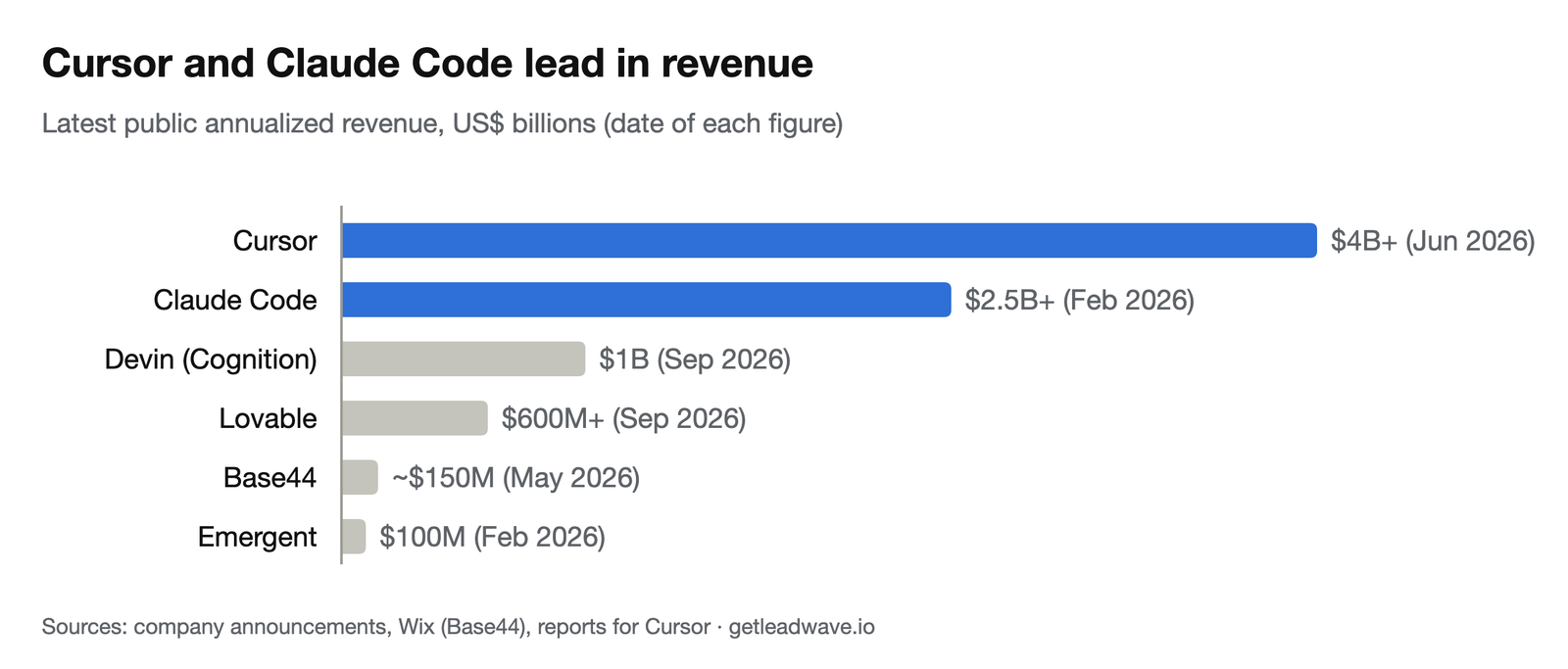
Cursor: the leading AI code editor, with more than $4 billion in annualized revenue by June 2026 (reported). SpaceX bought its maker, Anysphere, for $60 billion in August 2026.
Claude Code: Anthropic's agent for the terminal and IDEs. Its run-rate revenue passed $2.5 billion in February 2026, more than doubling since January.
GitHub Copilot: the most widely used, with 50 million users (Microsoft, July 2026). Paid plans start at $10 a month.
OpenAI Codex: more than 5 million weekly active users in June 2026, up from about 600,000 in January. Included in ChatGPT plans from $8 a month.
Devin: Cognition's autonomous agent, now sold together with Devin Desktop (formerly Windsurf). It reached a $1 billion revenue run rate in September 2026.
Google Antigravity: Google's agent-first IDE and CLI, free with weekly limits. It replaced Gemini CLI for individual users in June 2026; Google publishes no user numbers.
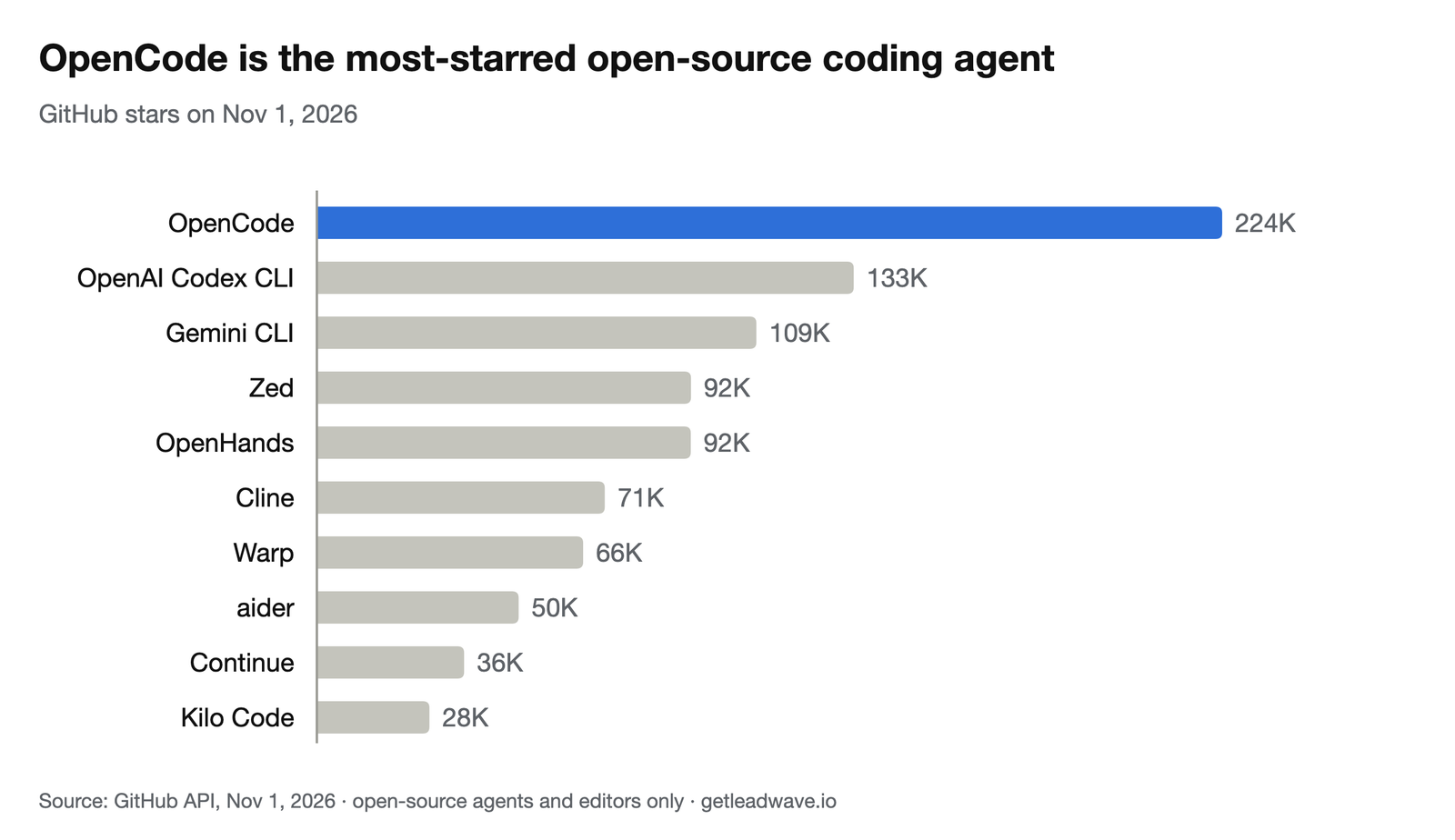
OpenCode: the most-starred open-source coding agent (224,000 GitHub stars). The company says more than 16 million developers use it each month.
Cline: an open-source agent inside VS Code, installed more than 11 million times.
Kilo Code: an open-source agent that reached 3 million developers in 16 months. Anaconda bought it in July 2026.
Factory: "Droids" for enterprise engineering teams, valued at $5 billion in September 2026.
Just outside the top 10: Kiro (AWS), Warp, Amp, Junie (JetBrains) and Zed.
Key numbers
Two tools lead on revenue. Cursor ($4 billion+ annualized) and Claude Code ($2.5 billion+) are far ahead of Devin ($1 billion) and Lovable ($600 million+), the app builder with the highest disclosed revenue.
Big valuations. SpaceX paid $60 billion for Cursor, Cognition is valued at $48 billion (September 2026), Lovable at $13.3 billion and Factory at $5 billion. CodeRabbit and Emergent each reached $1.5 billion.
Fast consolidation. Of the 75 tools here, 9 were acquired in whole or in part and 8 shut down, went offline or pivoted away from coding since 2025: 17 in all. Seven renamed themselves.
$20 a month is the going rate. Claude Code (via Claude Pro), Devin, Factory, Kiro, Warp, Amp, Augment Code and Replit all start at $20. GitHub Copilot, Zed and OpenCode start at $10.
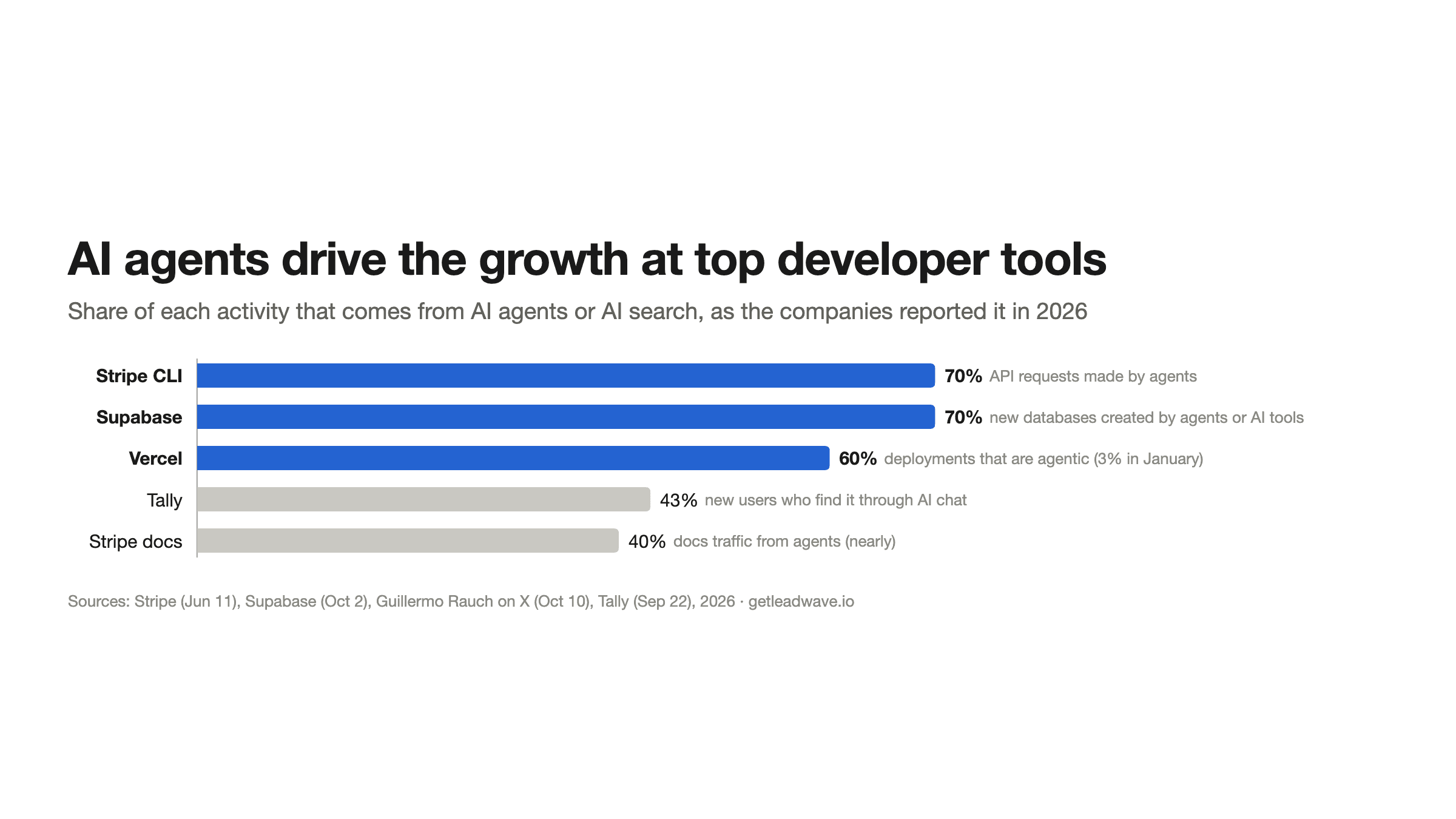
Billing is moving to usage. GitHub Copilot switched chat and agent work to usage-based AI credits in June 2026, Devin moved from compute units to dollars in April, and Cursor now shares one usage pool with Grok.
Open source is popular. OpenCode (224,000 stars), OpenAI's Codex CLI (133,000) and Gemini CLI (109,000) are the most-starred open-source agents on GitHub.
Terminal coding agents (CLI)
Terminal agents run in your shell, next to git and your test runner. You describe the task; the agent plans it, edits files, runs commands and asks before anything risky. This is where agentic coding started, and most of these tools now also plug into IDEs.
Tool | Maker | From (per month) | Free plan | Open source |
|---|---|---|---|---|
Anthropic | $20 (Claude Pro) | No | No | |
OpenAI | $8 (ChatGPT Go) | Yes, light use | CLI: yes | |
Anomaly | $10 (Go); app free | Yes | Yes (MIT) | |
Paid API key or license | No (since June 2026) | Yes | ||
Amp (ex-Sourcegraph) | $20 | Yes | No | |
Paul Gauthier (open source) | Free; pay your model | Yes | Yes | |
Factory | $20 | No | — | |
Warp | $20 | Yes | Client: yes (AGPL) | |
Poolside | Not published | Models free for now | Open-weight models |
Claude Code
Claude Code is Anthropic's agentic coding tool: it reads a codebase, edits files and runs commands from the terminal, VS Code, JetBrains, the Claude desktop app or the web. Run-rate revenue passed $2.5 billion in February 2026, more than double the January figure, and enterprise customers bring in over half of it. It needs a paid Claude plan.
Price: from $20 a month with Claude Pro; Max $100, Ultra $200
Traction: $2.5 billion+ run rate (Anthropic, February 2026)
OpenAI Codex
OpenAI Codex is OpenAI's coding agent: an open-source CLI, an IDE extension and a cloud agent inside ChatGPT. In July 2026 OpenAI merged the Codex app into the ChatGPT desktop app. Weekly active users passed 5 million in June 2026, up from about 600,000 in January.
Price: included in ChatGPT plans, from Go at $8 a month; ChatGPT Free covers quick tasks
Open source: the Codex CLI has 133,000 GitHub stars
OpenCode
OpenCode is an open-source coding agent for the terminal, desktop and IDEs that works with almost any model provider, including local models. With 224,000 GitHub stars it is the most-starred coding agent, and its maker says more than 16 million developers use it each month. In October 2026 attackers misused stored API keys of 1.4% of users of its legacy Console; the open-source agent itself was not affected.
Price: free app (MIT license); OpenCode Go hosted models from $10 a month
Maker: Anomaly, backed by Y Combinator
Gemini CLI
Gemini CLI is Google's open-source command-line agent for Gemini models (109,000 GitHub stars). Since June 18, 2026 it serves only enterprise licenses and paid API keys: free and Google AI Pro/Ultra users were moved to Antigravity CLI.
Price: a paid Gemini API key or a Gemini Code Assist license
Amp
Amp is a terminal coding agent that spun out of Sourcegraph as an independent company in December 2025. Its agents can also run unattended on remote machines called orbs, which you check from the web or your phone. The company says it is profitable.
Price: free Hobby plan with your own keys or model subscriptions; Individual $20 a month
aider
aider is a free, open-source command-line tool for AI pair programming in your local git repo, created by Paul Gauthier in 2023. It has 6.8 million installs, but development has slowed: the last tagged release was in August 2025.
Price: free; you pay your own model provider
Factory
Factory sells AI agents called Droids that plan, write, review and test code from the command line, desktop, web, Slack, Jira and other tools. Customers include Nvidia, Adobe and T-Mobile. It raised $200 million at a $5 billion valuation in September 2026.
Price: Pro from $20 a month; Teams and Enterprise plans
Warp
Warp started as a modern terminal and is now an agentic development environment: you prompt built-in agents to code, debug and deploy, and its Oz cloud agents run in the background. Warp says it has about 1 million active users, and it open-sourced its client in April 2026.
Price: free with pay-as-you-go agent use; Build $20 a month
Poolside
Poolside is an AI lab that builds open-weight coding models, the Laguna family, and ships pool, a terminal coding agent tuned for them. In August 2026 Nvidia agreed to license its model-building system and invest at a reported $12 billion valuation.
Price: Laguna models are free to use for a limited time
AI IDEs and agentic code editors
An AI IDE is a code editor built around an agent: you chat with it, it edits across files, and you review the diff. Most are forks of VS Code; Zed is written from scratch.
Tool | Maker | From (per month) | Free plan | Open source |
|---|---|---|---|---|
Anysphere (SpaceX) | $8 (Grok models only); $30 for others | Yes | No | |
Cognition | $20 | Yes | No | |
$19.99 (Google AI Pro) | Yes, with limits | No | ||
AWS | $20 | Yes, 50 credits | No | |
Zed Industries | $10 | Yes | Yes | |
PearAI | $15 | Yes | Yes (dormant) |
Cursor
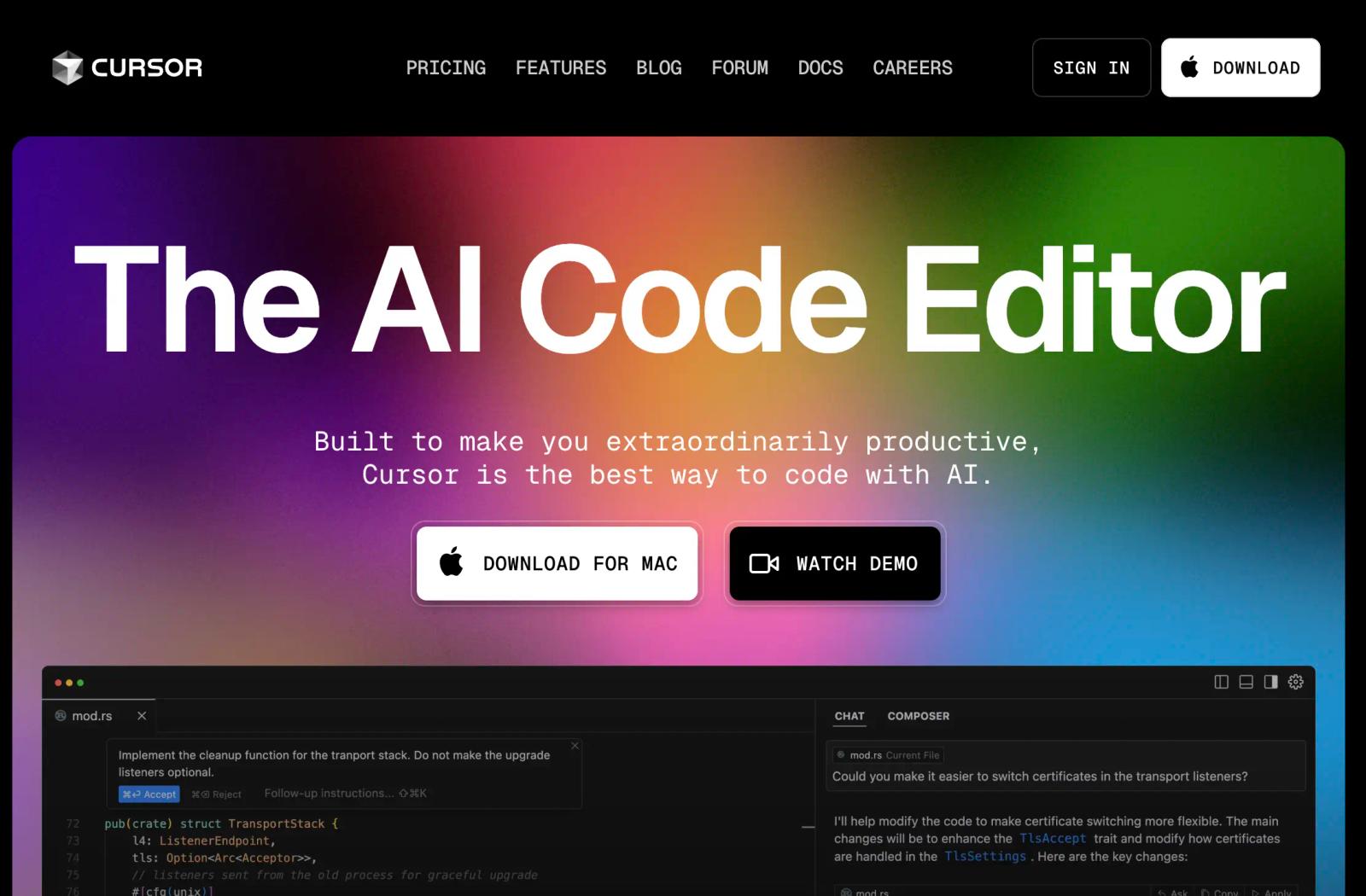
Cursor is an AI-first code editor (a VS Code fork) with built-in agents, a CLI, cloud agents and Bugbot code review. It reported more than $4 billion in annualized revenue in June 2026, and SpaceX closed its $60 billion purchase of Anysphere in August. Plans are now sold through X and bundle Grok; OpenAI has said it will cut Cursor's access to its models on November 12, 2026. Cursor also bought Continue and Graphite.
Price: free; Plus $8 a month (Grok models only); Premium $30 a month for cloud agents, Bugbot and other models
More: our Cursor dossier covers its owner, revenue and leadership
Devin Desktop (formerly Windsurf)
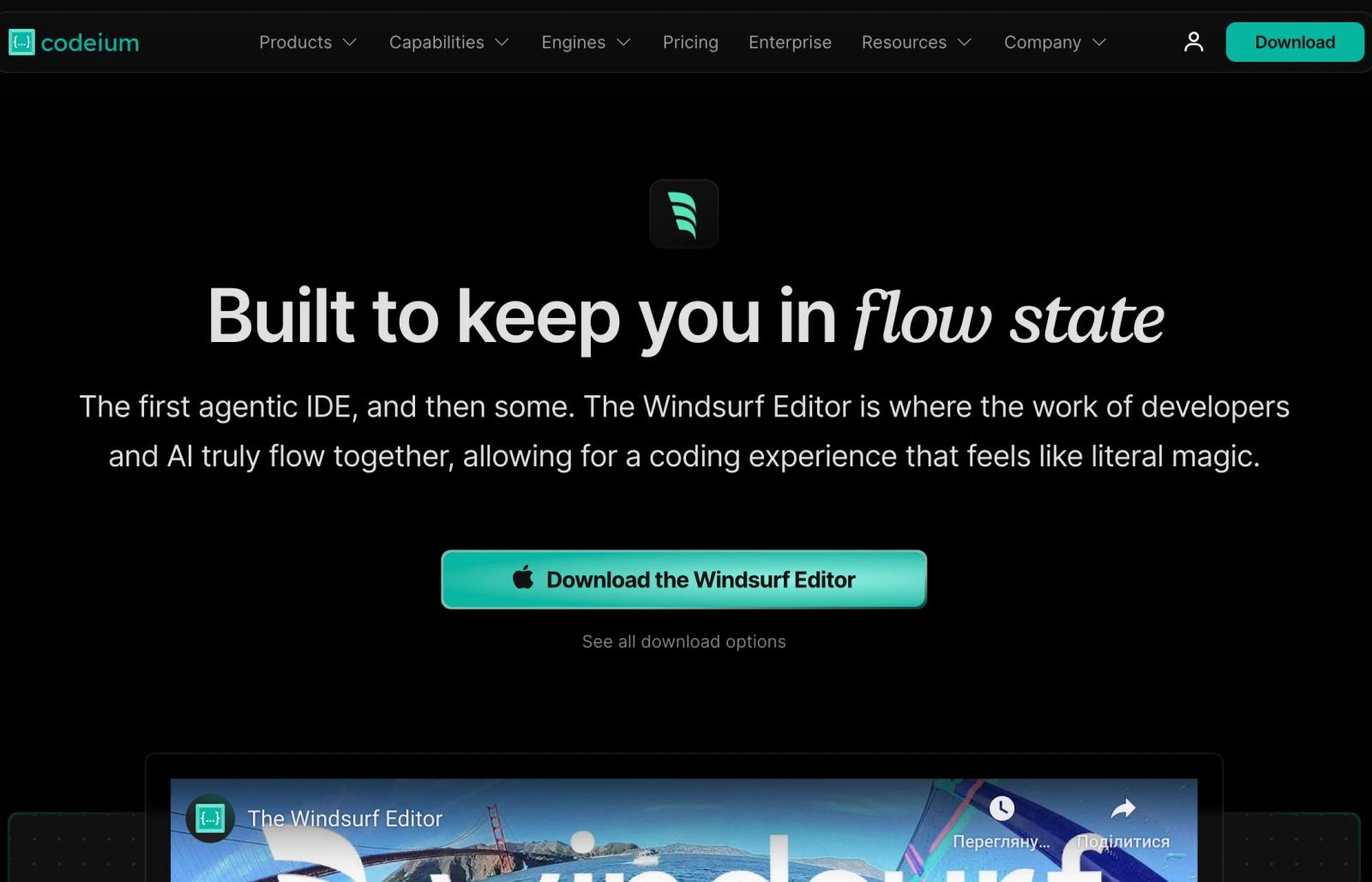
Devin Desktop (formerly Windsurf) is the AI code editor with the Cascade agent that Codeium built. Cognition bought it in July 2025, after OpenAI's deal fell through and Google hired its leaders, and renamed it Devin Desktop in June 2026. It had $82 million in annual recurring revenue at the time of the deal.
Price: same plans as Devin: free, Pro $20, Max $200
Google Antigravity
Google Antigravity is Google's agent-first development platform: an agentic IDE, a desktop app that runs several agents in parallel, and a CLI. Version 2.0 launched at Google I/O in May 2026, and Antigravity CLI replaced Gemini CLI for individual users in June. Parts of it were built by Windsurf leaders Google hired in July 2025.
Price: free with weekly limits; Google AI Pro $19.99 a month raises them
Kiro
Kiro is AWS's agentic IDE and CLI built around spec-driven development: it turns your prompt into a structured spec before it writes code. More than 250,000 developers used it before general availability, and AWS is replacing Amazon Q Developer with it.
Price: free 50 credits a month; Pro $20 a month for 1,000 credits
Zed
Zed is a fast, open-source code editor written in Rust by the creators of Atom, with built-in AI agents, edit predictions and real-time collaboration. It reached version 1.0 in April 2026.
Price: free with your own API keys; Pro $10 a month
Coding agents inside your editor (extensions)
If you'd rather keep VS Code or a JetBrains IDE, these agents install as extensions. Several are open source and let you bring any model.
Tool | Maker | From (per month) | Free plan | Open source |
|---|---|---|---|---|
GitHub (Microsoft) | $10 | Yes | No | |
Cline | Free; pay for inference | Yes | Yes | |
Anaconda | Free; Teams $15 per user | Yes | Yes | |
JetBrains | $8.33 (AI Pro, yearly) | Yes (Junie Lite) | No | |
Augment | $20 | No | — | |
Tabnine | Tricentis | Not public | — | No |
Cursor | No longer sold | — | Yes |
GitHub Copilot
GitHub Copilot is GitHub's AI assistant: code completion, chat and agent mode in editors, a CLI, a cloud coding agent you can assign issues to, and AI code review. Microsoft said it reached 50 million users in July 2026. Since June 2026, chat and agent work is billed in usage-based AI credits.
Price: free tier; Pro $10, Pro+ $39, Business $19 per seat
Cline
Cline is an open-source coding agent for VS Code and JetBrains, plus a CLI and desktop app, that works with any model through your own keys. Its VS Code extension has more than 11 million installs, and it raised $32 million.
Price: free; you pay for inference, or $9.99 a month for ClinePass open-weight models
Kilo Code
Kilo Code is an open-source, model-agnostic agent for VS Code, JetBrains and the terminal, with its own model gateway at provider prices. It reached more than 3 million developers in 16 months, and Anaconda bought it in July 2026.
Price: free; Teams $15 per user a month; Kilo Pass credits from $19
Junie
Junie is JetBrains' coding agent for its IDEs, the terminal and CI. It writes a plan before it codes, works with any model, and left beta in June 2026.
Price: Junie Lite free; JetBrains AI Pro $8.33 a month billed yearly
Augment Code
Augment Code built an AI coding assistant for large codebases around its Context Engine. On October 8, 2026 it sold its Cosmos agent platform, the Auggie CLI, the Context Engine and the team to Harness; the future of its IDE extensions hasn't been announced.
Price: Standard $20 a month, including $20 of usage
Cloud and background coding agents (Devin alternatives)
Cloud agents work without you watching. You assign a task from GitHub, Slack, Linear or a schedule; the agent works in its own sandbox and returns a pull request. Devin made the category famous, and these are its main alternatives. OpenAI Codex, GitHub Copilot and Cursor also run cloud agents.
Tool | Maker | From (per month) | Free plan | Open source |
|---|---|---|---|---|
Cognition | $20 | Yes, light quota | No | |
All Hands AI | Free self-hosted; Teams $500 | Yes | Yes | |
Reason Machines | Pro (price not public) | Yes, ad-supported | Partly | |
Tembo | $60 | Free trial | — | |
Niteshift | $50 | Yes | No | |
PostHog | Usage-based after $20 free | Yes | Yes | |
Potpie | Project-based | Yes, self-hosted | Yes | |
$19.99 (closing Dec 31) | Yes | — |
Devin
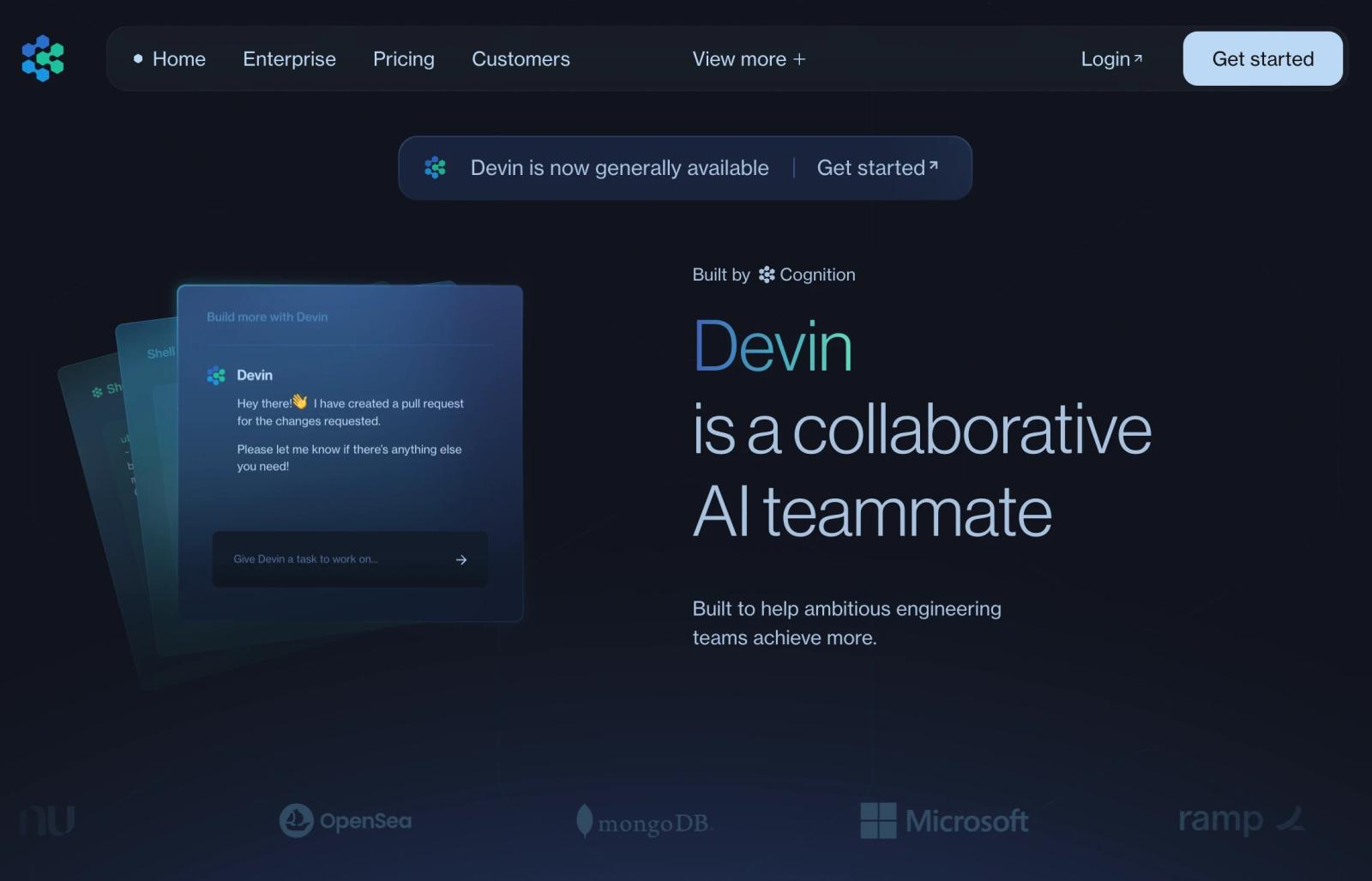
Devin is Cognition's autonomous AI software engineer: it takes a task, works in its own cloud environment and opens a pull request. Cognition reached a $1 billion revenue run rate in September 2026 and raised more than $2 billion at a $48 billion valuation. It also owns Devin Desktop, the former Windsurf.
Price: free light quota; Pro $20, Max $200; Teams $80 plus $40 per seat
OpenHands
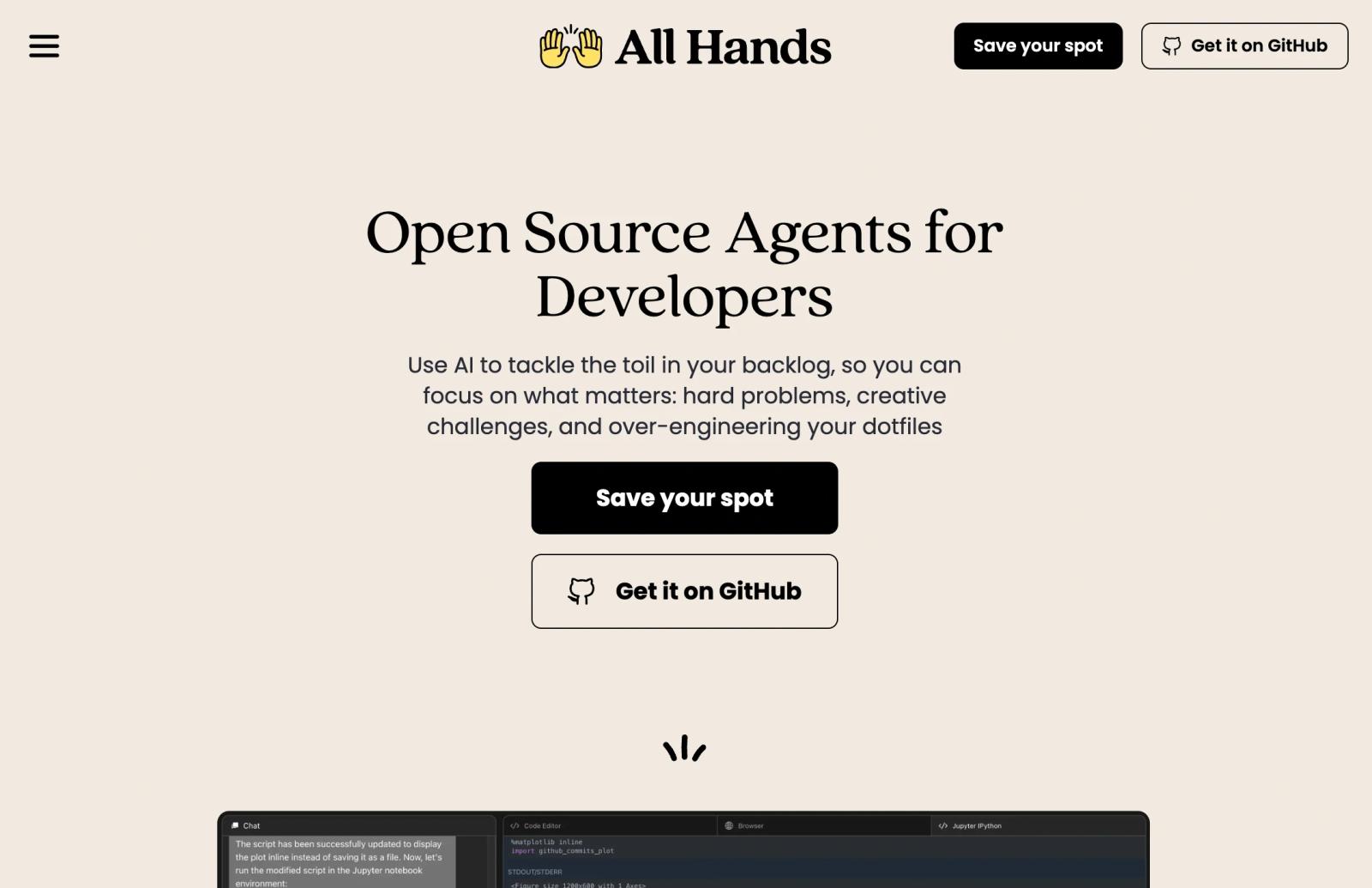
OpenHands, formerly OpenDevin, is an open-source, model-agnostic platform for running coding agents in sandboxes, from one agent on a laptop to many in the cloud. It has more than 92,000 GitHub stars, and its company, All Hands AI, launched Agent Canvas for scheduled agent work in June 2026.
Price: free to self-host with your own model key; Teams $500 a month for up to 10 users
Reason (formerly Ara)
Reason (formerly Ara) is a cloud agent you hand tasks to from team chat, Slack, a schedule or an issue; it reproduces the problem, edits code, runs tests and opens a pull request. A Y Combinator company, it renamed itself from Ara in 2026.
Price: free ad-supported plan; paid prices not public
Tembo
Tembo runs coding agents such as Claude Code, Codex and Cursor in full, shareable cloud environments. It pivoted from managed Postgres to coding agents in 2025.
Price: Pro $60 a month, including $90 of usage
Niteshift
Niteshift lets a team define its development environment once, then run any coding agent in many isolated cloud copies of it. It came out of waitlist in June 2026 with a $7 million seed led by Greylock.
Price: free with $10 of credits; Individual $50 a month
PostHog Desktop (formerly PostHog Code)
PostHog Desktop (formerly PostHog Code) is PostHog's coding-agent app that uses your product data, such as errors, session replays and support tickets, to pick up work and fix it. New sign-ups are paused for accounts created since October 1, 2026.
Price: $20 of free usage a month, then usage-based
Also in this group: Potpie, an open-source platform that maps a large codebase into a graph and runs agents on it for debugging and impact analysis, and Jules, Google's asynchronous agent, which stops taking new sessions on November 11 and closes on December 31, 2026.
Tools for running many coding agents at once
The newest category: apps that run several agents in parallel, each in its own git worktree, so you can compare results or split up a backlog.
Tool | Maker | From (per month) | Free plan | Open source |
|---|---|---|---|---|
Melty Labs | $50 | Yes | No | |
Paradev | $20 per user | Yes | Source-available | |
Imbue | Free; pay your model | Yes | Yes (MIT) |
Conductor
Conductor is a Mac app, with cloud workspaces and an iPhone app, for running a team of coding agents such as Claude Code, Codex and Cursor in parallel. Its users grew 10x from January to March 2026, and it raised a $22 million Series A.
Price: free with your own subscriptions; Pro $50 a month
Paradev (formerly Superset)
Paradev (formerly Superset) is a desktop app for running many agents side by side, each in its own worktree. It renamed itself from Superset on October 26, 2026 and raised an $11.5 million seed led by Union Square Ventures.
Price: free for one user; Pro $20 per user a month
Sculptor
Sculptor is Imbue's free, open-source desktop app for running several coding agents in parallel, each in its own workspace.
Price: free; you pay only your model provider
AI code review agents
Coding agents write more code than people can read, so review is now automated too. These tools comment on every pull request; Cursor's Bugbot and GitHub Copilot do the same inside their own products.
Tool | Maker | From (per month) | Free plan | Open source |
|---|---|---|---|---|
CodeRabbit | $30 per user ($24 yearly) | Public repos | No | |
Cursor | $20 per user (yearly) | Yes | No | |
Greptile | $1 per credit, no seats | Yes | No | |
Million Software | Pay as you go | 2M tokens | No (dormant) |
CodeRabbit
CodeRabbit reviews every pull request on GitHub, GitLab and other hosts, and also triages, explains and security-scans changes. It has 17,000 customers and raised $143 million at a $1.5 billion valuation in August 2026.
Price: free on public repositories; Essentials $30 per user a month
Graphite
Graphite is a code review platform with stacked pull requests, a merge queue and an AI reviewer. Cursor bought it in December 2025, so it is now part of SpaceX too.
Price: free Hobby plan; Starter $20 per user a month billed yearly
Greptile
Greptile reviews pull requests with the context of the whole codebase and, since mid-2026, runs the code during review to check its suggestions. It says it reviews more than 1% of all pull requests opened on GitHub each day, and raised a $50 million Series B at a $750 million valuation in October 2026.
Price: free for one developer; Pro $1 per credit, no seat fees
AI testing agents
Tool | Maker | From (per month) | Free plan | Open source |
|---|---|---|---|---|
Momentic | $125 plus usage | Yes | No | |
Autosana | $999 (Startup); pay as you go from $0 | Yes | No | |
TestMu AI | $15 (yearly) | Yes | No |
Momentic writes tests for web, iOS and Android and keeps them as YAML in your repo; its Mo agent bug-bashes an app from a URL. Autosana runs end-to-end tests on mobile and web apps from plain-language flows. TestMu AI is LambdaTest, renamed in January 2026 around its KaneAI testing agents; it reports more than 3 million users.
Agents that build whole apps (vibe coding)
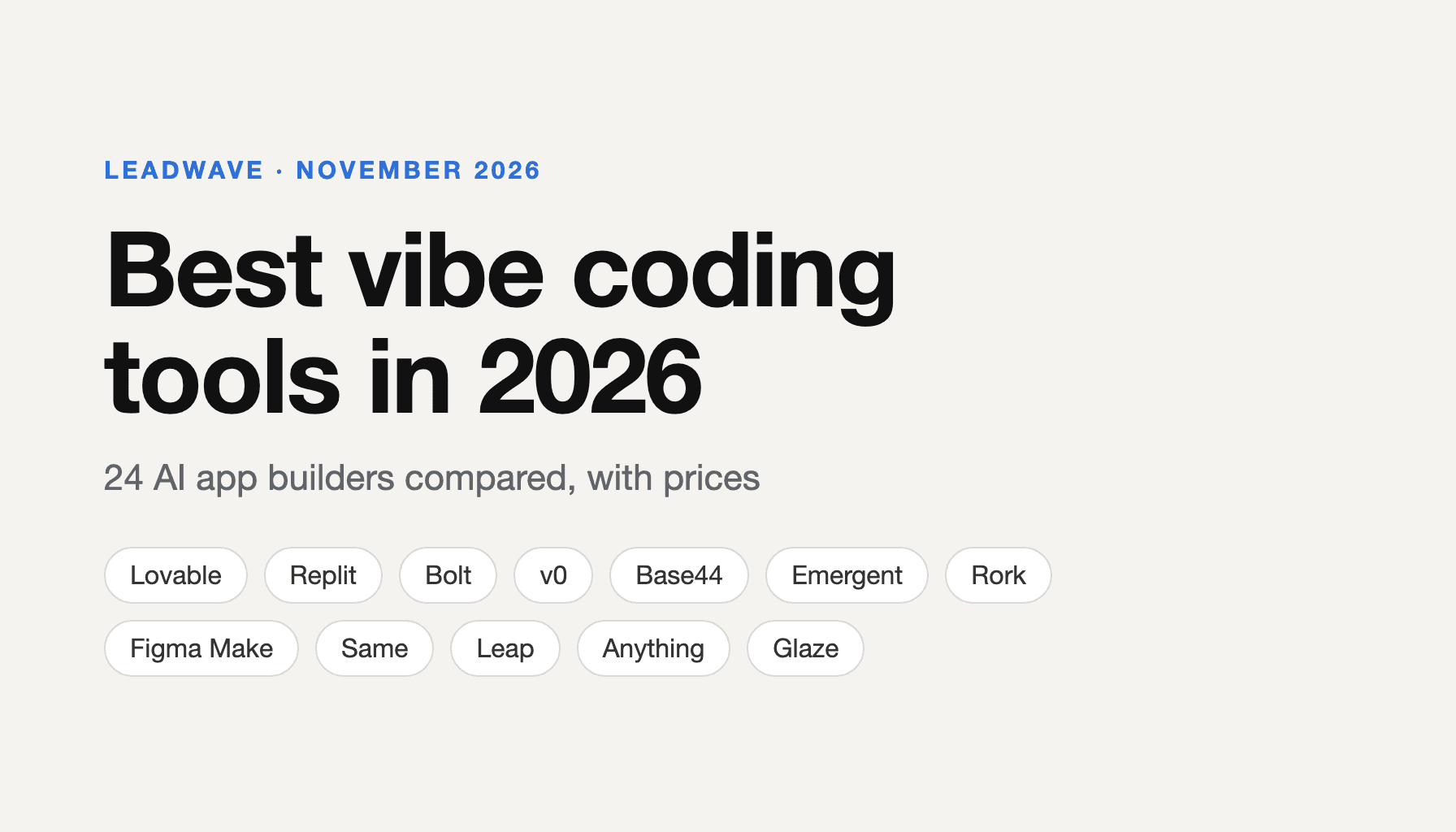
These agents are made for people who don't want to touch the code: you describe an app in a chat, and the agent builds, hosts and deploys it. We compare them in depth in our guide to the best vibe coding tools; here is the short list.
Tool | Builds | From (per month) | Free plan |
|---|---|---|---|
Full-stack web apps | $25 | Yes | |
Web apps, with hosting | $20 | Yes | |
Web and Expo mobile apps | $25 | Yes | |
React and Next.js apps | $30 per user | Yes | |
Web apps with a database | $20 | Yes | |
Web and mobile apps | $20 | Yes | |
Next.js web apps | $10 | Yes | |
Full-stack apps on your own cloud | $30 | Yes | |
Websites and apps (multi-agent) | $20 | Yes | |
Native iOS and React Native apps | $20 | Yes | |
iOS and Android apps | $25 | No | |
Mobile apps | $20 | Yes | |
Native Apple apps | $25 | Yes | |
Web and iOS apps | $24 | No | |
Next.js web apps | $25 | Yes | |
Web apps, extensions, bots | $25 per user | Yes | |
Internal enterprise apps | Enterprise only | No | |
Sites, apps, slides, videos | $20 | Yes | |
Native Mac apps | $10 | Yes | |
Prototypes and web apps from designs | $16 per seat (yearly) | Yes | |
UI prototypes | $20 per seat | Yes | |
Code from Figma designs | Enterprise from $500 | Yes | |
React prototypes | $20 | Yes | |
Design canvas for agents | $16 (yearly) | Yes | |
Decks and social designs | $30 per user | Yes |
Lovable
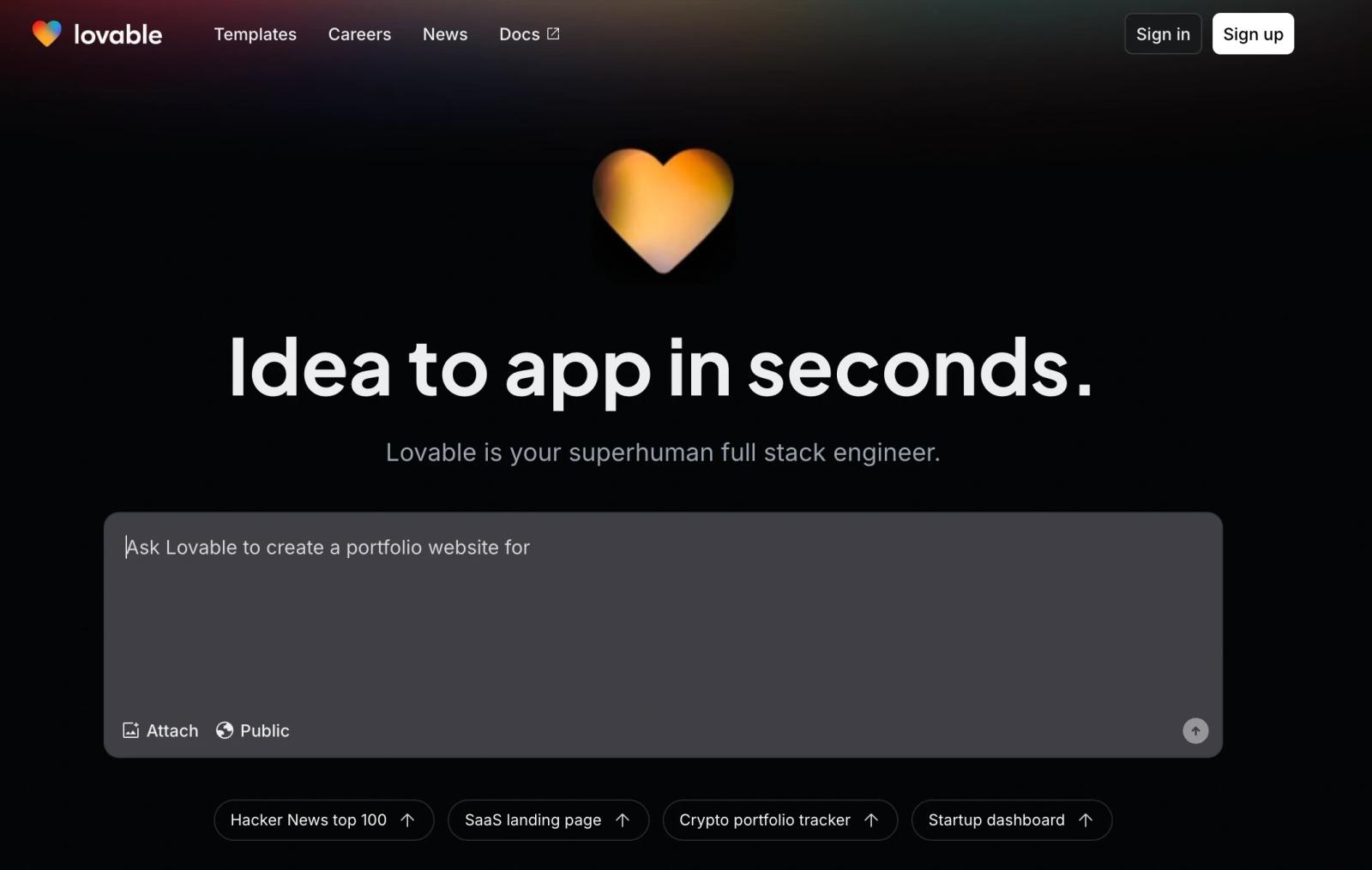
Lovable turns plain-English prompts into full-stack web apps, with hosting, a database and AI features built in. Its annualized revenue passed $600 million in September 2026, and it raised $400 million at a $13.3 billion valuation in August.
Price: free daily credits; Pro $25 a month
More: our Lovable dossier
Replit
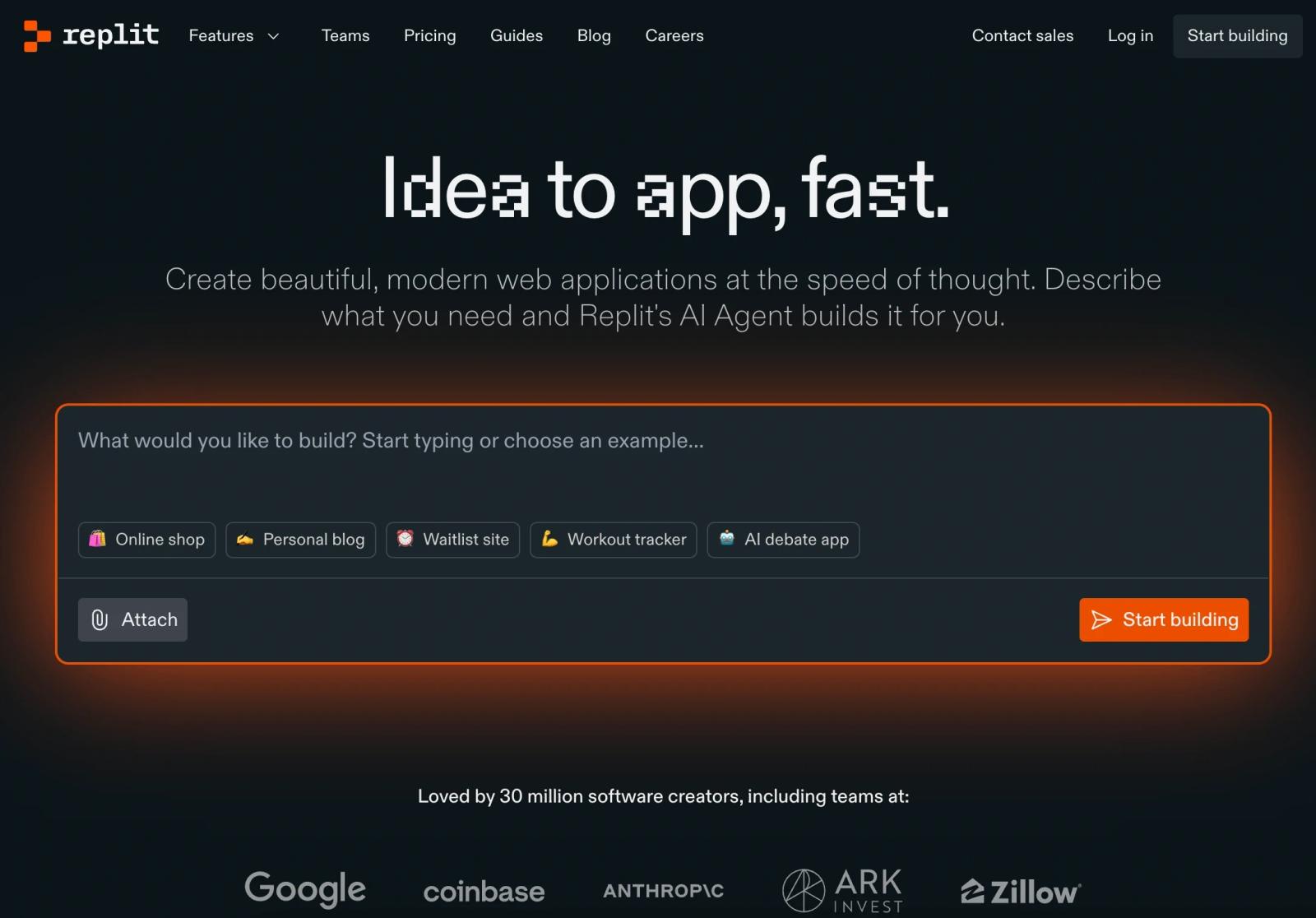
Replit is a browser-based platform where Replit Agent builds, hosts and deploys apps from prompts, on top of Replit's cloud IDE. It raised $400 million at a $9 billion valuation in March 2026.
Price: free Starter plan; Core $20 a month
Bolt
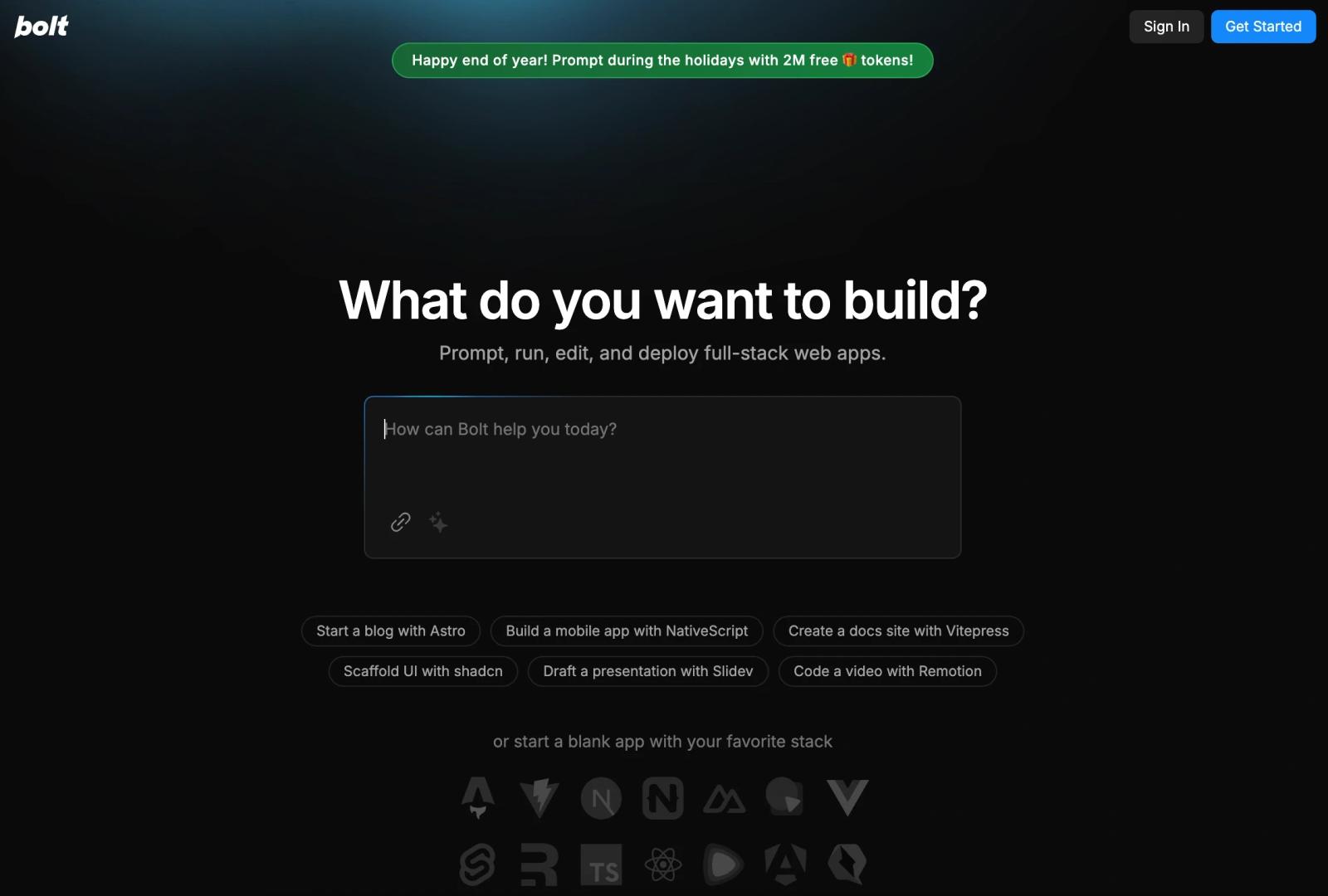
Bolt, from StackBlitz, writes, runs and deploys full-stack web and Expo mobile apps in the browser. Bolt v2 added third-party coding agents such as Claude Code and Codex, plus built-in hosting and a database.
Price: free 1 million tokens a month; Pro $25 a month
v0
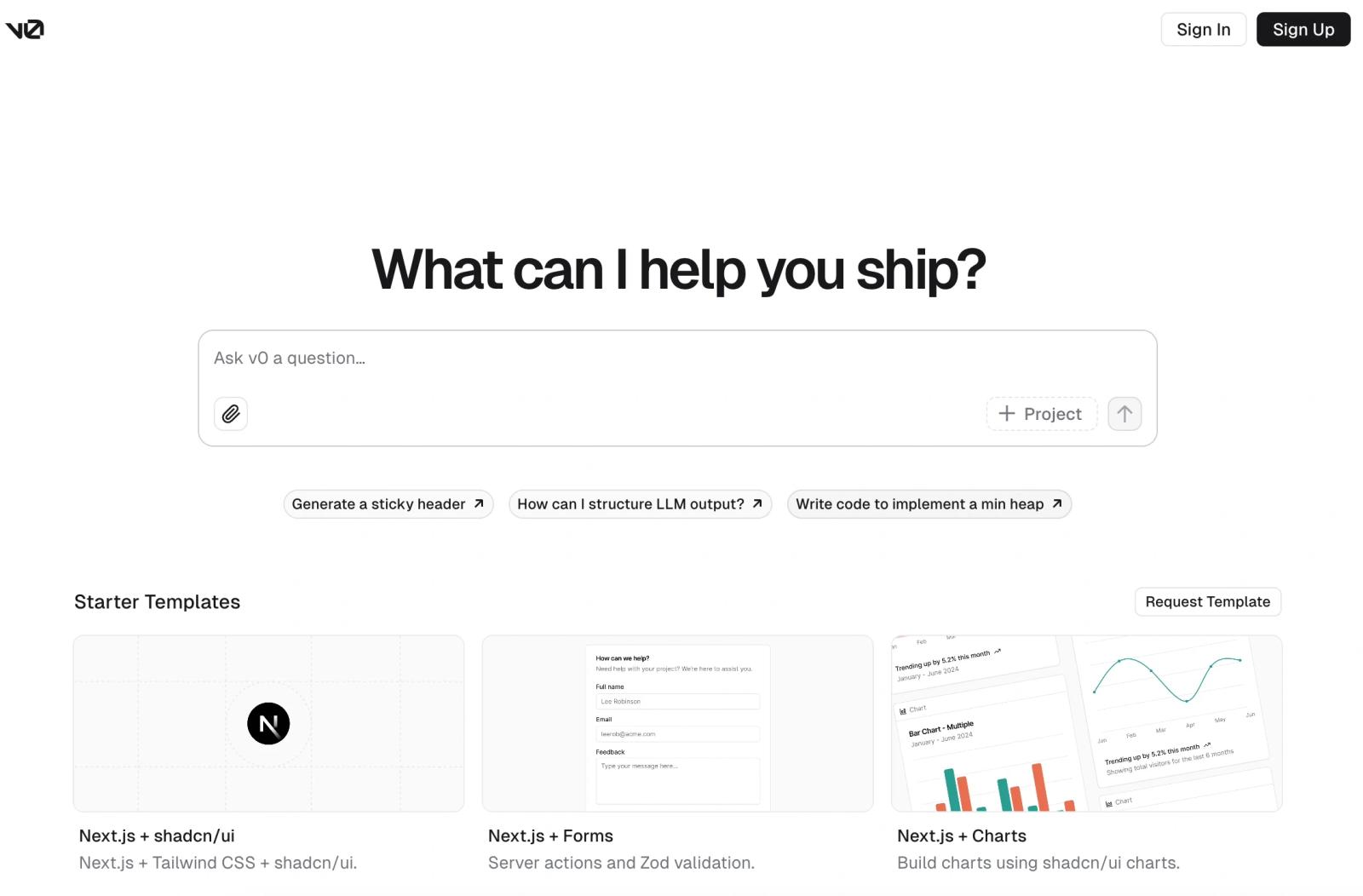
v0 is Vercel's AI app builder for React and Next.js. Vercel relaunched it in February 2026 for production work, with GitHub import and pull requests, and says more than 4 million people have used it.
Price: free daily messages; Plus $30 per user a month
Other developer tools on our list
Codev
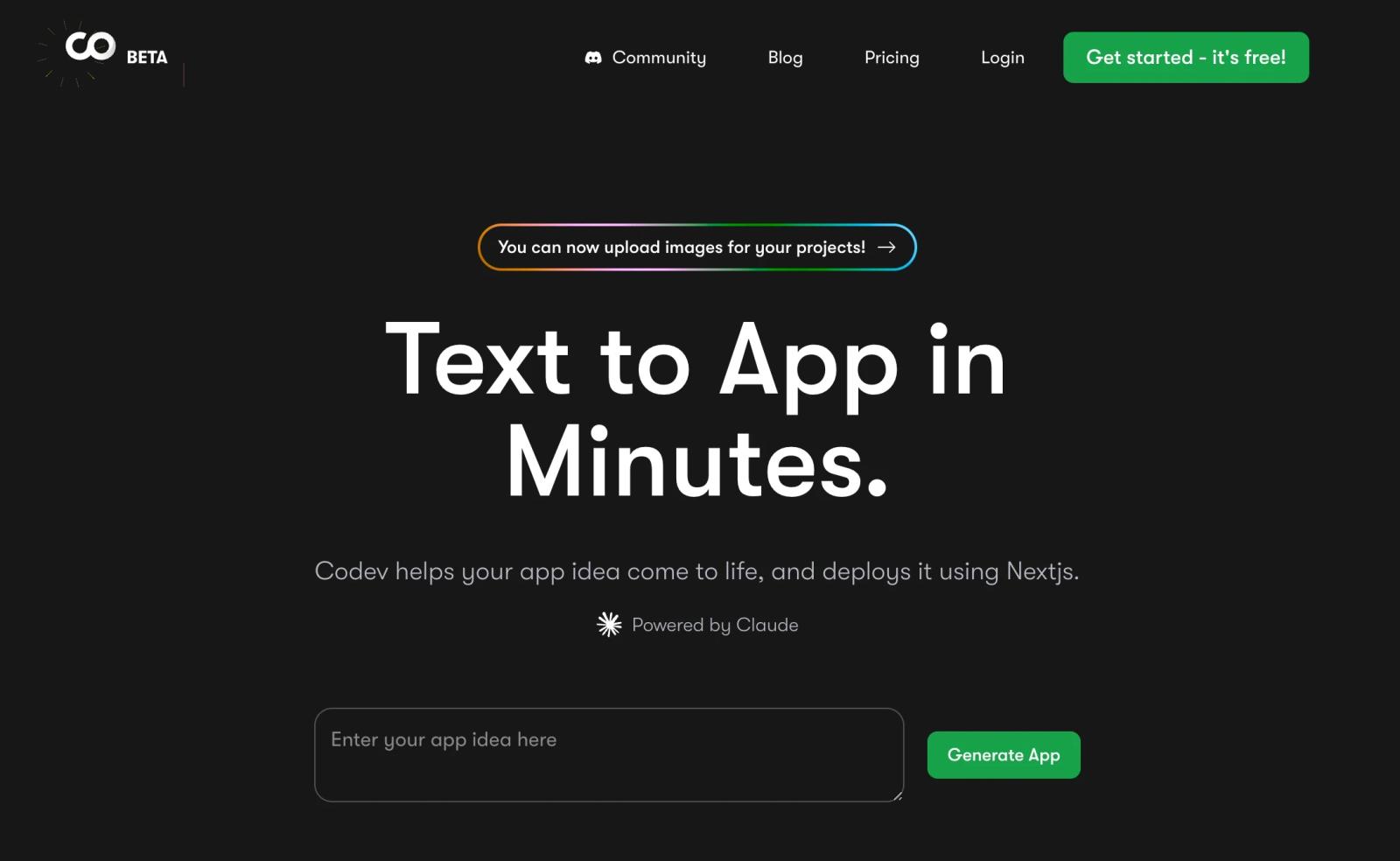
Codev started as a text-to-app generator and now calls itself the app builder for AI agents: your own agent, such as Claude Code or Codex, builds the app, and Codev provides hosting and a managed backend.
Price: first app free; Pro $29 a month
Also tagged: superlog, open-source observability whose agents investigate and fix production errors; Interfere, which watches production apps for bugs and suggests code fixes; and Mesa, which pivoted from AI code review to a versioned filesystem for agents in April 2026.
What changed in 2025 and 2026
AI coding tools are consolidating fast. These are the acquisitions, renames, shutdowns and pivots among the 75 tools on this page.
Tool | What happened | When |
|---|---|---|
Cursor | SpaceX bought its maker, Anysphere, for $60 billion in stock | Aug 2026 |
Windsurf | Bought by Cognition, renamed Devin Desktop | Jul 2025; Jun 2026 |
Continue | Bought by Cursor; hosted product shut down | Jun 2026 |
Graphite | Bought by Cursor | Dec 2025 |
Kilo Code | Bought by Anaconda | Jul 2026 |
Tabnine | Bought by Tricentis | Jul 2026 |
Augment Code | Sold Cosmos, the Auggie CLI and its team to Harness | Oct 2026 |
Base44 | Bought by Wix for about $80 million plus earn-outs | Jun 2025 |
Softgen | Taken over by Arising Ventures, a holding company | Mar 2025 |
Jules | Google is shutting it down | Dec 31, 2026 |
Gemini CLI | Enterprise and paid API only; individuals moved to Antigravity CLI | Jun 2026 |
Amazon Q Developer | Replaced by Kiro; plugins end April 30, 2027 | May 2026 |
Amp | Spun out of Sourcegraph as an independent company | Dec 2025 |
Superset | Renamed Paradev | Oct 2026 |
Ara | Renamed Reason | 2026 |
PostHog Code | Renamed PostHog Desktop; new sign-ups paused | Oct 2026 |
LambdaTest | Renamed TestMu AI | Jan 2026 |
MGX | Renamed Atoms | Jan 2026 |
Create.xyz | Renamed Anything | 2025 |
Tusk | Shut down; customers sent to Devin | Jun 2026 |
Instant | Team joined OpenAI; cloud closes Aug 31, 2027 | Aug 2026 |
Restack | Website offline | 2026 |
Mesa | Pivoted from code review to a filesystem for agents | Apr 2026 |
Rebolt | Pivoted to AI for aircraft maintenance | 2026 |
Runtime | Pivoted to AI agents for payment teams | 2026 |
Wabi | Relaunched as a multiplayer AI assistant | Oct 2026 |
PearAI | No major update since April 2025 | — |
How to choose an AI coding agent
For a startup team shipping features end to end: a terminal agent such as Claude Code or Codex for hands-on work, a cloud agent such as Devin or Cursor's cloud agents for background tasks, and an AI reviewer such as CodeRabbit or Greptile on every pull request. Conductor or Paradev help when you run several agents at once.
If you live in an IDE: Cursor, Devin Desktop, Google Antigravity or Kiro. On JetBrains, Junie or Copilot. In VS Code without switching editors, GitHub Copilot, Cline or Kilo Code.
For enterprises: GitHub Copilot Business or Enterprise, Factory, Devin, Claude Code on Team or Enterprise plans, and Kiro for AWS shops.
On a budget: GitHub Copilot Free, Google Antigravity's free plan, Codex in ChatGPT Free for quick tasks, and the open-source agents (OpenCode, Cline, Kilo Code, aider), where you pay only your model provider.
From your phone: Conductor has an iPhone app, and Amp lets you check agents running on remote machines from the web or your phone.
If you don't write code: an app builder such as Lovable, Replit or Bolt; see the vibe coding guide.
FAQ
What is an AI coding agent? Software that completes programming tasks on its own: it reads your code, plans changes, edits files, runs commands and tests, and opens a pull request. Unlike autocomplete, it works through many steps with little supervision.
What is agentic coding? Developing software by delegating tasks to AI coding agents instead of writing every line yourself. You set the goal and review the result; the agent does the steps in between.
What is the best AI coding agent in 2026? By revenue, Cursor ($4 billion+ annualized) and Claude Code ($2.5 billion+ run rate) lead. By users, GitHub Copilot is the largest with 50 million. The best one depends on how you work: in the terminal, in an IDE, or as a background agent.
Which AI coding agents are free? GitHub Copilot, Google Antigravity, Devin, Kiro and Zed have free plans with limits, and ChatGPT Free includes Codex for quick tasks. OpenCode, Cline, Kilo Code and aider are free and open source; you pay only for the model you use.
What are the best alternatives to Devin? For autonomous cloud agents: OpenAI Codex in ChatGPT, GitHub Copilot's coding agent, Cursor's cloud agents, Factory and the open-source OpenHands. Reason, Tembo and Niteshift are newer options. Google's Jules closes on December 31, 2026.
Which AI coding agents are open source? OpenCode, OpenAI's Codex CLI, Gemini CLI, Cline, Kilo Code, aider, OpenHands and Imbue's Sculptor, plus the Zed editor and Warp's client. Claude Code has a popular GitHub repository (154,000 stars), but the agent itself isn't open source.
Which IDEs support AI coding agents? Cursor, Devin Desktop, Google Antigravity, Kiro and Zed have agents built in. VS Code runs them as extensions (GitHub Copilot, Cline, Kilo Code, Claude Code, Codex), and JetBrains IDEs run Junie, Copilot and Claude Code.
What is the difference between an AI IDE and a coding agent? An AI IDE is a code editor with an agent built in; a coding agent can also run in the terminal or the cloud without an editor. Most products now do both: Cursor has a CLI, and Claude Code plugs into IDEs.
What is the difference between agentic coding and vibe coding? Agentic coding is developers delegating tasks to agents and reviewing the code. Vibe coding is building an app by describing it, often without reading the code at all; see our vibe coding guide.
How much do AI coding agents cost? Most start at $20 a month: Claude Pro, Devin, Factory, Kiro, Warp, Amp and Augment Code. GitHub Copilot and Zed start at $10, Codex at $8 through ChatGPT Go, and heavy users pay $100 to $200 a month for higher limits.
How this list was built
The list: the 63 companies tagged "AI Coding Agent" in LeadWave's database, plus 12 well-known tools the tag was missing: GitHub Copilot, OpenAI Codex, Gemini CLI, Jules, Windsurf, Kiro, Cline, Kilo Code, Poolside, OpenHands, Junie and Tabnine. That makes 75.
The facts: checked on November 1, 2026 against each company's site, pricing page, blog or filings, or a major news outlet. A dash means we couldn't confirm the figure.
Prices: the cheapest paid monthly plan on the official pricing page, before tax.
The top 10: ranked by reach, using the latest public revenue figure, or users where revenue isn't public.
Selling to developer-tool companies?
LeadWave's list of coding SaaS companies covers 1,179 companies that build software for developers, and our list of AI companies has 9,000 AI companies with CEO details, ready for outreach. For the labs behind the models these agents run on, see our list of AI labs.
About this list
Compiled by LeadWave from company announcements, pricing pages and filings, checked November 1, 2026. First published in 2025 as a top 10 and fully rewritten in November 2026.