Vibe coding means building software by describing what you want and letting AI write the code, often without reading it. Andrej Karpathy coined the term in February 2025, and by late 2026 it is a business of its own: Lovable alone passed $600 million in annualized revenue. This guide compares 24 vibe coding tools, the AI app builders for web apps, mobile apps, prototypes and internal tools, with prices checked on November 1, 2026.
If you are a developer who wants an agent working inside your own codebase, see our ranking of the best AI coding agents instead.
The best vibe coding tools in 2026: quick picks
Best overall for web apps: Lovable. The largest app builder by disclosed revenue, with hosting and a database built in.
Best all-in-one platform: Replit. Its agent builds, hosts and deploys apps on top of a full cloud IDE.
Best for code you keep: v0 and Bolt. v0 writes React and Next.js and works with GitHub; Bolt runs full-stack apps right in the browser.
Best for internal tools: Base44. Apps with a database, login and hosting, now owned by Wix.
Best for hands-off builds: Emergent. Autonomous agents plan, write, test and deploy the app.
Best for mobile apps: Rork. Native iOS apps in Swift; Newly, Bloom and Superapp are good alternatives.
Best for designers: Figma Make. Turns Figma designs into working prototypes and web apps.
Best for companies: SolveAI. Employees build internal apps that run on the company's own infrastructure.
Key numbers
$600 million+ for Lovable. Its annualized revenue passed $600 million in September 2026, and it raised $400 million at a $13.3 billion valuation in August. Users have created more than 60 million projects.
A fast exit. Wix bought Base44 for about $80 million in June 2025, months after it launched; Wix reported about $150 million in annual recurring revenue for it by May 2026.
$100 million in eight months. Emergent reached $100 million in annual recurring revenue eight months after launch and became a unicorn in July 2026, with more than 12 million apps built.
Big platforms joined in. Replit was valued at $9 billion in March 2026, more than 4 million people have used Vercel's v0, and Figma, Wix and Raycast all sell their own app builders.
$20 to $25 a month. That is where most paid plans start. Almost all charge in credits or tokens, so a bigger app costs more to build.
App stores push back. Apple pulled Anything from the App Store on March 26, 2026 under guideline 2.5.2, during a crackdown on vibe-coding apps; it was back by April 3.
Vibe coding tools compared
Prices are the cheapest paid monthly plan on each official pricing page, checked November 1, 2026.
Tool | Best for | From (per month) | Free plan | You pay in |
|---|---|---|---|---|
Full-stack web apps | $25 | Yes, daily credits | Credits | |
Apps with hosting and an IDE | $20 | Yes | Usage | |
Web and Expo mobile apps | $25 | Yes, 1M tokens | Tokens | |
React and Next.js apps | $30 per user | Yes, 7 messages a day | Credits | |
Internal tools with a database | $20 | Yes | Credits | |
Autonomous full-stack builds | $20 | Yes, 10 credits | Credits | |
Next.js web apps | $10 | Yes | Tokens | |
Backends on your own AWS or GCP | $30 | Yes | Credits | |
Sites and apps from an AI team | $20 | Yes | Credits | |
Next.js apps with Supabase and Stripe | $25 | Trial credits | Credits | |
Web apps, extensions and bots | $25 per user | Yes | Credits | |
Sites, apps, slides and videos | $20 | Yes, daily credits | Credits | |
Native iOS and React Native apps | $20 | Yes, design only | Credits | |
iOS and Android apps, store publishing | $25 | No | Credits | |
Mobile apps from your phone | $20 | Yes (waitlist) | Balance | |
Native Apple apps | $25 | Yes | Credits | |
Web and iOS apps with payments | $24 | No | Credits | |
Prototypes and apps from designs | $16 per seat (yearly) | Yes | AI credits | |
Prototypes in your design system | $20 per seat | Yes | Credits | |
Code from Figma designs | Enterprise from $500 | Yes | — | |
Clickable React prototypes | $20 | Yes | — | |
Designing on the running app | $16 per editor (yearly) | Yes | Per editor | |
Internal enterprise apps | Enterprise only | No | — | |
Native Mac apps | $10 | Yes | Credits or your Claude plan |
Vibe coding tools for web apps
Lovable
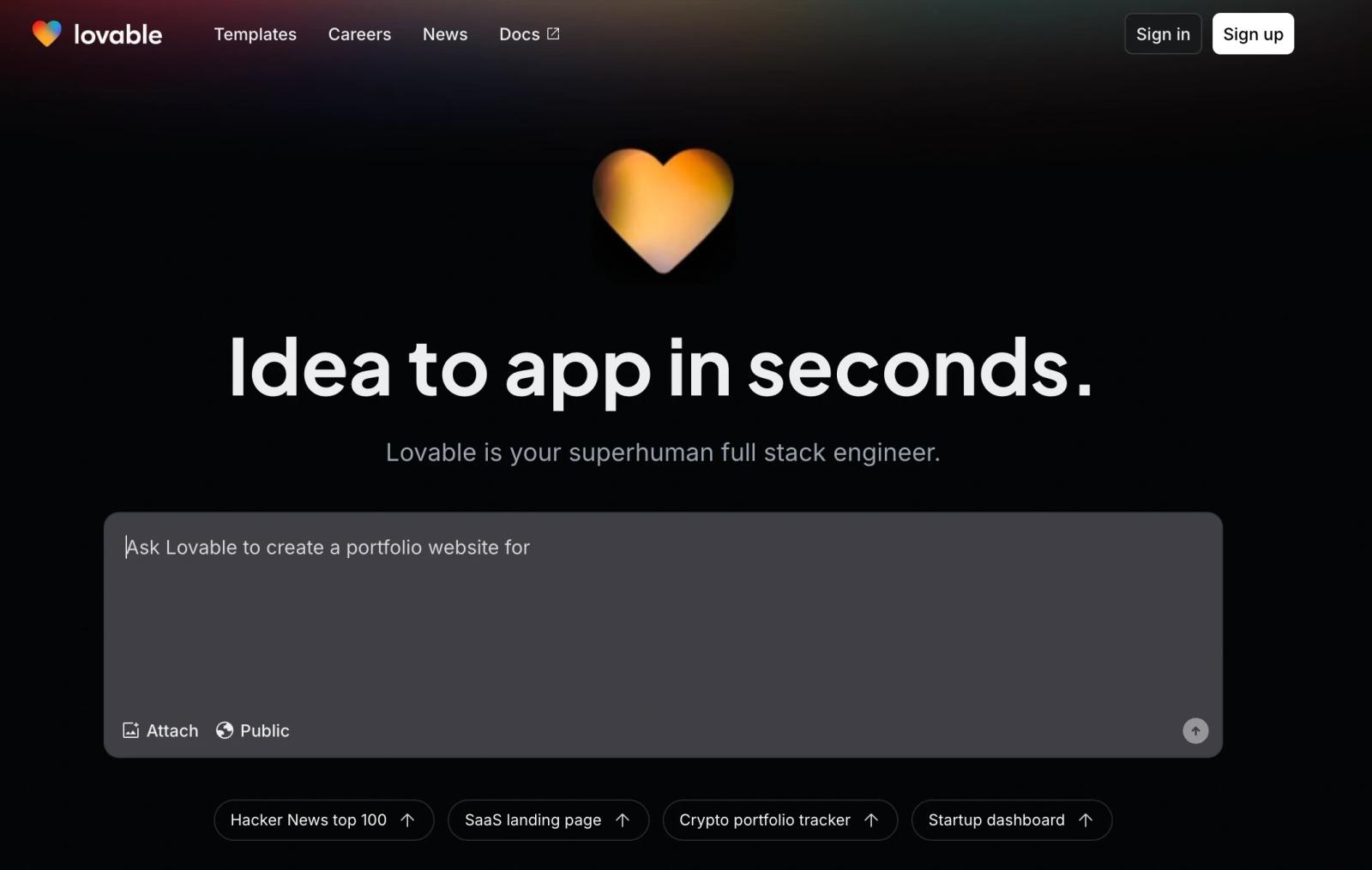
Lovable, from Stockholm, turns plain-English prompts into full-stack web apps with hosting, a database and AI features built in. It is the largest vibe coding company: more than $600 million in annualized revenue, a $13.3 billion valuation, and employees at nearly two-thirds of the Fortune 500 use it.
Price: free daily credits; Pro $25 a month; Business $50
More: our Lovable dossier covers its funding and leadership
Replit
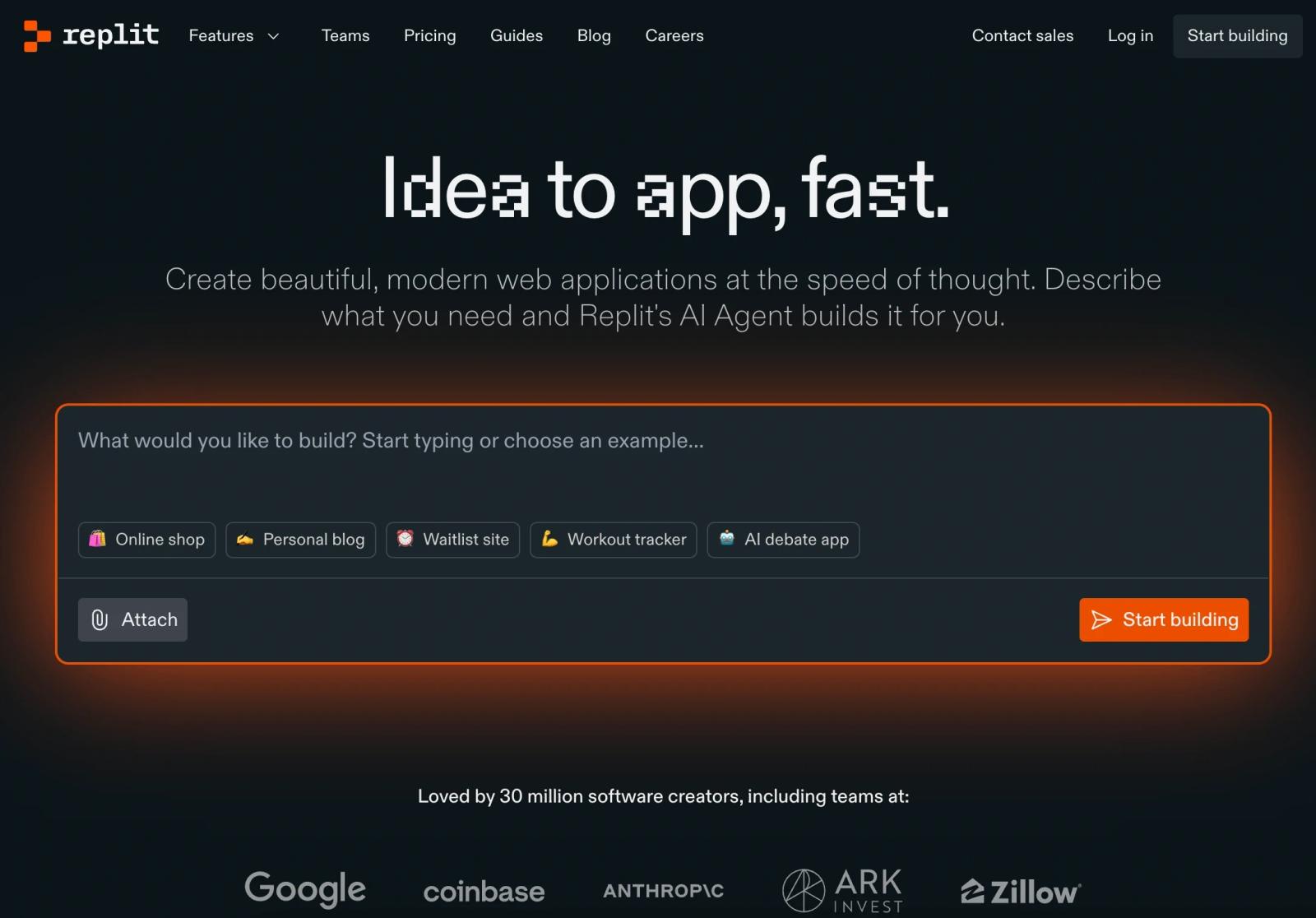
Replit is a browser-based platform where Replit Agent builds, hosts and deploys apps from prompts, on top of a full cloud IDE, so you can switch to the code whenever you want. Replit says builders at 85% of Fortune 500 companies use it, and it launched Agent 4 alongside its $9 billion funding round.
Price: free Starter plan; Core $20 a month, including $20 of model usage
Bolt
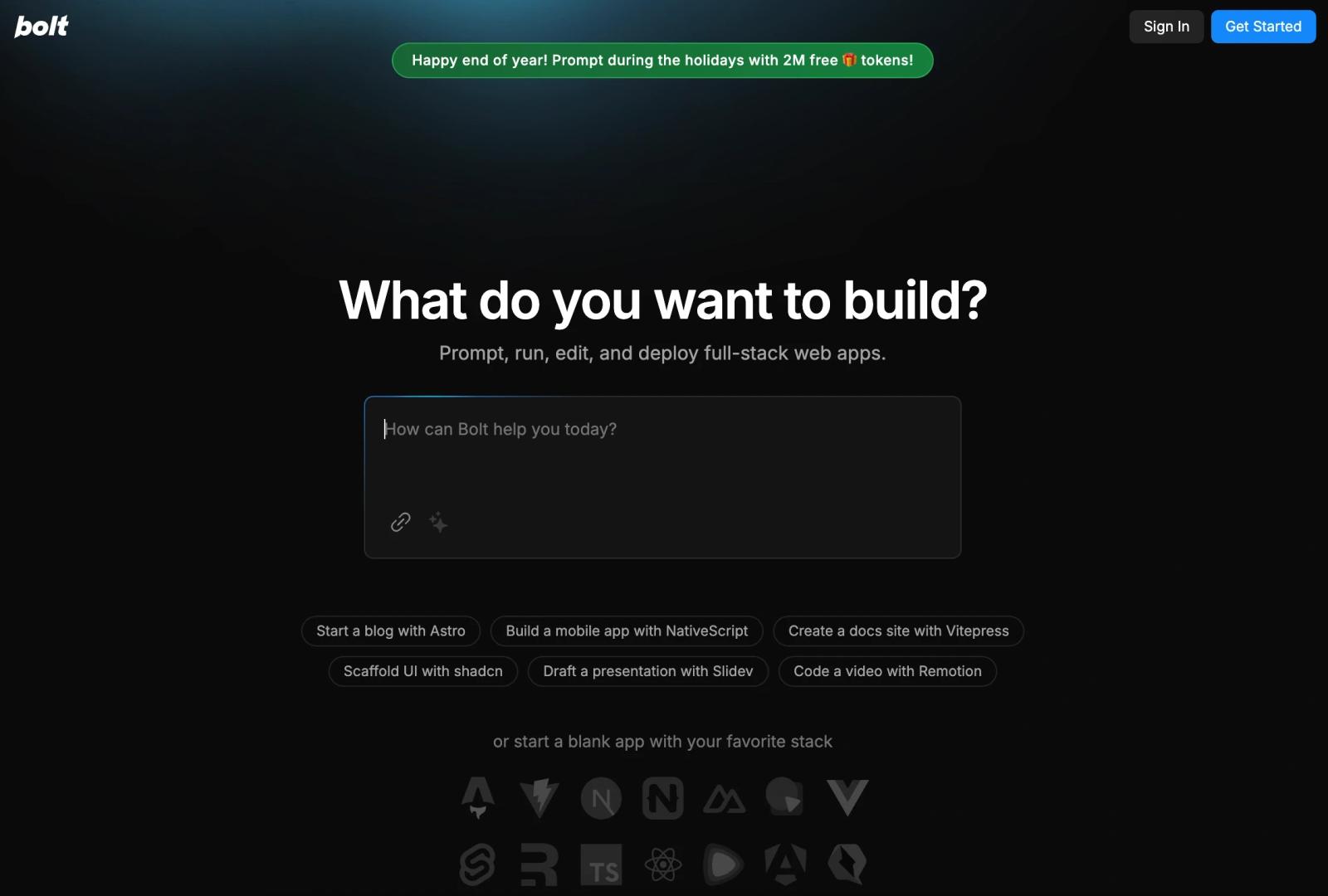
Bolt, from StackBlitz, writes, runs and deploys full-stack web and Expo mobile apps right in the browser, with hosting and a database built in. Bolt v2 added third-party coding agents such as Claude Code and Codex. Bloomberg reported StackBlitz's valuation at about $700 million in January 2025.
Price: free 1 million tokens a month; Pro $25 a month for 10 million tokens, and unused tokens roll over
v0
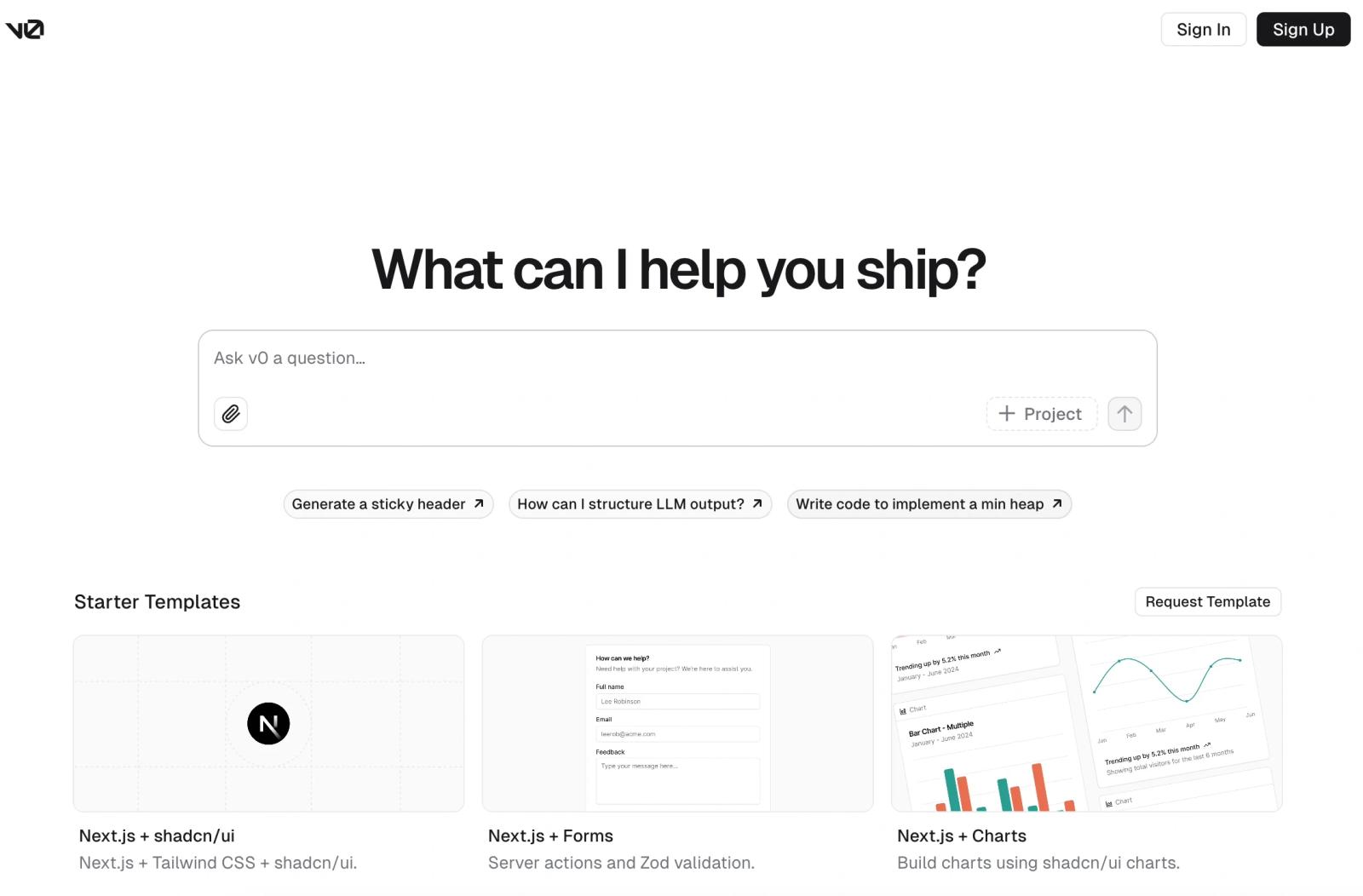
v0 is Vercel's app builder for React and Next.js. Vercel relaunched it in February 2026 for production work: it can import an existing GitHub repo, opens pull requests and deploys to Vercel in one click. More than 4 million people have used it.
Price: free 7 messages a day; Plus $30 per user a month
Base44
Base44 turns a chat description into a working web app with a built-in database, login and hosting, which makes it popular for internal tools. Founder Maor Shlomo sold it to Wix in June 2025, and in mid-2026 it launched Base1, its own model.
Price: free 25 message credits a month; Starter $20 a month
Emergent
Emergent uses autonomous agents that plan, write, test and deploy full-stack web and mobile apps from a plain-language prompt. It reached $100 million in annual recurring revenue eight months after launch and raised $130 million at a $1.5 billion valuation in July 2026.
Price: free 10 credits a month; Standard $20 a month
Same
Same builds and deploys Next.js web apps from a prompt. It launched in March 2025 as a tool for cloning existing websites and says more than 600,000 builders use it.
Price: free 500,000 tokens a month; Basic $10 a month
Leap
Leap, from the makers of the Encore backend framework, is aimed at technical founders: it builds full-stack apps with real APIs and databases and deploys them to your own AWS or Google Cloud account.
Price: free 15 credits a month; Pro $30 a month
Atoms
Atoms, formerly MGX, is a multi-agent "AI team" with a product manager, engineer and other roles that builds websites and apps from one prompt. It comes from the makers of MetaGPT and raised $31 million led by Ant Group and Cathay Innovation.
Price: free daily credits; Pro from $20 a month
Softgen
Softgen plans and builds full-stack Next.js apps with Supabase, Stripe and GitHub export. It is now run by Arising Ventures, a company that buys and operates software businesses.
Price: free trial credits; Starter $25 a month
Shipper
Shipper is a no-code builder for web apps, landing pages, Chrome extensions and chatbots, with an AI advisor that reviews your project. Its company is registered in Dubai and has no announced funding.
Price: free daily credits; Pro from $25 per user a month
Runable
Runable is a general-purpose AI agent for small businesses that builds websites, apps, slides and videos, and now also runs ads, social posts and SEO. It raised a $21 million Series A in August 2026 and reports about 1.7 million registered users.
Price: free daily credits; Pro $20 a month
Vibe coding tools for mobile apps
Mobile app builders add the hard part of shipping: native code, test builds, and submitting to the App Store and Google Play.
Rork
Rork builds native iOS apps in Swift (Rork Max) and cross-platform React Native apps from prompts, and helps publish them. It raised a $15 million seed in April 2026 and says the Rork Max launch doubled its annual revenue within two weeks.
Price: free design-mode credits; Pro $20 a month; Rork Max from $200
Newly
Newly, from Stockholm, turns a description into native iOS and Android apps built with React Native and handles TestFlight, App Store and Google Play publishing for you.
Price: Apex $25 a month; no free plan
Bloom
Bloom, a Y Combinator company from Zurich, builds cross-platform mobile apps from prompts, previews them on your phone in seconds and sets up the backend. Android users can build straight from their phone in early access.
Price: Starter $20 a month
Superapp
Superapp builds native Swift apps for iPhone, iPad, Apple Watch and Mac and helps ship them to the App Store. The Ukrainian team raised a $1.6 million pre-seed in March 2026.
Price: free starter credits; Pro $25 a month
Anything
Anything, formerly Create.xyz, builds web and iOS apps with a database, payments and App Store submission built in. Apple briefly removed it from the App Store in March 2026.
Price: building needs a paid plan; Pro from $24 a month
Vibe coding for designers and product teams
Figma Make
Figma Make turns a text prompt or an existing Figma design into a working, code-backed prototype or web app you can publish. About 60% of Figma's paying customers with more than $100,000 in annual spend used it every week in early 2026.
Price: free with daily AI credits; included in a Full seat from $16 a month billed yearly
Magic Patterns
Magic Patterns is a prototyping workspace where product teams describe a feature and get interactive prototypes built from their own design system. More than 1,500 product teams use it.
Price: free credits; Starter $20 per seat a month
Anima
Anima turns Figma designs, screenshots or cloned websites into React or HTML code and has an AI playground for building apps from prompts. IBM made a strategic investment in it in February 2026.
Price: free plan; Enterprise from $500 a month
Two newer options: Prototyper is a canvas where designers and coding agents build clickable React prototypes together, and Wonder relaunched in October 2026 as a canvas where you and agents such as Claude Code design and code on the running app.
Vibe coding for companies and the desktop
SolveAI
SolveAI, from London, lets employees build full-stack internal apps by chatting with an AI, running on the company's own infrastructure and connected to systems such as Salesforce, SAP and ServiceNow. It came out of stealth in February 2026 with $50 million from GV and Accel.
Price: enterprise sales only
Glaze
Glaze, from Raycast, builds native Mac apps from a chat. The apps run locally, work offline and can be shared through a public or team app store. It opened to everyone in July 2026.
Price: free with your own Claude subscription or 50 welcome credits; Pro $10 a month
Vibe coding with developer tools
Many developers vibe code too, just with tools that work on a real codebase: Cursor, Claude Code, OpenAI Codex and Google Antigravity. They need a computer and some setup, but the code is yours from the first line. We rank them in our guide to the best AI coding agents.
Before you vibe code: what to watch
Credits run out. Every prompt costs credits or tokens, and fixing a stubborn bug can take many prompts. Check the monthly allowance, and whether unused credits roll over (Bolt's do).
Know where the code lives. Some tools let you export to GitHub or deploy to your own cloud (v0, Leap, Softgen); others keep the app on their hosting.
Review before real users. Generated apps can ship with bugs and security holes. Before you take payments or personal data, have a developer or an AI code review tool check the code.
App stores have rules. Apple's March 2026 crackdown briefly removed Anything from the App Store, so check the store guidelines before you build a business on a vibe-coded app.
Tools change fast. In the past year Wix bought Base44, Rebolt left app building for aircraft maintenance, Wabi became an AI messenger, and Codev now only hosts apps that your own agent builds.
FAQ
What is vibe coding? Building software by describing it to an AI in plain language and accepting the code it writes, often without reading it. You steer by testing the result and asking for changes.
Who coined the term vibe coding? Andrej Karpathy, the former Tesla AI director and OpenAI co-founder, in a post in February 2025.
What is the best vibe coding tool? For web apps, Lovable is the most popular, with more than $600 million in annualized revenue. Replit suits people who want hosting and an IDE in one place, v0 and Bolt suit people who want to keep the code, and Rork suits mobile apps.
Are there free vibe coding tools? Most have free plans with small daily or monthly credits: Lovable, Bolt (1 million tokens a month), v0 (7 messages a day), Base44, Emergent, Replit and Figma Make. Building anything real usually needs a paid plan, from about $20 a month.
Which vibe coding tools build mobile apps? Rork, Newly, Bloom, Superapp and Anything are made for mobile apps. Bolt and Emergent can build them too.
Can you publish a vibe-coded app to the App Store? Yes. Newly handles TestFlight, App Store and Google Play publishing, and Rork, Superapp and Anything help with submission. Apple's review still applies: in March 2026 it briefly removed Anything under guideline 2.5.2.
Is vibe coding good enough for production apps? For prototypes, internal tools and simple apps, often yes. For apps that handle payments, personal data or many users, have the code reviewed and tested first.
What is the difference between vibe coding and agentic coding? Vibe coding is building an app by describing it, usually without touching the code. Agentic coding is developers handing tasks to AI coding agents and reviewing the code; see our AI coding agents guide.
Do I need to know how to code to vibe code? No. The app builders on this page are made for non-developers, though knowing some code helps you debug and judge what the AI produced.
How this list was built
The list: the app builders among the companies tagged "AI Coding Agent" in LeadWave's database. The developer tools from the same tag are in our AI coding agents guide. Rebolt and Wabi are left out because they no longer build apps, and Codev because it now only hosts apps built by your own agent.
The facts: checked on November 1, 2026 against each company's site, pricing page or announcements, or a major news outlet.
Prices: the cheapest paid monthly plan, before tax. Credit and token allowances change often, so check the pricing page before you buy.
Selling to AI companies?
LeadWave's list of AI companies covers 9,000 AI companies with CEO details, and our list of coding SaaS companies covers 1,179 companies that build software for developers.
About this list
Compiled by LeadWave from company announcements and pricing pages, checked November 1, 2026.