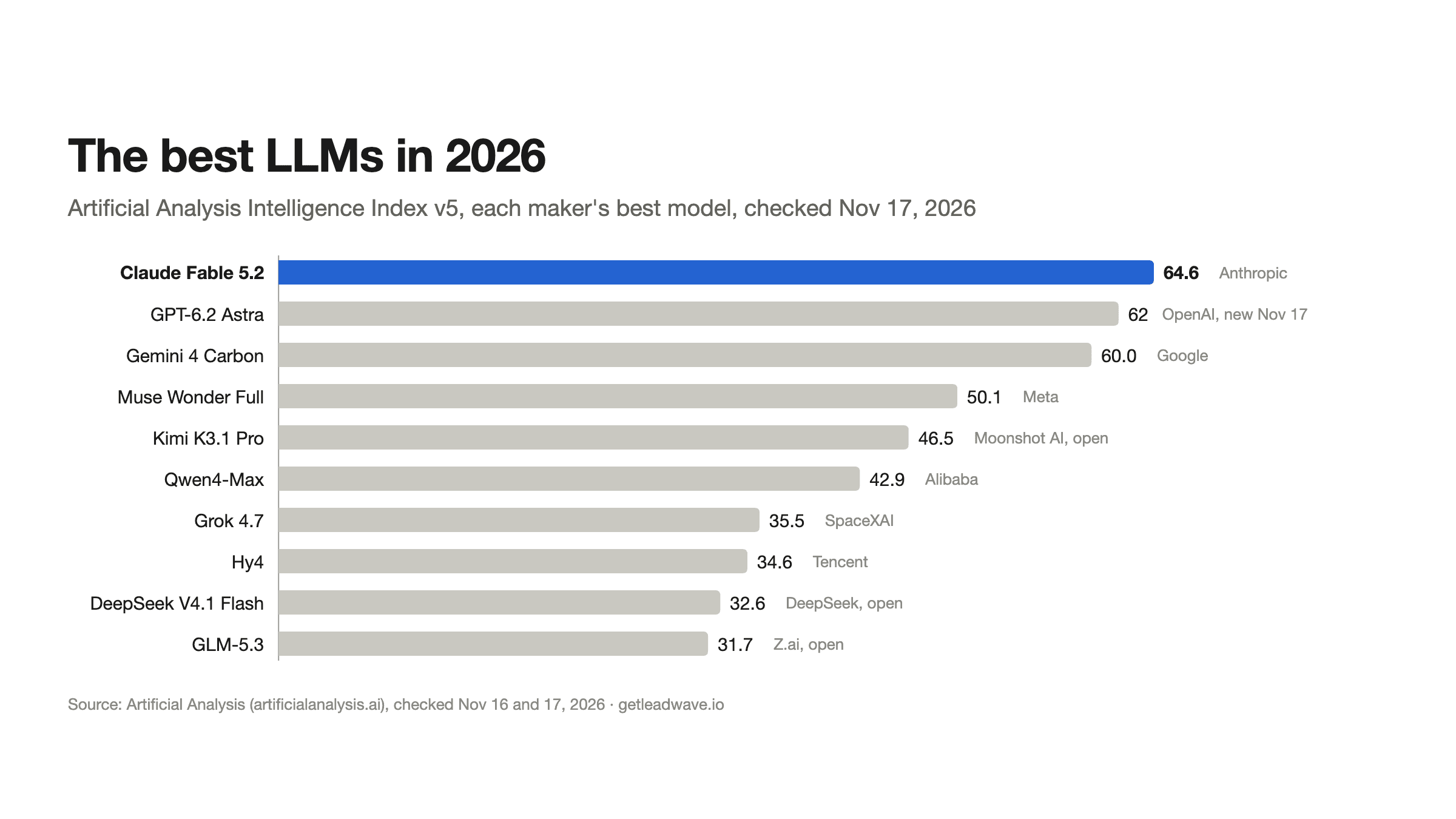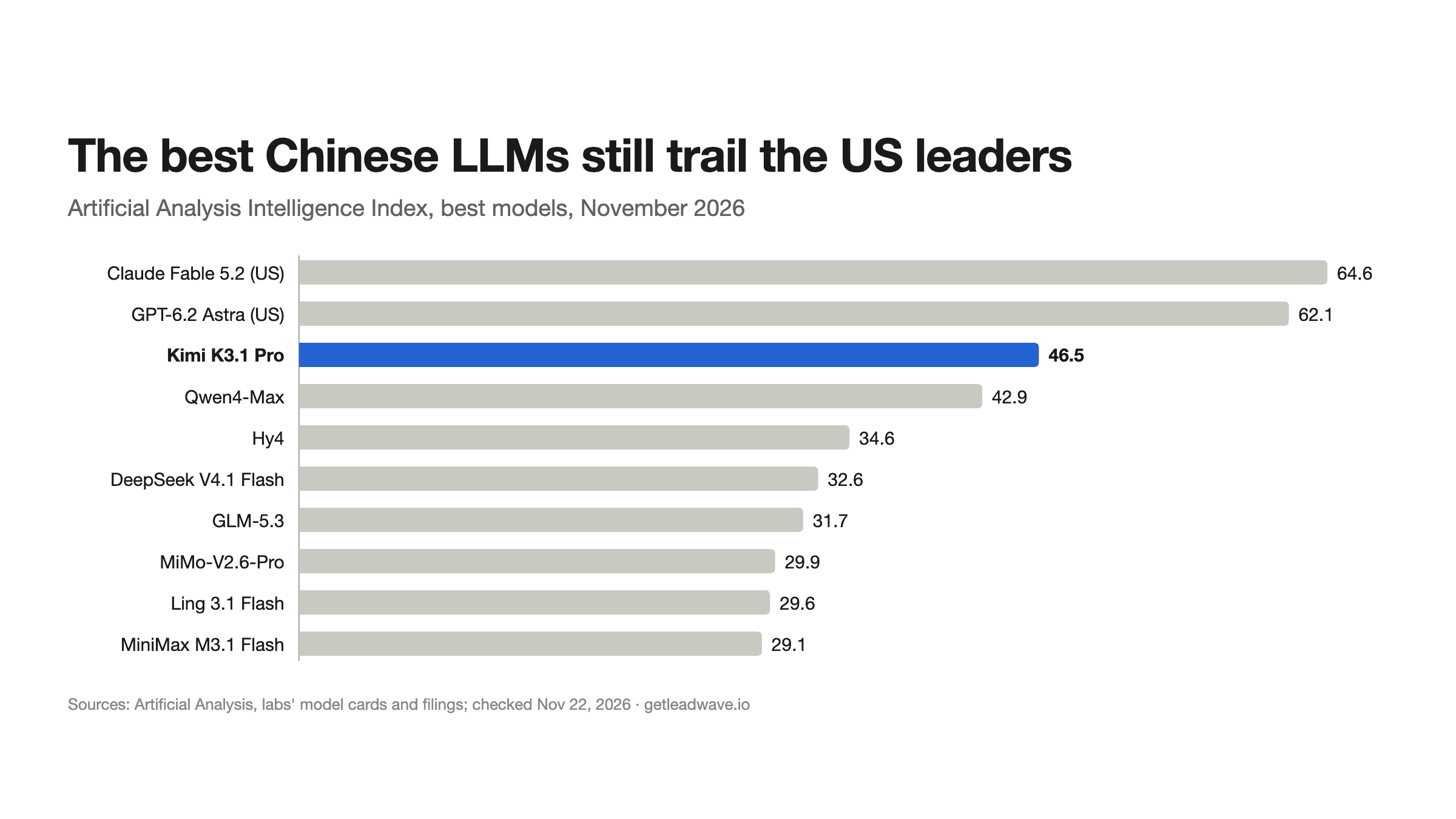
The leading Chinese AI labs in 2026 are Moonshot AI, whose Kimi K3.1 Pro is the best Chinese LLM on the Artificial Analysis Intelligence Index at 46.5, followed by Alibaba Qwen (42.9), Tencent (34.6), DeepSeek (32.6) and Z.ai (31.7). A Chinese AI lab is an organisation based in China or Hong Kong that trains or builds its own AI models.
This list covers 69 of them, with each lab's main model, license, value and one thing most lists skip: whether the lab really trains its own models or builds on someone else's. 28 of the 69 build at least some models on Alibaba's Qwen or Wan.
Top 10 Chinese AI labs in 2026
Ranked by the score of each lab's best model on the Artificial Analysis Intelligence Index, read November 22, 2026.
# | Lab | HQ | Best model | Score | Why it matters |
|---|---|---|---|---|---|
1 | Moonshot AI | Beijing | Kimi K3.1 Pro | 46.5 | The best open-weight model on the index |
2 | Alibaba Qwen | Hangzhou | Qwen4-Max | 42.9 | Best closed Chinese model; Qwen is the base of many others |
3 | Tencent Hunyuan | Shenzhen | Hy4 | 34.6 | Second-best open-weight model |
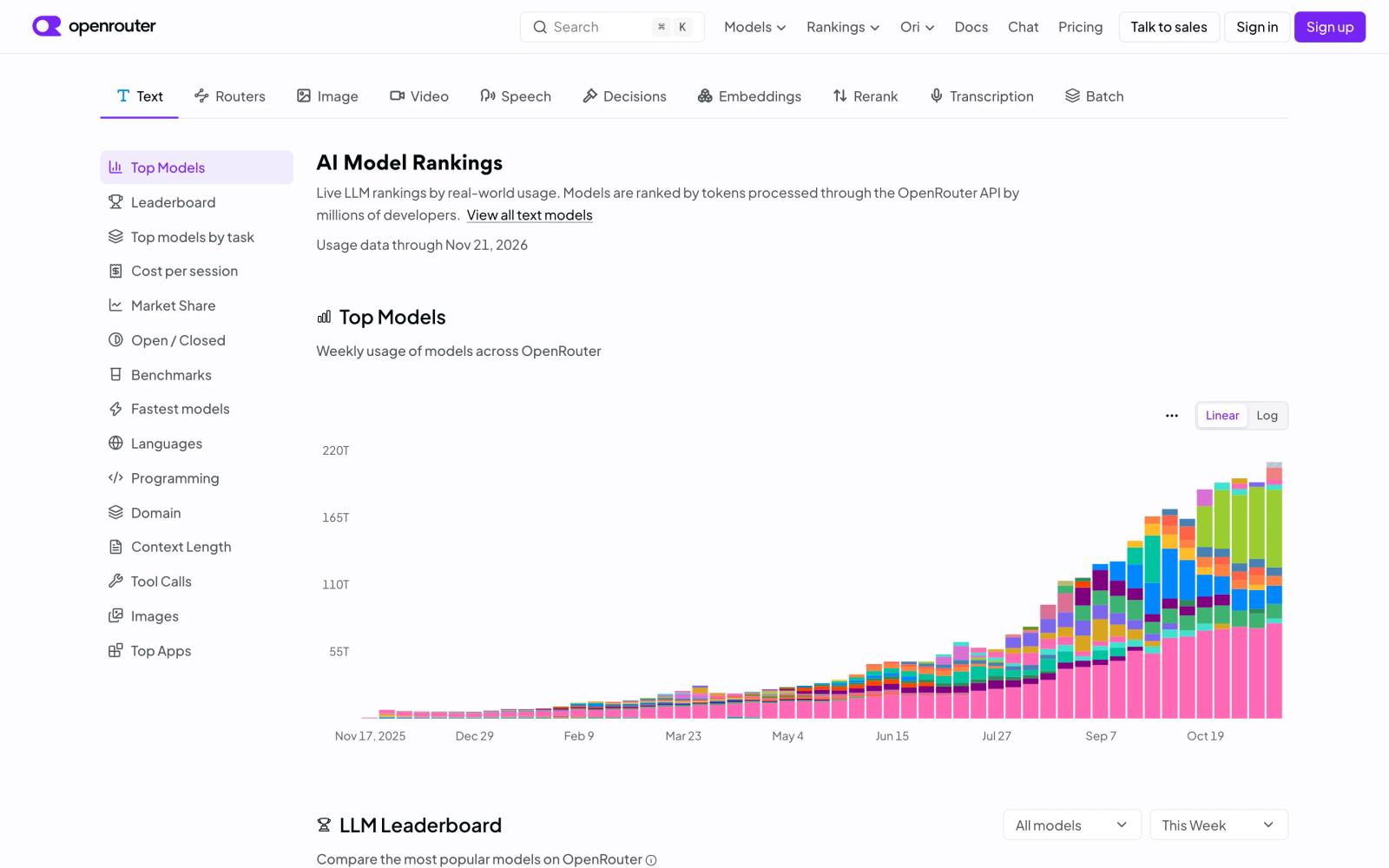
4 | DeepSeek | Hangzhou | DeepSeek V4.1 Flash | 32.6 | Largest share of OpenRouter's text requests |
5 | Z.ai (Zhipu) | Beijing | GLM-5.3 | 31.7 | Listed in Hong Kong; on the US Entity List |
6 | Xiaomi MiMo | Beijing | MiMo-V2.6-Pro | 29.9 | A 1T open model under MIT |
7 | Ant Group | Hangzhou | Ling 3.1 Flash | 29.6 | A 560B open model under MIT |
8 | MiniMax | Shanghai | MiniMax M3.1 Flash | 29.1 | Low-priced open model; listed in Hong Kong |
9 | StepFun | Shanghai | Step 5 Preview | 28.5 | A 600B open model |
10 | JD JoyAI | Beijing | JoyAI-VL-Preview | 28.0 | New closed vision model |
ByteDance, Meituan and Baidu aren't ranked here because their newest flagships don't have an index score yet. They're in the model table below.
Key numbers
69 labs: 12 independent LLM startups, 16 big tech units, 7 listed AI and state-owned groups, 16 public and university labs, and 18 in video, robotics and science.
34 are in Beijing, followed by Shenzhen (10), Shanghai (8) and Hangzhou (7).
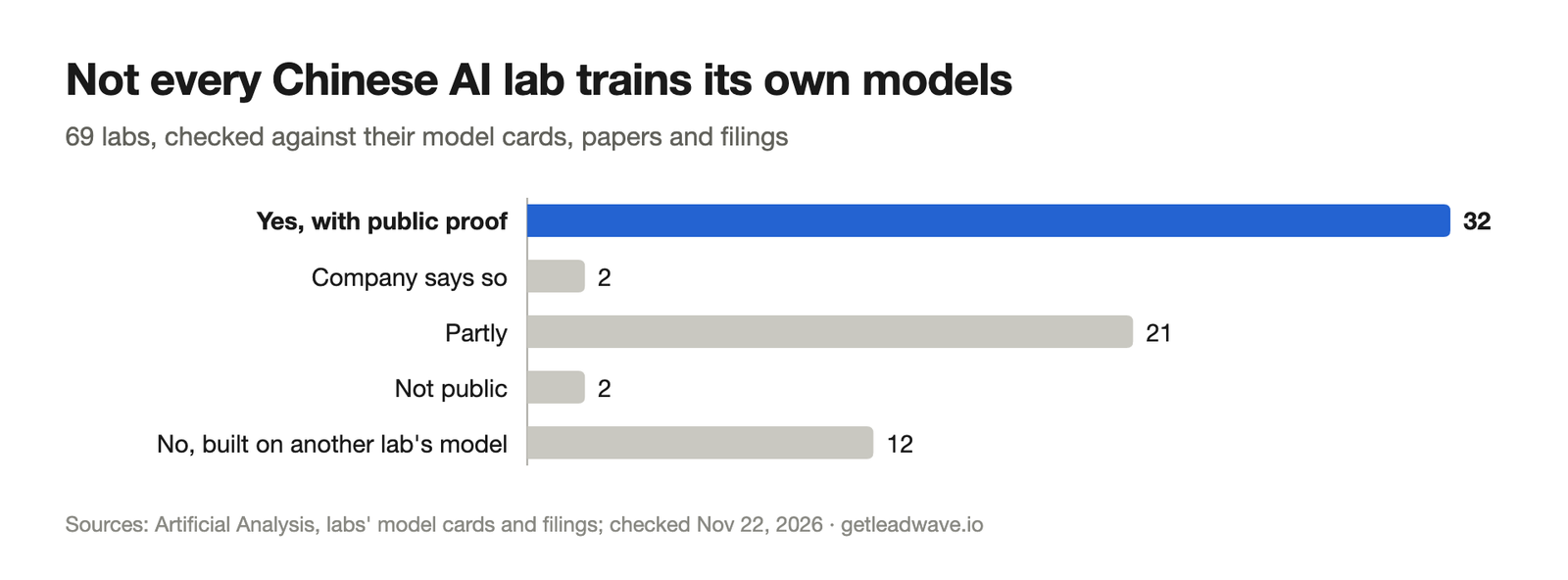
32 labs show public proof that they train their own models. 21 do so only partly, and 12 build on another lab's model.
The gap to the US: Kimi K3.1 Pro scores 46.5, against 64.6 for the leader, Claude Fable 5.2.
41% of Hugging Face model downloads over the past year were Chinese models, more than any other country (March 2026).
8 of the top 10 models on OpenRouter by weekly tokens are Chinese (week to November 21).
Best Chinese LLMs, ranked
Scores are from the Artificial Analysis Intelligence Index. Arena is the model's rank on the Arena text leaderboard. Prices are per million input and output tokens on the lab's own API where it publishes them; DeepSeek's are peak rates, and off-peak is half.
# | Model | Lab | Score | Arena | Price (in / out) | Access |
|---|---|---|---|---|---|---|
1 | Moonshot AI | 46.5 | #29 | $2.00 / $10.00 | Open, custom | |
2 | Alibaba | 42.9 | – | $1.50 / $4.50 | Closed | |
3 | Tencent | 34.6 | – | $0.83 / $2.50 | Open, custom | |
4 | DeepSeek | 32.6 | – | $0.30 / $1.20 | Open, MIT | |
5 | Z.ai | 31.7 | #30 | $1.40 / $4.40 | Open, custom | |
6 | Xiaomi | 29.9 | #33 | $0.44 / $0.87 | Open, MIT | |
7 | Ant Group | 29.6 | – | $0.30 / $0.90 | Open, MIT | |
8 | MiniMax | 29.1 | – | $0.15 / $0.60 | Open, custom | |
9 | Alibaba | 28.6 | – | $0.15 / $0.47 | Open, custom | |
10 | StepFun | 28.5 | #88 | $1.00 / $2.70 | Open, custom | |
11 | JD | 28.0 | – | Not listed | Closed | |
12 | Z.ai | 27.8 | #39 | $0.15 / $0.50 | Open, MIT | |
13 | Xiaomi | 26.7 | #92 | $0.14 / $0.28 | Open, MIT | |
14 | DeepSeek | 23.1 | #65 | $1.32 / $3.96 | Open, MIT | |
– | Moonshot AI | Not scored | #22 | $3.00 / $15.00 | Open, custom | |
– | Alibaba | Not scored | #26 | $2.00 / $6.00 | Open, custom | |
– | Baidu | Not scored | #57 | ¥4 / ¥18 | Closed | |
– | Meituan | Not scored | – | Not listed | Open, MIT | |
– | ByteDance | Not scored | – | $0.50 / $2.50 | Closed |
The two leaderboards disagree. Artificial Analysis runs benchmarks, and Arena ranks models by human votes: Kimi K3 is the best Chinese model there at #22, and no Chinese model is in its top 20. For how these compare with every other model, see our guide to the best LLMs.
How close are Chinese models to the US?
It depends on the measure. On the Intelligence Index, the best Chinese model trails the leader by about 18 points. Stanford's 2026 AI Index called the gap "effectively closed" on the Arena leaderboard in March 2026, when the top US model led by 2.7%.
Where China clearly leads is open models. Kimi K3.1 Pro, Hy4 and DeepSeek V4.1 Flash are the top three open-weight models on the index, and 50 of the 69 labs here release their main model with open weights. Private funding runs the other way: $285.9B in the US in 2025 against $12.4B in China, although that figure doesn't capture state-directed money.
Do Chinese AI labs train their own models?
Pretraining is the expensive first stage, where a model learns from trillions of tokens of raw data. Fine-tuning starts from a model someone else has already pretrained. We checked each lab's model cards and papers and gave it one label:
Yes: a model card, paper or technical post shows it trained its own model.
Company says: it says so, but publishes little proof.
Partly: some models are its own, or it continues training from another lab's weights.
Not public: nothing shows how its main models were trained.
No: its published models are built on another lab's model.
Alibaba is the hidden base of Chinese AI. 28 of the 69 labs build at least some models on Qwen or Wan, including Kuaishou, Bilibili, SenseTime, Unitree and UBTech. State labs build on commercial models too: CASIA's ZDTaichu 5.0 uses a Qwen3.5 backbone, and Shanghai AI Lab's new Atria Dawn is built on Z.ai's GLM-5.2. Two of the original "AI tigers" have also stepped back: Baichuan's recent open models start from Qwen, and 01.AI now fine-tunes other labs' models.
Independent Chinese LLM labs
China's "AI tigers" are the six startups that led its first LLM wave: Zhipu (Z.ai), Moonshot AI, MiniMax, StepFun, Baichuan and 01.AI. Their paths have split. Z.ai and MiniMax listed in Hong Kong in January 2026, and both now trade far below their peaks. Moonshot is reportedly valued near $50B and has reportedly filed for a Hong Kong IPO. DeepSeek, never one of the six, reportedly raised about $22B in two rounds this year.
Lab | HQ | Main model | Access | Trains its own? | Value or owner |
|---|---|---|---|---|---|
DeepSeek | Hangzhou | Open, MIT | Yes | About $75B pre-money (reported) | |
Moonshot AI | Beijing | Open, custom | Yes | About $50B (reported) | |
Z.ai (Zhipu) | Beijing | Open, custom | Yes | $19.8B market cap, HKEX: 2513 | |
MiniMax | Shanghai | Open, custom | Yes | $4.6B market cap, HKEX: 0100 | |
StepFun | Shanghai | Open, custom | Yes | $3B+ raised in 2026 (reported) | |
ModelBest | Beijing | Open, Apache 2.0 | Partly | $3B+ valuation (reported) | |
Naive AI | Beijing | Open, MIT | Partly | $1.42B valuation (reported) | |
RWKV | Shenzhen | Open, Apache 2.0 | Yes | Not disclosed | |
XVERSE | Shenzhen | Open, Apache 2.0 | Yes | Not disclosed | |
Baichuan | Beijing | Closed | No | $2.75B valuation (2024) | |
01.AI | Beijing | Closed | No | $1B valuation (2023) | |
Mind Lab | China | Open, MIT | No | $60M raised by its parent (reported) |
Big tech AI labs in China
Most of China's largest internet companies now train their own frontier-scale models and release many of them openly. Alibaba released Qwen4-Max on November 16 and has promised smaller open Qwen4 models. Meituan and Xiaomi are the surprise entrants, each with an open model above 1 trillion parameters under the MIT license.
Lab | HQ | Main model | Access | Trains its own? | Value or owner |
|---|---|---|---|---|---|
Alibaba Qwen | Hangzhou | Closed; Qwen3.8 is open | Yes | Alibaba, NYSE: BABA | |
ByteDance Seed | Beijing | Closed | Yes | ByteDance, about $550B (reported) | |
Tencent Hunyuan | Shenzhen | Open, custom | Yes | Tencent, HKEX: 0700 | |
Baidu ERNIE | Beijing | Open, custom | Yes | Baidu, NASDAQ: BIDU | |
Huawei Pangu | Shenzhen | Open, custom | Yes | Huawei, private | |
Xiaomi MiMo | Beijing | Open, MIT | Yes | Xiaomi, HKEX: 1810 | |
Meituan LongCat | Beijing | Open, MIT | Yes | Meituan, HKEX: 3690 | |
Ant Group | Hangzhou | Open, MIT | Yes | Ant Group, private | |
RedNote (Dots) | Shanghai | Open, Apache 2.0 | Yes | Xiaohongshu, up to $50B (reported) | |
Kuaishou KAT | Beijing | Open, Apache 2.0 | Partly | Kuaishou, HKEX: 1024 | |
JD JoyAI | Beijing | Open, modified MIT | Partly | JD.com, NASDAQ: JD | |
Bilibili Index | Shanghai | Open, Apache 2.0 | Partly | Bilibili, NASDAQ: BILI | |
NetEase Youdao | Hangzhou | Open, Apache 2.0 | No | NetEase, NASDAQ: NTES | |
Kunlun Skywork | China | Open, MIT | Partly | Kunlun Tech, SZSE: 300418 | |
vivo BlueLM | Dongguan | Closed | Yes | vivo, private | |
OPPO | Dongguan | Open, Apache 2.0 | Partly | OPPO, private |
Listed AI companies and state-owned groups
These are the older names in Chinese AI and the three state telecoms. iFlytek says its Spark X2.6 was built on fully domestic computing, and China Telecom trains TeleChat3 on Huawei Ascend chips.
Lab | HQ | Main model | Access | Trains its own? | Value or owner |
|---|---|---|---|---|---|
SenseTime | Hong Kong | Open, Apache 2.0 | Partly | HKEX: 0020 | |
iFlytek | Hefei | Closed; 4B version is open | Yes | SZSE: 002230 | |
360 | Beijing | Open, Apache 2.0 | Partly | SSE: 601360 | |
Inspur (IEIT) | Jinan | Open, custom | Yes | SZSE: 000977 | |
China Telecom | Beijing | Open | Yes | State-owned, SSE: 601728 | |
China Mobile | Beijing | Closed | Yes | State-owned, HKEX: 0941 | |
China Unicom | Beijing | Open | Not public | State-owned, HKEX: 0762 |
Public and university AI labs in China
Public labs seeded much of the industry: GLM began at Tsinghua. Their newest models often build on commercial ones, while the clearest from-scratch public models are small, such as Kaiyuan-2B, YuLan-Mini and daVinci-origin. Our guide to sovereign AI models compares these efforts with other countries.
Lab | HQ | Main model | Access | Trains its own? | Released |
|---|---|---|---|---|---|
Shanghai AI Lab | Shanghai | Open, Apache 2.0 | Partly | Sep 2026 | |
Tsinghua KEG | Beijing | Mixed | Yes | Aug 2022 | |
BAAI | Beijing | Open, Apache 2.0 | Yes | Oct 2025 | |
Zhejiang Lab | Hangzhou | Open, Apache 2.0 | Yes | Dec 2025 | |
Shanghai Jiao Tong GAIR | Shanghai | Open, Apache 2.0 | Yes | Jan 2026 | |
Renmin University | Beijing | Open, MIT | Yes | Dec 2024 | |
Peng Cheng Lab | Shenzhen | Open, Apache 2.0 | Yes | Dec 2025 | |
Harbin Institute of Technology | Harbin | Open, Apache 2.0 | Partly | Sep 2024 | |
Fudan OpenMOSS | Shanghai | Open, Apache 2.0 | Partly | May 2026 | |
IDEA Research | Shenzhen | Closed | Partly | Nov 2024 | |
CAS ScienceOne | Beijing | Open, Apache 2.0 | No | Jul 2026 | |
CUHK-Shenzhen | Shenzhen | Open, Apache 2.0 | No | Sep 2026 | |
CASIA | Beijing | Open, Apache 2.0 | No | Sep 2026 | |
BIGAI | Beijing | Open, Apache 2.0 | No | Nov 2026 | |
Peking University | Beijing | Open, MIT | No | Feb 2025 | |
HKGAI | Hong Kong | No public weights | No | Jun 2026 |
Chinese video, image and 3D AI labs
Kling is the largest: its parent Kuaishou's filing shows a $15B pre-money value for the business, and it closed about $3B from outside investors in October. ByteDance's Seedance and Seedream, Alibaba's Wan, Tencent's Hunyuan3D and MiniMax's Hailuo also compete here.
Lab | HQ | Main model | Access | Trains its own? | Value or owner |
|---|---|---|---|---|---|
Kling AI | Beijing | Closed | Yes | About $18B valuation (reported) | |
Sand.ai | Beijing | Open, Apache 2.0 | Yes | $1B+ valuation | |
VAST (Tripo) | Beijing | Mixed | Partly | $1B+ valuation | |
Shengshu (Vidu) | Beijing | Closed | Company says | $380M raised in 2026 (reported) | |
HiDream.ai | Beijing | Open, MIT | Yes | $314M raised in 2026 | |
Math Magic (Hi3D) | Beijing | Closed | Company says | Nearly $50M raised | |
Manycore | Hangzhou | Open, non-commercial | No | $575M market cap, HKEX: 0068 |
Chinese robotics AI labs
Unitree is the standout: it listed in Shanghai in August and is now worth about $35.7B. Most robot models here are not trained from scratch. They add robot-action training on top of a vision-language model, most often Alibaba's Qwen.
Lab | HQ | Main model | Access | Trains its own? | Value or owner |
|---|---|---|---|---|---|
Unitree | Hangzhou | Open, Apache 2.0 | Partly | $35.7B market cap, SSE: 688836 | |
AgiBot | Shanghai | Not released yet | Partly | About $7.5B (reported) | |
UBTech | Shenzhen | Open, non-commercial | No | $3.7B market cap, HKEX: 9880 | |
Galbot | Beijing | Closed | Partly | $3B valuation | |
X Square Robot | Shenzhen | Open, Apache 2.0 | Partly | $2.8B valuation | |
Spirit AI | Beijing | Open, Apache 2.0 | Partly | $1.5B+ valuation | |
Dexmal | Beijing | Open, Gemma terms | Partly | $140M raised (reported) |
AI-for-science labs in China
Lab | HQ | Main model | Access | Trains its own? | Value or owner |
|---|---|---|---|---|---|
XtalPi | Shenzhen | Closed | Not public | $2.6B market cap, HKEX: 2228 | |
Insilico Medicine | Hong Kong | Mixed | Partly | $2.2B market cap, HKEX: 3696 | |
DP Technology | Beijing | Open, MIT | Yes | $114M Series C (reported) | |
BioMap | Beijing | Mixed | Yes | Hong Kong IPO filing (reported) |
Chinese AI labs by city
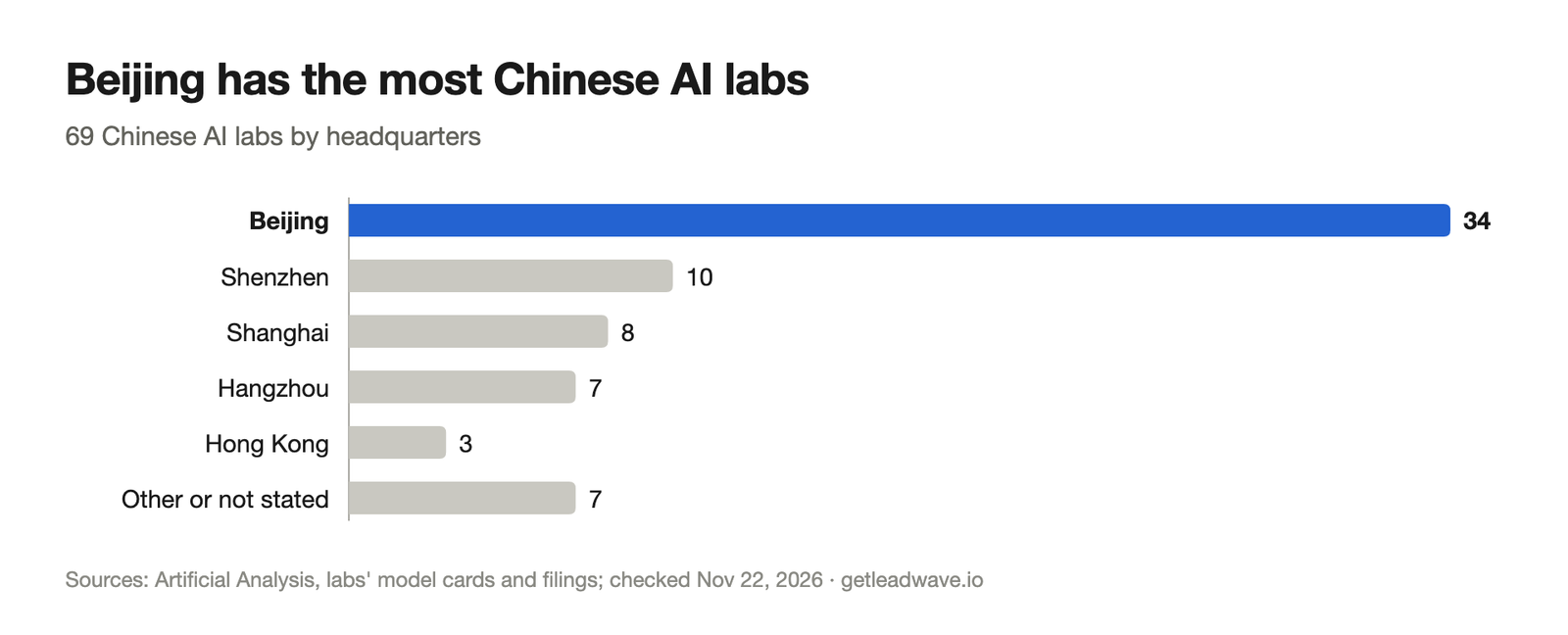
Beijing has the universities and most of the startups. Hangzhou is small on this list but holds Alibaba, DeepSeek, Ant Group and Unitree.
Are Chinese AI models safe to use?
It depends on how you run them. The main difference is between a lab's hosted app and open weights on your own hardware.
Hosted apps and APIs send your data to the lab. DeepSeek's privacy policy says it stores personal data in China, and inputs may train its models unless you opt out.
Open weights on your own servers keep prompts away from the lab. We found no evidence of weights sending data home.
Model risks stay either way. In a US government test, agents built on DeepSeek R1-0528 were 12 times more likely to follow malicious instructions than US frontier models. CrowdStrike found that DeepSeek-R1 wrote more vulnerable code when a prompt mentioned Tibet. Both tests cover 2025 models.
Bans mostly target DeepSeek's app on government devices, including in Australia, Taiwan, the Czech Republic and US agencies. Italy's data regulator also restricted it, and the app was blocked there.
US lists are not the same as a ban on using a model. The Entity List limits exports to Z.ai, BAAI, iFlytek, SenseTime and Huawei. The Pentagon's 1260H list, which includes Alibaba, Baidu, Tencent and Unitree, is a defense-contracting designation. DeepSeek, Moonshot and ByteDance are not on the Entity List.
Read the license. "Open" ranges from MIT to custom terms with revenue limits, and ERNIE 5.5 Flash Base excludes the EU, UK and South Korea.
FAQ
What is the best Chinese LLM?
Kimi K3.1 Pro from Moonshot AI, with 46.5 on the Artificial Analysis Intelligence Index. It's also the best open-weight model on that index. The best closed Chinese model is Alibaba's Qwen4-Max, at 42.9.
How many AI labs are there in China?
There's no official count. This list has 69 that train or build their own models, and 32 of them show public proof of training their own.
What are China's AI tigers?
Six LLM startups: Zhipu (Z.ai), Moonshot AI, MiniMax, StepFun, Baichuan and 01.AI. Some older lists swap in other names. DeepSeek isn't one of them.
Is DeepSeek still China's best AI lab?
Not on benchmarks. Its best model scores 32.6, fourth among Chinese labs. It's still the most used: DeepSeek had the largest share of text requests on OpenRouter in the week of November 9, at 31.8%.
Which Chinese AI models are open source?
DeepSeek, Xiaomi MiMo, Meituan LongCat, Ant's Ling and GLM-5.3-Flash use the MIT license. Kimi, GLM-5.3, Hy4, MiniMax and Step 5 publish their weights under custom licenses with commercial conditions. Qwen4-Max, Seed2.1 and Kling are closed.
Are Chinese AI models safe?
Running open weights on your own servers keeps your data away from the lab, while hosted apps send it to the lab, and for DeepSeek that means China. Model-level risks such as weak jailbreak resistance remain either way, so test them before using them for sensitive work.
Is DeepSeek banned in the US?
There's no nationwide ban for the public. US law bars the Defense Department from using it, with case-by-case waivers, and several agencies and states have blocked it on government devices.
Who are the biggest AI companies in China?
Among AI and robotics companies, DeepSeek (about $75B pre-money, reported) and Moonshot AI (about $50B, reported) are the most valuable private labs, and Unitree ($35.7B) and Z.ai ($19.8B) are the largest listed ones. Alibaba, ByteDance and Tencent are far larger as whole companies.
Selling to AI companies?
LeadWave's list of AI companies covers 9,000 AI companies with CEO details. See also our list of AI labs, the European AI labs and the best LLMs in 2026.
About this list
Compiled by LeadWave from each lab's model cards, technical reports, stock filings and funding announcements, plus Artificial Analysis and Arena, checked November 22, 2026. Market caps are from the November 20 close. Figures marked reported are press figures the company hasn't confirmed. We left out companies based outside China, such as Manus and PixVerse (Singapore) and Fish Audio (US).