Add-ons and Multiple SKUs: How SaaS Companies Grow Net Revenue Retention
Sell a second, third and eighth product to customers you already have. Filings from Datadog, CrowdStrike and Figma show how product count drives NRR.
Impact
High
Effort
High
Time to results
Quarters
Budget
Needs a budget
Team
Product, Engineering
Tools for this growth idea
StripeSell each add-on as its own price on the subscription
ChargebeeAdd-ons, bundles and upgrades without custom billing code
AmplitudeFind heavy users of a feature: the first buyers of its add-on
IntercomOffer the add-on in the app at the moment it's needed
Why add-ons move net revenue retention
Net revenue retention (NRR, also called net dollar retention) is this year's revenue from last year's customers, divided by what they paid last year. Expansion comes from four places: more seats, a higher tier, more usage, and new products. The first three are capped by the customer: they only have so many employees, one top tier and a usage curve that follows their own growth. New products aren't. Every product you add raises the ceiling on what one account can pay you.
Multi-product customers also churn less, because each extra product is another workflow to rip out. Datadog's trailing 12-month gross revenue retention stays in the mid-to-high 90s while its NRR sits around 120%.
That's the logic behind what Rippling's Parker Conrad calls the compound startup: a company that builds a range of products on one shared platform from the start, instead of a single point solution.
Four ways to package it
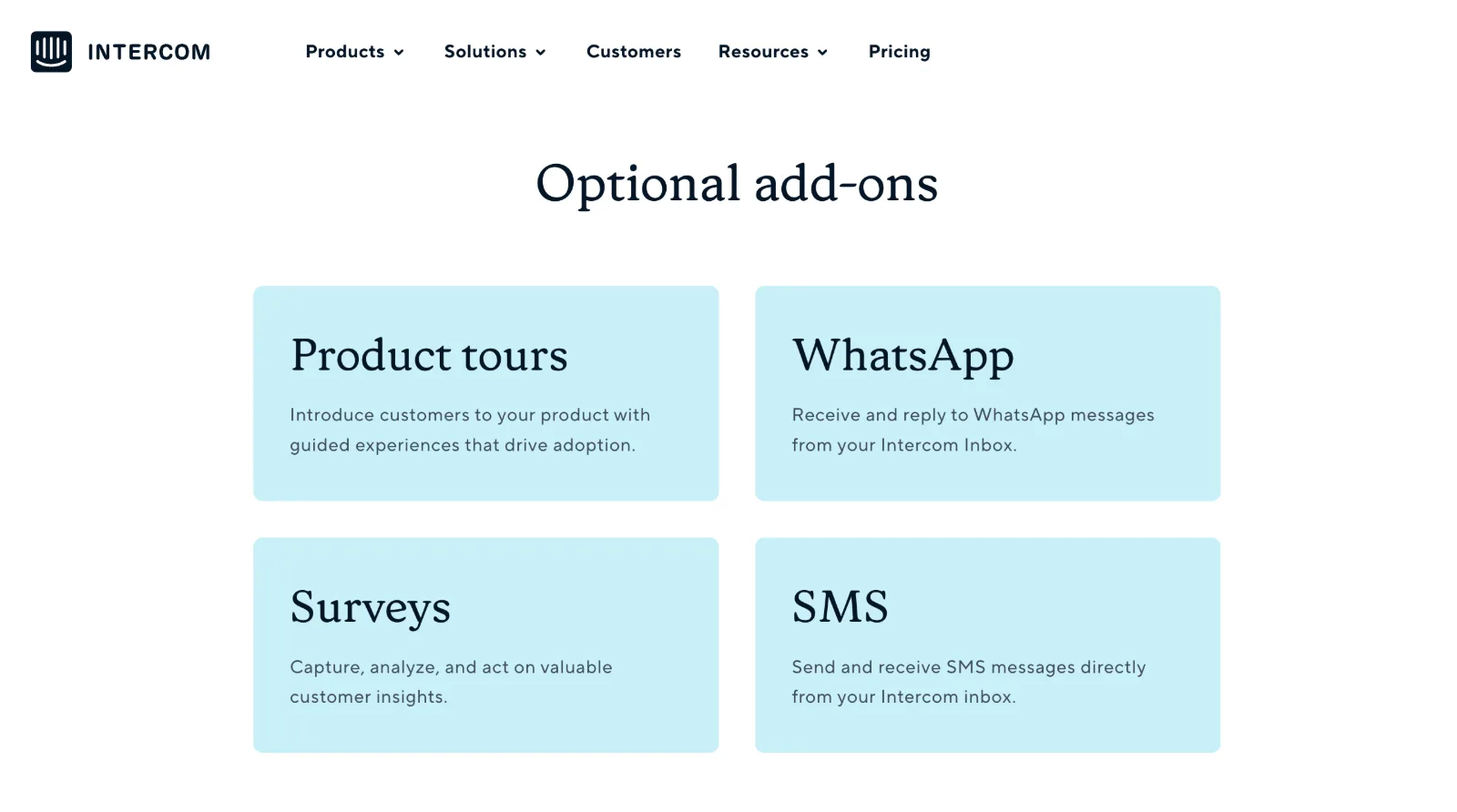
Add-ons sit on top of a plan. Intercom sells Copilot at $29 per agent per month (billed annually) and a Pro add-on at $100 a month, and charges for its Fin AI agent from $0.99 per outcome on every plan.
Separate products (SKUs) are priced on their own. Datadog prices each product (infrastructure, APM, logs, security…) separately, so a customer can start with one and add more without renegotiating.
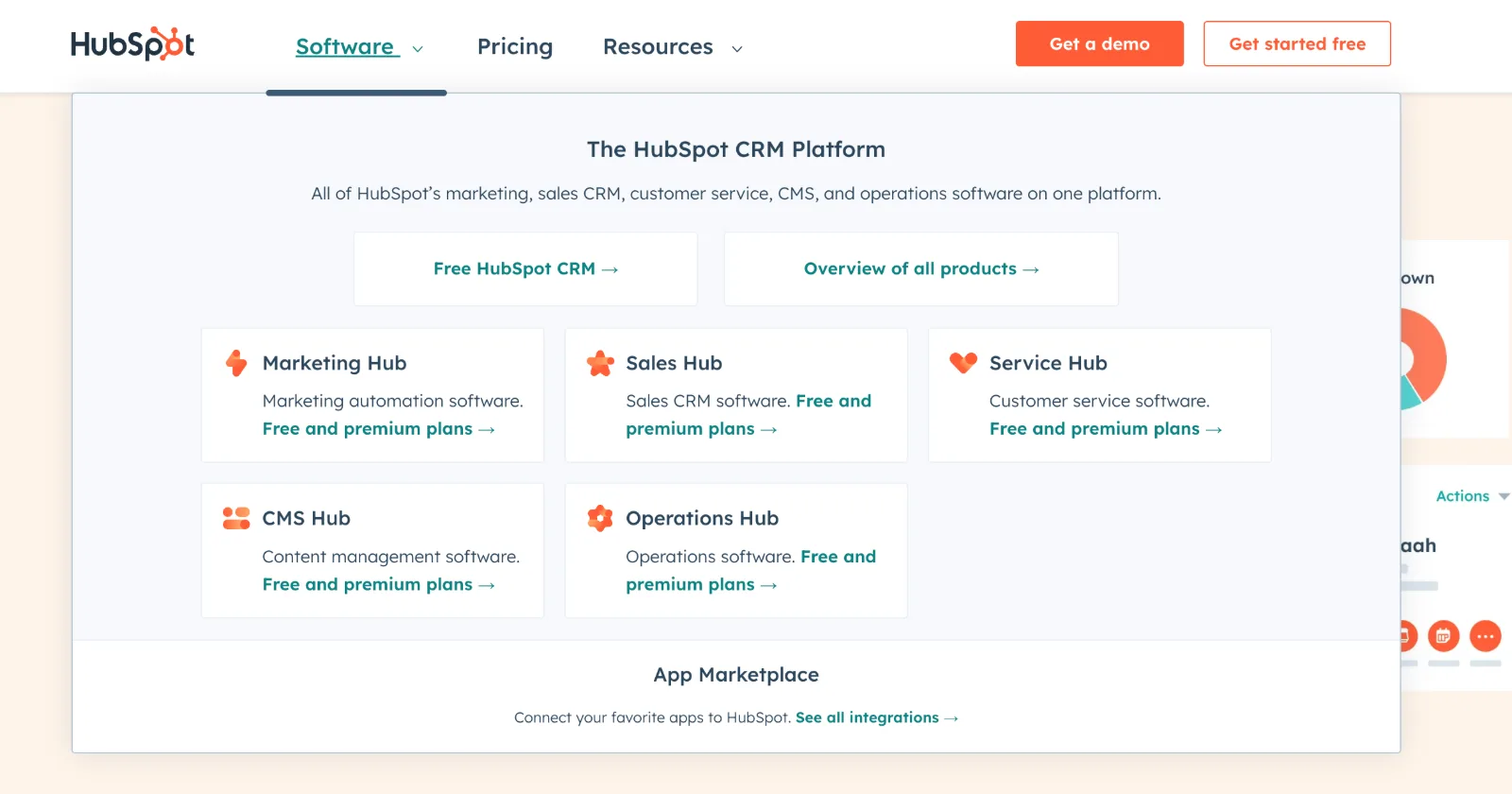
Bundles group products for one buyer. HubSpot sells Marketing, Sales and Service Hubs individually or together; Atlassian now sells Collections, such as Jira, Confluence, Loom and Rovo as the Teamwork Collection.
Platform credits let customers spend one commitment across modules. CrowdStrike's Falcon Flex lets customers consolidate multiple security modules under a single agreement, so trying a new module doesn't need a new contract.
Most companies use more than one. The question is which motion costs the customer the least effort to say yes to the next product.
What the numbers show
Public companies report multi-product adoption because investors read it as future NRR:
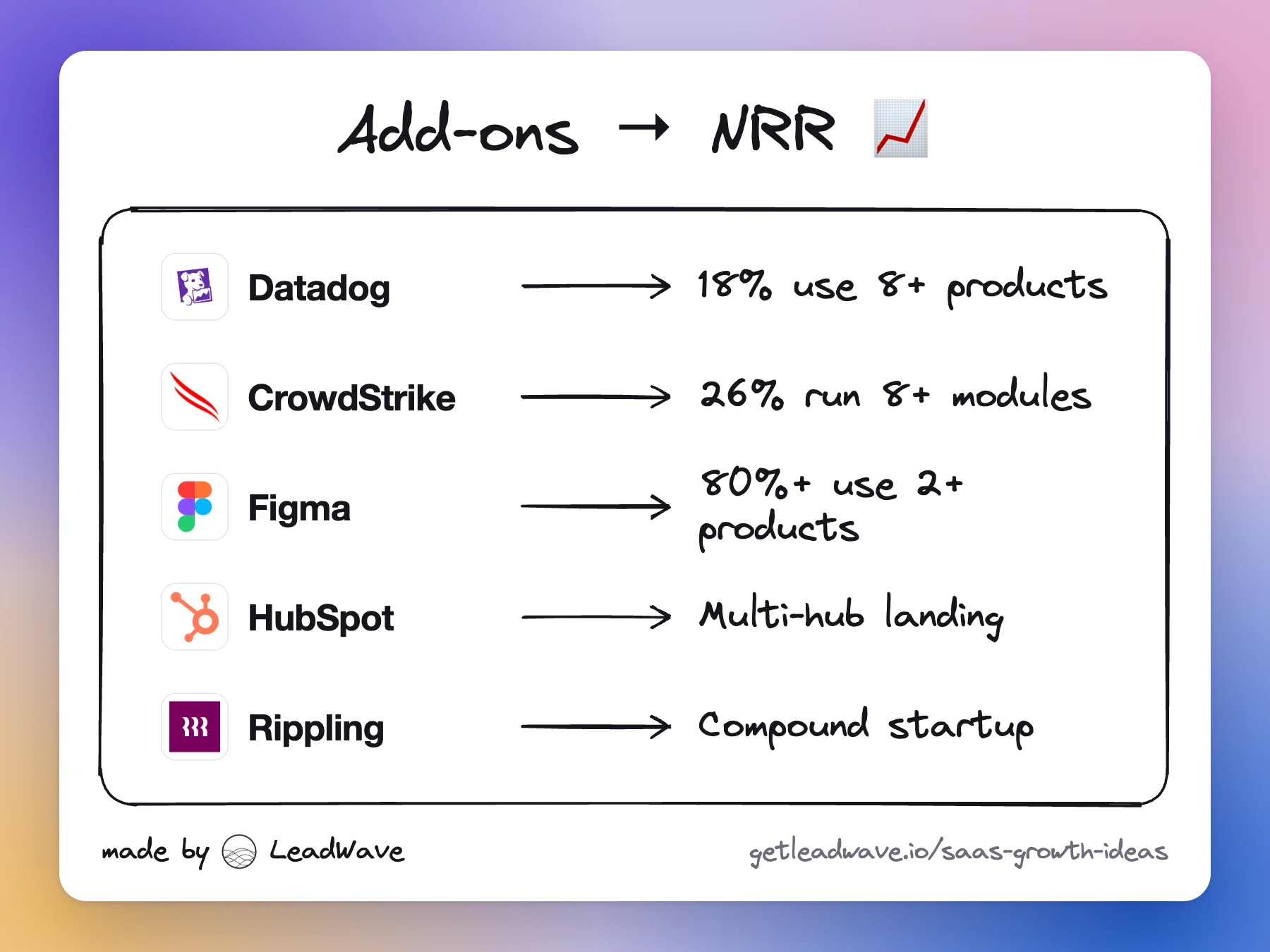
Datadog (Q4 2025): 84% of customers use 2+ products, 55% use 4+, 33% use 6+ and 18% use 8+, up from 12% a year earlier.
CrowdStrike (July 2026): 51%, 35% and 26% of subscription customers use six, seven and eight or more modules.
Figma (Q2 2025): more than 80% of customers use two or more products and two-thirds use three or more; NDR for customers above $10,000 ARR was 129%.
Workiva (Q1 2026): 75% of subscription revenue comes from customers with multiple solutions, up from 69%; NRR 112%.
Amplitude (Q1 2026): customers with 5+ products are 24% of ARR, up from 20% a quarter earlier; NDR 106%.
HubSpot (Q1 2026): 63% of new Pro Plus customers land with multiple hubs and 42% of the Pro Plus base by ARR owns four or more; NRR 103%.
The pattern: product count rises everywhere, but NRR doesn't follow automatically. Datadog and Figma combine high product counts with NRR well above 110%. HubSpot and Amplitude show the counter-case: rising multi-product adoption with NRR just above 100%, so cross-sell has to outrun churn and downgrades elsewhere in the base.
Choosing the next add-on
The second products that sell themselves share three traits:
Same buyer. The person who bought product one can approve product two. Datadog sells to the same engineering teams over and over; HubSpot's hubs all sell to go-to-market leaders.
Shared data. The second product is better because the first already exists. Rippling builds HR, IT and finance products on one employee record, so every product reads and updates the same data.
A job customers already patch together. Look at the integrations, exports and Zapier flows your customers build. Each one is a product they'd buy from you if it worked natively.
AI has made per-outcome add-ons possible: Intercom charges per resolved Fin conversation, not per seat, so the add-on grows as support volume grows.
If you're early, read the compound-startup argument carefully. Conrad's point is that a shared platform makes many products cheaper to build, not that any startup should ship five products before one works. Rippling is one of the SaaS unicorns; its approach is built on an unusually deep data layer.
When it backfires
A new buyer. A product sold to a different department needs its own marketing, sales and support. That's a second company inside the first.
Nickel-and-diming. Charging extra for what customers see as core (exports, SSO on small plans, basic reporting) creates resentment, not expansion.
SKU sprawl. Twenty add-ons make the pricing page unreadable and slow every deal. Bundle the ones that are always bought together.
Weak second products. A thin add-on that loses to the specialist damages trust in the core.
No one owns expansion. If account managers or CSMs aren't paid on cross-sell, the installed base never hears about product two.
Add-ons and multiple SKUs examples
DatadogPer-product observability SKUs
Prices each product separately and reports adoption every quarter. At the end of 2025, 84% of its ~32,700 customers used 2+ products and 18% used 8+, with trailing NRR around 120% and gross retention in the mid-to-high 90s.
Sells the Falcon platform as modules on one agent. As of July 31, 2026, 51%, 35% and 26% of subscription customers had adopted six, seven and eight or more modules. Falcon Flex consolidates modules under one agreement so customers can add modules without a new contract.
Added products around the same files and teams. By mid-2025 more than 80% of customers used two or more products and two-thirds used three or more, with 129% NDR for customers above $10,000 ARR.
Sells Marketing, Sales, Service and other hubs alone or bundled. In Q1 2026, 63% of new Pro Plus customers landed with multiple hubs and 42% of Pro Plus ARR owned four or more, while credits consumed grew 67% quarter over quarter. NRR was 103%.
Builds HR, IT and finance products on one employee record and prices for the value of the bundle. It has hired 50+ former founders to run product lines.
Added experimentation, session replay, and guides and surveys to its analytics core. In Q1 2026, 77% of ARR came from multi-product customers and customers with 5+ products made up 24% of ARR, while NDR was 106%.
Sells financial reporting, sustainability and GRC on one platform. In Q1 2026, 75% of subscription revenue came from customers with multiple solutions, up from 69% a year earlier; NRR rose to 112%.
Layers add-ons on every plan: Copilot at $29 per agent per month billed annually, a $100/month Pro add-on, and the Fin AI agent from $0.99 per outcome, which grows with support volume instead of seats.
Groups its products into Collections for each team: Jira, Confluence, Loom and Rovo as the Teamwork Collection, and DX, Pipelines and Bitbucket for software teams. A bundle turns one product decision into four.
Split your NRR by source.Break last year's expansion into seats, tier upgrades, usage and new products. If new products are near zero, that's your headroom.
Mine your customers' workarounds.List the integrations, exports and adjacent tools in your customers' stacks, and the requests support keeps getting.
Pick one adjacent product.Same buyer, reuses your data or install, solves a job customers already patch together.
Choose the packaging.Add-on on existing plans if it extends the core; separate SKU if it can stand alone; bundle if most customers will want both.
Price on the value metric.Per seat if value grows with users, per usage or per outcome if it grows with volume, like Intercom's per-outcome Fin pricing.
Launch to the installed base first.Give CSMs and account managers a cross-sell target and comp, and show the add-on inside the product where the need appears.
Report adoption like a public company.Track the share of customers on 2+, 4+ and more products every quarter, as Datadog and CrowdStrike do.
What to measure
NRR and gross revenue retention (Datadog: ~120% and mid-to-high 90s)
Share of customers using 2+, 4+ and 8+ products
Share of ARR from multi-product customers (Workiva 75%, Amplitude 77%)
Attach rate of a new add-on within 90 days of launch
Expansion ARR by source: seats, tier, usage, new products
Time from first purchase to second product
Pitfalls
Building a second product for a different buyer
Charging extra for features customers see as core
Too many SKUs to explain on a pricing page
A weak add-on that loses to the specialist and hurts trust in the core
Nobody paid to sell product two to the installed base
Expecting cross-sell to lift NRR while the base churns or downgrades
Frequently asked questions
A term from Rippling CEO Parker Conrad for a company that builds a range of products on one shared platform from the start, instead of one point solution expanded later. Rippling builds HR, IT and finance products on one employee record.
Public examples: Figma 129% for customers above $10,000 ARR, Datadog about 120%, Workiva 112%, Amplitude 106% and HubSpot 103%. Above 100% means the existing base grows even before new customers.
Add-ons suit features only some customers need and let them pay as they grow. Bundles suit products most customers end up buying together, and turn several purchase decisions into one.
They add expansion revenue that isn't capped by seats or tiers, and each extra product makes the customer less likely to churn.
Only if they share a platform and a buyer. Rippling's compound approach works because its products reuse one employee data layer; without that, extra products split a small team's focus.
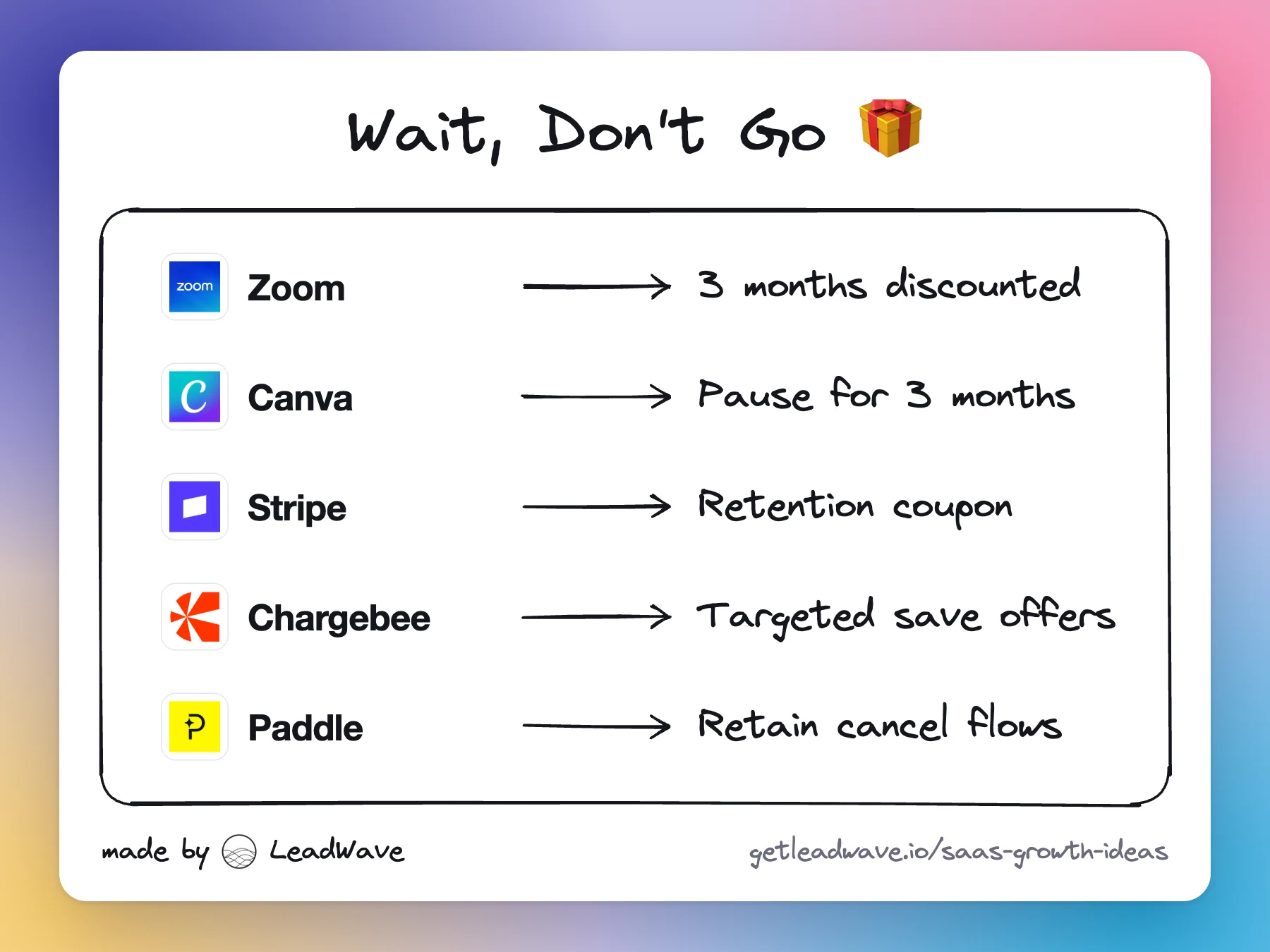
Ask why before they go, then make the offer that fits: a discount for price, a pause for timing, a downgrade for overbuying. Never make cancelling hard.
Make switching cheaper than staying: position as the one tool that replaces several, migrate customers for free, and cover what's left on a rival's contract.