Feature Teasers: How SaaS Teams Build Hype Before a Launch (8 Examples)
Tease a new feature days or weeks before it ships, so launch day lands on an audience that is already waiting for it.
Impact
Medium
Effort
Low
Time to results
Days
Budget
None needed
Team
Marketing
Tools for this growth idea
LinkedInPost the teaser and the countdown where buyers already look
CanvaMake teaser graphics and countdown posts quickly
GuideflowShow the new feature as a clickable demo before launch
LinearPlan the feature and the launch date the teasers count down to
IntercomAnnounce it in the app on launch day
Why teasers work
A launch post competes with everything else in the feed that day. A teaser gives it a head start: people who saw the hint are watching for the reveal, and the comments on the teaser become social proof before anything has shipped.
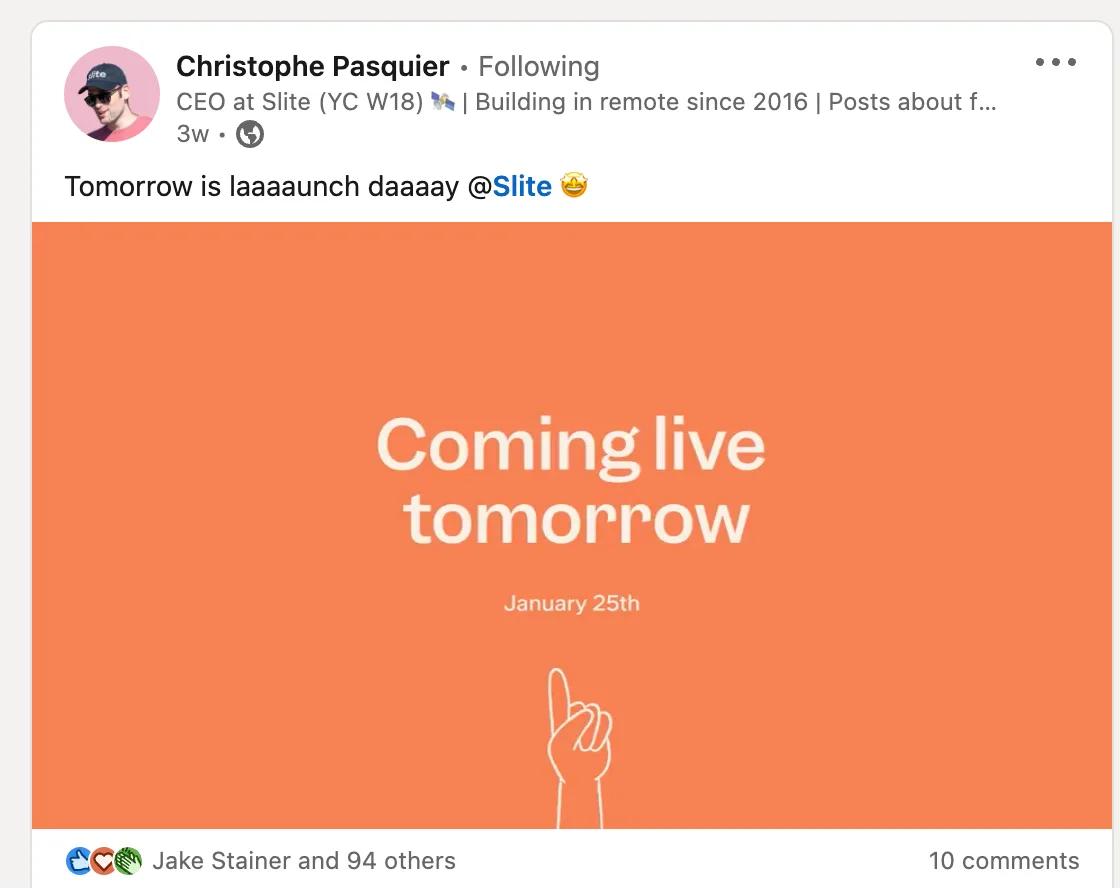
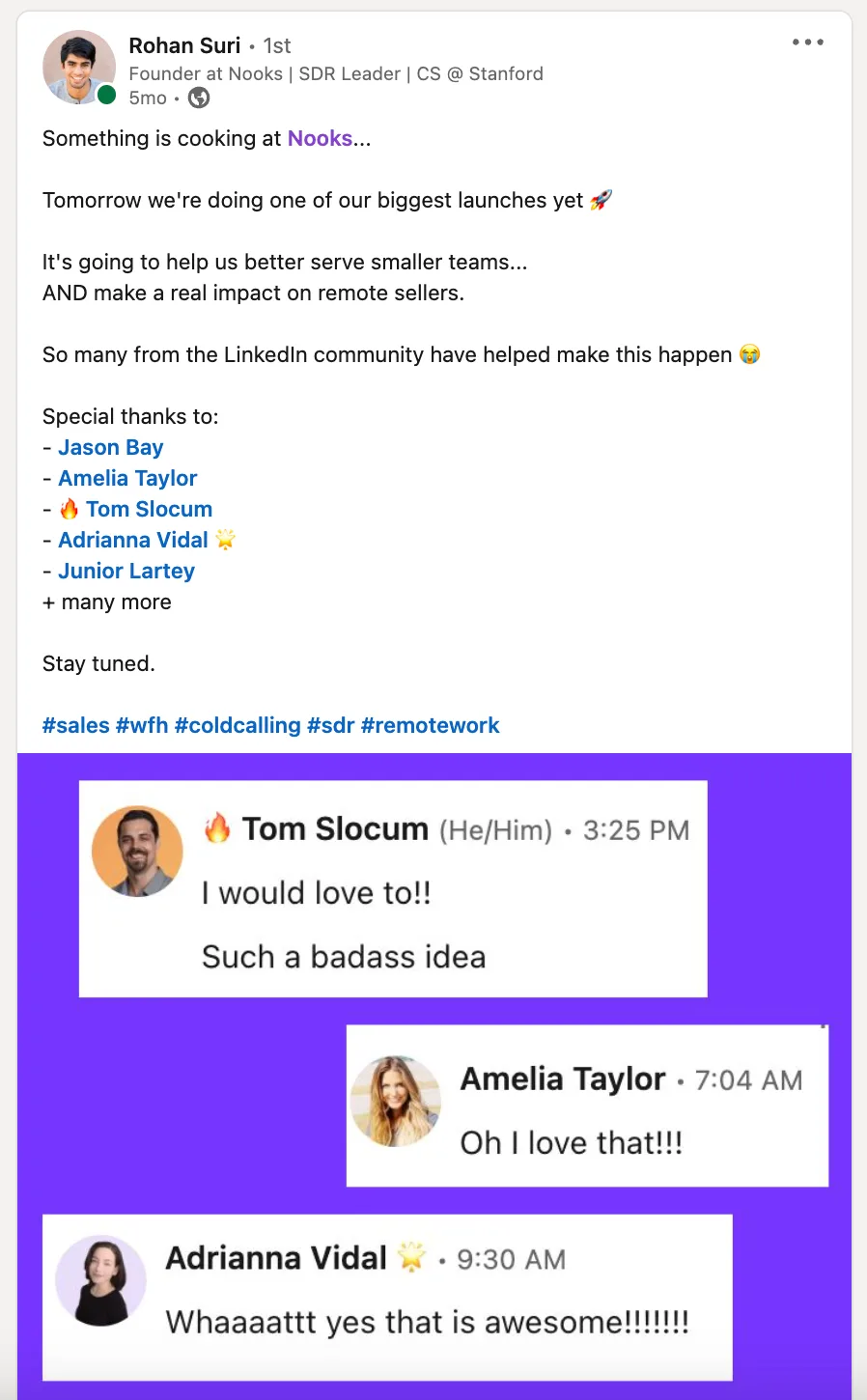
Look at the two LinkedIn posts that started this idea. Slite's CEO posted “Tomorrow is laaaaunch daaaay” with no details at all; the comments filled up with founders and investors saying they couldn't wait. Nooks co-founder Rohan Suri posted “Something is cooking at Nooks” the day before a launch and thanked by name the sales creators who had helped build it, so they had every reason to share it.
The mechanism is simple: curiosity plus a date. The reader knows something is coming and when, so the launch post the next day is the second time they hear about it, not the first.
Teaser formats that work
The night-before post. A founder or PM says tomorrow is launch day, with a hint and a thank-you to the people involved. Cheapest format, works at any size.
The sneak peek. A short clip or screenshot of the feature in use, a week or two out. Raycast has a whole Hype Team whose job includes sneak peeks of upcoming features on X.
The feature waitlist. Announce the feature, show a demo, and let people sign up for early access. Notion did this for Notion AI in November 2022.
The launch week. One launch a day for five days, announced in advance with a schedule and hints. Supabase made this format famous for developer tools; Raycast and Inngest ran their own.
The event countdown. Big launches saved for a keynote with a date, like Vercel Ship or Figma Config.
This is different from building in public. Building in public shares the journey over months. A teaser is a launch tactic aimed at one date.
What the best teams do differently
They set the date before they tease. A teaser without a date is just noise. Notion's waitlist, Supabase's launch week schedule and every “tomorrow” post work because the reader knows when to come back.
They tease the outcome, not the settings page. Show what the user will be able to do, in a few seconds of video, not a list of features.
They don't hold features hostage. Supabase says it very rarely holds back features for Launch Week and encourages shipping early; the week packages work, it doesn't delay it.
They give the audience a role. Join the waitlist, turn on notifications, come to the livestream, or, like Nooks, get thanked by name.
They use more than one voice. Raycast posts from the company account and from team members' personal accounts, which it finds very effective. Founders, PMs and beta customers each reach a different crowd.
They promise only what ships. Raycast's rule is to be intentional about what it promises and when it delivers on that promise.
When teasers backfire
The date slips. The audience you built shows up to nothing. Tease only what is code-complete or close to it.
The feature is small. A countdown for a minor settings change teaches people to ignore your countdowns. Save teasers for launches that change what users can do.
The waitlist never ends. Waitlists build demand only until people forget why they joined. Notion opened its AI alpha waitlist in November 2022 and made it available to everyone three months later, in February 2023.
Existing customers hear last. Teasers on social reach strangers; make sure customers get an email or in-app note before launch day too.
Notion announced Notion AI as a private alpha with a short demo and a waitlist in November 2022. It hoped for 200,000 sign-ups; five weeks later the waitlist hit 1,000,000.
One major launch a day for a week, announced in advance, with a pre-launch overview post full of memes and hints. Supabase called it a key part of the growth that took databases under management up 47% month on month for 18 months (as of late 2021).
Raycast's five-person Hype Team makes videos, tweets and sneak peeks of upcoming features, posting from the company and personal accounts; downloads are its main metric. Raycast also ran its first Launch Week in July 2022.
CEO Christophe Pasquier posted “Tomorrow is laaaaunch daaaay @Slite” on LinkedIn with no details; the comments from other founders and investors did the hyping.
Co-founder Rohan Suri teased “one of our biggest launches yet” the day before and thanked by name the LinkedIn sales creators who helped shape it, which gave each of them a reason to share.
Vercel Ship is an annual event where launches are announced on stage, so the date itself becomes the teaser and press, partners and users all show up at once.
Figma's Config conference is where its biggest product news lands. The site for the next Config goes up months ahead, which keeps the date in front of designers all year.
From LeadWave’s own collection, saved as we found them since 2022. Some of these pages have changed since.
Slite's CEO Christophe Pasquier: “Coming live tomorrow”
Nooks' co-founder Rohan Suri: “Something is cooking…”, the day before a launch
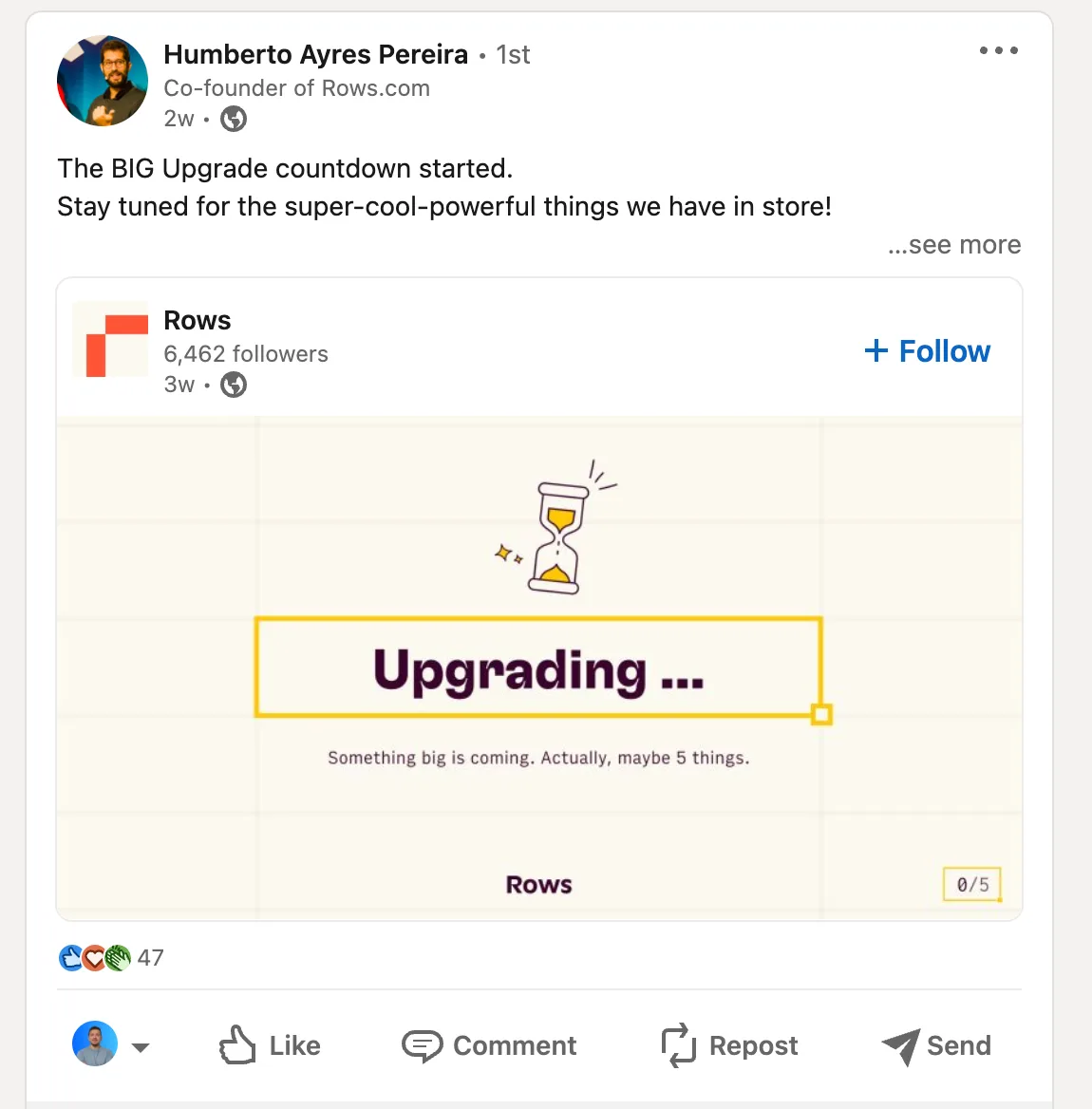
Rows' “Upgrading…” countdown: something big is coming, maybe 5 things
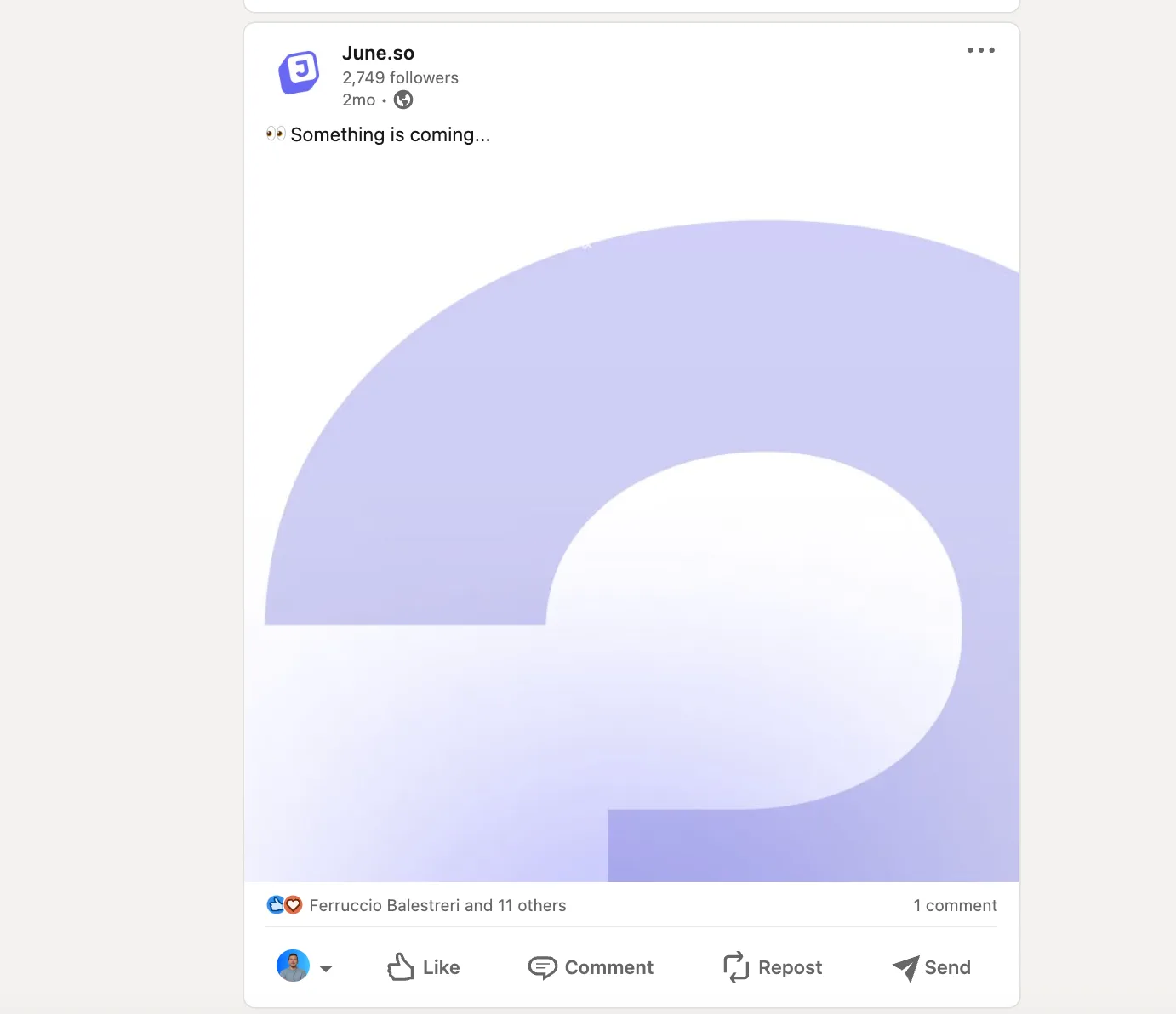
June's “Something is coming…” teaser
How to run it: the playbook
Pick a launch worth teasing.A feature that changes what users can do, not a settings tweak. If you can't show it in a 15-second clip, it probably doesn't need a teaser.
Lock the date.Only tease once the feature is code-complete or close. Put the date in the teaser.
Plan three beats.About a week out: a sneak peek or hint. The day before: a countdown post from the founder or PM. Launch day: the reveal with a demo and a link.
Give people an action.A waitlist, an early-access form, a livestream reminder or a notify-me button, so the teaser builds a list you can email on launch day.
Line up the voices.Brief the founders, the team and a few beta customers; tag the people who helped build it.
Tell customers directly.Send existing users an email or in-app note on launch day, so they don't learn about it from a competitor's repost.
Close the loop.Reply to every teaser commenter with the launch link, then publish a recap or changelog entry that lasts after the posts fade.
What to measure
Waitlist or early-access sign-ups per teaser post
Reach and comments on teaser posts compared with your normal posts
Launch-day visits and sign-ups compared with your last launch without a teaser
Share of the waitlist that activates the feature in the first week
Replies and reposts from people outside your team
Pitfalls
Teasing before the feature is ready, then missing the date
Vague “something big is coming” posts with no date or hint
Countdowns for minor updates, which train people to ignore your countdowns
Waitlists that stay closed for months with no updates
Holding finished features back just to have something to tease
Frequently asked questions
A short post, clip or page that hints at a new product or feature before it launches, usually with a date and a way to sign up. Its job is to make the launch the second time people hear about it.
For most features, one to two weeks: a sneak peek about a week out and a countdown post the day before. Waitlists for big features can open earlier, as long as you keep people updated.
A format popularized by Supabase where a company announces one feature or product a day for a week, with the schedule and hints published in advance. It bundles many smaller launches into one event worth following.
Yes. B2B buyers follow founders and product people on LinkedIn and X. Slite, Nooks, Notion and Supabase all teased features before launch.
Say what is coming and when, show a hint (a clip, a screenshot or the problem it solves), and give one action, such as joining a waitlist or following for the launch. Thanking the people who helped build it gives them a reason to share.
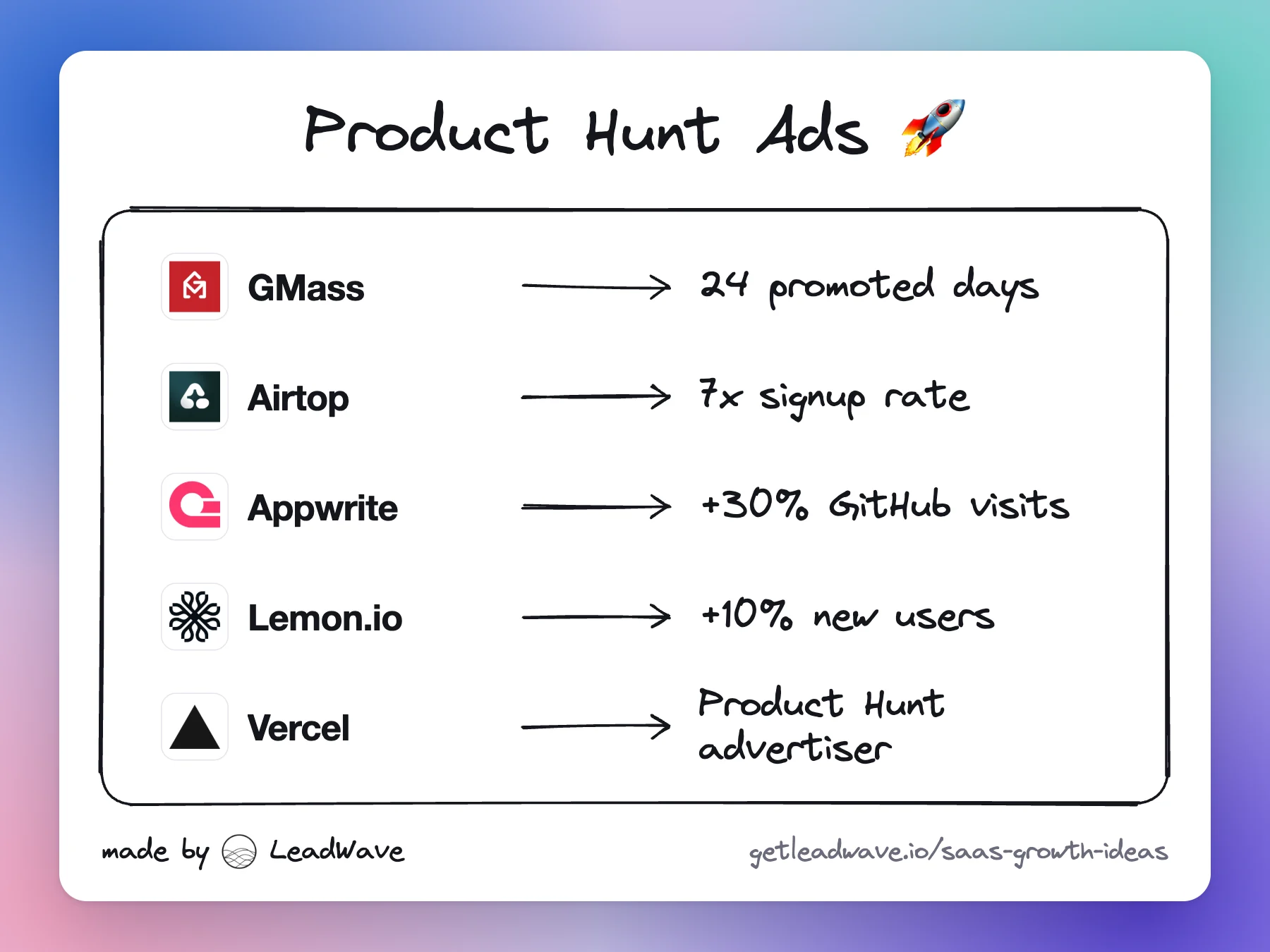
Pay for reach among the founders and engineers on Product Hunt: feed ads, the homepage billboard or the newsletter. Cheap to test, hard to make pay back.