Replace Your Competitors: Consolidation, Switch Programs and Contract Buyouts (10 Examples)
Make switching cheaper than staying: position as the one tool that replaces several, migrate customers for free, and cover what's left on a rival's contract.
Impact
Medium
Effort
Medium
Time to results
Weeks
Budget
None needed
Team
Marketing
Tools for this growth idea
ClayBuild the list of companies that use the competitor you replace
ProspeoFind the decision makers' emails for the switch offer
Apollo.ioOr find both the companies and the people in one place
Reply.ioSend the switch offer as a sequence
WebflowA "switch from X" page per competitor
Why buyers stay with tools they don't like
Most lost deals against an incumbent aren't lost on product. The buyer agrees you're better and still doesn't switch, because switching costs:
Time: exporting data, rebuilding automations, retraining the team.
Money: paying twice while the old annual contract runs out.
Risk: something breaks mid-migration and customers notice.
Competitor replacement is a set of offers that take those costs off the buyer. Jason Lemkin's version of the money problem: a customer six months into a 12-month contract won't pay twice to switch, so give them 18 months for the price of 12 (SaaStr). The same logic applies to time (do the migration for them) and risk (run both tools side by side).
Angle 1: replace several tools with one
If your product covers what customers currently buy from three or four vendors, sell the consolidation, not the features.
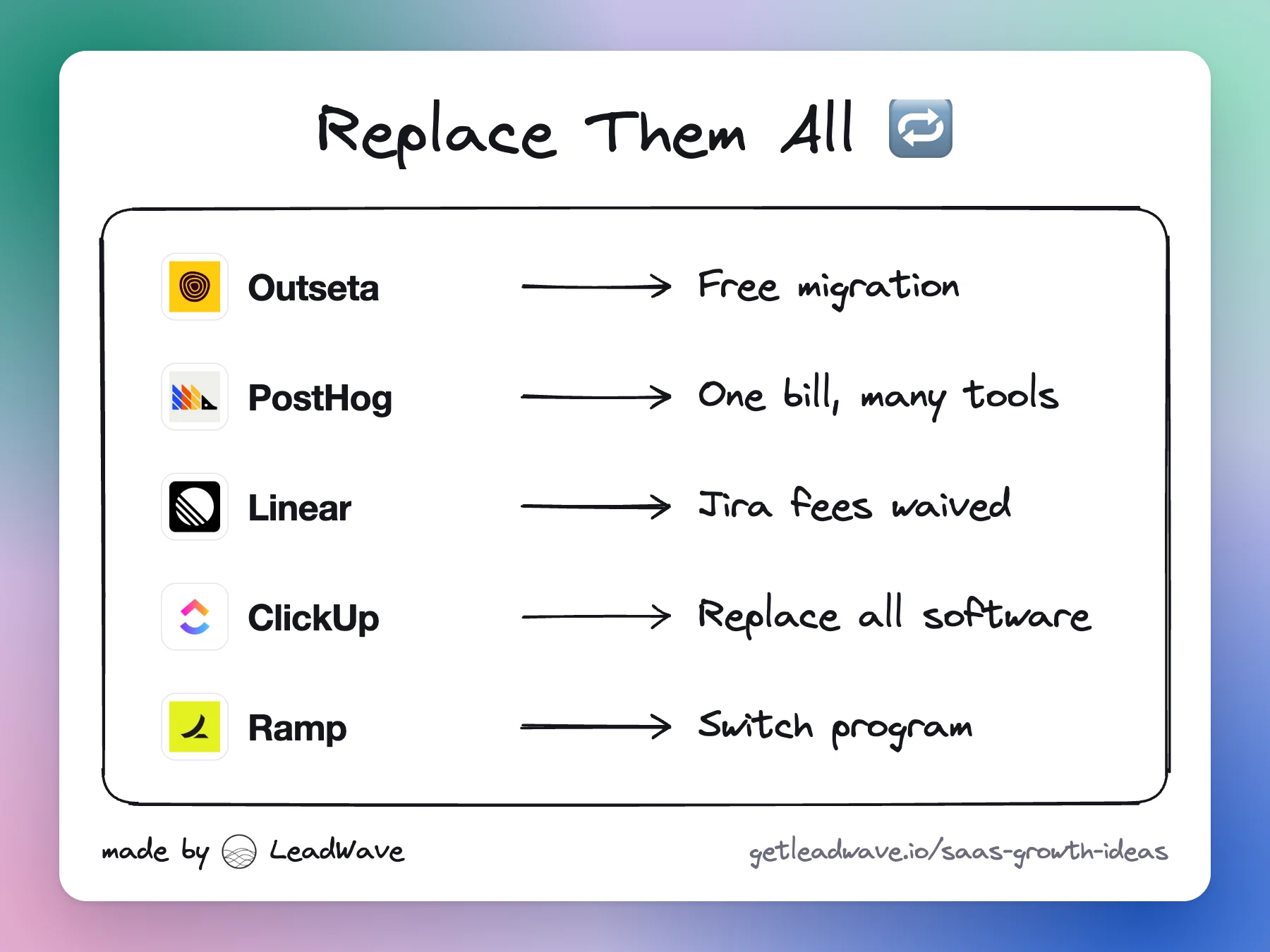
Outseta lists the tools it replaces on its homepage (Memberstack, Intercom, Mailchimp, Auth0, HubSpot, ChartMogul) under "Quit context switching", and quotes a customer who "walked away from Hubspot, Intercom and Chargebee".
PostHog's pricing FAQ makes the bundle the price argument: because it offers several products, it can "charge less than competitors" and aims to be the cheapest option for each product. Then the operational one: "a single SDK, manage a single bill, and sign a single contract" (pricing).
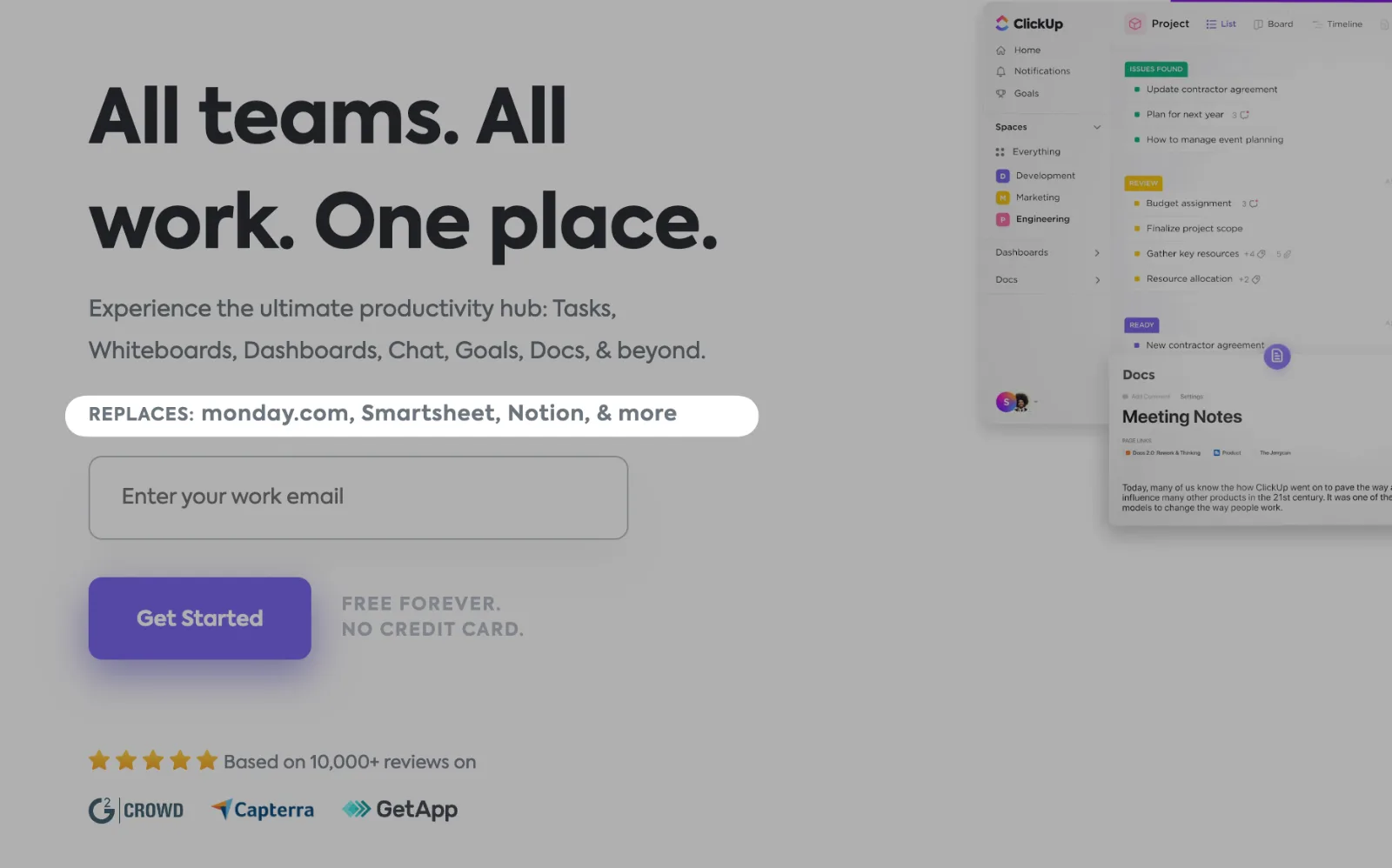
ClickUp goes furthest: "Software to replace all software", with a REPLACES label on every solution block.
Rippling sells "Replace dozens of tools" and argues that shared data, not bundling, is the point: "Unlike 'all-in-one' platforms that simply bundle tools".
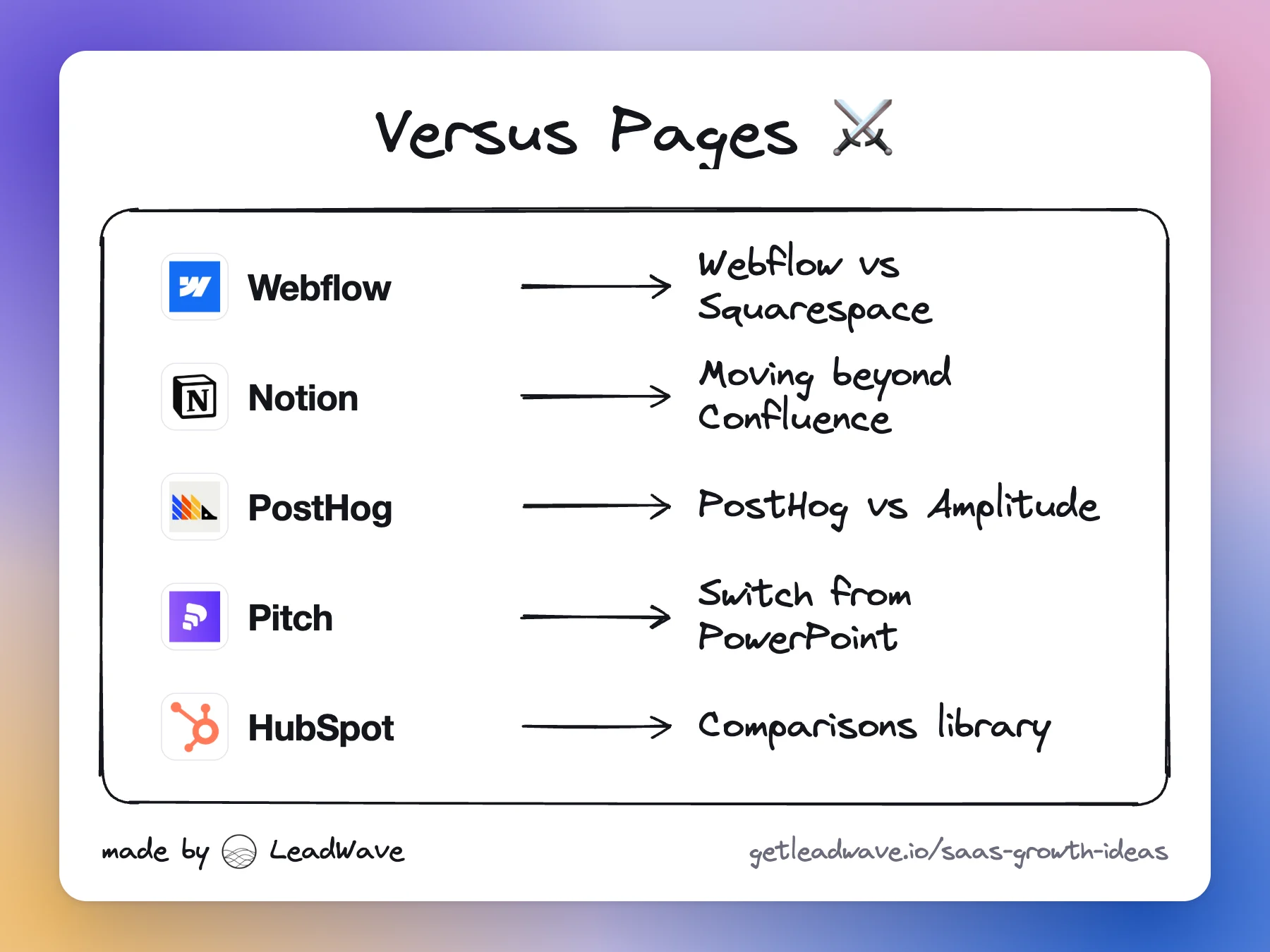
The sharpest versions name the tools being replaced and add up their combined price. Buyers already know their stack bill, so the comparison does the work. The risk: "all-in-one" can read as "mediocre at everything". PostHog answers that with a dedicated vs page against each specialist (comparison pages).
Angle 2: a switch program for one incumbent
When you're replacing one specific tool, build a program around the switch itself:
Free migration, done by your team. Outseta: "We'll migrate your customers for free", included on every paid plan, with a reply within 48 hours and the old tool left running until you're ready. Kit offers a free setup service that moves tags, segments and custom fields and rebuilds automations. beehiiv has step-by-step migration guides for Substack, Mailchimp, Kit, Ghost and others, and pitches Substack users with "Stop giving away 10% of your revenue."
Pay nothing twice. Linear will "waive Linear fees while your Jira contract winds down" for teams locked into an annual or multi-year contract (switch page). Everstage runs a contract buyout: send proof of your current contract and it comes back with custom discounts and terms.
Lower the risk. Linear offers a two-way Jira sync for pilots and an option to import only active projects, leaving history read-only in Jira.
Proof from switchers. Ramp's switch page labels testimonials "Switched from Expensify" and "Switched from Brex". Linear lists migrations by size and time: Opendoor moved 500 seats in two weeks.
Put the offer on the pricing page, on every comparison page, and in the sales team's hands for deals that stall on "we're under contract".
The model to copy: Linear's Switch to Linear page. It's aimed at enterprises leaving Jira, and it answers each reason a buyer stays with a matching offer:
Risk → a synced pilot: two or three teams try Linear while a two-way Jira sync keeps both tools up to date.
Effort → import only active work, or keep Jira read-only and start fresh. The page says none of its featured companies moved their full backlog, and that enterprise migrations take "weeks, not quarters".
Money → Linear's fees are waived while the Jira contract winds down, once the buyer shares the contract with sales.
Then it proves the switch is survivable, with the size of each company and how long the move took: Opendoor moved 500 seats in two weeks, Oscar Health moved more than 600 people in just over a month, and Brex retired four planning tools after a six-week pilot. For an enterprise buyer, those numbers answer the real question: how bad will the migration be?
When replacement offers backfire
A switch program brings in customers who chose you partly for the deal. That's fine if the product holds them, and expensive if it doesn't. Watch for three failure modes:
The buyout that churns. You gave six free months to cover a rival's contract, and the customer leaves when the bill starts. Tie buyouts to annual terms, as Lemkin suggests with 18 months for the price of 12, so the free period extends the commitment instead of replacing it.
The migration you can't deliver. "We'll migrate you for free" is a promise about your team's capacity. Outseta commits to a reply within 48 hours and keeps the old tool running until the customer is ready. Publish only what you can staff.
The consolidation claim that fails on one feature. A buyer replacing four tools needs each replacement to be good enough. Find the one feature in each replaced tool that customers can't live without, and make sure you have it before you put that tool's logo on your homepage.
And don't forget the other side: your competitors can run the same play on you. A clear cancellation flow that asks where a leaving customer is going tells you which rival's switch program is working.
Competitor replacement examples
OutsetaReplaces billing, CRM, email stack
Positions itself against Memberstack, Intercom, Mailchimp, Auth0, HubSpot and ChartMogul, and backs it with a free migration on every paid plan plus a /switch page per competitor.
The pricing FAQ argues that offering several products lets it charge less than competitors and aim to be the cheapest option per product, with one SDK, one bill and one contract. A vs page against each specialist answers the "jack of all trades" doubt.
Sells HR, IT, payroll and finance on one platform, and separates itself from plain bundles: "Unlike 'all-in-one' platforms that simply bundle tools", its products share one data foundation.
A page for enterprises leaving Jira that removes each switching cost: a two-way synced pilot, importing only active work, and Linear fees waived while the Jira contract winds down. It backs it with migration timelines: Opendoor, 500 seats in two weeks; Oscar Health, 600+ people in just over a month.
"Switch to Ramp today": a dedicated onboarding specialist, zero-downtime data migration and live team training, with testimonials tagged by the tool each customer left (Expensify, Brex).
The switch page bundles a deliverability review, rebuilt automations and transfer of tags, segments and custom fields, with a dedicated section for Mailchimp users.
Guides for Substack, Kit, Mailchimp, Ghost, MailerLite, ActiveCampaign, Klaviyo, HubSpot and Campaign Monitor, plus a pointed Substack pitch: "Stop giving away 10% of your revenue."
"Stuck in a contract?" Apply with proof of your current contract, get custom discounts and terms, and Everstage migrates data, dashboards and integrations for you.
A switch page aimed at one incumbent, built around consolidation ("One workspace, zero sprawl") with migration resources and a Q&A for teams planning the move.
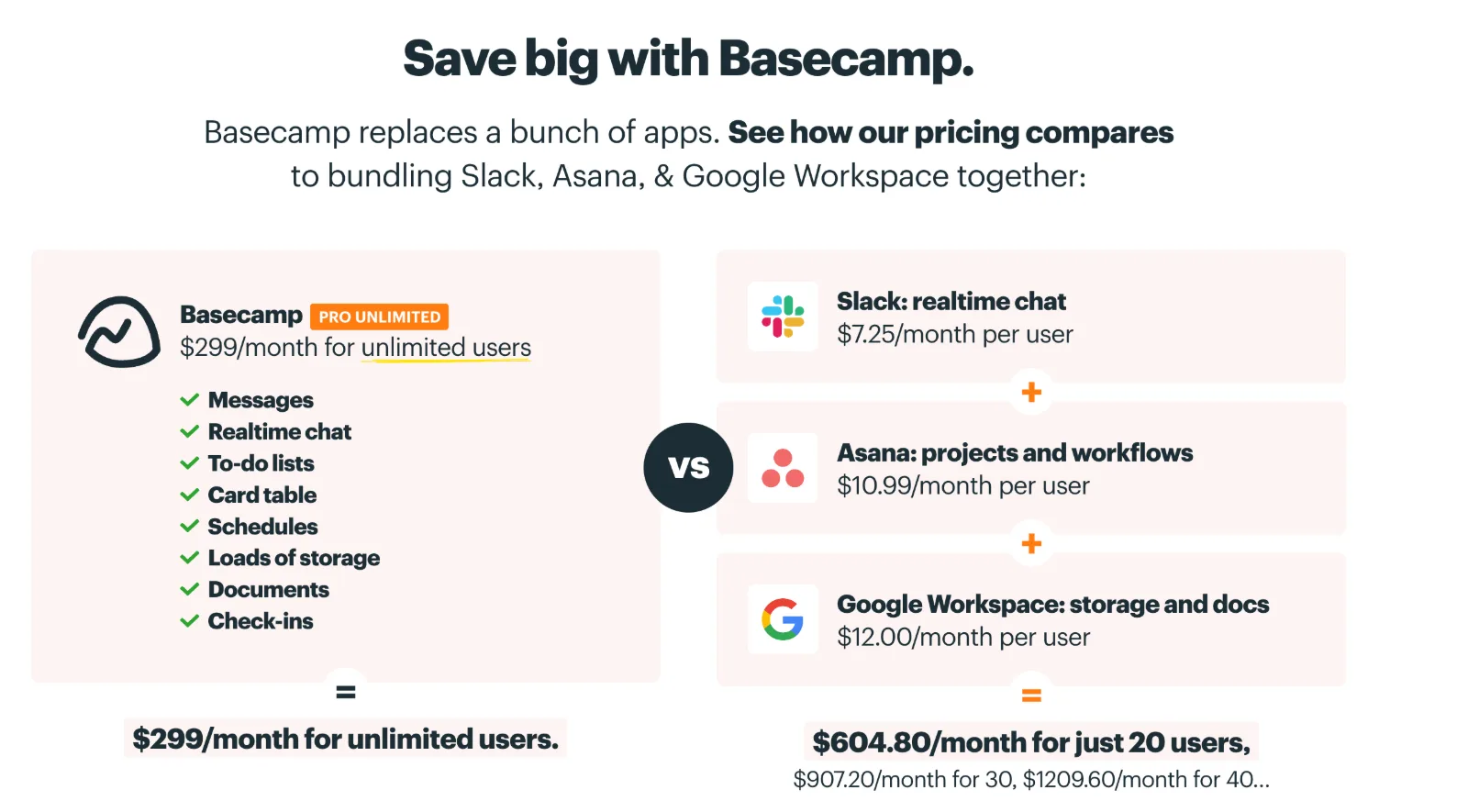
Basecamp's pricing comparison: $299 a month against $604.80 for Slack, Asana and Google Workspace
Outseta: less software, one tool in place of a stack
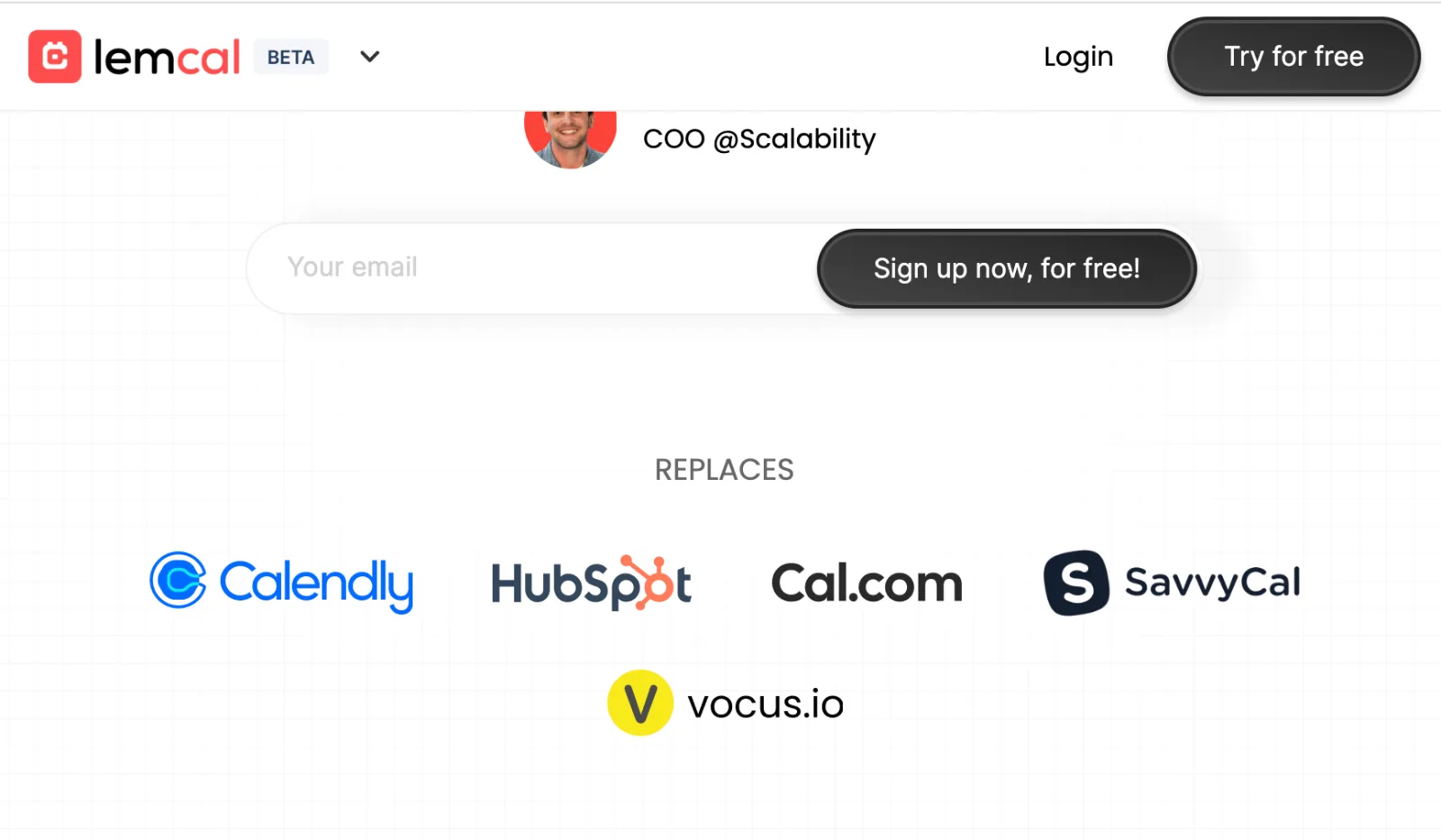
lemcal: “Replaces” Calendly, HubSpot, Cal.com, SavvyCal and vocus.io
How to run it: the playbook
Find what blocks the switch.Go through lost and stalled deals. Tag each one: contract lock-in, migration effort, risk, or missing features. Build the offer around the biggest bucket.
Pick your angle.If you cover several tools, lead with consolidation and the combined price. If you replace one incumbent, build a switch program for it.
Make migration someone's job.Importers for the top 2–3 competitors, plus a person or partner who does migrations for free on paid plans. Publish the timeline.
Set buyout rules.Decide in advance what you'll give for remaining contract time (free months, waived fees, extended term), who qualifies, and what proof you need.
Publish switch pages.One per competitor: why people leave, what moves over, how long it takes, the offer, and customers who switched. Link from pricing and comparison pages.
Tag switchers.Record which tool every new customer came from, so you can see which programs pay back.
What to measure
New customers by previous tool (from the import source or a signup question).
Win rate in deals where the competitor is the incumbent, before and after the program.
Time from signup to fully migrated, and share of migrations that stall.
Retention of switchers vs other customers: buyout deals that churn after the free period cost twice.
Pitfalls
Buyouts without rules. Sales gives away a year of free service on every deal and the program becomes a discount.
"All-in-one" claims you can't back up feature by feature against each specialist.
Promising free migration without staffing it; a broken migration is the worst first impression.
Naming competitors with claims that go stale. Date and review switch pages like comparison pages.
Frequently asked questions
An offer that covers the cost of a prospect's remaining contract with a competitor, usually as free months, waived fees or a longer term, so they don't pay twice to switch.
Targeting a competitor's customers directly, with switch pages, migration offers, buyouts and ads on competitor searches.
If data migration is a real blocker in your category, yes. It's often cheaper than the discount you'd otherwise give, and it gets the customer set up properly.
Name the tools you replace, show their combined cost, and back the claim with a comparison against each specialist.
Versus, alternatives and switch pages catch buyers who already know the category and are choosing between tools. The highest-intent pages a SaaS site can own.
Give young companies your product cheap or free, so you're the default tool when they grow. The design of the exit matters more than the size of the discount.