SaaS Startup Programs: How to Design Startup Discounts That Pay Back (11 Examples)
Give young companies your product cheap or free, so you're the default tool when they grow. The design of the exit matters more than the size of the discount.
Impact
Medium
Effort
Low
Time to results
Weeks
Budget
None needed
Team
Marketing
Tools for this growth idea
StripeThe program's discount as a coupon or promotion code
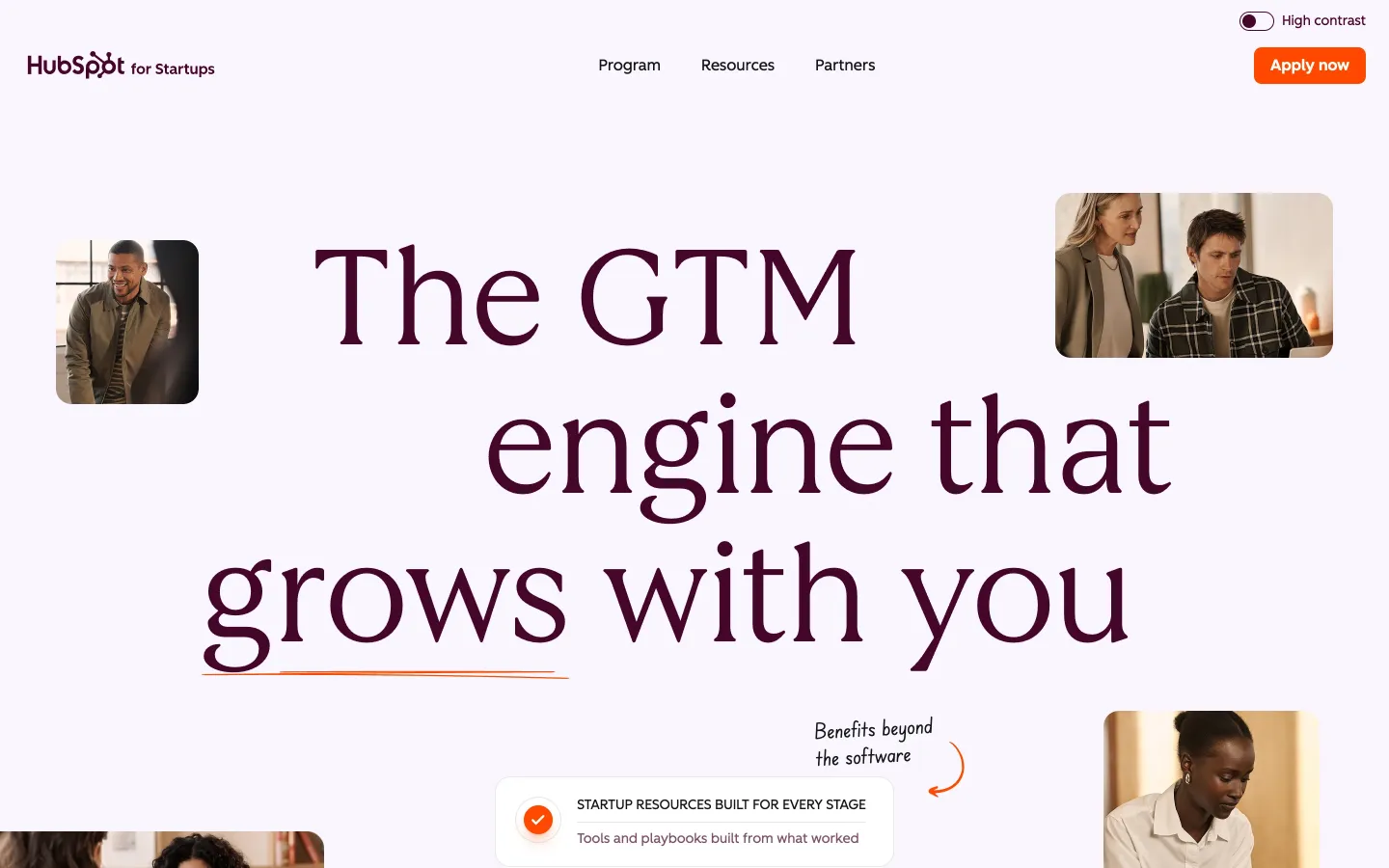
HubSpotThe application form, and who qualifies
ClayFind newly funded startups and enrich them before inviting
ProspeoFind founders' emails to invite them
Why startup programs work
A seed-stage startup picks its CRM, analytics and support tool once, usually in a hurry, and lives with the choice for years. A startup program makes sure you're the easy choice at that moment. Three things make the math work:
Lock-in grows with the customer. Data, automations and team habits pile up. HubSpot pitches it directly: "Never migrate again", one system from Seed to Series A and beyond (HubSpot for Startups).
The best startups grow fast. A 5-person team that pays nothing today can be a 200-seat account in three years. You're buying an option on that growth.
Distribution comes with it. Accelerators and VCs hand your offer to every company in their portfolio. Miro, Notion, Zendesk and Attio all give better terms to startups referred by partners, which turns VCs into a sales channel.
The programs that fail are the ones where the product isn't sticky (a startup can leave as easily as it came) or where each free account costs real money to serve.
Four ways to structure the offer
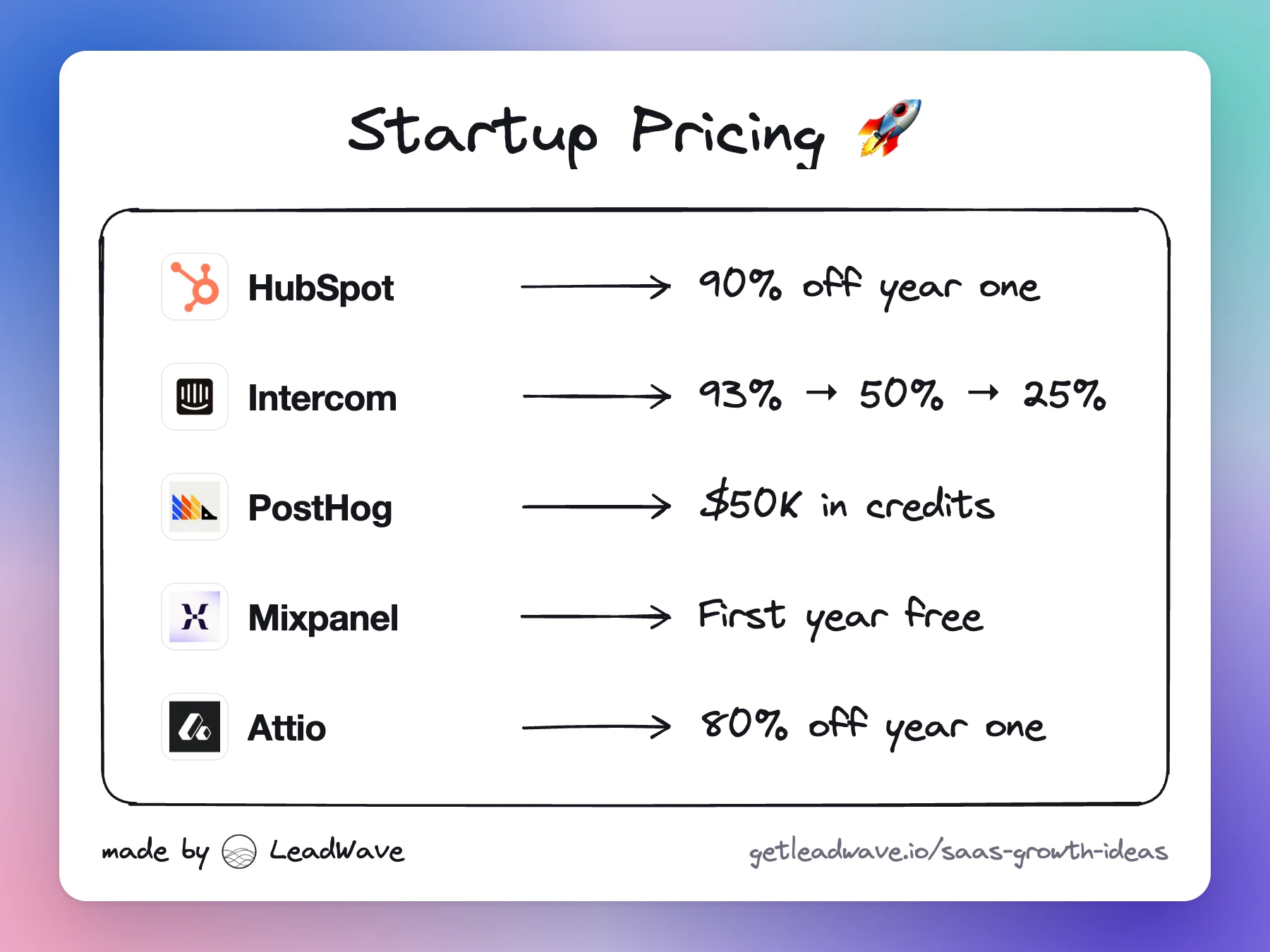
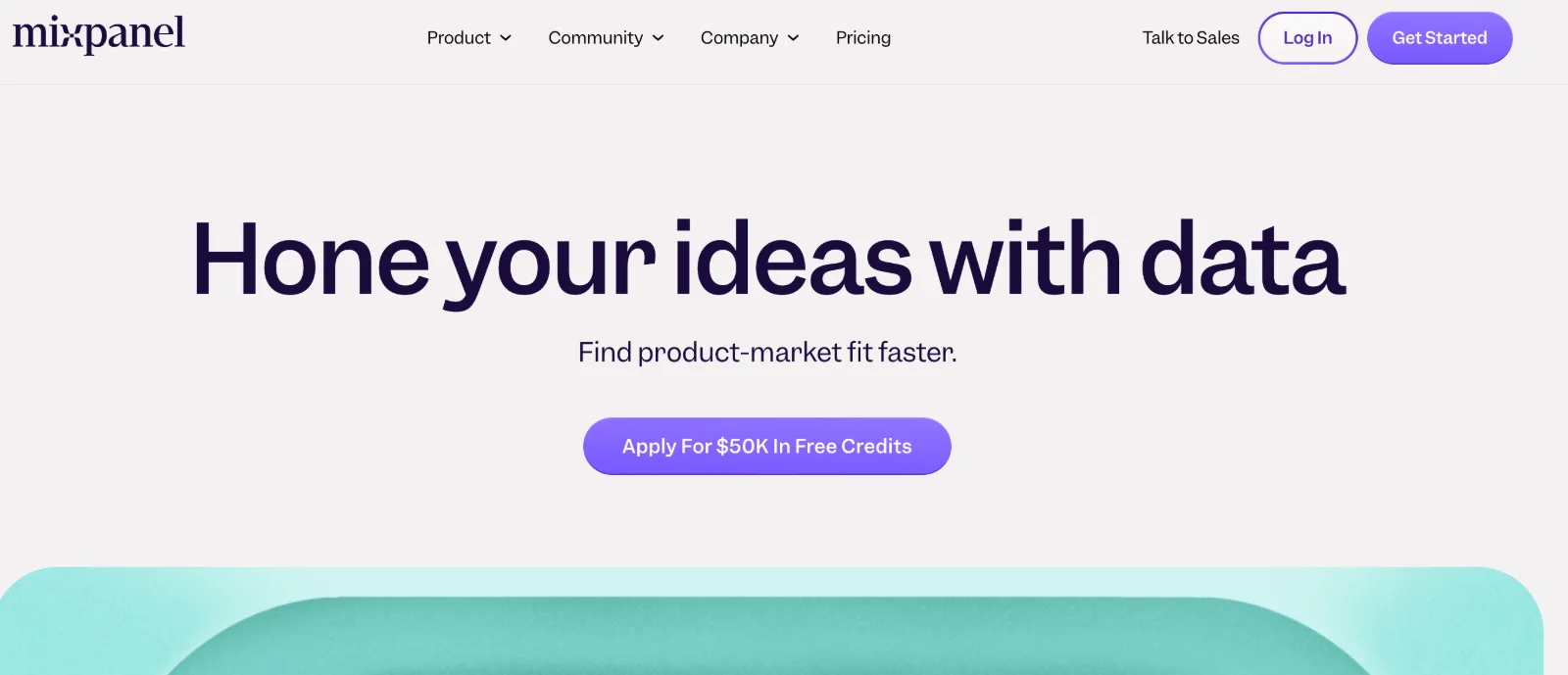
Free for a fixed period. Mixpanel gives startups a full year free, "Worth $145,000. Costs $0", covering up to 1 billion events and 1 million session replays (Mixpanel). Zendesk offers up to 2 years free for funded startups (Zendesk). Simple to explain, but a hard cliff at the end.
Credits. PostHog gives $50,000 of credit for 12 months plus $12,000 in partner benefits (PostHog). Miro gives a $1,000 credit through partners or $500 for independent startups. Credits cap your cost and let heavy users hit the paid plan sooner.
A discount that steps down. Intercom: 93% off in year 1, 50% in year 2, 25% in year 3 (Intercom). Attio: 80% off year one, 30% off year two. The price rises as the company grows into it, so there's no cliff.
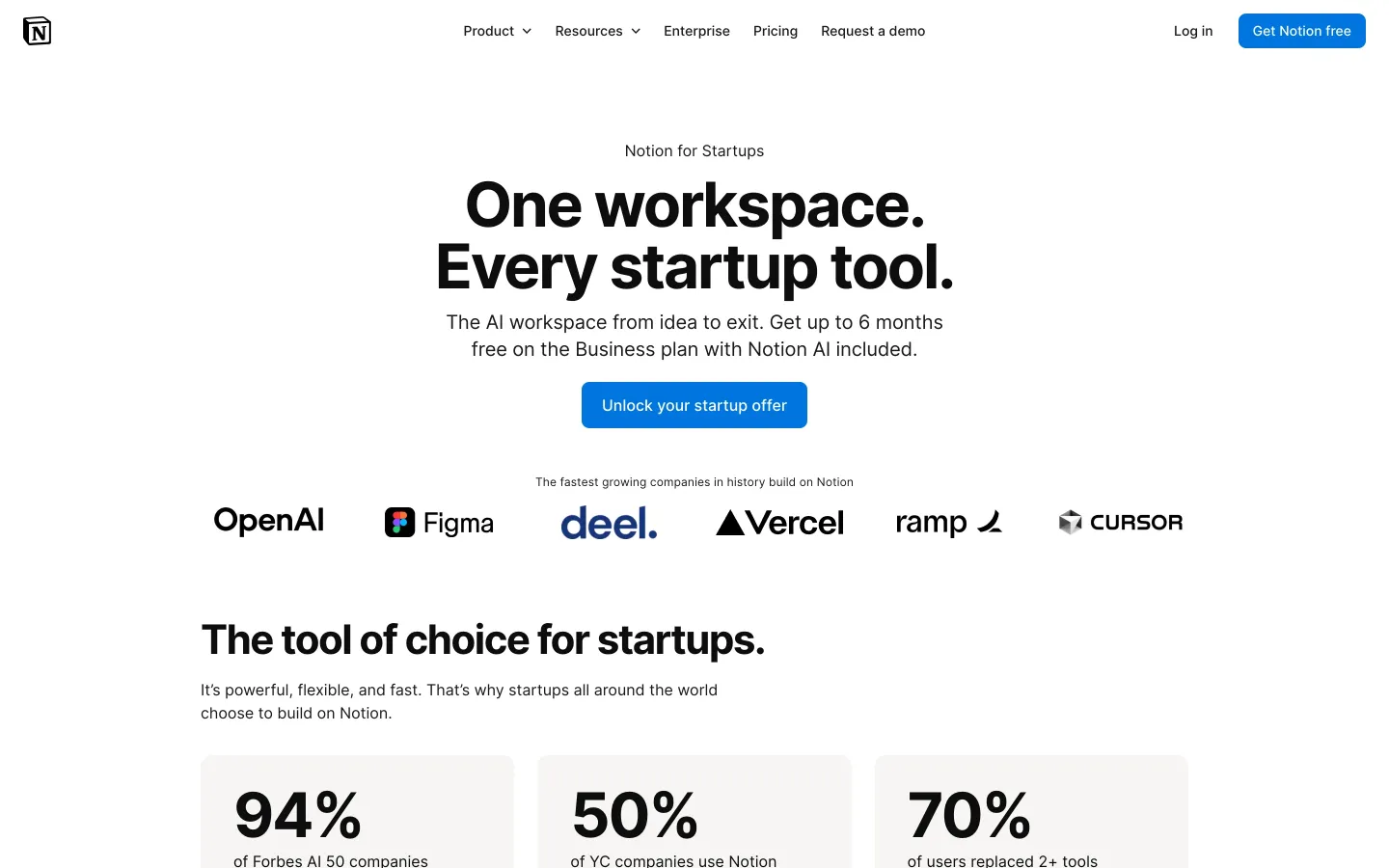
A deep first-year discount. HubSpot gives Seed and Series A founders 90% off year 1. Notion gives up to 6 months free on its Business plan, depending on partner affiliation and size.
If you're unsure, the step-down discount is the safest default: it graduates customers to full price gradually instead of handing them a full bill the day the free year ends.
Eligibility: who gets in
Every program filters on some mix of age, funding, size and partner referral. Real examples:
PostHog: under 2 years old, under $5M raised, company email domain. Y Combinator companies get $50,000 a year while they've raised under $25M (handbook).
Zendesk: new customers with outside funding (angel through Series B) and 50 or fewer employees, or 250 or fewer if referred by a partner.
Attio: VC-backed or partner-affiliated, signed up in the last 90 days, incorporated less than 5 years ago, up to 10 seats.
Notion: non-paying customers under 100 employees; partner affiliation unlocks the longest offer.
AWS Activate: pre-Series B, founded in the last 10 years, with tiered credits by stage (AWS).
Two rules worth copying: require a company email domain (PostHog rejects Gmail and Outlook applications), and require startups to apply early (Attio's 90-day window), so the program wins new customers rather than discounting existing ones.
Design the graduation before the welcome
The end of the program is where startups churn. PostHog's public handbook shows a well-built exit (handbook):
Milestone emails when a team has used 50%, 75% and 100% of its credit, or when credits expire.
Automatic move to a standard paid plan when credits run out, with no re-signup.
A one-time $500 credit at the transition to soften the first bill.
A firm window. Credits last 12 months from application, and extensions are rare, granted only with evidence.
PostHog also shows the risk side. From September 14, 2026, its startup credits can no longer be used on AI products, "due to the prohibitive and unpredictable nature of token-based pricing." If serving a free account costs you real compute, cap what credits cover.
Programs also end. Webflow closed its startup program on June 30, 2026, honoring existing participants and saying it had no plans for a new early-stage program (Webflow). Write the terms so you can change or close the program without breaking promises.
Startup program examples
HubSpot90% off year one
HubSpot for Startups gives Seed and Series A founders 90% off year 1, a founder community and partner deals (Gamma, Asana, Make). The pitch is never migrating again as the company grows.
Early Stage pricing steps down over three years, with included AI agent usage shrinking from 300 to 150 to 75 outcomes. The page claims 12,500+ startups use it.
For companies under 2 years old with under $5M raised. The program page compares its eligibility rules and limits with Pendo, LogRocket, Amplitude and Mixpanel, and the public handbook documents milestone emails and a $500 transition credit.
80% off the annual Pro plan in year one and 30% in year two, for VC-backed startups that sign up within 90 days, plus partner perks such as 3 months of Linear and 6 months of Notion.
A tiered offer: 6 months of the Business plan with AI for partner-affiliated startups under 100 employees, 3 months with a business website and domain email, 1 month otherwise.
$1,000 for startups referred by a program partner, $500 for independents, for teams under 30 employees. Miro's help page explains that for a team of 20, the credit covers about 5 months of the Starter plan.
A "for startups" landing page with an application form, pitched as a way to land first customers without hiring a sales team. It targets the startup search intent as well as the discount.
Tiered credits by funding stage for pre-Series B startups founded in the last 10 years. The benchmark most founders compare every other program against.
Webflow for Startups gave a year free on monthly Premium Site plans and closed to new applications on June 30, 2026, honoring existing participants. A reminder to write terms you can wind down cleanly.
From LeadWave’s own collection, saved as we found them since 2022. Some of these pages have changed since.
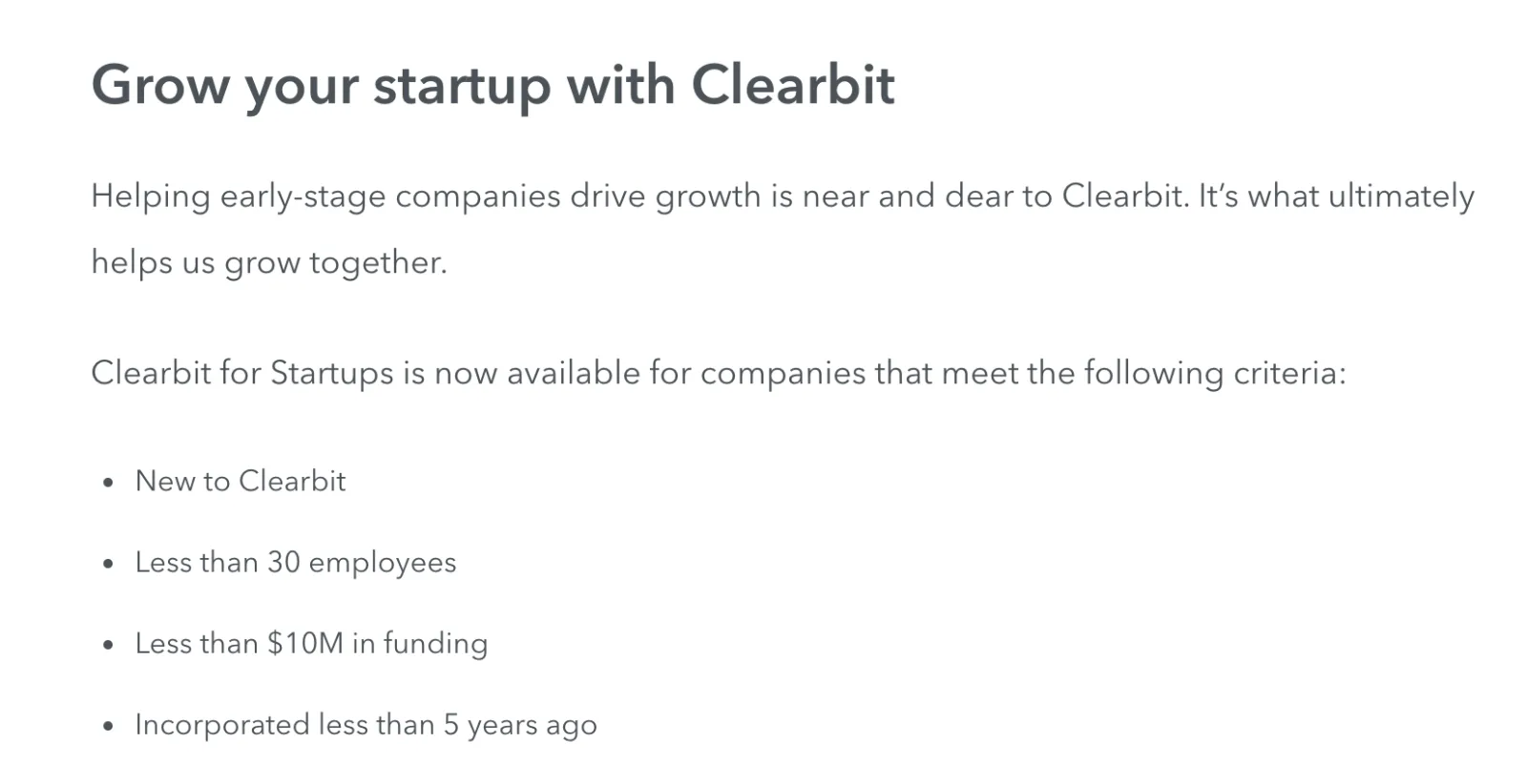
Clearbit for Startups: under 30 employees, under $10M raised, under 5 years old
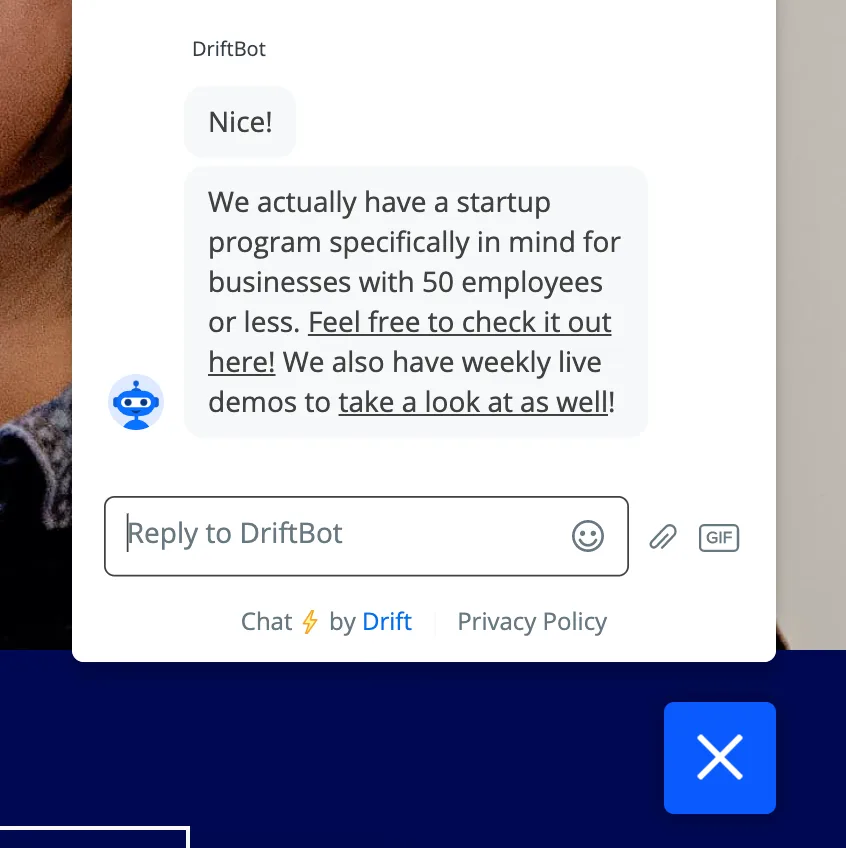
Drift's chatbot pointing a visitor to its program for companies of 50 or fewer
Mixpanel's startup program: “Apply for $50K in free credits”
How to run it: the playbook
Check the economics.Estimate the cost of serving a free or discounted account, and how much an account grows after 2–3 years. If free accounts are expensive (AI inference, heavy storage), use capped credits.
Pick a structure.Step-down discount, credits, or a free period. Decide what happens on the last day before you launch.
Set eligibility.Age, funding and headcount limits, a company email domain, and an application window soon after signup.
Sign partners.Offer accelerators, VCs and startup communities a better tier for their companies. They distribute the program for you.
Publish a /startups page.State the offer, eligibility and what happens after in plain numbers, plus an application form. It also ranks for "[your brand] startup discount" searches.
Automate the graduation.Usage milestone emails, a reminder before the end date, an automatic move to a paid plan, and a small transition credit or discount.
What to measure
Share of program startups still active 3 months after the free period or credits end (the graduation rate).
Revenue from program alumni in years 2 and 3, compared with the cost of the free year.
Applications by source (partners vs organic) and acceptance rate.
Expansion: seat or usage growth of alumni accounts compared with self-serve customers.
Pitfalls
A hard cliff: everything free, then a full bill with no warning.
Loose eligibility that discounts companies who would have paid anyway.
Free usage that costs you real money per account, such as AI inference, with no cap.
A product that isn't sticky: startups take the free year and leave.
Terms you can't change, which makes it hard to close or rework the program later.
Frequently asked questions
An offer of free or discounted access for early-stage companies, usually limited by company age, funding or size, so the vendor becomes the default tool as those companies grow.
Common structures are 80–93% off the first year stepping down after (Attio, Intercom, HubSpot), a free year (Mixpanel), or fixed credits (PostHog's $50,000). Size it to your cost per account and how much accounts grow.
Typically companies under 2–5 years old, below a funding limit, with a company email domain, and new to your product. Partner referrals often unlock a better tier.
Credits cap your cost and suit usage-based pricing. A step-down discount suits seat-based plans and avoids a cliff when the program ends.
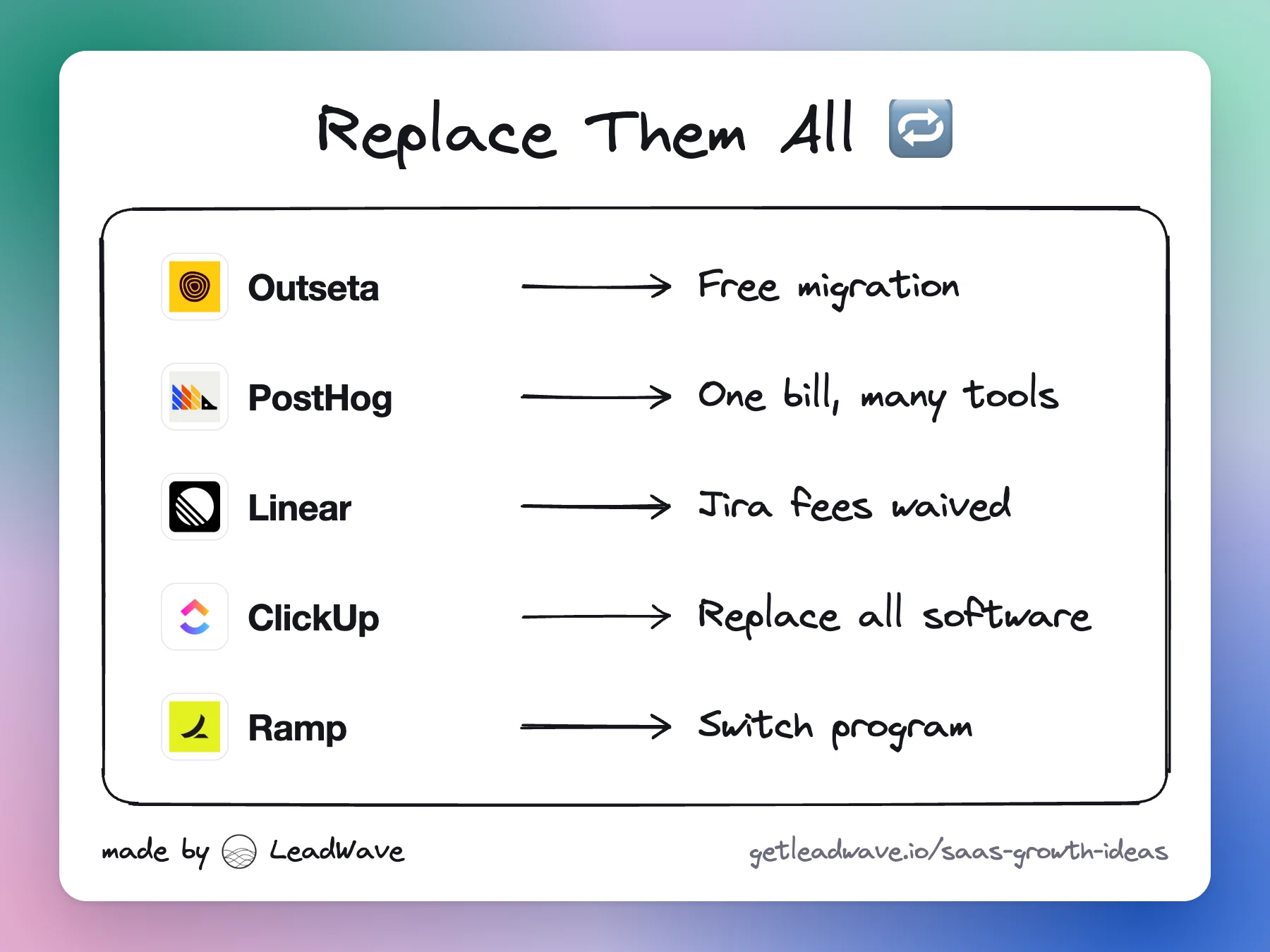
Make switching cheaper than staying: position as the one tool that replaces several, migrate customers for free, and cover what's left on a rival's contract.