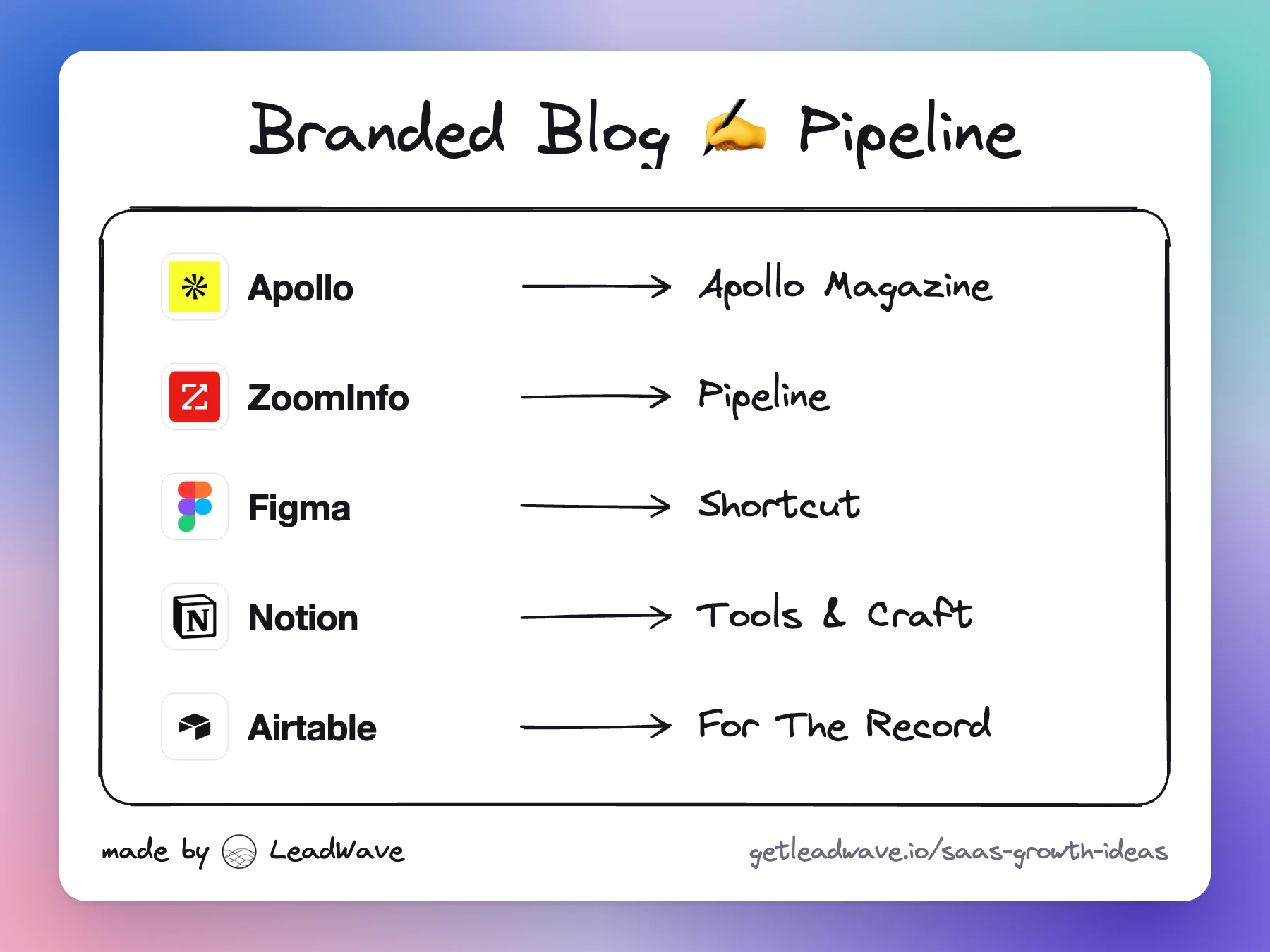


Why B2B companies really run podcasts
A branded podcast looks like a media play, but in B2B the mechanism that pays first is the guest list. You choose who to interview, and you can choose the people you want to sell to, partner with or learn from.
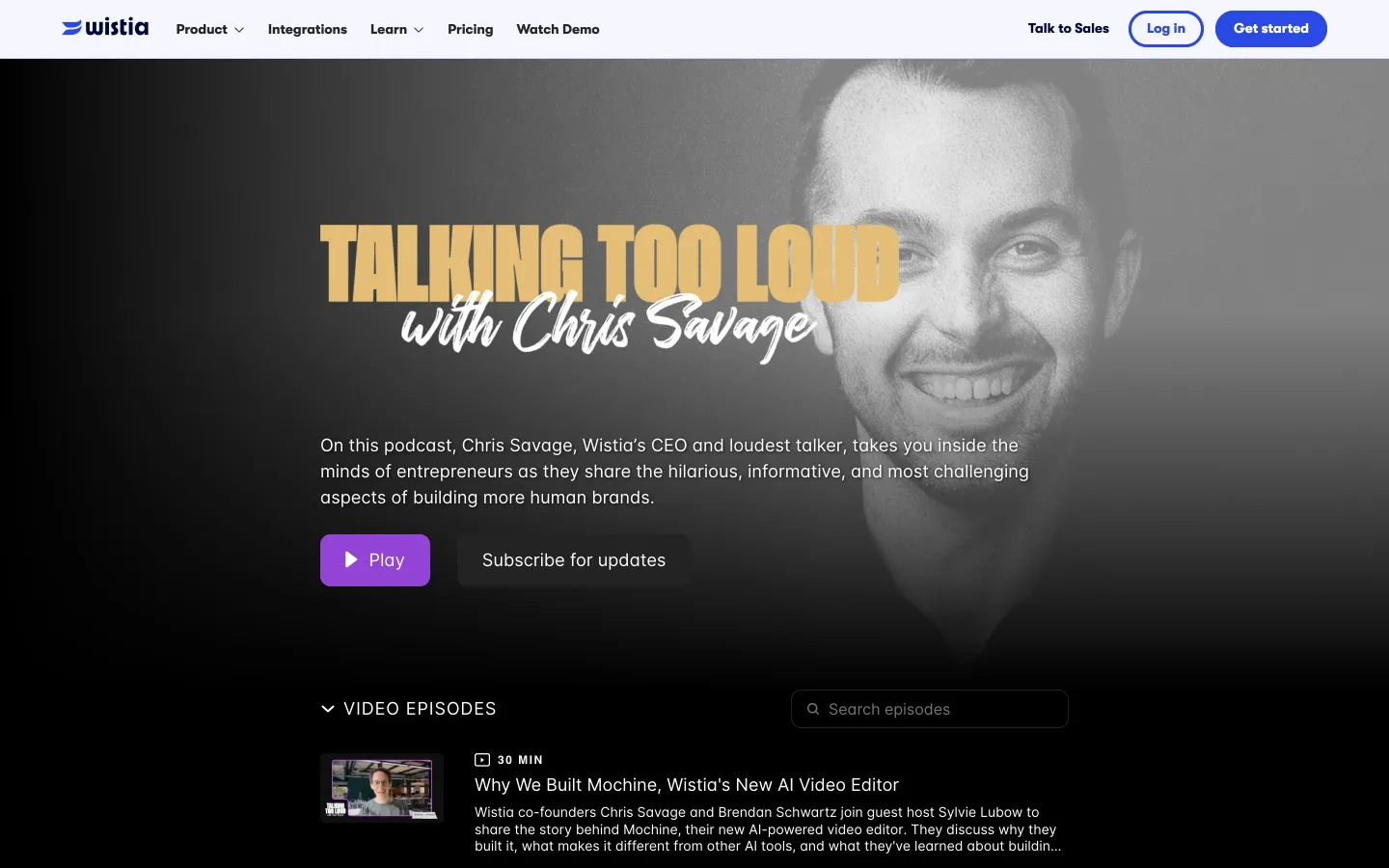
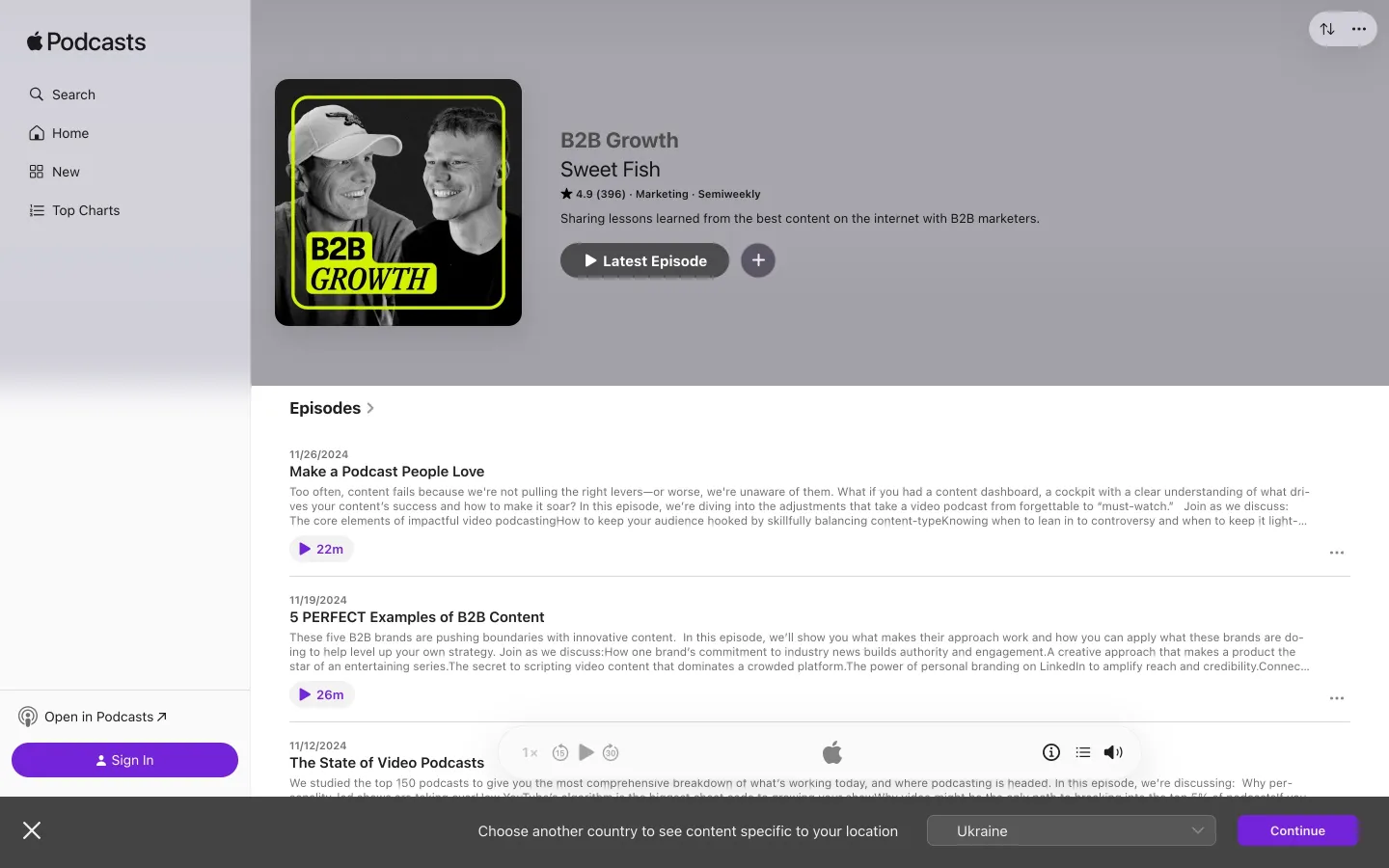
James Carbary built Sweet Fish Media on this idea and called it content-based networking: reach out to the people you want to know, invite them onto your show, and build a relationship that benefits both sides. Carbary's first test of it was a cold email to 100 church pastors about being on a podcast, and 80 said yes. Sweet Fish then ran its own show, B2B Growth, as a way to meet the B2B marketers it sold podcast production to.
The reason it works is simple. A demo request asks for something; a guest invitation offers something: attention, a platform, a polished piece of content the guest can share. The recording gives you an hour of real conversation about their problems, and every clip you post afterwards is a reason to tag them and stay in touch.
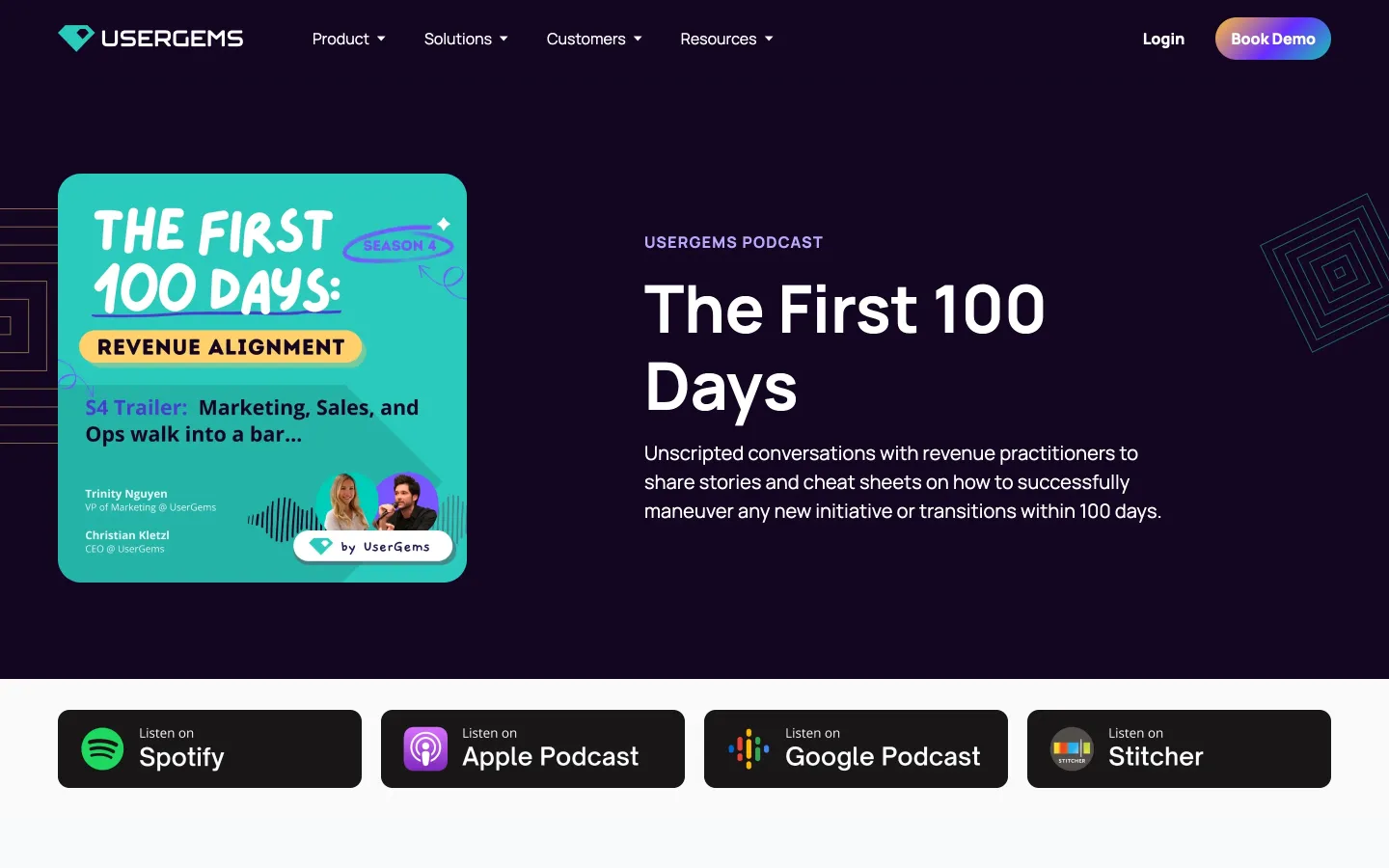
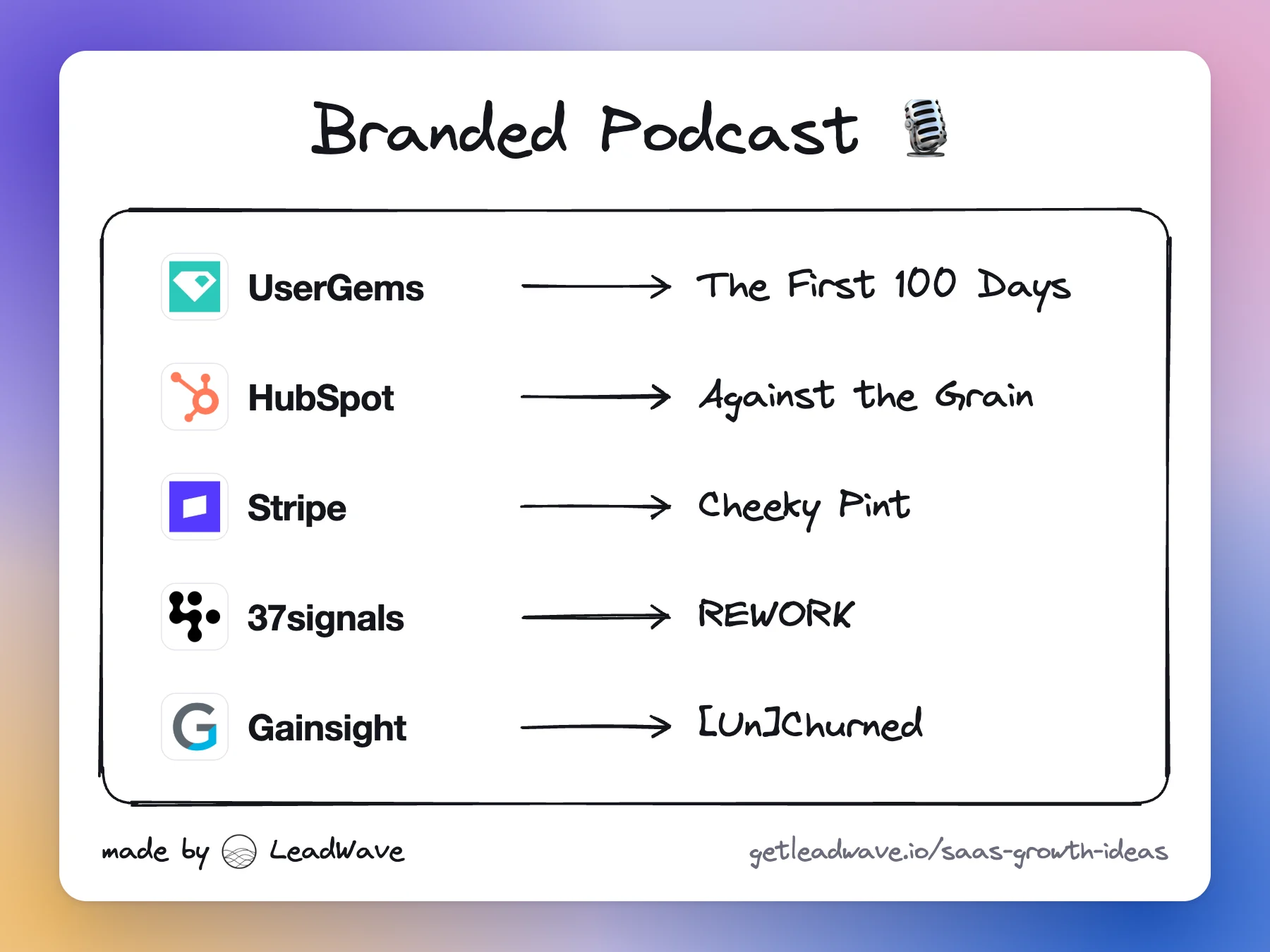
UserGems is the cleanest current example. Its show, The First 100 Days, interviews revenue leaders about taking on a new role. UserGems sells signals about buyers who change jobs, so its guests are exactly the people its product is built around.
The second job is audience. A niche show lets your best people talk to buyers for 30 minutes a week, which no ad or blog post can do. The third is content supply: one conversation becomes clips, posts, quotes and articles for the rest of the month.
Three formats, and what each one is for
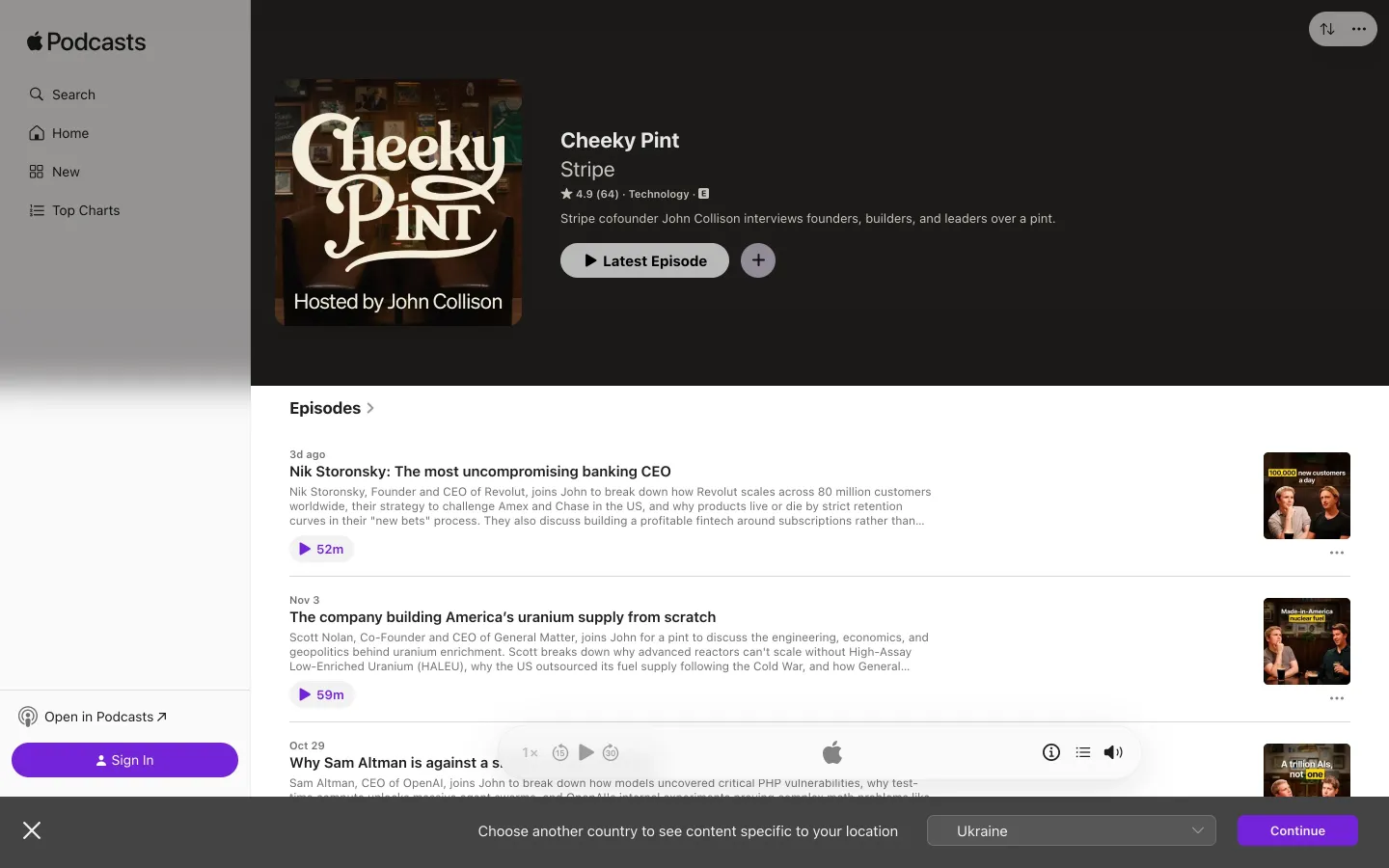
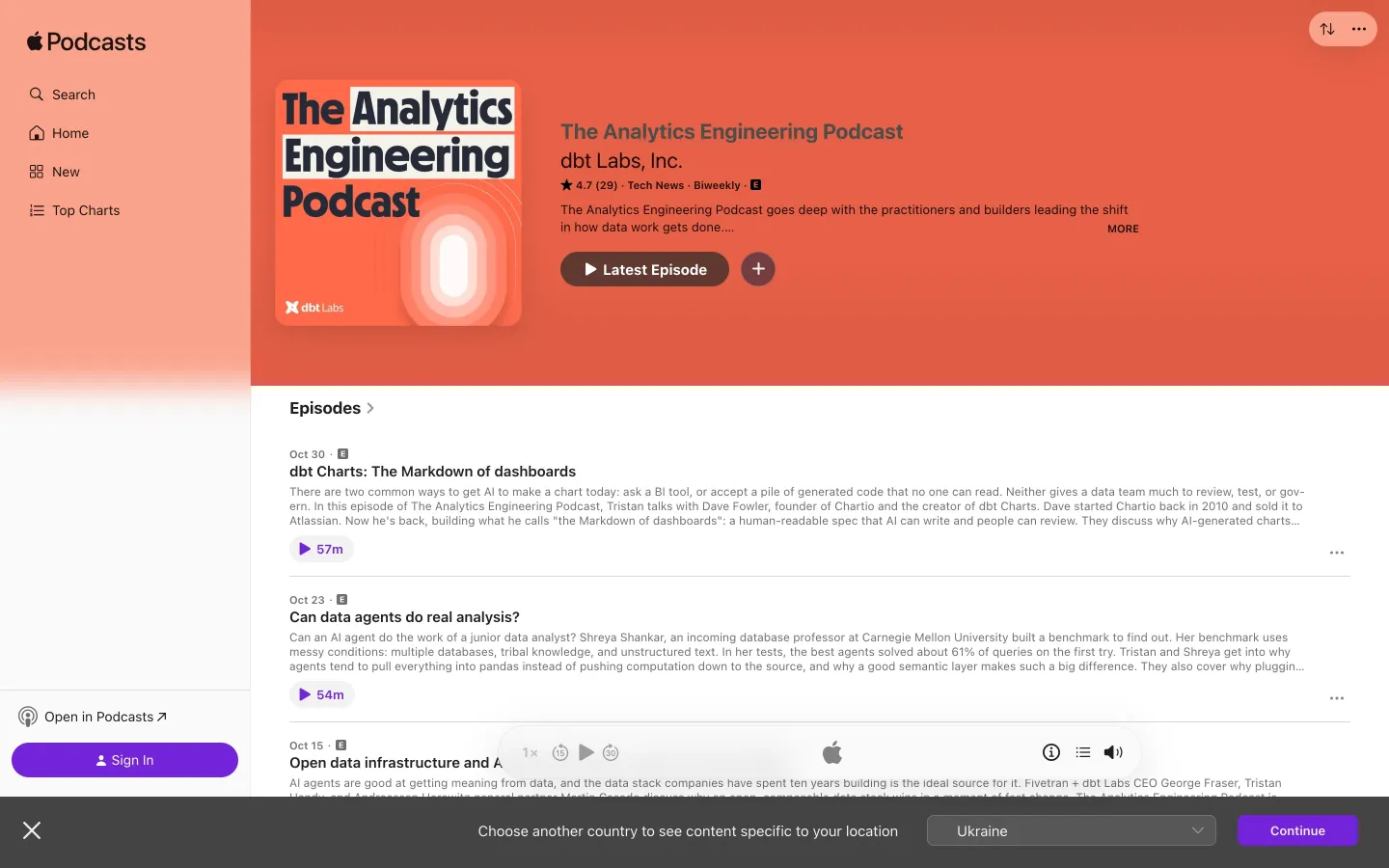
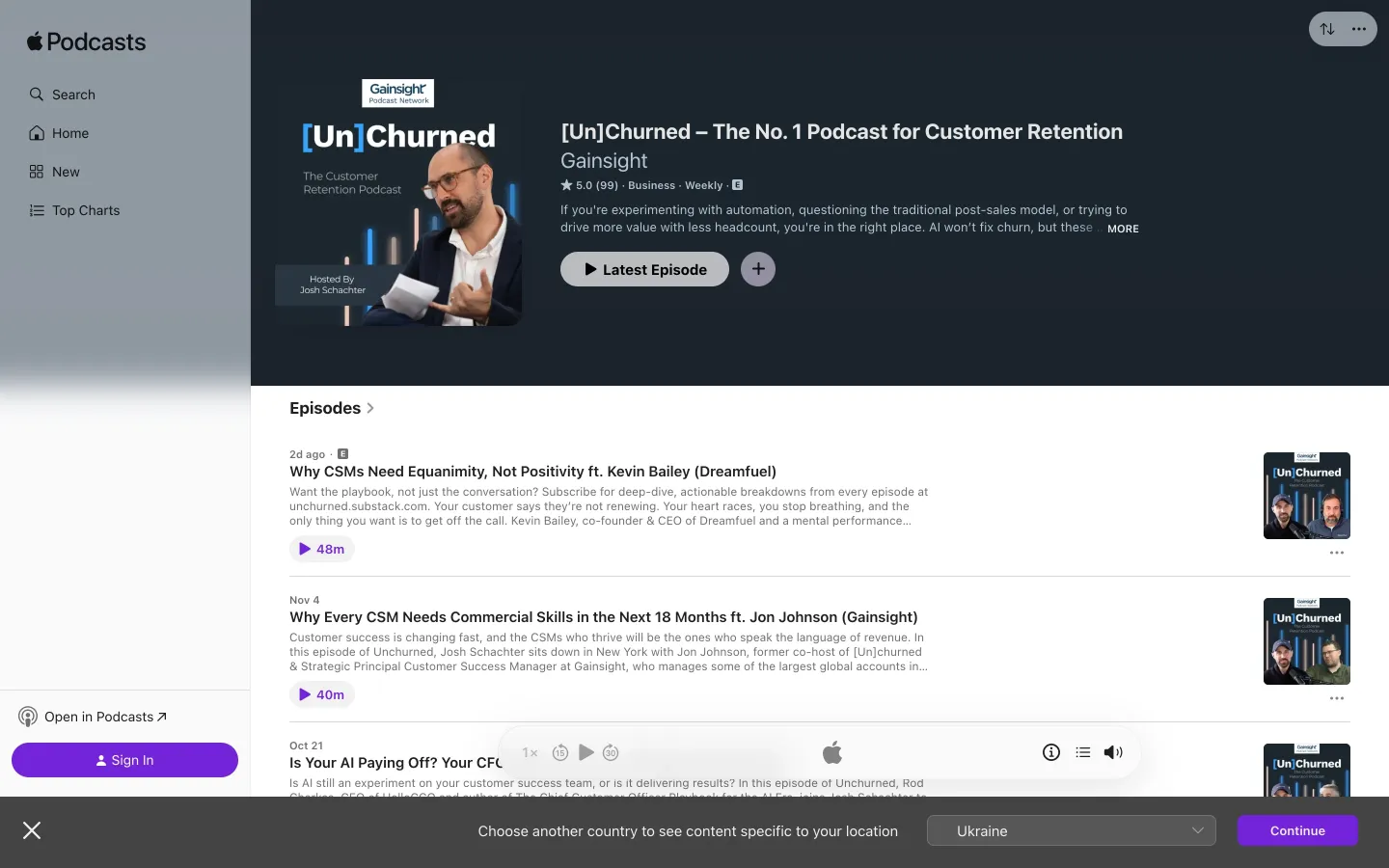
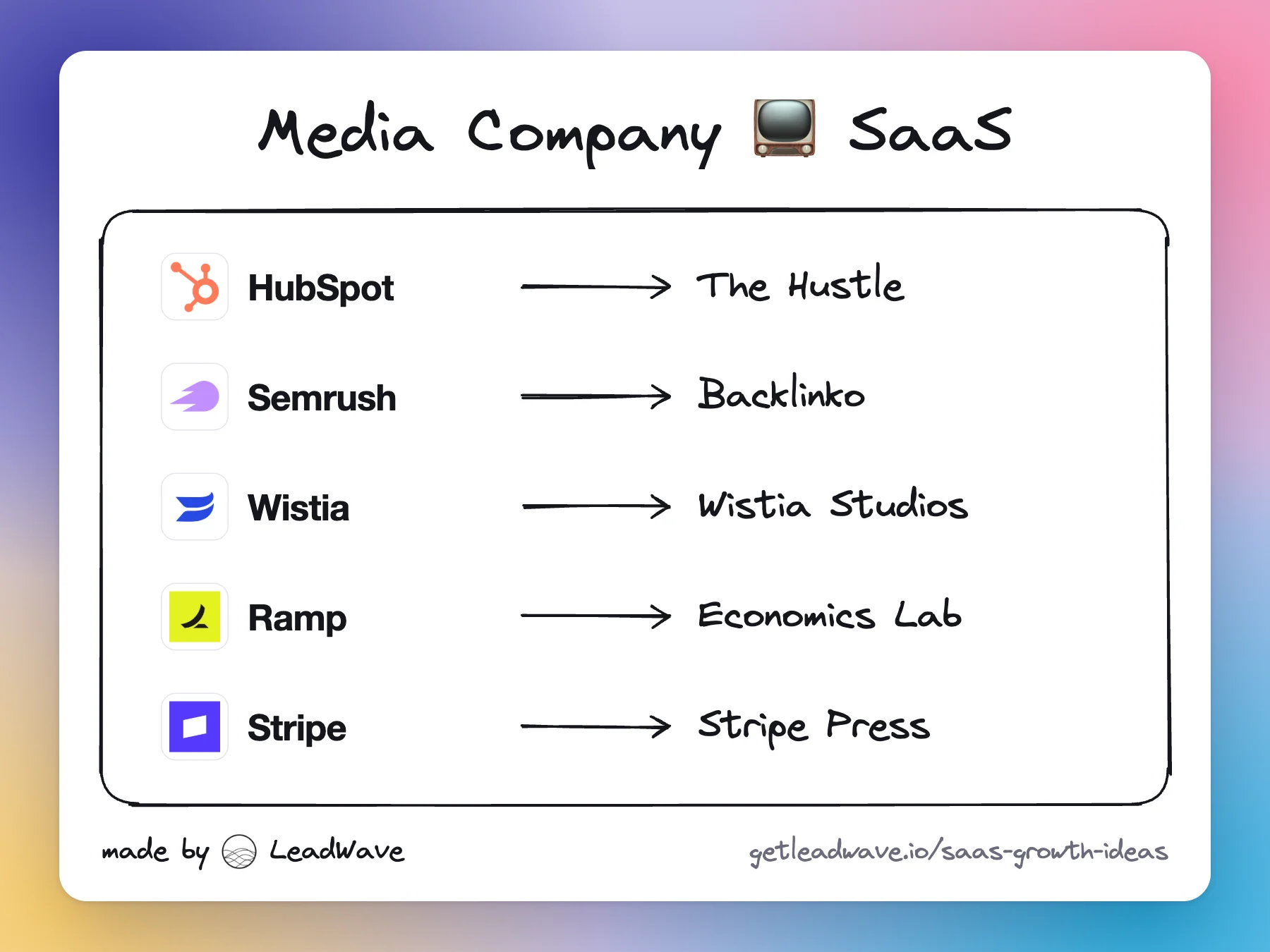
- Interview show. A host from your company talks to one guest per episode. Best for relationship building, because every guest is a chosen contact. Examples: Stripe's Cheeky Pint, where co-founder John Collison interviews founders and leaders; Gainsight's [Un]Churned for customer success leaders; dbt Labs' The Analytics Engineering Podcast for data teams.
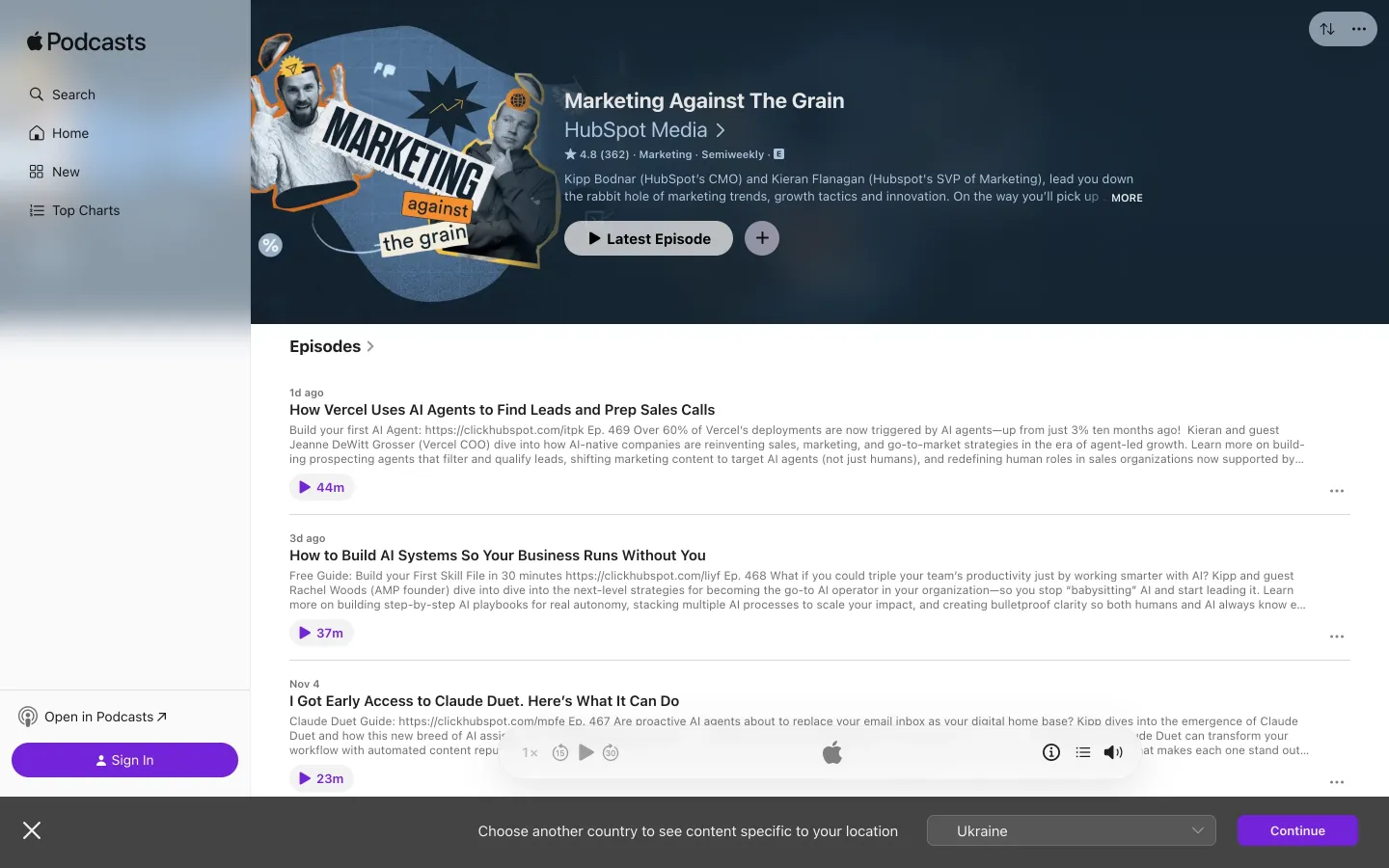
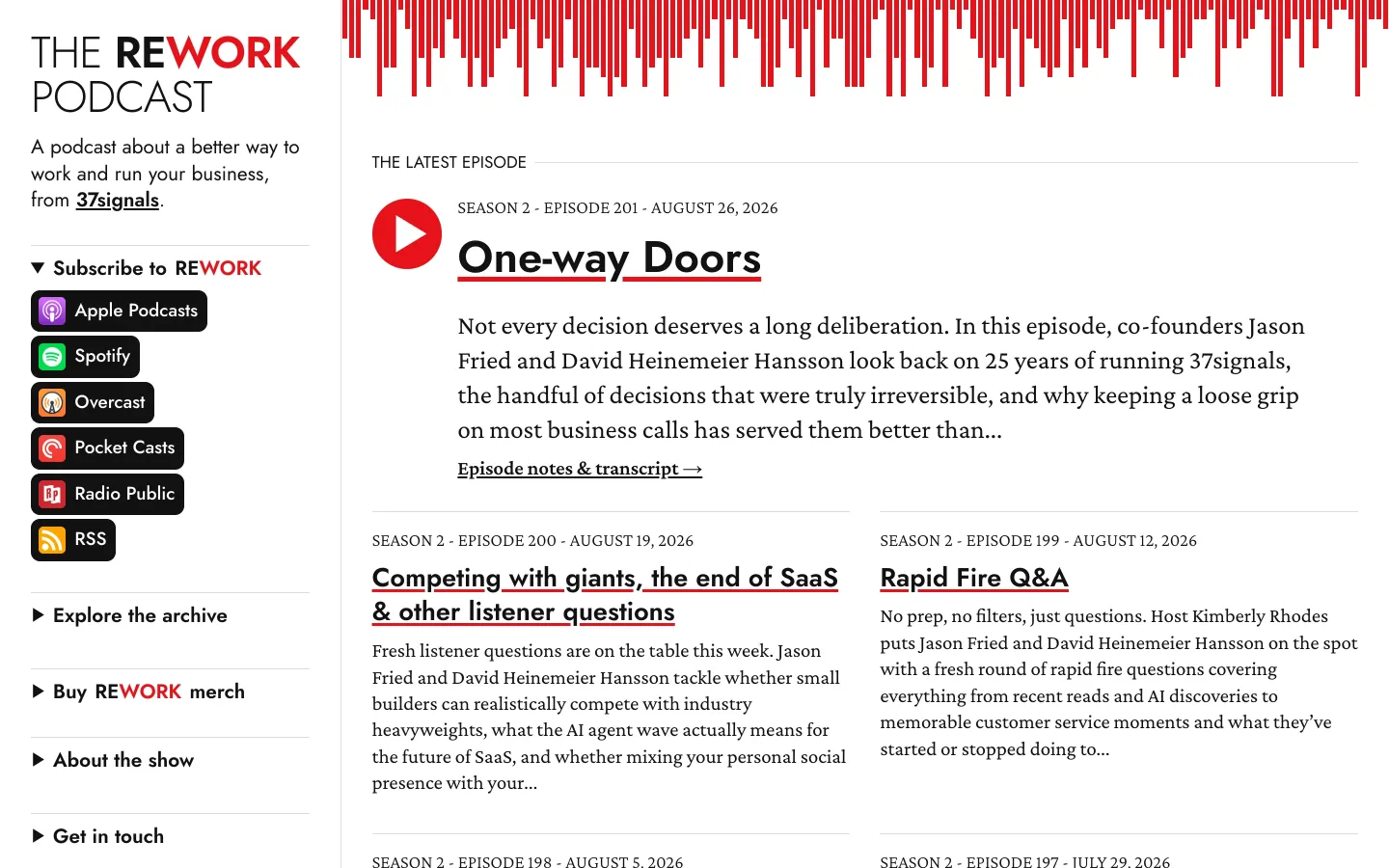
- Internal-expert show. Your own people talk, with few or no guests. Best when your team has strong, distinct opinions. 37signals' REWORK is mostly Jason Fried and David Heinemeier Hansson on how to run a business. HubSpot's Marketing Against the Grain is its CMO Kipp Bodnar and Kieran Flanagan trading growth tactics. Cheapest to produce, but it only works if the hosts are worth listening to.
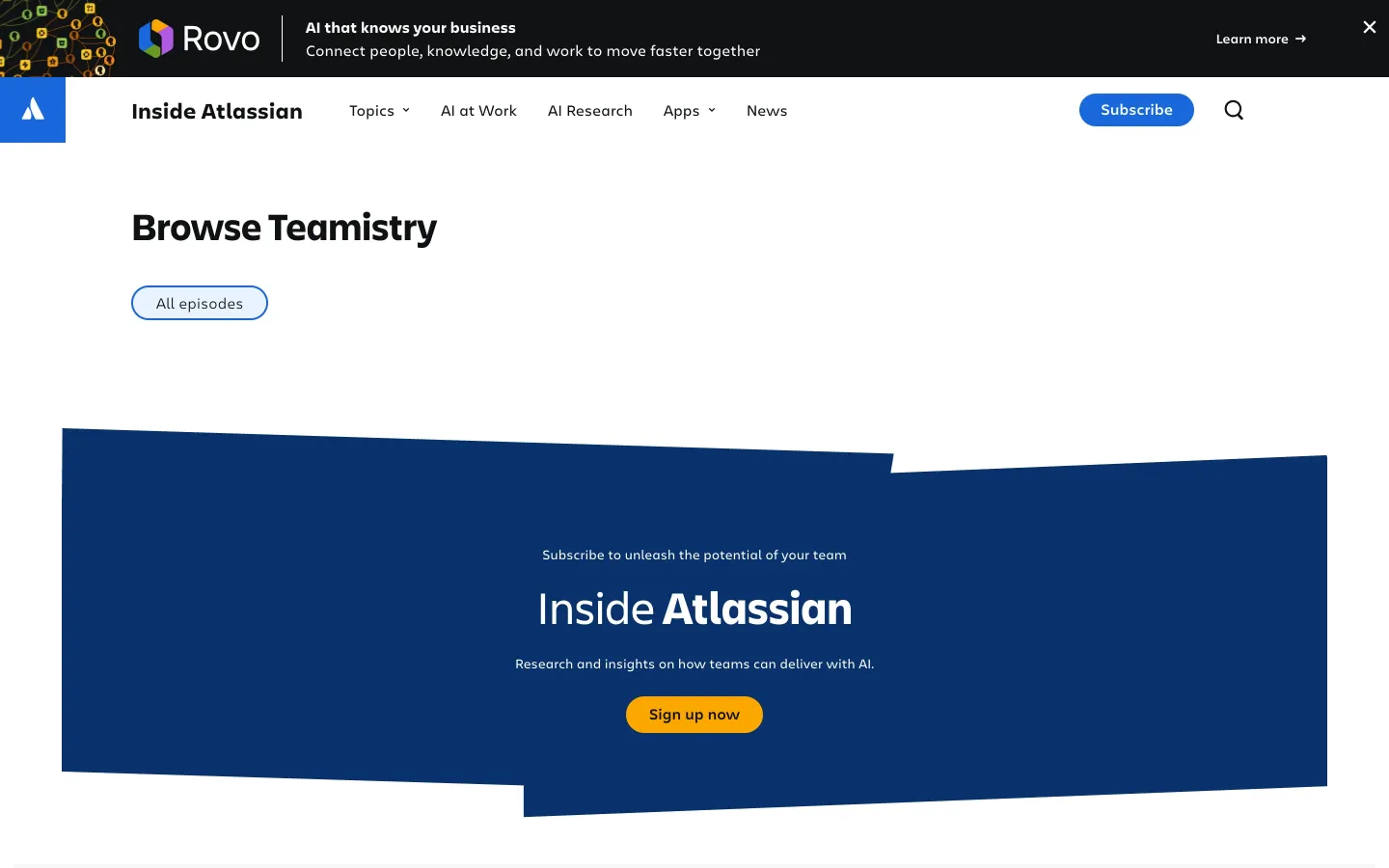
- Narrative or documentary series. Scripted, reported stories, often with a journalist host. Best for brand, and the most expensive per minute. ClickUp's When It Clicked told founding stories of Google Docs, Rippling, Shopify and Front. Atlassian's Teamistry told stories of teamwork. Zapier's The 4% was a four-part true-crime series. All three are finished: narrative shows tend to run as seasons, not forever.
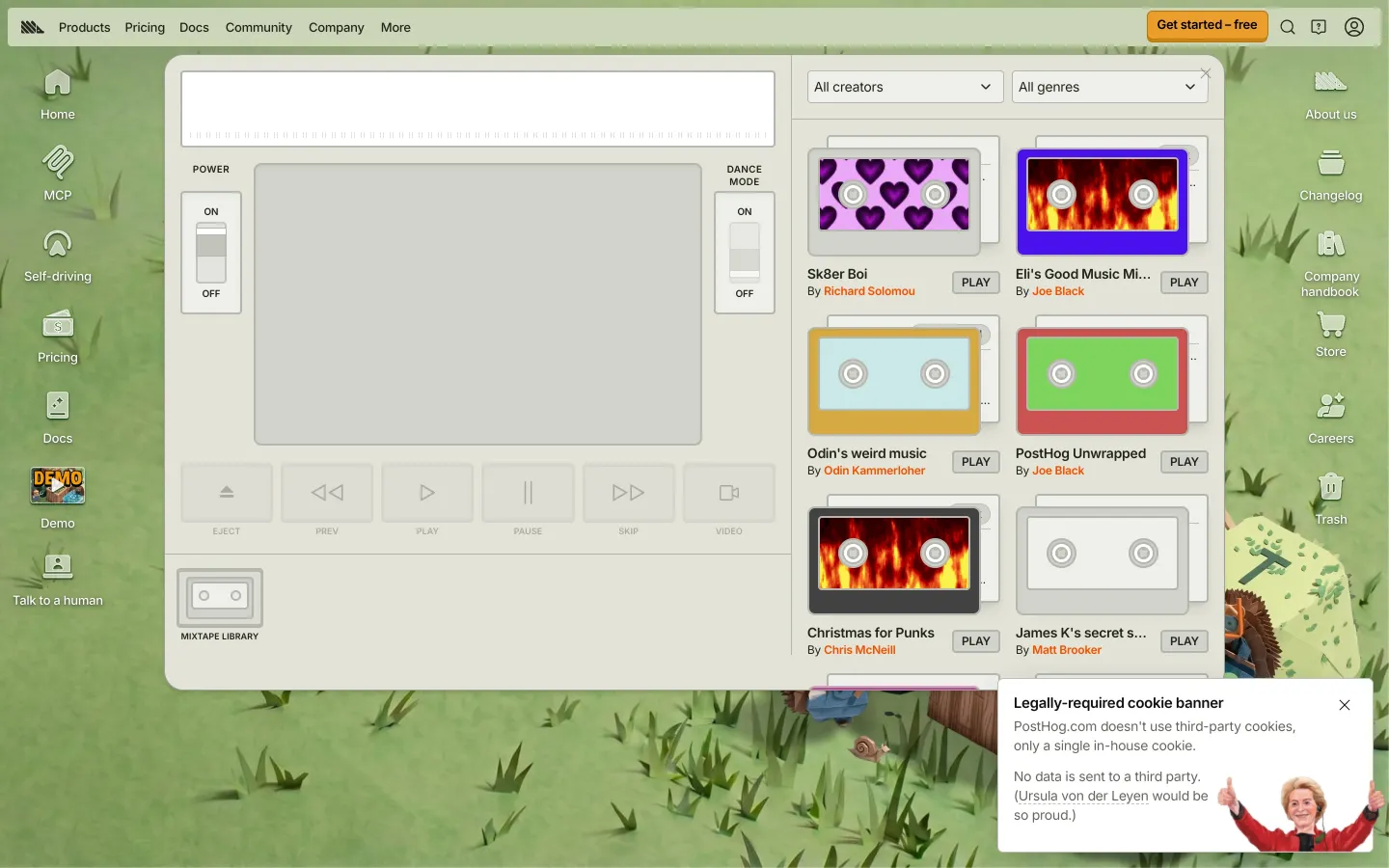
There is also a fourth, cheap option worth knowing: audio of what you already publish. PostHog FM turns PostHog's public handbook into an audio feed. It won't build relationships, but it costs almost nothing and gives fans another way in.
Video first: clips are the distribution
Podcasts are no longer audio-only. YouTube said in February 2025 that it has more than 1 billion monthly active viewers of podcast content. For B2B, that changes the plan:
- Record video from day one, even for a remote interview. Two cameras or a good remote-recording tool is enough.
- Publish the full episode on YouTube as well as Apple Podcasts and Spotify. YouTube is also a search engine, so title episodes for what buyers search, not inside jokes.
- Cut three to five clips per episode of 30 to 90 seconds, each built around one sharp claim. Post them on LinkedIn from the host's and the guest's personal profiles, not only the company page, and tag the guest so the clip reaches their network too.
- Turn the transcript into written content: a blog post, a section in your newsletter, a quote card, a short summary sales can send to prospects in the same role.
This is how a podcast with a small audio audience still reaches a large one: most of the reach is in clips and posts, and the full episode is where the interested few go deep. Stripe's Cheeky Pint, HubSpot's Marketing Against the Grain and Zapier's Agents of Scale, where CEO Wade Foster interviews C-suite leaders, all treat video as a main format.
What a show takes
The cost of a podcast is mostly time, and most of the time is not the recording. A typical weekly or biweekly interview show needs:
- A host who is credible to your buyers and will still show up in month 12. This is usually the founder, an executive or a senior expert. A host who leaves often ends the show.
- Guest booking: a target list, outreach, scheduling and prep notes. This is where the relationship value is made, so give it to someone who knows the market.
- Production: recording, editing, show notes, thumbnails and publishing. An agency or freelancer can do most of this.
- Clips and posts: someone who turns every episode into short videos and written posts, the part most teams underinvest in.
- A season plan. Commit to 10 to 12 episodes before judging results. Most shows are judged too early, or quietly fade after a handful of episodes.
If that is too much, start smaller: a 10-episode season with buyers you'd want to meet anyway is a fine first test. It's also cheaper to guest on other people's shows first and learn what conversations resonate.
How to measure a B2B podcast
Downloads are the number everyone reports and the one that matters least. A niche B2B show will never have consumer download numbers, and it doesn't need them. What matters is who is listening and what happens next:
- Guest to pipeline. Track every guest in your CRM. How many became opportunities, customers, partners or referrers within six to twelve months?
- Self-reported attribution. Add “How did you hear about us?” as a free-text field on demo and sign-up forms, and count mentions of the show. Podcast influence rarely shows up in click tracking.
- Audience quality. Look at who follows, comments on and shares the clips. Are they the job titles you sell to?
- Sales use. How often do reps send an episode to a prospect, and do those deals move faster?
- Consistency. Episodes published on schedule. A show that skips weeks loses both listeners and guests.
If after a year the guests aren't buyers, the clips don't reach your market and nobody mentions the show on forms, change the format or stop. Plenty of good companies have.
Shows that stopped, and what that teaches
Branded podcasts end often, and it isn't always failure. Looking at the public feeds:
- ClickUp's When It Clicked ran six feed items from October 2021 to March 2022, then stopped. The page is still up.
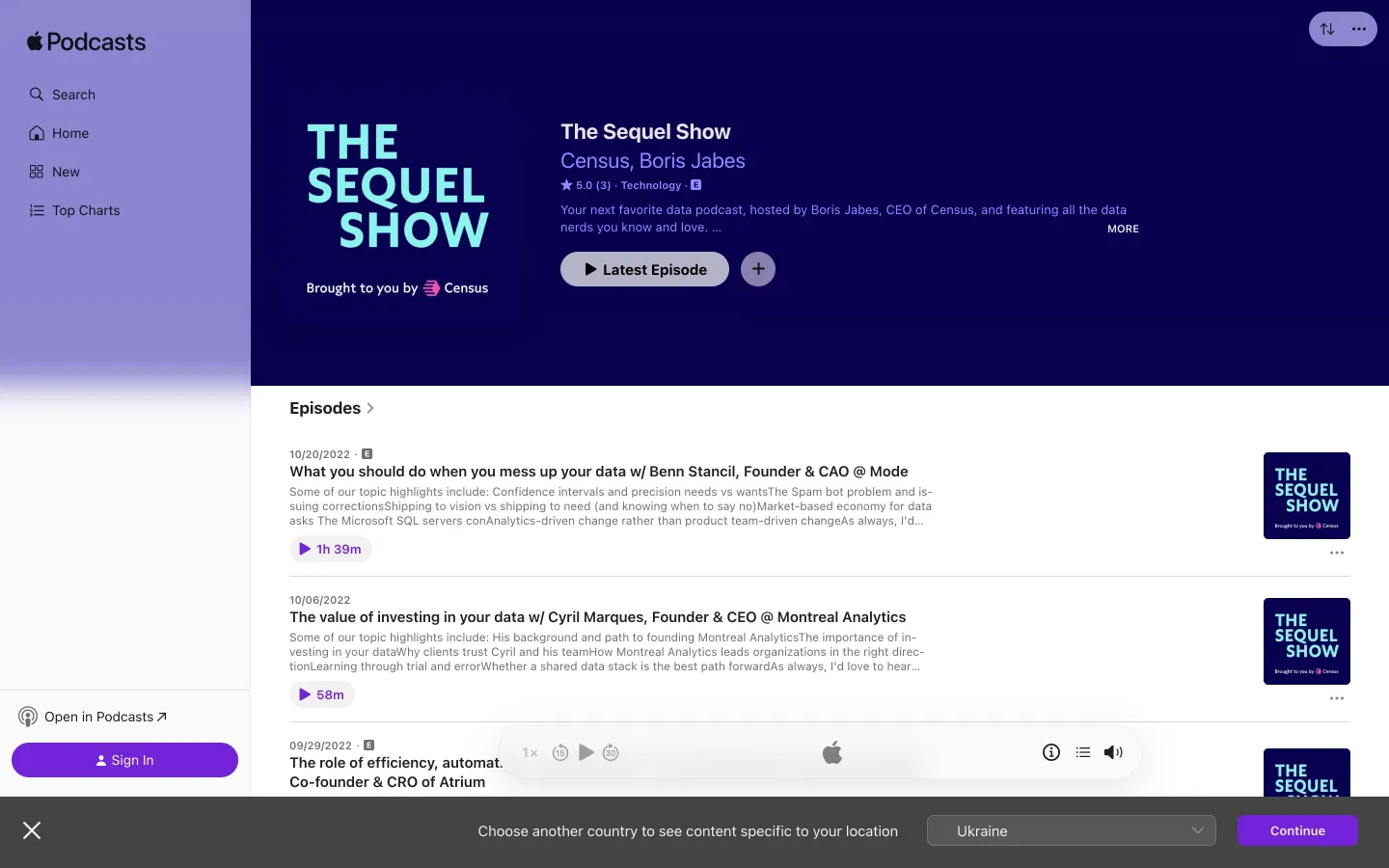
- Census's The Sequel Show, hosted by CEO Boris Jabes, ran 30 episodes from March 2021 to October 2022. Fivetran agreed to buy Census in May 2025, and getcensus.com now redirects to Fivetran.
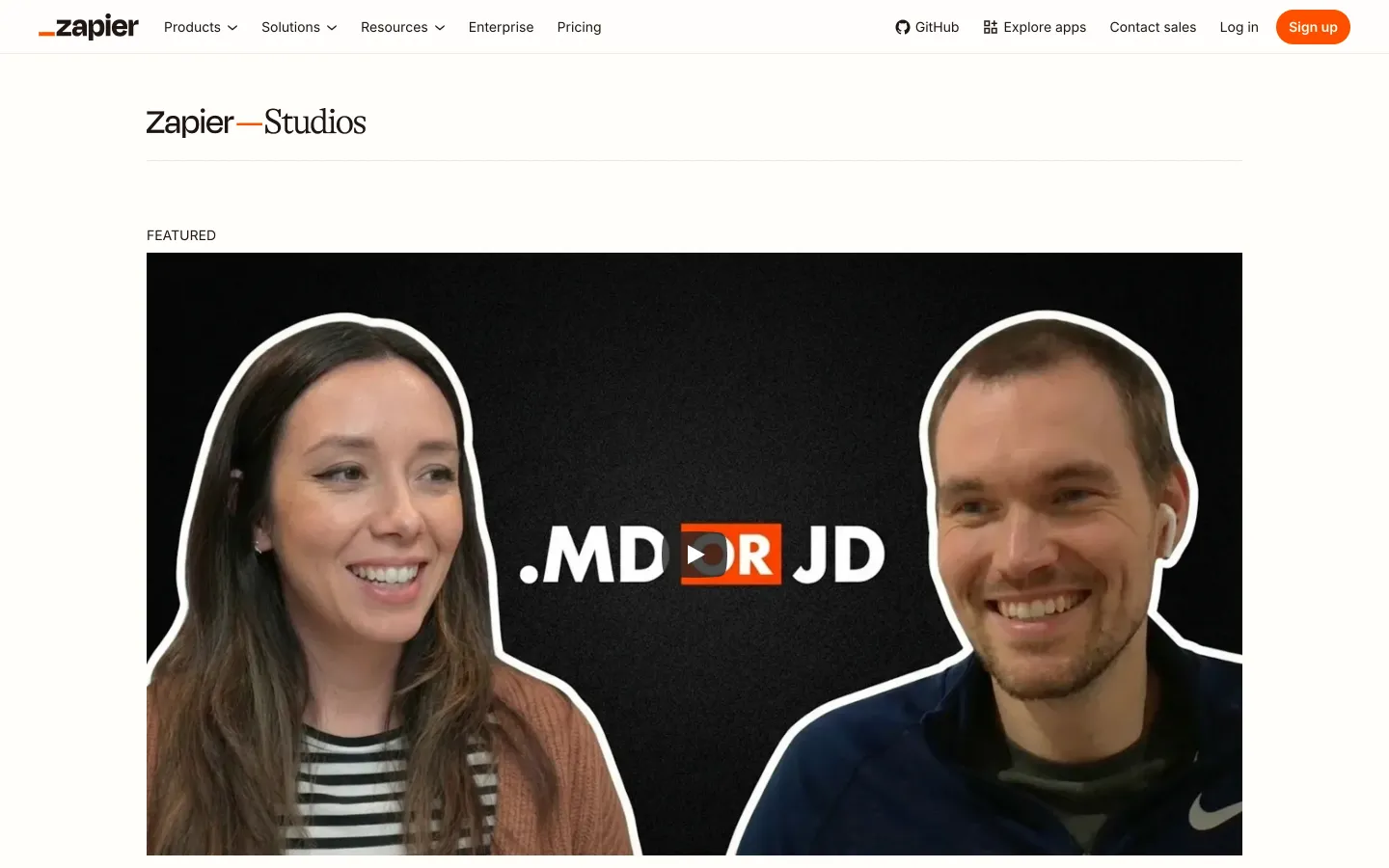
- Zapier's podcast page now redirects to Zapier Studios. Its podcast The 4% was a finished four-part series; its ongoing show is the video-first Agents of Scale.
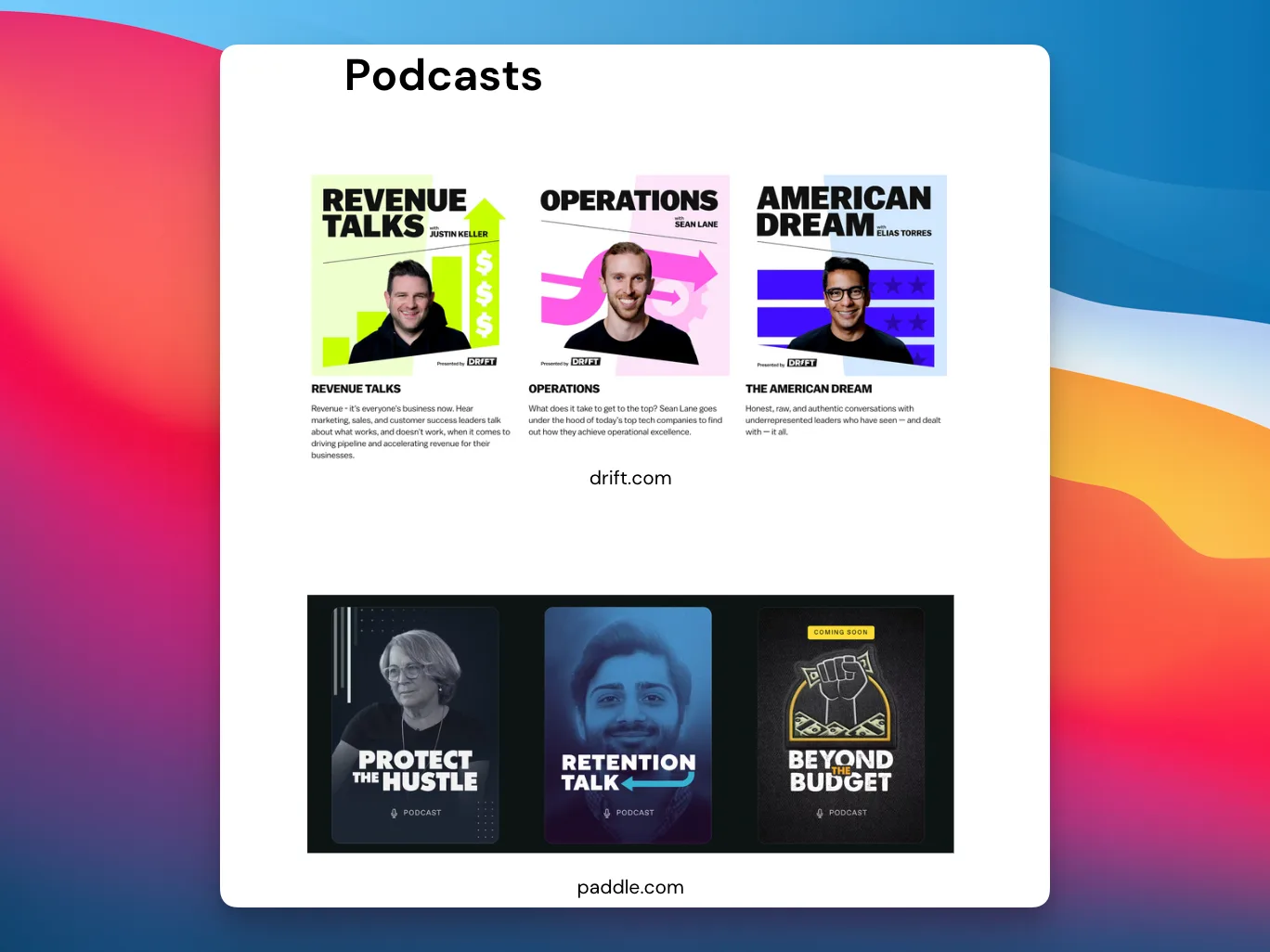
- Drift's Seeking Wisdom has had no new episode on Apple Podcasts since September 2021; Atlassian's Teamistry since February 2023; Salesforce's Blazing Trails since March 2023.
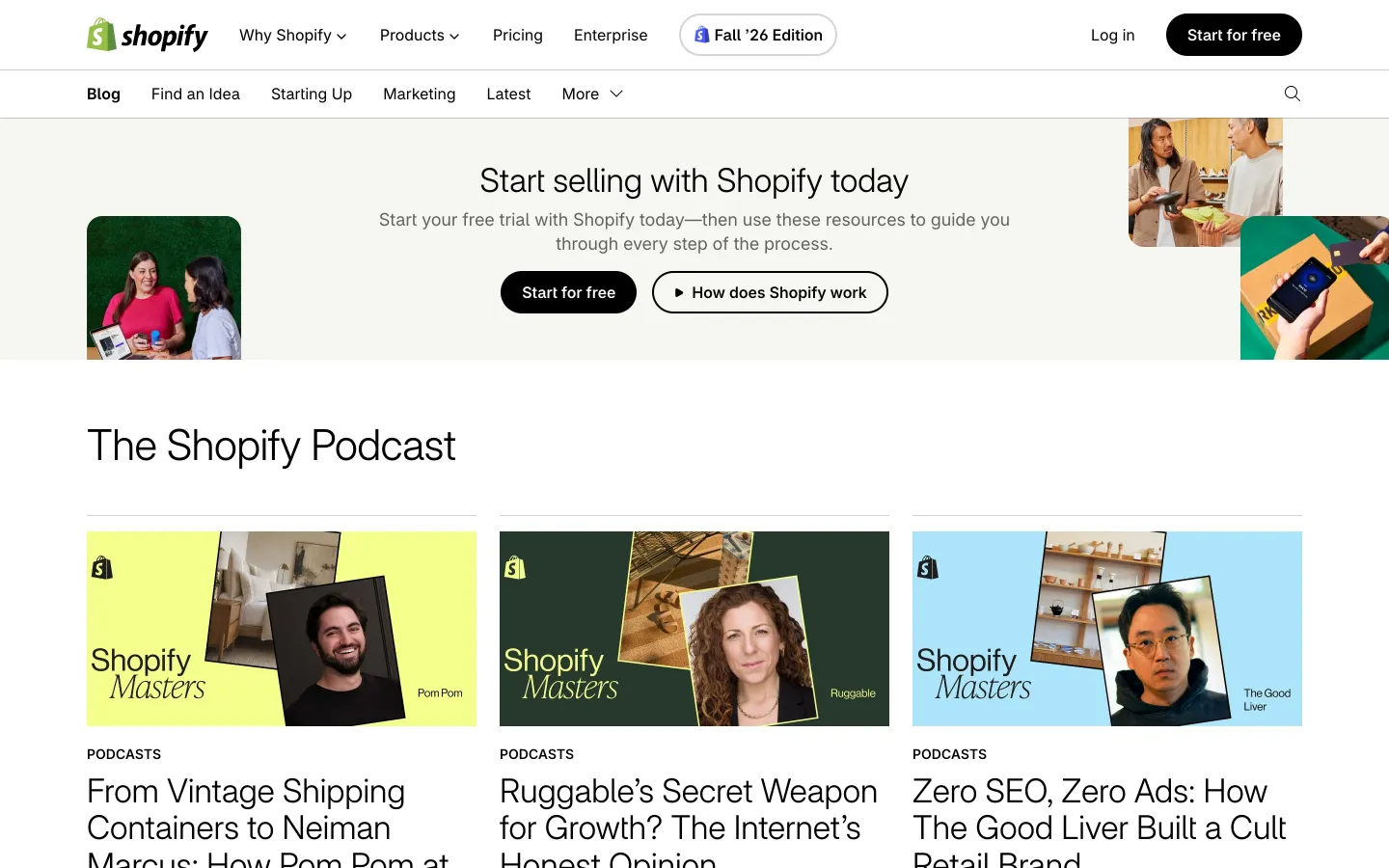
The pattern: narrative series end because they are expensive and were planned as seasons; interview shows end when the host leaves, the company is acquired or the budget moves. The shows that last (37signals' REWORK, HubSpot's Marketing Against the Grain, Shopify Masters) have a host who owns them and a clear audience the company sells to. Plan for that from the start, and treat a finished season as a result, not a failure.