Branded Blog Examples: 12 SaaS Blogs That Work Like Publications
Turn the company blog into a named publication with a point of view and content only your product can teach. It earns trust, search traffic and citations.
Impact
Medium
Effort
Medium
Time to results
Quarters
Budget
None needed
Team
Marketing
Tools for this growth idea
WordPressThe classic blog CMS, on its own subdomain or path
WebflowA blog on the same CMS as the marketing site
ClaudeResearch, outlines and first drafts; an editor makes them good
CanvaCover images in the blog's own style
Google AnalyticsSee which posts bring signups, not just visits
What makes a blog branded
Most SaaS blogs are a list of keyword posts under /blog. A branded blog has a name, an editorial identity and a reason to come back. It reads like a publication that happens to be owned by a software company.
These examples show the pattern:
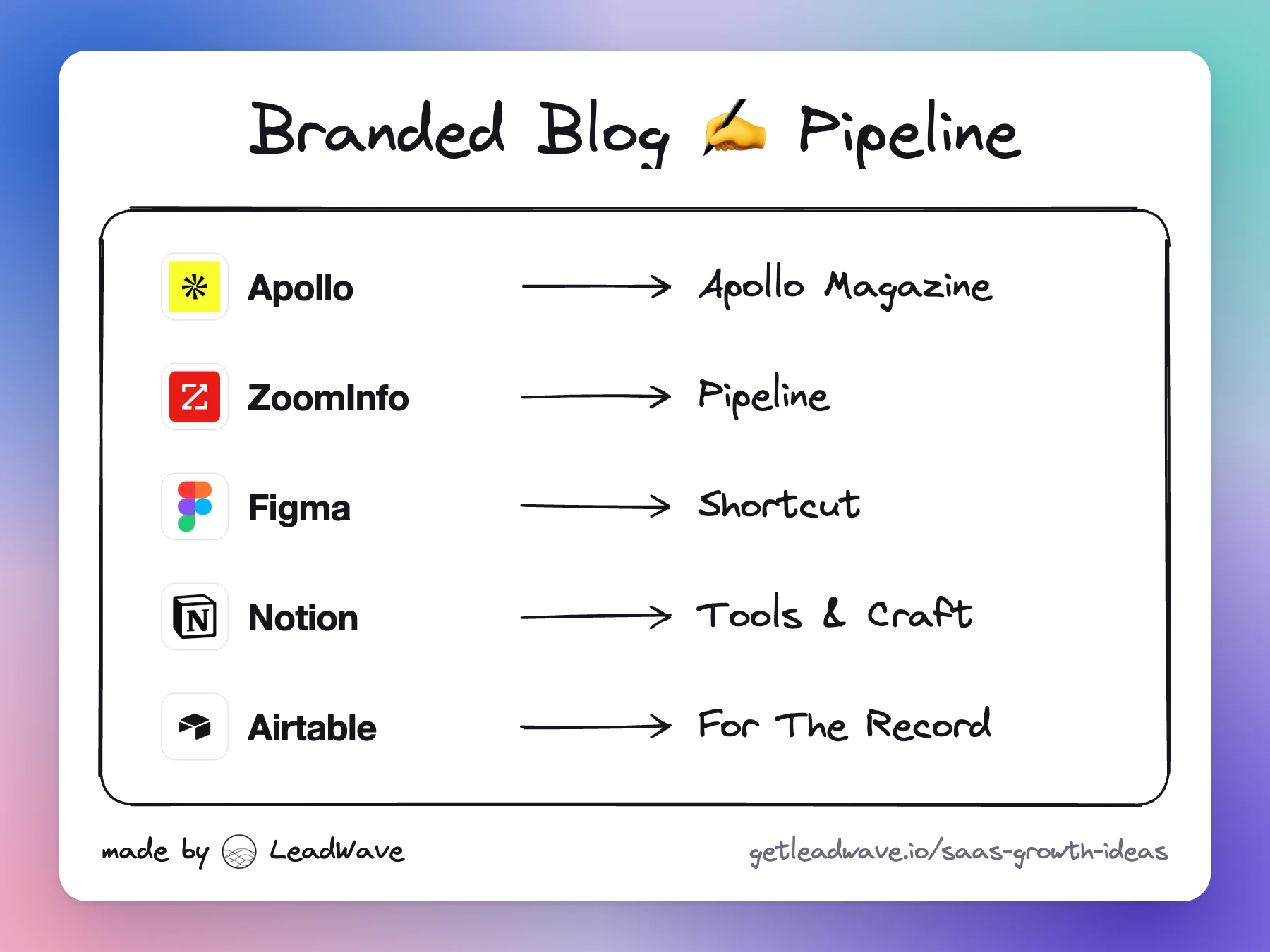
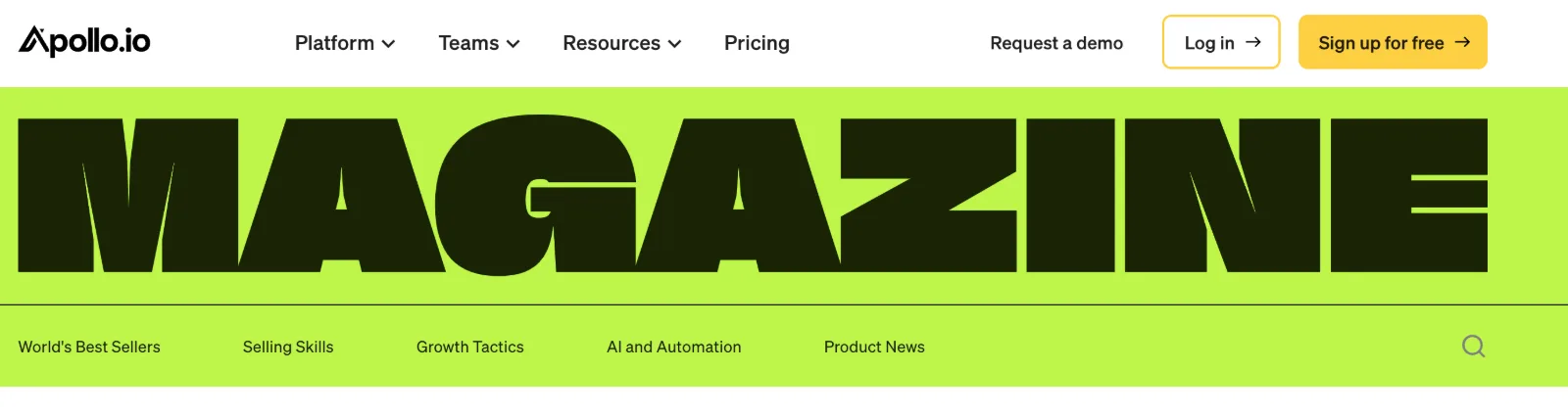
Apollo Magazine: Apollo's sales and growth content, framed as a magazine.
Pipeline: ZoomInfo's blog on B2B sales and marketing, on its own subdomain.
Tools & Craft: Notion's 'thoughts on the future of work'.
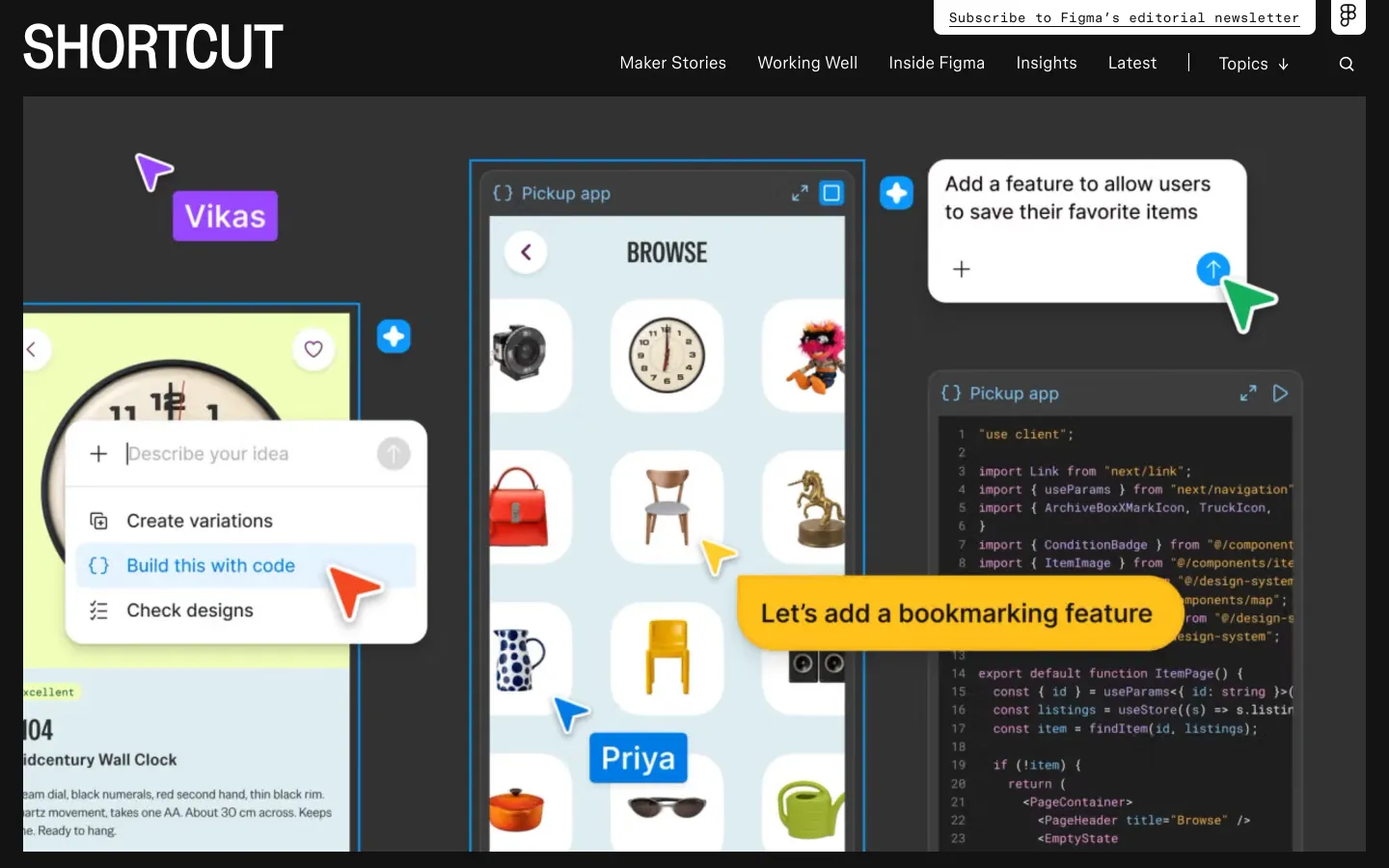
Shortcut: Figma's blog, rebuilt as an editorial publication with maker stories and its own newsletter.
Why a name helps: it sets a higher bar for what gets published, it gives the blog its own identity on social and in newsletters, it makes guest writers and interviewees say yes more often, and readers remember a publication better than a URL. The name alone does nothing, though. It works only when the content behind it is worth following.
Write what only your product can teach
A blog that gets traffic and sells nothing is common. The fix is to choose topics by how close they are to the product.
Ahrefs is the clearest case. CMO Tim Soulo scores every topic from 0 to 3 for 'business potential': 3 means Ahrefs is close to the only solution, 0 means the product barely fits. The team writes only 2s and 3s, and each post shows how to solve the problem using Ahrefs. In an interview on SaaS Club, Soulo described growing the blog from 15,000 to over 250,000 monthly visitors from Google in about four years, becoming one of Ahrefs' biggest drivers of new customers, without email capture on posts.
Two more ways to write what others can't:
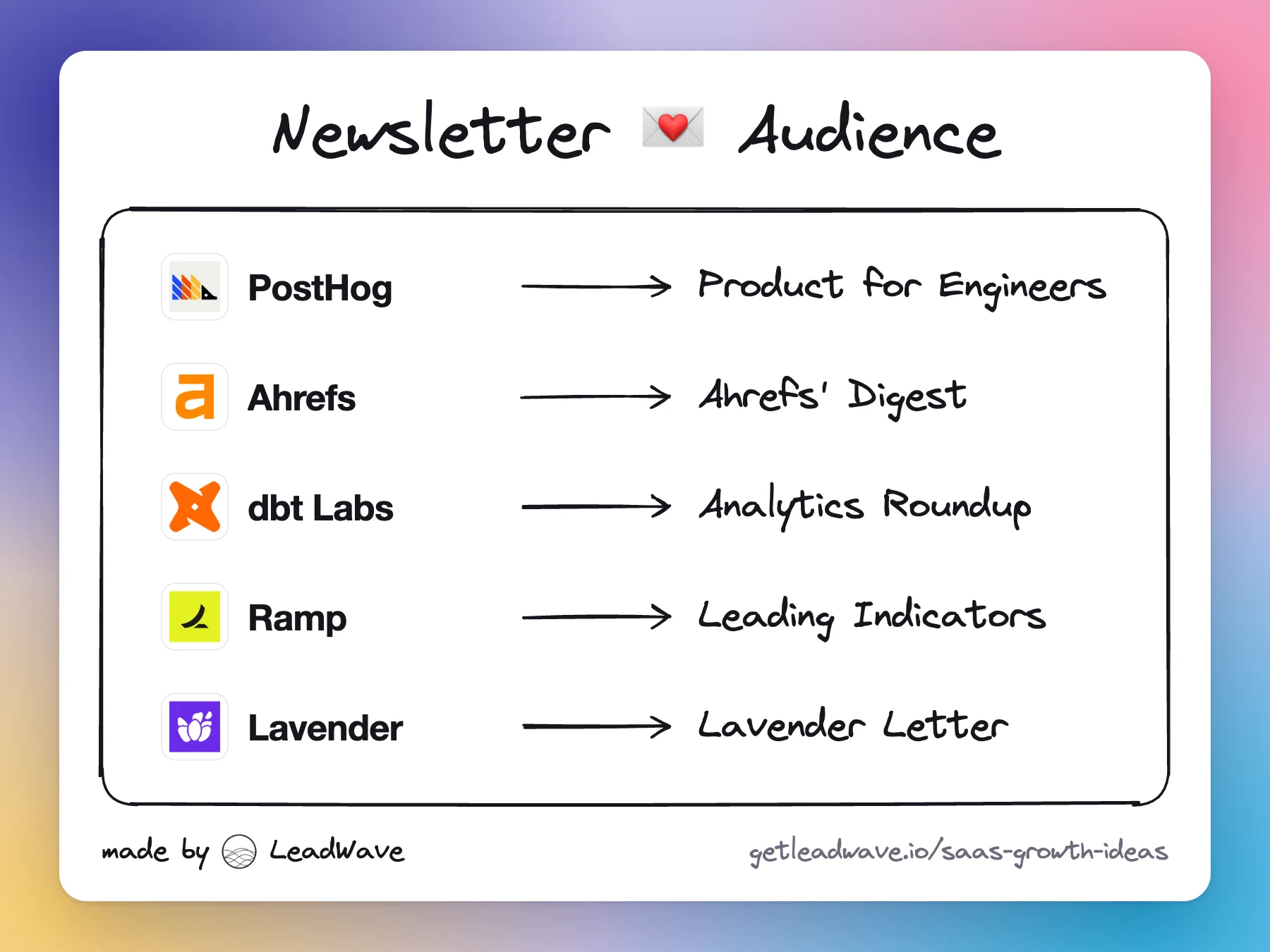
Your own data. Gong's blog calls itself 'the #1 data-backed sales blog on the internet', and its Gong Labs research comes from analyzing sales conversations and deals with Gong AI. Lavender publishes a Cold Email Benchmark Report and breaks it down by the function you're emailing.
Your own way of working. Buffer's blog has an 'Open' topic where the company writes about how it runs itself, such as an A/B test on human and AI involvement in hiring.
Posts like these earn links and citations because they are the original source.
What changed with AI search
The playbook of ranking for every broad question in your market is weaker now. On HubSpot's Q2 2025 earnings call, CEO Yamini Rangan said organic search traffic is declining globally and that AI overviews are giving answers, so fewer people click through. She put blog traffic at roughly 10% of HubSpot's leads. HubSpot built the inbound blog model, so this matters.
What holds up:
Product-led posts. How-tos that need your product to finish the job still convert, because the reader has to act, not just learn.
Original data and research. AI answers cite sources. Being the source is how you get named.
Opinions and experience. First-person lessons and strong takes are hard to summarize away.
Bottom-of-funnel pages. Comparisons, alternatives and use-case pages close to buying. See comparison pages.
What fades: broad definitions, listicles anyone could write, and AI-written filler. Those are exactly what AI answers replace.
Where branded blogs fail
A rename and nothing else. Calling the blog a magazine without changing what gets published fools nobody.
No schedule. Publications publish on time. A blog that goes quiet for months loses readers and crawl priority.
Writing for the algorithm, not the buyer. Posts that chase volume with no product fit fill the traffic chart and leave the pipeline empty.
Acquisitions and rebrands. From our own 2023 list: Loom's blog now lives as an archive on Atlassian's blog, Census's blog redirects to Fivetran's, and Dealfront's blog redirects to Leadfeeder's. Years of posts end up on a domain that doesn't care about them. If you rename or merge, map every old URL with a redirect.
No path to the product. Every post should end with a next step that matches it: a template, a free tool, a trial, a demo.
Figma's blog, now an editorial publication called Shortcut with maker stories, 'Working Well', 'Inside Figma' and insights sections, plus an editorial newsletter.
Billed as 'the #1 data-backed sales blog on the internet'. Gong Labs publishes findings from analyzing sales conversations and deals with Gong AI, so the research is something only Gong can produce.
Every topic is scored 0 to 3 for how well the product fits, and only 2s and 3s get written. Tim Soulo described growing it from 15,000 to over 250,000 monthly Google visitors in about four years.
The blog that defined inbound marketing. On HubSpot's Q2 2025 earnings call the CEO said AI overviews mean fewer clicks, and put blog traffic at roughly 10% of leads.
The Lavender Library publishes a Cold Email Benchmark Report and follow-up posts on emailing specific functions like finance and operations, written by Will Allred.
From LeadWave’s own collection, saved as we found them since 2022. Some of these pages have changed since.
Apollo's blog, rebranded as Apollo Magazine
How to run it: the playbook
Define the reader and the promise.One buyer role and what they get better at by reading. Write it as a one-line editorial promise.
Name the publication.Pick a name that reflects the reader's goal or your product (Pipeline, For The Record, Shortcut). Keep the company visible as publisher.
Score topics for business potential.List topics from search, sales calls and support tickets. Score each 0 to 3 for product fit and write only 2s and 3s at first.
Plan one original-data series.A quarterly or yearly report on your product data or a survey of your users. It is your main source of links and citations.
Set a schedule you can keep.Two strong posts a month beats eight weak ones. Name an editor who owns quality and the calendar.
Give every post a next step.A matching template, free tool, trial or demo, and a newsletter signup.
Refresh, don't just publish.Each quarter, update the posts that bring the most signups and prune or merge the ones that bring nothing.
What to measure
Signups and pipeline from blog first-touch and assisted sessions, by post.
Organic clicks and rankings for posts with business potential 2 or 3.
Mentions and citations in AI answers for your core topics.
Referring domains to data and research posts.
Newsletter signups per 1,000 blog visits.
Returning visitor share, the clearest sign the blog works like a publication.
Pitfalls
Renaming the blog without raising the bar on what gets published.
Chasing search volume on topics where the product doesn't fit.
Publishing AI-written filler that AI answers replace anyway.
Going quiet for months.
Losing years of posts in a rebrand or merger without redirects.
Posts with no next step into the product.
Frequently asked questions
It is a company blog run like a publication, with its own name, editorial voice and schedule, such as Apollo Magazine, ZoomInfo's Pipeline or Figma's Shortcut.
Strong examples include Ahrefs (product-led SEO content), Gong (data-backed sales research), HubSpot (inbound marketing), Figma's Shortcut and Notion's Tools & Craft (editorial), Buffer (open company posts) and Lavender (cold email benchmarks).
Yes, if it publishes what AI can't replace: original data, real experience, strong opinions and how-tos that need your product. Generic definitions and listicles are losing clicks to AI answers.
As often as you can keep quality high. Two strong posts a month, kept up for a year, usually beats a burst of weekly posts that stops.
Versus, alternatives and switch pages catch buyers who already know the category and are choosing between tools. The highest-intent pages a SaaS site can own.