

What Segment did
Guillaume Cabane led growth at Segment, the customer data platform, through a period when, he says, it tripled revenue in 18 months (SaaStr). His growth team ran on experiments, and one became his favorite story.
The flow, as write-ups of his talks describe it:
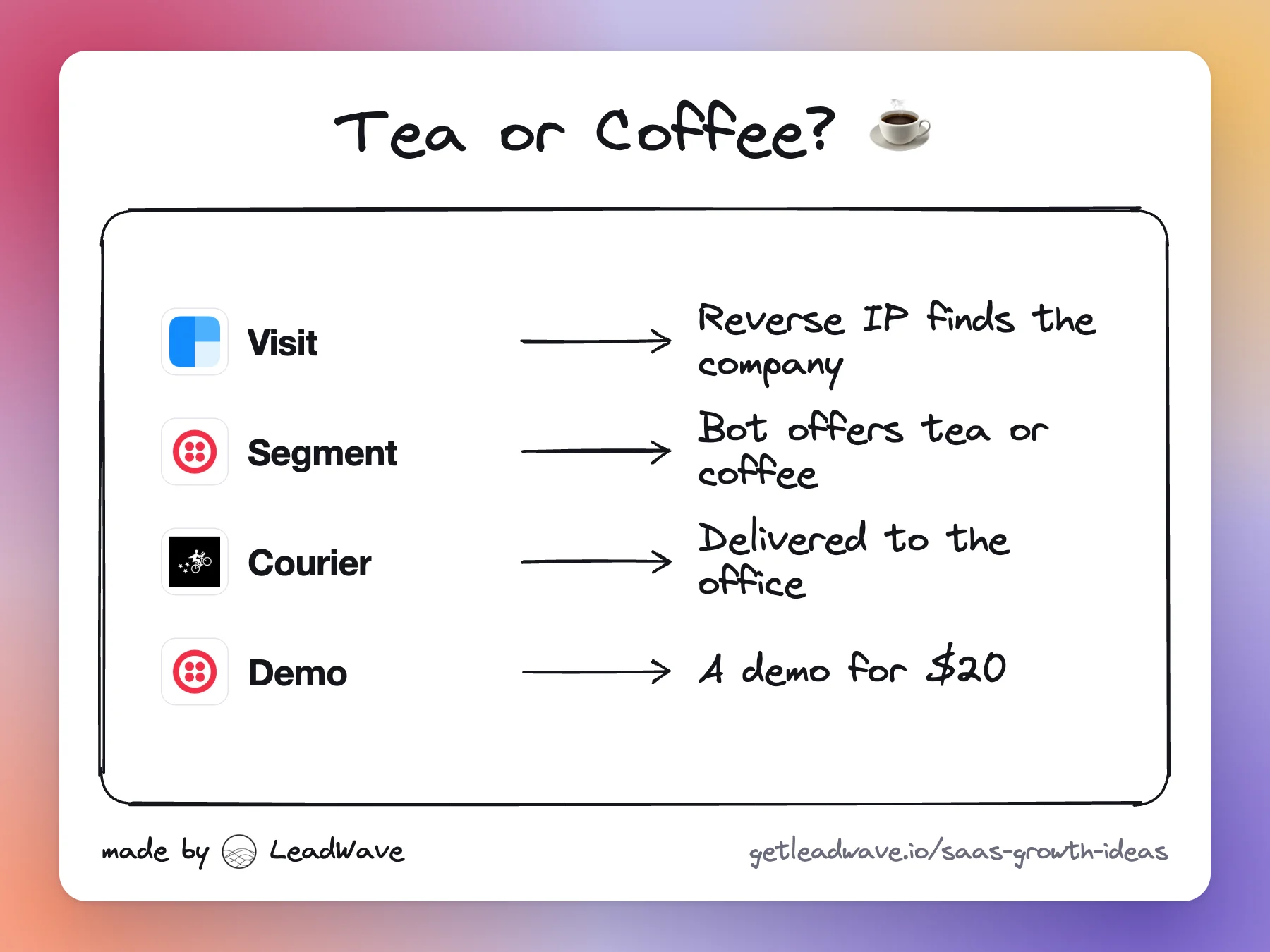
- Identify the company. When someone visited Segment's site, a reverse-IP lookup (Clearbit) turned the visitor's IP address into a company: its name, size, industry and headquarters.
- Qualify it. Only visitors from high-value accounts got the offer.
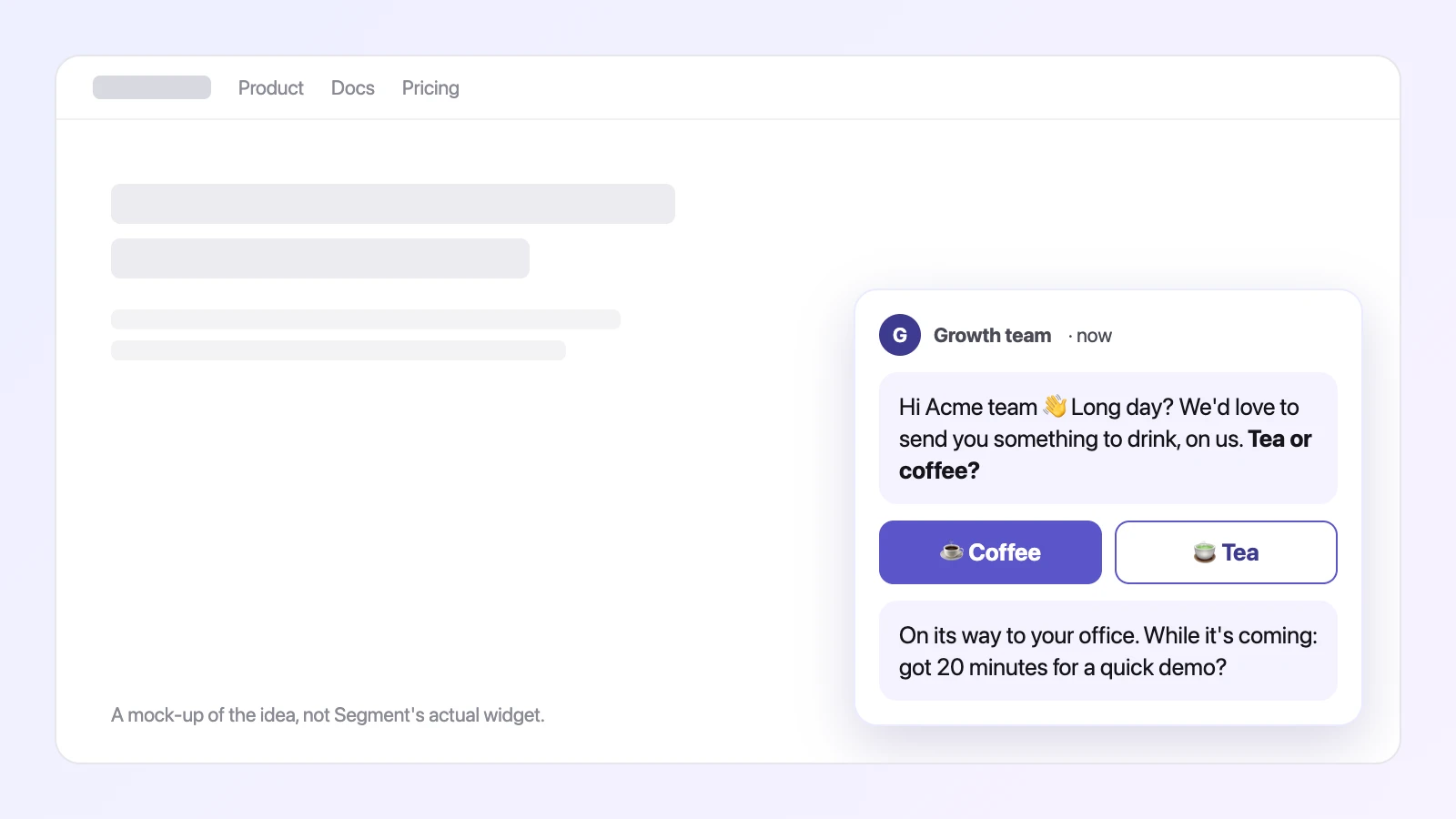
- Offer a drink in the chat. The website bot asked how they liked their coffee. In some tellings the visitor picks tea or coffee.
- Deliver it. An order went out to a delivery service, addressed to the company's office in the visitor's name. Drift's write-up of one of his talks mentions Postmates and a delivery time of about 15 minutes.
- Ask while it's on the way. While the coffee was coming, the bot asked for a 20-minute demo.
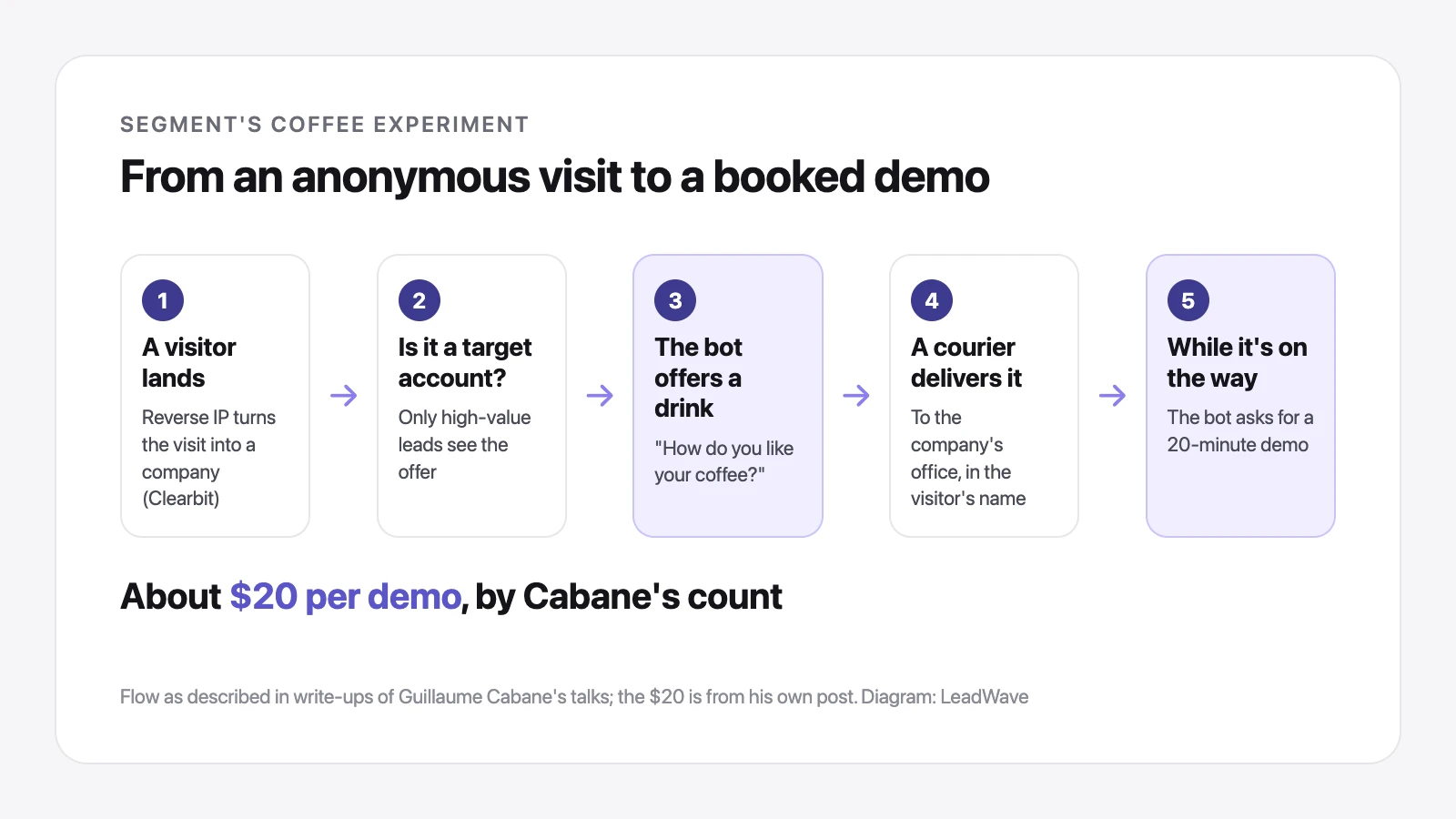
The details vary between retellings (cappuccino or tea, which courier), and the only number is Cabane's own: a demo for about $20. Treat it as one team's experiment, reported years later, not a benchmark.
Why it worked
The timing is perfect. The visitor is on your website right now, reading about your product. Most outbound reaches people who aren't thinking about you; this reaches them while they are.
The surprise is real. Nobody expects a website to send them a coffee. A real coffee showing up at the desk is the kind of thing people mention to colleagues, and the colleagues are often part of the buying team.
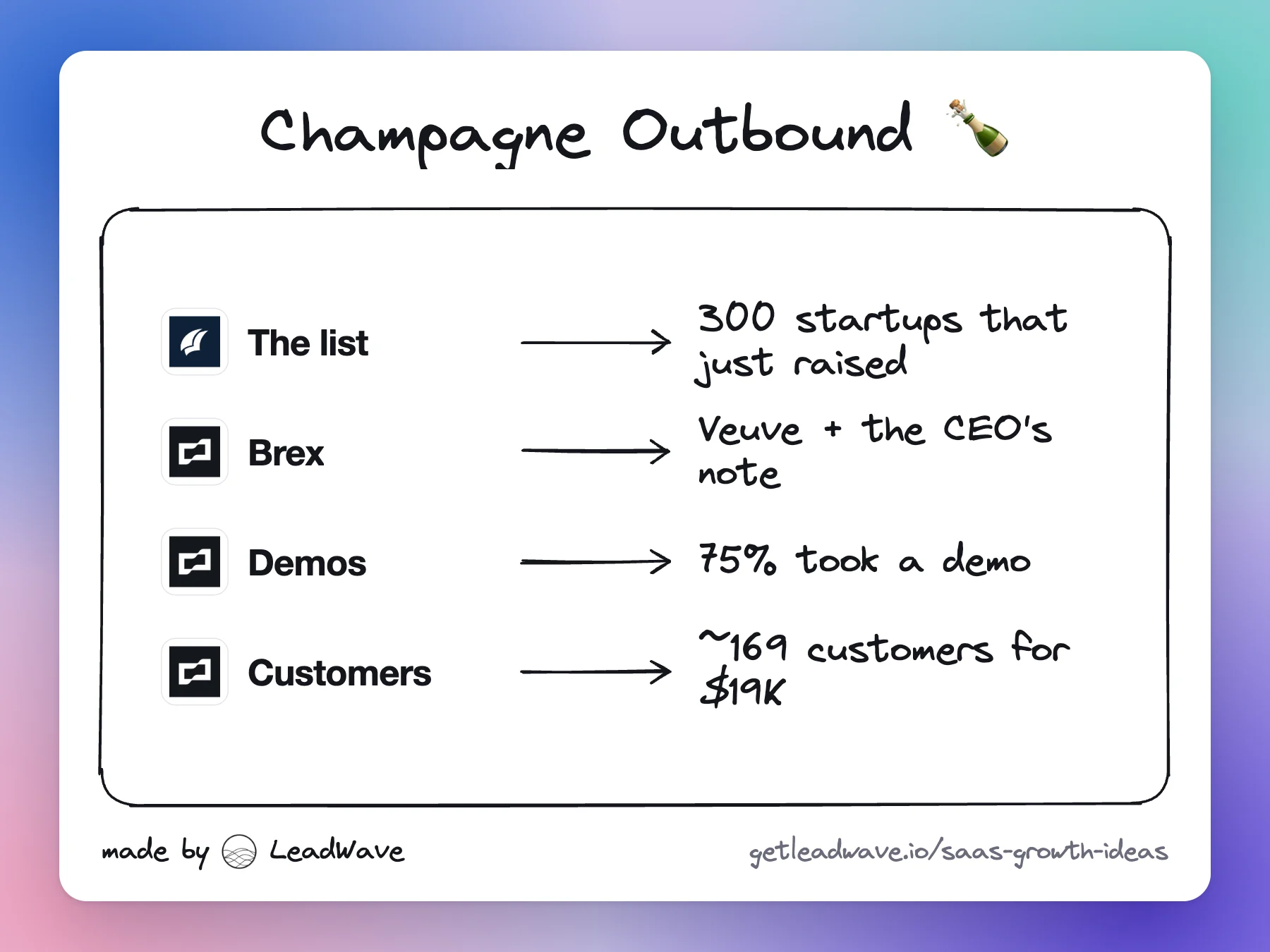
The ask is small and well timed. "Got 20 minutes for a demo?" lands better when the coffee is already on its way. It's the same give-first logic as Brex's champagne campaign, triggered by intent instead of a funding round.
It's cheap. A coffee and a delivery fee cost a few dollars. Even with most offers declined, Cabane's math came out at about $20 per demo, far below what a demo usually costs to book through ads or SDRs.
It used data the team already had. The same reverse-IP lookup let Segment put the visitor's company name into its pages and messages, which Cabane has said raised click-through rates about 5x (Drift). The coffee was one more thing to do with the knowledge of who's visiting.
Why it's harder now, and how to adapt it
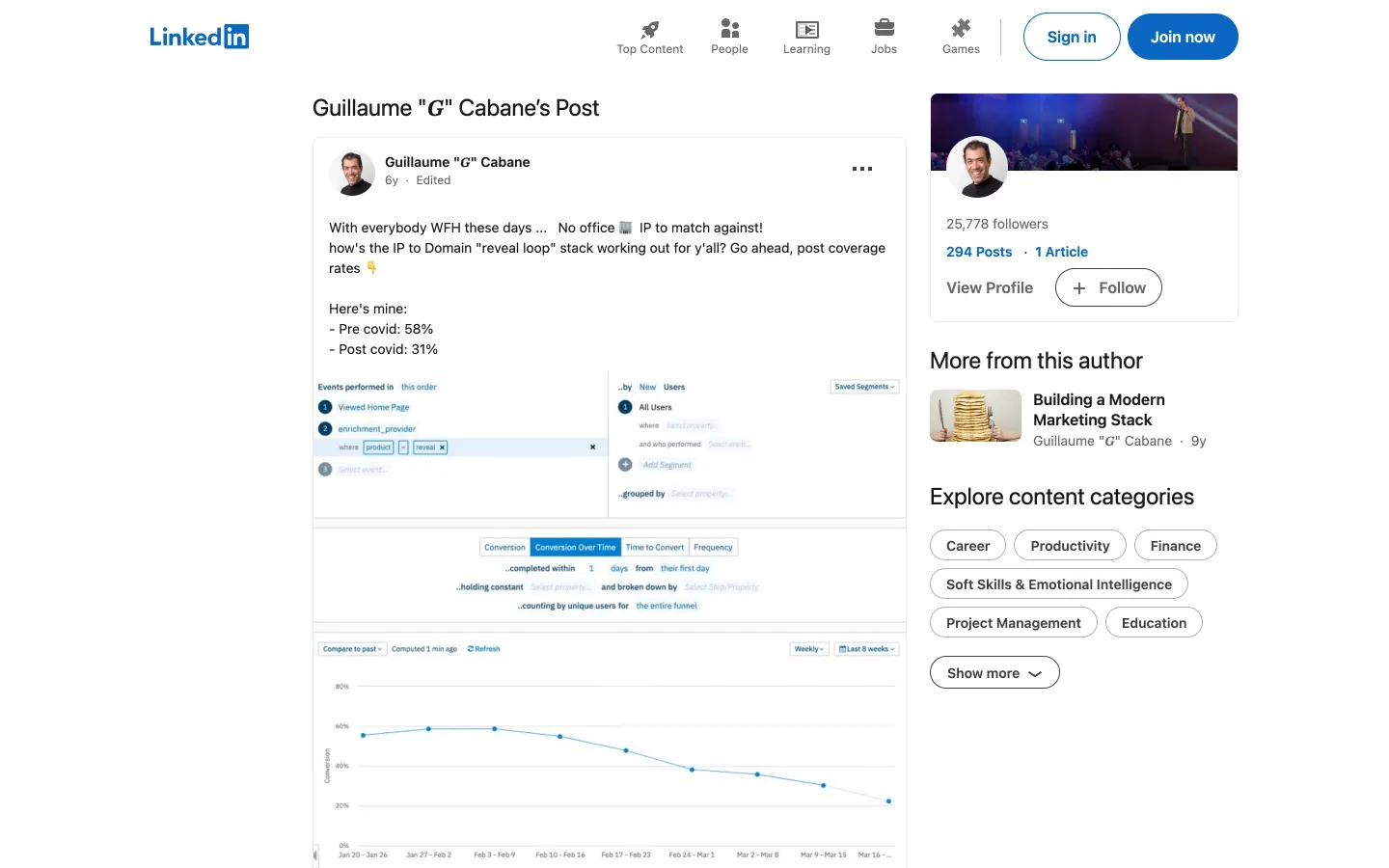
The experiment depended on office networks: a visitor's IP address pointed to their employer, and their employer's office was where they sat. Remote work broke both. In March 2020 Cabane asked other growth teams how their IP-to-company matching was doing and shared his own: 58% before Covid, 31% after (Cabane on LinkedIn).
Versions that work today:
- Ask for the address. The visitor picks tea or coffee and types where they are. It filters for real interest and gets the drink to a person, not an empty office.
- Send it digitally. A coffee e-gift card by email, redeemable anywhere, after the visitor gives their work email in the chat.
- Trigger on known visitors. People who signed up, came from a sales email or are logged in are identified without IP lookups.
- Keep it to target accounts. Match the company against your list of best-fit accounts before you offer anything, or you'll be buying coffee for students and competitors.
In the EU and the UK, collecting a home address and tying a visit to a person is personal data: ask for it with clear consent, and don't look it up.
Where it fails
- Wrong visitors. Without a target-account filter, the offer goes to job seekers, students and competitors.
- Free-coffee hunters. Once people know the bot gives coffee, some will visit for it. Cap it at one per company and per person.
- Creepy wording. "We know you're from Acme" can feel like being watched. Offer the drink; don't announce what you know.
- No delivery. Couriers don't cover every city, and remote workers aren't at the office. Have the digital version ready.
- No one to take the demo. The ask lands within minutes. If sales can't take a call that day, the moment passes with the coffee.
- Gift rules. Some companies and public bodies don't let employees accept gifts at all. Keep it to a coffee.