Crazy B2B Marketing Campaigns: 12 SaaS Stunts and Why They Worked
Ramp locked Kevin from The Office in a glass box. Drift killed its lead forms. What made these B2B stunts spread, what they cost, and how to measure one.
Impact
Medium
Effort
Medium
Time to results
Months
Budget
Needs a budget
Team
Marketing
Tools for this growth idea
FigmaDesign the stunt's one image: the one people will share
LinkedInWhere the photos and clips of a B2B stunt travel
Google AnalyticsWatch branded and direct traffic the weeks after
What makes a B2B stunt work
Most B2B campaigns are forgettable because they describe features. The ones people still talk about follow the same few rules:
One idea, tied to the product's promise. Ramp sells faster expense management, so it put the most famous fictional accountant in a glass box doing expense reports by hand. You understand the product without reading a word.
A villain. Forms (Drift), typing into the CRM (WINN.AI), software itself (Salesforce in 2000). A villain gives the buyer something to agree with and gives the campaign a side to take.
A way to join in. WINN.AI asked salespeople to post videos of themselves smashing keyboards with small axes. Rows designed a Notion-style avatar for everyone who reshared its launch. Participation is the distribution.
Distribution planned before production. Decide where the clip will live, who will share it on day one and what you'll do with the footage afterward, before you book anyone.
The shareable artifact. One photo, one 20-second clip, one headline. If it needs a paragraph of explanation, it won't travel.
Ramp's head of creative experimentation described the brief like this: “How do we make that pain feel visceral?” That's the question to start from.
Patterns worth stealing
Kill the villain in public. Drift deleted every lead form and ungated its content in 2016, then a year later declared May “#NoForms Month” with stickers, swag and weekly posts. A stance like that becomes a movement only if you keep living it.
Dramatize the pain, live. Ramp's seven-hour livestream turned a boring chore into a show. Live formats feel real and give you hours of footage to cut later.
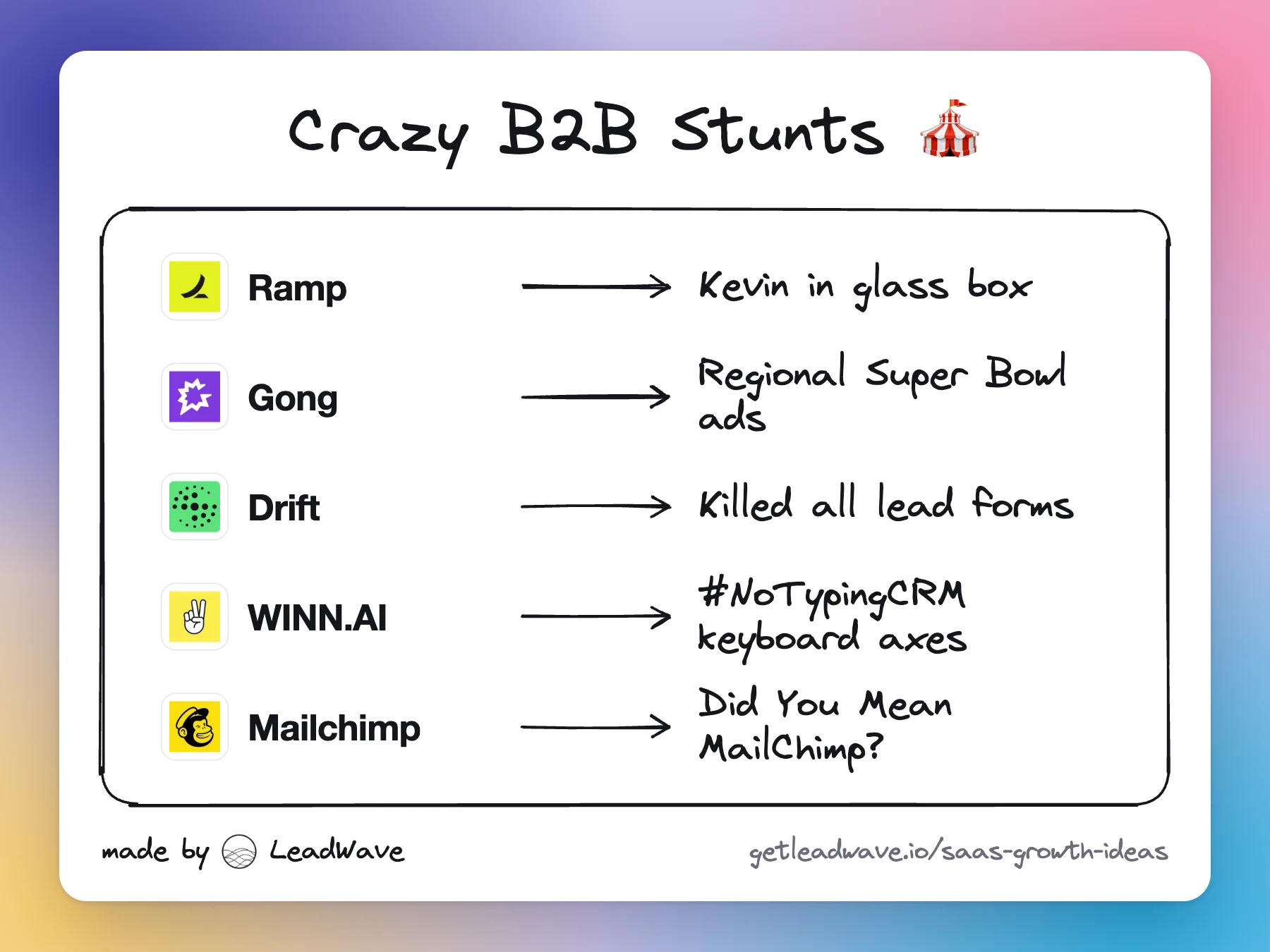
Borrow a cultural icon. Acquire.com used the Silicon Valley character Russ Hanneman, through Cameo, to announce company news. Mailchimp turned people mishearing its name into nine fake brands like FailChips and KaleLimp.
Pick a fight with a giant. Salesforce staged a fake protest outside Siebel's conference; Slack bought a full page in The New York Times to “welcome” Microsoft Teams. The giant's attention makes the challenger look like its equal.
Give everyone something. Rows' avatars and Paddle's space-themed swag page cost little and invite people to share.
Be the show. Lavender built a channel of email teardown shows, and lemlist's founder explained on video why the company turned down $30 million. Recurring formats compound; one-off stunts don't.
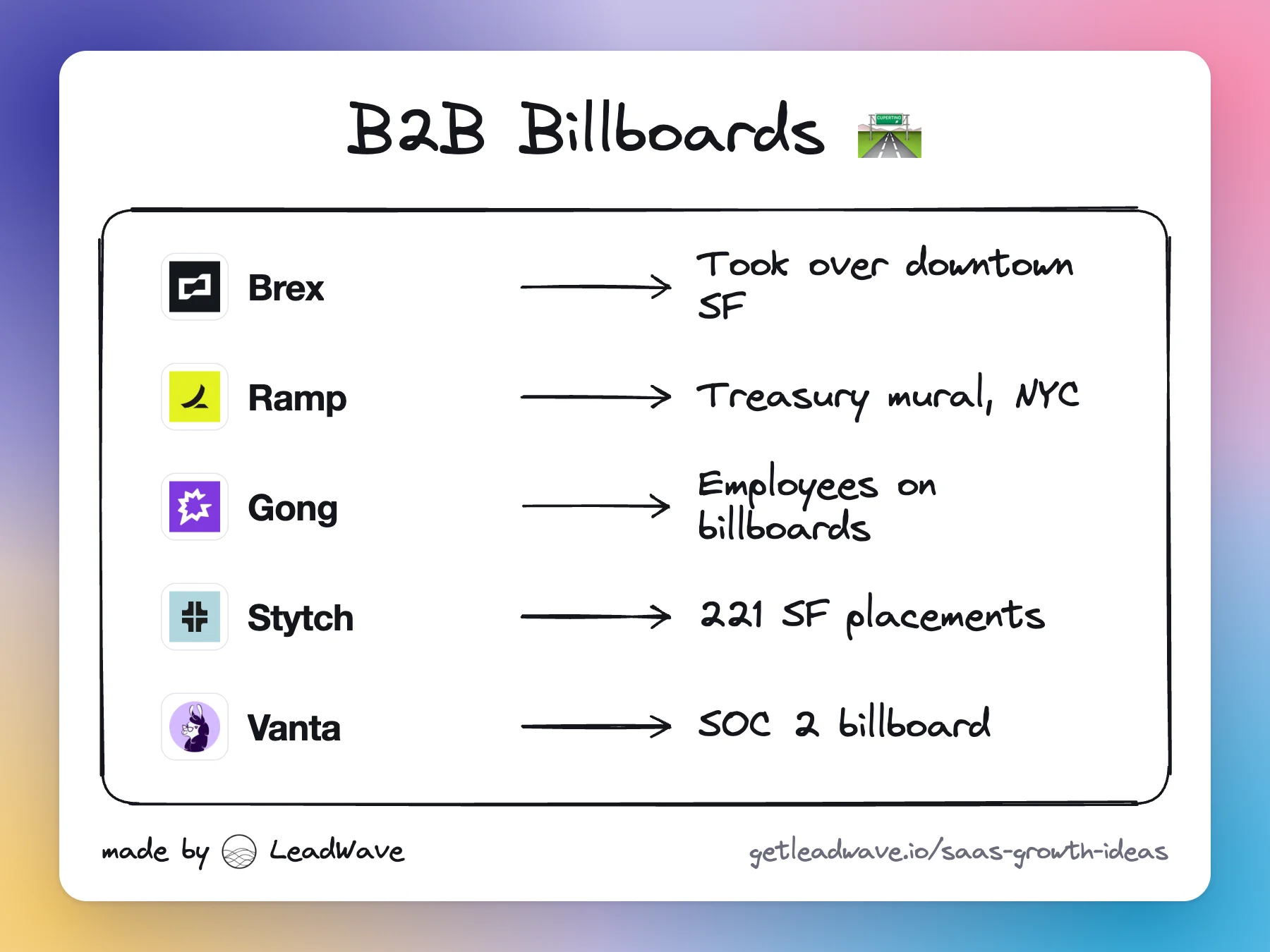
Billboards are their own playbook: see billboard marketing for Airtable's, Brex's and Gong's boards, what they cost and how to measure them.
What a stunt costs, and what it reaches
Cost varies by orders of magnitude, and reach doesn't follow spend:
Close to free: Rows' avatars and Acquire.com's Cameo videos cost a designer's day or a celebrity-impression fee. Acquire.com's founder said the videos started as a way to make the team laugh and became something the company was known for.
Thousands:Gong's logo appeared in a regional NBC overlay for $5,000 for three quarters, plus a free fourth, which happened to include Steph Curry's record-breaking shot. Its CMO said that cost “less than most companies spend on an eBook”.
Regional TV: Gong bought Super Bowl slots in a few metros rather than a national spot, which Gong says can cost $5M and up. The 2021 ad, Gong says, helped create its biggest-ever sales pipeline.
Big productions: Ramp's glass box took five months to plan, a celebrity, guest stars and two SAG-AFTRA contracts. It drew about 10,000 people in person, 380,000 livestream viewers on X, and Ramp estimated at least 85 million views across platforms.
The cheap stunts work when you already have an audience to spark them. Without one, spend goes into paid distribution of the clip.
How to measure a stunt
A stunt is brand marketing, so last-click attribution will show almost nothing. Set up these before launch:
Branded search. Brand queries in Google Search Console and Google Trends against the four weeks before. Look at the weeks after too.
Direct traffic and signups in the days after, against the same days the week before.
Share of voice. Mentions of your brand against your two or three main competitors on LinkedIn, X and Reddit.
Pipeline mentions. Add the campaign to “How did you hear about us?” and search sales call recordings for it. Gong's prospects told reps they'd seen its Super Bowl ad, “realized you were this big deal now, and finally reached out.”
Reach of the asset. Views, shares and comments on the clip and the photo, and how many came from people outside your team.
Write down the goal first. Recall, credibility with enterprise buyers, recruiting and launch awareness each call for different numbers.
Stunts that backfired
Provocation aimed at the buyer's people. Artisan's “Stop Hiring Humans” billboards brought huge reach and a long backlash, and its founder later walked the slogan back in a long blog post (details on the billboard page).
A message that reads as a threat.Ring's $8 million Super Bowl ad in February 2026 promoted an AI “Search Party” feature; after a public outcry Ring ended its partnership with Flock Safety.
The same joke too often. Acquire.com's founder admits running the Russ Hanneman play “a few too many times”.
A stance you can't keep. Drift's #NoForms was credible because it really removed its forms. A stunt that the product or the company's behavior contradicts gets called out fast.
The reverse can work too. In July 2025, after its CEO went viral on a Coldplay concert kiss cam, Astronomer answered with a playful Gwyneth Paltrow video that pointed attention at its upcoming product event, instead of a stiff statement.
What happened to the examples on the original list
This tactic started from a list of eleven campaigns. Checked in November 2026:
Drift is now part of Salesloft, and drift.com redirects there; the #NoForms post survives on the Internet Archive.
WINN.AI now sells “real-time sales execution”; the no-typing CRM pitch from the campaign is gone from its site.
Rows has joined Superhuman.
ProfitWell's roadshow and Ramp's direct outreach campaign couldn't be documented from public sources, so they aren't covered here. Ramp's best-documented stunt, the glass box, is.
In October 2025 Ramp put Brian Baumgartner, who played accountant Kevin Malone in The Office, in a glass box in Manhattan's Flatiron Plaza for seven hours, processing expense receipts by hand. It drew about 10,000 people in person and 380,000 livestream viewers on X, and Ramp estimated at least 85 million views across platforms.
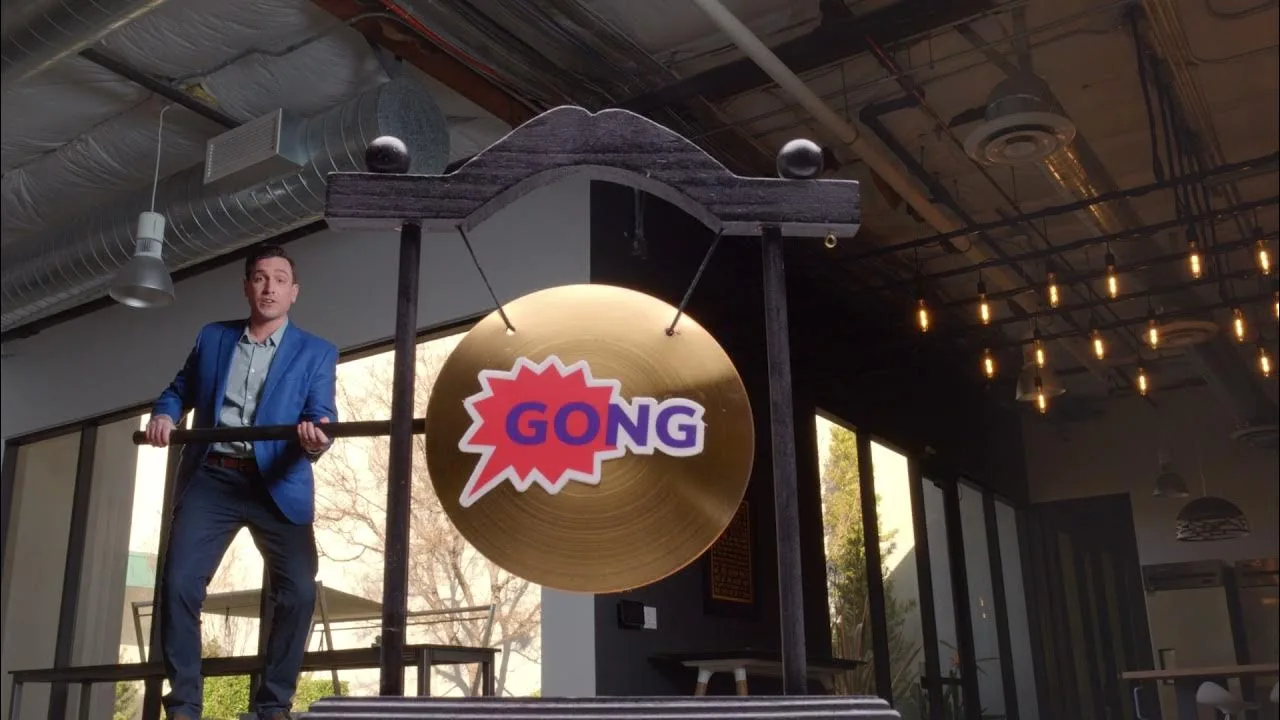
Gong's first Super Bowl ad in 2021 ran only in the Seattle, San Francisco and New York markets, for a fraction of a national spot. Gong says it helped create the company's biggest-ever sales pipeline, so the 2022 ad, built on the sound of a gong, ran again in the Bay Area and added Chicago and Boston.
To launch its no-typing CRM in June 2023, WINN.AI asked sales professionals to post videos of themselves destroying keyboards with small axes. The campaign drew 90+ videos and 500,000 impressions in under 48 hours, then followed with #CelebrateSales, where a “Captain Quota” character interrupted podcasts and meetings with a jingle.
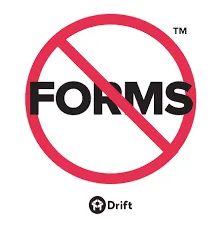
In 2016 Drift deleted its lead forms and ungated all its content, arguing that buyers would rather chat than fill in a form, which happened to be what Drift sold. A year later it declared May “#NoForms Month”, with weekly posts, webinars, stickers and swag. Drift is now part of Salesloft.
The startup marketplace booked Russ Hanneman, the billionaire from HBO's Silicon Valley, through Cameo to announce news. Its founder says it started as a joke for the team and became something the company was known for, with a lot of engagement, until the actor left Cameo.
Guillaume Moubeche published a video explaining why lemlist, then at $5 million ARR after three years without outside funding, turned down a $30 million VC offer. Turning a financing decision into content made the bootstrapped story part of the brand.
In 2017 Mailchimp turned people mishearing its name into nine fake brands, including FailChips snacks, a KaleLimp film trailer and a SnailPrimp pop-up spa. It reached 334 million people, against 36 million for its previous best campaign, and won the Cyber Grand Prix at Cannes Lions.
In 2000 Salesforce hired actors to stage a mock protest, with anti-software signs, outside a Siebel Systems conference. It earned the company its first major press coverage, in The Wall Street Journal, and drove home its “The End of Software” tagline.
On November 2, 2016, the day Microsoft announced Teams, Slack ran a full-page open letter in The New York Times: “Wow. Big news! Congratulations on today's announcements.” Its “friendly advice” on building “something just like it” set Slack up as the original.
A campaign page and webinar with Forrester themed around space: “In space no one can tax your sales... But here on Earth things aren't quite so simple.” It turns a dry message about sales tax in 11,000+ US jurisdictions and localized checkout into a joke, with space swag to match.
To launch its Notion integration, the spreadsheet company promised a Notion-style avatar to everyone who reshared the announcement and replied “avatar” within 12 hours. The post drew 425 comments. Rows has since joined Superhuman.
The AI email coach built “LavenderLand”, which it billed as a free streaming service: recurring shows where its team tears down and rewrites real cold emails, with puppet characters in some episodes. Its YouTube channel now has 300+ videos.
From LeadWave’s own collection, saved as we found them since 2022. Some of these pages have changed since.
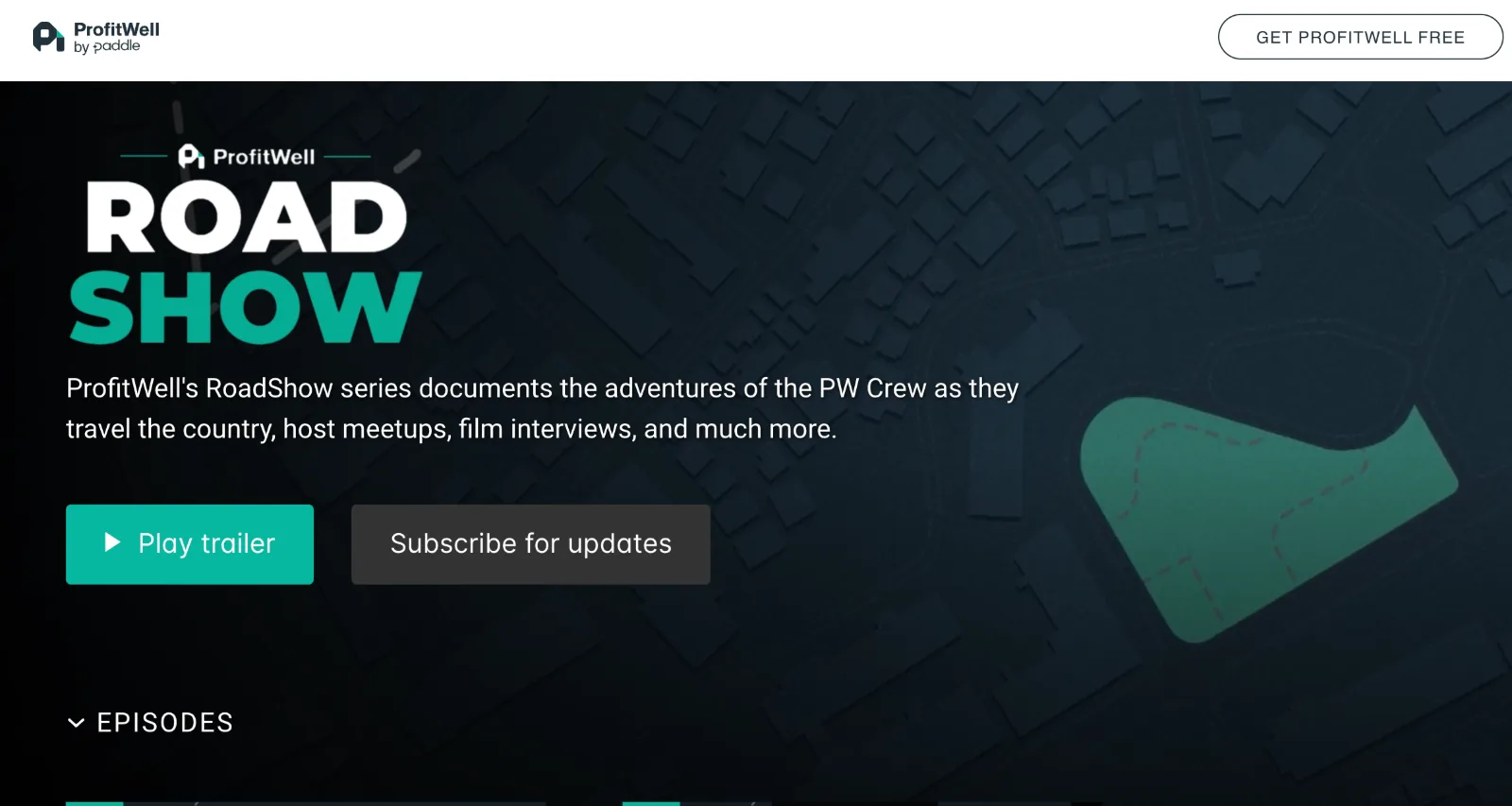
ProfitWell's RoadShow: a series following the team across the country, hosting meetups and filming interviews
Gong's Super Bowl commercial: the gong itself as the brand
Drift's “No Forms” campaign: a villain the whole market already hated
How to run it: the playbook
Name the villain.Write down the chore, habit or incumbent your product kills. Forms, typing, expense reports, software installs. The stunt makes that villain visible.
Find the one image.Brainstorm until you have an idea someone could describe in one sentence and share as one photo or clip. Test it on people outside the company.
Plan distribution first.Decide the main channel (LinkedIn, X, a livestream, a TV market), who posts on day one, and which creators, customers and employees will share it.
Build in participation.Give people something to do: post a video, get an avatar, reply with a word. Every participant is a new distributor.
Capture everything.Cameras, a photographer and rights for the footage, so one event becomes weeks of clips. Ramp signed a separate agreement to turn its livestream into ads.
Set the baseline.Record branded search, direct traffic, mentions and demo volume for the weeks before, and add the campaign to your attribution field.
Check the downside.Ask who could be hurt or insulted by the idea, and whether your product and behavior back up the claim. Have someone who'll disagree review it.
What to measure
Branded search volume against the four weeks before
Direct traffic and signups in the week after
Share of voice against two or three competitors
Prospects who mention the campaign on calls or in “How did you hear about us?”
Views, shares and comments on the core clip, and the share from outside your team
Participants, for campaigns that ask people to join in
Pitfalls
An idea that needs explaining before anyone gets it
A stunt with no link to what the product does
Spending on production and nothing on distribution
Provocation aimed at your buyers' jobs or people
Running the same joke until the audience is tired of it
Expecting last-click attribution to prove the result
Frequently asked questions
Salesforce's fake “No Software” protest (2000), Slack's “Dear Microsoft” letter (2016), Mailchimp's “Did You Mean MailChimp?” (2017), Gong's regional Super Bowl ads (2021–2022) and Ramp's livestream with Brian Baumgartner in a glass box (2025).
From almost nothing (Rows' avatars, Acquire.com's Cameo videos) to a few thousand dollars (Gong's $5,000 regional TV overlay) to big productions like Ramp's five-month glass-box project with a celebrity and union contracts. Reach depends more on the idea and distribution than on spend.
Track branded search, direct traffic, share of voice against competitors and how often prospects mention it on sales calls or in “How did you hear about us?”, compared with the weeks before. Last-click attribution will undercount it.
Yes. Provocation aimed at people (Artisan's “Stop Hiring Humans”), a message that reads as a threat, or a claim your product doesn't back up can bring backlash that outlasts the reach.
Low-cost, unconventional tactics that get attention in places buyers don't expect, like Salesforce's staged protest at a competitor's conference or Gong wrapping cars around Dreamforce.
Brex, Ramp, Gong and Stytch bought billboards to make a B2B brand feel big. What they paid, how they measured it, and why the photo matters more than the board.
Make launch videos people share: a person, a story, humor or a stunt instead of floating UI and swelling music, posted natively where your buyers scroll.
Pay creators your buyers already follow on LinkedIn, newsletters, YouTube and TikTok to show your product in their own words, then boost the winners as ads.