

Why B2B companies buy billboards
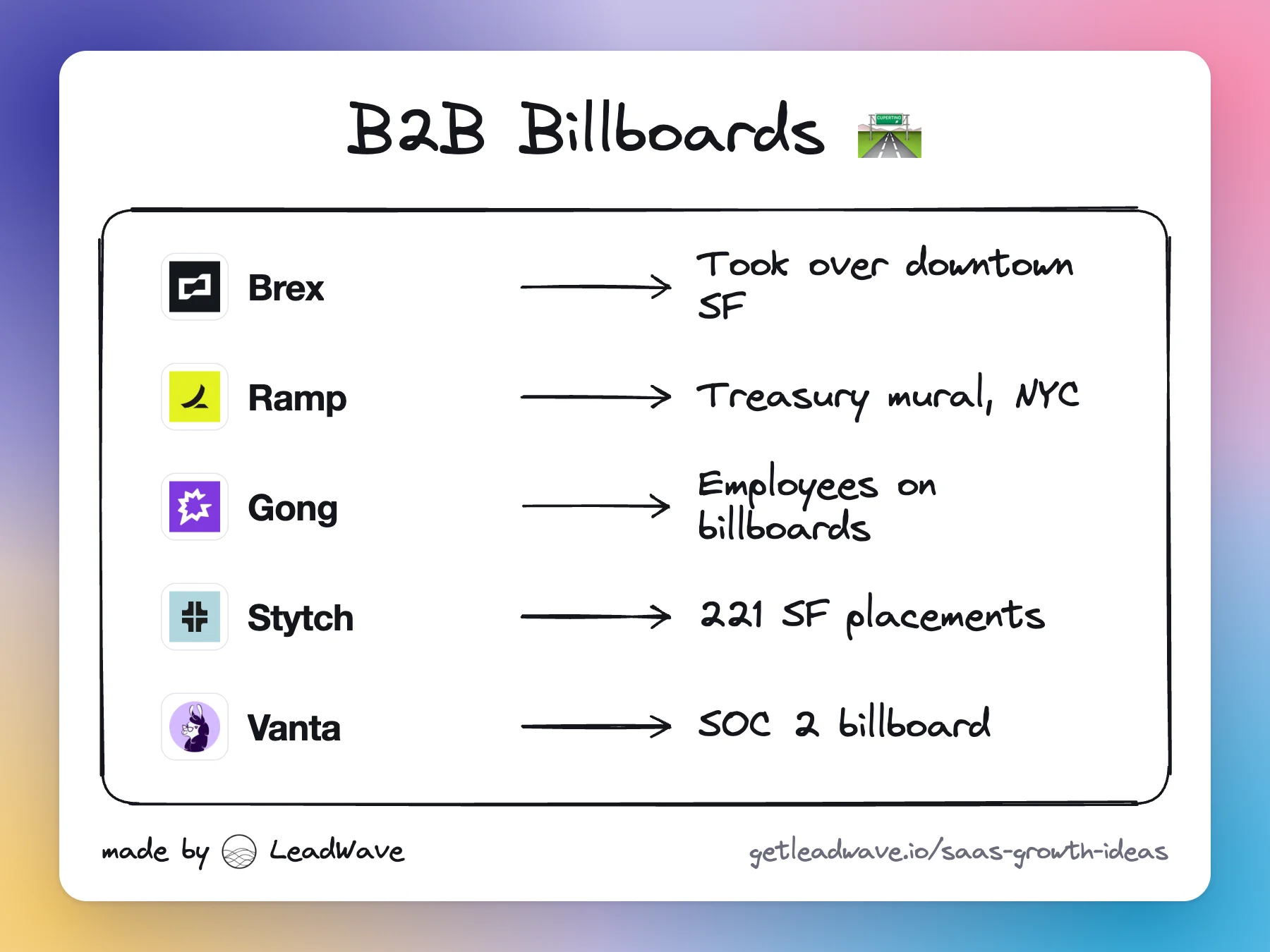
Software buyers cluster. Founders, engineers and finance leads in San Francisco drive the same stretch of Highway 101 and wait at the same bus shelters, so a few dozen placements can reach a large share of a startup's market. Brex's co-founder Henrique Dubugras put the economics plainly: “The cost per qualified view of a billboard is so much lower than the cost per qualified view on any online display platform.”
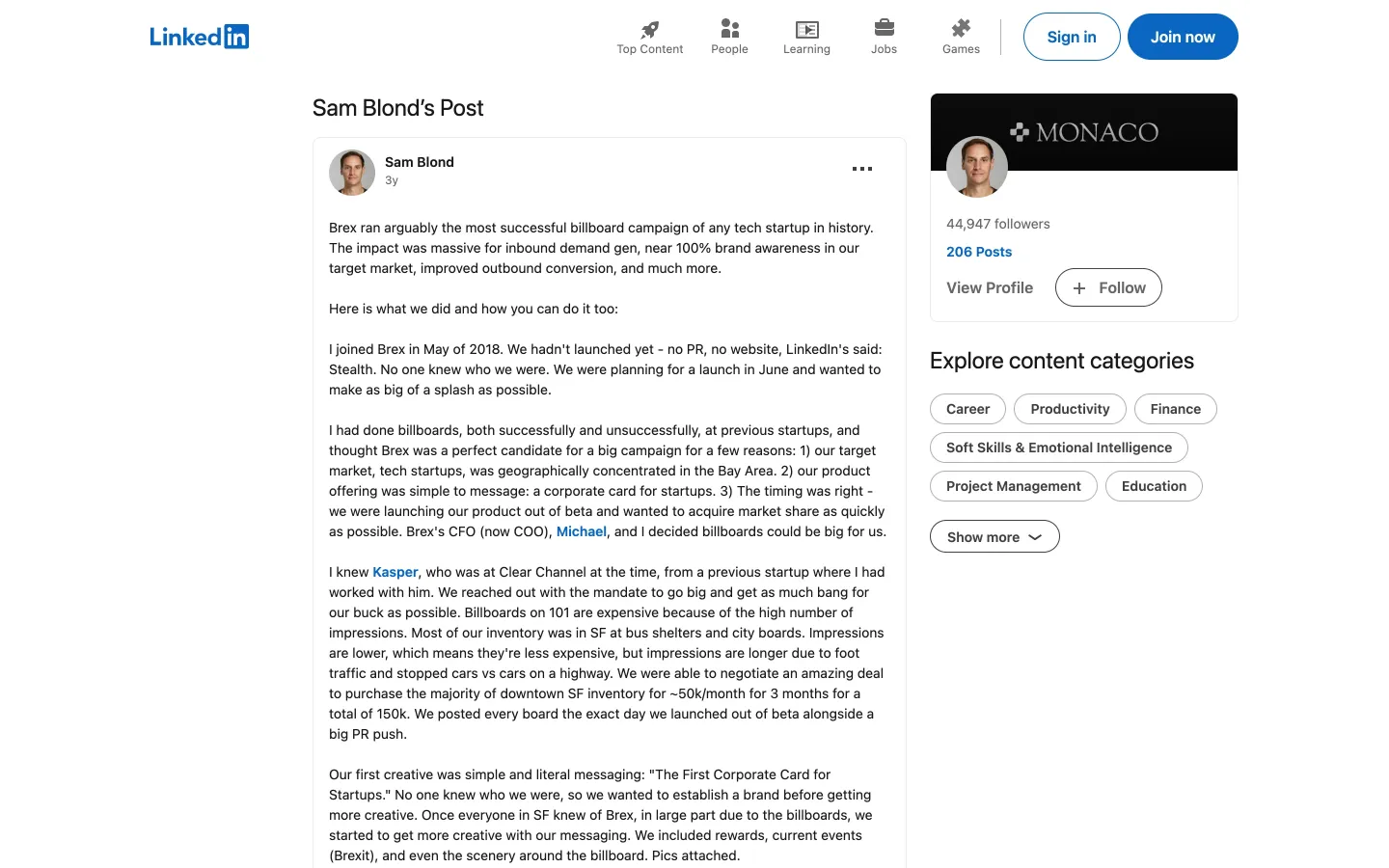
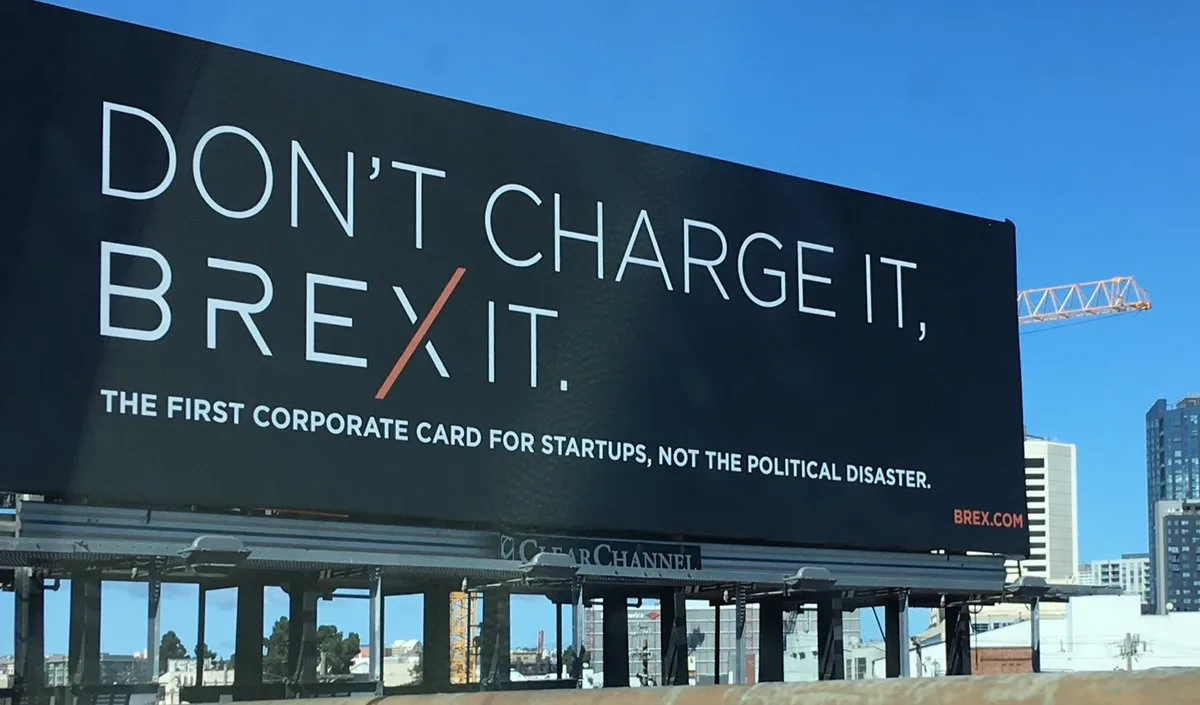
The second effect is legitimacy. A company on a billboard looks established, which helps the next outbound email, the next candidate and the next fundraise. Sam Blond, who ran sales at Brex, wrote that after its 2018 launch campaign outbound response rates in San Francisco were “as high as I've ever seen”.
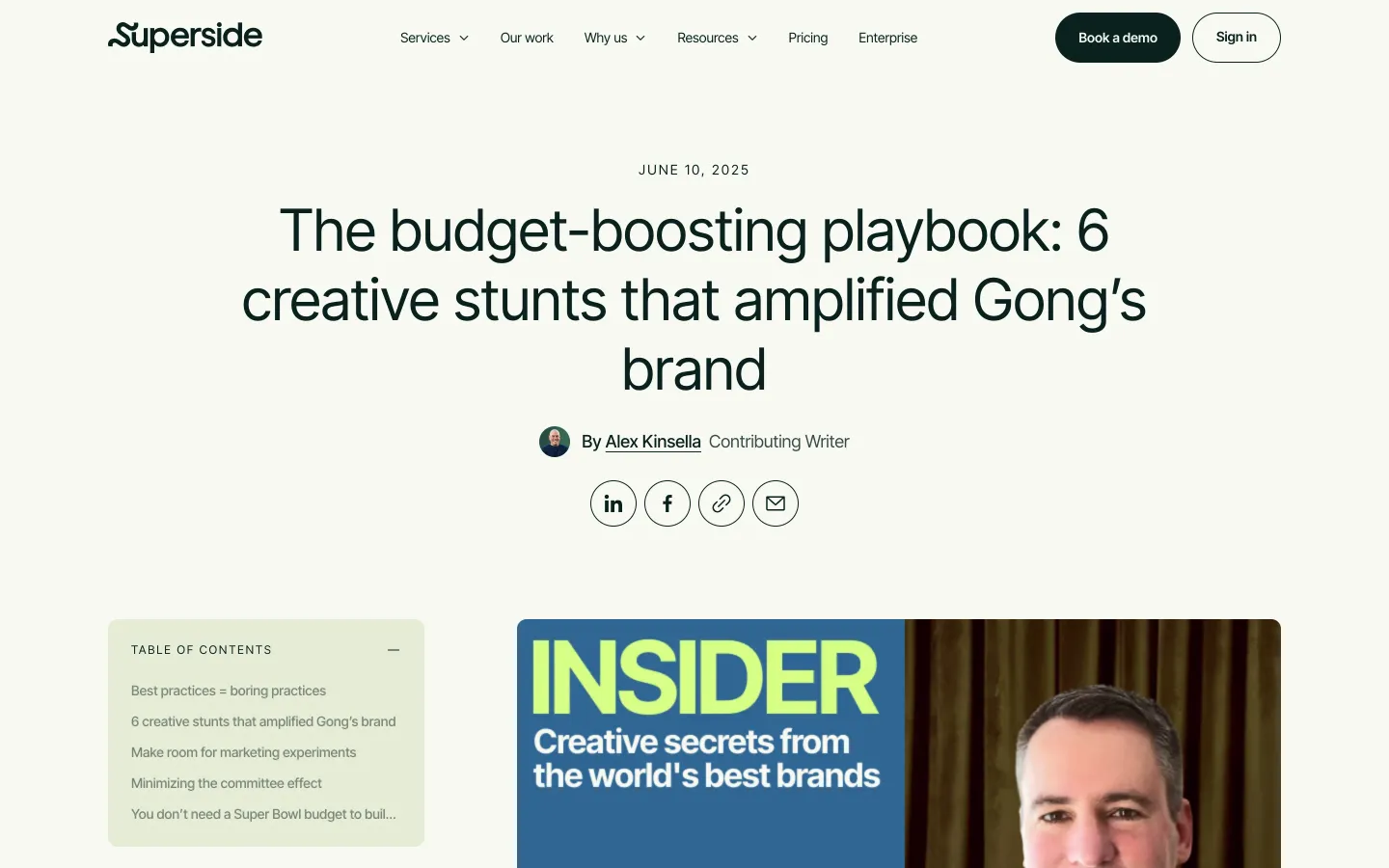
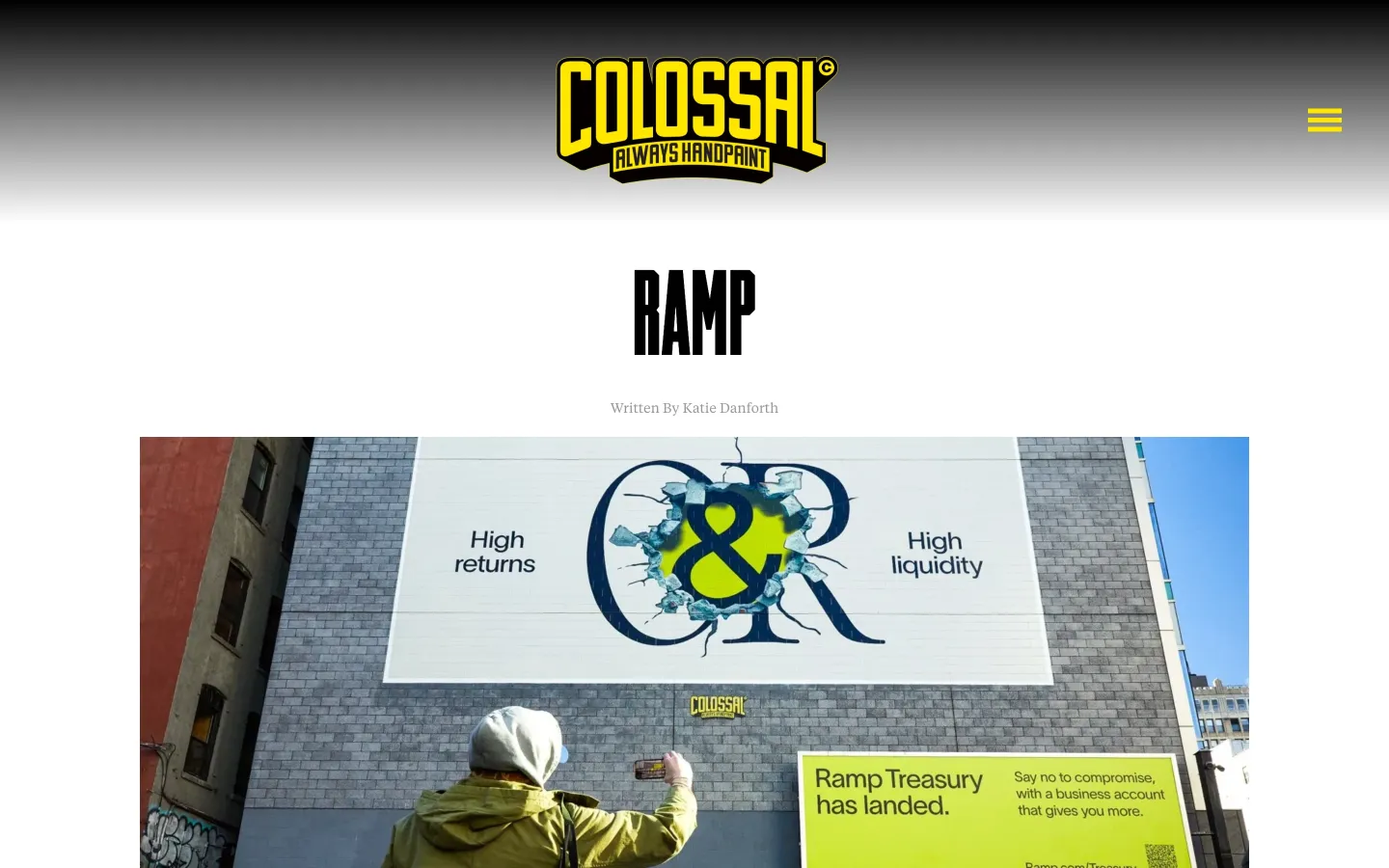
The third is social. Nobody photographs a LinkedIn ad, but employees, customers and investors post billboards. Gong's former CMO Udi Ledergor says what he cares about is “the reach we get when we share the content from that billboard with our actual audience.”
Emily Kramer of MKT1 suggests picking one goal before buying: “we've arrived” (awareness), “we're still here” (recall), “we've made it” (team and insiders) or “come join us” (recruiting and investors).
What billboards cost in 2026
Prices depend on city, size, traffic and whether the board is static or digital:
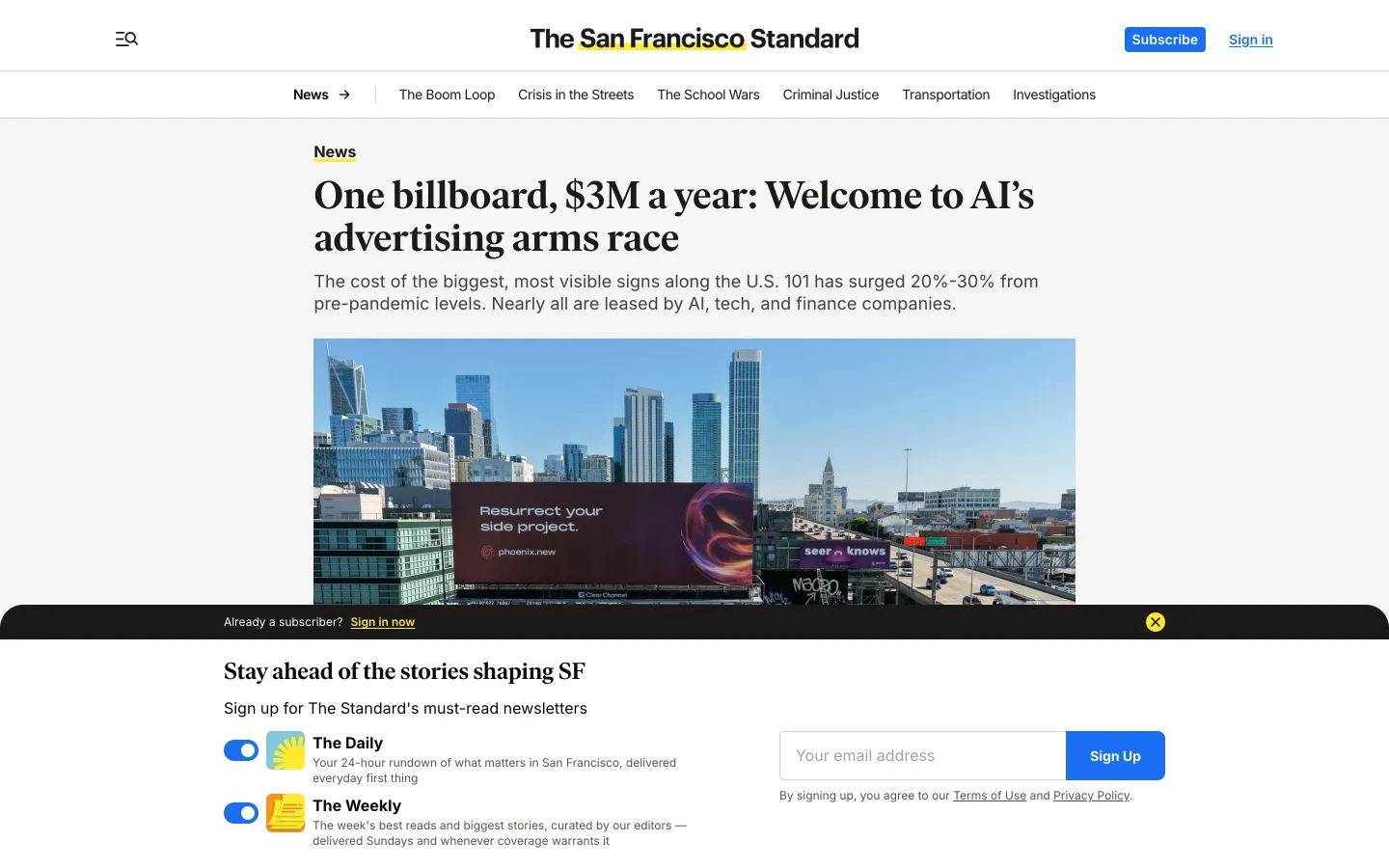
- San Francisco, Highway 101: a premium static board costs $20K to $50K+ for four weeks, and a SoMa wallscape about $40K (MKT1, June 2026). The very top skyway boards now command $200K to $250K a month, and desirable ones $50K to $100K, up 20% to 30% on pre-pandemic prices as AI companies compete for space (SF Standard, Aug 2026).
- Other cities: $3K to $15K a month in Chicago or Boston, $2K to $5K in Nashville, Denver or Austin, and $500 to $2K in small markets.
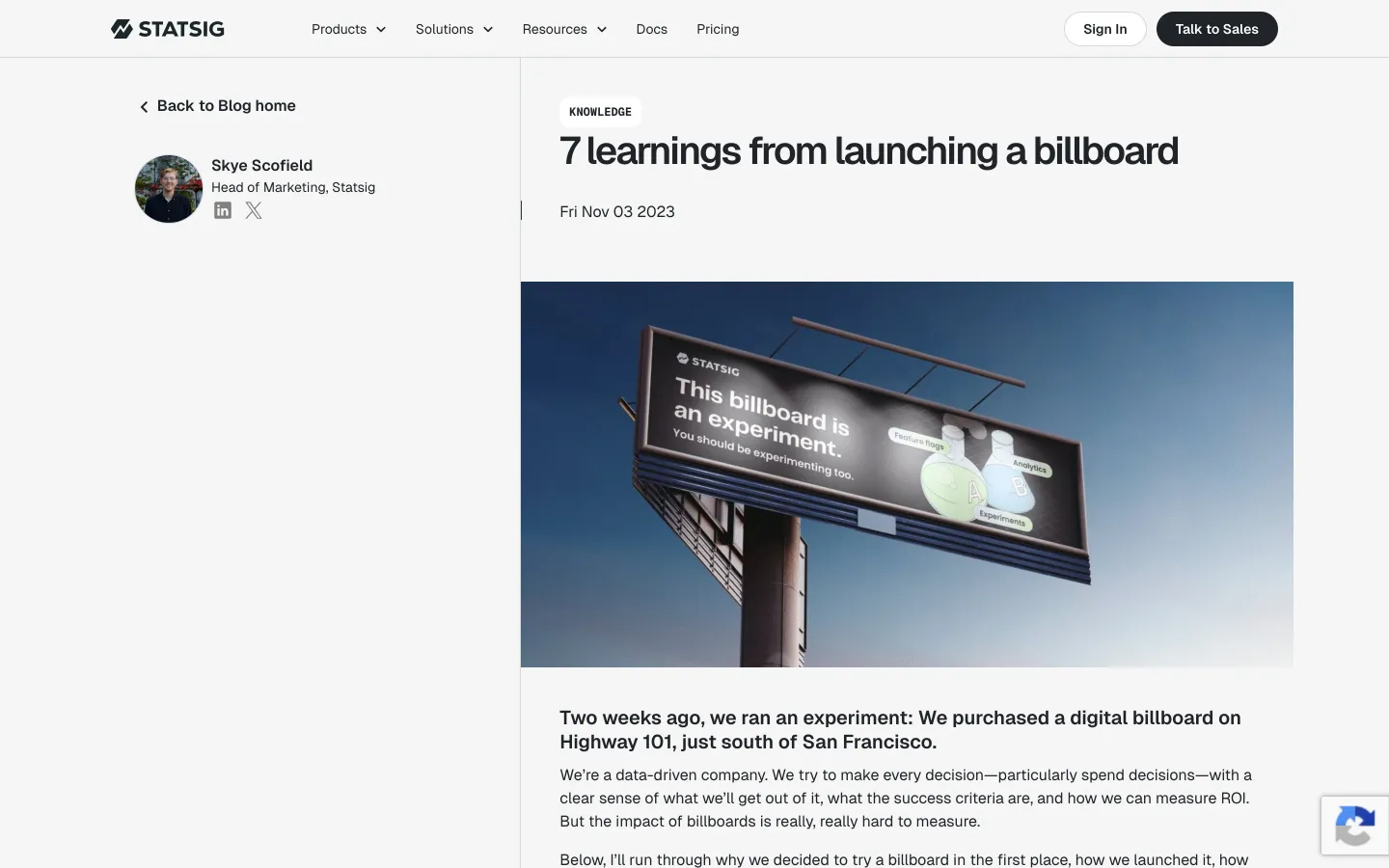
- Digital slots: short rotations are cheap. Statsig paid about $8,000 for a week on a digital 101 board, and Gong says a 30-second slot on a big digital screen can cost as little as $500.
San Francisco supply is fixed: a 2002 ballot measure froze new sign permits at roughly 1,500 signs, which is why prices there swing with every startup boom.
How to measure a billboard campaign
Accept that the result will be directional. Then set up the measurement before the boards go up:
- Branded search in the target metro against the weeks before and against a city without boards.
- Direct traffic by location. Brex saw direct traffic from IP addresses in its campaign zones grow by over 31% in the 30 days after launch.
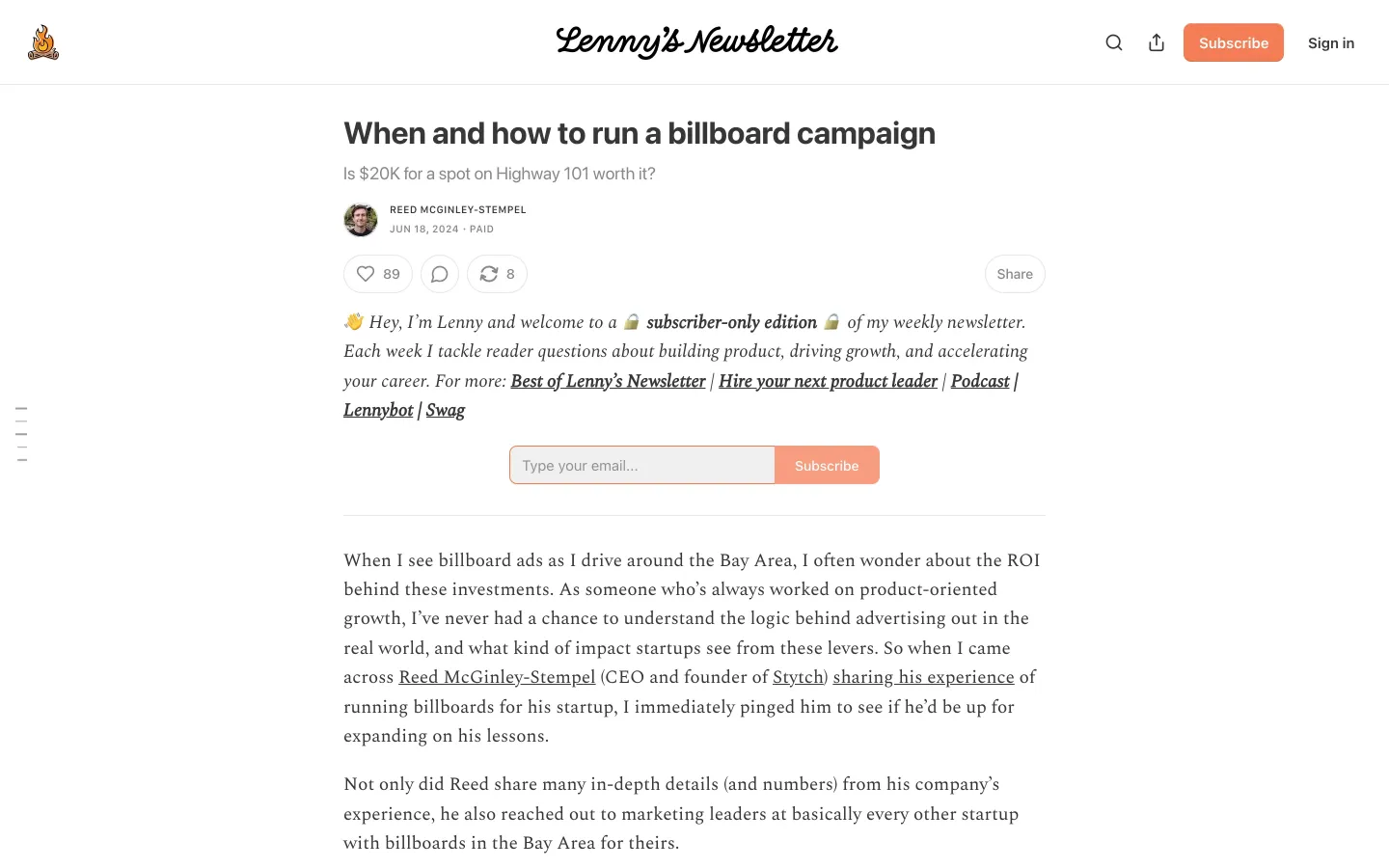
- Self-reported attribution. Add billboards as an option in “How did you hear about us?” and ask sales to log it. At Stytch, more than 10% of opportunities created after its campaign explicitly cited the billboards or bus ads.
- Sales signals. Outbound reply rates in the target city, and how often prospects mention the ads on calls.
- Social reach of photos of the board.
Look past the flight. Stytch's branded search stayed 10% to 15% above baseline after the boards came down.
Creative that works
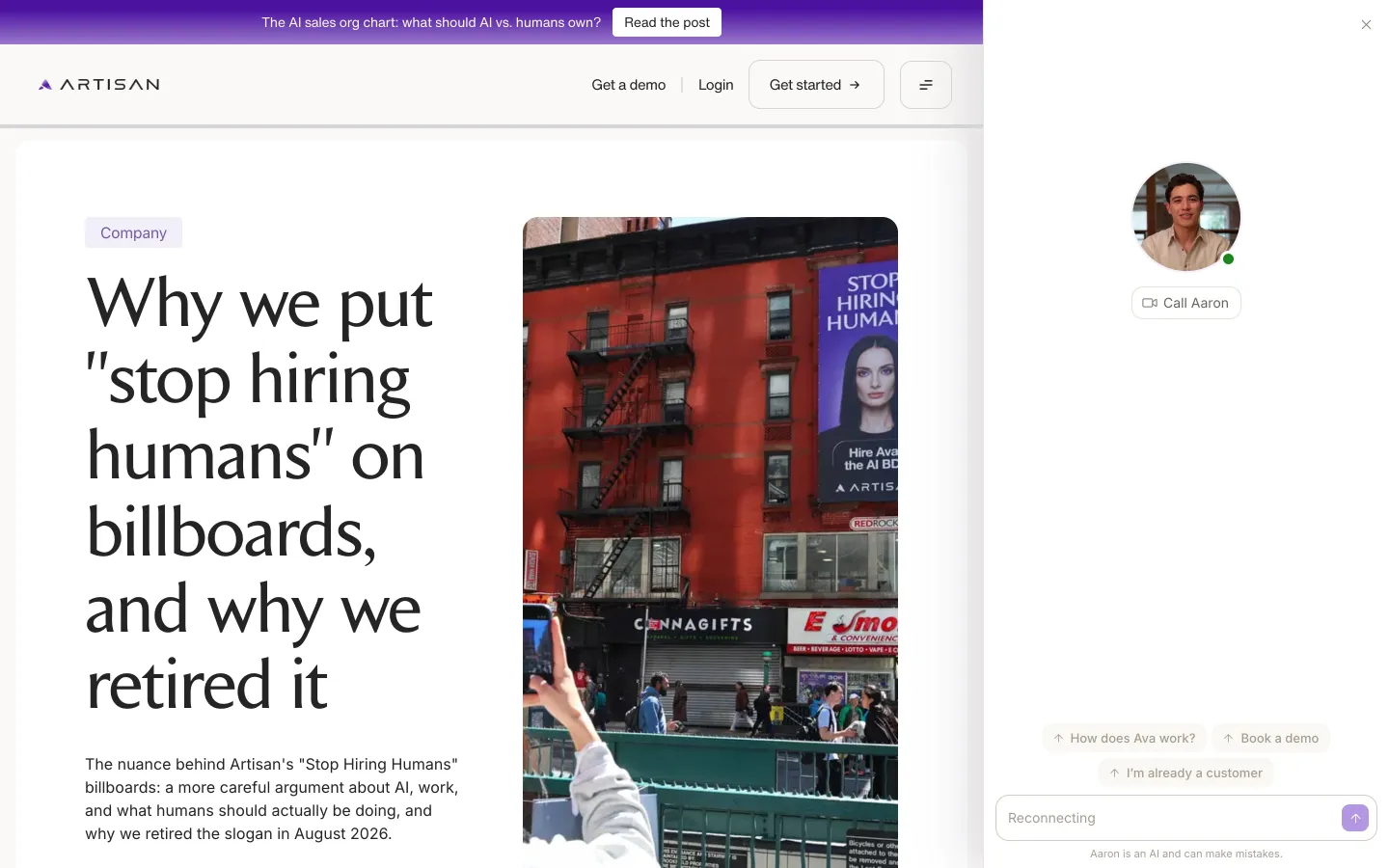
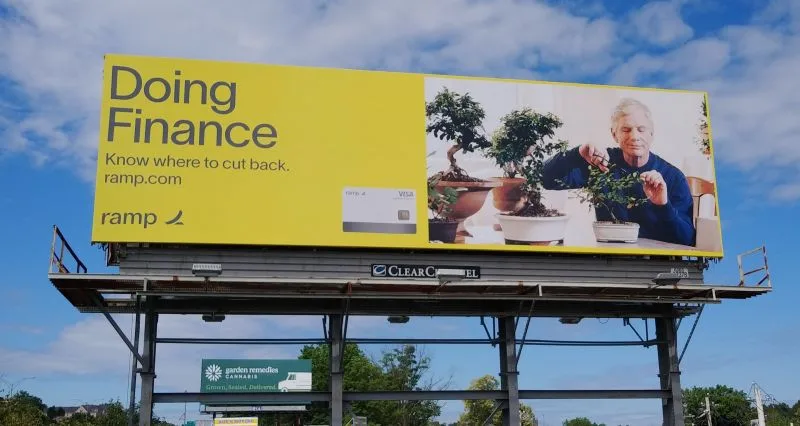
A driver gets a few seconds. The boards that worked say one thing, often to insiders: Vanta's SOC 2 board, Brex's “The first corporate card for startups”, WorkOS's “Auth for agents”. Provocation travels further: Bland replaced the phone number on its board with an AI agent and asked “Still hiring humans?”, and Artisan's “Stop Hiring Humans” became national news.
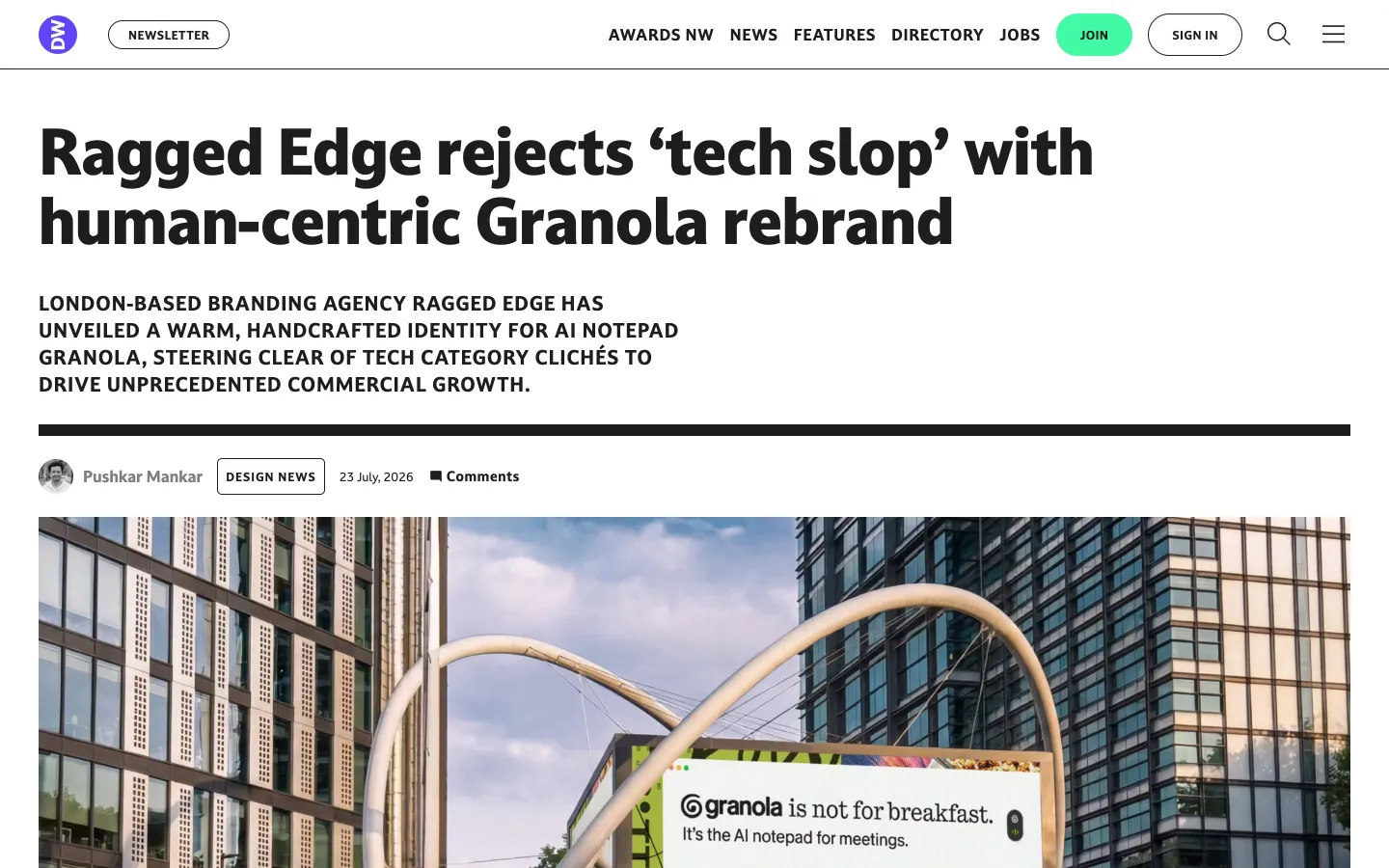
Wordplay on your own name works when the name is confusing. Granola sounds like breakfast, so its 2026 launch campaign in London and New York said so: “Granola is not for breakfast. It's the AI notepad for meetings.” It ran on billboards, trains, bus stops and full station takeovers. San Francisco got a quieter line for tech leaders, “Being present is a power move” (Billboard Insider). The boards were part of a rebrand by the agency Ragged Edge, which reports that Granola trended on X on launch day, had its biggest download day ever, and raised $125M at a $1.5B valuation three months later. Those results belong to the whole rebrand, not the boards alone.
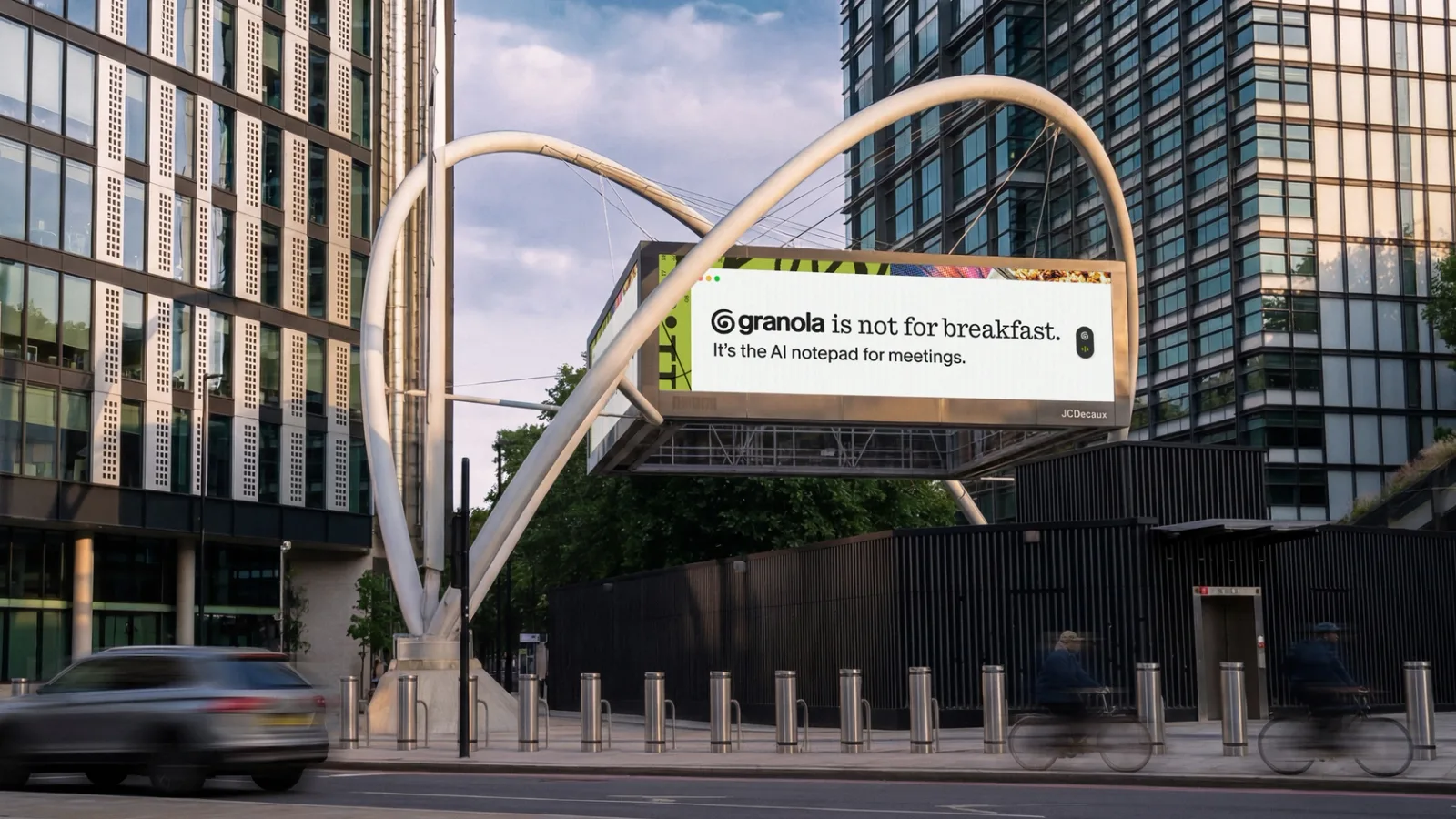
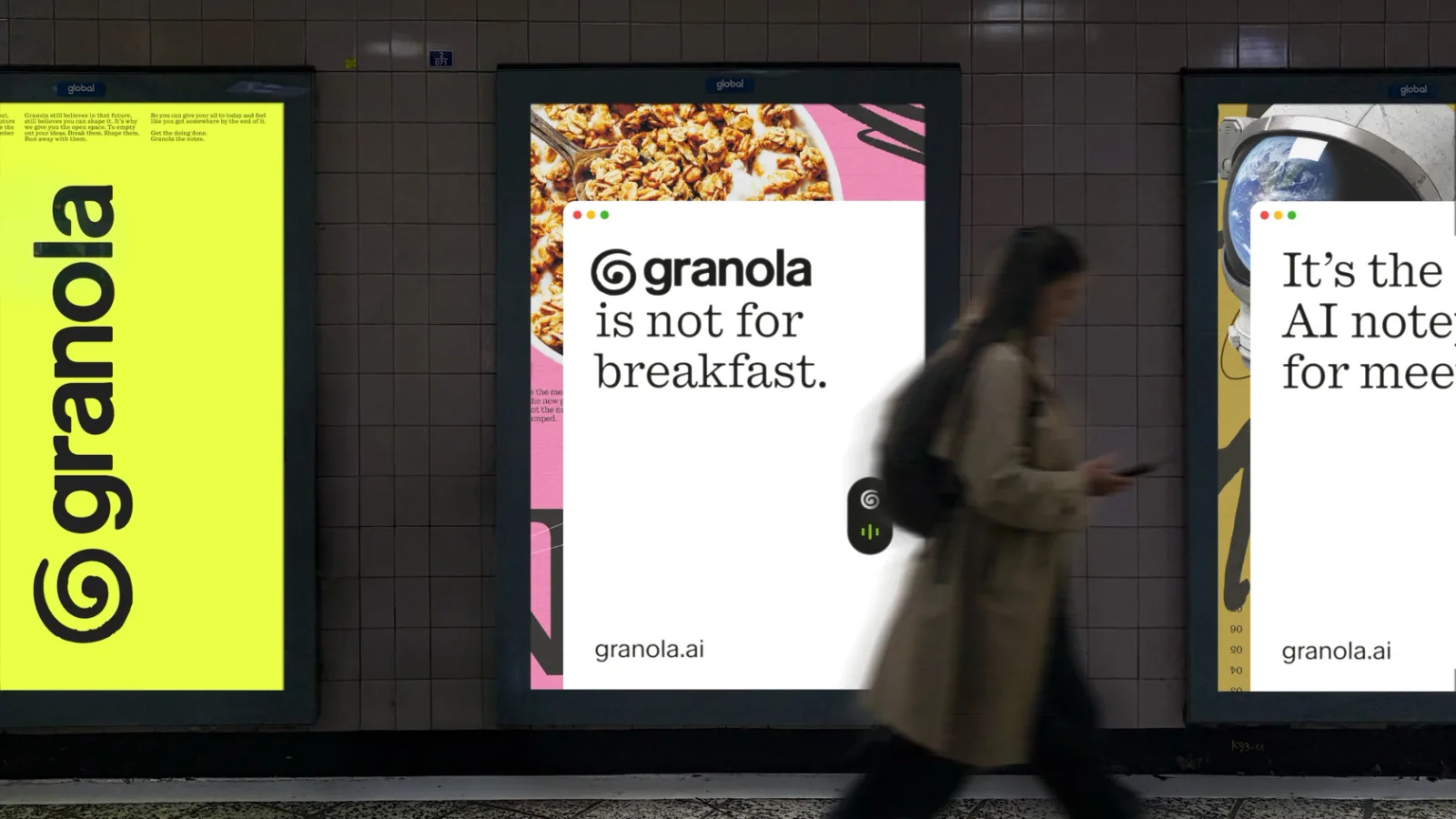
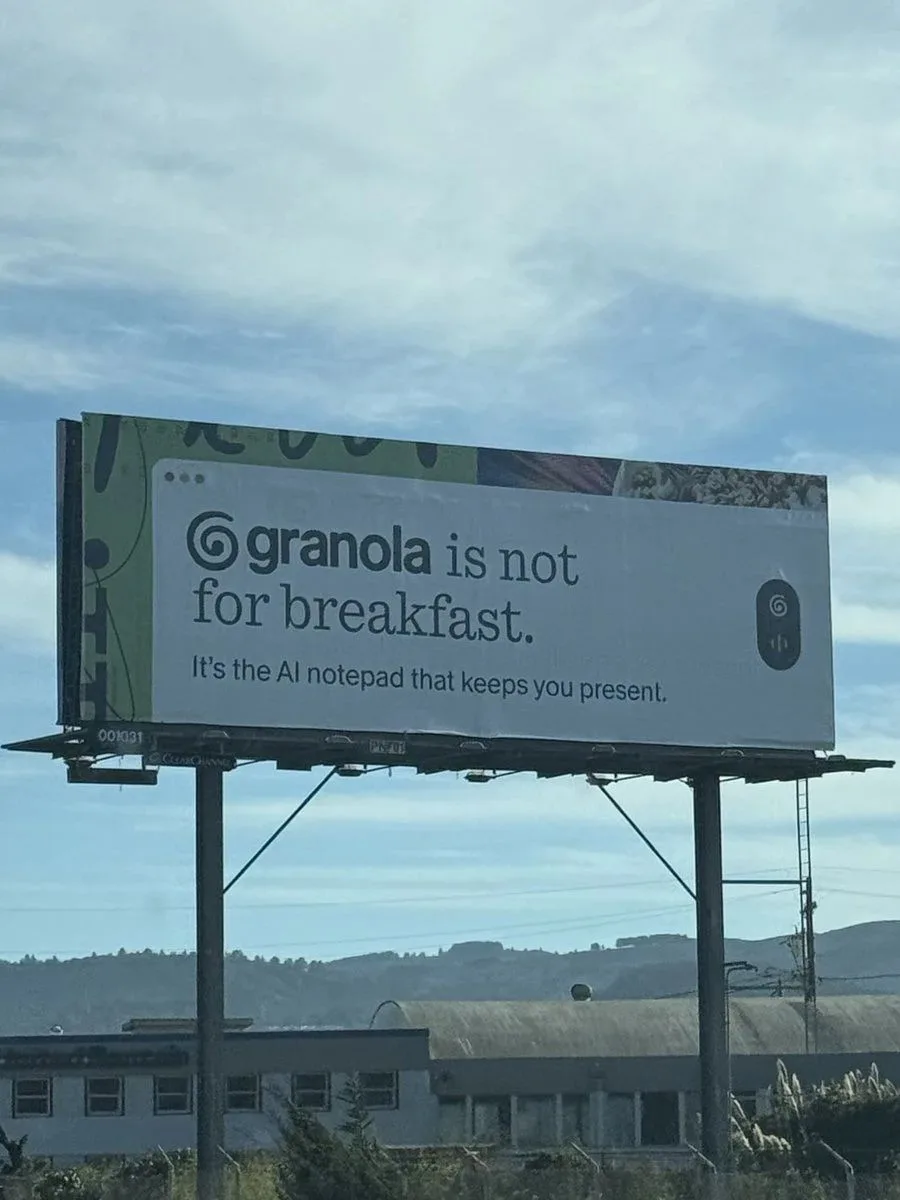
The failure mode is the undecodable board. MKT1 warns about the undifferentiated “agent” billboard on 101 “that nobody can decode”. If the reader can't tell what you sell and who it's for in one glance, the money only buys your team a photo.
When billboards fail
- One board, no frequency. Statsig's single digital board ran in rotation, visible about a sixth of the day, and moved neither traffic nor signups. Its own conclusion: to measure impact, go bigger.
- Buyers spread across the map. If your customers are dentists across 40 states, a city campaign reaches almost none of them.
- No path to act. Awareness without a memorable name, URL or offer fades before the next search.
- No amplification plan. Without a photographer and a launch post, most of the value goes unseen. Teams that already build in public get the most from a board.
- Provocation that turns. Artisan says “Stop Hiring Humans” brought billions of impressions and millions in ARR, but it also brought a backlash, and the company retired the slogan in 2026.