SaaS Launch Videos: What Makes One Travel (13 Examples)
Make launch videos people share: a person, a story, humor or a stunt instead of floating UI and swelling music, posted natively where your buyers scroll.
Impact
Medium
Effort
Medium
Time to results
Weeks
Budget
Needs a budget
Team
Marketing
Tools for this growth idea
FigmaStoryboard the video and design its frames
CanvaCut-downs, thumbnails and captions for each platform
LinkedInPost it natively, where B2B buyers will watch it
Why most launch videos look the same
Scroll recent.design's launch video gallery and the template is obvious: a dark background, the UI floating in 3D, smooth cursor zooms, a short headline per scene, swelling music, logo at the end. In October and November 2026, Framer's MCP launch ran 49 seconds, Paper's rich-text launch 45, Linearity AI's 58, Perplexity's Teammates 71 and Ramp's Glass 108. They are well made. They also look a lot like each other.
Screen recorders with automatic zooms, motion templates and AI video tools have made that look cheap, so it no longer signals much. As Unify's Haley put it when pitching a different idea, “every startup has the same launch video today”.
That doesn't make the template useless. A clean product film is the right asset for your changelog, your landing page and your Product Hunt gallery. It just won't spread by itself. Treat it as the baseline, then decide what you'll add that people will want to pass on.
What makes a launch video travel
The videos that get shared have at least one thing a product film doesn't:
A person. A real face holds attention better than floating UI. Unify brought in Juliano Massarelli, “the wolf of insurance”, to front the launch of its dialer. The video was shot in New York and got about 550,000 impressions on X in the week after.
A joke for a specific crowd. Dropbox's 2008 demo looked like a normal screencast, but it hid about a dozen Easter eggs for the Digg audience it was posted to. Drew Houston said the beta waiting list “went from 5,000 people to 75,000 people literally overnight.”
A bold, specific claim. Shortcut's launch opened with a quantified result about doing Excel work 10 times faster than people, then spent over half of its two minutes on the product working. It earned 4.1 million impressions on X, and a follow-up “available now” video earned 3.5 million more.
A stunt. Cluely launched in April 2025 with a scripted film of its co-founder using its hidden AI to lie on a date. TechCrunch called it “slickly produced”; it was also polarizing, and that was the point. Stunts buy attention, but the brand you get is the one the stunt creates.
Extreme brevity. Apple's teasers on X run 5 to 11 seconds. A teaser only has to make people curious, not explain the product.
The common thread is that the viewer feels something in the first few seconds, before they know it's an ad. Show the outcome, not the feature list.
Formats to choose from
Product film. The polished walkthrough: Linear's “Introducing Linear Agent”, Framer's MCP launch, Ramp's Glass. Best for features where seeing the UI is the point. Keep it under two minutes and lead with the outcome.
Founder on camera. The founder explains why the thing exists. The Browser Company built a following on Josh Miller's essays to camera, such as “Why did we build Arc Boosts?”. Notion launched Notion 3.0 with a keynote by Ivan Zhao. Cheap to make, and it builds trust that a product film can't.
Parody or sketch. Borrow a format everyone knows: a movie, a TV ad, a famous character. Unify's “wolf of insurance” does half the work with the nickname alone. Funny works when the joke is about your buyers' daily pain, not about your company.
Trailer or teaser. Seconds long, released days before the launch to build anticipation. Pairs well with feature teasers.
Raw demo. A sped-up screen recording with no voiceover. A 23-second sped-up Claude-to-Blender demo did well on X because the result looked like magic. Works best when the product is new enough that just seeing it is the hook.
Event or livestream. The Browser Company launched Arc Max at a live event. Worth it when you're launching several things at once.
Many teams pair two: a sharable hook video for social, and a clear product film for the landing page.
Production options and effort
In-house screen recording (days). A screen recorder with automatic zooms, a script, a music track and captions. Fine for feature launches and raw demos.
Founder to camera (a day or two). A decent camera or phone, a lav mic, good light, and a script written in the founder's own words. Audio quality matters more than video quality.
Motion design studio (a few weeks). The polished product-film look. Send the studio your narrative, not just your feature list.
Live action with talent (weeks, real budget). Actors or a known personality, locations, a crew. Unify's dialer video needed a budget approval and a shoot in New York.
Whoever makes it, the founders should own the story. Daylight's two-person team spent a few weeks on its launch film and directed it closely themselves instead of handing it off. Start the story at least three weeks before launch day, write the script before anyone opens an editor, and test the first five seconds on people who've never seen the product.
Distribution: X, LinkedIn, YouTube and Product Hunt
A launch video that's only on your YouTube channel and homepage won't be seen. Plan distribution like a campaign:
X and LinkedIn: upload natively. Native video autoplays in the feed; a YouTube link doesn't. Add burned-in captions, since most people watch with the sound off, and make the first two seconds work as a hook.
Post from people, not just the logo. Many launches in the recent.design gallery went out from a founder's or executive's own account rather than the company's. People follow people.
Seed it. Line up customers, investors, friends and employees to repost and comment in the first hour, as OpenSesame and FLORA did. If you work with creators, give them the video too (see B2B influencer marketing).
Give a reason to comment. Shortcut gave an early invite code to people who commented, which turned the video into a waitlist and fed the algorithm.
YouTube as the permanent home. Embed it on the landing page and the changelog post. It keeps getting views from search long after launch day.
Product Hunt. Put the video first in your launch gallery, where it does the explaining for visitors who won't read (see Product Hunt ads).
Cut-downs. Make 6-, 15- and 30-second versions for ads, a vertical cut for TikTok and Reels, and a GIF for email.
A second wave. Shortcut's follow-up “available now” video got almost as many impressions as the first. Plan the follow-up before launch day.
How to measure a launch video
Views are the easy number and the least useful one. Measure the video like any campaign:
Reach: impressions and views per platform, and how many came from reposts by people in your market.
Attention: average watch time and completion rate. If most people drop in the first three seconds, fix the hook before spending on ads.
Response: comments asking for access, waitlist signups, demo requests and trials started in the launch window, compared with a normal week.
Pipeline: for B2B, the meetings and pipeline the launch creates. Unify measures its launch moments this way: its Series A announcement playbook reports 494 booked meetings and $6.6 million in pipeline.
Add a “How did you hear about us?” field and UTM-tag every link in the launch posts, so the video's effect doesn't disappear into “direct” traffic.
Launch videos examples
Unify“Wolf of insurance” dialer launch
Instead of a standard product film, Unify launched its dialer with Juliano Massarelli, “the wolf of insurance”, in a video shot in New York. It got about 550,000 impressions on X in the week after.
Linear launches major features with short “Introducing…” films on its YouTube channel (Agent, Releases, Initiatives) alongside a changelog post, so each launch has a permanent home.
The Browser Company explained its Arc features in videos of Josh Miller talking to camera, such as “Why did we build Arc Boosts?”, and launched Arc Max at a live event.
Cluely launched in April 2025 with a scripted film of its co-founder using its hidden AI on a date. It was polarizing on purpose, and a $15 million Series A from Andreessen Horowitz followed in June.
A two-minute launch led by a quantified claim and mostly product walkthrough; commenters got an invite code. It earned 4.1 million impressions on X, and a follow-up video 3.5 million.
June, the product analytics startup, published feature launch videos like this one on its YouTube channel. June has since joined Amplitude (August 2025); the video is still up.
Pick the launch and the one message.One outcome the viewer should remember. Write it as a single sentence before anything else.
Choose the hook.A person, a story, a joke, a stunt or a bold claim. If it's a plain product film, it needs a strong claim in the first seconds.
Pick the format and the maker.In-house screen recording, founder to camera, a motion studio, or a live-action shoot. Match it to the launch's size.
Script and storyboard three weeks out.Write the script first, test the first five seconds on people who don't know the product, and keep the founders involved.
Make the cuts.The main video, a 15- to 30-second cut, a vertical cut, a teaser and captions for all of them.
Line up the seeding list.Customers, investors, employees and creators who'll repost and comment in the first hour.
Launch natively.Upload to X and LinkedIn from the founder's account, then the company's. Add a reason to comment. Put it on YouTube, the landing page, the changelog and Product Hunt.
Measure and follow up.Track watch time, signups and pipeline in the launch window, then post a second video a few days later.
What to measure
Impressions and views per platform, and reposts from people in your market
Three-second hold rate, average watch time and completion rate
Waitlist signups, trials and demo requests during the launch week vs. a normal week
Comments asking for access or pricing
Meetings and pipeline attributed to the launch (UTMs and “How did you hear about us?”)
Pitfalls
Making the same floating-UI film as everyone else and expecting it to spread
A slow intro: logo, music and a title card before anything happens
Posting a YouTube link on X or LinkedIn instead of uploading natively
No captions, for an audience that watches with the sound off
A stunt that gets attention but sets the wrong brand
Measuring views only, with no link to signups or pipeline
Frequently asked questions
A short video that announces a new product or feature, usually posted on X, LinkedIn and YouTube on launch day and used on the landing page and Product Hunt.
Most SaaS launch films in recent.design's gallery in late 2026 ran between 45 seconds and two minutes, while teasers can be 5 to 15 seconds. What matters more is that the first few seconds give people a reason to keep watching.
Something beyond a polished product demo: a real person, a story, a joke aimed at a specific crowd, a stunt or a bold, specific claim, plus a plan to seed it with people who will share it in the first hour.
recent.design keeps a gallery of recent launch videos and trailers filtered by AI, developer, design and productivity products. The official YouTube channels of Linear, Notion and The Browser Company are also worth studying.
For a major launch, often yes, but the founders should still own the story. For feature launches, an in-house screen recording or a founder talking to camera is often enough.
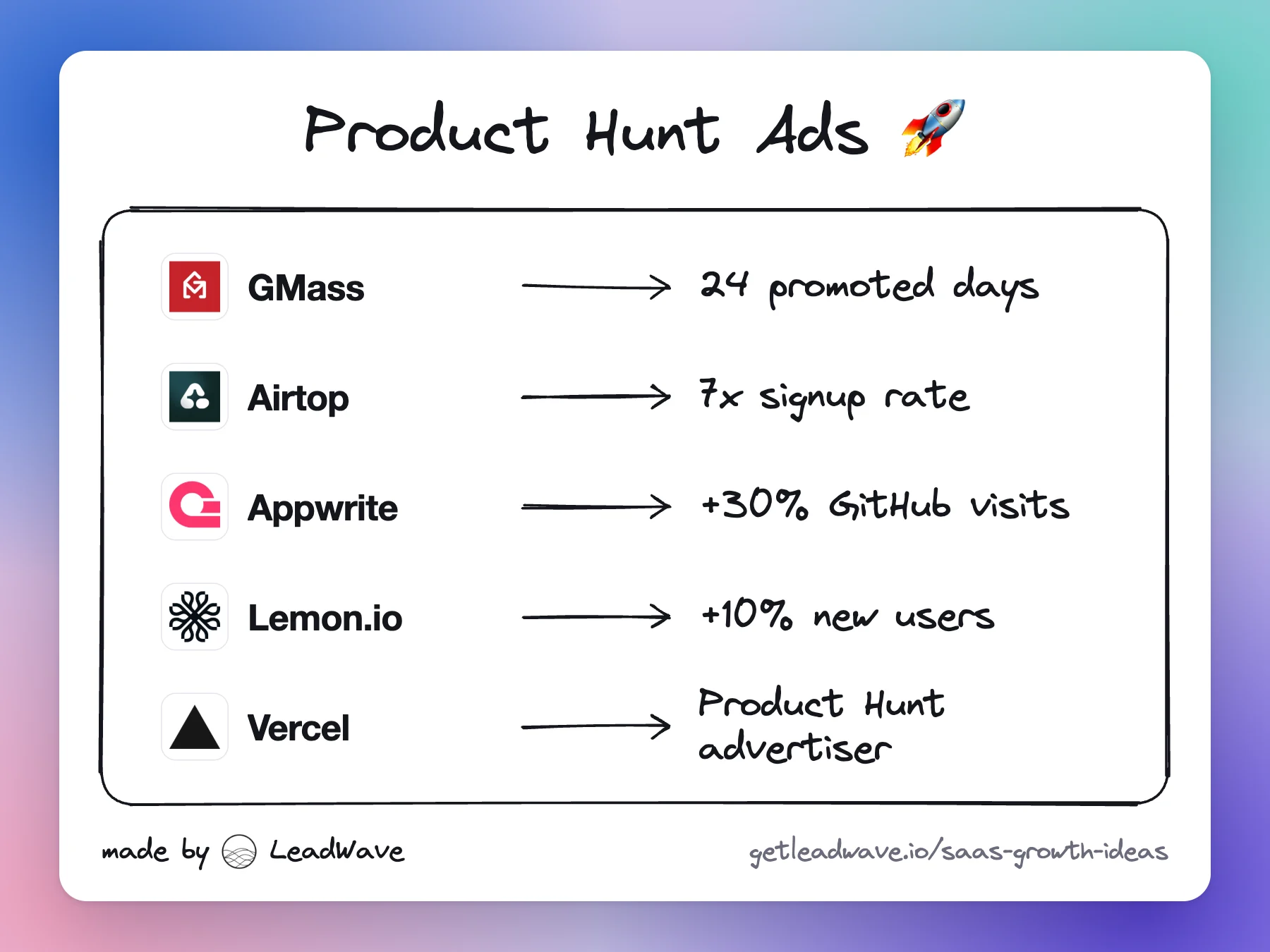
Pay for reach among the founders and engineers on Product Hunt: feed ads, the homepage billboard or the newsletter. Cheap to test, hard to make pay back.
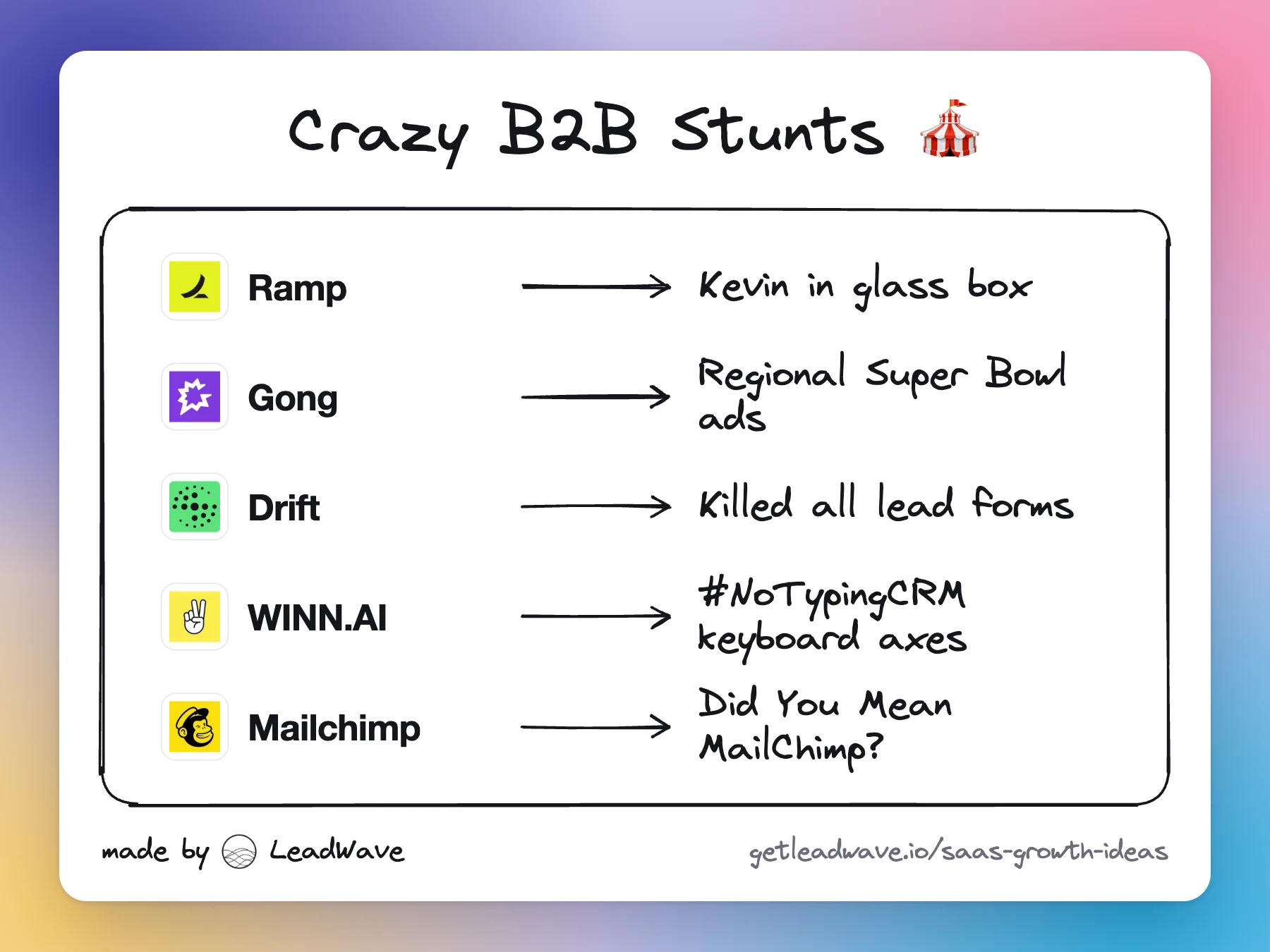
Ramp locked Kevin from The Office in a glass box. Drift killed its lead forms. What made these B2B stunts spread, what they cost, and how to measure one.