Build a small free tool that does one job your buyers already search for. It ranks, earns links, collects leads and shows off the paid product in seconds.
Impact
High
Effort
Medium
Time to results
Months
Budget
None needed
Team
Engineering
Tools for this growth idea
VercelHost each tool on its own fast URL, so it can rank for its search
SupabaseStore results and capture emails without building a backend
ClaudeBuild the tool's code, or power an AI generator inside it
Google AnalyticsSee which tools get traffic and turn it into signups
HubSpotSend the emails a tool captures straight into your CRM
Why free tools work
A free tool is marketing you build instead of write. It does one small job for free (grade a website, find an email, calculate a per diem) and the job is close enough to your product that the people who use it are your buyers.
It works for three reasons.
It matches how people search. Nobody searches for 'CRM thought leadership'. Plenty of people search 'email signature generator', 'backlink checker' or 'business name generator'. Those are task searches, and a page that does the task beats an article about it.
It earns links without outreach. People link to utilities in roundups, docs and forum answers. A useful tool keeps collecting links for years, and those links lift the rest of your site.
It shows value faster than a trial. The user gets a real result in seconds, with no setup. That is the moment a demo or a 14-day trial tries to reach and often doesn't.
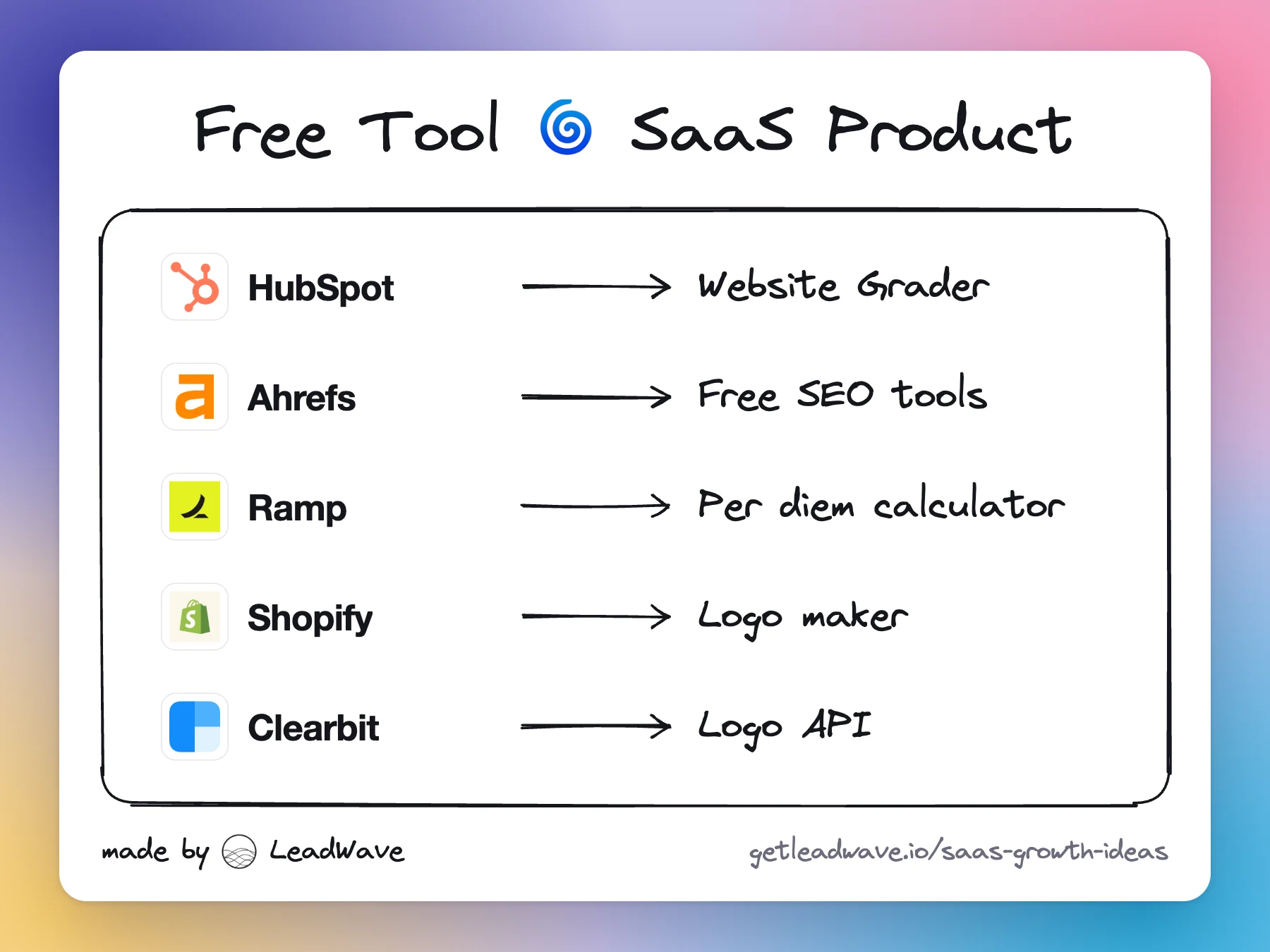
The classic case is HubSpot's Website Grader. It was the first code Dharmesh Shah wrote at HubSpot, it launched in 2007, and by HubSpot's count it has graded 4 million websites. Every grade was a marketer learning, in HubSpot's terms, what was wrong with their marketing.
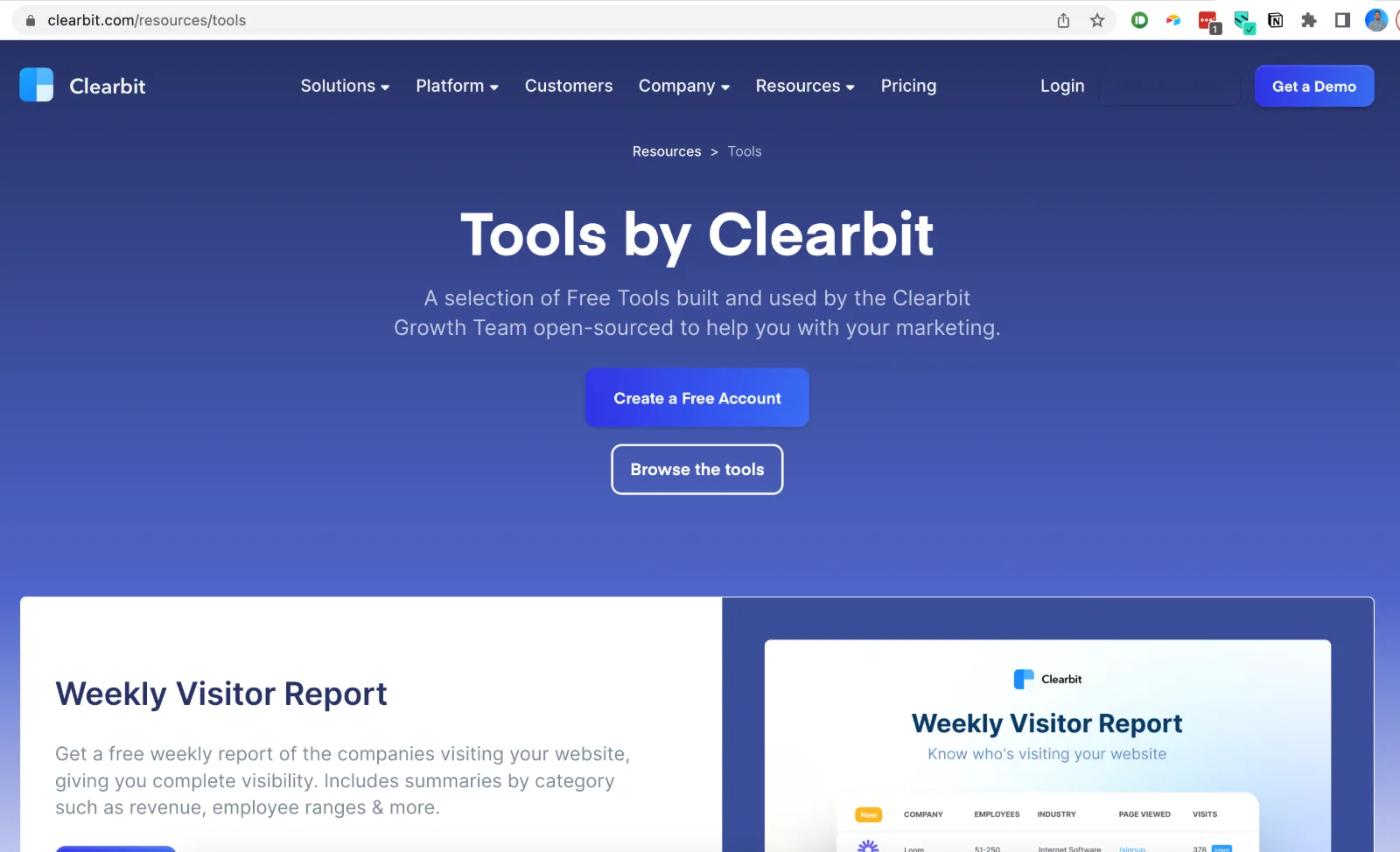
Clearbit ran the same play for developers. In a 2016 write-up the team said free APIs and browser extensions had driven 100K inbound leads and were their single largest source of inbound leads for paid products. The Logo API alone drew over 60,000 page views in its first week.
What separates tools that convert from tools that just get traffic
Lots of free tools get traffic and sell nothing. The ones that sell share a design.
1. The tool is a slice of the paid product. Ahrefs' free backlink checker is Site Explorer with the volume turned down. Clearbit's Logo API was a toy built on its paid Enrichment API, so a developer who embedded logos was one step from enriching leads. When the tool and the product share data and code, the upgrade is obvious and the tool is cheap to keep alive.
2. The tool runs on data only you have. Ramp's expense policy builder is benchmarked against 10,000 real company policies, and its vendor directory runs on Ramp's spend data. A competitor can copy the form, not the data. Tools built on a public API are easy to clone, which is why the AI text generator category is crowded.
3. The capture model fits the distance to the product. There are three models, and the best teams pick on purpose:
No gate.Name2Email by Reply asks for no account, no email and no card. Its page says the extension 'is how a lot of people meet Reply for the first time'. Use this when the tool lives where the work happens (Gmail, Chrome) and the brand rides along.
Gate the full result. Show a score free, ask for an email to get the full report. This is the Website Grader model. Use it when the result is personal and worth keeping.
Make the tool a free plan.Ahrefs Webmaster Tools gives site owners free Site Audit and Site Explorer for sites they verify. That is not lead capture, it is a free tier with a login, and every user is already inside the product.
A rule of thumb: the closer the tool is to the paid product, the less you need a gate. The further it is, the more you need to ask for an email, because the tool alone won't sell anything.
Free tools examples
HubSpotWebsite Grader
Enter a URL, get a score for performance, SEO, mobile and security, with fixes. Launched in 2007 as the first code Dharmesh Shah wrote at HubSpot; HubSpot says it has evaluated 4 million websites.
A hub of free SEO tools (backlink checker, keyword generator, website authority checker, AI writing tools), each a limited view of the paid product on its own URL that targets the exact tool search.
Site owners who verify their site get Site Audit and Site Explorer for free. At launch Tim Soulo wrote that Ahrefs was 'practically giving you free access to two of our professional SEO tools'. The tool is a free tier, so every user is already logged into the product.
Engineering as marketing means using engineering time to build free tools, calculators or small apps that attract and convert your buyers, instead of spending the same budget on ads or content. The term was popularized by the book Traction by Gabriel Weinberg and Justin Mares, which lists it as one of 19 traction channels.
Yes, often better than articles. An AI answer can summarize an article, but it can't run your calculator on the user's own numbers. Tool pages keep their clicks because the user has to use the tool to get the result.
Not for the first result. Let people use the tool, then ask for an email to save, export or get the full report. Tools that are really a free plan of your product can require a login, like Ahrefs Webmaster Tools.
A calculator or simple generator can be built in days. The real cost is ongoing: hosting, API or AI calls per use, bot traffic and keeping it working as your product changes. Budget an owner and a monthly check for every tool.
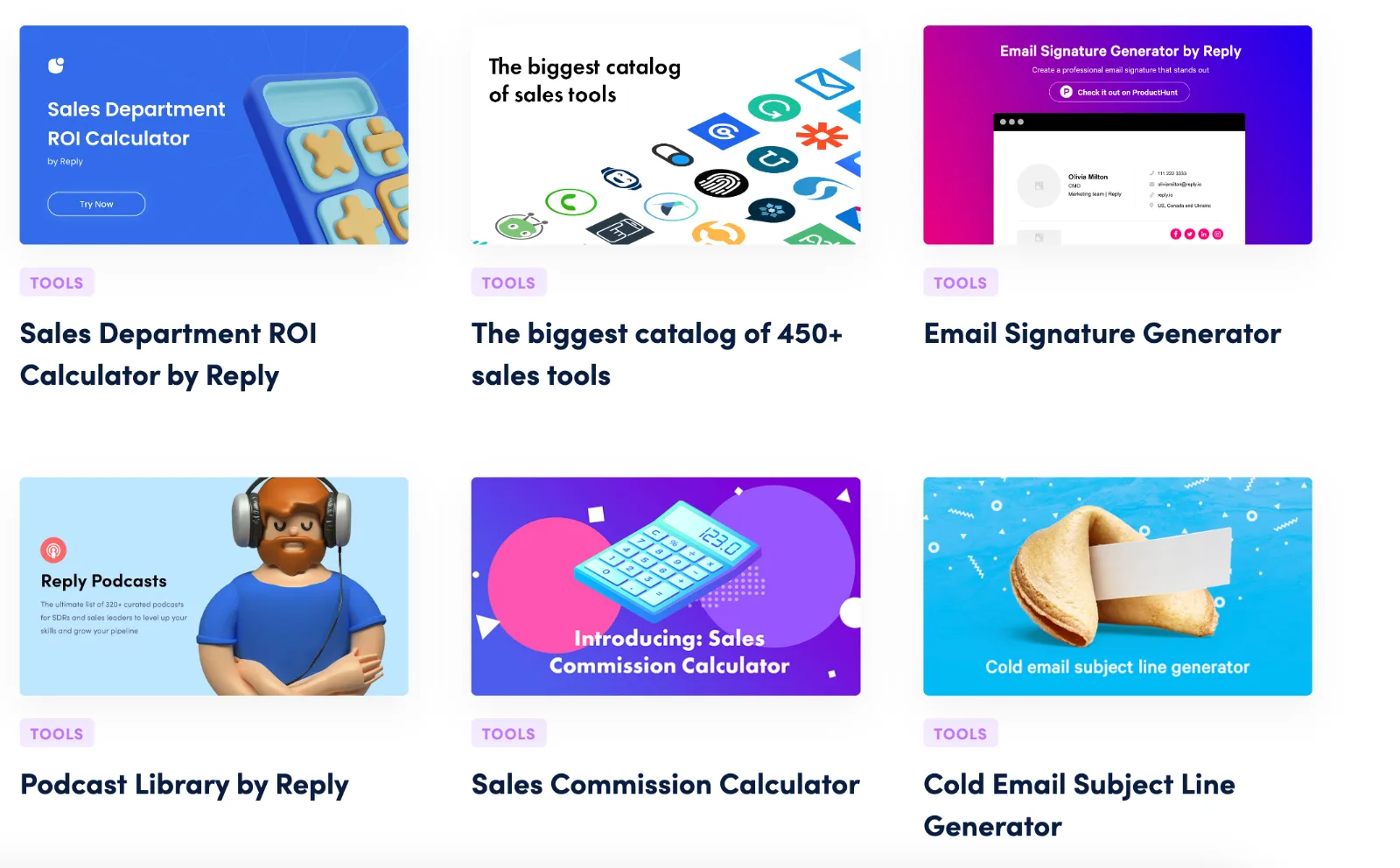
Calculators (ROI, pricing, churn, cost), graders and checkers (website, email, security), generators (names, templates, copy), and lookups or directories built on your own data. Pick tasks your buyers do just before they need your product.
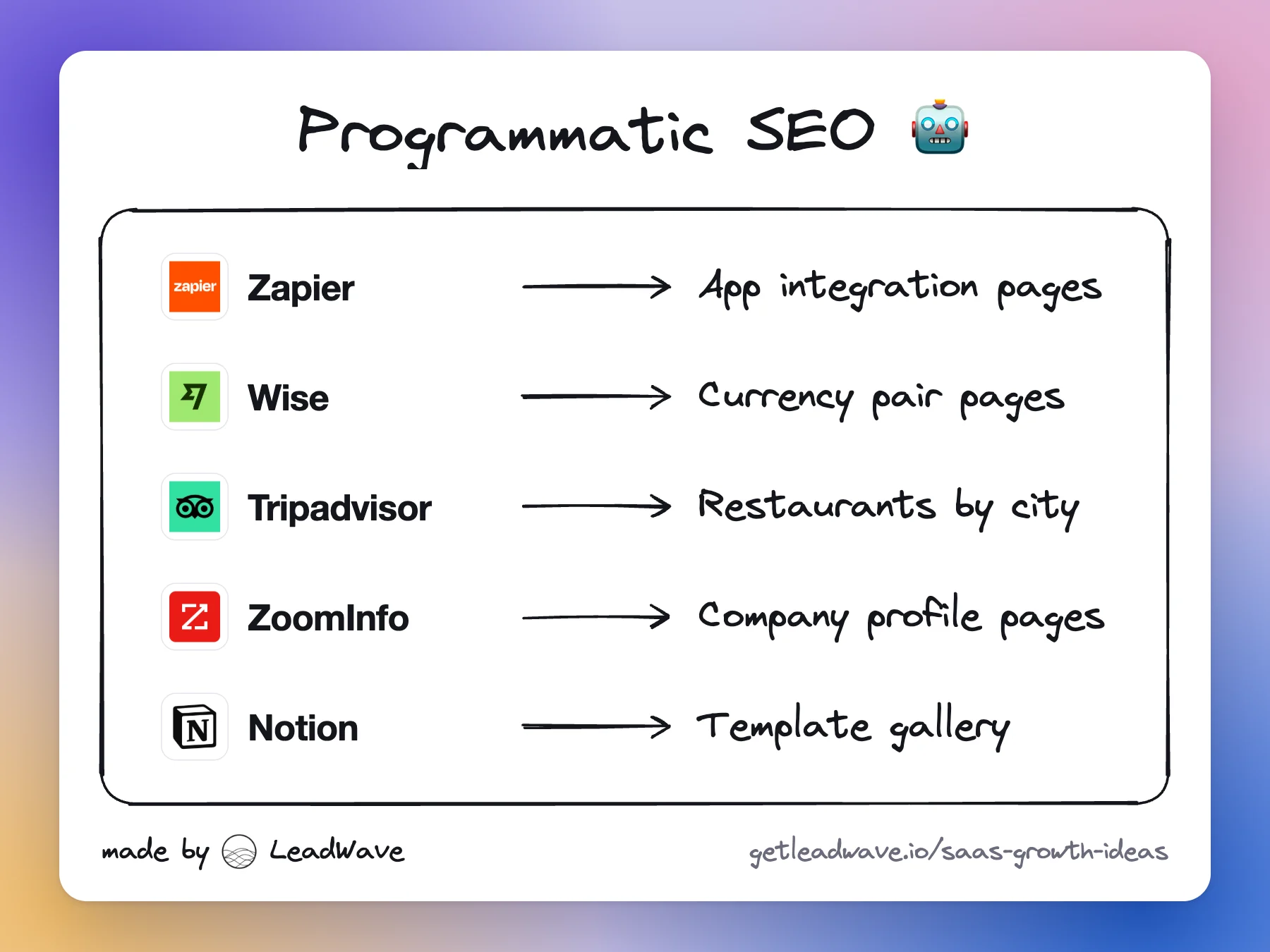
One template plus a dataset makes thousands of pages, each answering one search. It works when each page has data nobody else has, and fails when it doesn't.