

Why AI app directories are a distribution channel
People now start a lot of their work in ChatGPT or Claude. When the assistant can call your product from the conversation, your product does the work there: it makes the video, pulls the CRM report, writes the database migration. When it can't, the assistant does a weaker version itself or names a competitor that can.
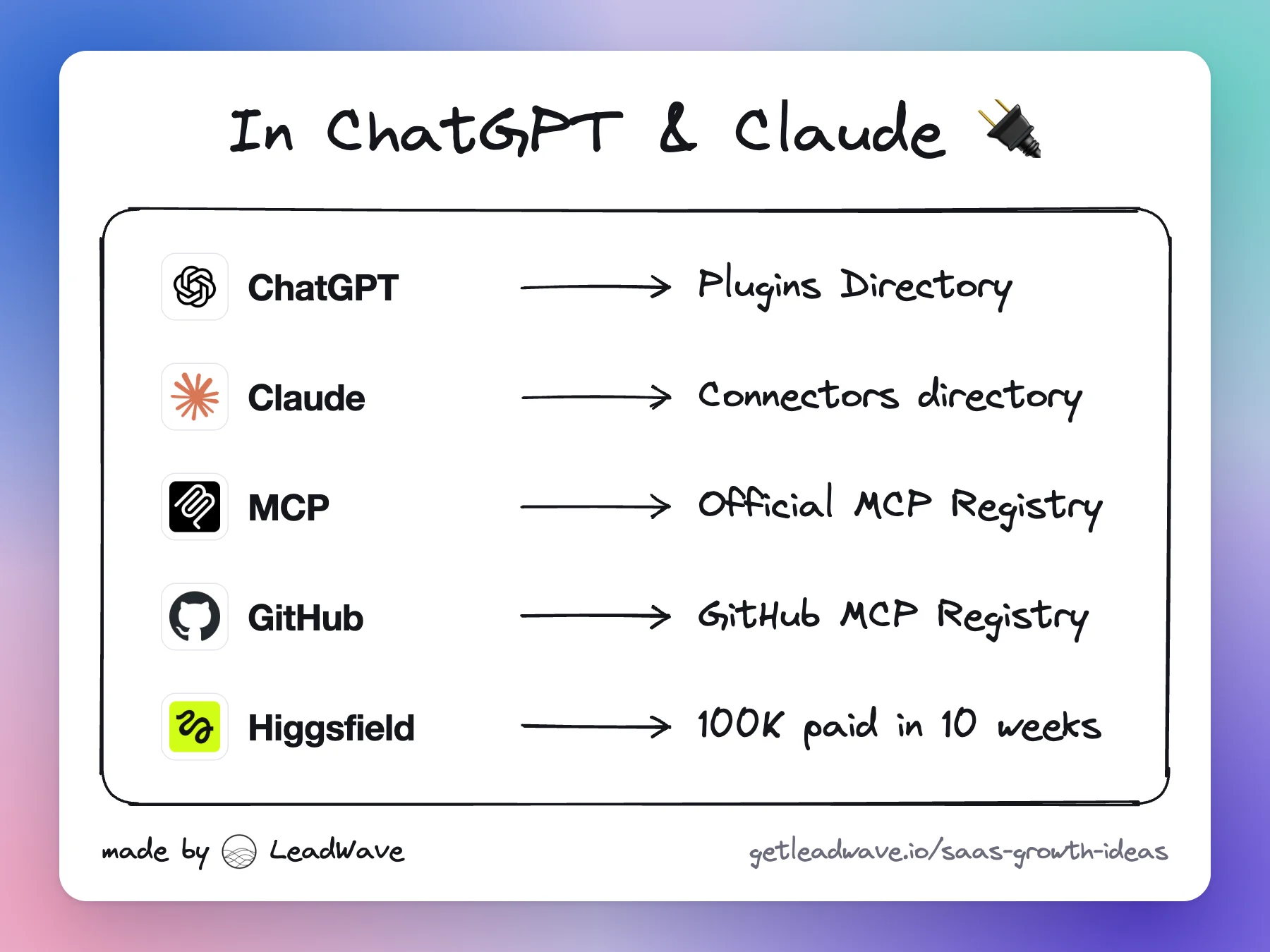
The directories are how assistants and their users find those products. Since 2025 each big assistant has opened one: ChatGPT's Plugins Directory (apps until July 2026), Claude's connectors directory, and the MCP registries that AI coding tools read. All of them list the same kind of thing, an MCP server: a small API, built on the open Model Context Protocol, that describes your product's actions as tools the model can call.
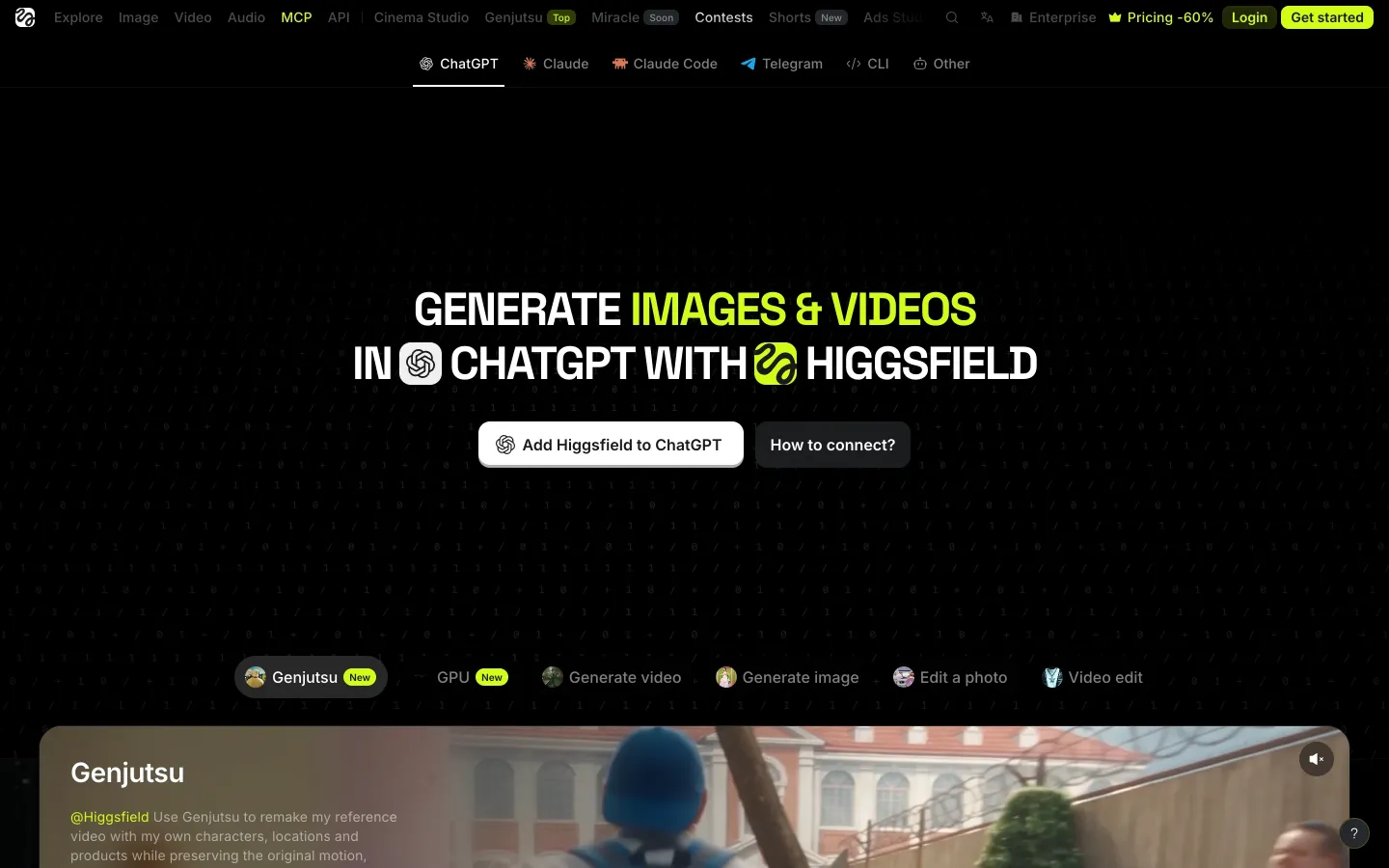
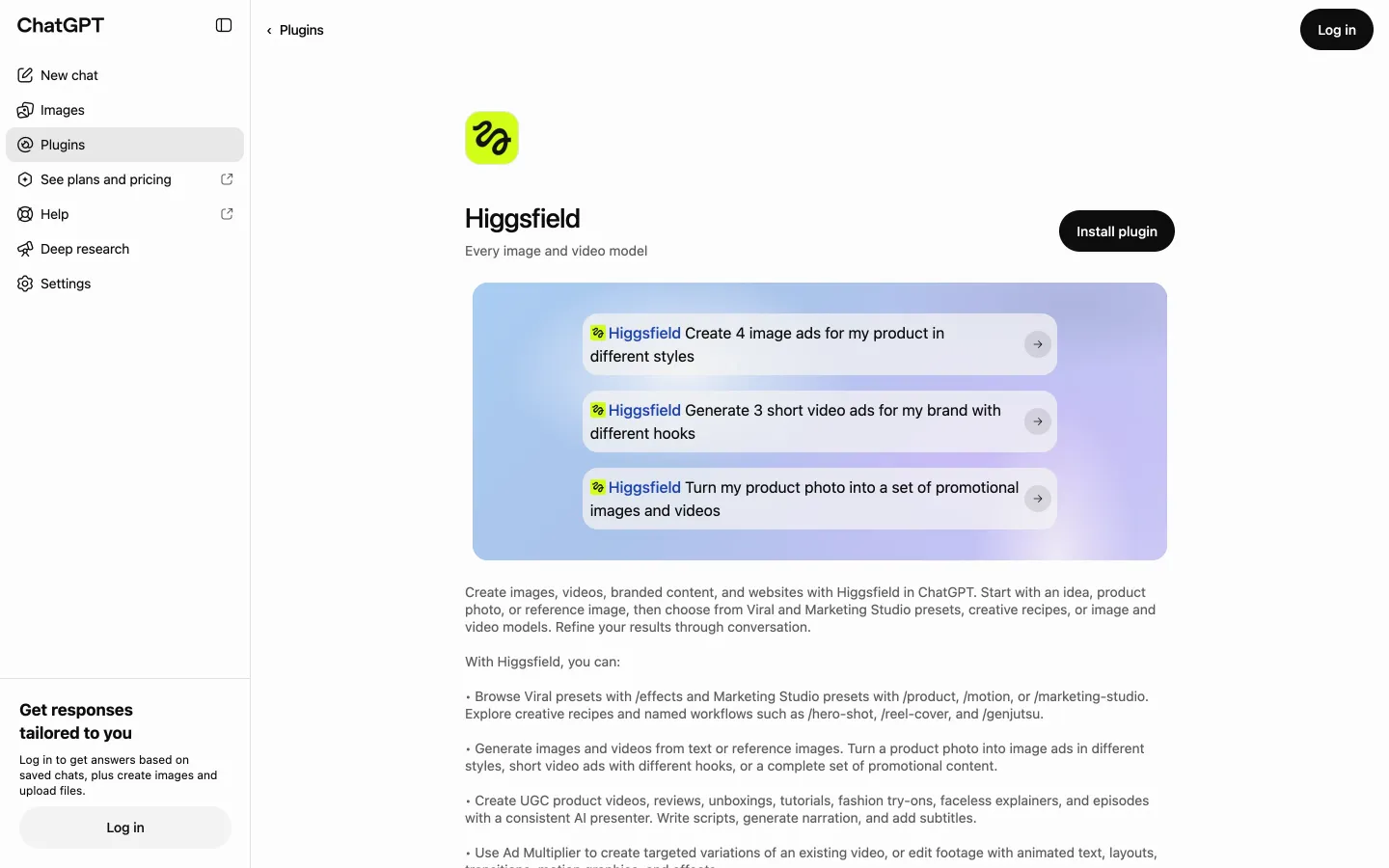
The clearest result so far is Higgsfield's. Its CEO, Alex Mashrabov, wrote in November 2026 that the company's ChatGPT plugin "brought 100,000 new paid subscribers to Higgsfield in 10 weeks" (LinkedIn). People describe a video to ChatGPT, and Higgsfield's models make it inside the chat. The plugin needs an active paid Higgsfield subscription, so every new user it brought had to pay.
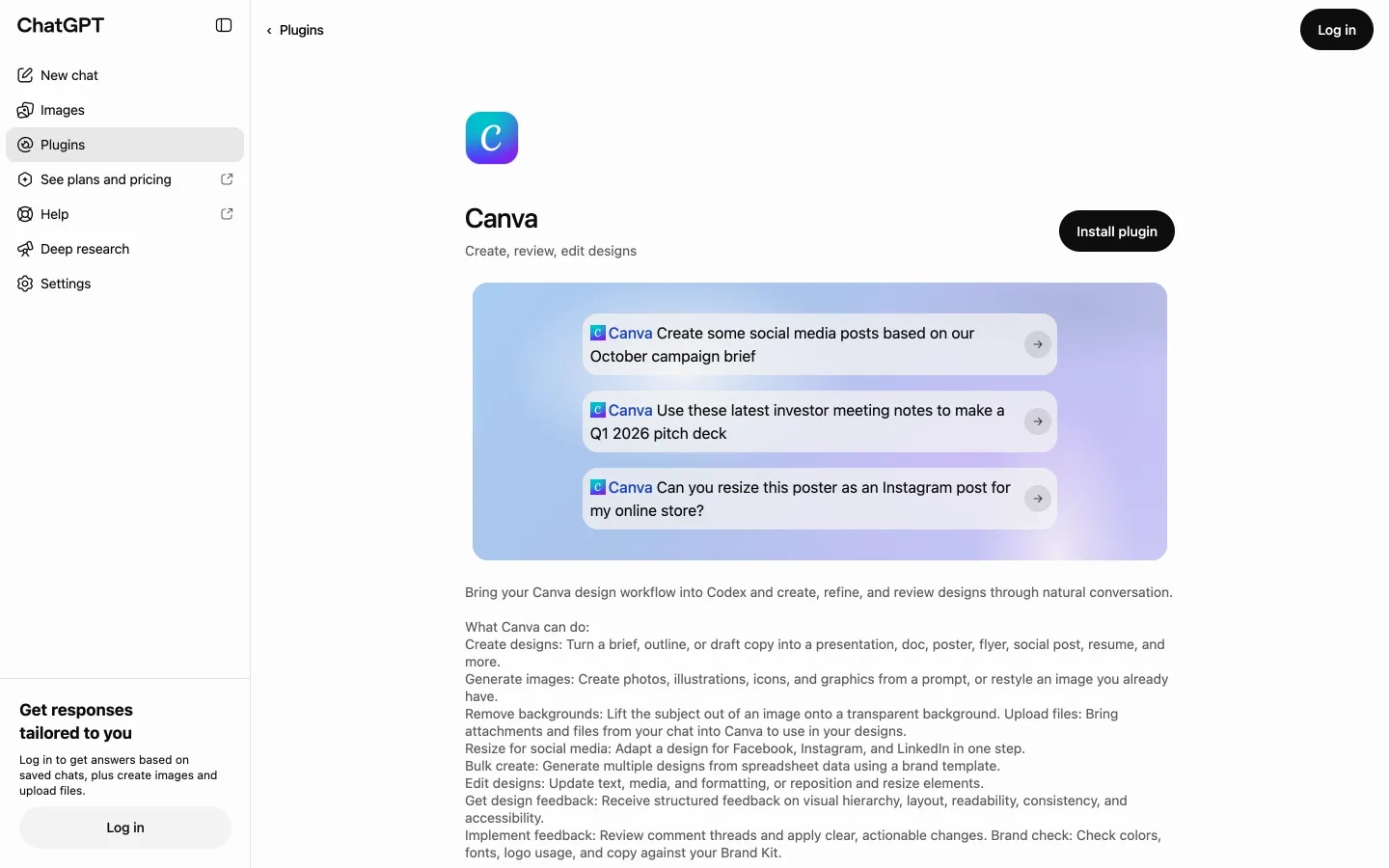
Canva is the other big public number: users had more than 26 million conversations with the Canva app in ChatGPT, and Canva is one of the top 10 domains ChatGPT sends traffic to (TechCrunch, February 2026). Most other companies haven't published numbers yet, so treat the channel as early: the shelf space is still cheap, and few categories have more than one or two serious listings.
ChatGPT: the Plugins Directory
OpenAI launched apps in ChatGPT in October 2025 and opened submissions to all developers on December 17, 2025 (OpenAI). On July 9, 2026 apps became plugins: a plugin packages one app (your MCP server) with skills and templates for a workflow, and the Plugins Directory replaced the app directory. Existing app connections kept working (OpenAI Help). The same plugin works in Codex.
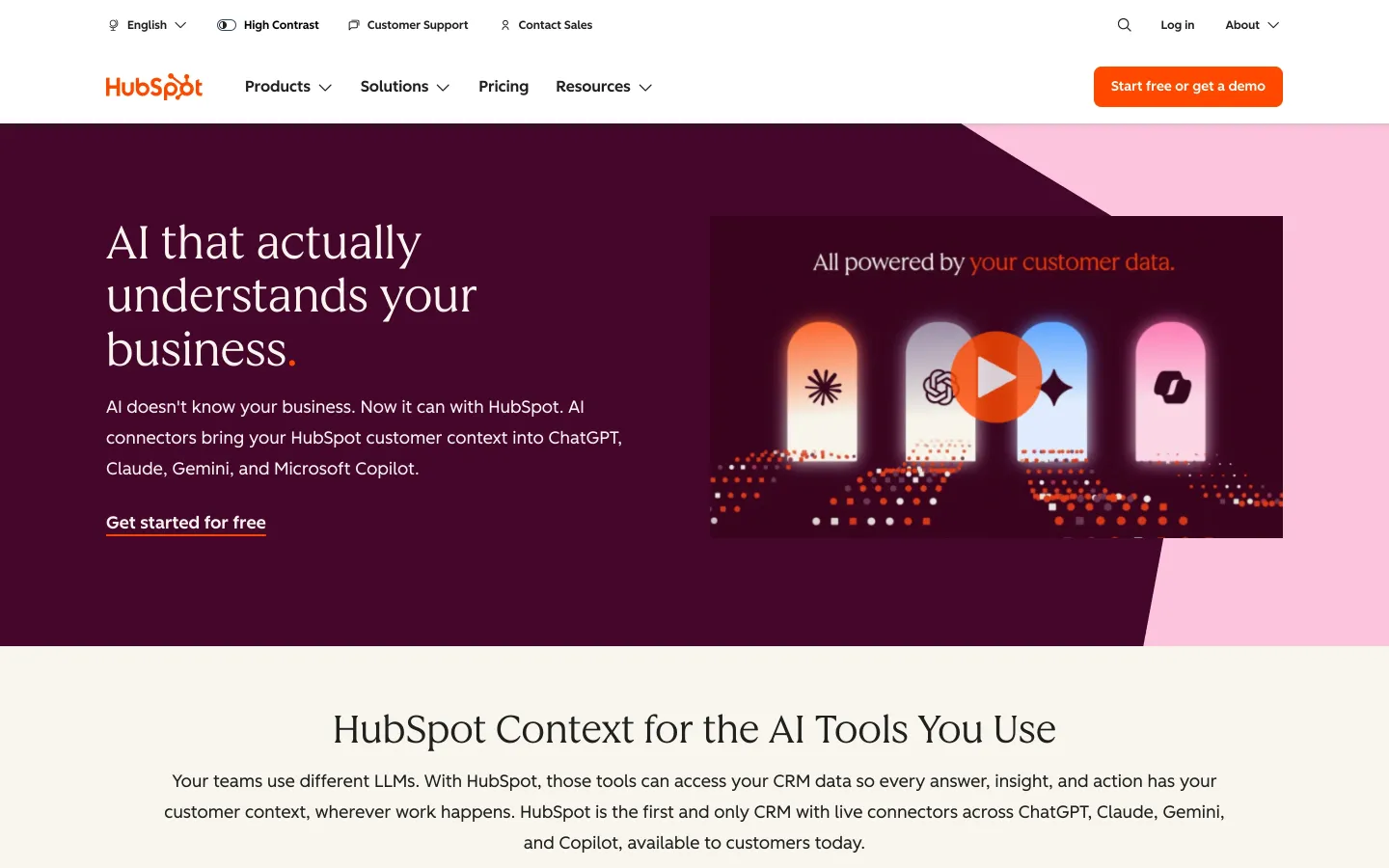
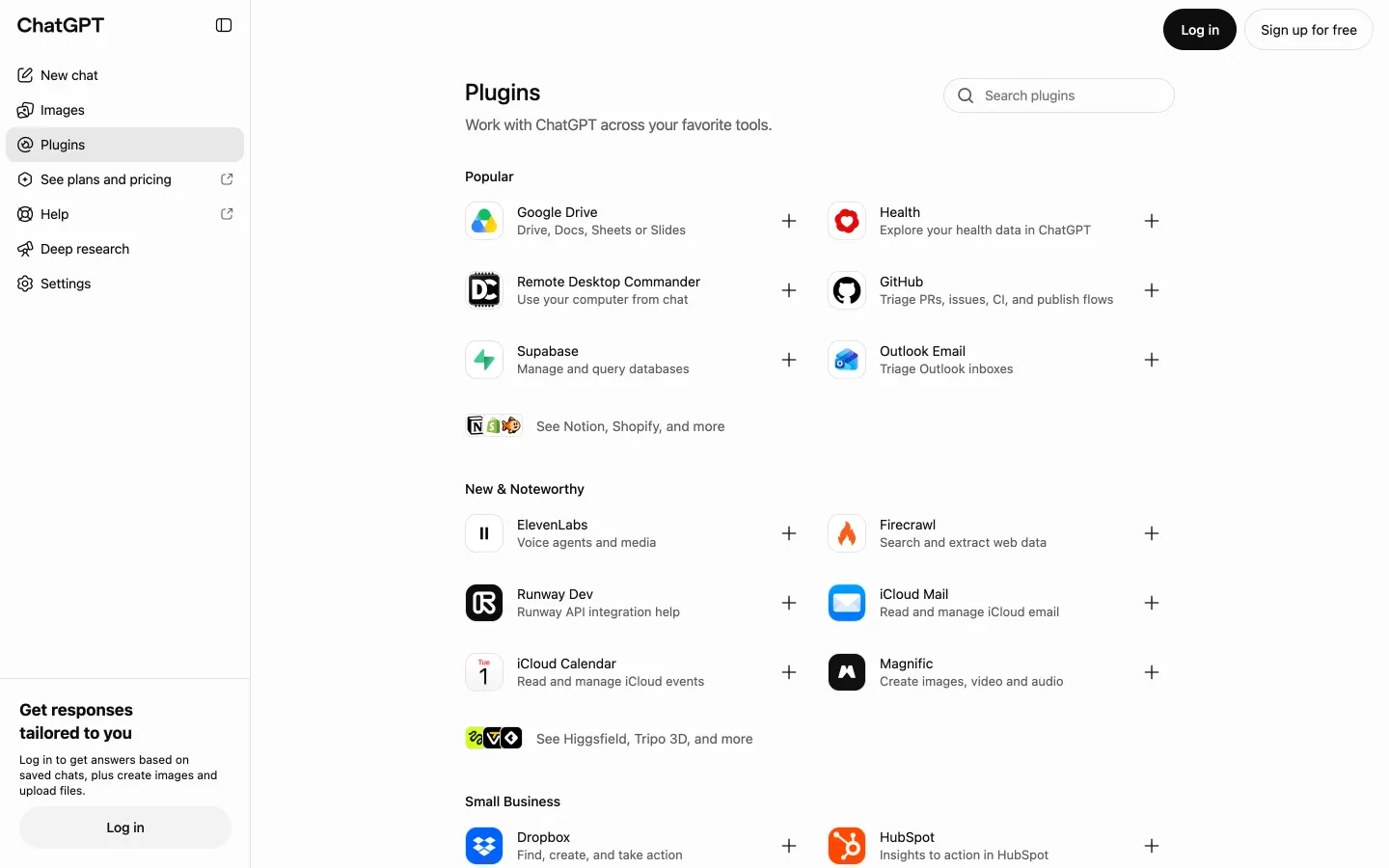
The directory at chatgpt.com/plugins is public. It has Popular, New & Noteworthy and Small Business rows, and every listing has its own page with starter prompts, a description, the app and its skills. On November 14, 2026 Supabase and GitHub sat in Popular, next to Google Drive; ElevenLabs, Firecrawl and Runway were in New & Noteworthy; HubSpot and Dropbox led Small Business.
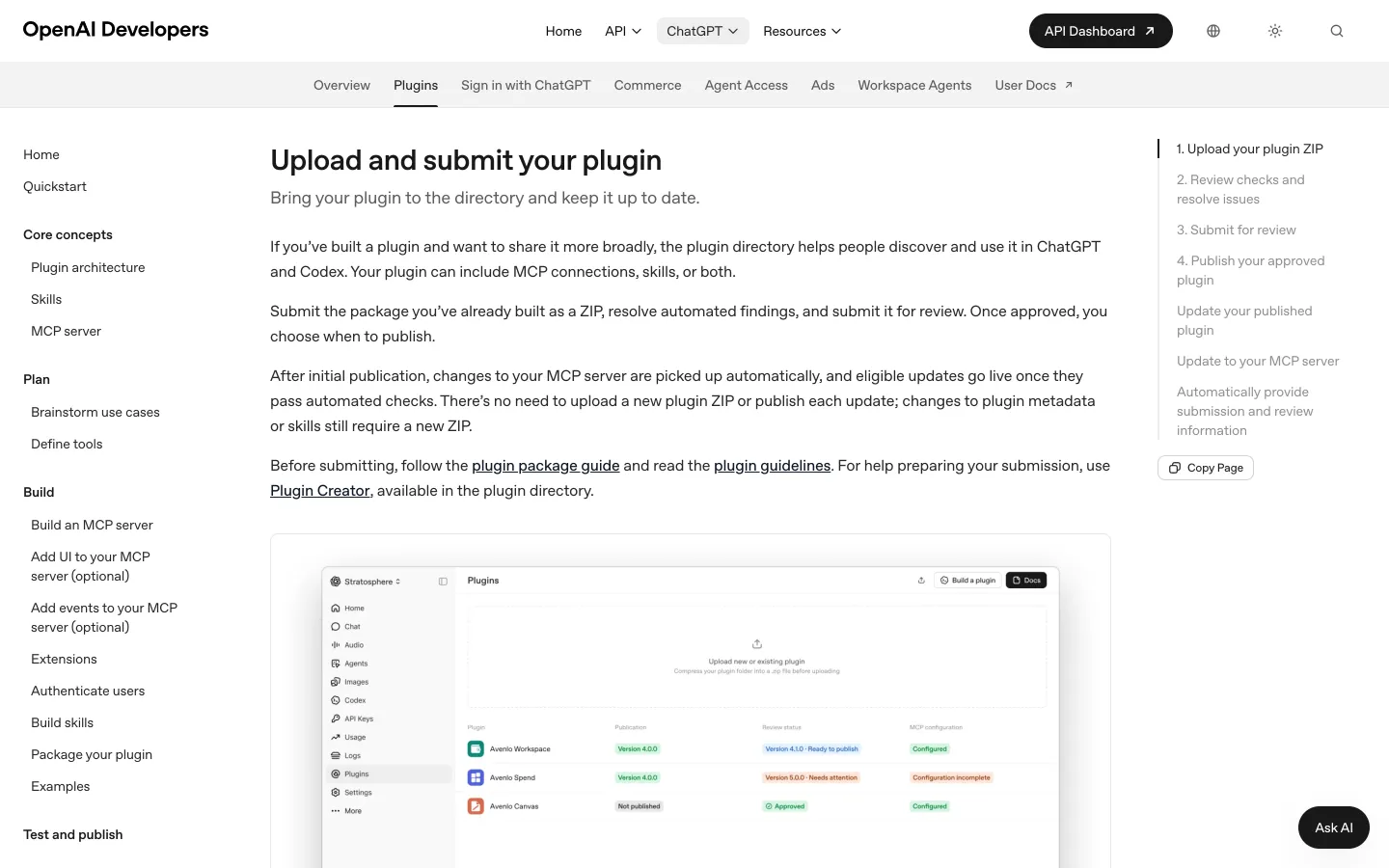
Submitting happens on the Plugins page of the OpenAI Platform (platform.openai.com/plugins), as a ZIP upload (OpenAI Developers):
- Verify yourself or your business, so the listing carries your name. Organization owners submit.
- One MCP server per plugin, on a stable public HTTPS URL, with a domain check at
/.well-known/openai-apps-challenge. Sign-in is OAuth or none: the portal doesn't take API-key or bearer-token flows. - Public URLs: website, support, privacy policy and terms, all naming the same publisher.
- Review material: five test prompts that should use your tools and three that shouldn't, a demo video, release notes, and a test account with sample data that works without MFA or email codes.
After approval you choose when to publish. Changes to your MCP tools are scanned daily and go live after automated checks; new tools wait for approval. OpenAI says apps that meet its standards can be featured more prominently or recommended by ChatGPT in conversations, which is the real prize: being suggested at the moment someone needs you.