

How ChatGPT and AI search choose what to cite
AEO (answer engine optimization) and GEO (generative engine optimization) are two names for the same job: getting your product named, and your pages linked, when someone asks an AI assistant instead of Google. GEO comes from a 2023 Princeton-led research paper, which found that adding statistics, quotations and cited sources raised a page's visibility in generated answers by up to 40% on its test set.
The mechanism matters more than the acronym. When a question needs current facts ("best AP software for a 20-person company"), the assistant runs web searches (Google calls this query fan-out), retrieves pages from a search index and writes its answer from them, citing some. Two things follow:
- No index, no citation. If the engine's crawler can't fetch your page, or it doesn't rank for the searches the model runs, you can't be cited from it.
- A mention is not a citation. Your brand can be named because a G2 page or a Reddit thread said so, with no link to you. AirOps, which sells AEO software, reports that about 85% of brand mentions in early commercial queries come from third-party domains (AirOps 2026 report).
Where each engine looks:
- ChatGPT finds pages with OAI-SearchBot; sites that block it don't appear in its search answers. GPTBot is the separate training crawler (OpenAI). It's the AI referrer that matters most: 91% of Webflow's LLM referrals come from ChatGPT.
- Perplexity uses PerplexityBot to "surface and link websites in search results" (docs) and leans on Reddit, YouTube, LinkedIn, Wikipedia and G2.
- Google AI Overviews and AI Mode retrieve from Google's index with its core ranking systems. A page must be indexed and snippet-eligible; no special files, schema or rewriting needed (Google's guide). YouTube and Reddit top their cited domains.
- Microsoft Copilot grounds its answers in Bing, and Bing Webmaster Tools reports its citations.
- Claude indexes pages with Claude-SearchBot; Anthropic says blocking it may reduce your visibility in Claude's answers (Anthropic).
The source mix comes from Peec AI's analysis of 30 million cited sources (US, March 2026). The upshot: good SEO is the entry ticket. AEO adds three things on top: answer-shaped pages for buying decisions, work on the third-party pages engines trust, and a way to measure both.
What companies report, and who is reporting it
First-party numbers, from companies measuring their own signups:
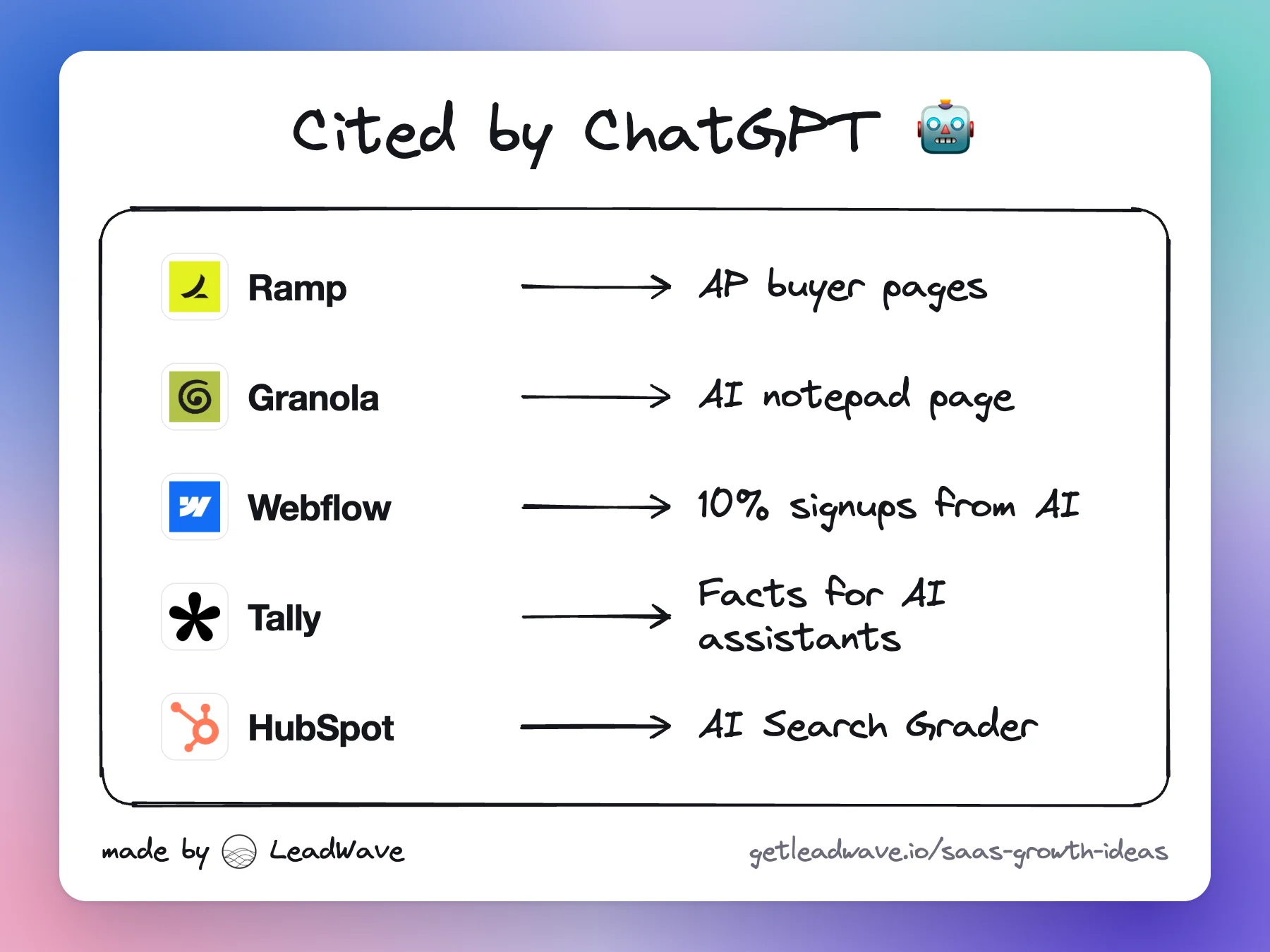
- Webflow: 10% of signups come from AI discovery, growing 4x year on year; ChatGPT traffic converts at 24%, 6x higher than Google (Growth Unhinged, Nov 2025).
- Vercel: ChatGPT referred about 10% of new signups, up from 1% six months earlier (Vercel, June 2025).
- Tally: ChatGPT became its #1 referral source, with 2,000+ tracked signups from AI tools, and its onboarding survey says the real number is higher (Tally, June 2025).
- Ahrefs: AI search was 0.5% of its traffic over 30 days but 12.1% of signups (Ahrefs, June 2025).
- HubSpot: a two-person SEO pod shipped AEO experiments weekly for a year; by year end HubSpot was the most visible CRM in AI search and qualified leads from AI were up 1,850% (Aja Frost in Growth Unhinged, Sep 2026).
- Gamma: its head of growth marketing, Ravish Agrawal, calls AI search one of Gamma's top acquisition channels (Profound's podcast, Nov 2026).
Read everything else with one question: who is selling what? The best-known case studies, Ramp and Granola, are published by the vendors that ran them (Profound and Discovered Labs), and most citation studies come from companies selling tracking tools. Visibility scores are each vendor's own metric over prompts they chose, and big percentages start from small bases: Granola's 4,600% is 47x a January baseline. Take the method, not the benchmark.
Two more cautions. AI referrals undercount, because many people read the answer and then search your brand on Google, so add ChatGPT to your "How did you hear about us?" options. And the conversion premium may fade: Ahrefs' author doubts it will hold once AI search is the default.