

Why referrals work, and why most SaaS programs stall
A referred sign-up arrives with three things a paid click doesn't have: trust in the person who sent the link, a reason to try the product now, and someone to ask for help. That is why a referred user can activate faster and cost far less than one bought with ads.
The catch is that a referral program amplifies word of mouth; it doesn't create it. If users don't recommend you unprompted, a reward won't change that. If they do, a program gives them a reason to do it more often and a link that makes it easy.
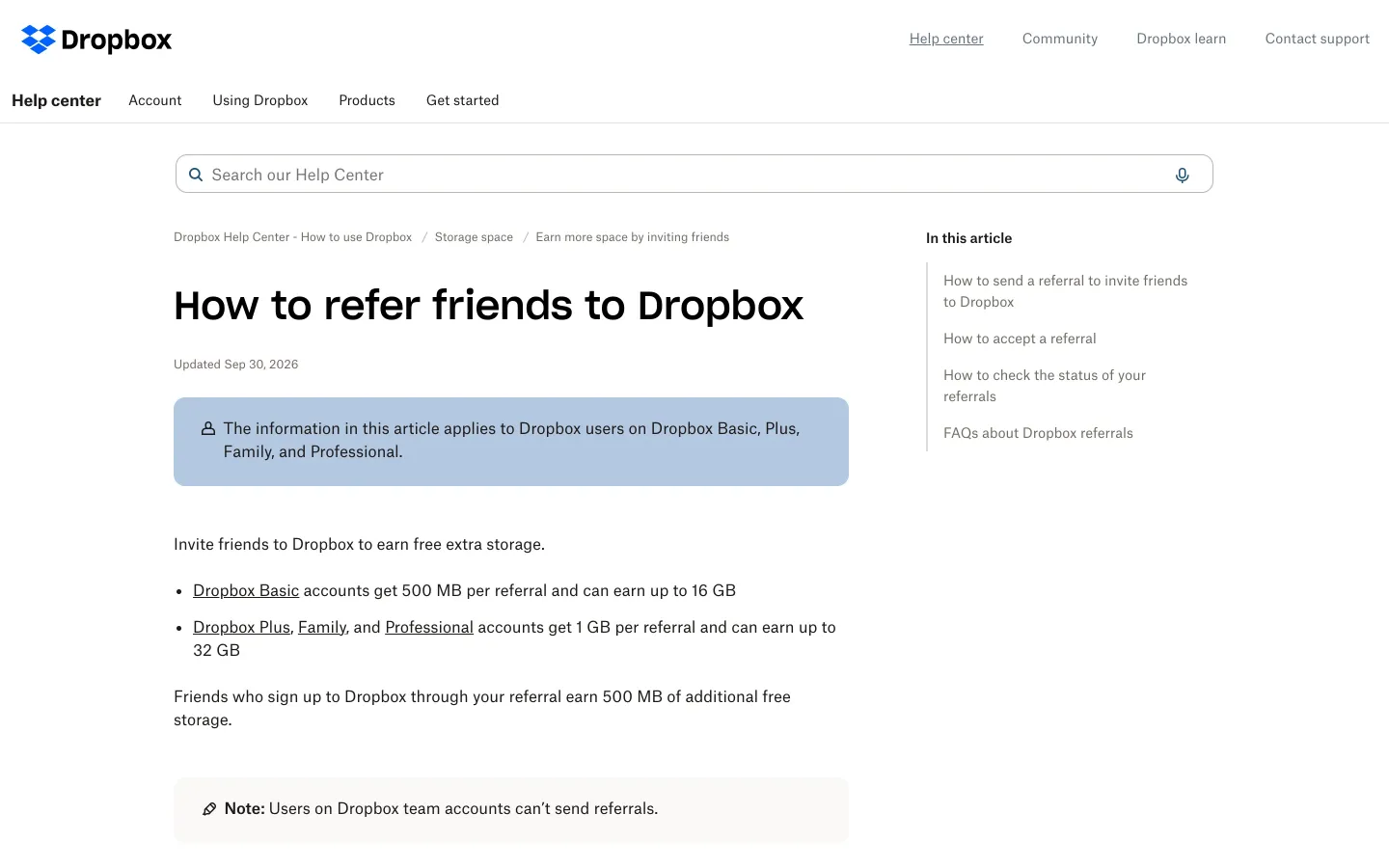
Dropbox is the case everyone cites, and the numbers come from Drew Houston's own Startup Lessons Learned talk in 2010. A referral program with a two-sided reward permanently increased sign-ups by 60%, referrals drove 35% of daily sign-ups, and Dropbox grew from 100,000 registered users in September 2008 to 4 million in January 2010.
Two details mattered more than the size of the reward:
- The reward was the product. Free storage relieved the exact limit free users kept hitting, cost Dropbox little, and pulled the user deeper into the product.
- The reward waits for activation. Today a referred friend must install the app, log in and verify their email before either side gets space, and the rewards are capped: 500 MB per referral up to 16 GB on Basic, 1 GB up to 32 GB on paid plans.
The strength of the loop is roughly share rate × invites per sharer × invite conversion × activation. Most programs die at the first number, because the program lives in a settings menu nobody opens.
Choosing the reward: two-sided or one-sided, product, credit or cash
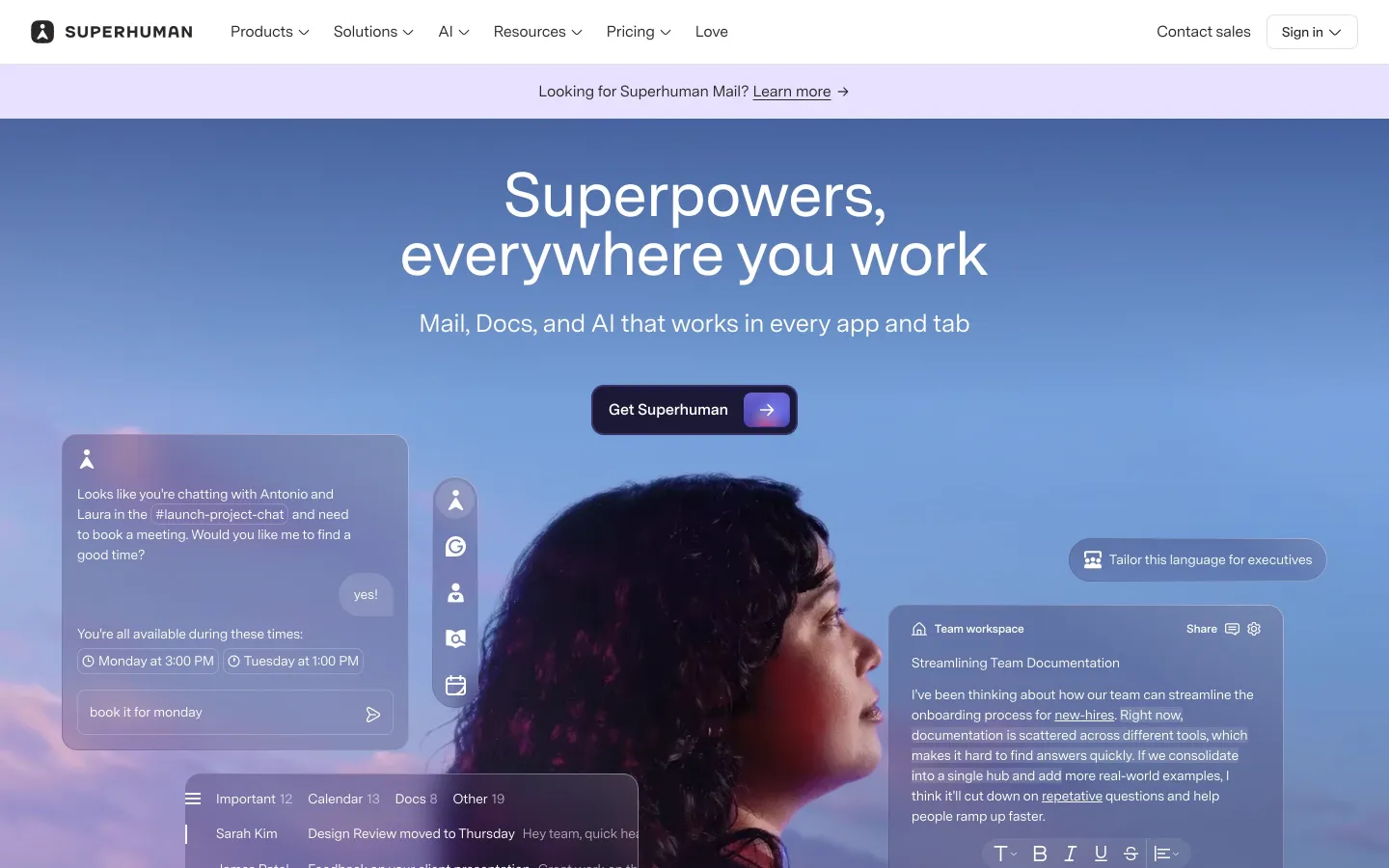
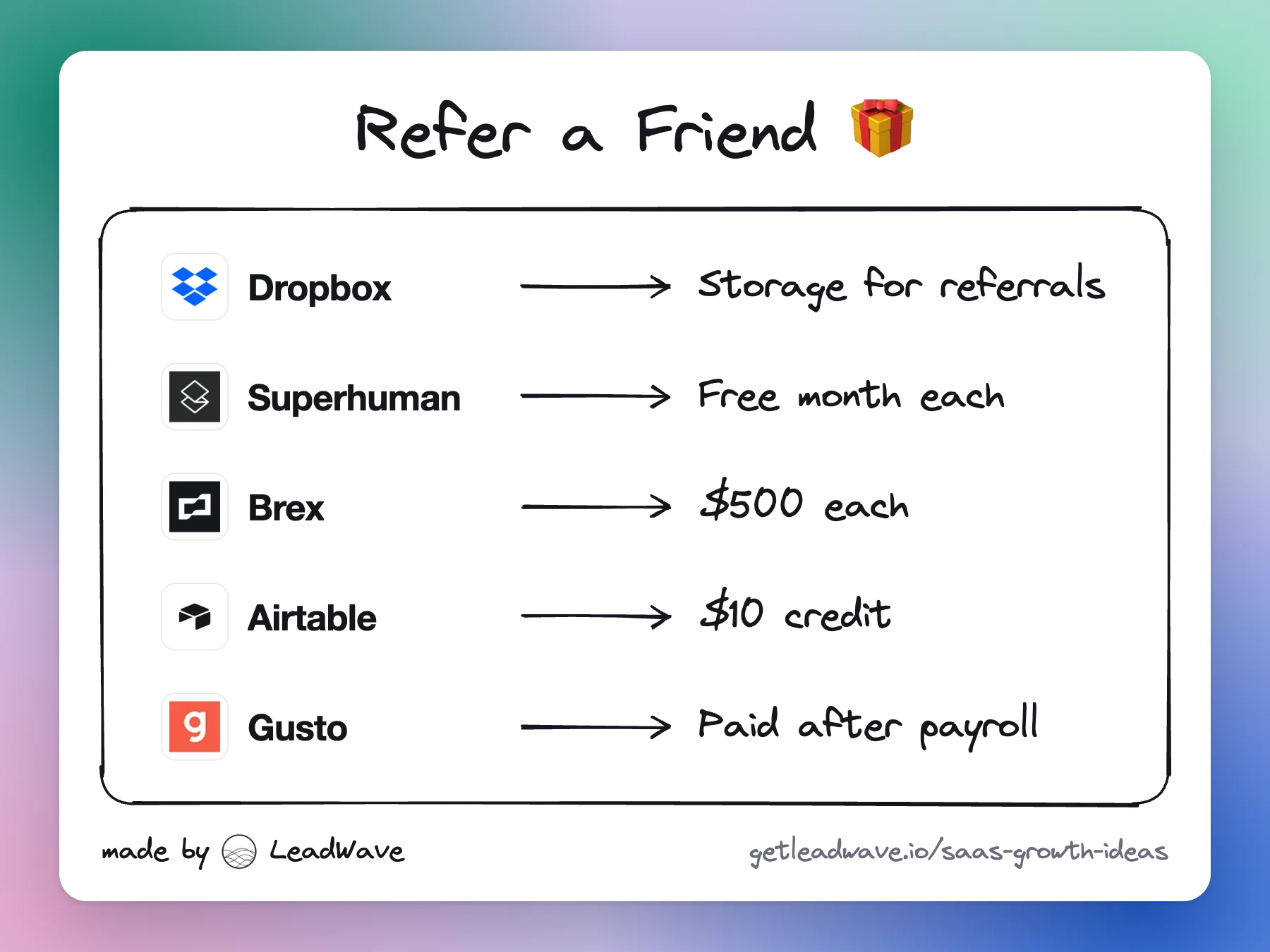
Two-sided rewards give the friend something too. That changes the ask from a sales pitch into a gift: the user isn't asking a favor, they're handing over a free month or extra space. Dropbox's 60% lift came from a two-sided reward, and most consumer-friendly SaaS copies it: Superhuman gives both sides a free month, Brex gives both sides $500.
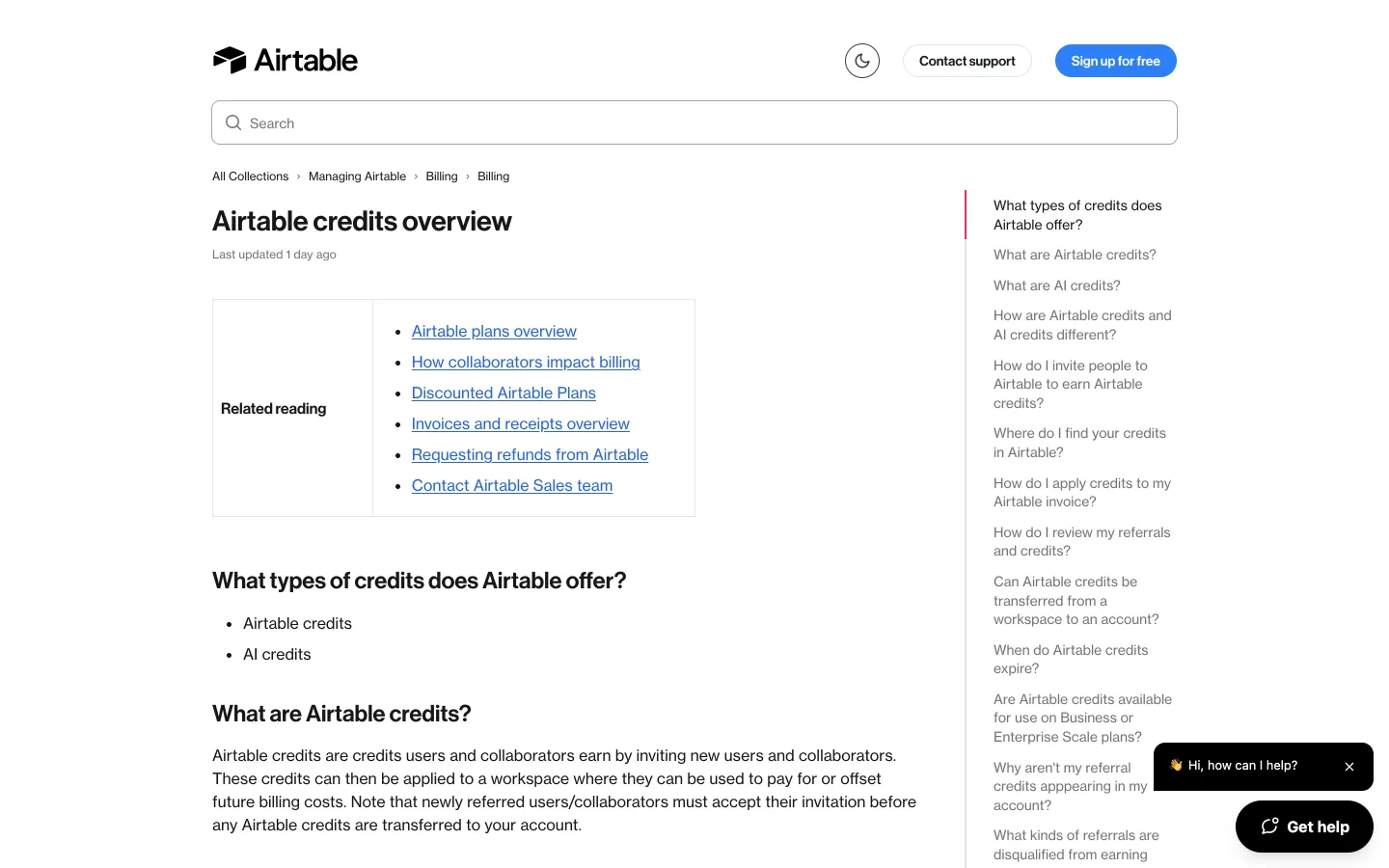
One-sided rewards pay only the referrer. They work when the referrer is motivated by the reward itself, or when the referred buyer is a business that wouldn't notice a small perk. Airtable gives the referrer $10 in credit per sign-up; Gorgias pays the referrer cash.
Then pick the currency:
- Product (storage, seats, usage, months free). The cheapest to give, because the marginal cost is close to zero, and it keeps the referrer using the product. It can't be cashed out, which makes it less attractive to fraudsters. Best when the reward relieves a limit users actually hit.
- Credits. Product in dollar form. Airtable's credits earned on the Free plan expire after 90 days unless the account upgrades to Team, so the reward doubles as an upgrade nudge.
- Cash and gift cards. Needed when the referrer isn't a heavy user (accountants, consultants, investors) or the product is priced on spend, as in fintech. Cash is the biggest fraud magnet and brings tax paperwork: Mercury asks for tax details once a referrer's bonuses pass $600 in a year.
Size the reward to the customer's value, not to a round number. Gorgias pays $120 to $3,000 depending on the plan the referred company buys, and Gusto's referrer reward climbs with every successful referral.