Skip to content

Acquisition

YouTube as a SaaS Growth Channel: How Ahrefs, Instantly and Bardeen Do It

Teach your buyers on YouTube, so they find you when they search for how to do the job your product does.

YouTube growth: real examples from Ahrefs, Instantly, Bardeen
Impact
High
Effort
High
Time to results
Quarters
Budget
None needed
Team
Marketing

Tools for this growth idea

  • Google Analytics
  • Canva
  • Guideflow

Why YouTube works for SaaS

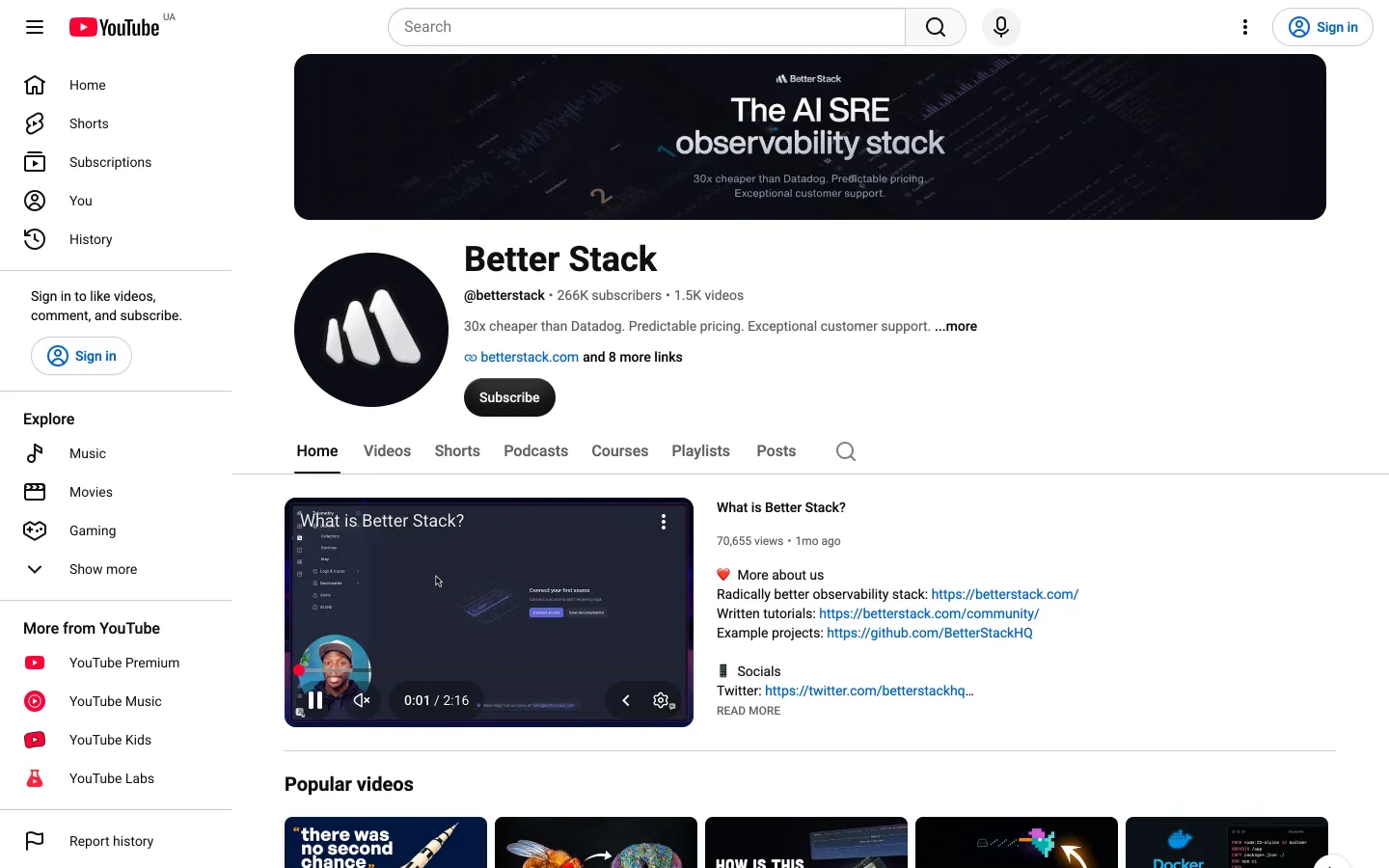
Most social posts are gone in a day. A good YouTube tutorial keeps bringing people in for years, because someone is always searching for how to do that job. Better Stack's top video is a Docker tutorial that reached 414,000 views.

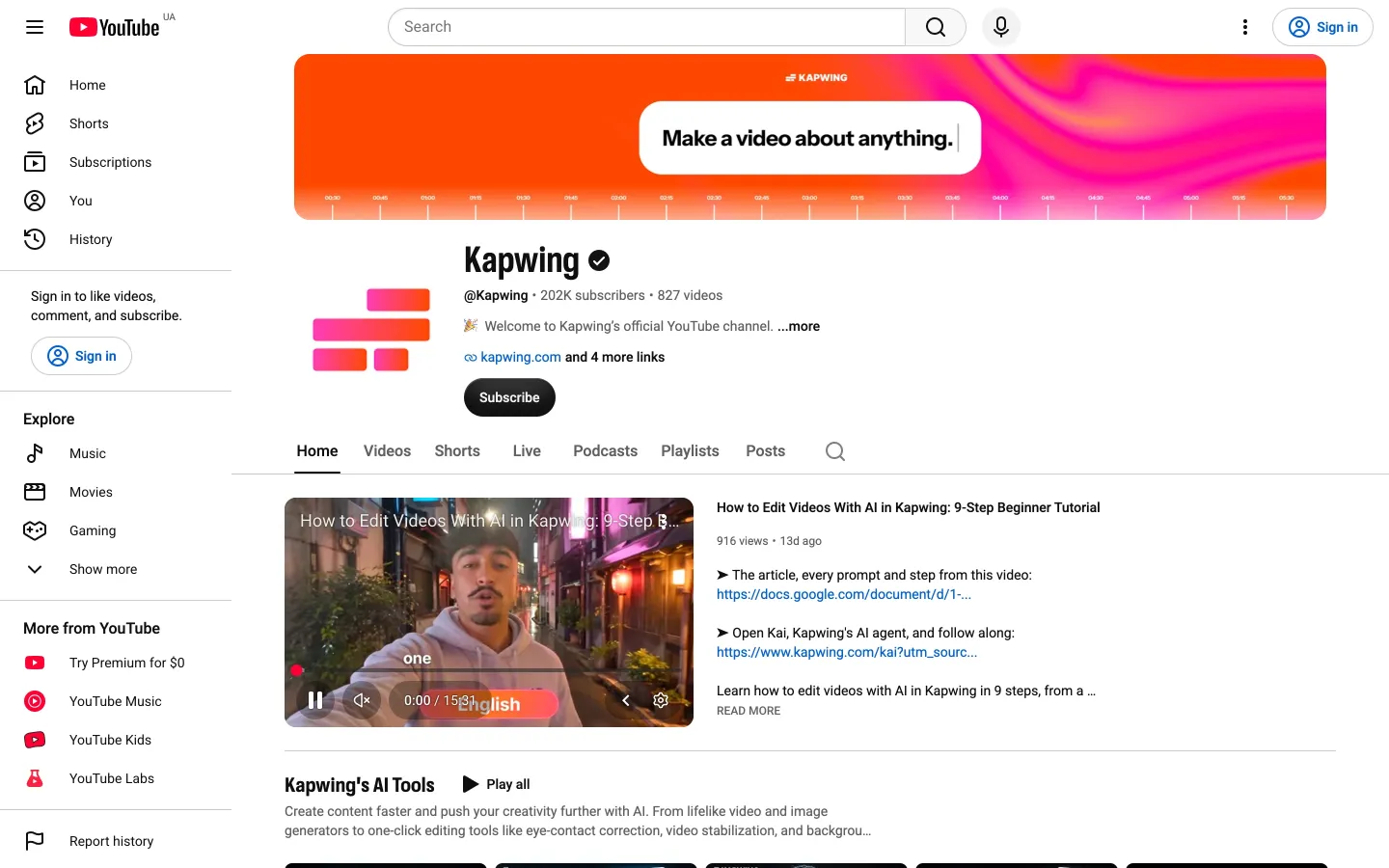
Kapwing, a video editor, shared what its first year on YouTube taught it. Simple screencast tutorials made up “more than 80% of our total Youtube views.” Its most entertaining videos brought in less than 1%. And “more than 50% of our YouTube views come from Google Search,” so a video can rank in two search engines at once.
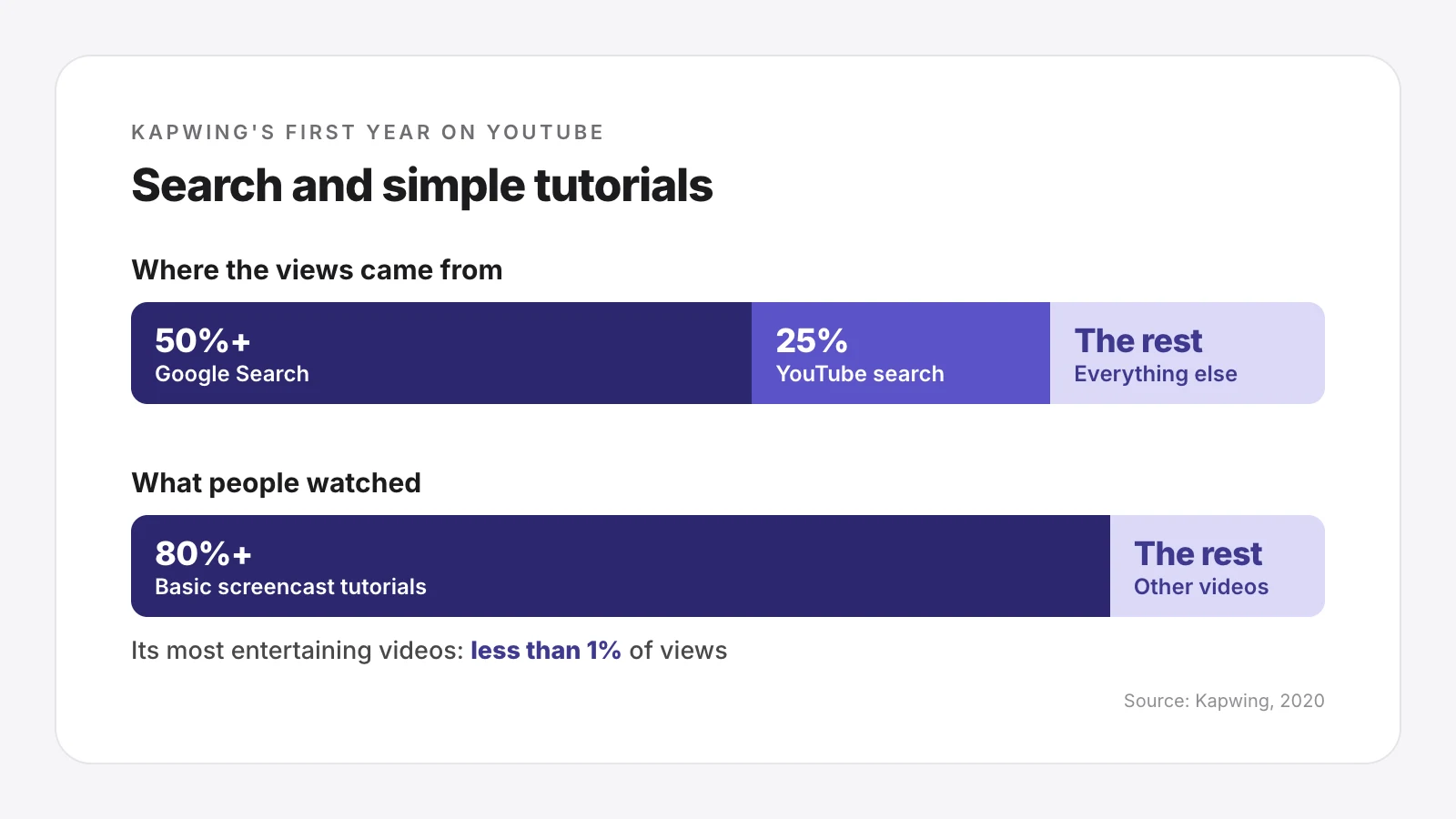
Where Kapwing's YouTube views came from in its first year, and which videos people watched.

A video also does something a blog post can't: people see the product working and get to know the person teaching it. By the time they sign up, they already know how to use it.
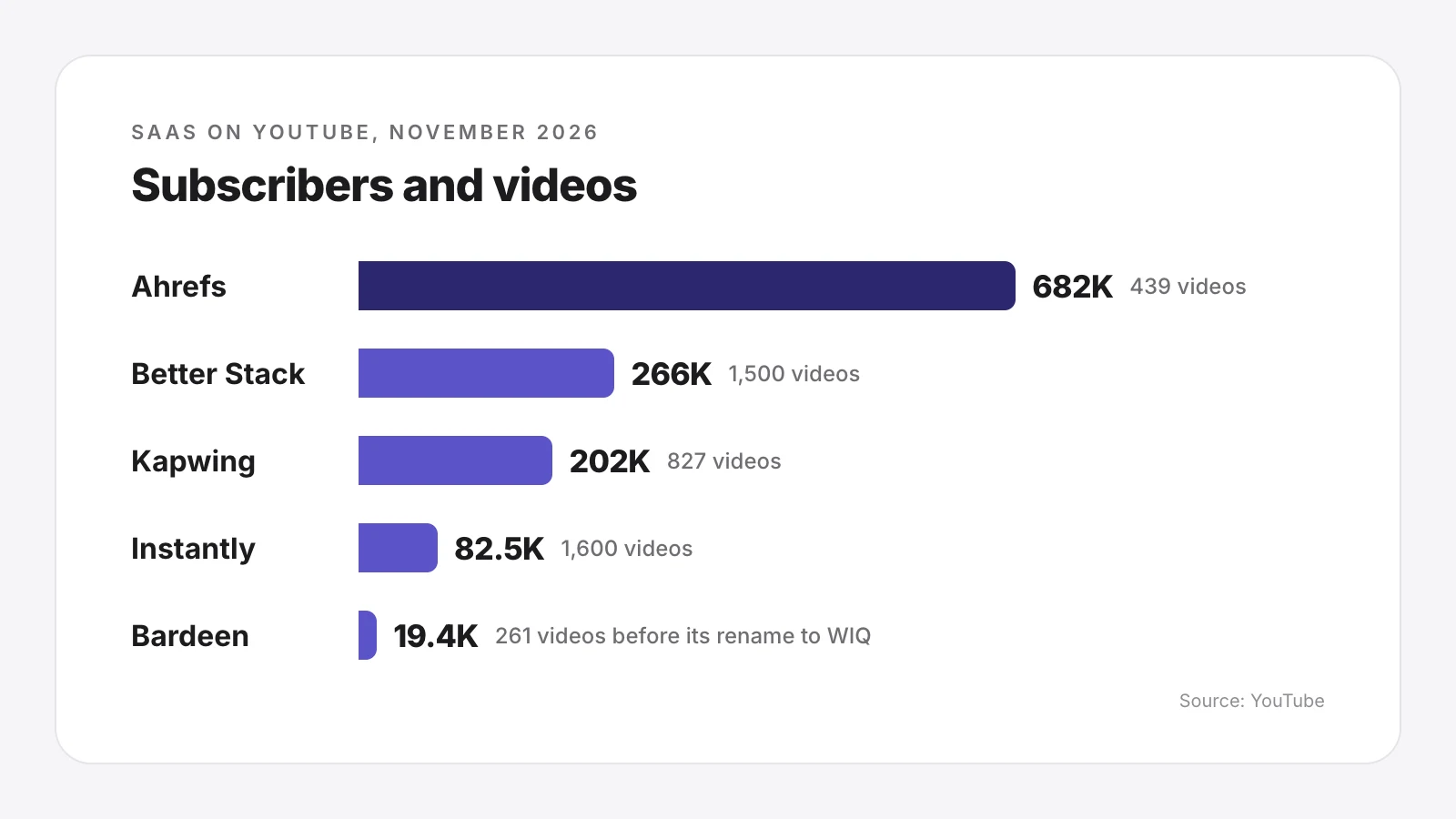
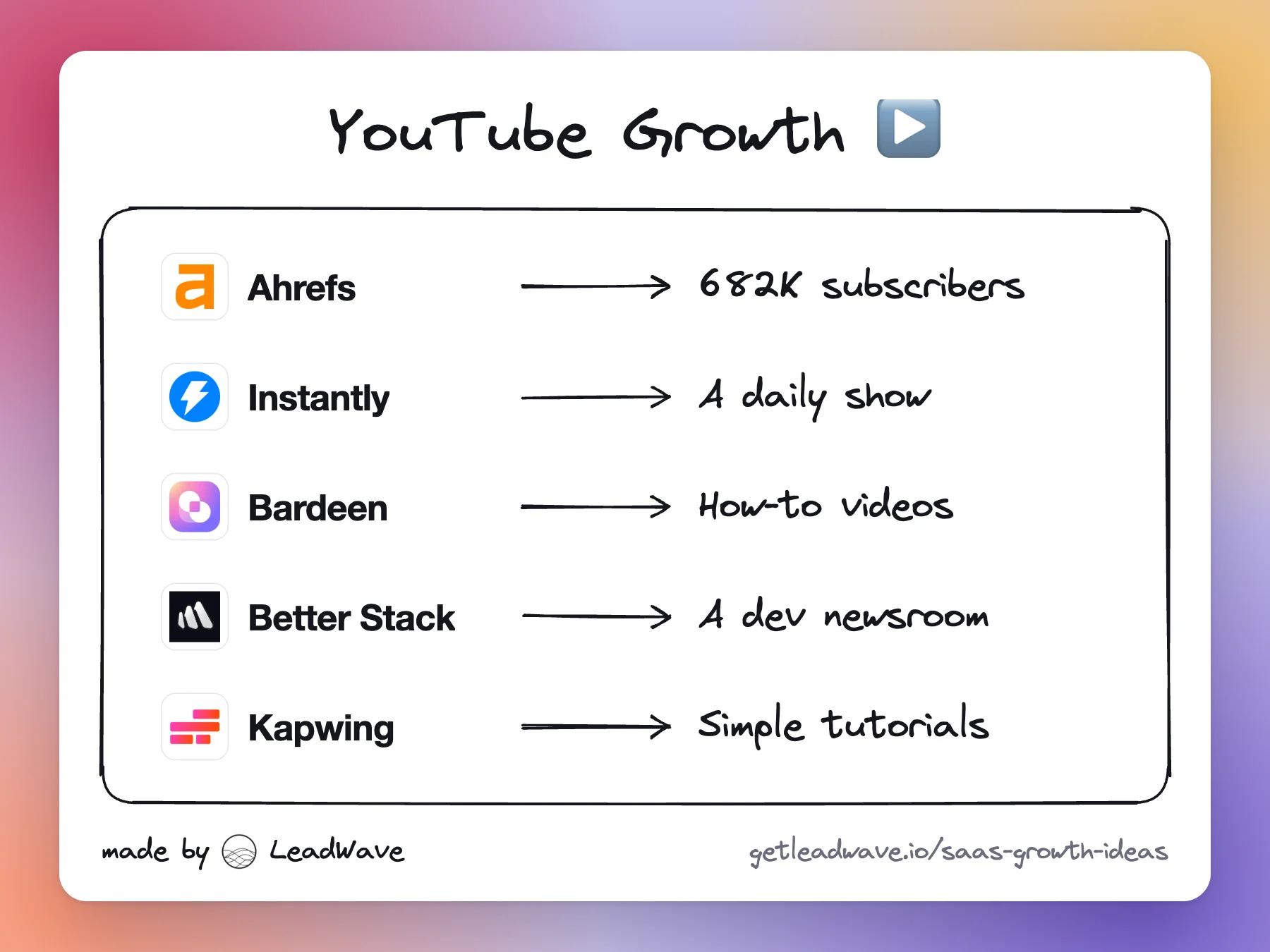
Five SaaS YouTube channels, November 2026. More videos doesn't mean more subscribers: Ahrefs has the most subscribers and the fewest videos but one.

Ahrefs: one topic, one face, one video a week

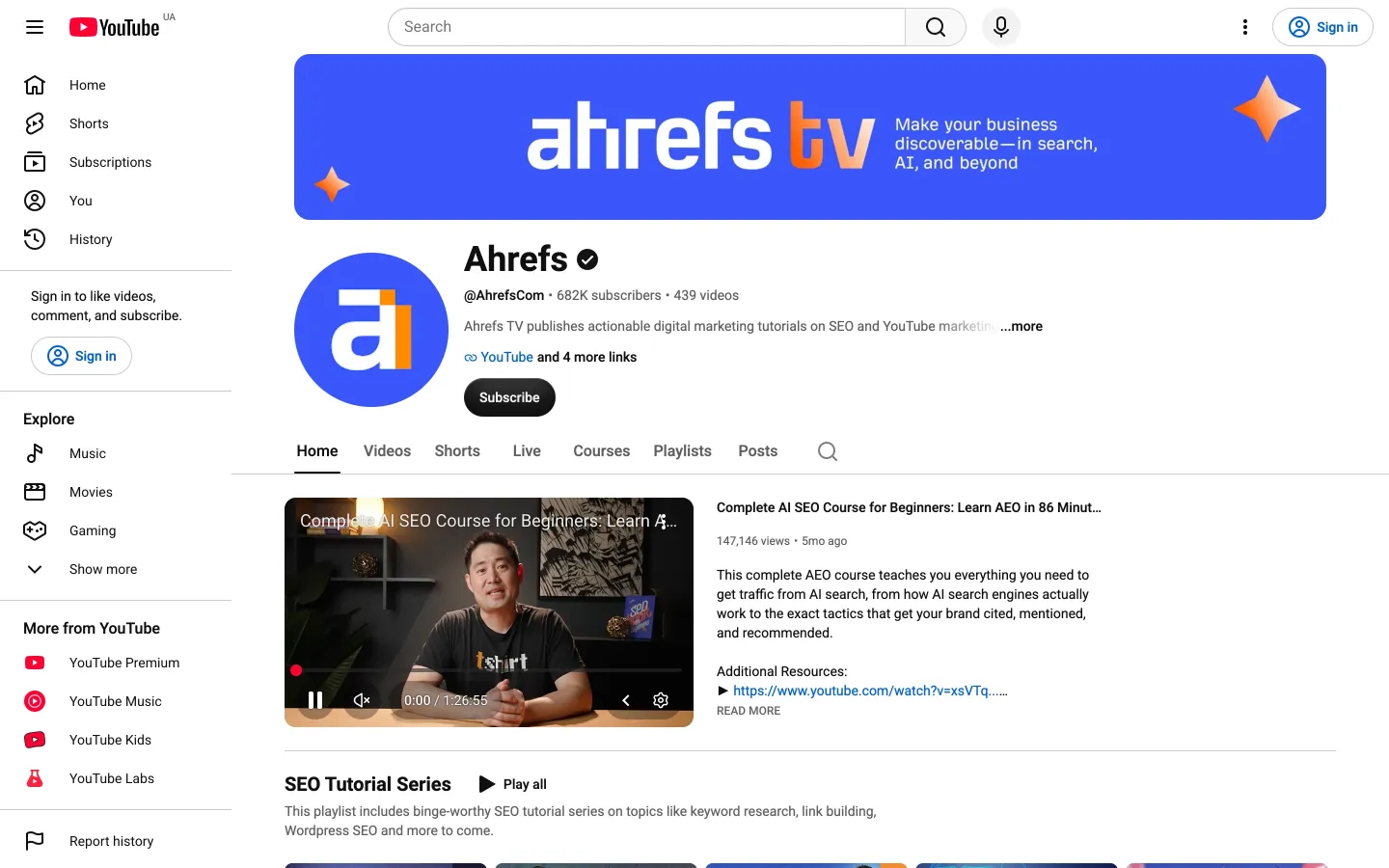
Ahrefs revived its channel in March 2018 with 14,000 subscribers. It now has 682,000, from just 439 videos. Three choices did most of the work:

  • A tight topic. The channel started with SEO and nothing else. “Sam's Singapore vlog was the only video on our entire channel that resulted in net-zero subscribers.”
  • A steady schedule. “Only when we started publishing one video per week in 2018 did our subscribers truly begin to grow.”
  • One familiar presenter. Sam Oh has fronted hundreds of its videos, so viewers come back to a person, not a logo.
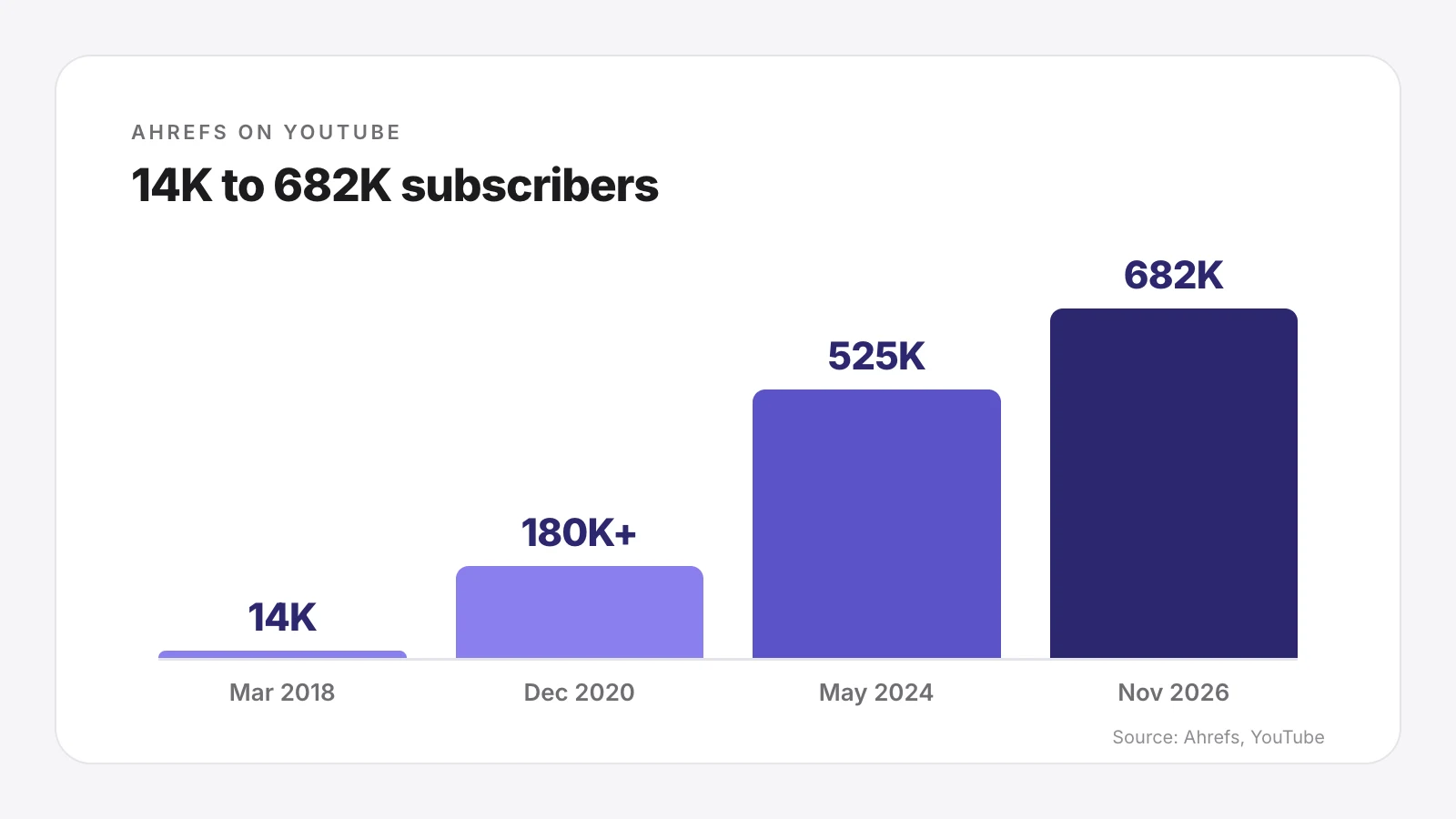
Ahrefs' YouTube subscribers, from the channel's revival in 2018 to November 2026.

Ahrefs teaches SEO first and shows its tool only when the lesson needs it. Today its channel page opens with a complete AI SEO course for beginners, with 147,000 views. Someone who learns SEO from Ahrefs already knows which tool to try.

Instantly: a daily show and full courses

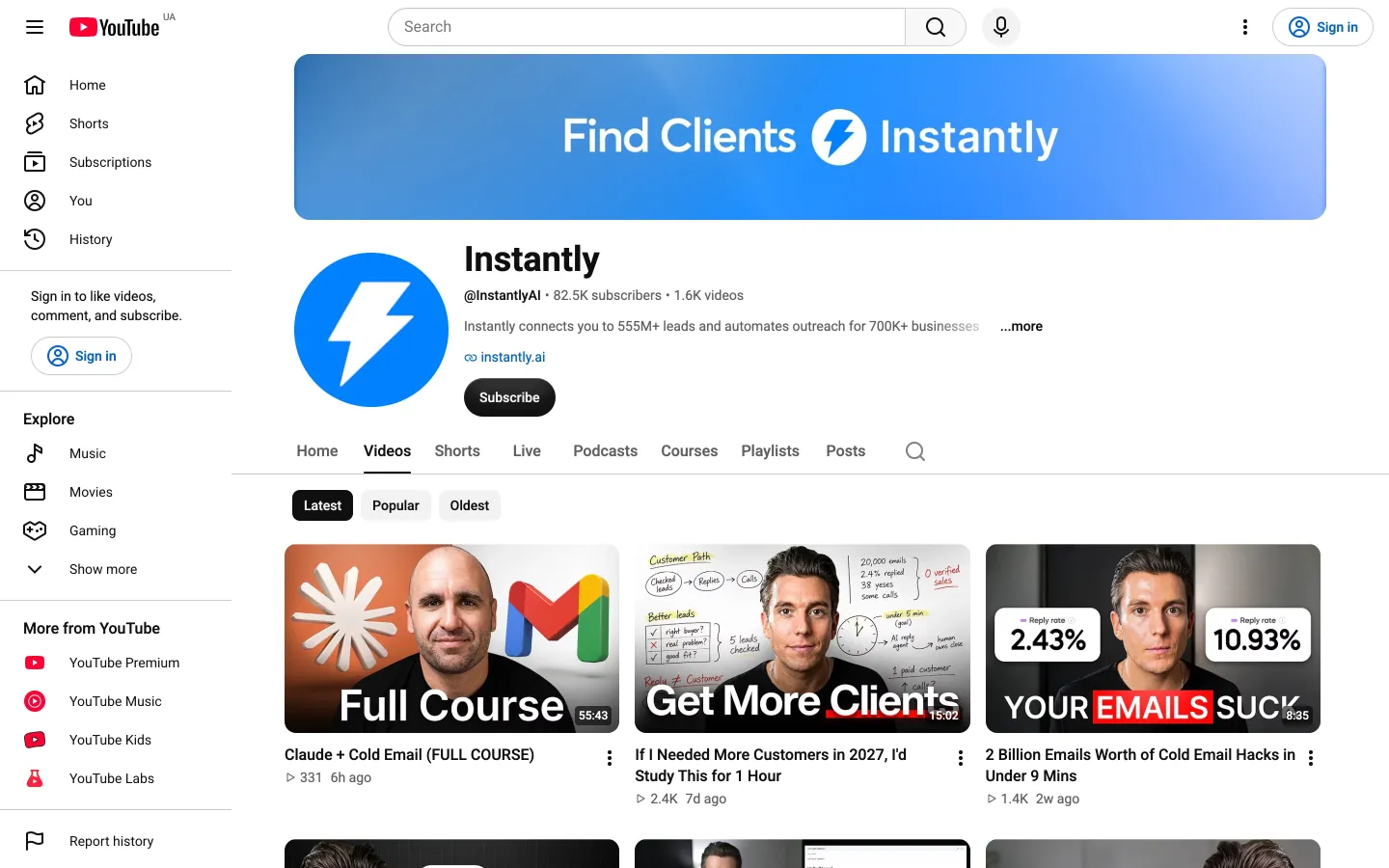
Instantly, a cold email tool, publishes far more than Ahrefs: 1,600 videos so far. Its channel grew from 1,760 subscribers in November 2022 to 28,000 two years later, and to 82,500 today.
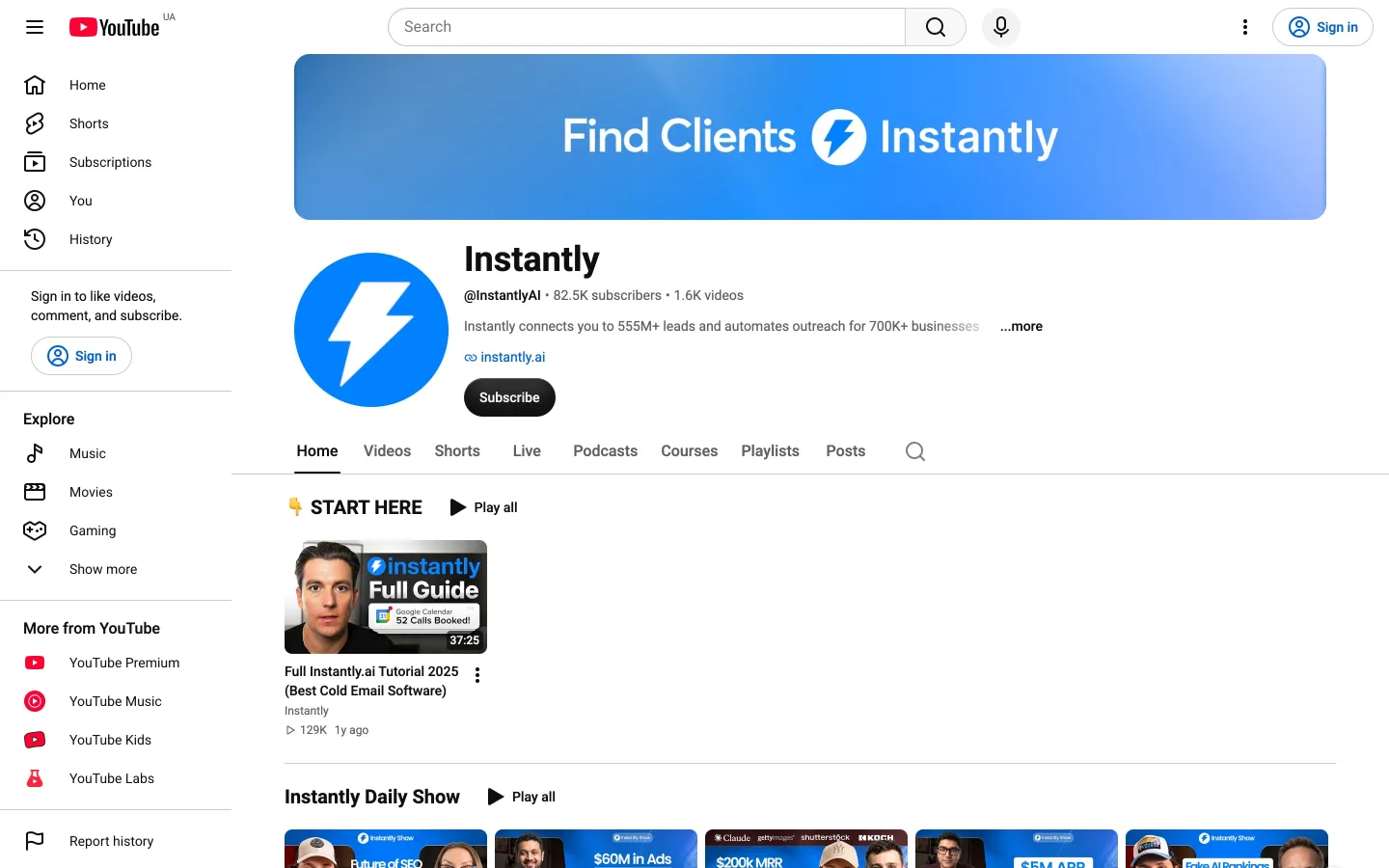
Instantly's YouTube channel. It opens with “Start here,” a full product tutorial, followed by the Instantly Daily Show.

The channel mixes three formats for three kinds of viewer:

  • A full tutorial for people about to buy. Its “Start here” video teaches the whole product.
  • Full courses on the job, like “Claude + Cold Email (FULL COURSE),” for people learning outbound.
  • A daily live show and short clips on growth and AI news, so regulars have a reason to come back.

One small detail is worth copying: the link in Instantly's channel description carries a “YouTube_Organic” tag, so it can count the visitors the channel sends.

Bardeen: make videos about the job, not the tool

Bardeen made a browser automation tool, which is hard to explain in a search box. So next to its product tutorials, the channel went after what people did search for: AI tools, web scraping and getting data into a spreadsheet.

Its videos had titles like “7 Best ChatGPT Chrome Extensions That EVERYONE Should Be Using” (21,000 views by May 2023), “Scrape Facebook Without Code For Free” and “Comparing Top 5 AI Web Scraping Tools.” The channel grew from about 2,000 subscribers in November 2022 to 17,700 by December 2024, with 240 videos.
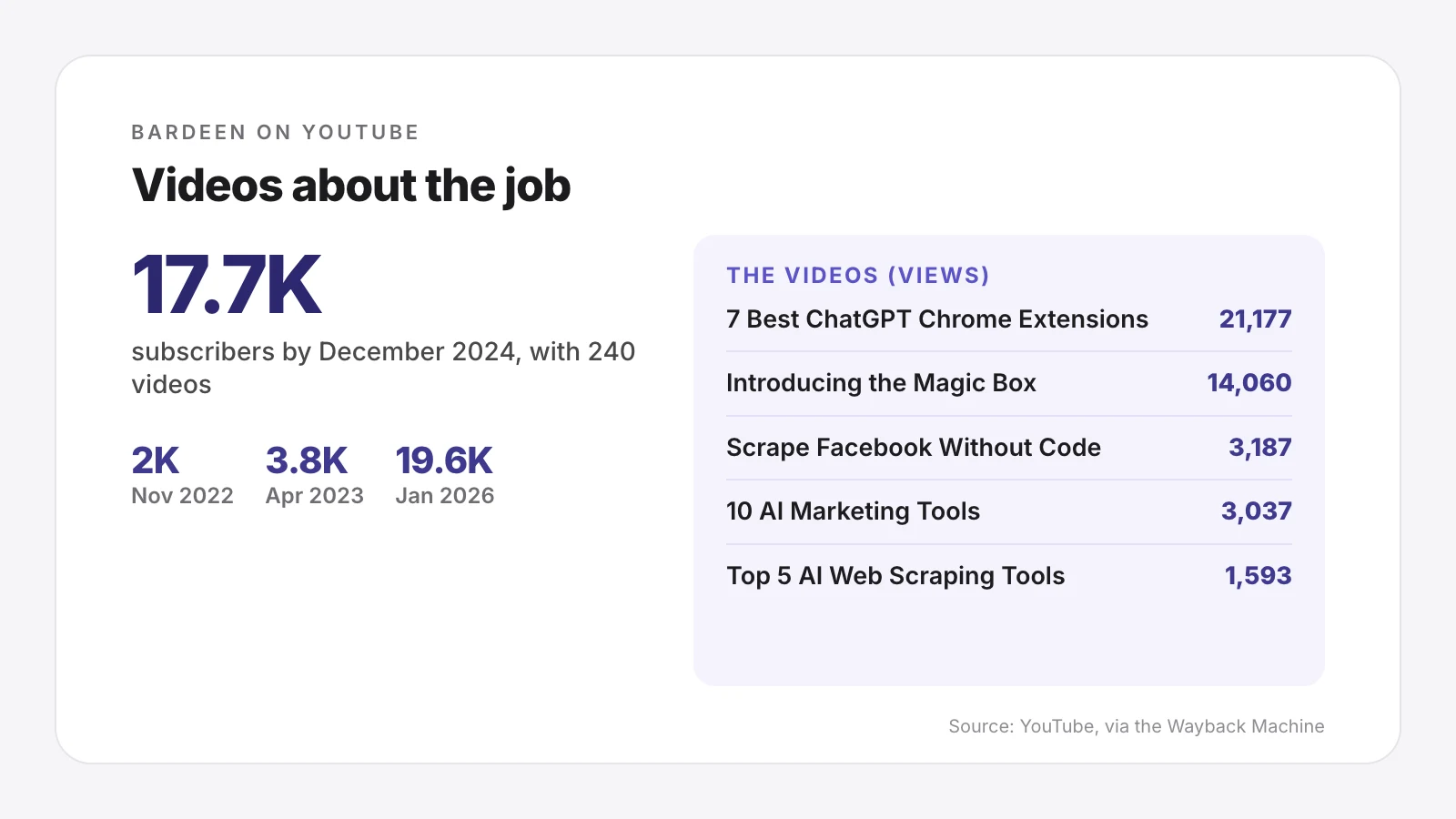
Bardeen's channel before the rename. Subscribers from archived copies of the page, and the kind of videos it made.

The story has a warning at the end. In November 2026 the channel was renamed WIQ, after the company's new enterprise AI product. On November 11 it listed 261 videos. Now it shows 4. An audience built on how-to videos for individuals doesn't automatically follow a move to enterprise buyers, so if your company might change direction, keep your channel's topic broad enough to come with you.

Pick a format you can keep up

  • Product tutorials. Short screencasts of one task. The cheapest place to start, and they double as help docs. Kapwing built its channel on these.
  • Job tutorials. Teach the skill your buyers need, with your product as one step. Ahrefs and Bardeen.
  • Full courses. One long video or a playlist that teaches a whole topic. Ahrefs' SEO course, Instantly's cold email courses.
  • A regular show. A daily or weekly program that gives people a reason to subscribe. Instantly's Daily Show.
  • News and hot takes. Fast videos on what just launched. Better Stack has about four people making 30 videos a month this way, and “most viewers don't realize Better Stack is a SaaS company at all.” YouTube still sends it 55.6% of its social traffic.

Start with tutorials. They need no studio and no audience, because search brings the viewers. Add a show or news format once you know you can publish every week.

Where YouTube fails

  • Only filming product demos. Few people search for your product before they know it. Make videos about their problem.
  • Vlogs and company culture. They're fun to make, and Ahrefs and Kapwing both found they barely moved the numbers.
  • Giving up after ten videos. YouTube takes months. Plan for a steady schedule for at least two quarters before you judge it.
  • Changing topic. Every off-topic video teaches YouTube and your viewers that the channel isn't for them.
  • No way to count signups. Tag every link in your descriptions, and ask “How did you hear about us?” at signup.
YouTube growth examples

  • AhrefsSEO tutorials, one presenter

    Ahrefs grew from 14,000 subscribers in 2018 to 682,000 with 439 videos, by sticking to SEO, publishing weekly and keeping one main presenter.

    See it liveSource

  • InstantlyDaily show and full courses

    A cold email tool with 82,500 subscribers and 1,600 videos: a “Start here” tutorial, full courses on outbound, and a daily live show.

    See it live

  • BardeenHow-to videos on the job

    Bardeen grew to about 19,000 subscribers with videos on AI tools and web scraping. The channel was renamed WIQ in November 2026 and now shows 4 videos.

    See it live

  • Better StackA newsroom for developers

    A team of about four makes roughly 30 videos a month on new developer tools. The channel has 266,000 subscribers, and its brand name is almost never in the titles.

    See it liveSource

  • KapwingSimple screencast tutorials

    Basic tutorials made up over 80% of Kapwing's views in its first year, and more than half of its views came from Google Search. It now has 202,000 subscribers.

    See it liveSource

How to run it: the playbook

  1. List the jobs people search for. Type your buyers' problems into YouTube and Google. Note the how-to searches where the top videos are old or weak.
  2. Pick one topic and one presenter. Someone on the team who knows the subject and is comfortable on camera. Keep the channel on that topic.
  3. Film 10 tutorials. A screen recording and a clear voice are enough. Solve one problem per video and show the result early.
  4. Write titles for search. Use the words people type, and make a clear thumbnail that promises the result.
  5. Show your product only where it helps. Teach the job first. When your tool is the easy way to do a step, use it.
  6. Tag every link. Use a YouTube tag on links in descriptions, and ask new users how they heard about you.
  7. Publish every week for six months. Keep the schedule before you judge the results. Double down on the topics that bring subscribers.
  8. Add a course or a show. Turn your best tutorials into a full course, or start a regular show once the weekly habit is solid.

What to measure

  • Signups from tagged YouTube links, and “YouTube” answers in your signup survey
  • Views from search compared with views from recommendations
  • Average view duration on tutorials
  • Subscribers gained per video
  • Trial-to-paid rate of YouTube signups compared with other channels

Pitfalls

  • Making product demos nobody is searching for
  • Publishing for a few weeks, then stopping
  • Drifting off topic into vlogs and company news
  • Changing presenters so viewers never get to know anyone
  • Leaving links untagged, so you can't tell what YouTube brings

Frequently asked questions

Sources

More SaaS growth ideas

All growth ideas
  • Acquisition

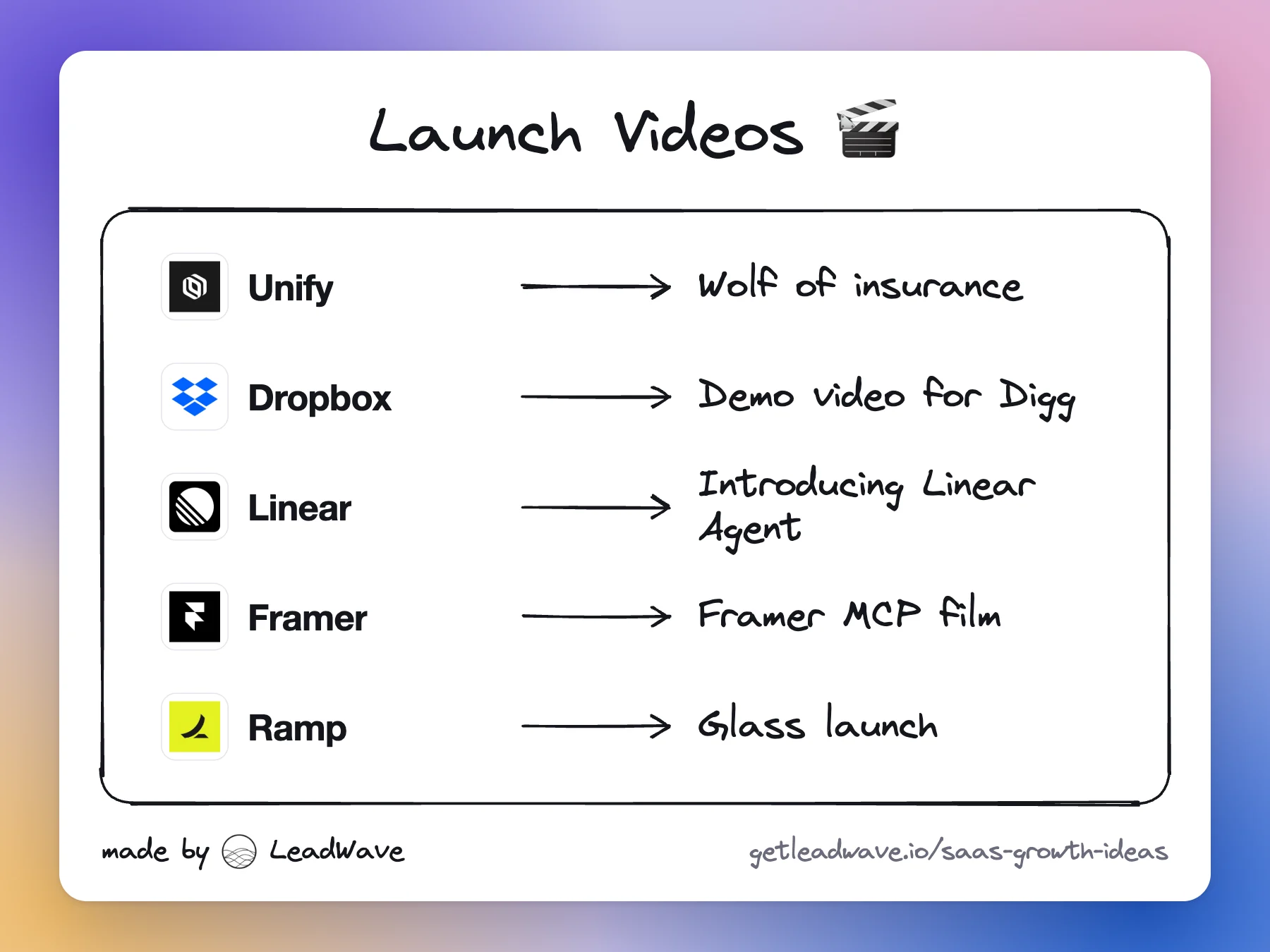
    Launch videos

    Make launch videos people share: a person, a story, humor or a stunt instead of floating UI and swelling music, posted natively where your buyers scroll.

    Impact MediumEffort Medium13 examples
    Read the tactic
  • Acquisition

    Webinars

    Teach something useful live, once a week or once a month, and turn the people who show up into signups, active users and sales calls.

    Impact MediumEffort Medium8 examples
    Read the tactic
  • Acquisition

    Branded podcast

    Launch a niche podcast your buyers want to be on and listen to, then cut every episode into clips and posts for YouTube and LinkedIn.

    Impact MediumEffort Medium14 examples
    Read the tactic