

Why webinars still work for SaaS
A webinar is a scheduled live session where your team, sometimes with a guest, teaches something your buyers want to learn. People sign up with their work email, so every registration is a lead, and the hour they spend with you is more attention than any ad gets.
The format has survived because it does three different jobs, and the best SaaS teams run a format for each:
- Find new people with an expert session on a topic your buyers search for, ideally with a guest who brings an audience.
- Get users active with a product training that shows new users the one workflow that makes them stay.
- Sell to many at once with a live group demo that replaces one-on-one calls for smaller deals.
lemlist showed the first job early. In June 2021 its founder Guillaume Moubeche went live with Jacco van der Kooij, the founder of Winning by Design, on cold calling. lemlist hosted the registration page on Luma, streamed the session on YouTube, and had a guest whose name sold the hour.
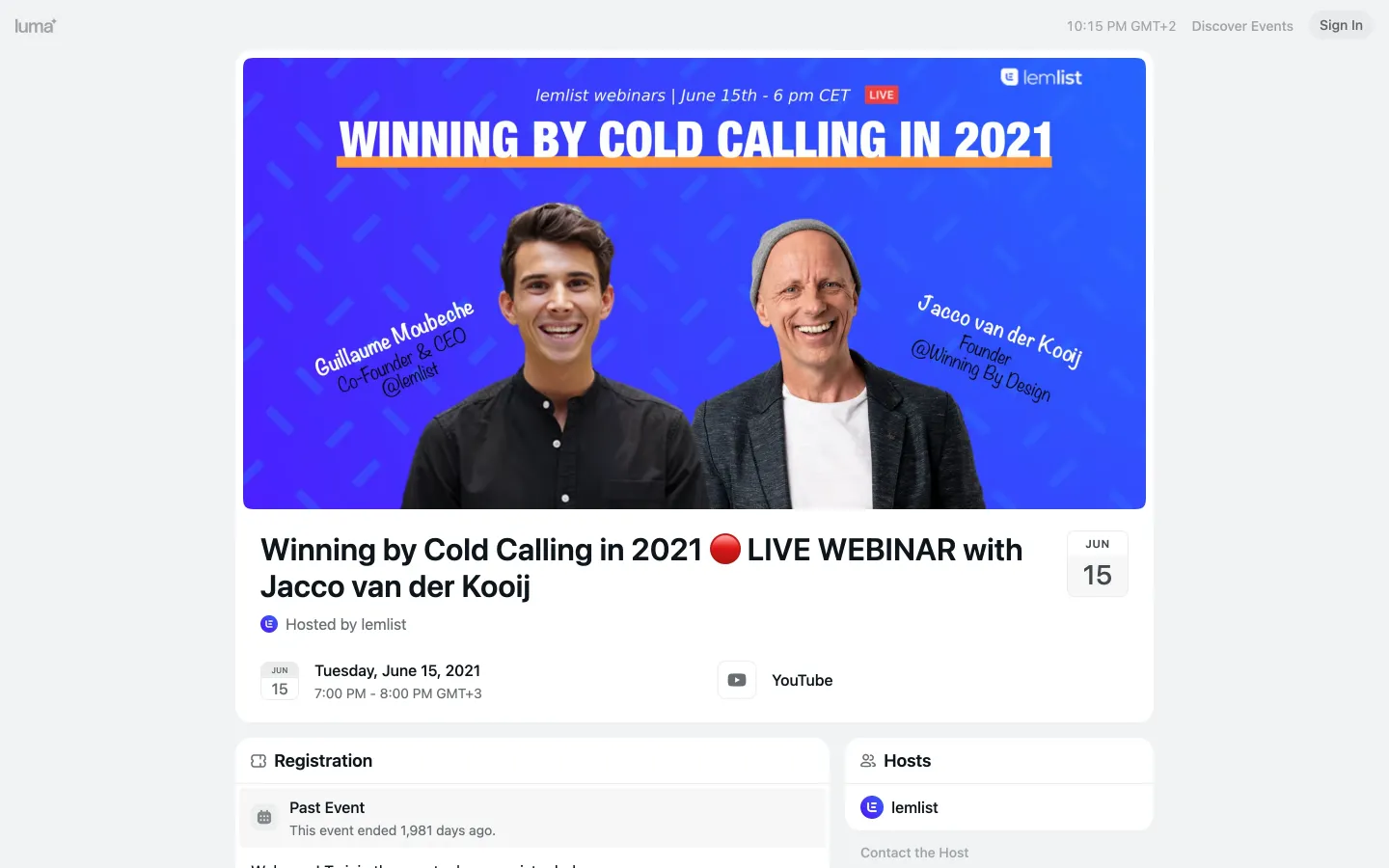
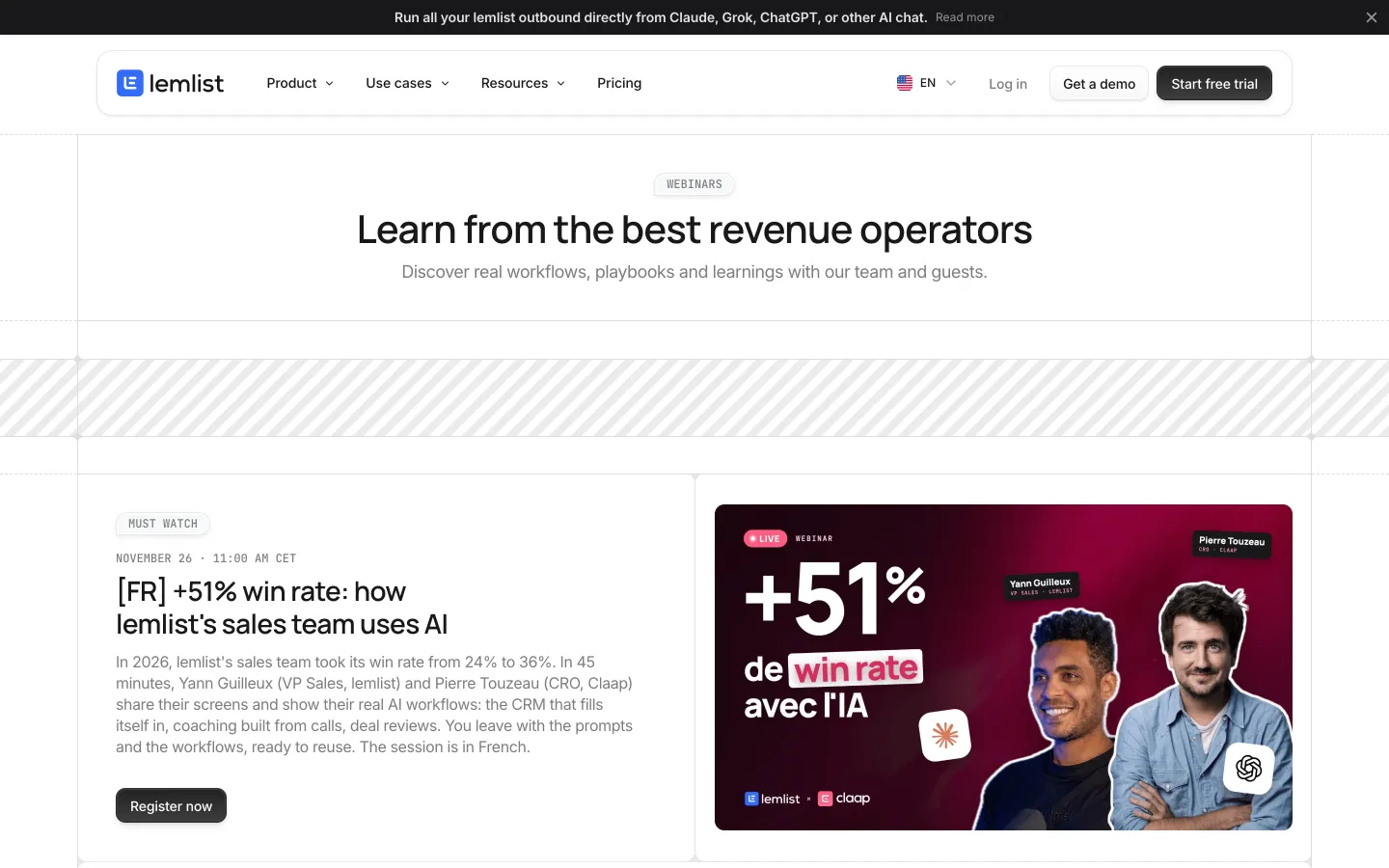
Today lemlist's webinars hub promises “real workflows, playbooks and learnings with our team and guests,” and runs some sessions in French for its home market. One session shows how lemlist's own sales team took its win rate from 24% to 36% with AI. That's the pattern: teach the job, and let the product show up as the way you do it.
Five webinar formats that work
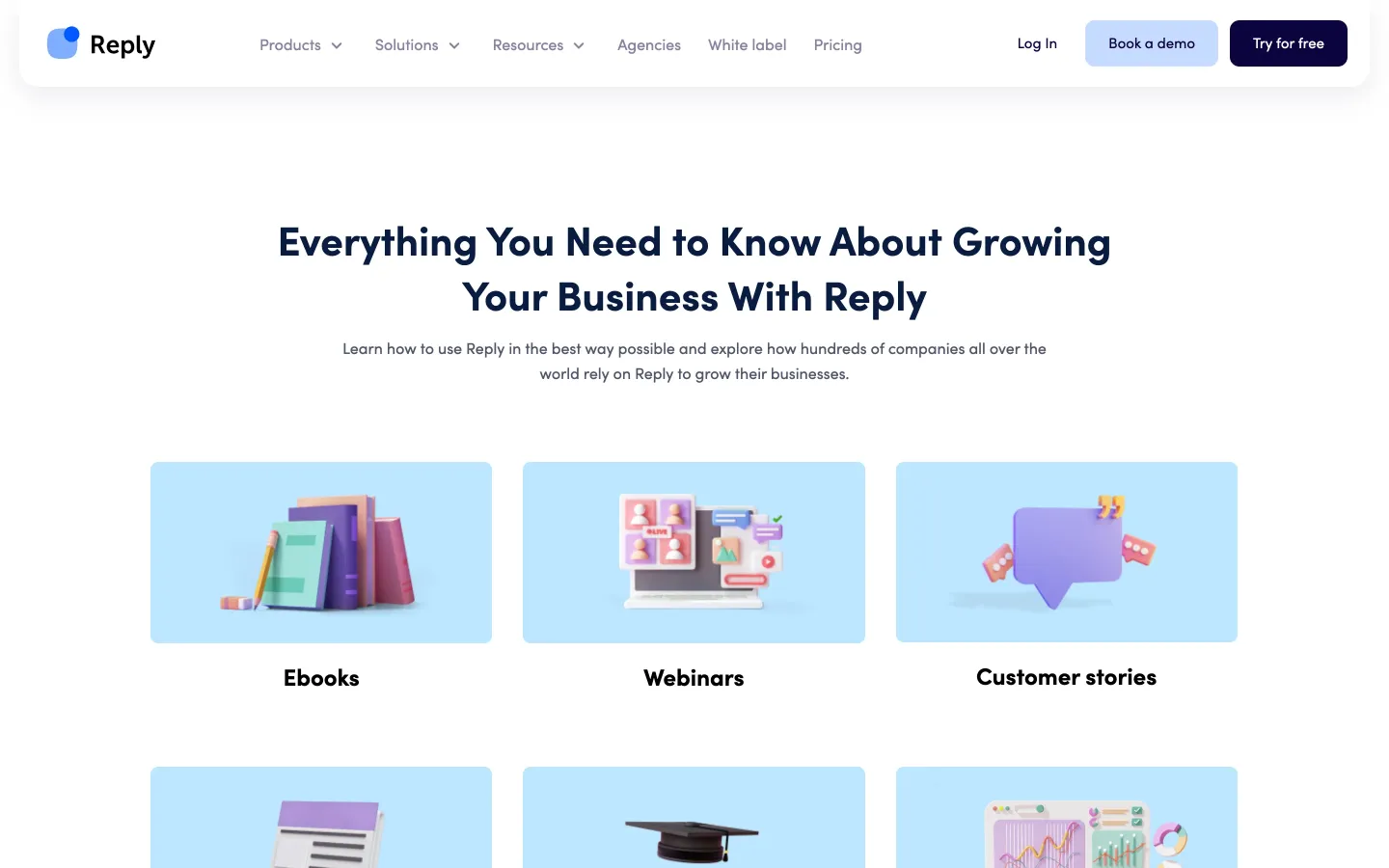
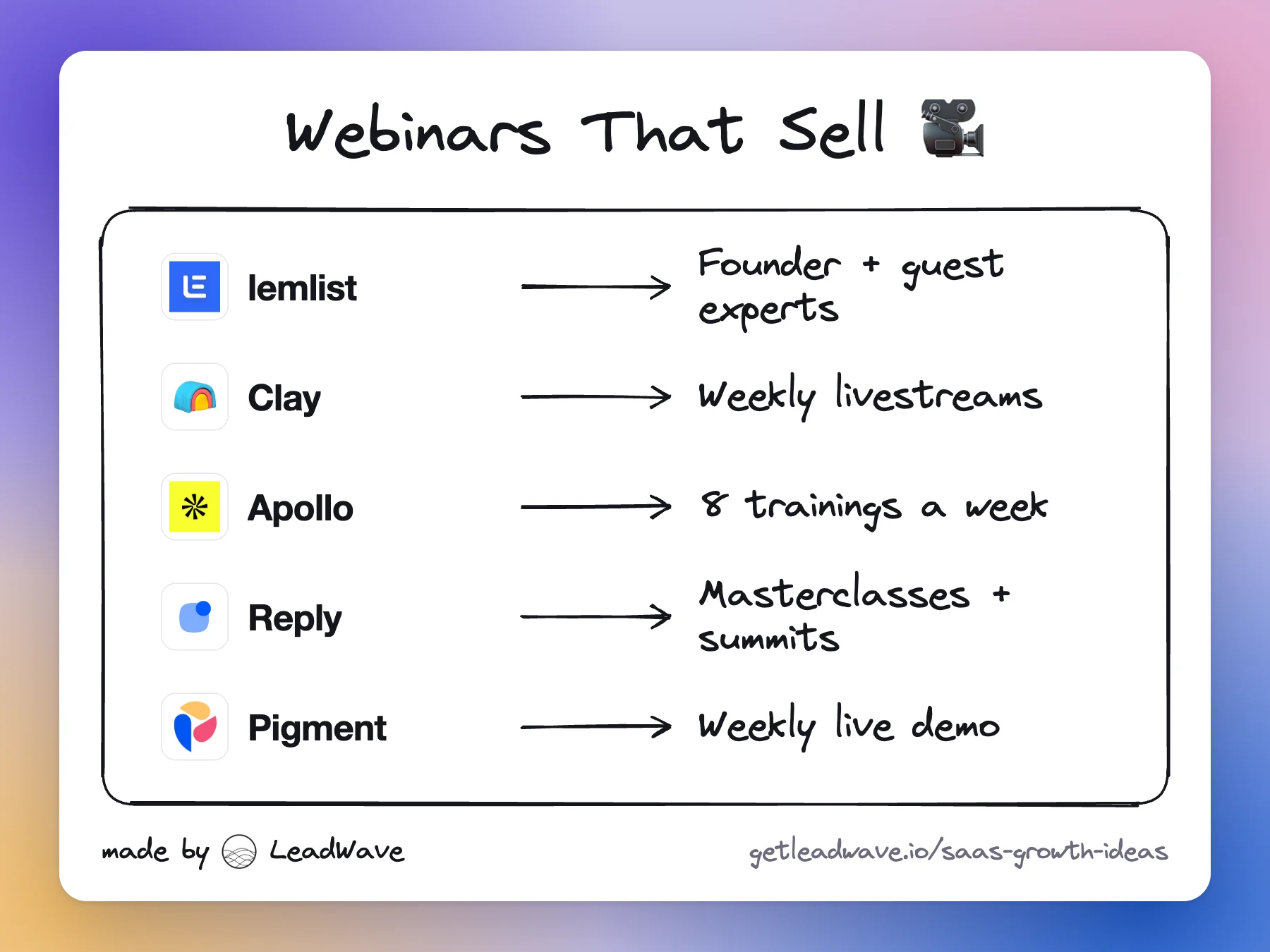
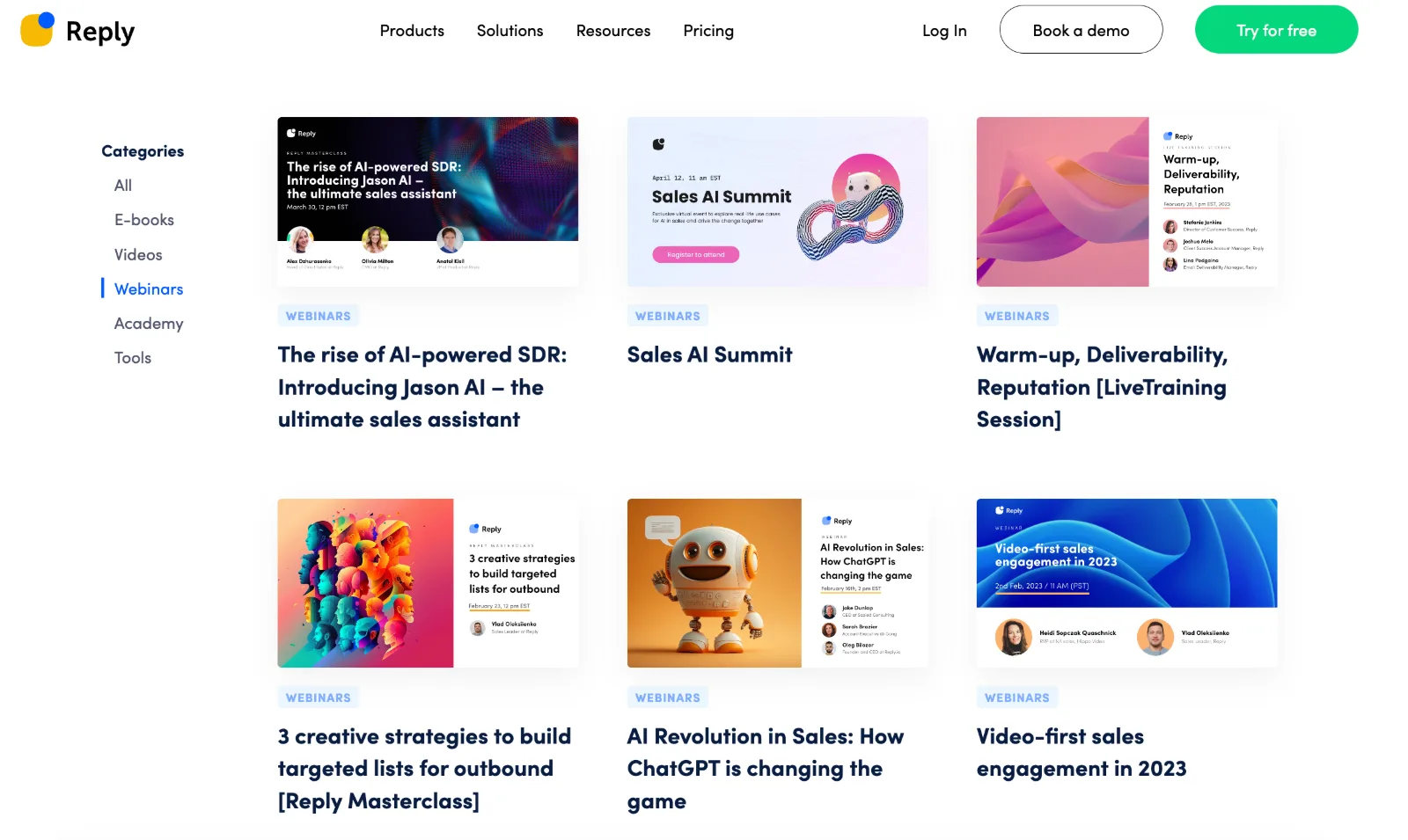
1. The expert session. A topic your buyers care about, taught by your team and a guest. Reply runs a library of these: masterclasses, live training sessions on deliverability, and a Sales AI Summit, all filed under Webinars in its resource library.
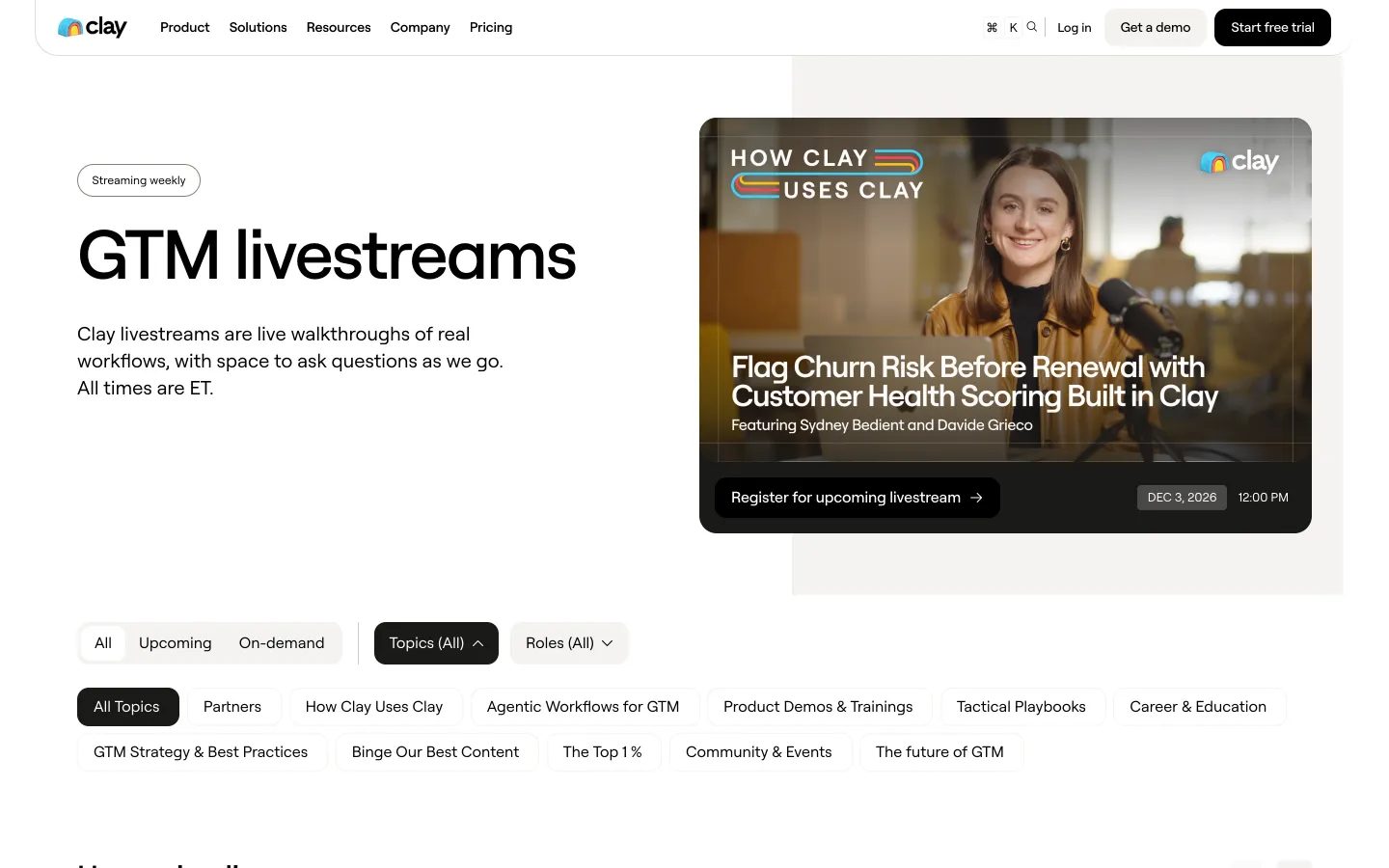
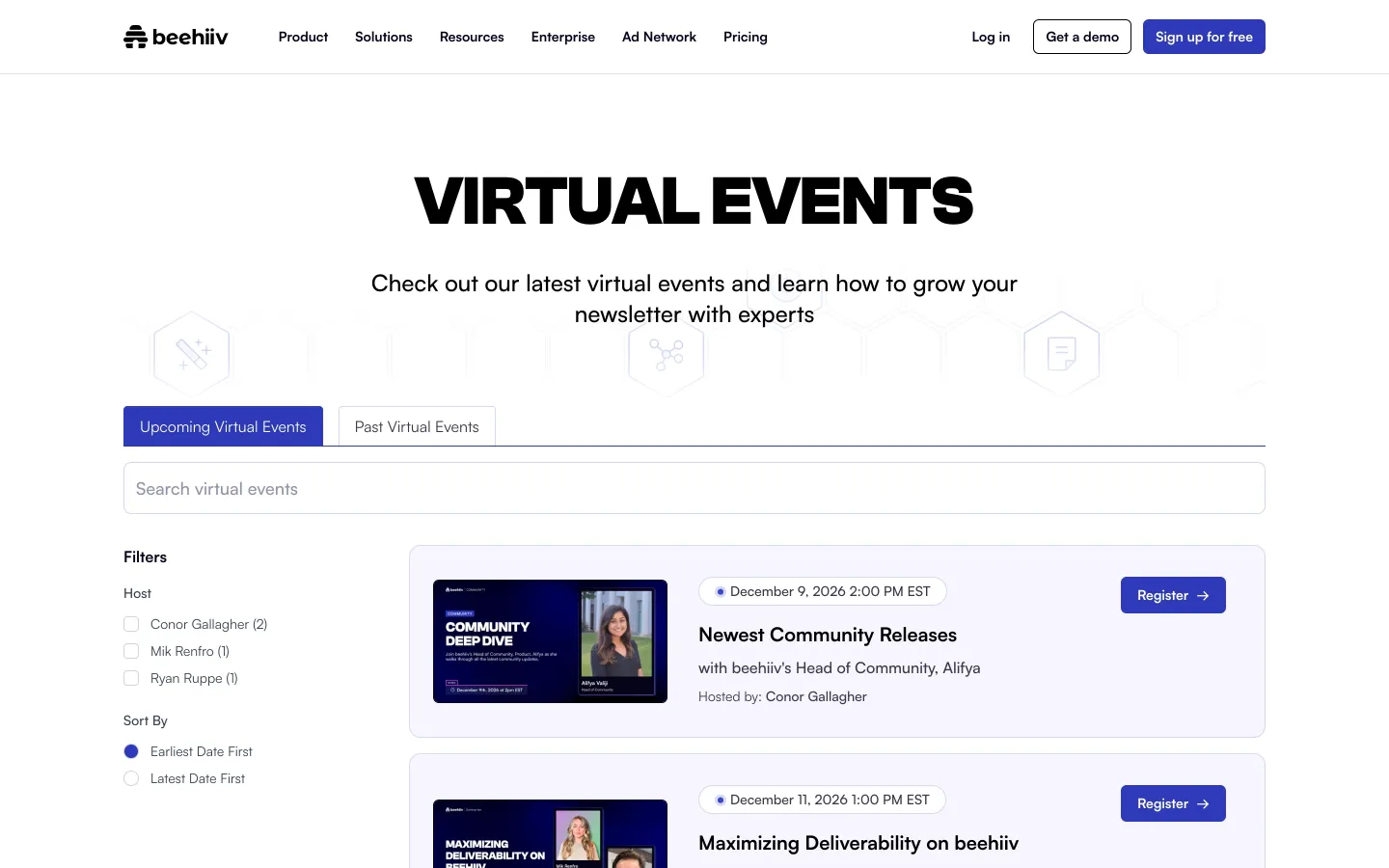
2. The weekly stream. Same day, same time, every week, so people make it a habit. Clay's GTM livestreams are “live walkthroughs of real workflows, with space to ask questions as we go,” streamed weekly. Recent ones include “Build an Outbound Engine that Booked 250 Meetings in 7 Days” and a “How Clay Uses Clay” series. beehiiv runs virtual events the same way for newsletter writers, many hosted by its own team.
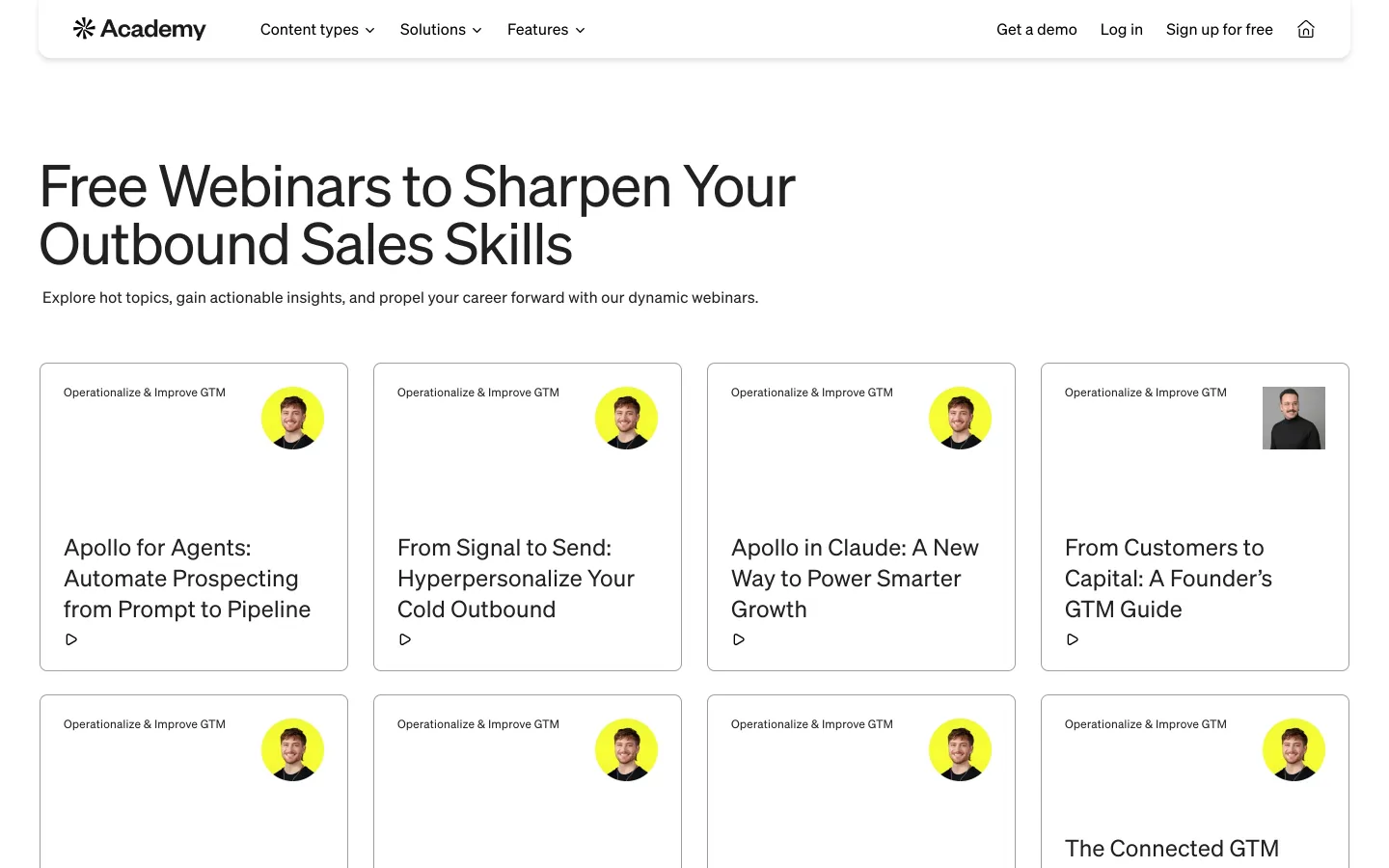
3. The product training. Apollo runs 8 webinars a week inside its app, for users who are already logged in, so there's no registration form. New users get invited during onboarding, sessions are matched to what each user does in the product, and the Q&A averages 22 questions per 30-minute session. Users who attend booked 6x more meetings, Apollo saw a 500% increase in product adoption, and free users who attend are more likely to upgrade within 30 days.
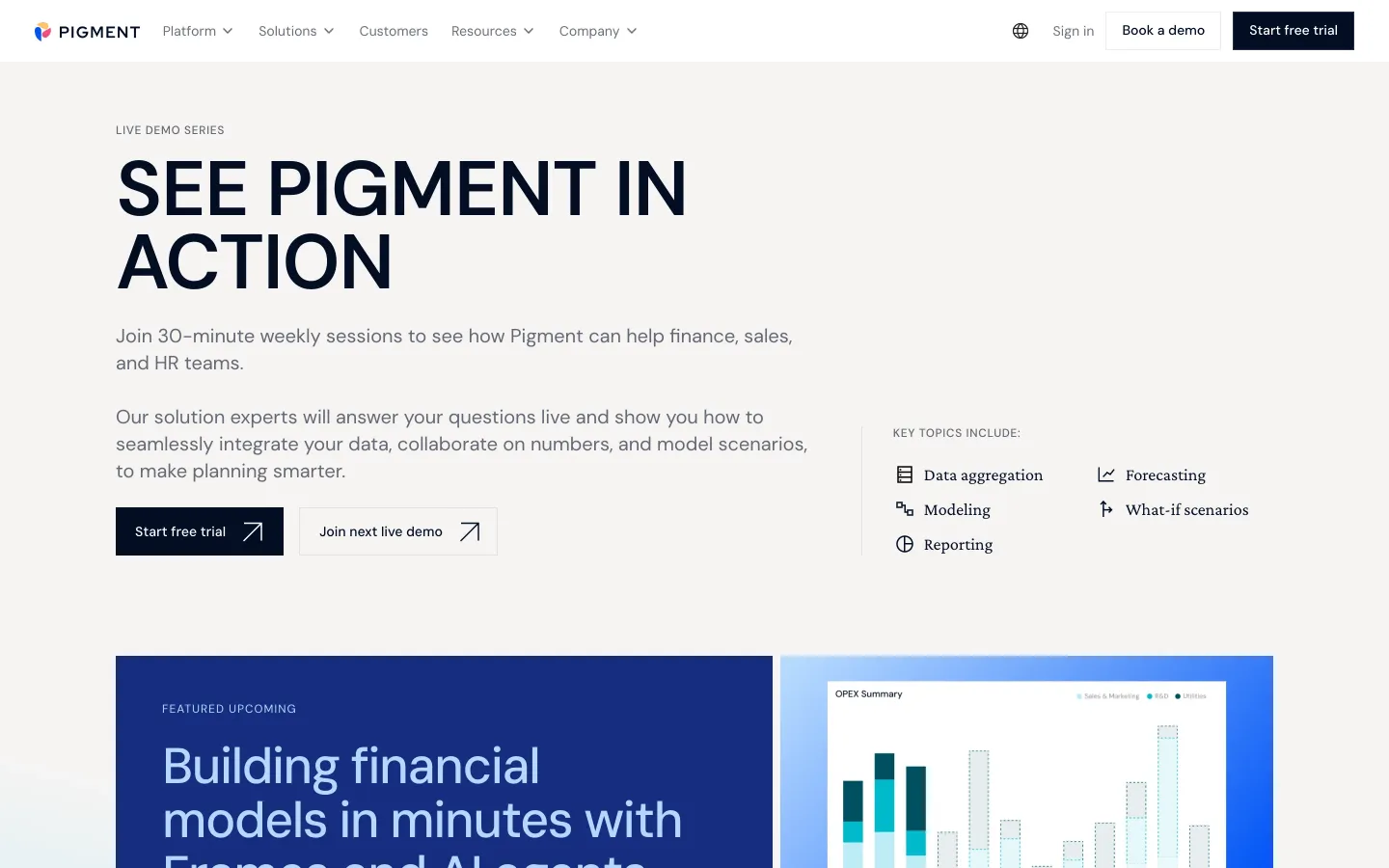
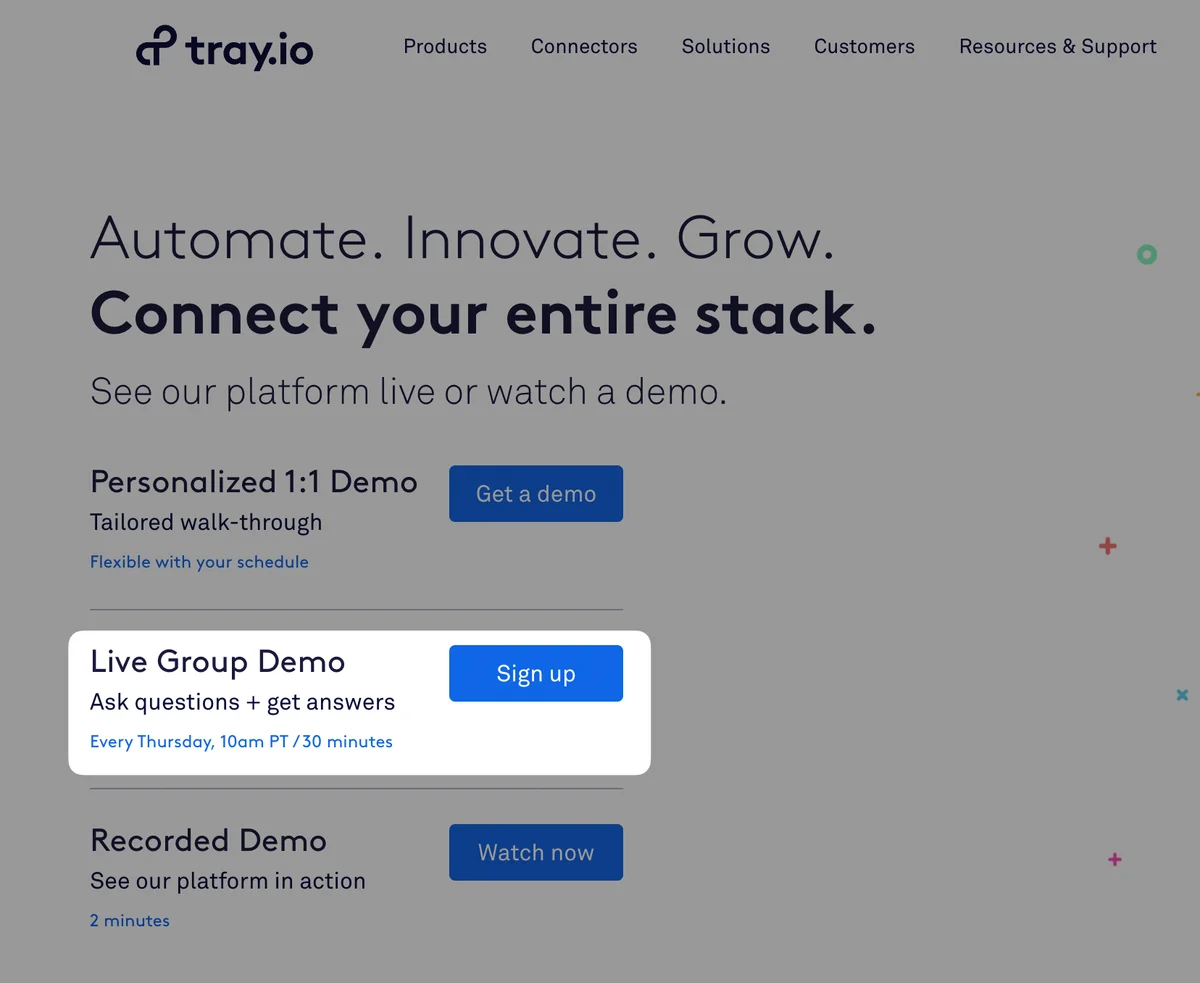
4. The live group demo. A 30-minute demo, same time every week, for prospects who aren't ready for a sales call. Pigment's Live Demo Series invites people to “join 30-minute weekly sessions,” with solution experts answering questions live. tray.io put its group demo between a one-on-one demo and a 2-minute recorded one, so every buyer could pick the effort they wanted.
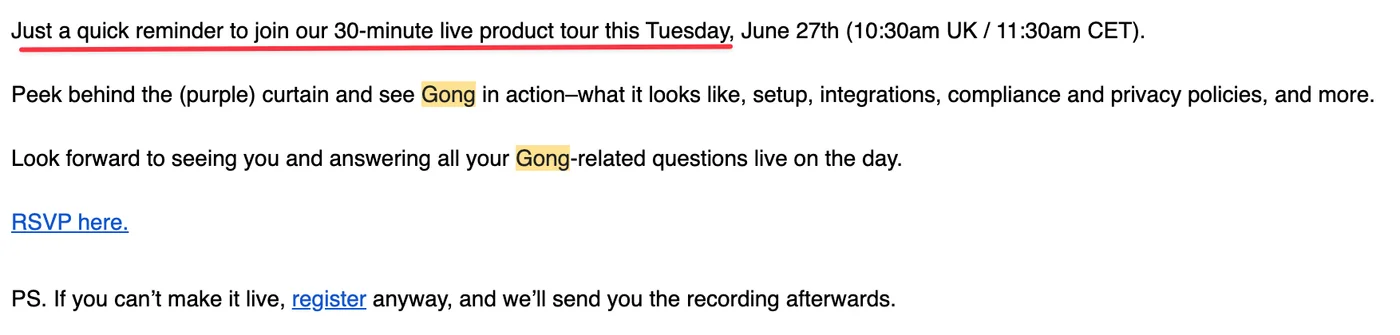
Gong sells its version by email. Its reminder for a “30-minute live product tour” ends with the line that saves most of the no-shows: “If you can't make it live, register anyway, and we'll send you the recording afterwards.”
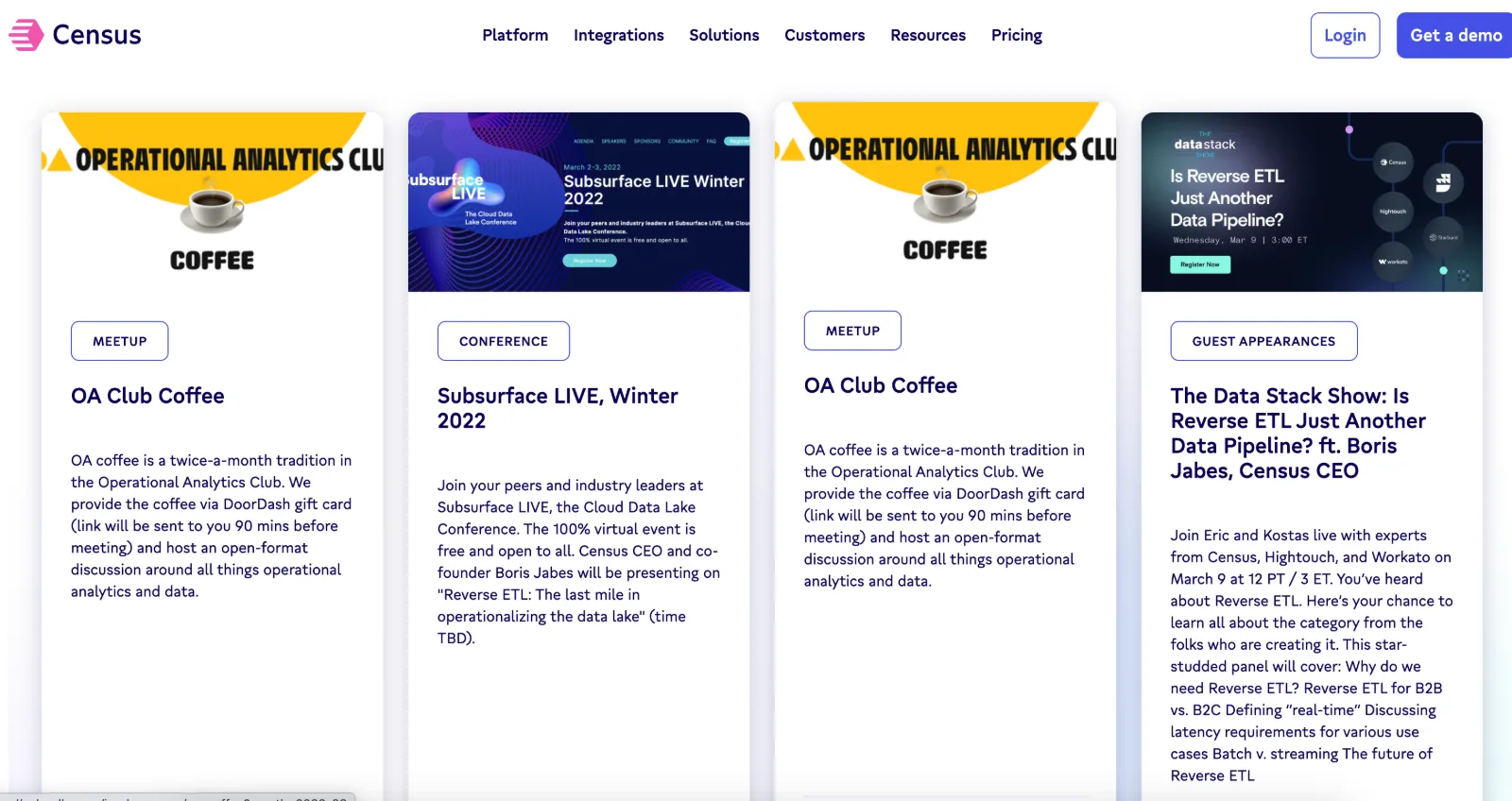
5. The small-group session. No slides, a few dozen people, an open conversation. Census ran OA Club Coffee twice a month for its Operational Analytics Club, and sent every attendee a DoorDash gift card 90 minutes before the call so the coffee was on Census. (Census is now part of Fivetran, and the club is gone.) It's the online cousin of coffee for website visitors.
Run a webinar people show up for
- Pick the topic from your calls. The questions prospects ask on sales calls and users ask support are the topics people will register for. Put the outcome in the title: “Build an outbound engine that booked 250 meetings” beats “Outbound best practices.”
- Bring a guest with an audience. A guest doubles the promotion: they post to their followers, and their name sells the session. lemlist's early sessions paired its founder with a known sales voice.
- Keep the page short. Name, work email, and maybe one question about what they want to learn. A Luma or Zoom page works on day one; HubSpot forms send every registrant into your CRM.
- Promote for about two weeks. Your email list, LinkedIn posts from the host and the guest, an in-app banner for users, and the sales team's prospects.
- Remind three times. The day before, an hour before, and “we're live now.” Tell people they'll get the recording either way, as Gong does, so they register even if they can't come.
- Teach, then take questions. Thirty to 45 minutes, half of it Q&A. Show the real workflow on screen; the product appears because that's how the work gets done.
- Follow up within a day. The recording to everyone, a personal note from sales to the attendees who asked about buying, and the next session's date.
Host it where you can see who came
Zoom is the default, and it's fine to start. The trade-off is that the session lives on Zoom's pages and the data sits in an export. Two other set-ups are worth knowing:
- Luma for registration. Clean event pages and a calendar people can subscribe to. lemlist ran its registration pages there.
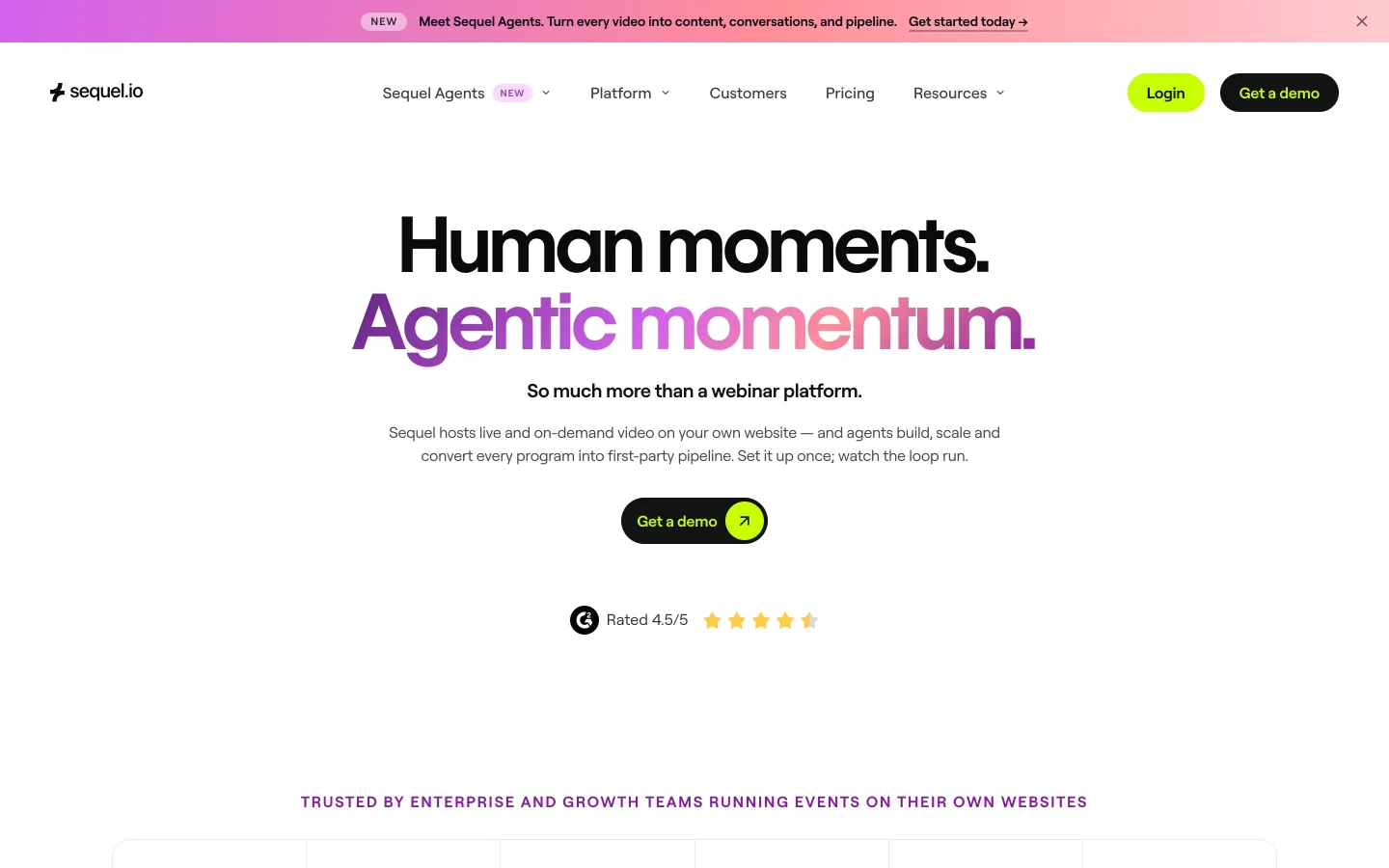
- Your own website. Sequel “hosts live and on-demand video on your own website,” so every attendee is a known visitor on your domain and their data flows to your CRM. Its customer list includes Apollo, Clay and beehiiv. Apollo used it to put its trainings inside the product.
Wherever it runs, send the attendee list into HubSpot or your CRM with what each person did: registered, attended, asked a question, stayed to the end. That's what sales follows up on.
Turn one webinar into a month of content
The live hour reaches the people who showed up. The recording reaches everyone else:
- A replay page that keeps collecting registrations. lemlist's hub keeps its past sessions as replays, and Apollo's webinars page gathers its sessions in one library.
- Clips for LinkedIn and YouTube Shorts: the three best minutes, each with one idea.
- A blog post or newsletter issue from the transcript, with the screenshots from the demo.
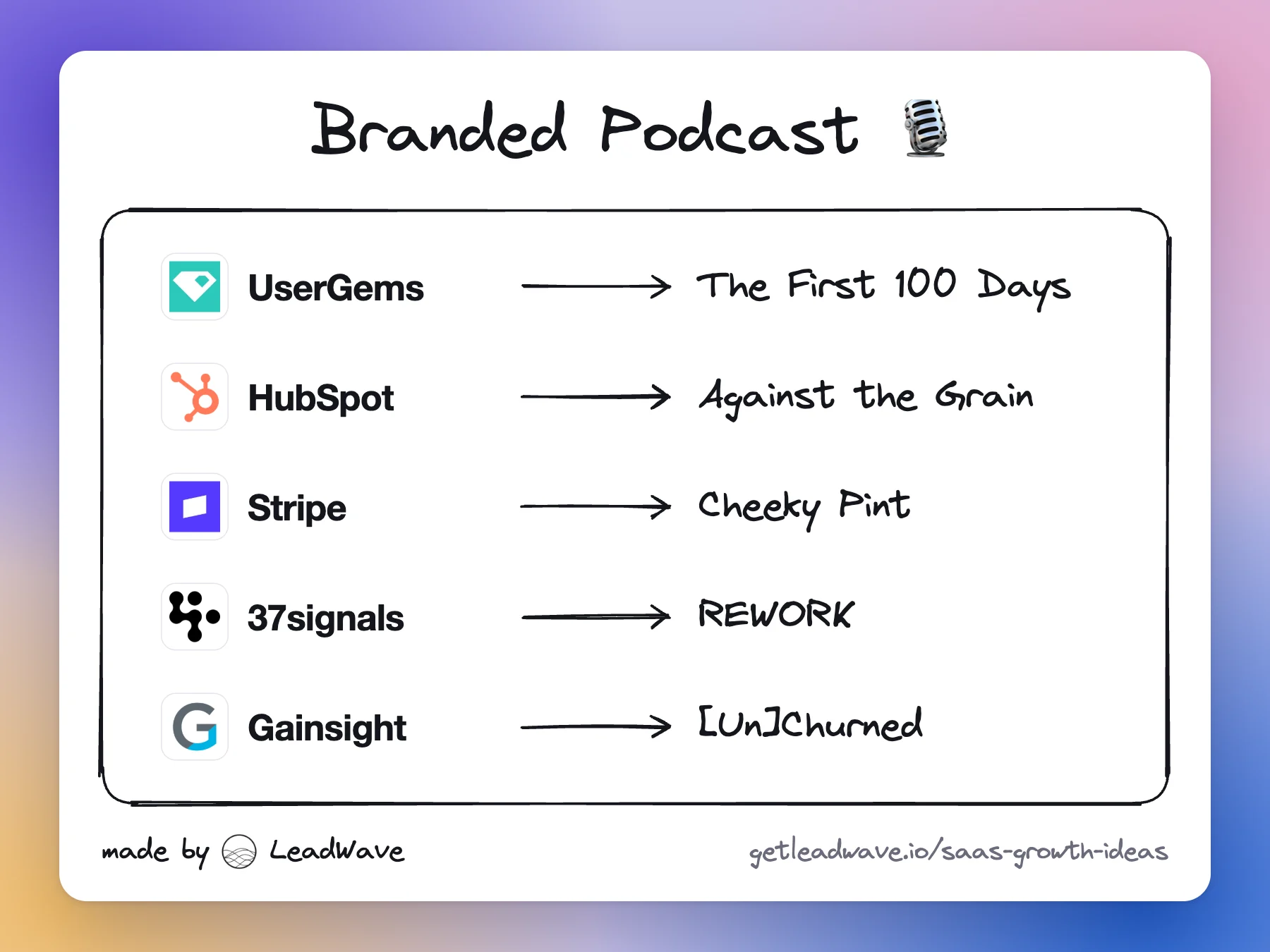
- A podcast episode from the audio, if you run a branded podcast.
One good session can fill a month of posts, and each of them points back to the next live date.
Where webinars fail
- A pitch dressed as a lesson. If the first 20 minutes are about your company, people leave and don't come back.
- One-offs. A single webinar a quarter never builds an audience; a weekly or monthly slot does.
- No audience to invite. Without an email list, users or a guest with followers, the room stays empty. Build the list first, with a branded newsletter or by bringing guests.
- Measuring registrations. Registrations are cheap. Count attendees, questions, and the signups, activations and deals that follow.
- Slow follow-up. A recording sent a week later is a recording nobody opens.