


Skip to content
Mercor logoMercorSan Francisco, USA
Website

How Mercor Grew: From a Hackathon to a $3B Run Rate

Curated by Khrystyna Oleksiienko · Published

Mercor started in 2023 as three 19-year-olds placing engineers from India with US startups. A meeting with xAI pointed it at AI labs, and paid referrals helped build a network of more than 5 million experts. In November 2026 its CEO put its run rate at $3 billion. That figure is gross: experts reportedly keep 60% to 70% of it.

Gross run rate, the CEO says
$3B
Nov 2026
Valuation
$20B
Nov 2026
Experts in its network
5M+
Nov 2026
Paid to experts per day
$4M+
Nov 2026

Mercor’s growth in charts

Mercor revenue and ARR over timeRun-rate and ARR figures, as each source reported them. Hover or tap the line for each figure.
$0$1B$2B$3B20252026$3B
What Mercor pays experts per dayAs the company and its investor Felicis reported it. The first and last points are floors (“over $1M”, “$4M+”).
$0$1M$2M$3M$4MSep 2025: $1M+$1MSep 2025Oct 2025: $1.5M$1.5MOct 2025Jan 2026: $2M$2MJan 2026Jul 2026: $4M+$4MJul 2026
Mercor's valuation by roundFrom the Series A to the Series D, which included an employee tender.
$0$5B$10B$15B$20BSep 2024: $250M$250MSep 2024Feb 2025: $2B$2BFeb 2025Oct 2025: $10B$10BOct 2025Nov 2026: $20B$20BNov 2026
People on Mercor“Users” in the CEO's 2025 recap, then “experts” in company posts. The two counts may not be defined the same way.
02M4M6MJan 2025: 217K217KJan 2025Dec 2025: 3.4M3.4MDec 2025Jun 2026: Nearly 5M5MJun 2026Nov 2026: 5M+5MNov 2026
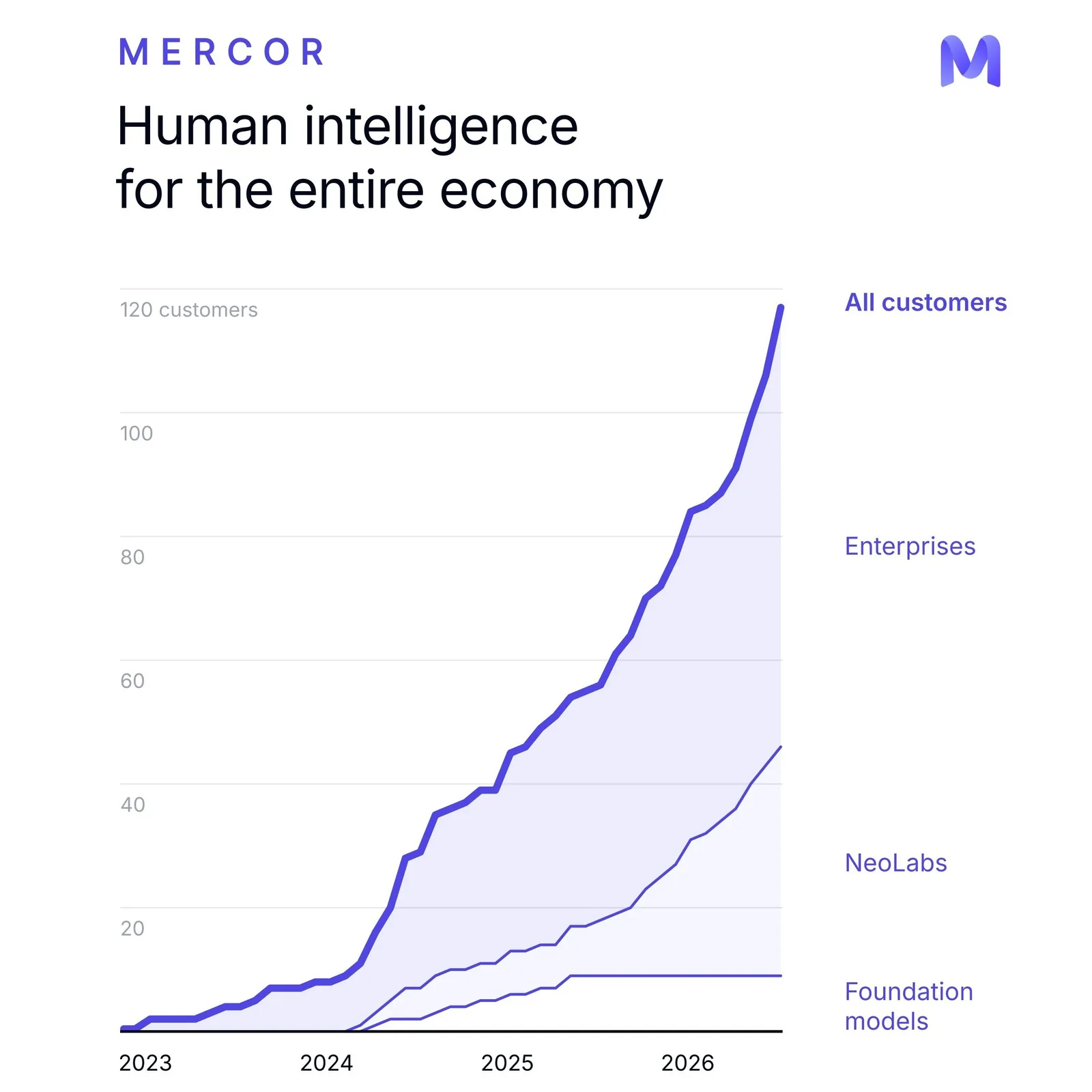
Mercor's customers, from its CEO's funding postMercor's customer count from 2023 to 2026, rising to about 120, split into foundation models, neolabs and enterprises
Brendan Foody on X, November 2026: about 120 customers across AI labs and enterprises.
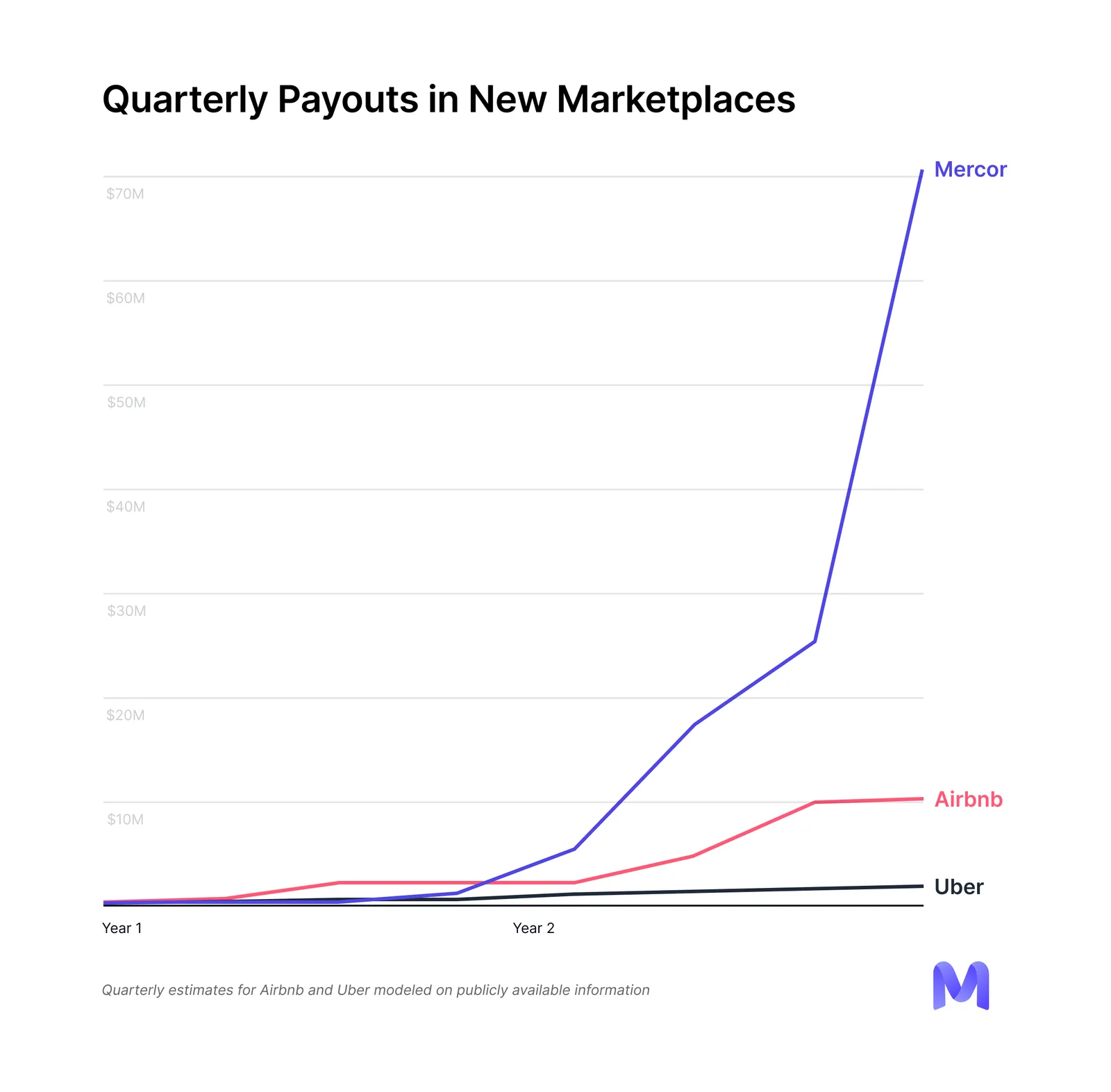
Mercor's payouts against Uber and AirbnbQuarterly payouts in the first two years: Mercor passes $70M a quarter, Airbnb about $10M, Uber lower
Brendan Foody on X, October 2025. This is Mercor's own chart, and the Uber and Airbnb lines are its estimates.

The Mercor growth playbook at a glance

9 moves, one card each. The proof is further down the page; the full how-to is on each tactic’s page.

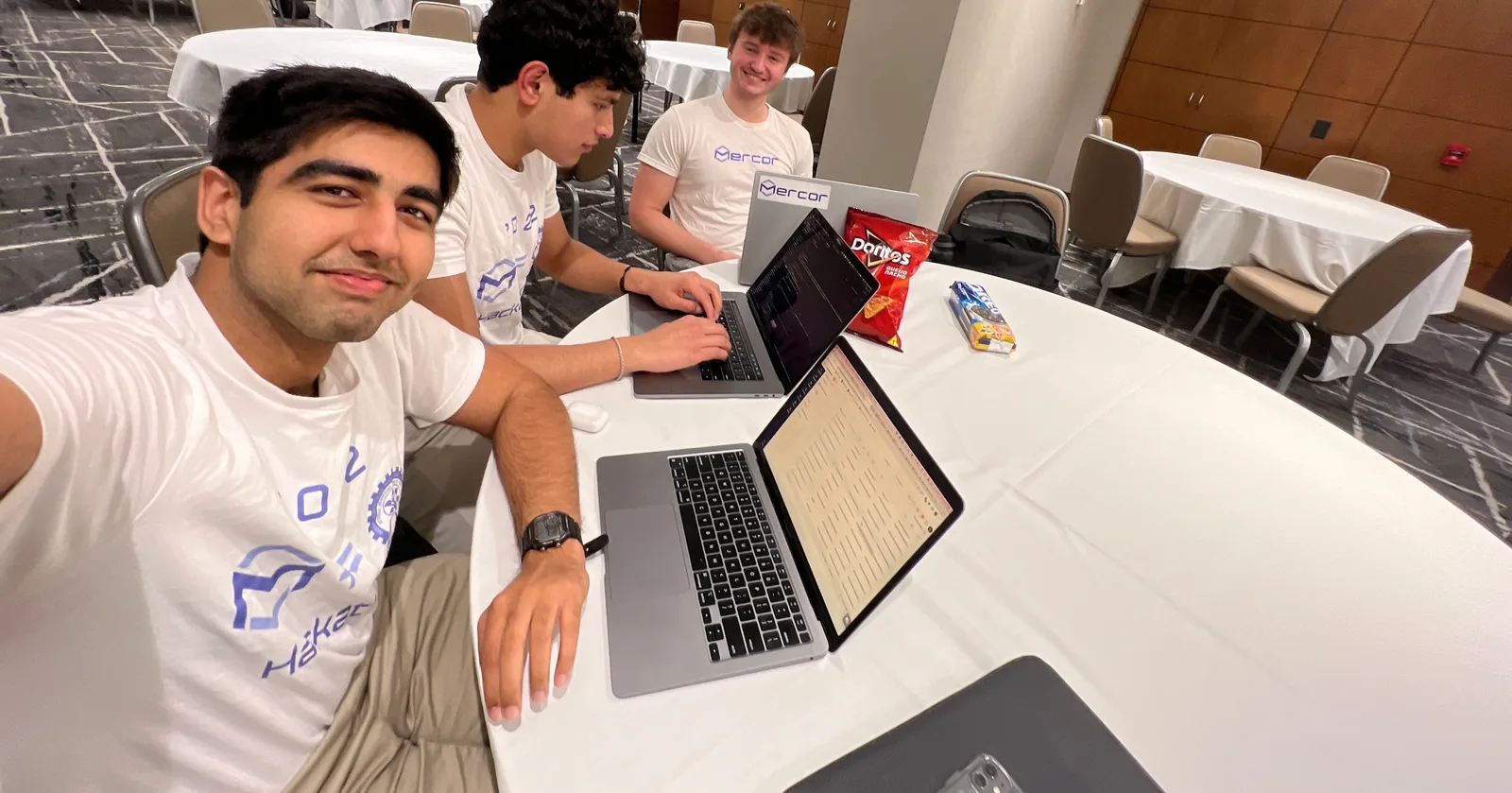
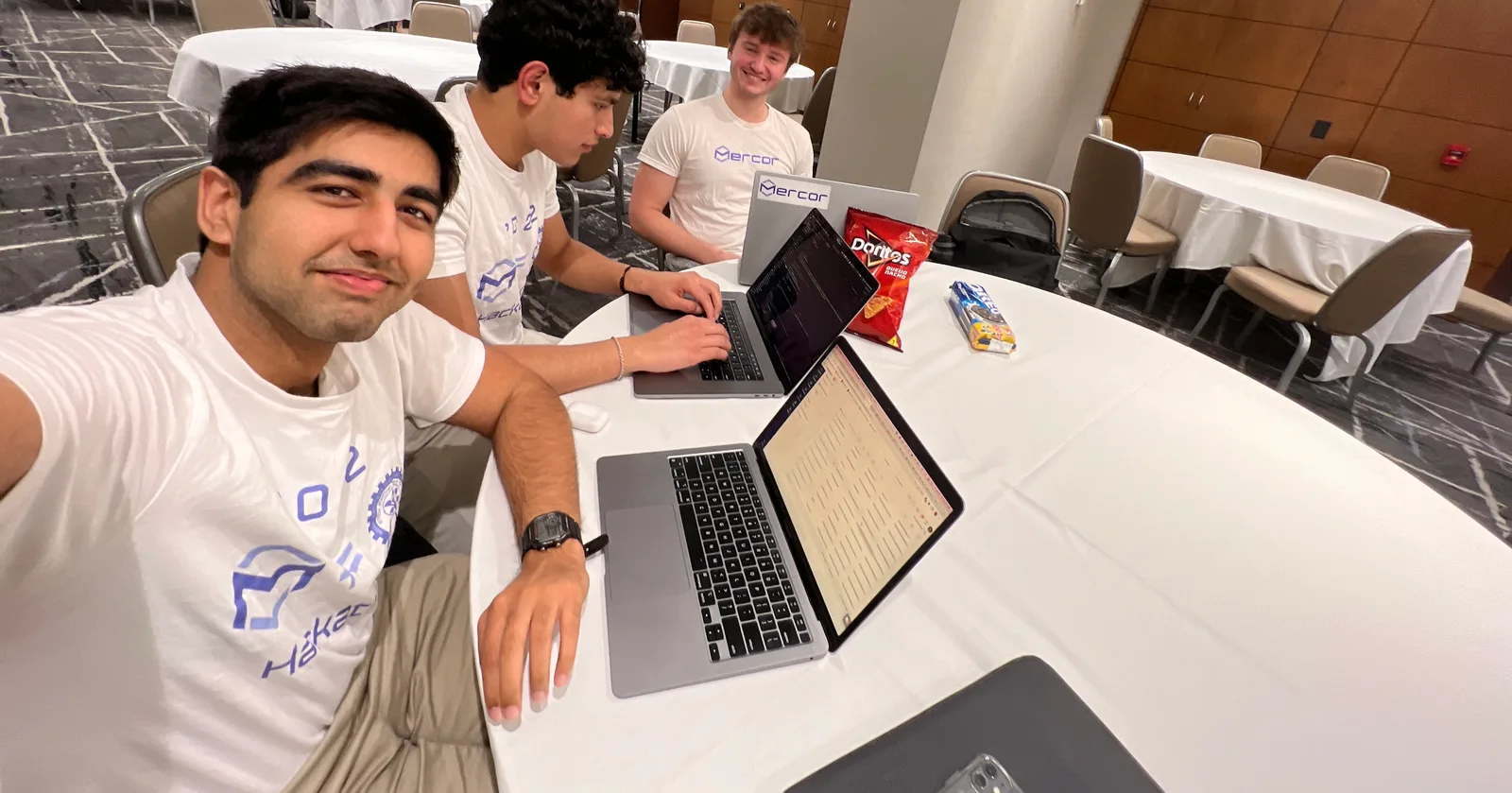
  1. The three Mercor founders working at a table
    01

    Start with friends

    Foody persuaded friends to hire from Mercor while Surya Midha interviewed engineers by hand.

    See the proof

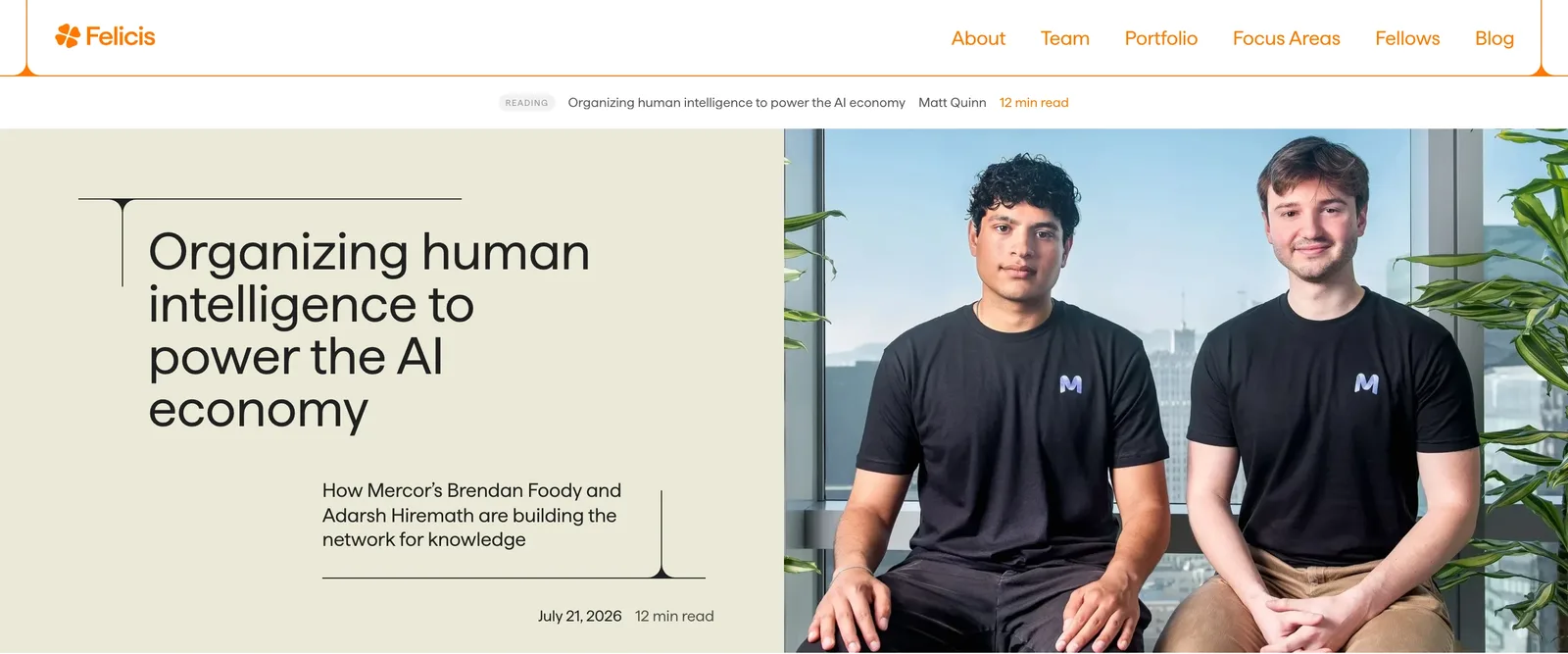
  2. Felicis' profile of Mercor's founders
    02

    Follow the surprising customer

    When xAI asked how they found such strong engineers, the founders turned toward AI labs.

    See the proof

  3. Mercor's open roles, with hourly pay on each
    03

    Say yes to impossible orders

    Requests like 300 people in two days forced Mercor to automate each step of hiring.

    See the proof

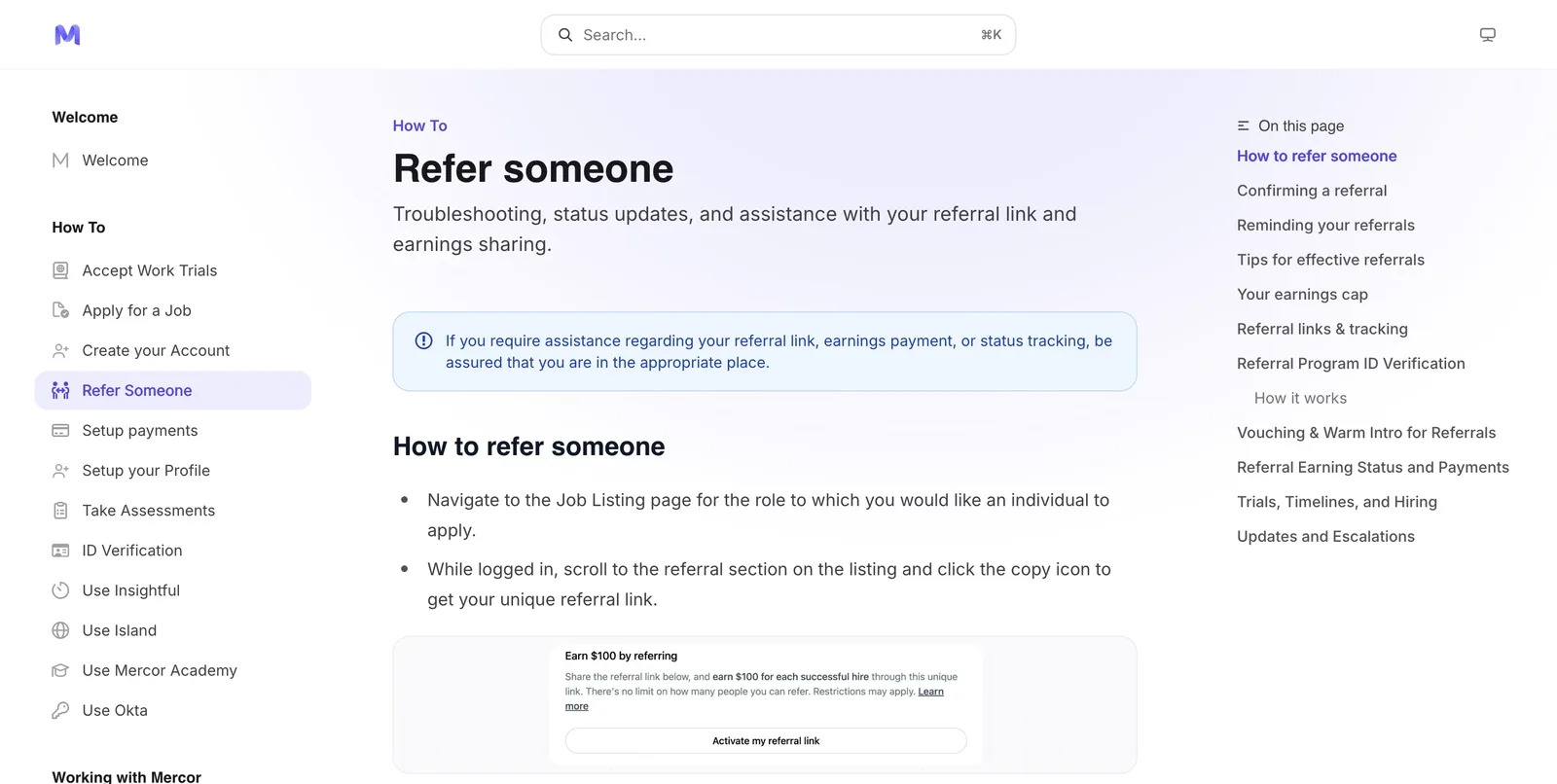
  4. Mercor's help page on referring someone
    04

    Pay people to bring people

    Referrers earn 20% of what their referral makes, up to a cap. Referring a company that licenses its data pays up to $100,000.

    See the proofFull playbook

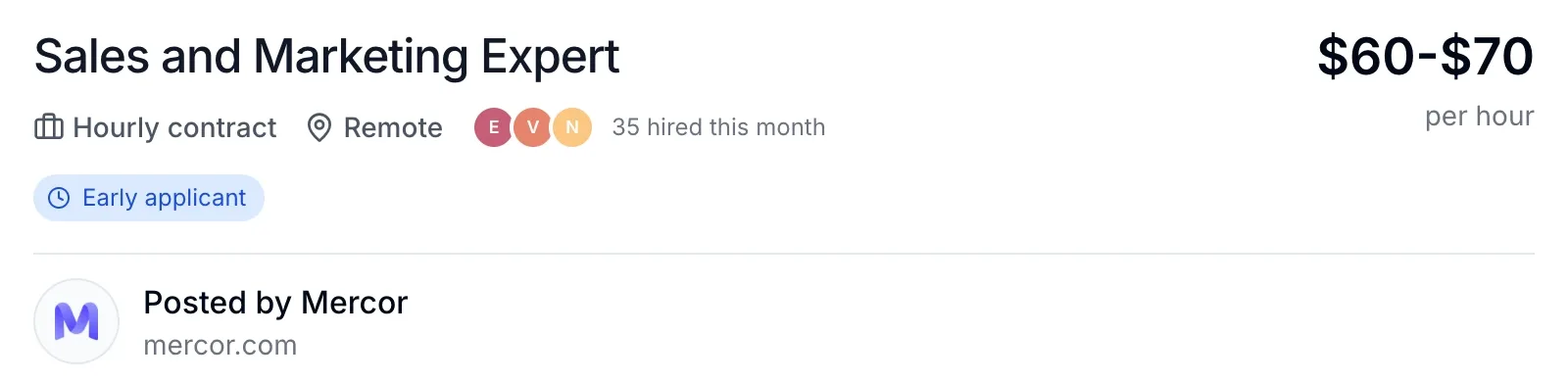
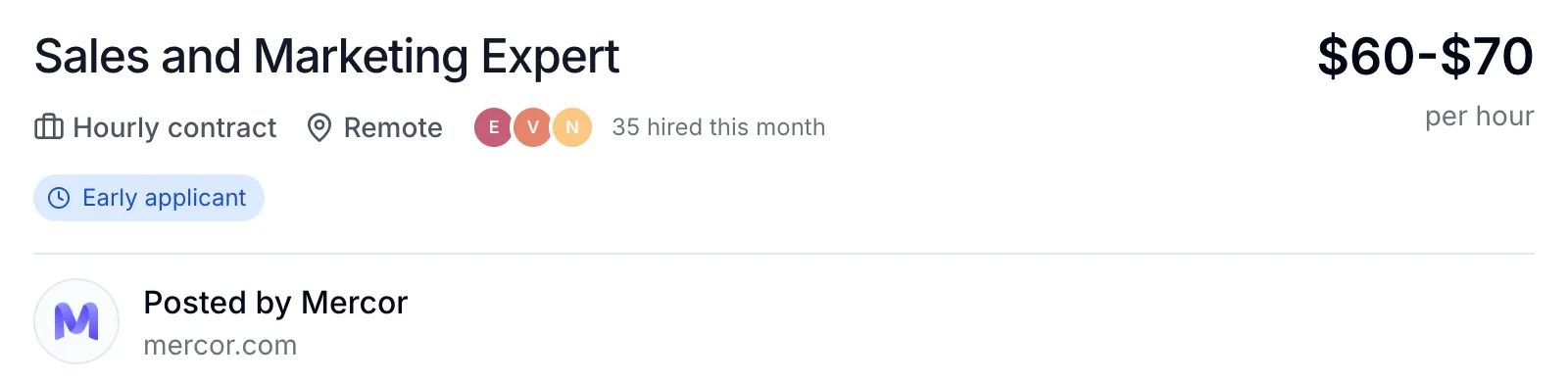
  5. A Mercor listing for a sales and marketing expert at $60 to $70 an hour
    05

    Put the pay on every role

    Each listing shows the hourly rate and how many people were hired that month.

    See the proof

  6. Mercor's chart comparing its payouts with Uber and Airbnb
    06

    Post the numbers yourself

    Foody shares run-rate milestones and weekly growth on X, and some of those posts double as hiring ads.

    See the proofFull playbook

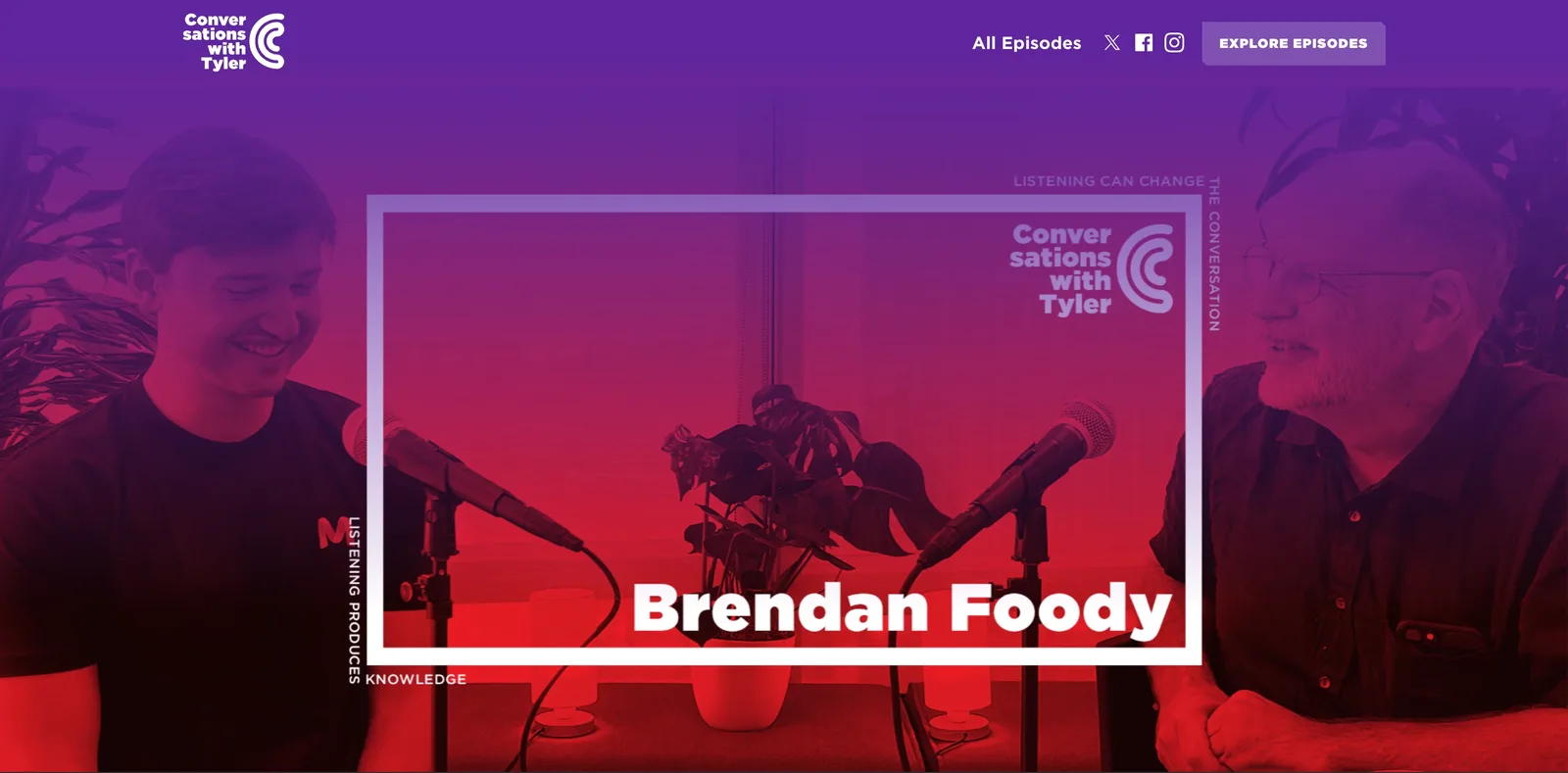
  7. Brendan Foody on Conversations with Tyler
    07

    Hire with work tests

    Foody argues most interviews reward chemistry, so Mercor tests the skills the job needs.

    See the proof

  8. Mercor's customers by type, 2023 to 2026
    08

    Take the lab playbook to enterprises

    The same experts and evaluations now sell to large companies. Mercor has more than 100 customers.

    See the proof

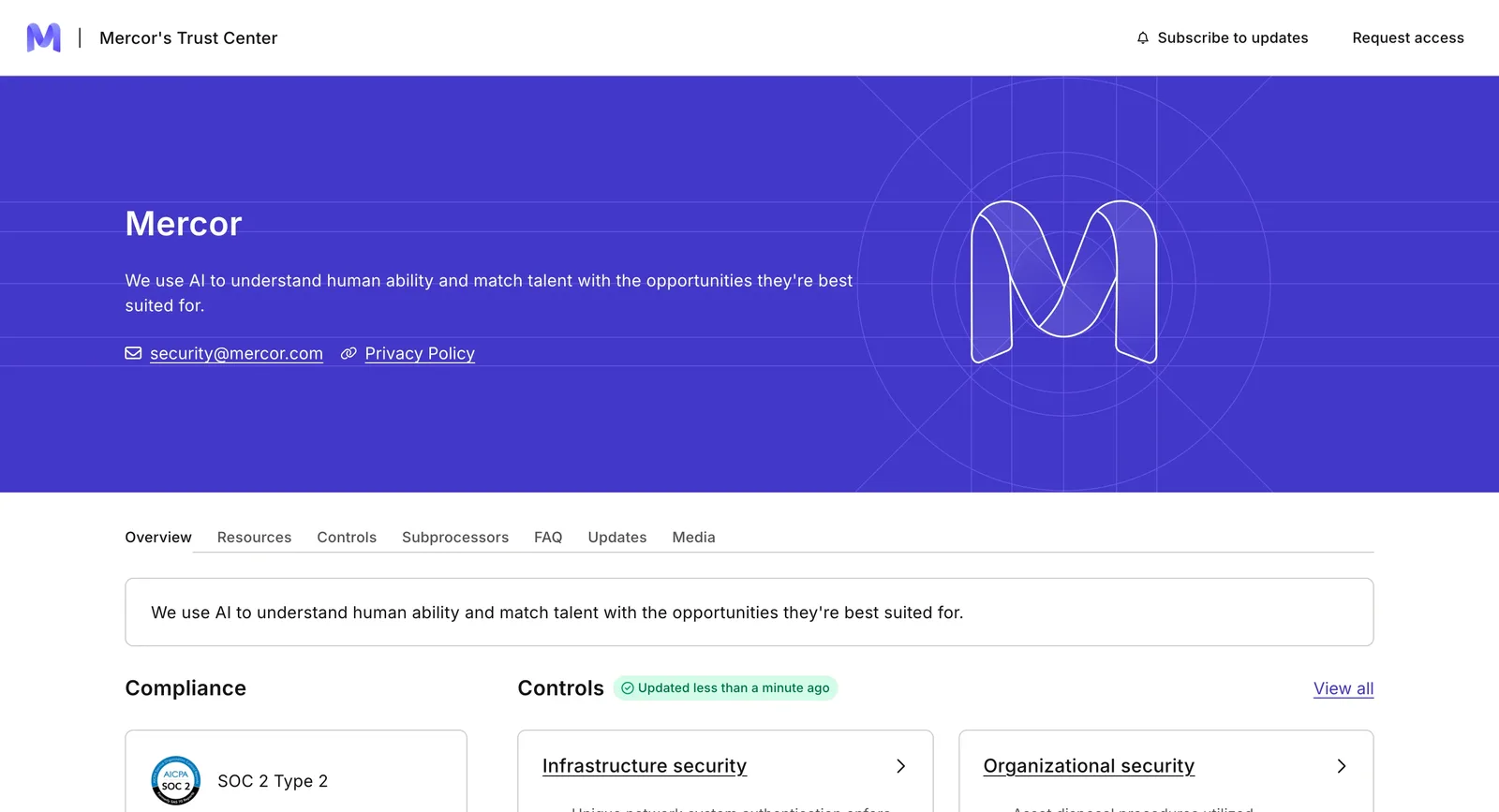
  9. Mercor's trust center
    09

    The cost of moving this fast

    A data breach, a pay dispute, lawsuits, and former staff describing harsh working conditions.

    See the proof

Mercor growth timeline

  1. Founded at a hackathon in São Paulo

    Brendan Foody, Adarsh Hiremath and Surya Midha were 19. Source

  2. A meeting with xAI points Mercor at AI labs Source

  3. Series A at a $250M valuation Source

  4. $100M Series B at $2B Source

    $75M run rate
  5. Passes $100M; publishes its “master plan” Source

    $100M run rate
  6. Passes $500M; Scale AI sues Source

    $500M run rate
  7. $350M Series C at $10B; Midha moves to chairman Source

  8. Meta project Musen ends; a similar one pays $5 less an hour Source

  9. LiteLLM attack exposes data; passes $1B Source

    $1B run rate
  10. Passes $2B Source

    $2B run rate
  11. Agrees to buy Deeptune Source

  12. $750M Series D at $20B

    Jason Wei joins as chief scientist. Source

    $3B run rate

Three friends and a hackathon

Foody, Hiremath and Midha met on their high school debate team. In January 2023, at 19, they started Mercor to place engineers from India with US startups, beginning with their friends as customers. Midha interviewed candidates by hand while Hiremath automated the process.

Brendan FoodyCo-founder and CEO, Mercor
3 years ago today, @adarsh_exe, @suryamidha, and I were 19 years old and started @mercor at a hackathon in Sao Paulo, Brazil. … We started doing things that didn’t scale: I persuaded our friends to hire from us, Surya manually interviewed engineers from the IITs, and Adarsh built the product to automate the hiring process. Within 8 months, we scaled Mercor to a $1M revenue run rate and dropped out of college.
The three Mercor founders at a table with laptops, in Mercor T-shirts

X505 likes49K viewsView on X

Adarsh HiremathCo-founder and co-CEO, Mercor
Surya, Brendan, and I dropped out together, moved to New York (mistake), and then finally ended up in San Francisco. … Before we had automated our payments system, Surya would manually generate a spreadsheet and issue every payment himself.

X389 likes101K viewsView on X

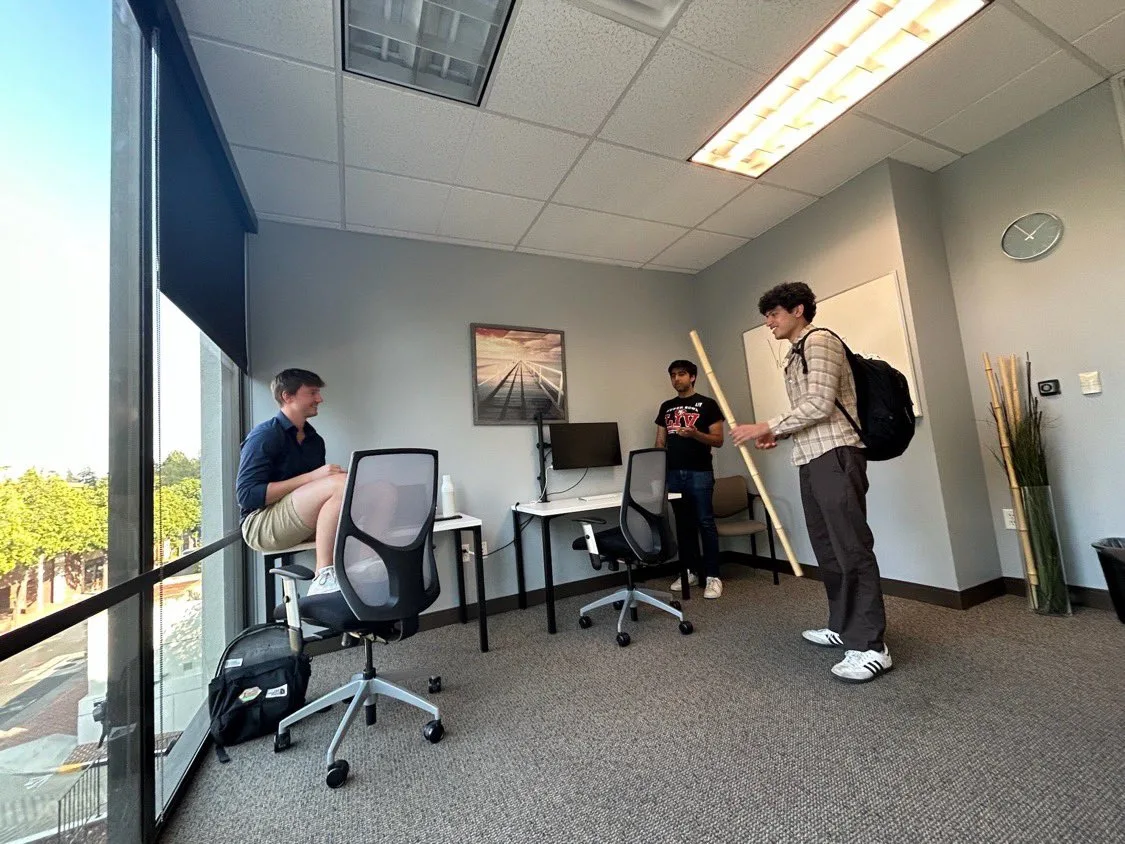
Three young men talking in a small office, from Surya Midha's post
A photo Surya Midha shared when he stepped back as COO in October 2025.

The meeting that changed the customer

In August 2023 a customer introduced the founders to xAI's team, who wanted to know how they had found so many strong engineers. The founders saw that AI labs would need skilled people to train their models. Mercor first supplied more than 1,000 engineers through Scale AI, then dropped the middleman and sold to the labs directly.

Brendan FoodyCo-founder and CEO, Mercor
This can’t be normal … We just felt like there must be such an anomaly that these people are excited to talk to us when we’re not qualified in the same way as the people they would normally spend time with. That’s when we knew there was something in the market we had to chase down.

FelicisRead the original

Adarsh HiremathCo-founder and co-CEO, Mercor
Almost immediately, we realized that what the human data market needed was a talent assessment offering … And because we had built up this network of really, really high-caliber, high-end knowledge workers and developed the ability to match and onboard them in an automated way, it ended up being a great fit to actually provide that offering to the foundation models.

FelicisRead the original

Felicis' profile of Brendan Foody and Adarsh Hiremath
The founders' story, told by their investor Felicis in July 2026.

Say yes to the impossible order

AI labs asked for things like 300 qualified people in two days. Mercor used those orders as the reason to automate resumes, interviews and matching. After Meta invested $14.3 billion in Scale AI in 2025 and hired its CEO, many labs stopped working with Scale, and Mercor picked up more of their work.

Brendan FoodyCo-founder and CEO, Mercor
Third, we will service “unreasonable asks” from AI labs like needing to find 300 people in two days. These high volume requests for quality people on extremely short timelines can’t be fulfilled with a services operation. They force us to build the automations at each layer of the engagement process to deliver.

BlogRead the original

Brendan FoodyCo-founder and CEO, Mercor
Mercor (@mercor) is now working with 6 out of the Magnificent 7, all of the top 5 AI labs, and most of the top application layer companies. One trend is common across every customer: we are entering The Era of Evals.

X915 likes385K viewsView on X

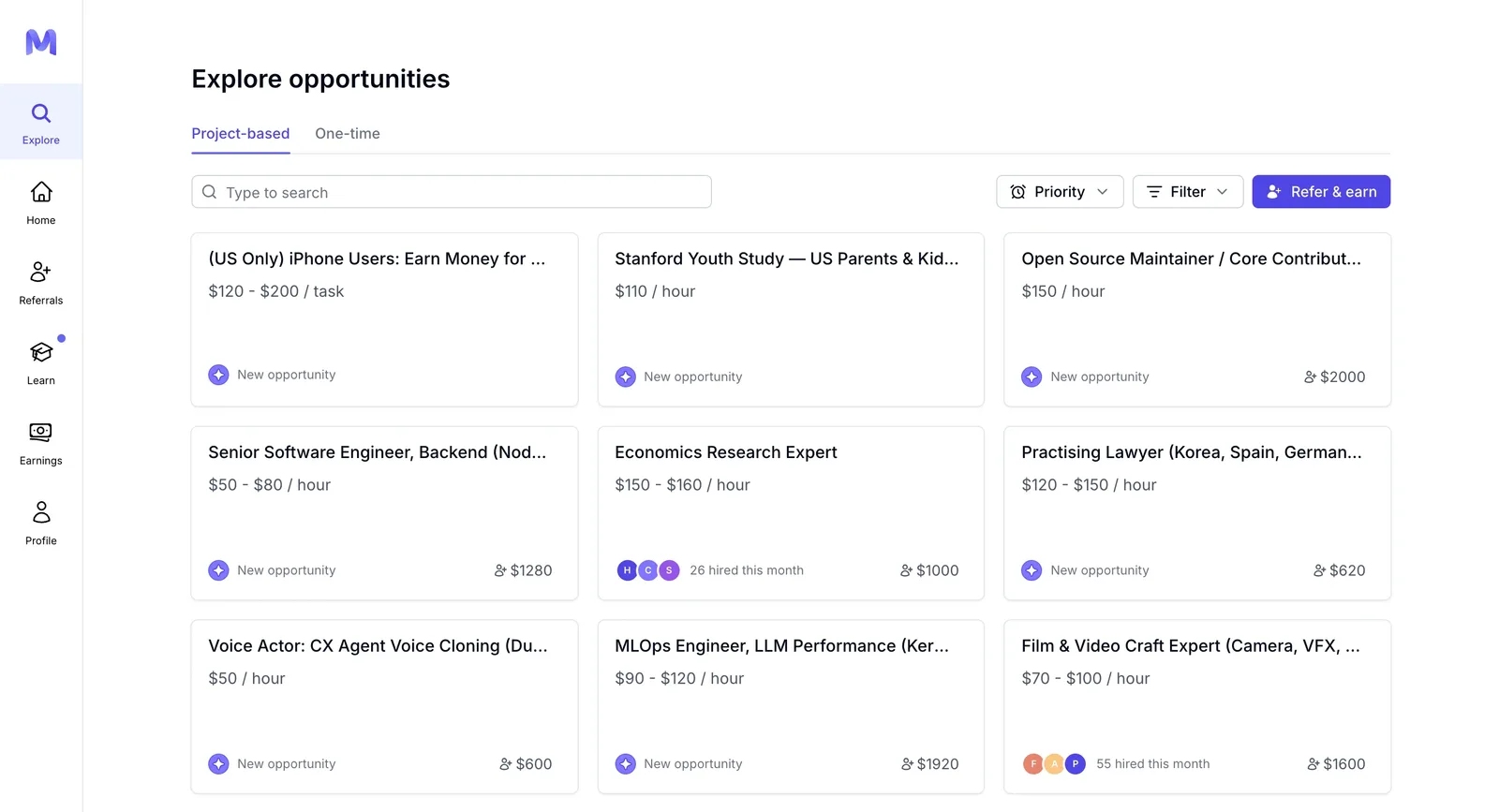
Mercor's open roles for lawyers, economists, engineers and film experts, with hourly pay
Mercor's open roles in November 2026, with pay and a referral bonus on most cards.

Referrals as the supply engine

Mercor pays people to bring in other experts: 20% of what the person they refer earns, up to a cap. Its referral page says referred people are 10 times more likely to be hired, and the CEO's 2025 recap says referrals rose from 1,198 to 1.9 million. By October 2026 he was also offering up to $100,000 for each company referred that licenses its data.

Brendan FoodyCo-founder and CEO, Mercor
2025 wrapped -Mercor grew revenue by 4658% -we went from paying out $2M / month to $2M / day -users increased from 217K to 3.4M -interviews increased from 88K to 1.5M -referrals increased from 1198 to 1.9M

X930 likes382K viewsView on X

Brendan FoodyCo-founder and CEO, Mercor
We’ll pay you up to $100K for every company you refer that licenses its data to @Mercor. We’ve partnered with > 500 companies so far.

XView on X

Mercor's help page explaining how to refer someone
The referral guide for Mercor's experts.
A Mercor role paying $60 to $70 an hour, with 35 people hired this month
A listing in November 2026: the pay and that month's hires are on the page.

The full playbook:In-app referral program

The revenue climb, and what it measures

Mercor reports gross revenue: everything customers pay, before experts get their share. Foody says that is common practice, and experts reportedly keep 60% to 70%, so a $3 billion run rate leaves Mercor about $0.9 billion to $1.2 billion a year (our calculation).

His timelines also differ. He has put the $1M mark within 8 months of the January 2023 start, while “27 months” to $3B would put it in 2024.

Brendan FoodyCo-founder and CEO, Mercor
Mercor scaled from $1M - $100M in annual revenue run rate in 11 months, making us the fastest growing company in the world. We averaged 41% monthly growth in 2024, then grew 55% in January, and 87% in February. We also profited $1M+ last month, but the largest barrier to growth is finding exceptional people to join our team.

X821 likes216K viewsView on X

Brendan FoodyCo-founder and CEO, Mercor
Mercor (@mercor) scaled from $1-500M in revenue run rate in the last 17 months, making us the fastest growing company of all time. Our growth is accelerating. We averaged 11% week over week growth in July, 18% WoW growth in August, and 19% WoW growth in September.

X1.4K likes627K viewsView on X

Brendan FoodyCo-founder and CEO, Mercor
Just 2 years after starting, Mercor is paying $1.5 million per day to experts in our marketplace. … While most new categories take time to build momentum, we’ve broken every growth record. For comparison, in their first 2 years: - Uber paid out just over a $1 million to drivers - Airbnb paid out $10 million to hosts

X1.8K likes1.9M viewsView on X

The full playbook:Build in public

Test the work, and work all the time

Mercor used its own platform to screen and hire its team. Foody argues that most companies judge candidates on chemistry instead of skill. He also says he has worked 100 hours a week for three years, a pace some former employees describe far less warmly.

Brendan FoodyCo-founder and CEO, Mercor
I think one of the largest problems that people make is that they don’t measure the actual skills and capabilities that they want someone to exhibit on the job. Instead of focusing on how do we measure how well this person does their investment analysis of the data room, they have this vibes-based conversation of where did the person grow up, how similar are they, do they think they would enjoy hanging out together.

Conversations with TylerRead the original

Brendan FoodyCo-founder and CEO, Mercor
I’ve worked a hundred hours a week for the last three years, and I love doing it, and I’ll continue doing that.

Conversations with TylerRead the original

Brendan Foody and Tyler Cowen on Conversations with Tyler
Foody on Conversations with Tyler, January 2026.

Next: every company

Mercor now sells the same experts and evaluations to large companies building their own AI. In July 2026 it agreed to buy Deeptune, which recreates business software for AI agents to practice in. In November it raised $750 million at $20 billion, including an employee tender, and hired AI researcher Jason Wei, one of its customers, as chief scientist.

Brendan FoodyCo-founder and CEO, Mercor
@mercor scaled from $1M to $3B in run-rate revenue in 27 months, the fastest in history to $3B. … The labs are the leading indicator for AI startups, then the Fortune 500. Our growth has accelerated over the past 6 months as enterprises start evaluating and training their own models. For many, owning their intelligence is existential.

X3.7K likes2M viewsView on X

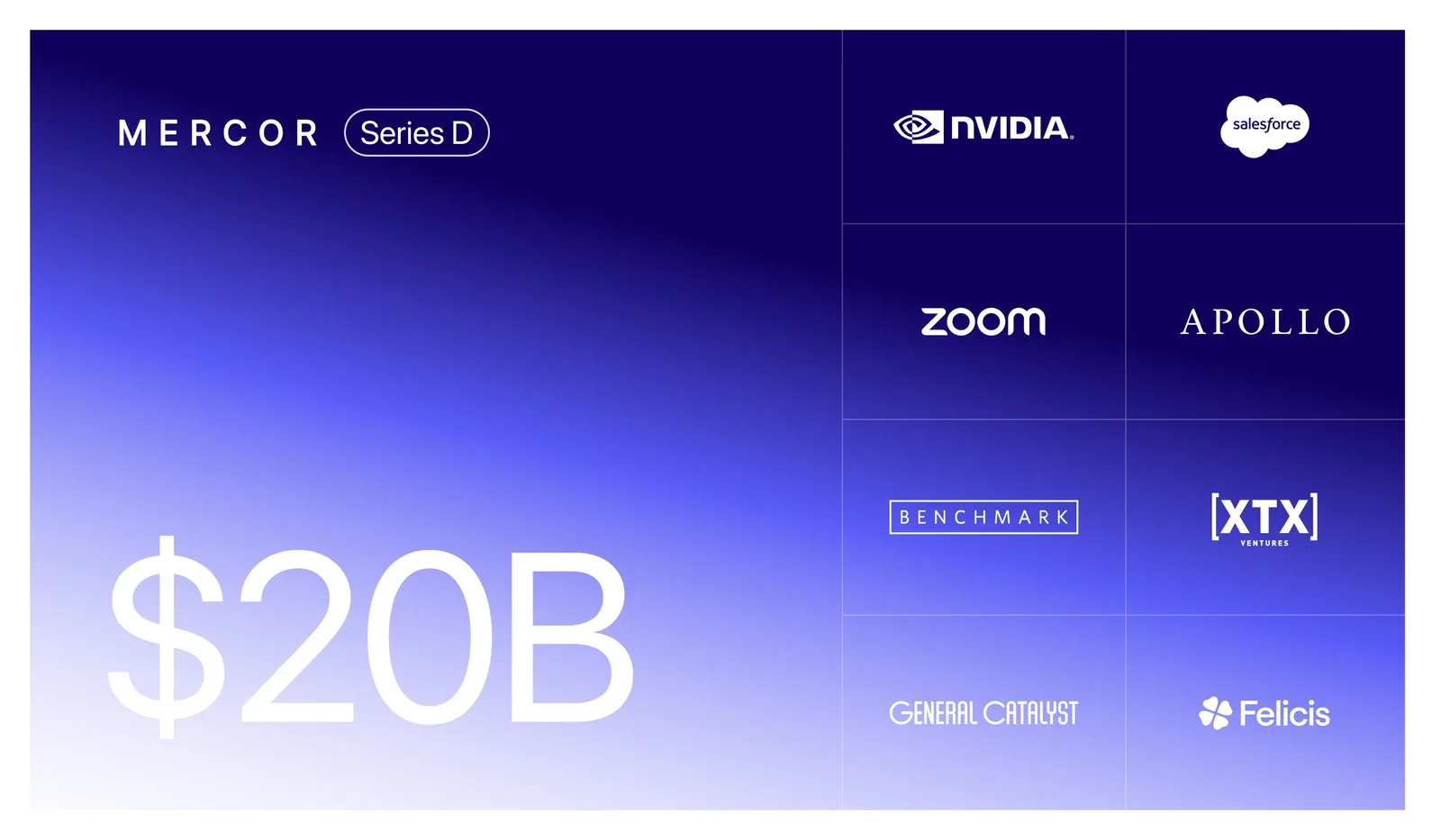
Mercor's Series D card: $20B, with NVIDIA, Salesforce, Zoom, Apollo, Benchmark, XTX, General Catalyst and Felicis
The Series D announcement, November 2026.
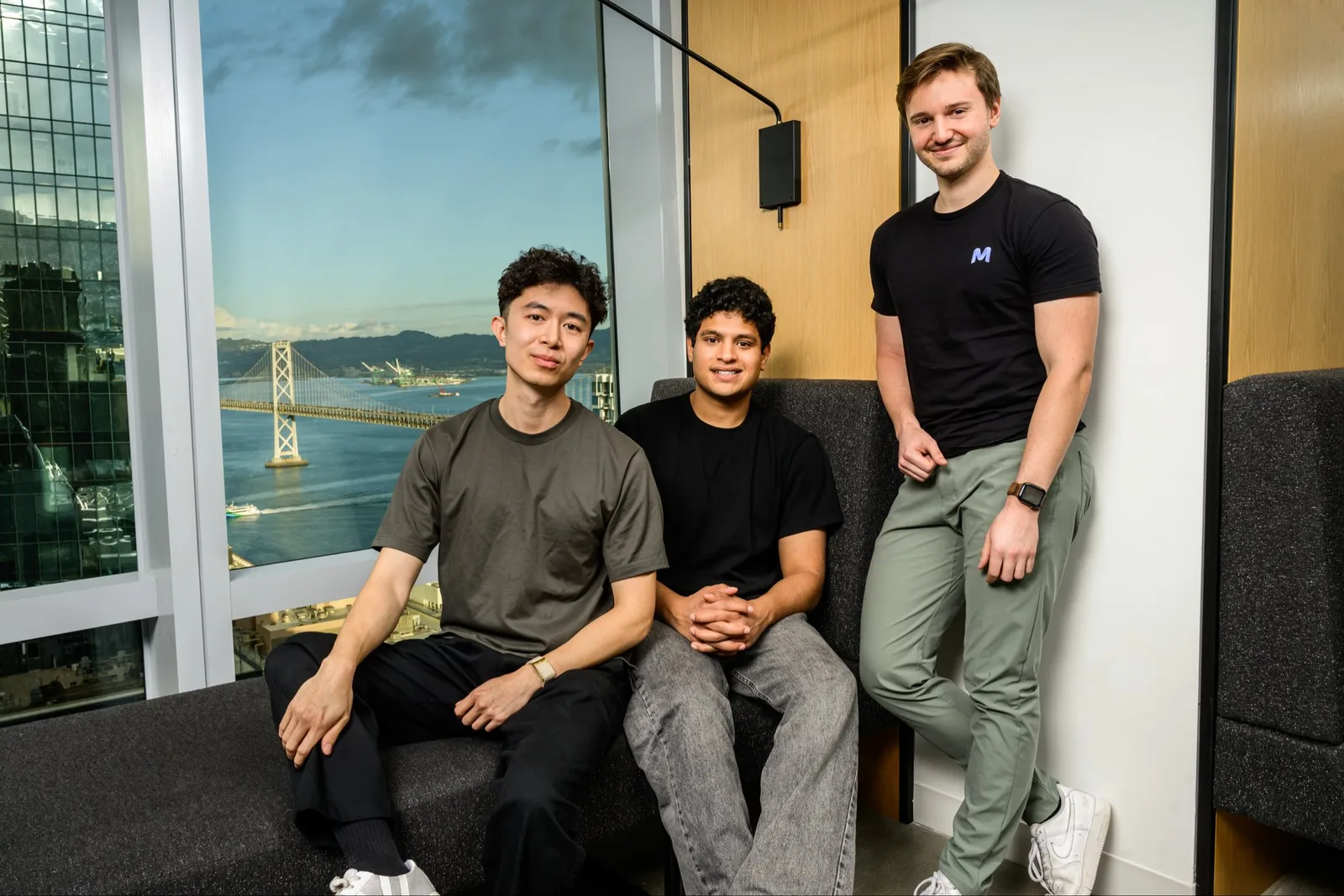
Three men in an office with a view of the Bay Bridge, from Brendan Foody's post announcing Jason Wei as chief scientist
The photo Foody posted when Jason Wei joined as chief scientist.

The cost of moving this fast

Mercor's speed came with real disputes. Several are allegations that it contests:

  • Security: a supply-chain attack on the open-source tool LiteLLM hit Mercor in March 2026. Mercor says “a very limited subset” of experts had sensitive data affected. Meta paused its work with Mercor, and contractors filed class actions.
  • Pay: in November 2025 Mercor ended a Meta project called Musen and offered workers a similar one at $16 an hour, $5 less. It called the report “inaccurate” and said the work is temporary and project-based.
  • Worker status: a proposed class action filed in Texas in May 2026 says Mercor misclassified more than 30,000 workers as contractors. Mercor wants the case sent to arbitration.
  • Trade secrets: Scale AI sued Mercor and a former employee in September 2025 over more than 100 confidential documents. Mercor says it never accessed them.
  • Culture: in May 2026 former employees described very long hours and firings without severance. Mercor said it makes employment decisions “based on performance, business, and customer needs”.
Brendan FoodyCo-founder and CEO, Mercor
Having a complete understanding of what actually happened and having really strong relationships with customers gave us a lot of confidence that we would get through the incident and be on the other side even stronger

FelicisRead the original

Surya MidhaCo-founder and board chairman, Mercor
While Mercor has hired many people who departed Scale, we have no interest in any of Scale’s trade secrets and in fact are intentionally running our business in a different way.

TechCrunchRead the original

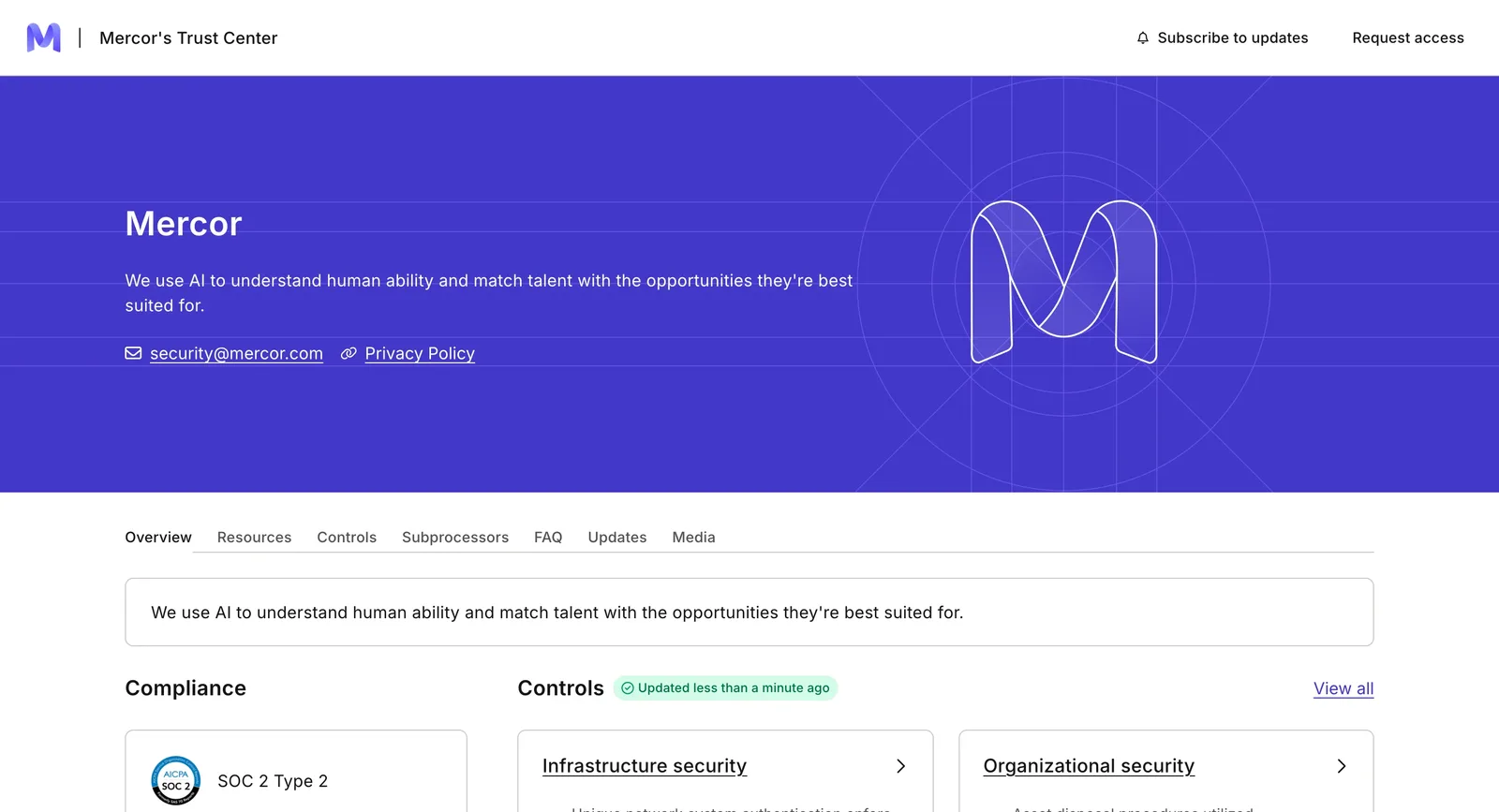
Mercor's trust center, listing its SOC 2 Type 2 report
Mercor's trust center, with its SOC 2 Type 2 report.

What you can copy from Mercor

  1. 1.Sell to people you know first, and do the work by hand until you know what to automate.
  2. 2.When a customer asks for something that seems impossible, treat it as your roadmap.
  3. 3.Pay users to bring the next users, and show them what they'd earn (in-app referral program).
  4. 4.Post your numbers yourself (build in public), and say plainly what they measure.
  5. 5.Test candidates on the actual work instead of judging them by how the conversation felt.
  6. 6.Fund security and fair treatment of workers before you scale: Mercor's hardest moments came from both.

Knowledge graph

Everything LeadWave has on Mercor: its leaders, our pages on it and the lists it’s on.

Frequently asked questions

More company dossiers

All dossiers
  • Notion logo

    Notion

    How Notion Grew: From Near-Death in Kyoto to 100M Users

    In 2015 Notion laid off its team, sublet its office and moved to Kyoto to rebuild before the money ran out. Its users then did most of the marketing, with templates, local groups and videos. It passed 100 million users in July 2024 and reportedly $600 million in annual recurring revenue by December 2025.

    Read


  • Cursor logo

    Cursor

    How Cursor Grew: From $1M to $4B ARR in Under Three Years

    Cursor had just passed $1 million in ARR when it raised its seed in October 2023. By June 2026 it was on a $4 billion run rate, and in August 2026 SpaceX bought it for $60 billion. Its founders say they hadn't spent a dollar on marketing; they explain how it grew in their own posts.

    Read
  • Gamma logo

    Gamma

    How Gamma Grew: From a Year of Runway to $100M ARR With 50 People

    In late 2022 Gamma had about 60,000 users and a little over a year of runway. It relaunched as an AI presentation maker in March 2023 and passed $100 million in ARR in November 2025, profitably, with about 50 people. Its founders and growth team explain how in their own posts.

    Read
  • Granola logo

    Granola

    How Granola Grew: No Meeting Bot, No Growth Hacks, Valued at $1.5B

    Granola launched its AI notepad in May 2024 after a year of closed beta. By October 2026, 68% of businesses on Ramp that pay for an AI notetaker used it, up from 6% two years earlier, and it was valued at $1.5 billion. Its founders explain how in their own posts: no bot in the meeting, and word of mouth.

    Read
  • Linear logo

    Linear

    How Linear Grew: $100M ARR With Almost No Marketing

    Linear opened to the public in June 2020 after a year of invite-only beta, turned profitable a year later, and passed $100 million in ARR in 2026 with more than 40,000 paying companies, having spent 0.5% of its revenue on marketing. Its founders explain how in their own posts.

    Read
  • PostHog logo

    PostHog

    How PostHog Grew: Open Source, No Sales Team, 500,000 Teams

    PostHog launched as open-source product analytics on Hacker News in February 2020. Six years later more than 500,000 teams have signed up, 97% of companies use it for free, and it was valued at $1.4 billion, all without an outbound sales team. Its founders and marketers explain how in their own posts.

    Read