

Why cold outreach still works, and why most of it doesn't
Cold outreach is the one channel where you choose exactly who hears about you, and when. No waiting for search rankings or a viral post: you pick the companies, find the person who owns the problem and write to them. That's why it's the default first channel for B2B SaaS and why it keeps working at scale.
It is also a channel that punishes laziness. Instantly's 2026 Cold Email Benchmark Report, built on its platform's 2025 sending, puts the average reply rate at 3.43%. The top quartile gets 5.5% or more and the top 10% gets 10.7% or more. 58% of replies come from the first email, and top performers keep that first email under 80 words.
The gap between 3% and 10% isn't the subject line. It's three things:
- Who: a narrow list of companies that actually have the problem.
- Why now: a real reason to write this week (a new hire, a G2 visit, a funding round, a post they engaged with).
- Landing: emails that reach the inbox at all.
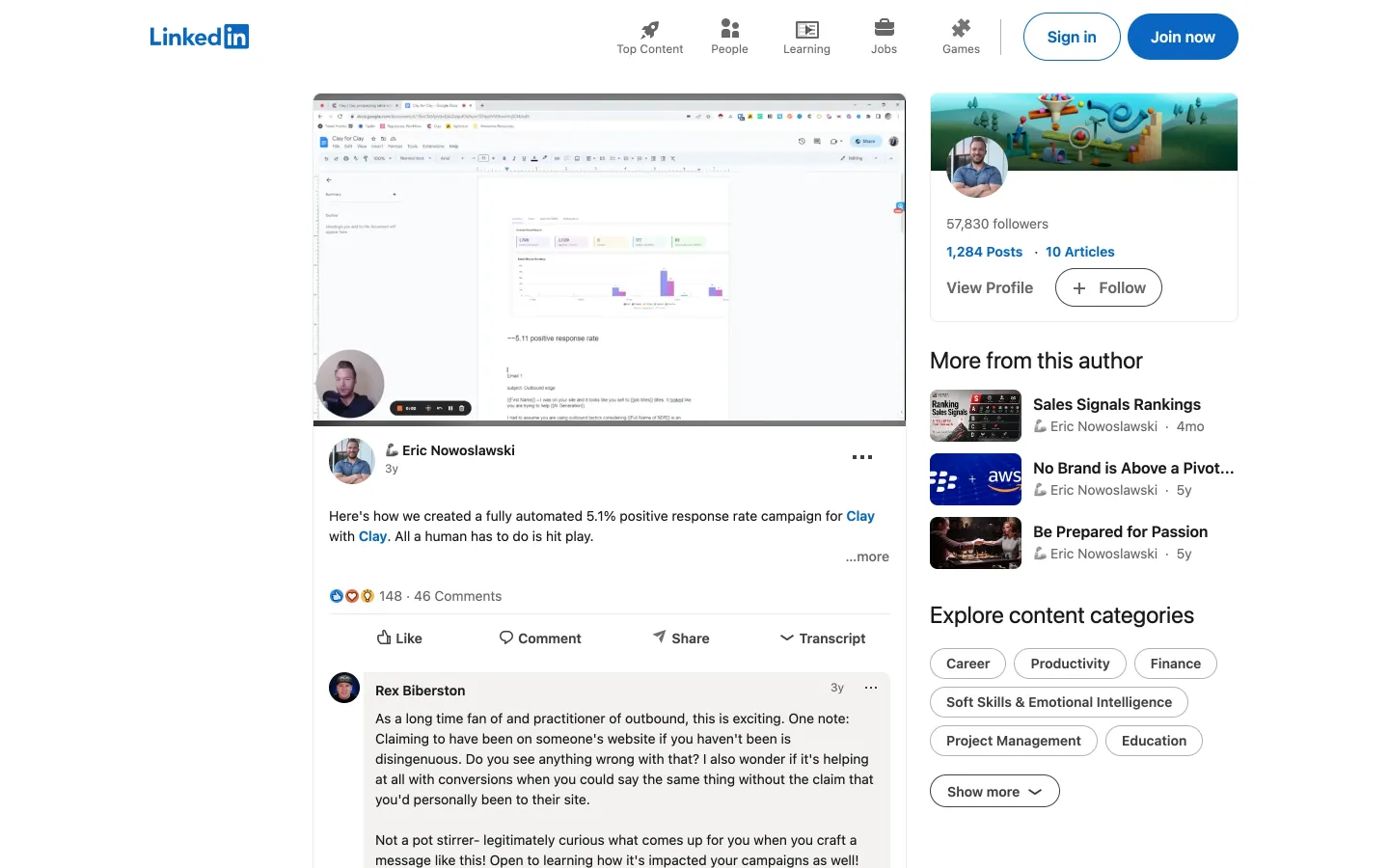
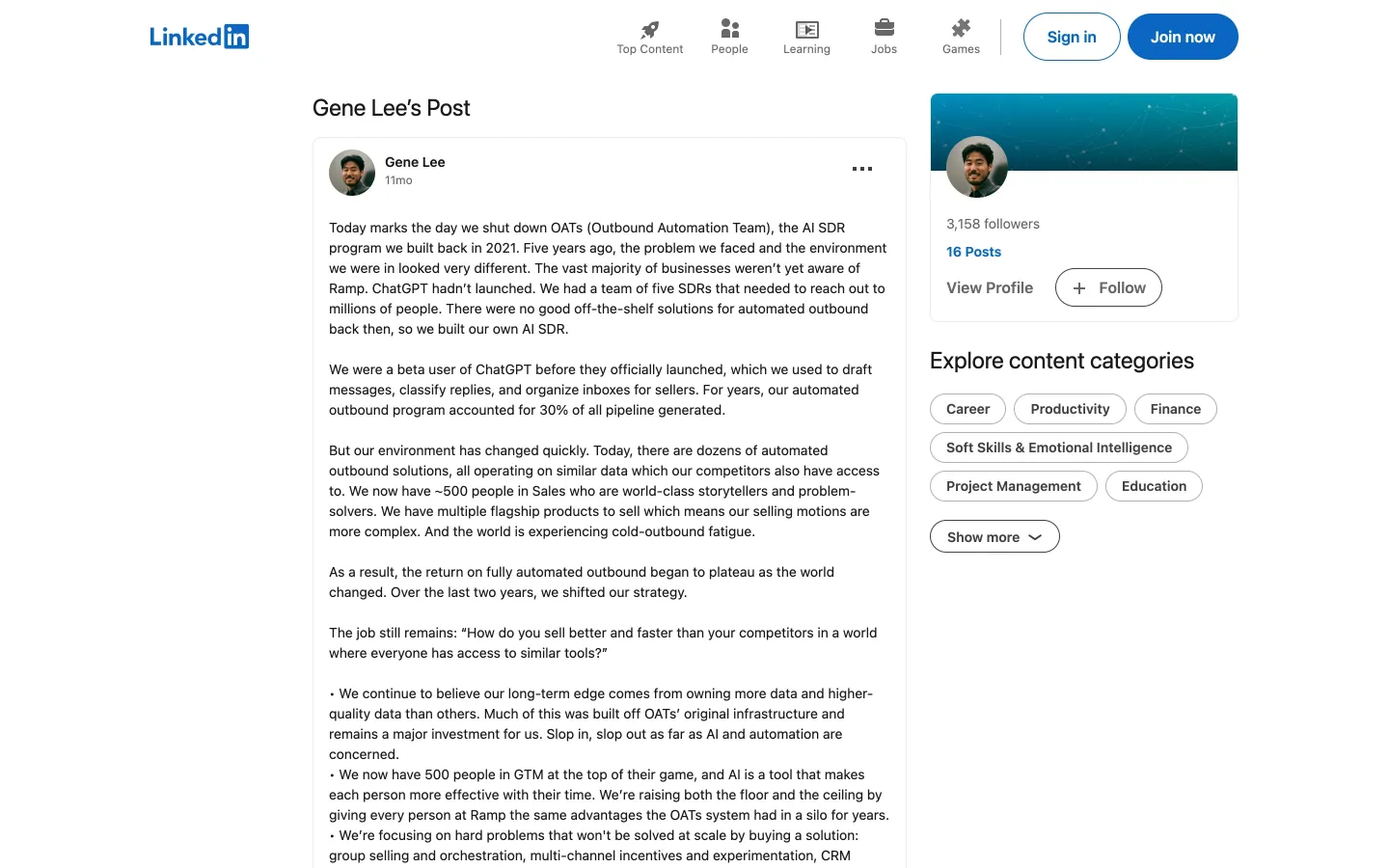
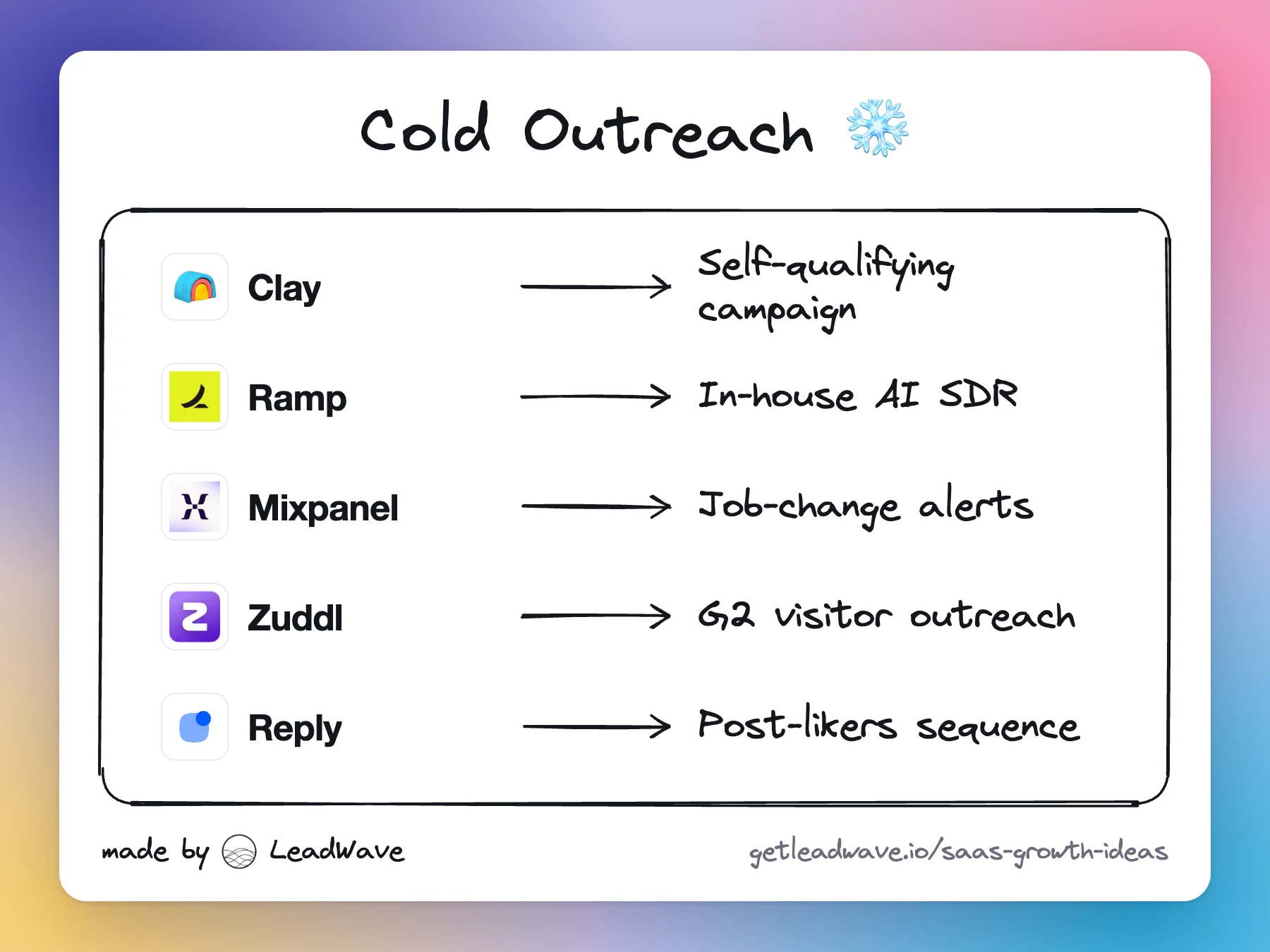
Ramp is the clearest lesson in where this goes. In 2021 its five SDRs had to reach millions of businesses, so it built its own AI SDR program, OATs. Co-founder Gene Lee wrote that automated outbound accounted for 30% of all pipeline for years. In December 2025 Ramp shut it down: dozens of tools now run on the same data competitors can buy, buyers have “cold-outbound fatigue”, and the return on fully automated outbound plateaued. Ramp kept the part that can't be bought, its own data, and handed it to 500 salespeople. The edge in cold outreach is better data and better reasons to write, not more emails.
Deliverability: domains, authentication and volume
If your emails land in spam, nothing else on this page matters. The rules got stricter in 2024.
What Gmail and Yahoo require. Since February 2024, Google requires every sender to set up SPF or DKIM, keep the spam rate in Postmaster Tools below 0.3% (it recommends staying under 0.1%) and use TLS. Senders of more than 5,000 messages a day to Gmail also need both SPF and DKIM, a DMARC record (p=none is enough), a From domain aligned with SPF or DKIM, and one-click unsubscribe on marketing messages. Yahoo asks the same of bulk senders and wants unsubscribes honored within two days. Microsoft started routing non-compliant mail from high-volume senders to Outlook.com junk folders in May 2025.
Send from separate domains. Most outbound teams buy a few lookalike domains (getacme.com, tryacme.com, acmehq.com), point them at the main site and send cold email only from those. A spam complaint then hurts a sending domain, not the domain your invoices, password resets and customer emails come from. Set up SPF, DKIM and DMARC on every one of them.
Warm up and keep volume low per inbox. New domains and inboxes need weeks of slowly rising, real-looking activity before they send at full volume. Instantly suggests starting new domains at 5 to 10 emails a day and ramping over 4 to 6 weeks. Smartlead's benchmark of 850 million emails recommends 50 cold emails per mailbox per day or fewer; the median mailbox sends 14. To send more, add domains and inboxes, not volume per inbox.
Keep the list clean. Verify every address before sending and keep bounces under 2%. A list bought years ago is the fastest way to burn a fresh domain.
Write like a person. Plain text, one link at most, no images or attachments in the first email, and no open tracking pixel if deliverability is shaky.