Skip to content

Acquisition

SaaS Deal Sites and Discount Codes: Where to List Your Offer (12 Examples)

Perk portals, deal marketplaces and coupon sites can send startups straight to your checkout. Where to list, what it brings, and how to keep codes from leaking.

Discount code sites: real examples from Secret, Intercom, HubSpot
Impact
Medium
Effort
Low
Time to results
Weeks
Budget
None needed
Team
Marketing

Tools for this growth idea

  • Stripe
  • Chargebee
  • Webflow
  • Google Analytics

Four kinds of “discount code sites”

Listing a discount code used to mean submitting it to coupon sites. In SaaS it now means four different channels, and they bring very different customers:

  • SaaS deal marketplaces. Secret, FounderPass and NachoNacho collect startup offers from hundreds of vendors and sell or give access to founders. Buyers arrive with a clear intent: they're building their stack.
  • Perk portals. Banks, card issuers, incorporation services and accelerators bundle partner offers as a feature for their own customers: Stripe Atlas, Mercury, Ramp, Brex, AWS Activate and accelerator deal books like Y Combinator's. You reach companies in their first weeks, often before they've picked a CRM or a help desk.
  • Lifetime-deal marketplaces. AppSumo and its peers sell your product for a one-time price. Big cash, very different customer, separate decision (below).
  • Consumer coupon sites and extensions. RetailMeNot-style sites and browser extensions like Honey. They mostly intercept people already at your checkout, so they rarely create demand.

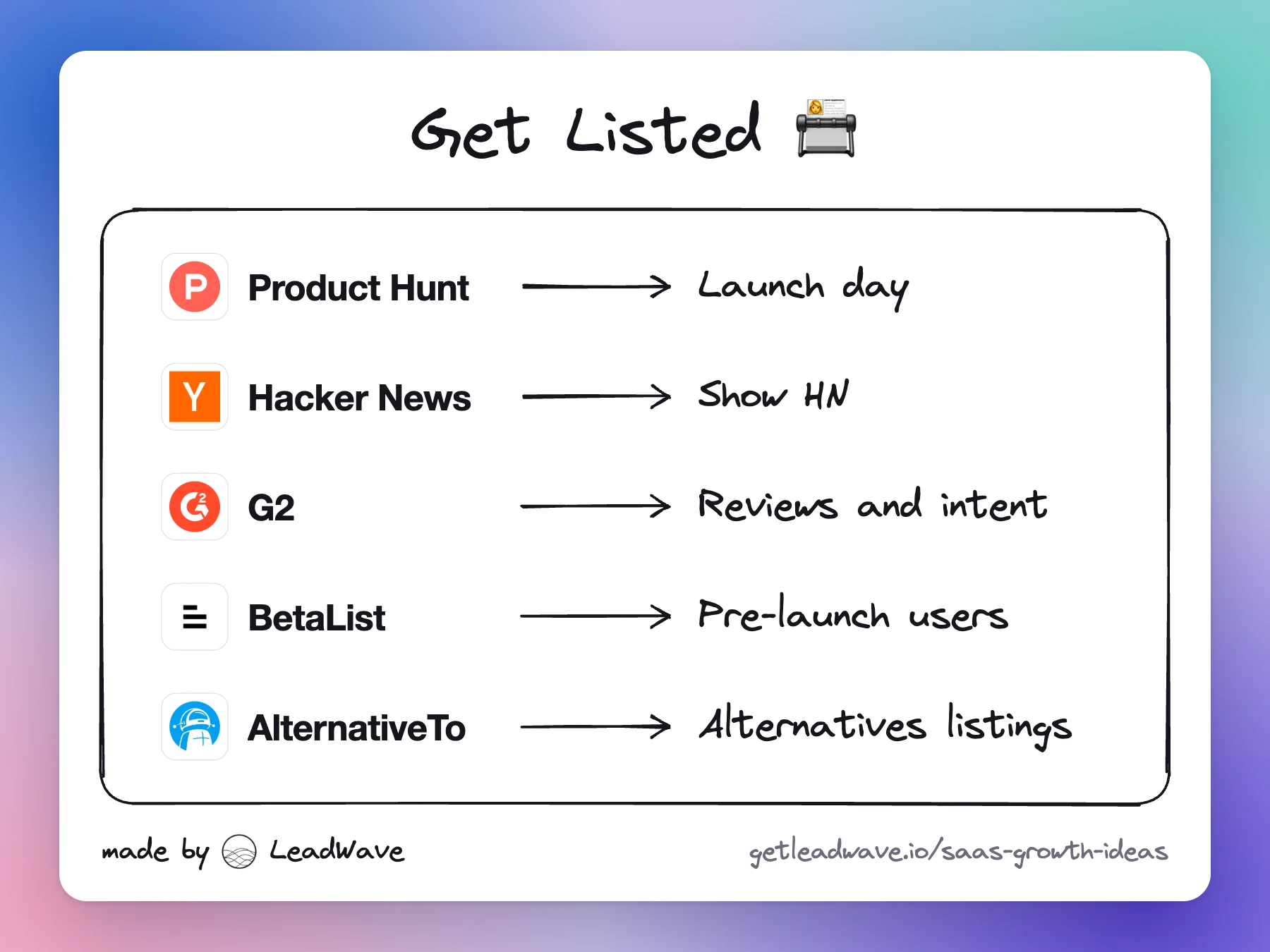
Startup directories are a separate channel, covered in startup directories and our list of SaaS directories. Of the four channels above, the first two are where the growth is. Perk portals in particular are run by companies that keep the portal alive because it retains their own customers, which is why they outlast standalone deal sites.

What happened to the deal sites on the original list

This tactic first collected nine sites. Checked in November 2026, most of them are gone:

  • catchin.io, deals.failory.com, startupdeals.tech and savewithloot.com no longer resolve. Failory itself is alive, but its deals section isn't.
  • splitgenie.com is for sale on HugeDomains, and dealster.io is a parked domain on Sedo.
  • martechbase.com is now a tool for auditing your marketing stack, with no deals section.
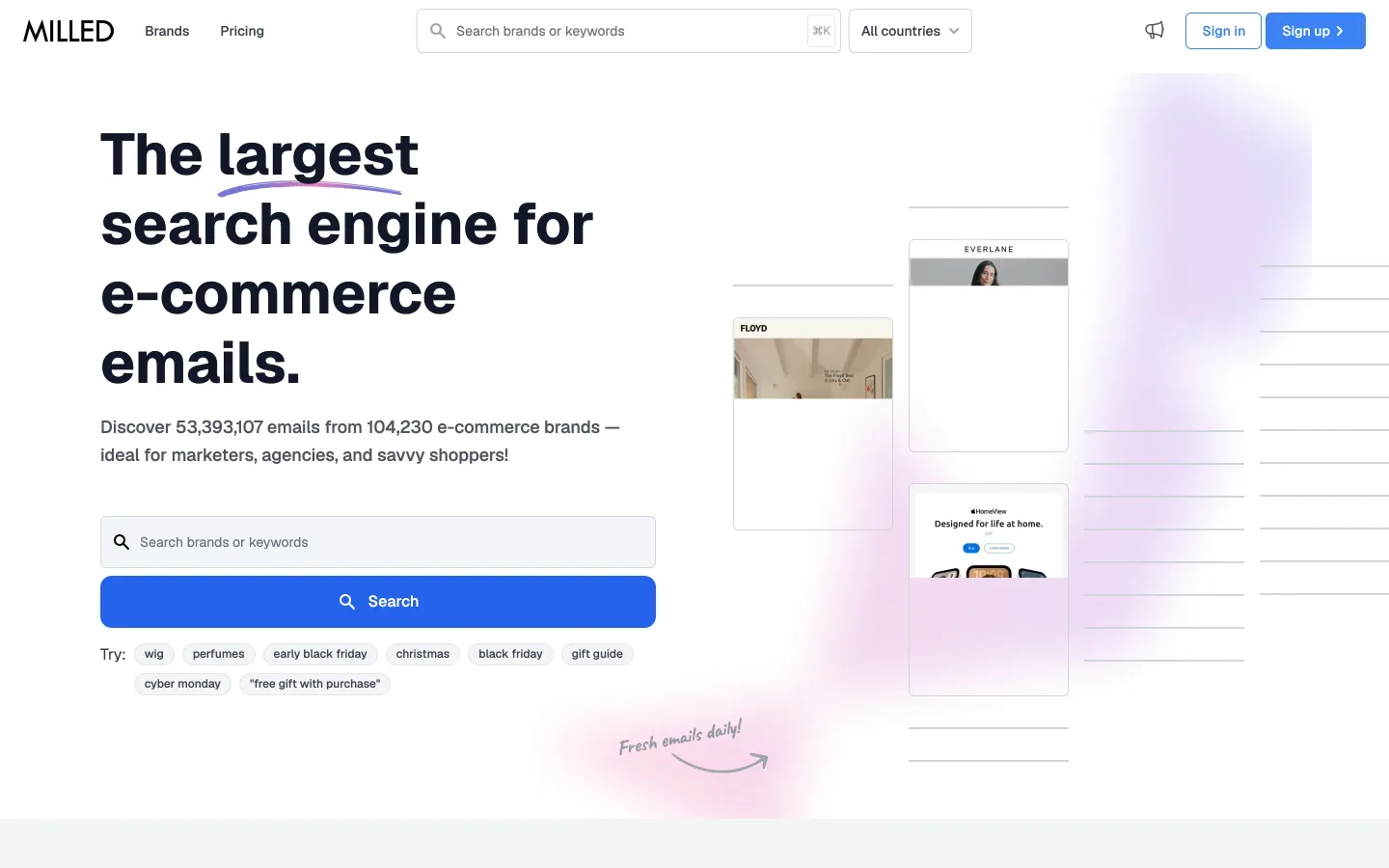
  • milled.com is a search engine of 53 million+ e-commerce marketing emails. It shows retail promo codes, not SaaS deals. It's still a useful warning: a code you send by email can end up public.
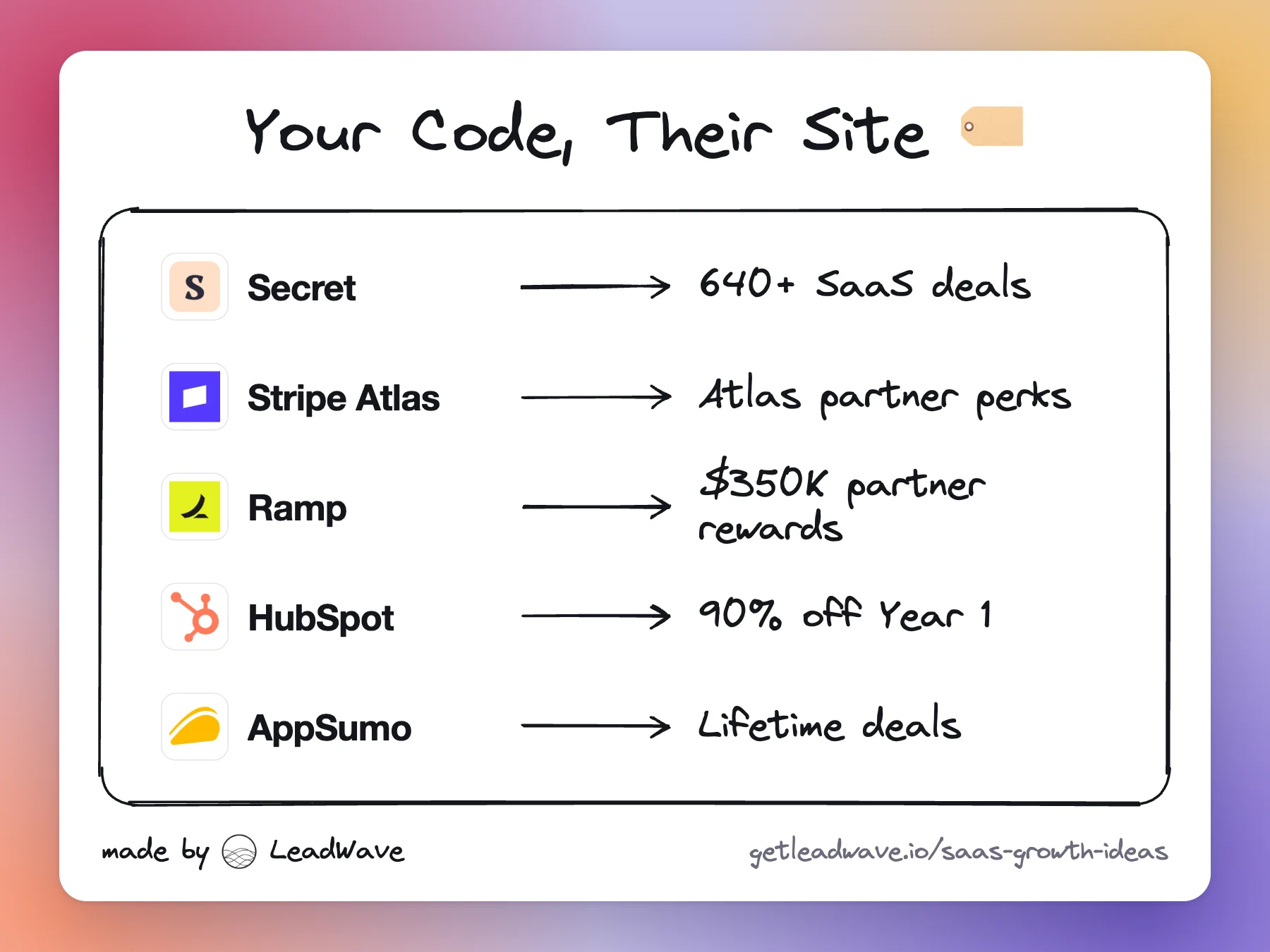
  • joinsecret.com is alive and bigger than ever, with 640+ deals and 500+ SaaS partners.

The lesson: small deal sites come and go every year or two. Spread your offer across platforms that have a business reason to stay alive, and keep a list of where each code lives so you can retire it.

What a listing actually brings

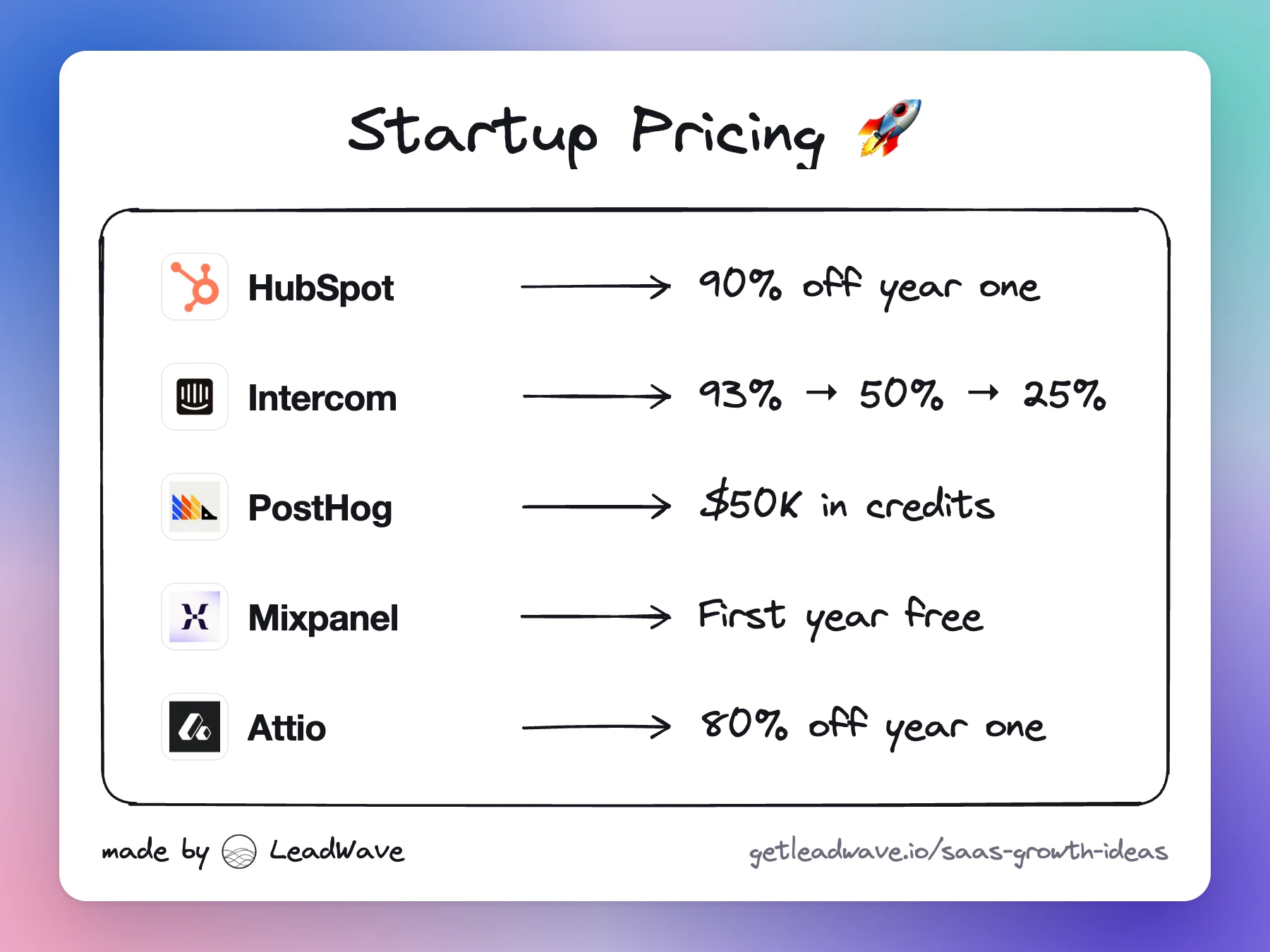
Signups from companies that are buying right now. A founder browsing a perk portal in their first month is choosing tools, not researching. That's the main value, and why credits or a free first year (HubSpot's 90% off, Notion's free months, Intercom's credits) beat a 10% code.

Brand searches you don't control. Deal pages are built for search. Secret's page for HubSpot is titled “HubSpot Promo Code: 90% off the Professional and Enterprise plans for 1 year”, and its Notion and Intercom pages follow the same pattern. Searches like “semrush coupon code 2026”, “canva promo code october 2026” and “notion discount code reddit” show that buyers look for a code right before paying. If you have no offer and no page, the result is a list of expired codes on someone else's site.

Distribution through partners. Secret also lets VCs, accelerators and communities embed its whole deal catalog, so one listing can surface in many white-labeled perk pages you'll never see directly.

Links and mentions, as a side effect. Treat any SEO value as a bonus, not the reason to list.

Own your “{brand} coupon” search

People who search “{your brand} promo code” are at your checkout already. If they leave to hunt for a code, some don't come back, and some come back with a coupon extension that claims the sale.

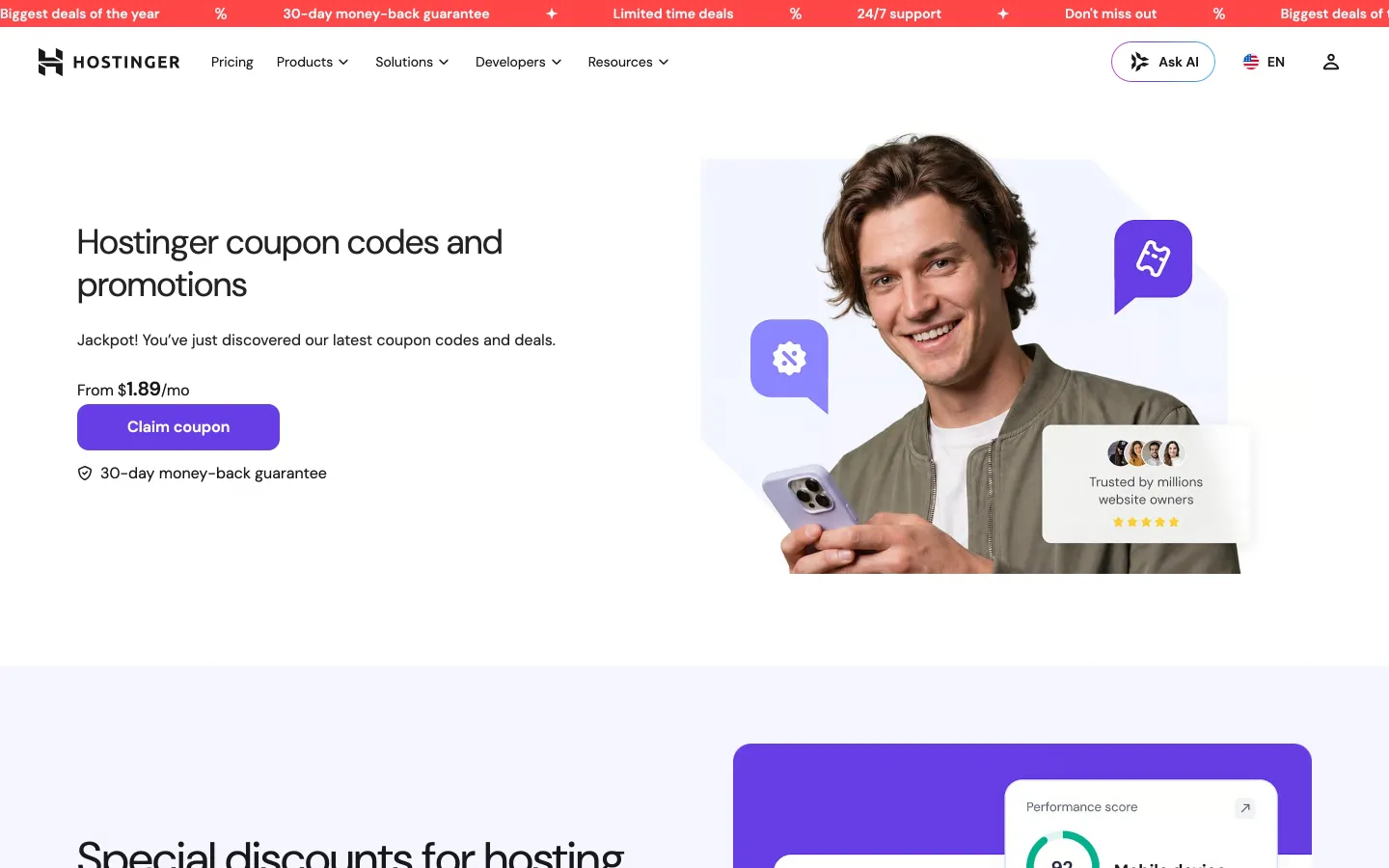
Publish an official promo page instead: /promo, /coupons or /deals. Hostinger does this well. Its page is titled “Official Hostinger coupon codes | 85% off (November 2026)”, lists current offers with the coupon already applied at checkout, and explains how to redeem them. The dated title matches how people search (“canva promo code october 2026”), so update it every month.

You don't need a deep discount for the page to work. List what's really available: the annual-plan discount, the startup program, education or nonprofit pricing, and the perk portals where qualified buyers get more. Saying “there's no public code right now, here's how to save” still keeps the buyer on your site, and you decide which offer they see. Link it from your pricing page FAQ and footer so it gets crawled.

Lifetime deals are a different bet

A lifetime deal on AppSumo is not a discount code. You trade all future revenue from a customer for a one-time payment, and the platform keeps a large share of it. AppSumo's own terms today: you keep 70% of sales from buyers it brings and 95% from buyers you bring, payouts arrive 60 days after each month to cover a 60-day refund window, and about 10% of applicants get in.

Project.co's 2019 campaign shows the shape of it. $93,884 in gross sales became $28,165 for the company under that year's split; 1,431 paid accounts came in, 764 codes were refunded, and the team handled 1,700+ support conversations, often 70 a day at launch.

It can work for a young product that needs cash, feedback and reviews fast, and has low per-user costs. It works badly for products with heavy support, AI or infrastructure costs per user, or a sales-led motion: those lifetime users stay on your servers and in your inbox for years.

The risks, and how to contain them

  • Training customers to wait. If a code is always one search away, nobody pays list price. Keep public offers for new customers and for specific segments, never as a standing discount on every plan.
  • Margin. A 90% first-year discount is a customer acquisition cost. Price it like one: know what a discounted cohort converts to in year two before you scale it.
  • Code leakage. Codes posted on one site get scraped by others and by browser extensions. In December 2024 YouTuber MegaLag showed that Honey swapped affiliate cookies at checkout to claim last-click credit and let merchants choose which codes its users saw; creators sued PayPal in several class actions.
  • Broken attribution. Last-click tools credit whichever code or extension touched the checkout last, not the partner that found the customer.

The fix is in your billing setup. Stripe promotion codes can be limited to first-time customers, a minimum spend, an expiry date, a set number of redemptions or a specific customer. Give each platform its own code, cap it, and check redemptions by code every month.
Discount code sites examples

  • SecretSaaS deal marketplace

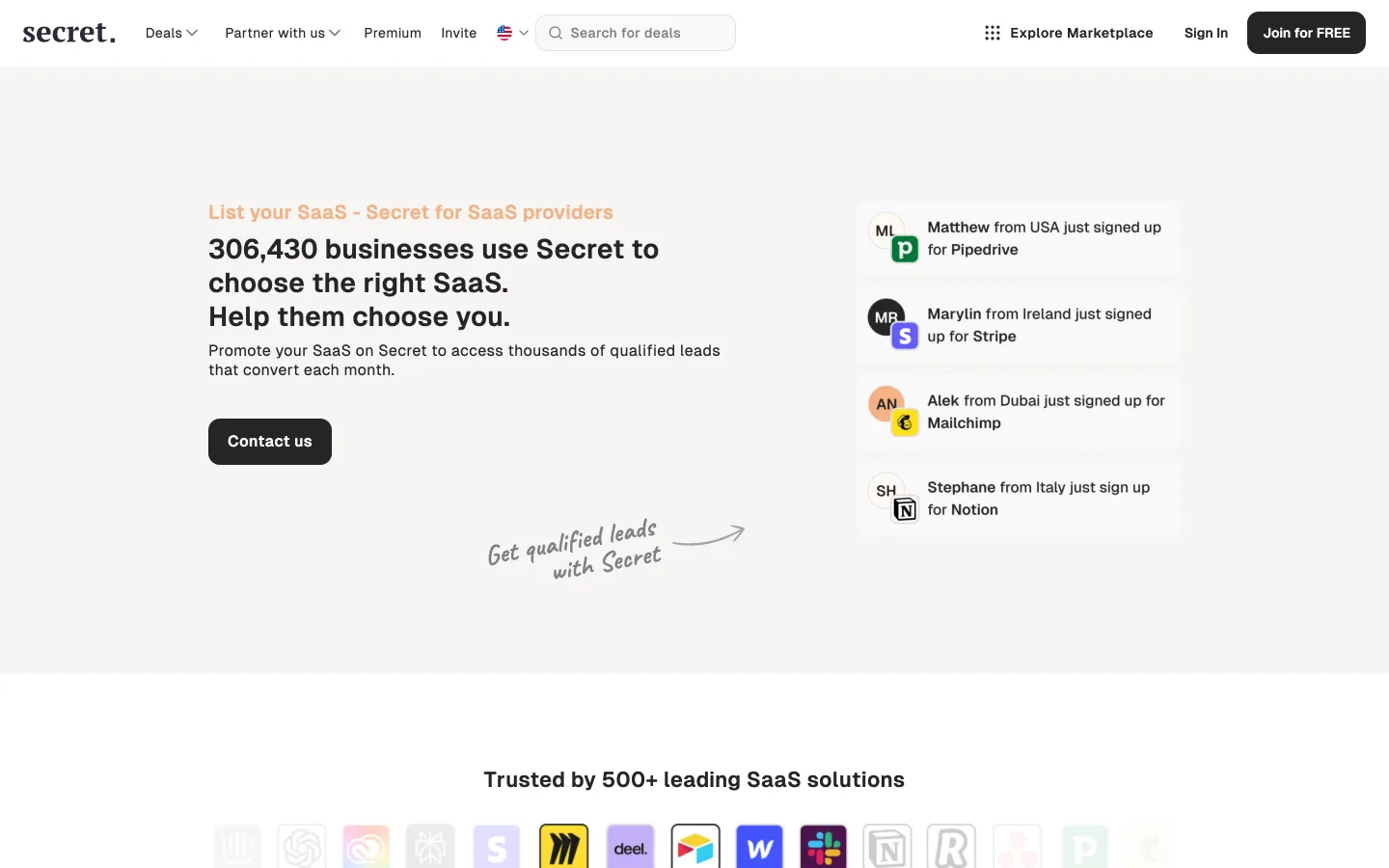
    The largest of the SaaS deal marketplaces, with 640+ deals from 500+ SaaS partners. About 370 deals are free to browse and the rest need a paid Premium membership. Vendors apply by email or a form and can also buy premium placements on the site and in its newsletters; each deal page is titled “{Brand} Promo Code”, so it ranks for brand-plus-code searches.

    See it live

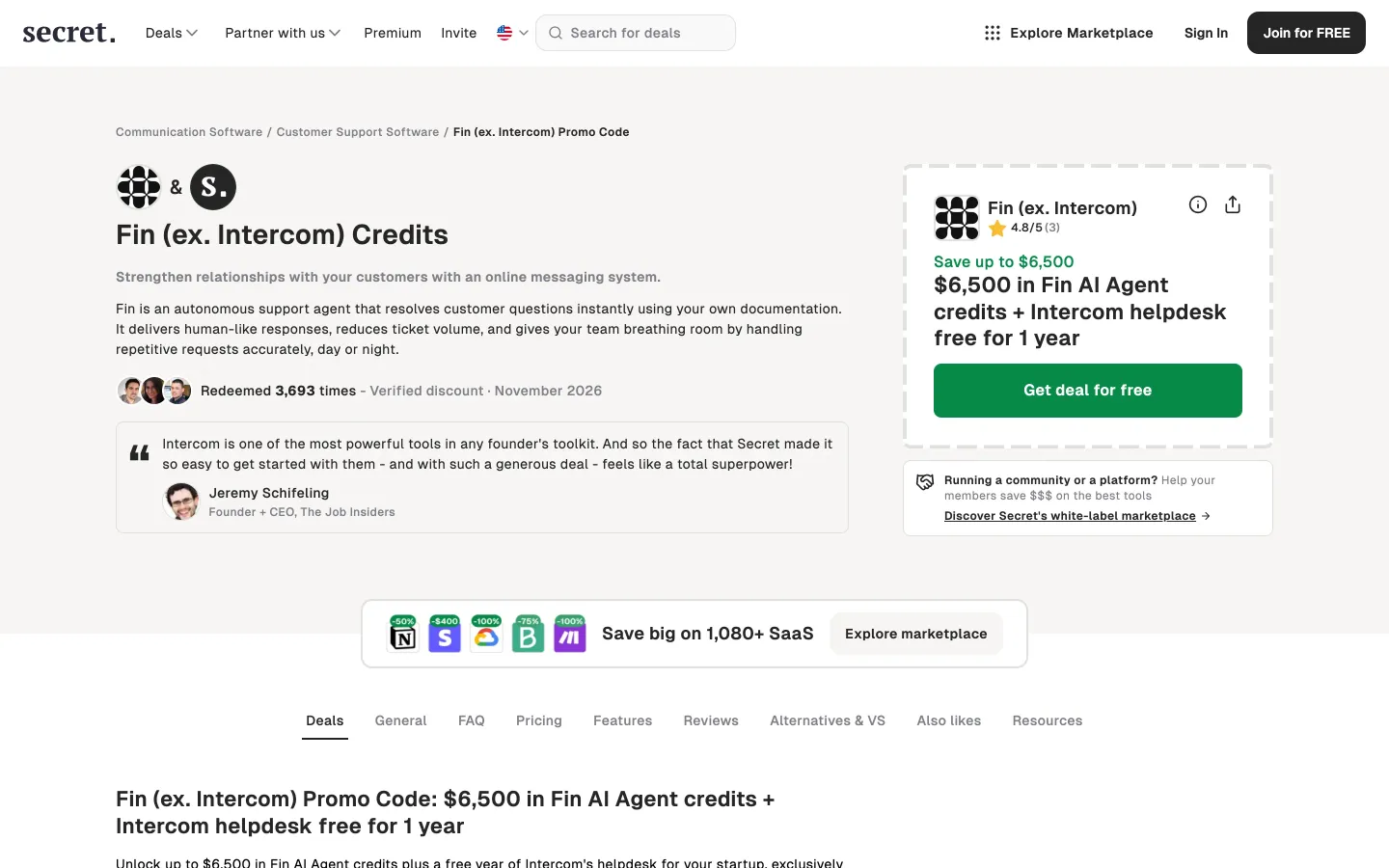
  • IntercomFin credits on Secret

    Lists $6,500 in Fin AI Agent credits plus the Intercom help desk free for one year on Secret. Credits on a usage-priced product cost little up front and get a startup building workflows on the help desk early.

    See it live

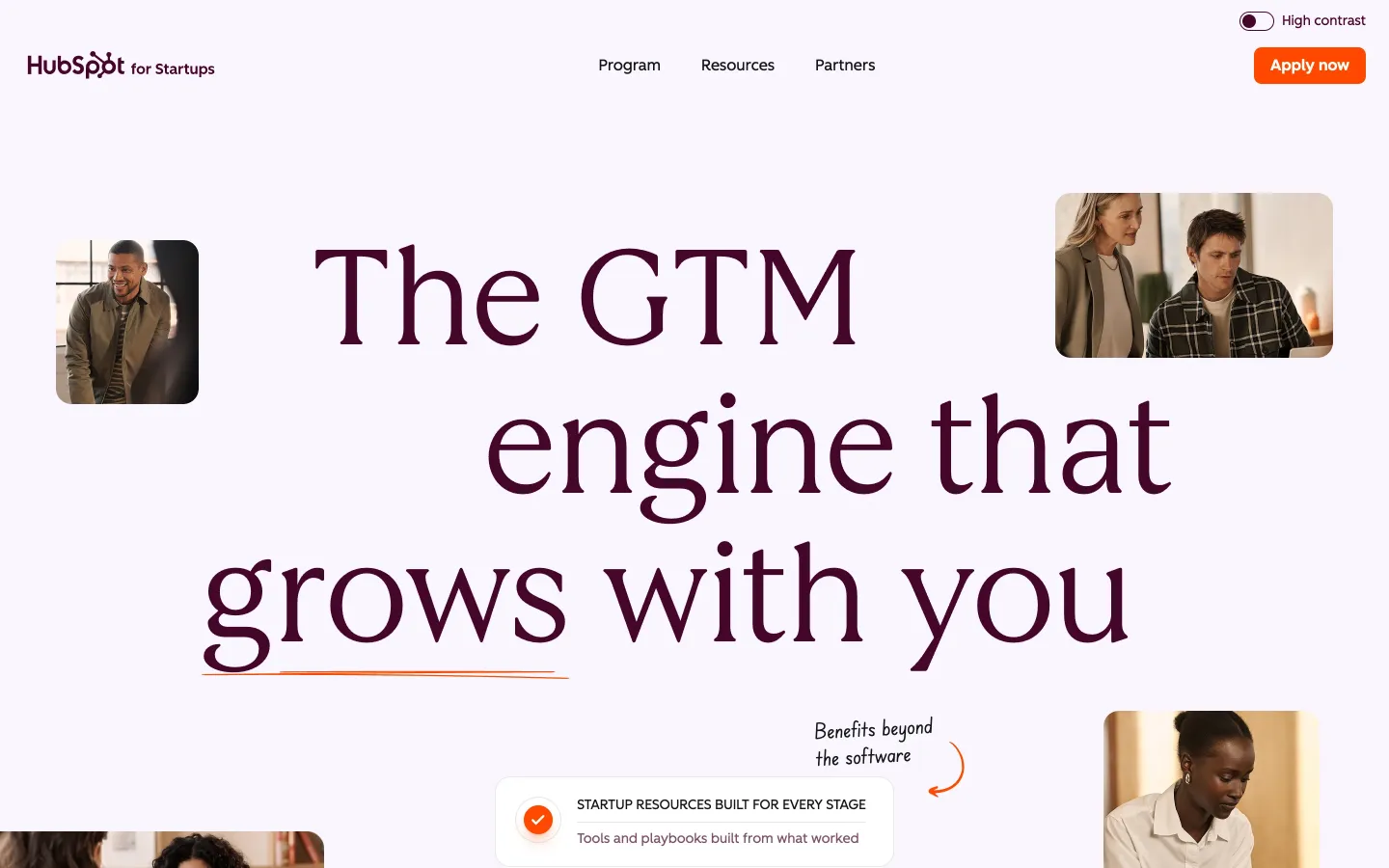
  • HubSpot90% off Year 1

    HubSpot for Startups gives Seed and Series A founders 90% off the first year, and the same offer is listed on Secret as a “HubSpot Promo Code”. It's aimed at companies that will grow into bigger plans, so the discount buys a long relationship rather than one sale.

    See it live

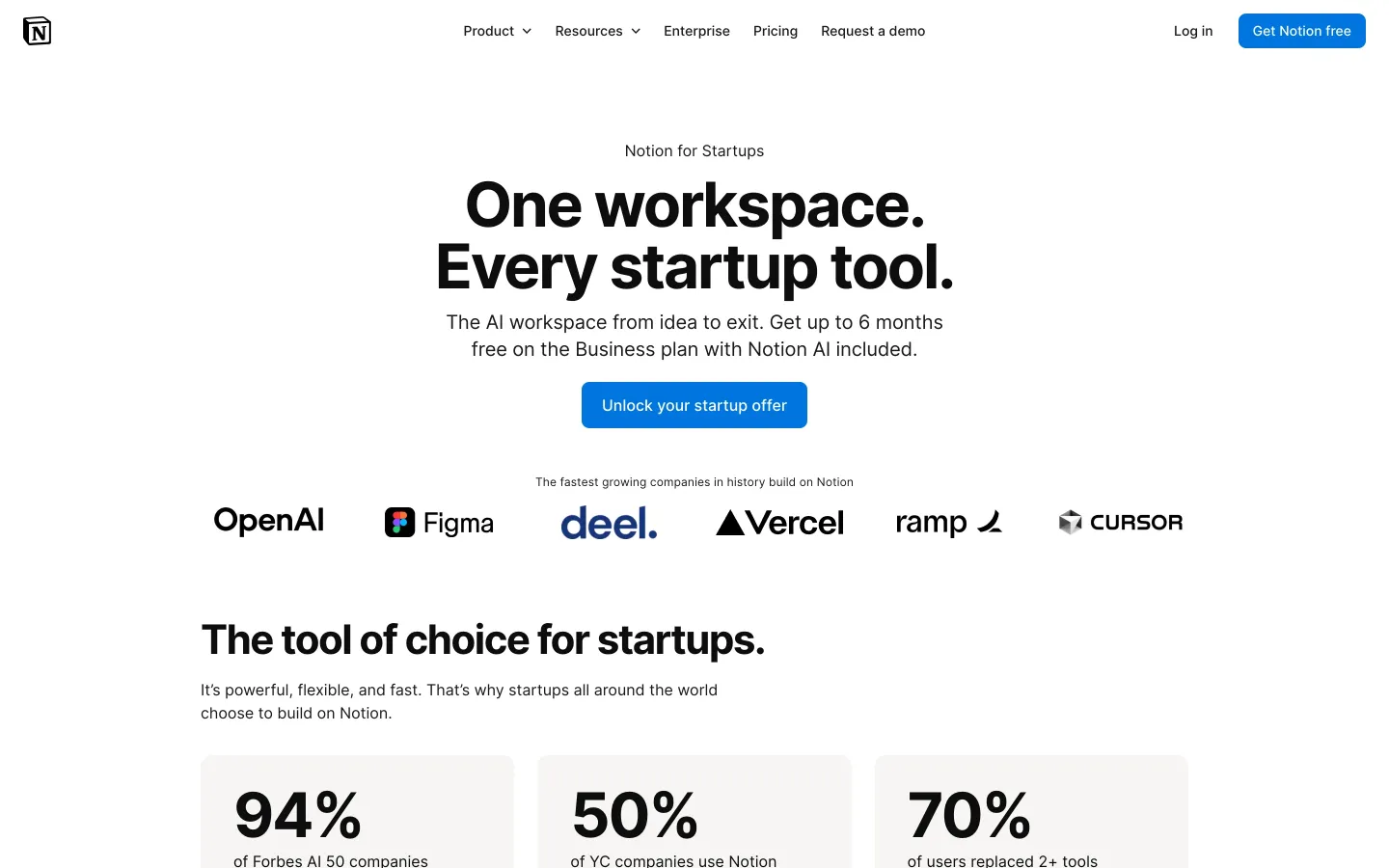
  • NotionOffer tiered by channel

    Notion gives six months free with Notion AI to startups that come through one of its startup partners, three months to other qualifying companies under 100 employees, and one month to small teams with incomplete applications. The tiers reward the partner channel and keep the biggest discount out of public coupon lists.

    See it live

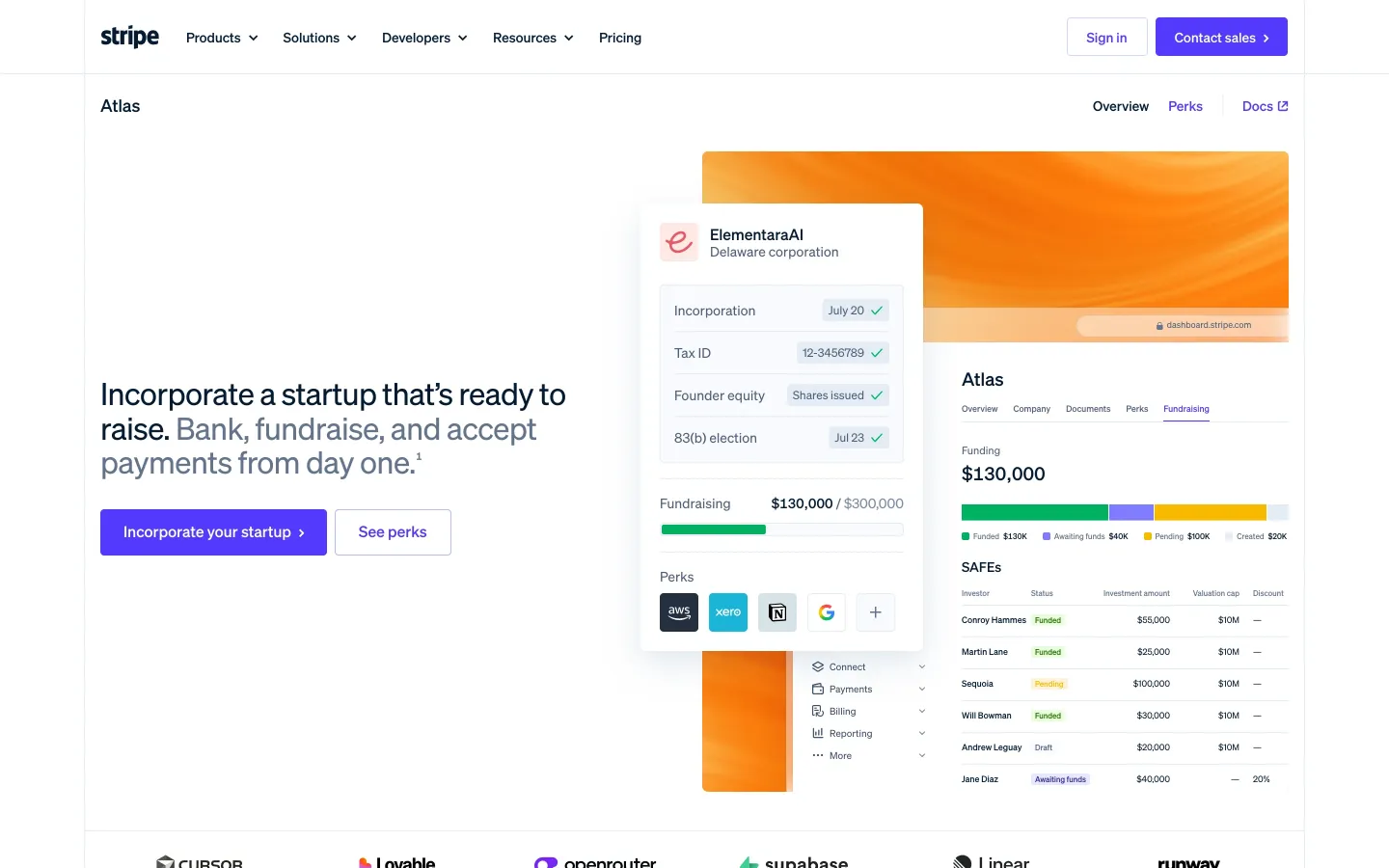
  • Stripe Atlas$200K+ partner offers

    Every company incorporated through Atlas gets access to $200K+ in partner offers from companies like AWS and Google. For a vendor it's one of the earliest moments to reach a founder: the day the company is formed.

    See it live

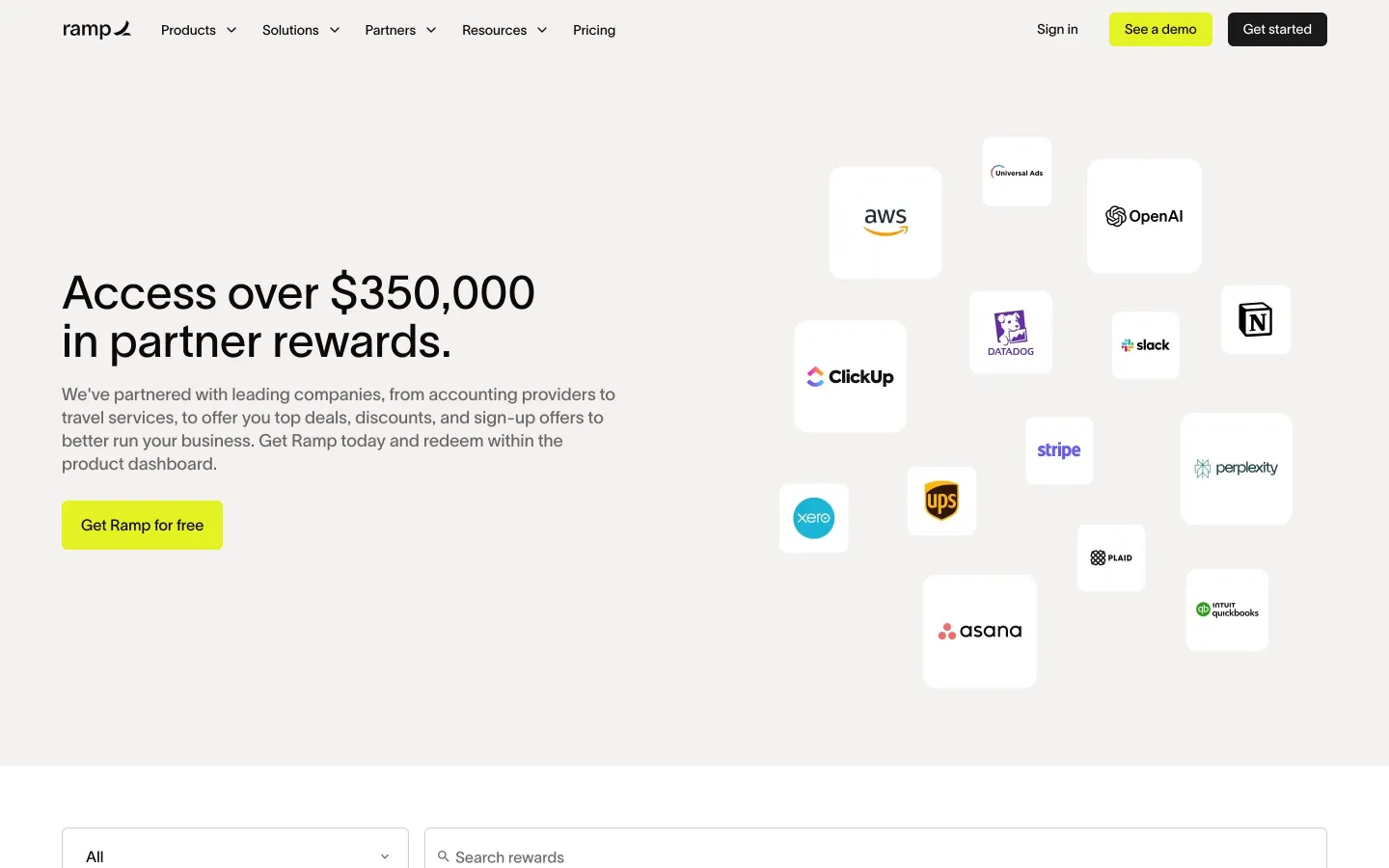
  • RampPartner rewards in-dashboard

    Ramp's Partner Rewards hold over $350,000 in offers, redeemed inside the Ramp dashboard. Pilot, for example, offers 20% off Pilot Core or Select for six months. The audience is finance teams already spending on cards, so offers for accounting, travel and HR tools fit best.

    See it liveHow Ramp grew

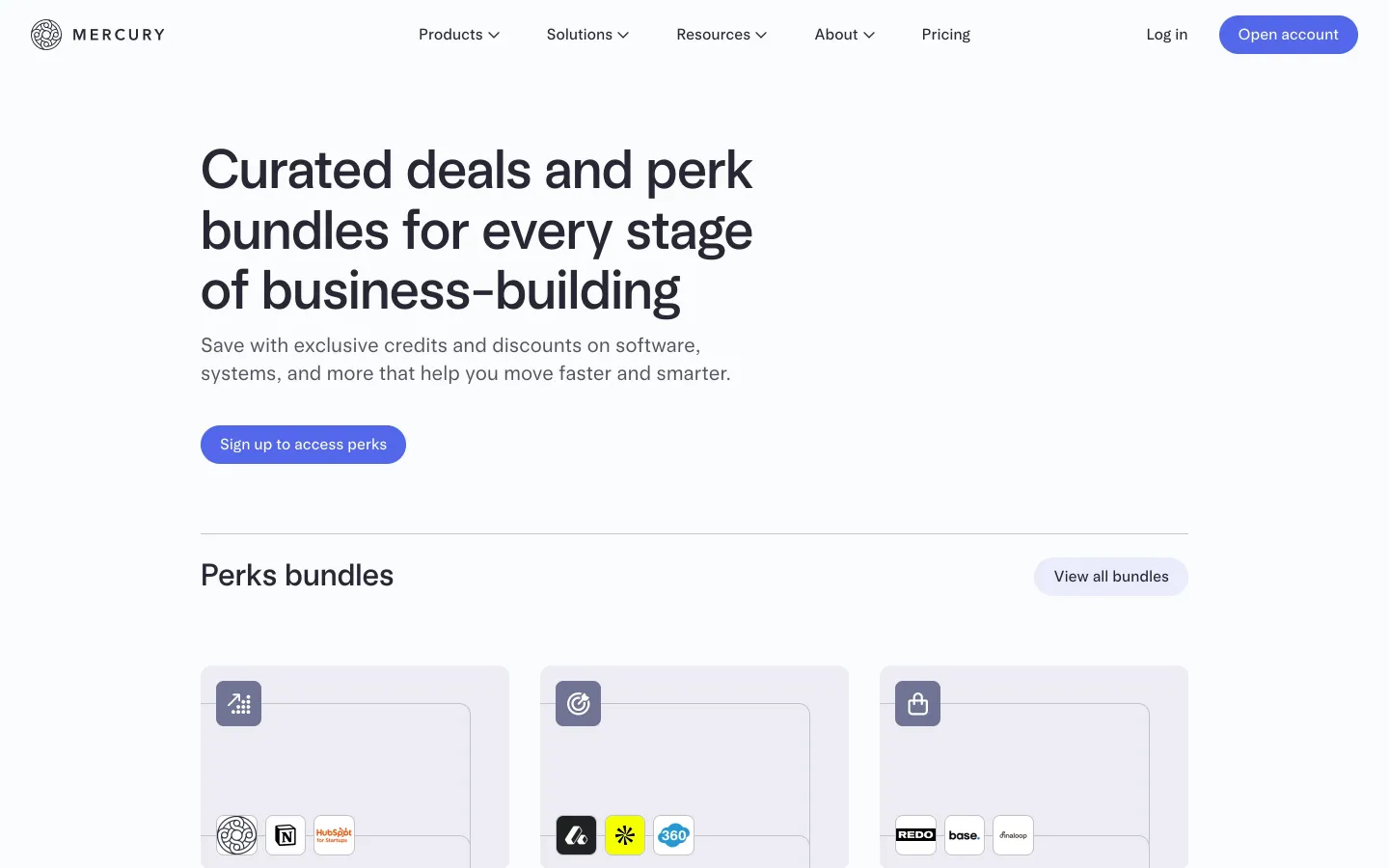
  • MercuryStartup banking perks

    Mercury's perks page bundles credits and discounts on software for its banking customers, grouped by stage of building a company. Bank perk pages reach startups at the point they're opening accounts and setting up their first tools.

    See it live

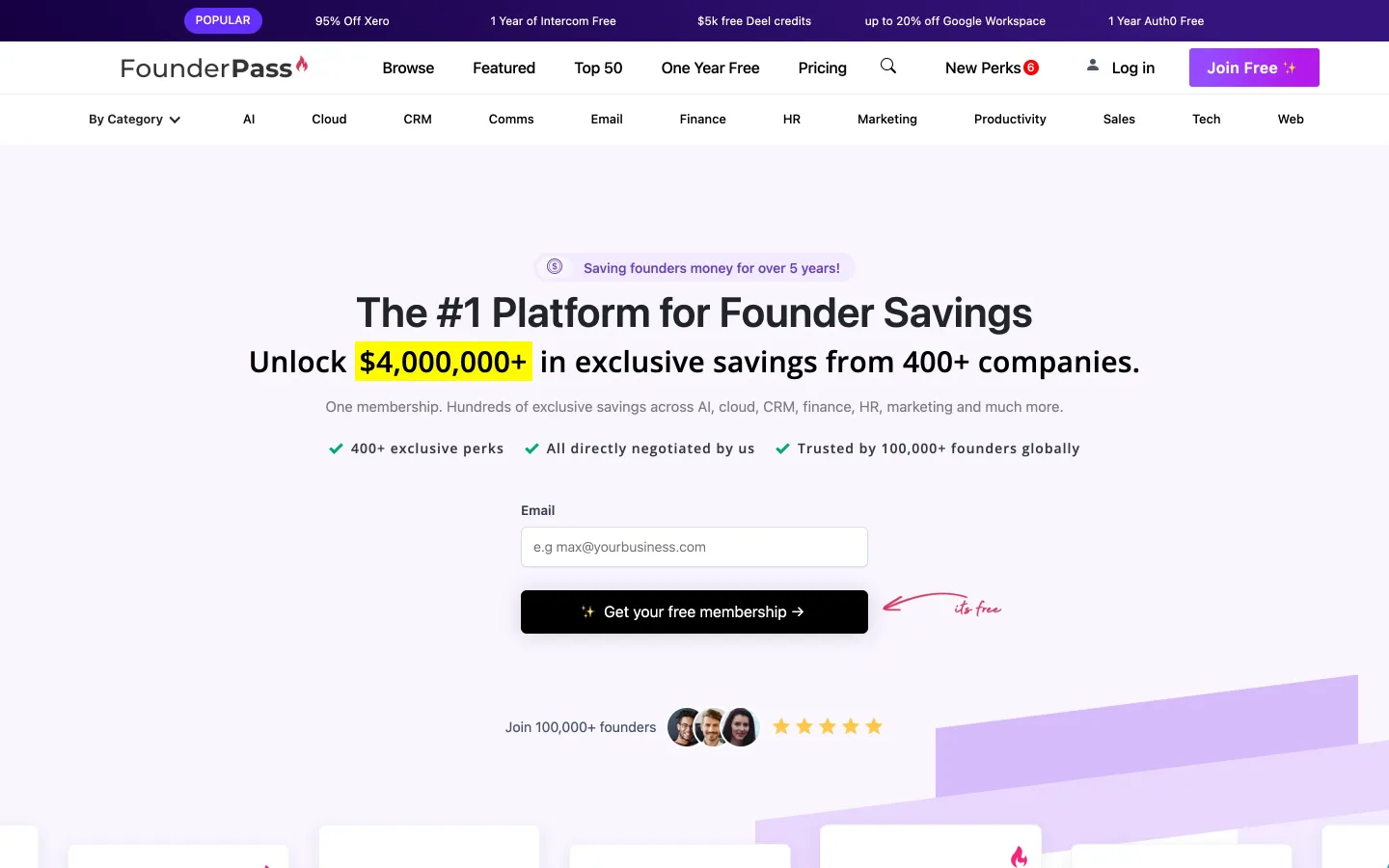
  • FounderPass400+ negotiated deals

    A paid membership with offers from 400+ companies and, by its own count, 100,000+ founders. Typical listings are multi-year discounts, like 20% off for four years on up to five seats.

    See it live

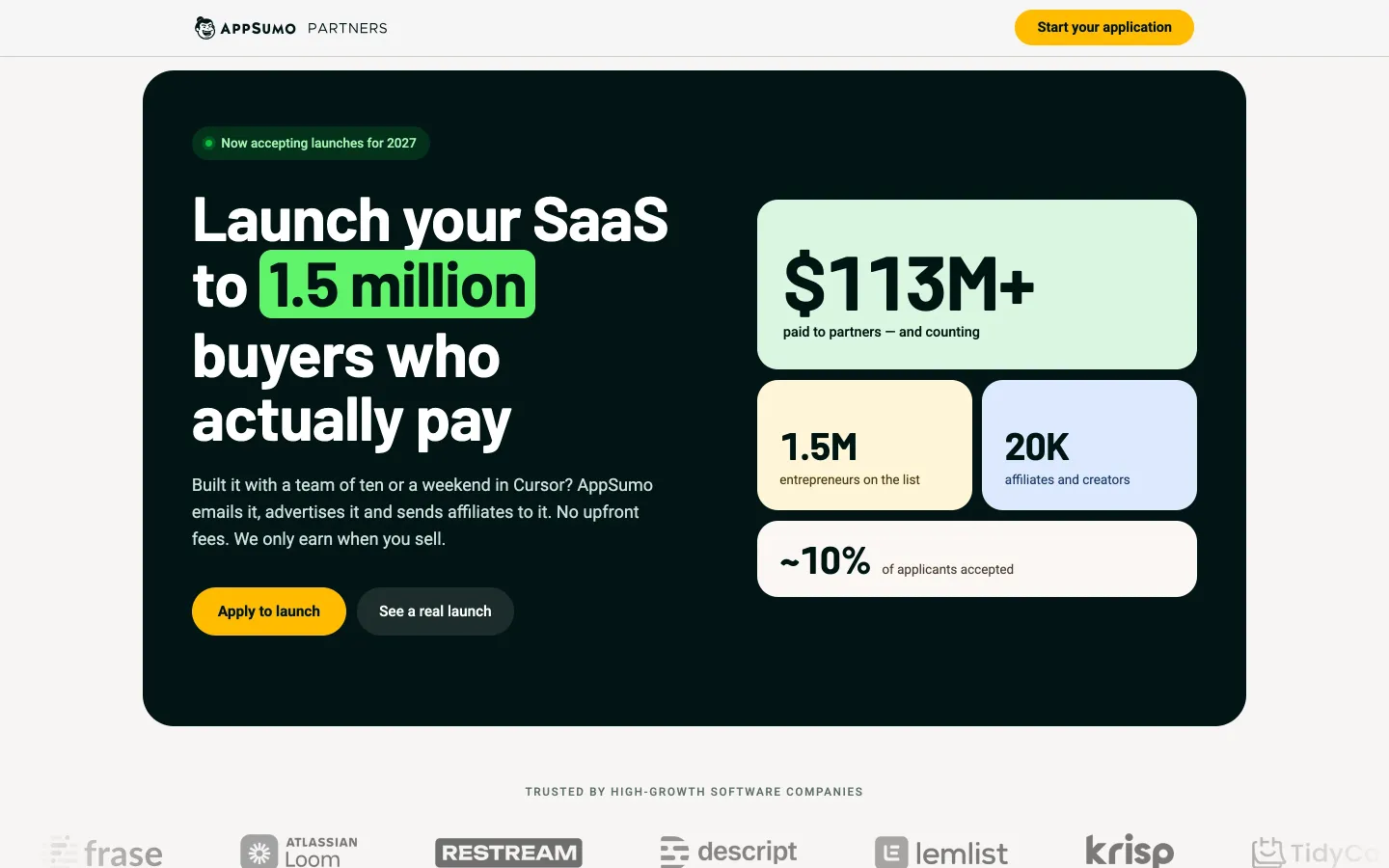
  • AppSumoLifetime deal marketplace

    AppSumo accepts about 10% of applicants. Vendors keep 70% of sales from buyers AppSumo brings and 95% from buyers they bring, campaigns run about 60 days, and payouts follow a 60-day refund window. AppSumo says about 40% of partner revenue comes from its email list.

    See it live

  • Project.co$93,884 AppSumo launch

    A $49 lifetime deal in 2019 brought $93,884 in gross sales, of which Project.co kept $28,165. It created 1,431 paid accounts, saw 764 codes refunded and took 1,700+ support conversations. 35% of sales came in the last three days.

    See it live

  • HostingerOfficial coupon page

    Hostinger publishes its own “Official Hostinger coupon codes” page, with the month in the title and offers already applied at checkout. It answers the “hostinger coupon” search on its own domain instead of leaving it to coupon sites.

    See it live

  • Milled53M marketing emails, searchable

    One of the sites on the original list. It's a search engine of 53 million+ marketing emails from 104,000+ e-commerce brands, going back to 2012. It isn't a place to list a SaaS code, but it shows that any code sent by email can become public.

    See it live

How to run it: the playbook

  1. Decide what you can give. Pick an offer you can afford as an acquisition cost: free months, credits on a usage-priced product, or a first-year discount for new customers only.
  2. Start with perk portals. Apply to the portals your buyers already use: Stripe Atlas, Mercury, Ramp, Brex, AWS Activate, accelerators and VC platform teams. Then list on Secret and one or two other marketplaces.
  3. Make one code per platform. Restrict each code to first-time customers, give it an expiry and a redemption cap, and keep a sheet of where every code lives.
  4. Write a deal page that sells. A clear value in the headline (“$5,000 in credits”, “6 months free”), who qualifies, and one screenshot. Deal marketplaces rank your page for “{brand} promo code”, so the copy matters.
  5. Publish an official promo page. Put /promo or /coupons on your site with current offers, how to qualify for the startup program, and the month in the title. Link it from the pricing FAQ.
  6. Onboard discounted signups like real customers. Perk-portal signups are early. Give them onboarding that gets them to value before the free period ends, and remind them before the price changes.
  7. Review every quarter. Compare signups, paid conversion and year-two retention by code. Retire codes that leaked or bring customers who never pay full price.

What to measure

  • Redemptions and signups per code, per platform
  • Paid conversion of discounted cohorts when the offer ends, against your normal trial conversion
  • Year-two retention and expansion of perk-portal customers
  • Share of checkouts using a code you didn't publish there (leakage)
  • Clicks and impressions on “{brand} promo code” searches to your own promo page
  • Support load per discounted customer, especially for lifetime deals

Pitfalls

  • A standing public discount that teaches every buyer to search for a code
  • One code everywhere, so you can't tell which platform worked or where it leaked
  • No expiry or redemption cap on a code that ends up in coupon extensions
  • A lifetime deal on a product with real per-user AI or infrastructure costs
  • Discounted signups with no onboarding, so they churn when the free period ends
  • Relying on a small deal site that may not exist next year

Frequently asked questions

Sources

More SaaS growth ideas

All growth ideas
  • Revenue

    Startup program

    Give young companies your product cheap or free, so you're the default tool when they grow. The design of the exit matters more than the size of the discount.

    Impact MediumEffort Low11 examples
    Read the tactic
  • Acquisition

    Startup directories

    List your product on the launch platforms, review sites and directories your buyers browse, for traffic, reviews, links and AI-search citations.

    Impact MediumEffort Low10 examples
    Read the tactic
  • Revenue

    Cancellation discount

    Ask why before they go, then make the offer that fits: a discount for price, a pause for timing, a downgrade for overbuying. Never make cancelling hard.

    Impact MediumEffort Low10 examples
    Read the tactic