

Why software companies make merch
Software has nothing you can hold. Merch gives people who love a tool something to wear, like a band T-shirt, and everyone around them sees the name.
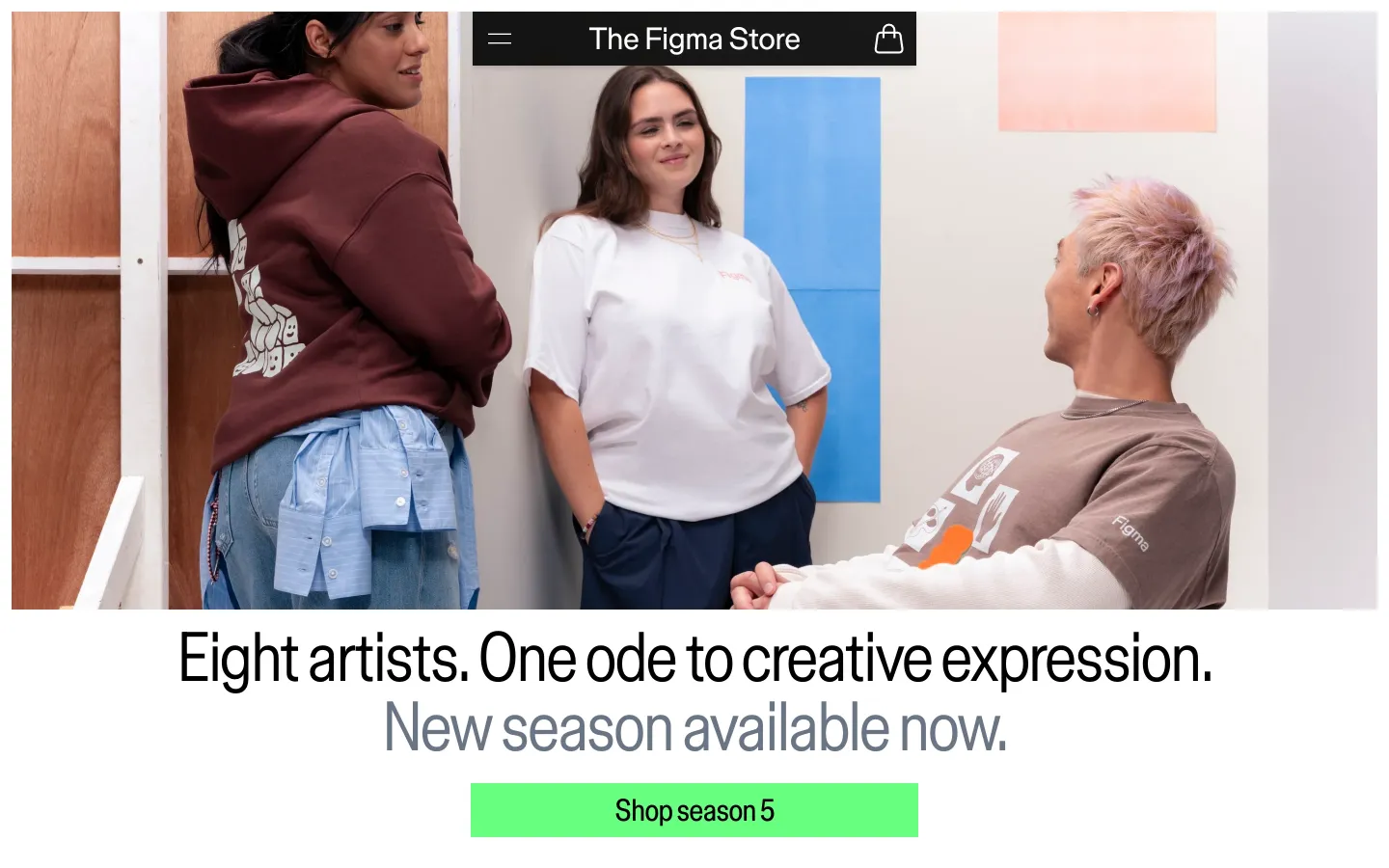
Figma is the best example. Its first store at its Config conference opened in 2023, and Jordan Scott, who runs community experiences there, remembers the reaction: “When I first brought up the idea, people were like, ‘No one wants to buy our stuff.’ But people were standing in line for two hours to get in, and that wasn't even a new collection.” Free Config swag now sells on eBay, and a limited jacket from Figma's New York Stock Exchange listing day fetched $550.
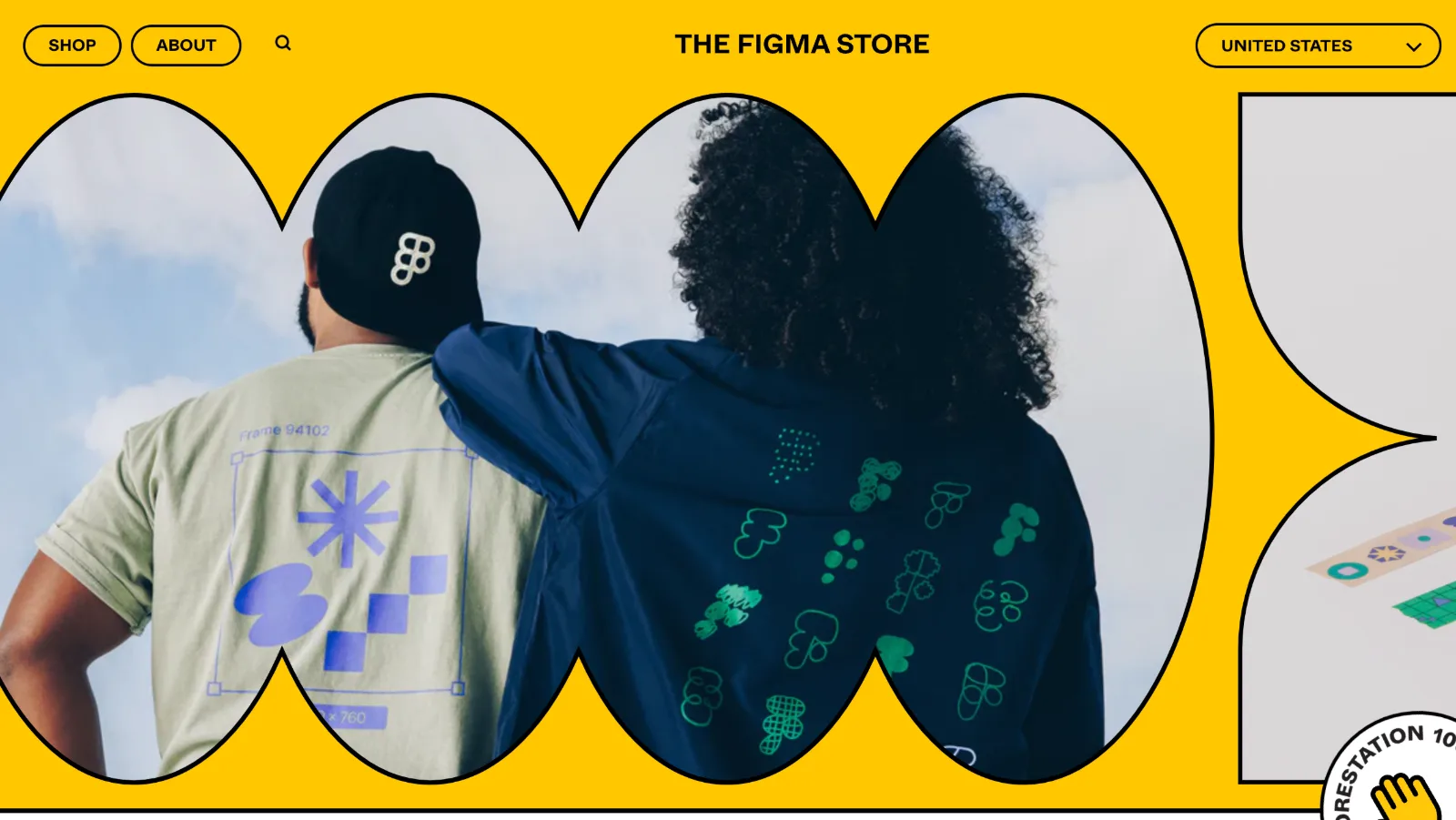
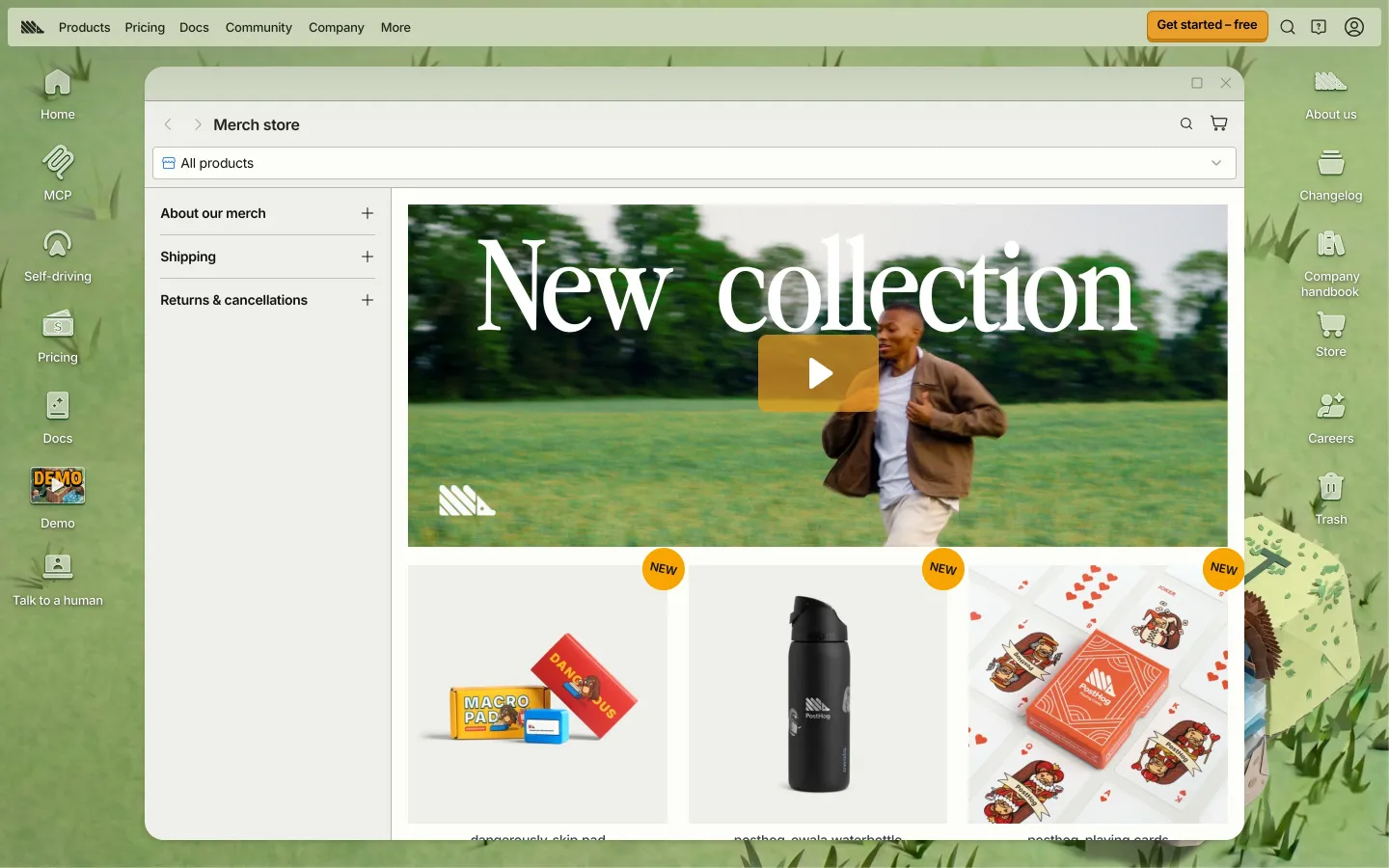
It's spreading fast. Kyle Poyar's “Swag got cool again” from October 2026 counts a teaser for Meta's Muse merch store that reached 500,000 views on X, an exclusive Codex hoodie listed on eBay for $2,000, and a PostHog macro pad that sold out quickly.
Merch does four jobs:
- Walking ads. A good hoodie at a conference or a coworking space puts your name in front of the right people.
- Belonging. It “excites people and makes them feel like part of what we're building,” as PostHog puts it.
- Saying thank you. A gift to a customer, partner or community member is remembered longer than an email.
- Opening doors in sales. A well-chosen gift gets a reply when another email won't.
Two tactics in one: a store and corporate merch
A merch store is public: fans buy what you make. Corporate merch is what you give away, to the people you most want to keep or win. Most companies should start with the second.
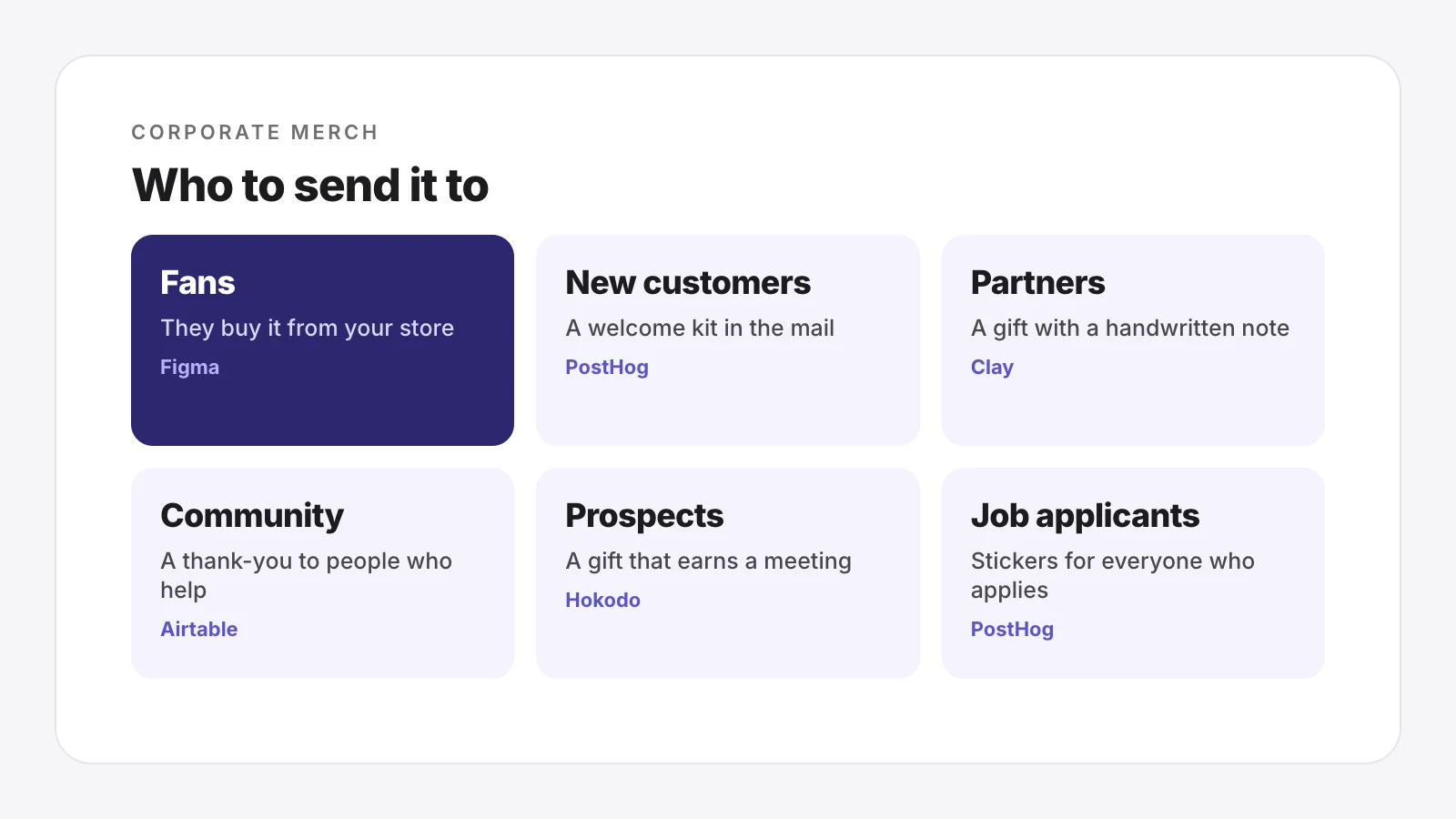
- New customers. Everyone on PostHog's startup plan gets a kit with a T-shirt, tie, desktop calendar, stickers and socks.
- Partners. “Clay taking care of their partners,” wrote Laurens Nys, sharing what Clay sent. People in the comments noticed the handwritten note.
- Community builders. Airtable sent a package to Mike Cardona, who builds with the product and posts about it. The thank-you post drew 324 reactions and 52 comments, and people in them wanted the socks.
- Job applicants. PostHog mailed stickers to the thousands of people who applied to work there.
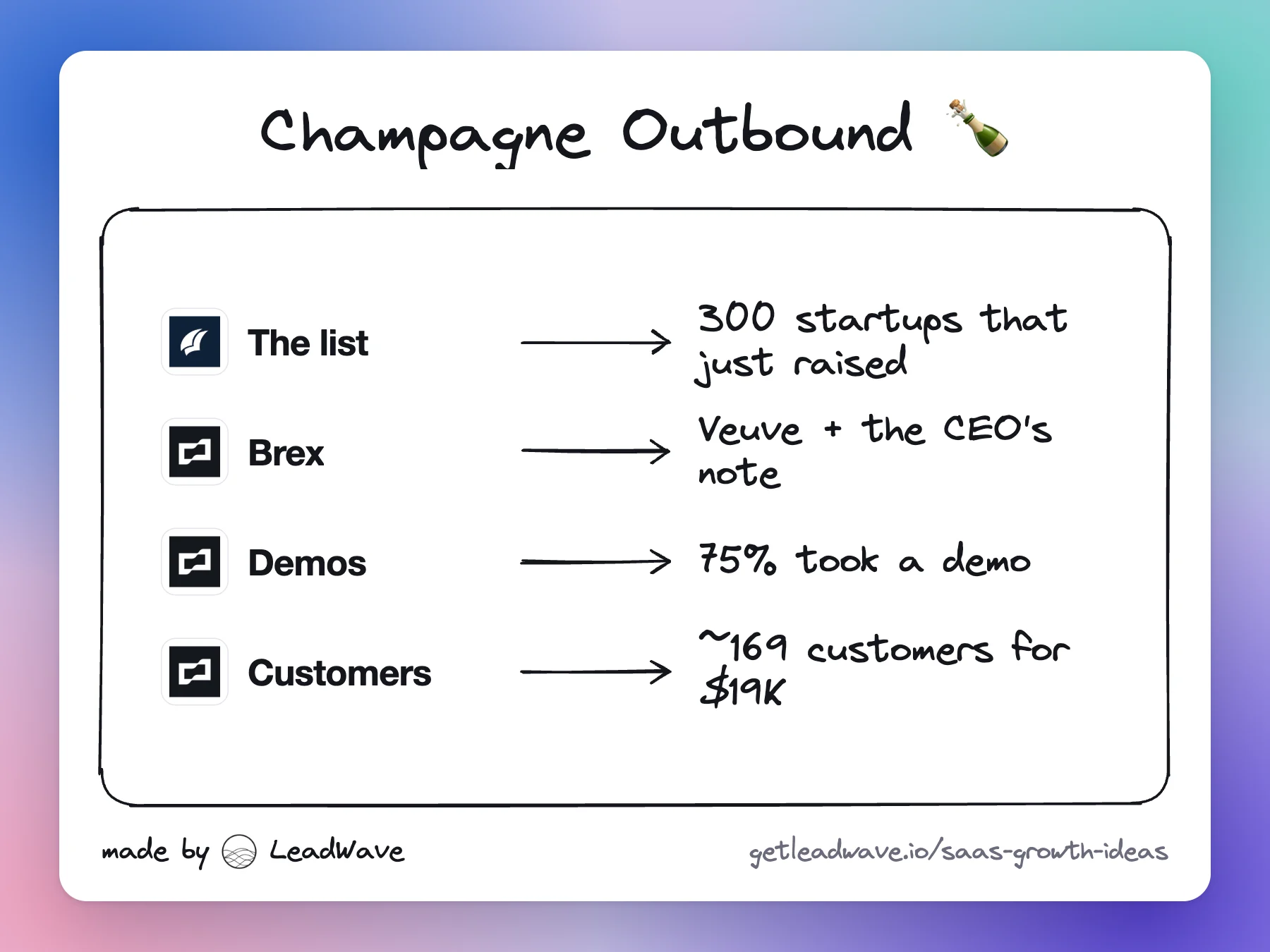
- Prospects. Hokodo, a B2B payments company, says gifting took its sales meeting show rate from 75% to over 90%, and deals with a gift were 3x more likely to close. That's from its gifting vendor's case study, so treat it as a best case. For a campaign built around one gift, see Brex's champagne outbound.
What it really costs: PostHog's warning
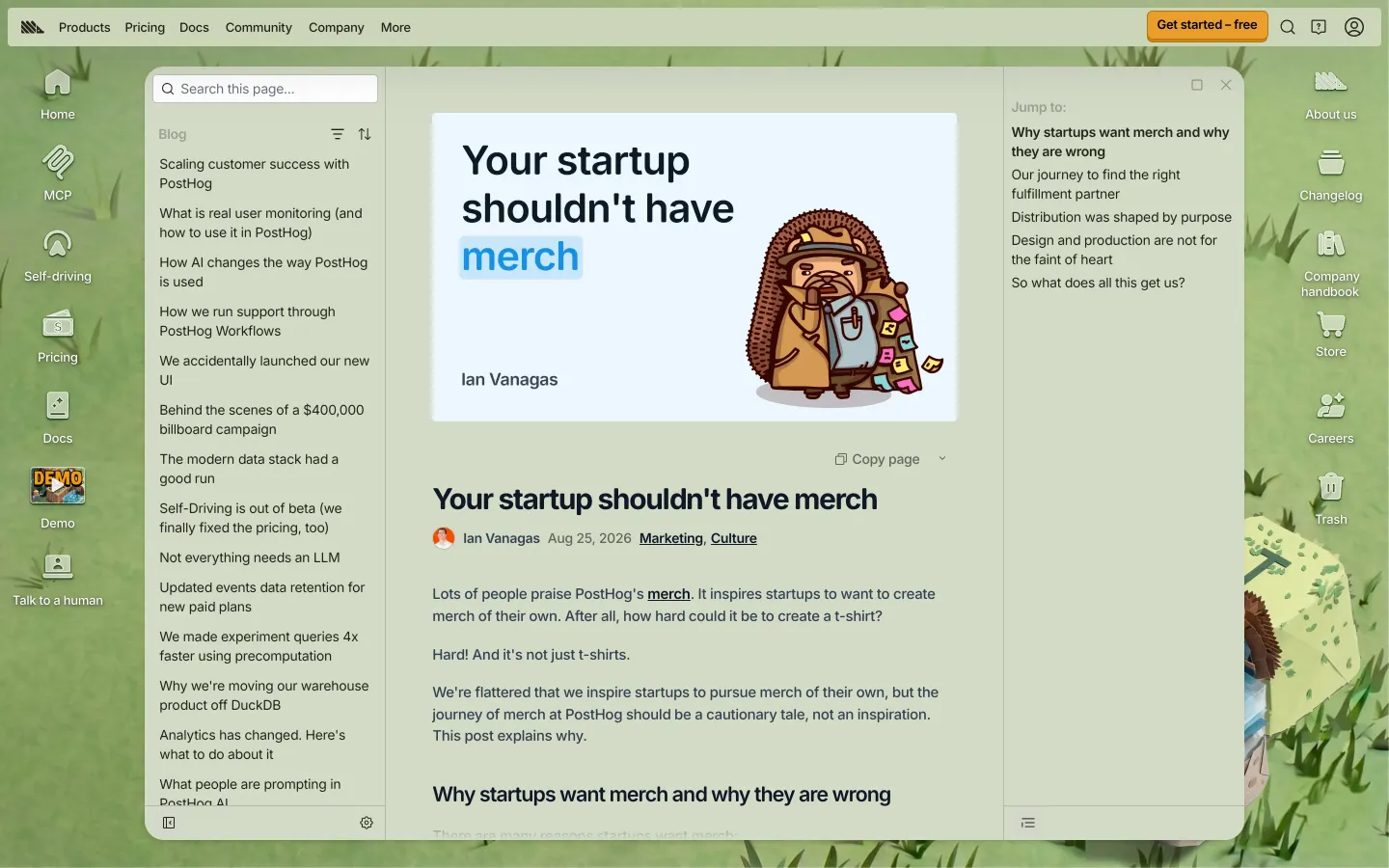
PostHog runs one of the best-known merch programs in software, and its own post about it is titled “Your startup shouldn't have merch.”
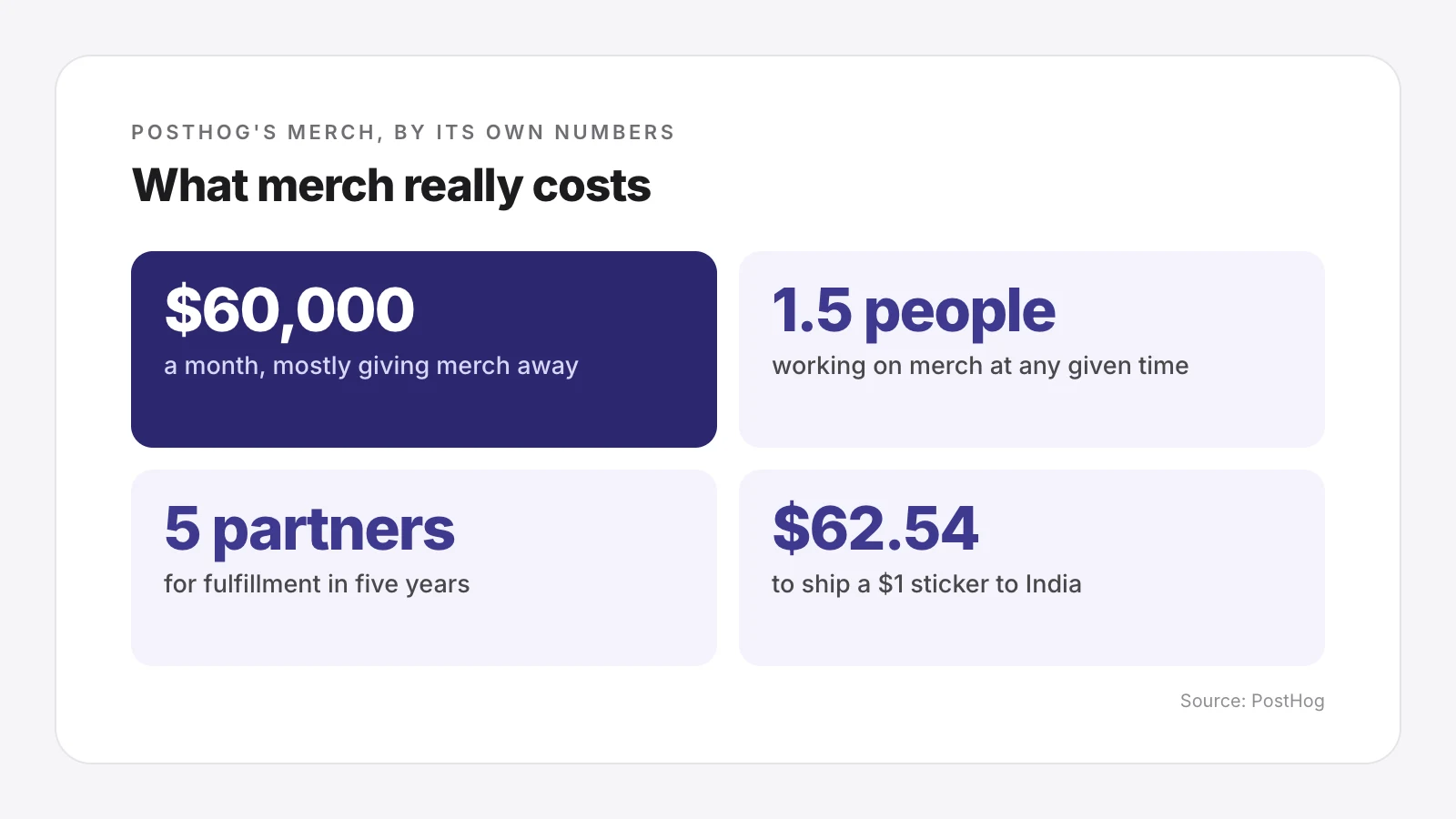
The hard part isn't the T-shirt. PostHog went through five fulfillment partners in five years, and at one point the shipping on a $1 sticker cost $62.54 to India. “Just sticking your logo on something does not make it nice,” the post says. “Merch needs proper design.”
So why keep going? “The biggest reason we do merch is that it brings us joy,” PostHog writes, and it also extends the brand. But it adds a clear limit for everyone else: “We have hundreds of thousands of users (and fans) and a strong brand to amplify through merch, but if we didn't have that, it might not be worth it.”
What happened to the SaaS merch stores of 2022
We keep a list of SaaS merch stores, started in 2022. On November 22, 2026 we opened all of them. Two refused our check (Salesforce and Product Hunt). Of the other 15, nine are still open, one is paused and five are gone.
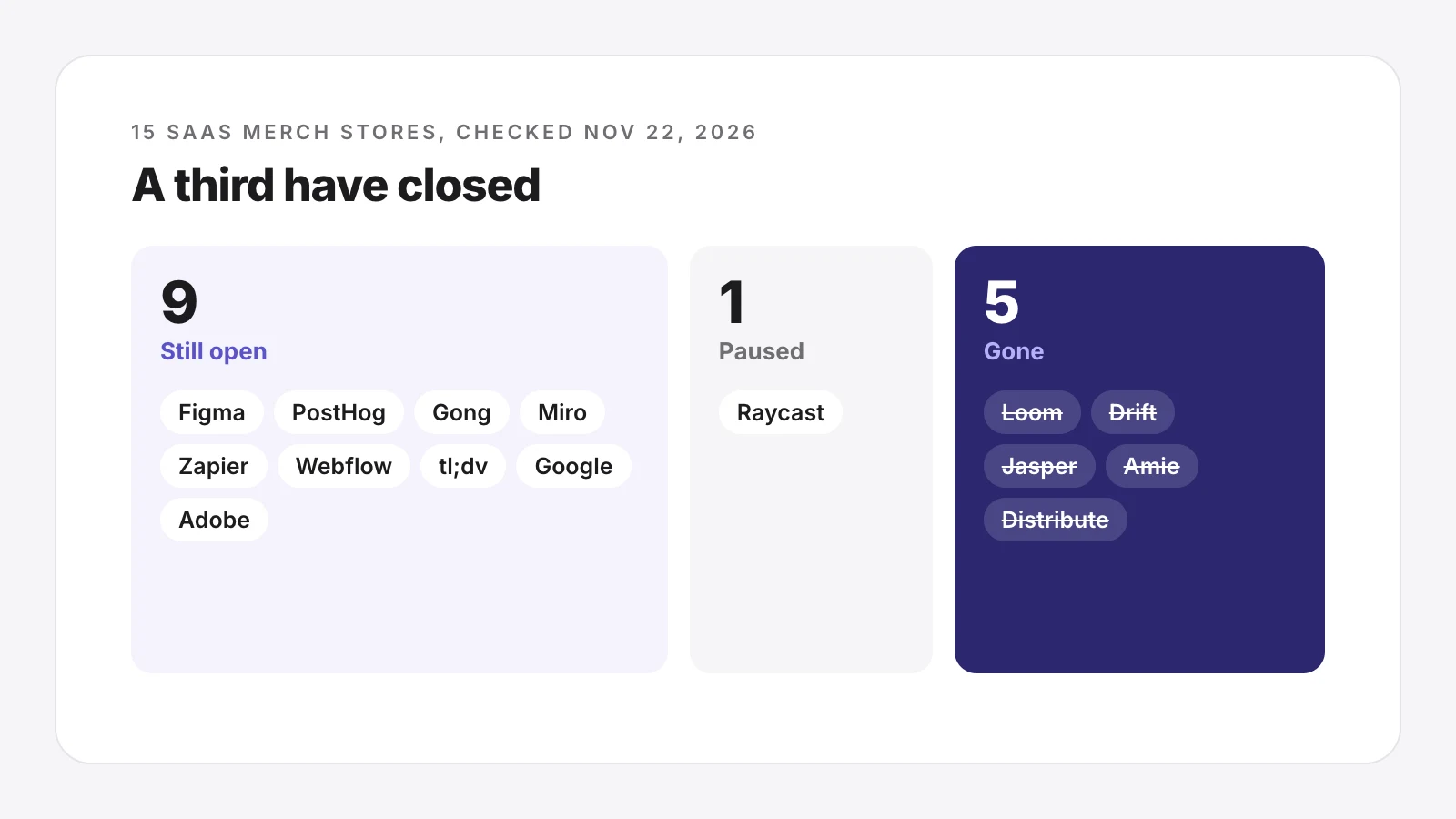
The closed ones include some famous names. Loom's shop sold a candle “that smells like free time.” Drift's store address now leads to Salesloft, which bought Drift. Amie, Jasper and Distribute have taken theirs down too.
Even a store people like can stall. Raycast's has been replaced by one line: “We're working on a new collection of merch. We'll be back soon.”

The lesson: a store is a small business that someone has to run. If nobody owns it, it quietly dies, and a dead store link looks worse than no store at all.
How to make merch people actually wear
- Use one simple test. Sebastian Moraga, who designs apparel for the tech show TBPN, asks: would someone choose to buy and wear this themselves? If it's only a logo on a cheap shirt, the answer is no.
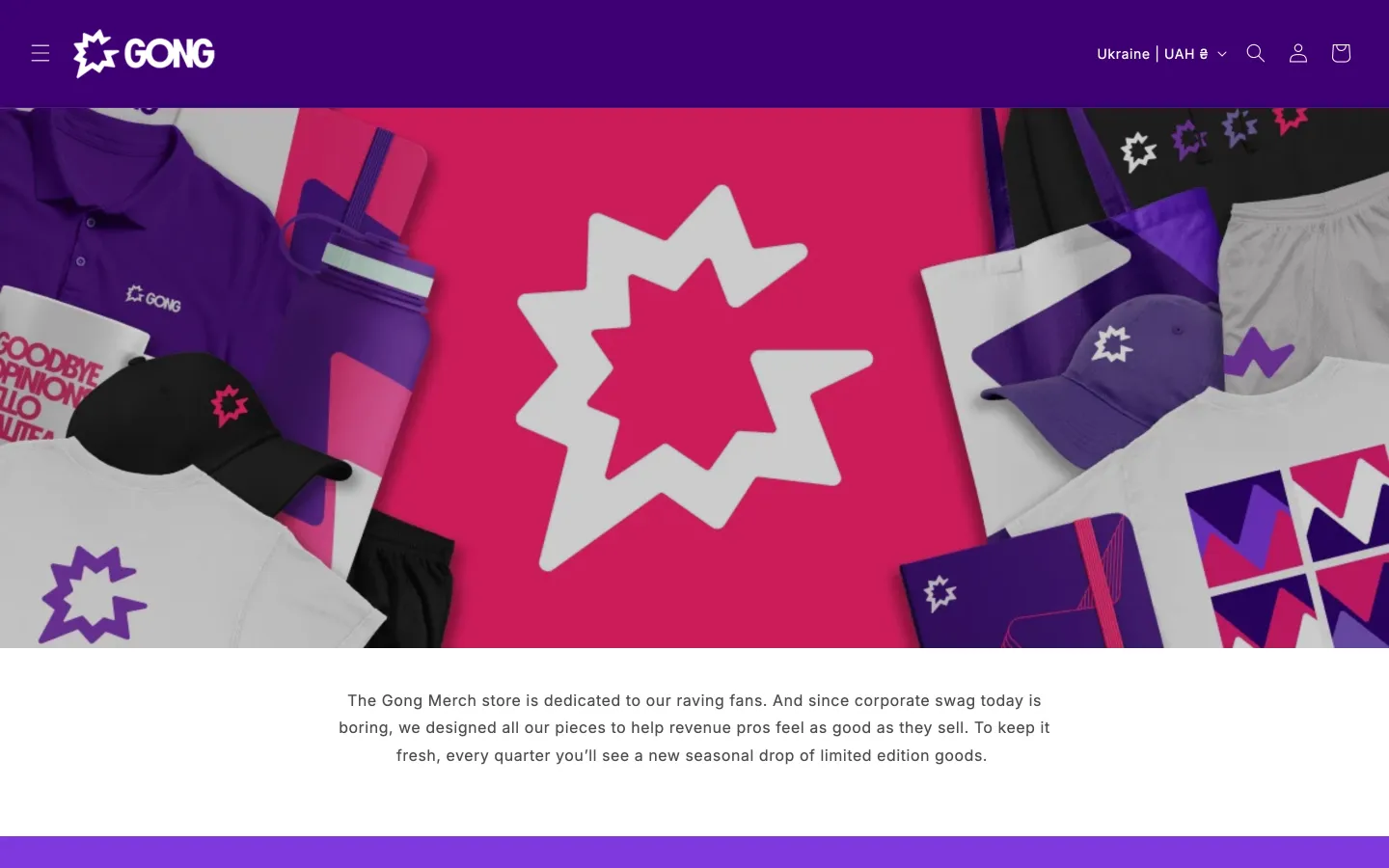
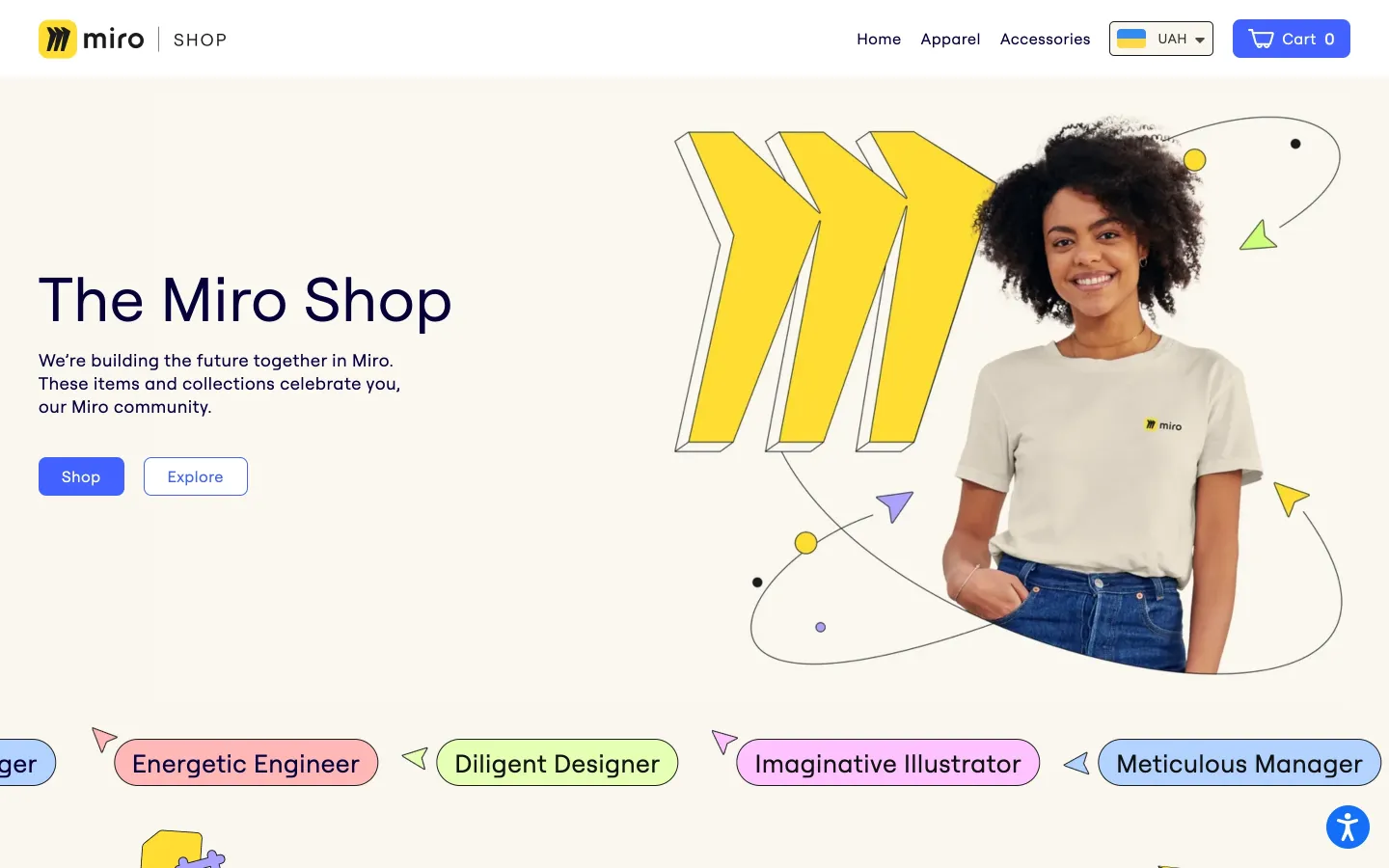
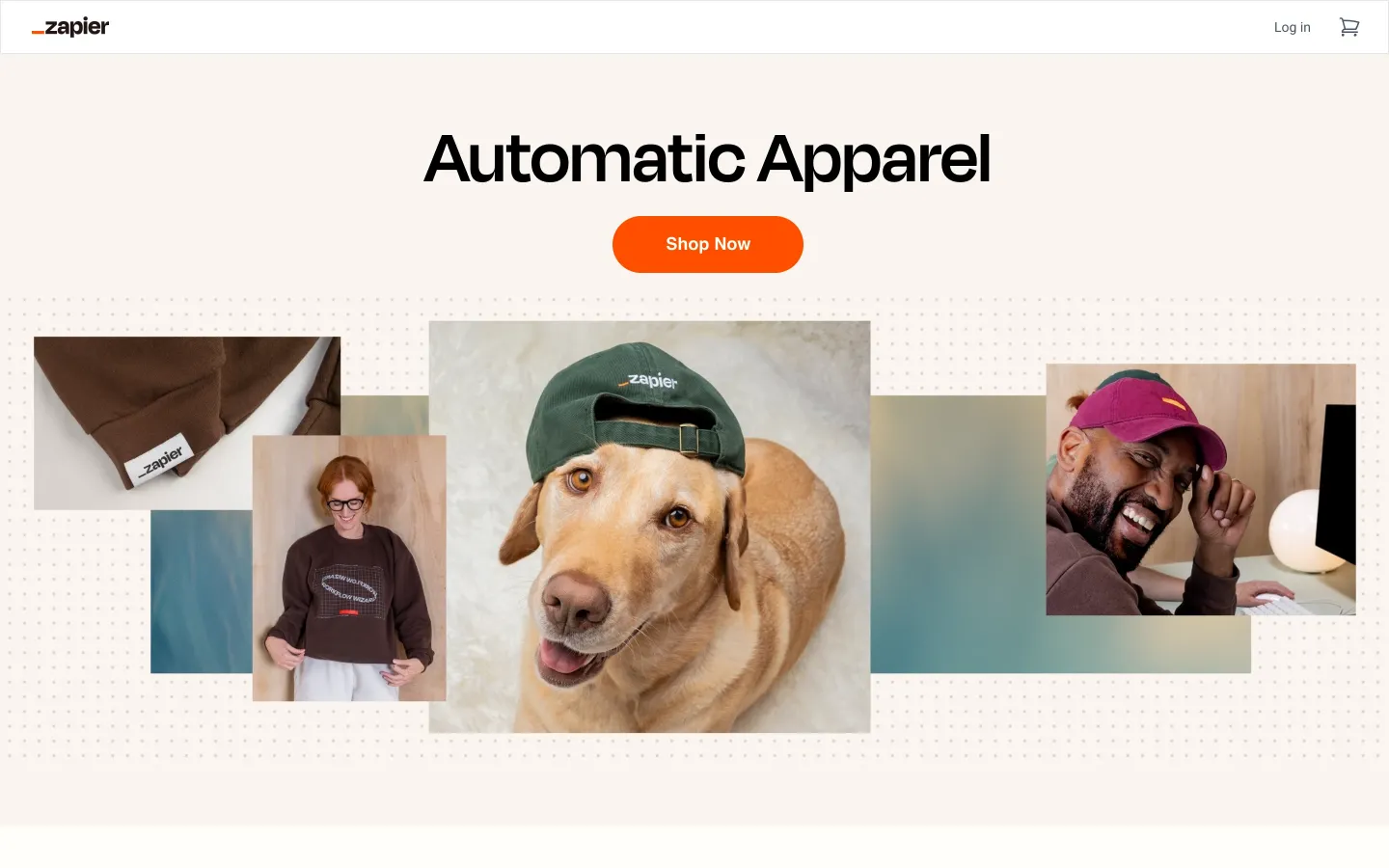
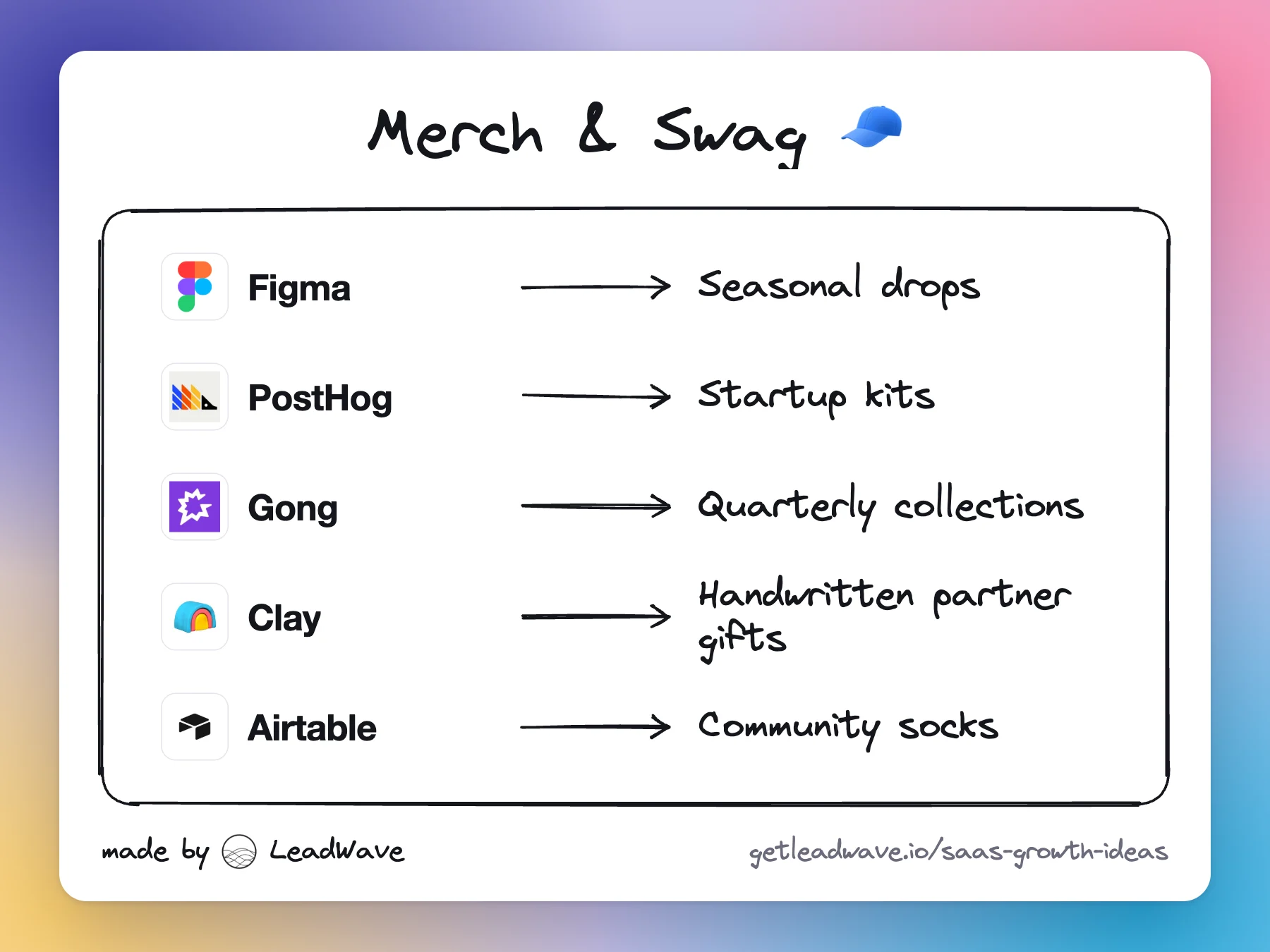
- Make it for your people. Gong's store says “corporate swag today is boring,” so it designs for “revenue pros.” Miro sells keyboard shortcut stickers and a card game. Zapier calls its line “Automatic Apparel.”
- Release it in drops. Gong brings out a limited collection every quarter, and Figma launches numbered seasons. Scarcity gives people a reason to buy now and to talk about it.
- Give it away first. TBPN's apparel started as a way to give back to its sponsors.
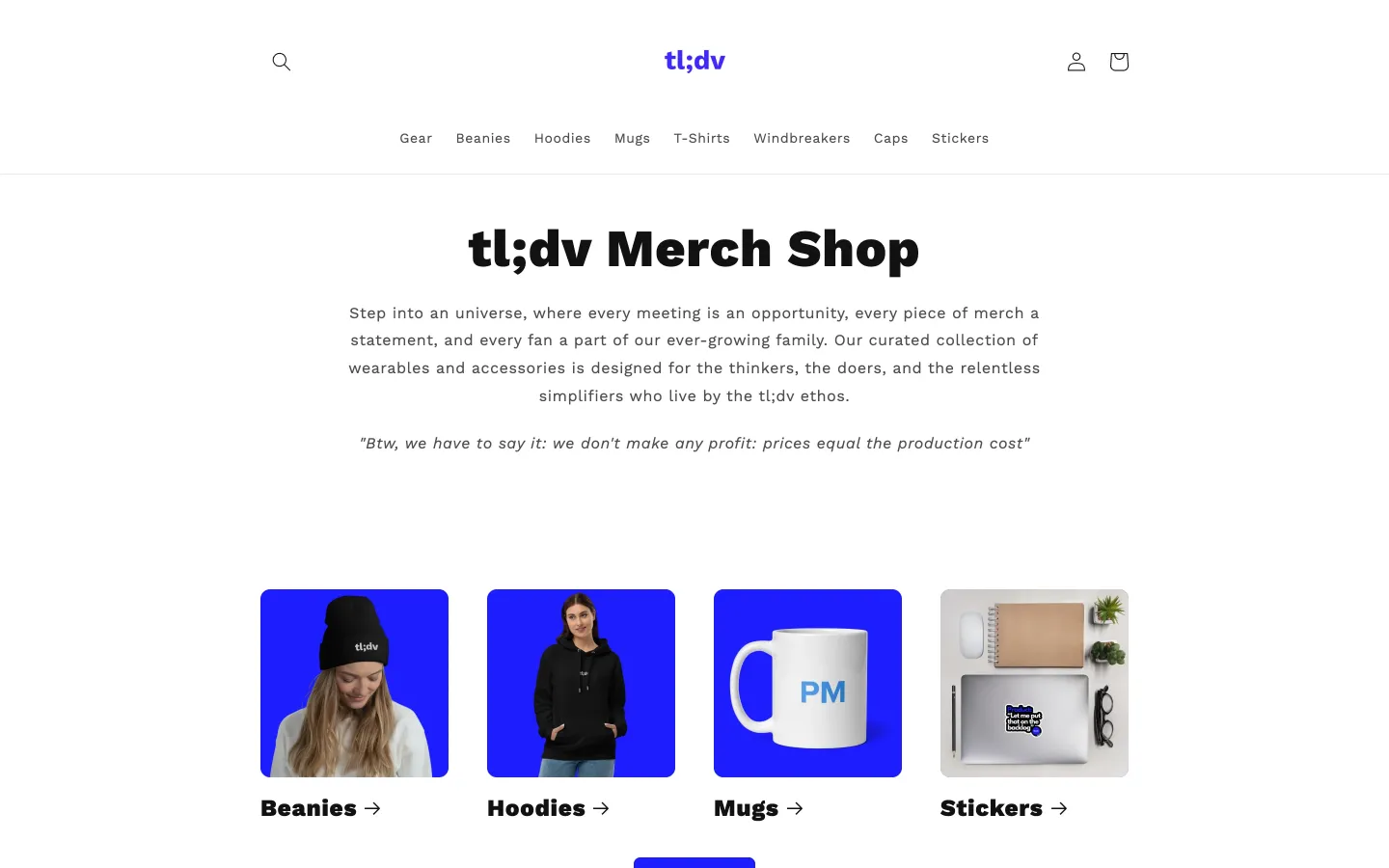
- Don't try to earn from it. tl;dv's shop says so outright: “we don't make any profit: prices equal the production cost.” Figma gives 100% of its store's profits to carbon removal, and Webflow's store raised thousands of dollars for charity in its first week.
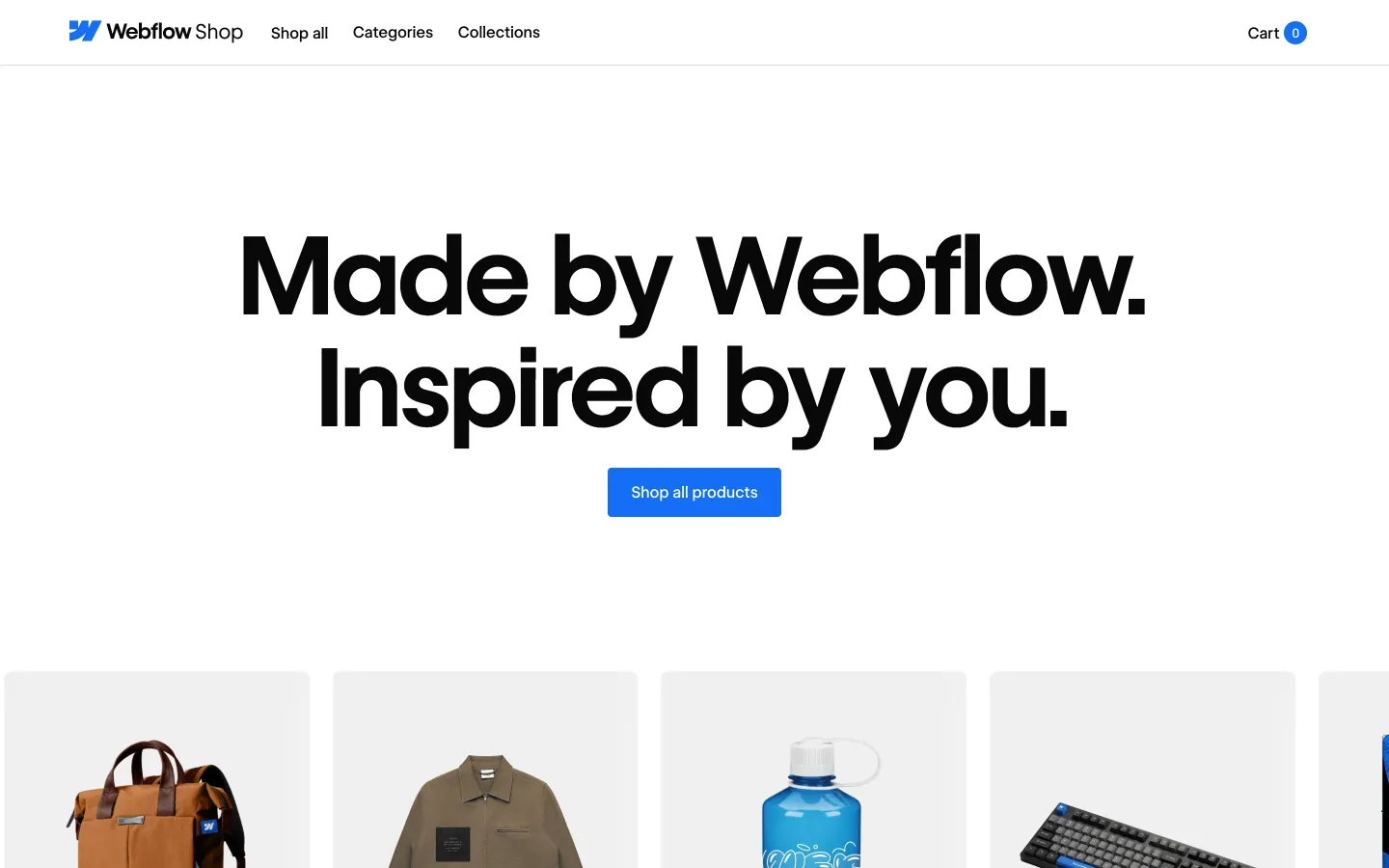
- Check demand before you build. Webflow's first question is “Are customers asking for merch?” If nobody is, it says, people won't buy it. It also used a print-on-demand partner, Printful, so it never had to hold stock or ship orders itself.