


Skip to content
Clay logoClayNew York, USA
Website

How Clay Grew: The GTM Data Company’s Road to $100M ARR

Curated by Khrystyna Oleksiienko · Published

Clay, the go-to-market data company, took six years to reach $1 million in ARR and two more to pass $100 million, in December 2025. It got there by committing to cold email agencies, turning users into its marketers and naming a new job, the GTM engineer. By September 2026 it had more than 17,000 customers and a $7.1 billion valuation.

ARR, two years after $1M
$100M
Dec 2025
Annualized revenue pace, reported
About $200M
Q3 2026
Customers
17,000+
Sep 2026
Valuation
$7.1B
Sep 2026

Clay’s growth in charts

Clay revenue and ARR over timeARR and revenue figures, as each source reported them. Hover or tap the line for each figure.
$0$50M$100M$150M$200M2023202420252026$200M
Clay’s customersAs Clay reported them, from its first funding announcement to its Series D.
05K10K15K20KJun 2024: 2,500+2.5KJun ’24Jan 2025: 5,000+5KJan ’25Aug 2025: 10,000+10KAug ’25Jan 2026: 14,00014KJan ’26Sep 2026: 17,000+17KSep ’26
Clay’s valuationMay 2025 and January 2026 are employee tender offers. The rest are funding rounds.
$0$2B$4B$6B$8BJun 2024: $500M$500M2024Jan 2025: $1.3B$1.3B2025May 2025: $1.5B$1.5BAug 2025: $3.1B$3.1BJan 2026: $5B$5B2026Sep 2026: $7.1B$7.1B
People at ClayFrom a team of under ten at launch to 552 in August 2026, as Clay and its leaders reported it.
0200400600Feb 2022: Under 1010Feb ’22Jun 2024: 50+50Jun ’24Jan 2026: 300300Jan ’26May 2026: 400400May ’26Aug 2026: 552552Aug ’26
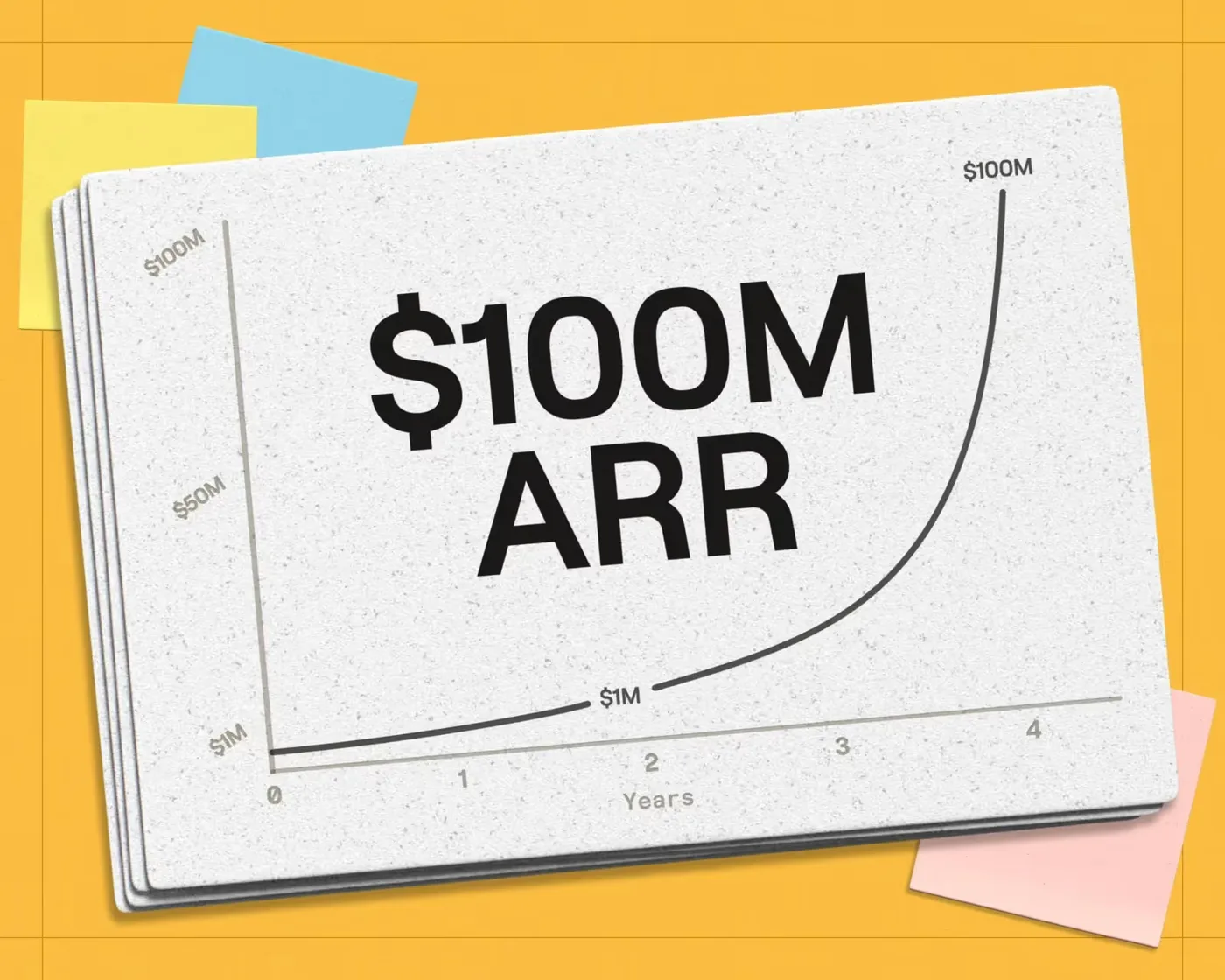
The curve Clay drew for its $100M postClay illustration of an ARR curve rising from $1M to $100M
Clay’s own illustration, December 2025: $1M, then $100M two years later.
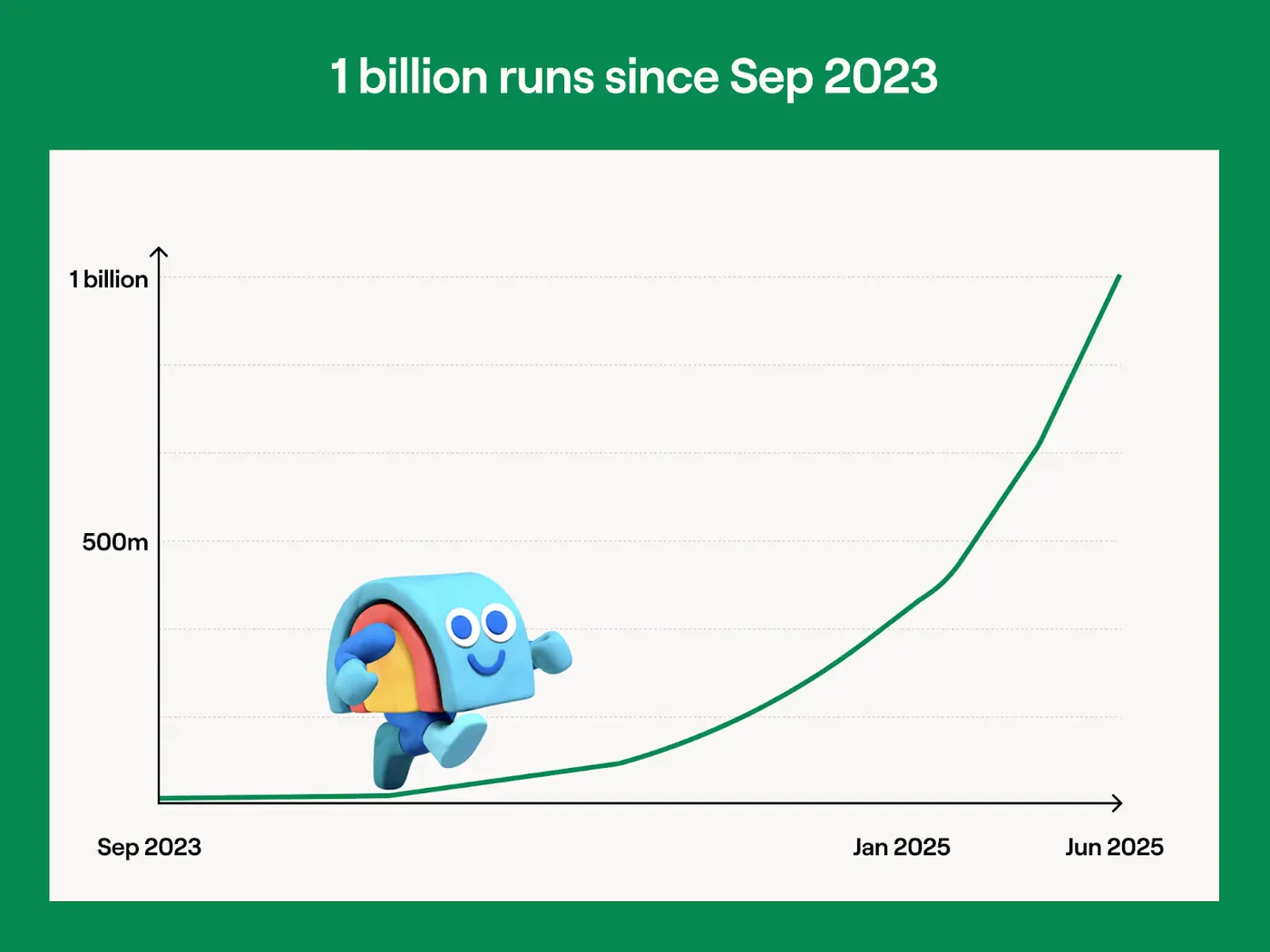
Claygent runs, from Clay’s own chartClay chart of Claygent runs rising from September 2023 to 1 billion in June 2025
Published in June 2025, when the agent passed 1 billion runs.

The Clay growth playbook at a glance

9 moves, one card each. The proof is further down the page; the full how-to is on each tactic’s page.

  1. Clay’s timeline to product-market fit
    01

    Pick one customer

    Clay narrowed to outbound sales and lost nearly all of its original customers.

    See the proof

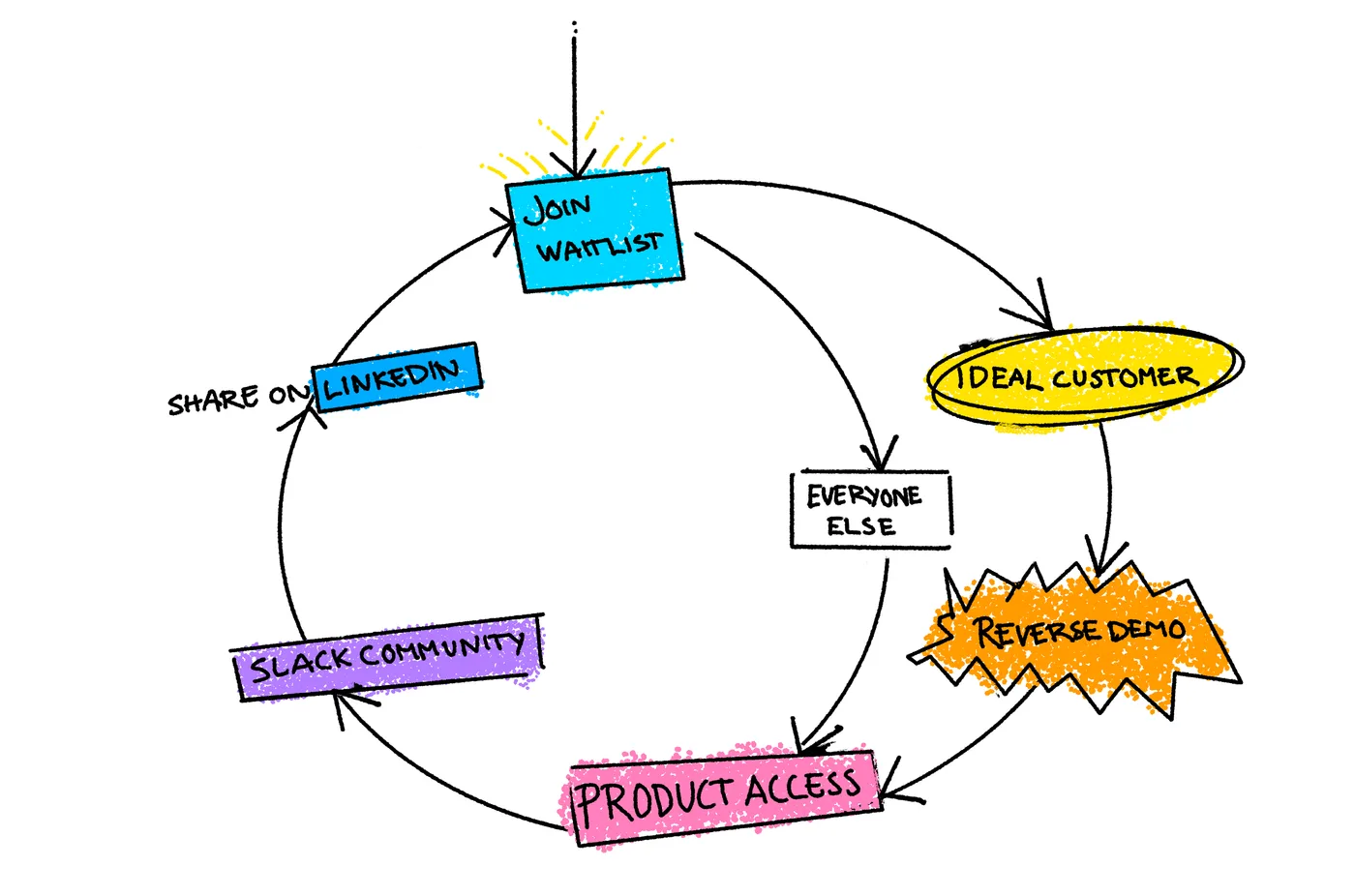
  2. Clay’s reverse demo loop
    02

    Reverse demos

    The customer drives and you guide. Seven calls per sale fell to one, then none.

    See the proof

  3. Clay community page
    03

    All support in one Slack

    Customers had to join to get help, so they met and taught each other.

    See the proofFull playbook

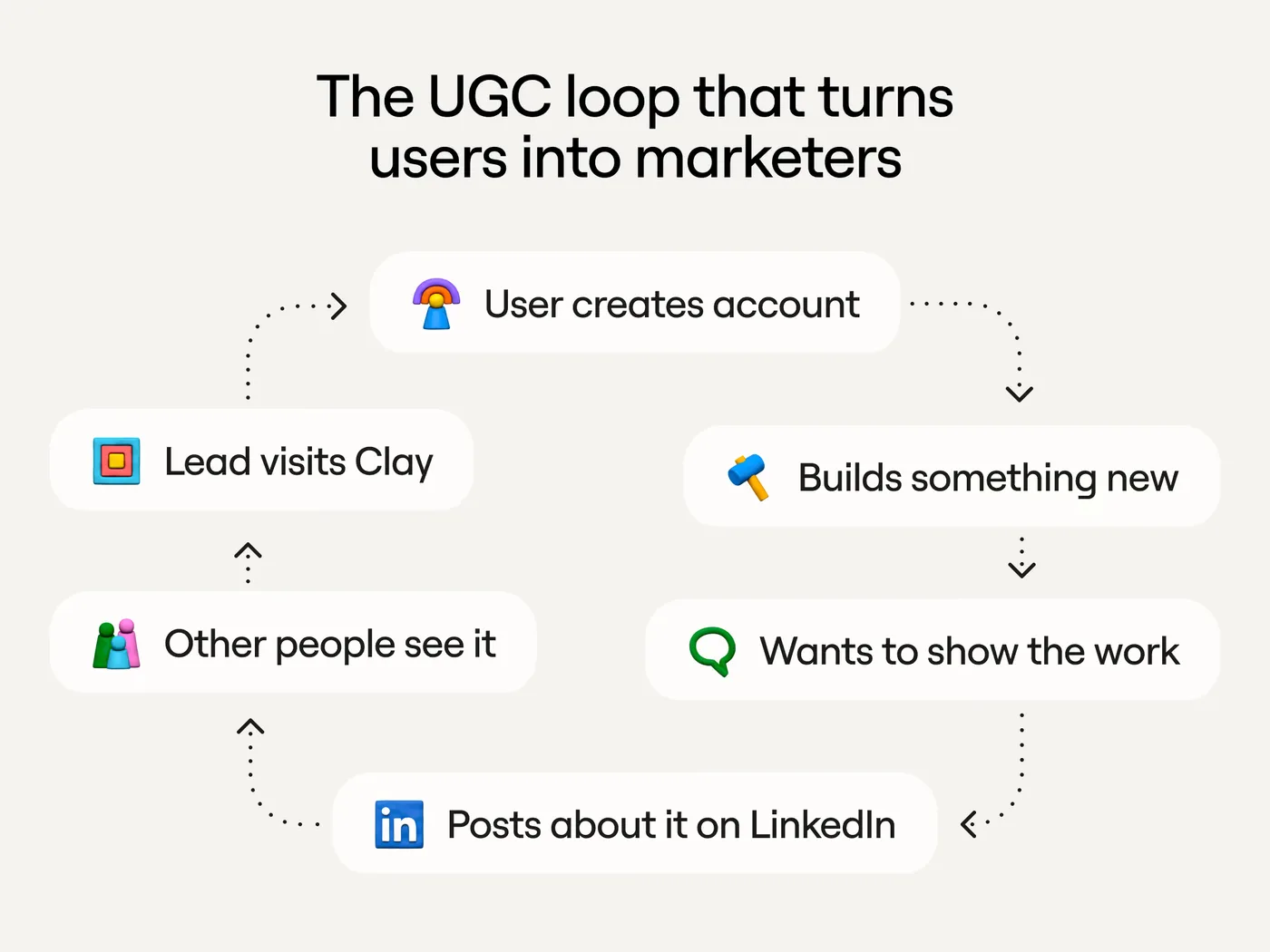
  4. Clay’s user-generated content loop
    04

    Users as marketers

    Free courses, certifications, clubs and an agency program keep people posting their Clay work.

    See the proofFull playbook

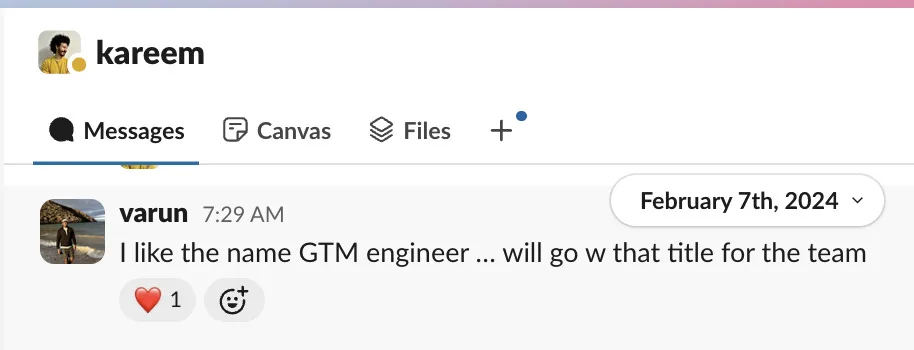
  5. Slack message choosing the name GTM engineer
    05

    Name a new job

    Clay named the “GTM engineer”, then trained people and helped companies hire them.

    See the proof

  6. Clay’s credit plans before March 2026
    06

    Usage pricing

    Credits instead of seats, so customers pay for the work done.

    See the proof

  7. Chart of Claygent reaching 1 billion runs
    07

    An AI agent in the table

    Claygent researches each row on the web: over 1 billion runs by June 2025.

    See the proof

  8. Clay’s 2026 account tiers
    08

    Run marketing on the product

    Ads, gifts and billboards aimed with its own data, plus a webinar series with about 19,000 sign-ups.

    See the proofFull playbook

  9. Clay’s plans from March 2026
    09

    The pricing backlash

    A new metered plan upset some agencies. Clay let customers keep their old plans.

    See the proof

Clay growth timeline

  1. Founded by Kareem Amin and Nicolae Rusan

    A spreadsheet that pulls in data from the internet. Source

  2. Varun Anand becomes co-founder

    Clay has about 20 customers. Source

  3. Product Hunt launch

    Two months later the waitlist returns, for 15 months. Source

  4. Claygent launches Source

  5. First announced funding: $46M at $500M

    2,500+ customers and 100,000 users. Source

    $500M valuation
  6. $40M at $1.25B

    5,000+ customers. Source

    $1.25B valuation
  7. Claygent passes 1 billion runs Source

  8. $100M Series C at $3.1B Source

    $3.1B valuation
  9. Passes $100M ARR Source

    $100M ARR
  10. Employee tender at $5B

    14,000 customers and 300 people. Source

    $5B valuation
  11. New pricing: Data Credits and Actions Source

  12. $115M Series D at $7.1B

    17,000+ customers. Source

    $7.1B valuation

Six years looking for the right customer

Kareem Amin and Nicolae Rusan started Clay in 2017 as a spreadsheet that fills itself with data from the internet. Recruiters, salespeople and engineers all tried it, but many didn’t come back, and revenue was still close to $0 in spring 2022. The way out was to pick one customer, outbound sales teams, and cut everything else.

Varun AnandCo-founder, Clay
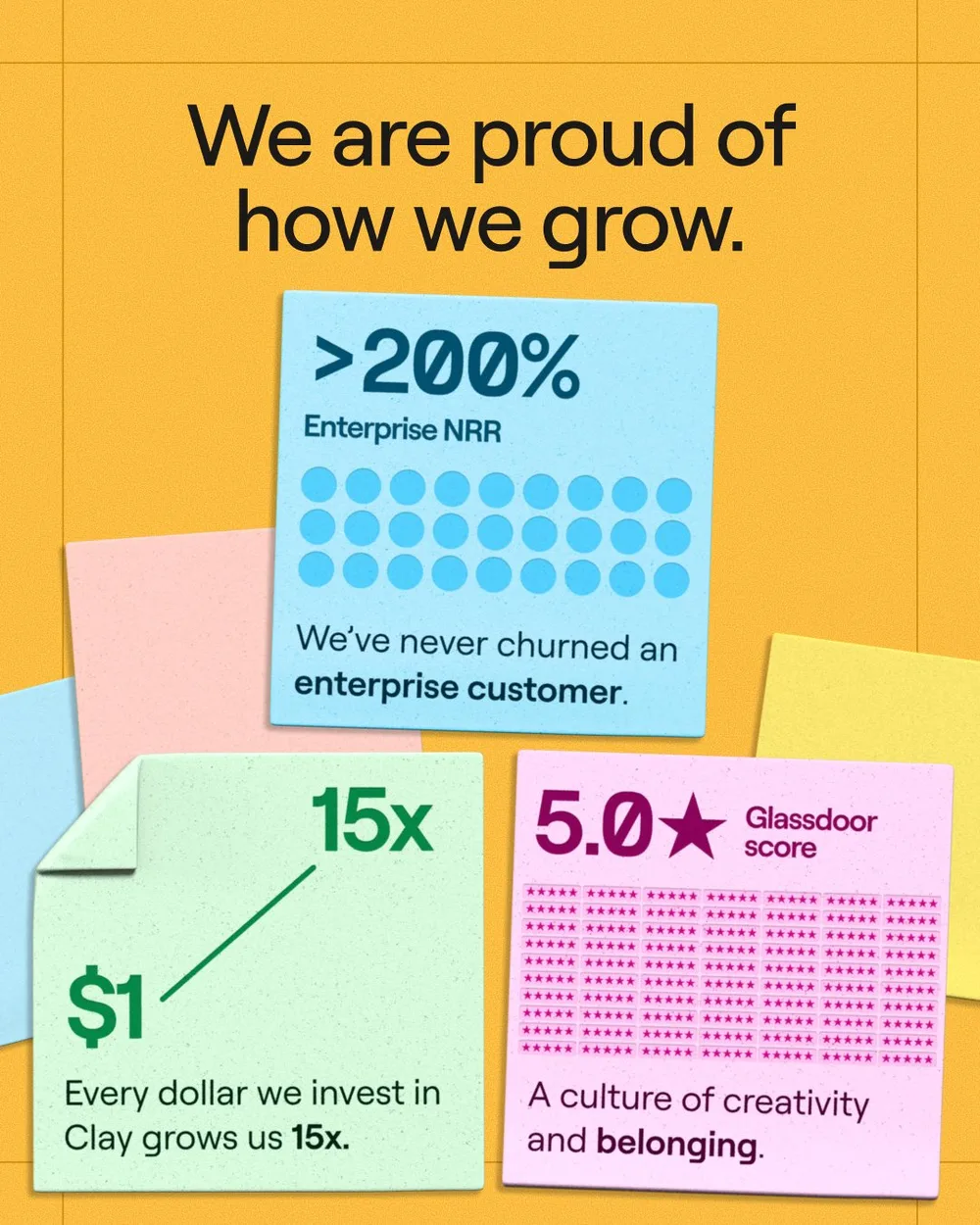
Today we hit $100M ARR at @clay. It took us six years to go from $0-1m, then two years to go from $1-100m. … we’ve never churned an enterprise customer, have >200% enterprise NRR, every dollar we invest grows 15x
Clay graphic: over 200% enterprise net revenue retention, no enterprise customer lost, $1 invested grows Clay 15x, 5.0 Glassdoor score

X2.5K likes716K viewsView on X

Kareem AminCo-founder and CEO, Clay
We had a bunch of initial customers, but they were all doing very wildly different things. … We had a customer, but it was the wrong customer. … When you narrow the scope, it feels claustrophobic. Why are we doing something that’s smaller when we could be doing something bigger? Eventually, we realized that by narrowing down our scope, we were actually increasing our value

First Round ReviewRead the original

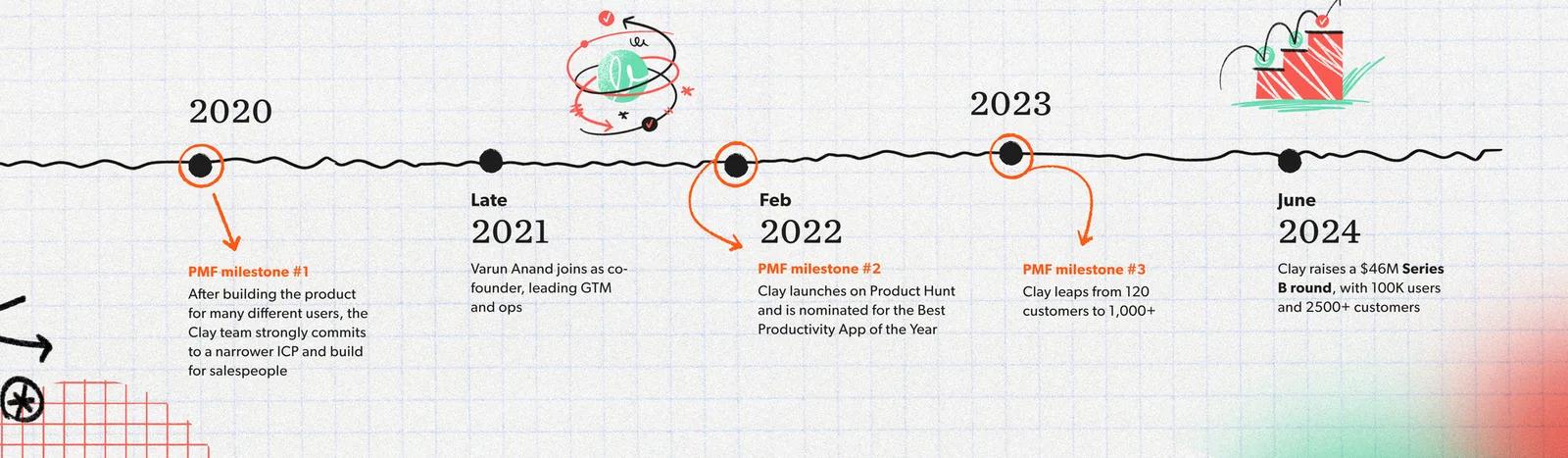
Timeline of Clay from 2020 to 2024: commits to salespeople, Varun Anand joins, Product Hunt launch, 120 to 1,000+ customers, Series B
Clay’s road to product-market fit, as drawn by early investor First Round.

Start with cold email agencies

Varun Anand joined in 2021 and found that cold email agency owners felt the problem most. He went to the WhatsApp and Slack groups where they talked, answered their data questions, and hired one of their best-known members. Every early sale was a reverse demo: the customer shared their screen and did the work while he guided them.

Varun AnandCo-founder, Clay
Nearly all of our original customers churned once we narrowed our focus to outbound sales … The very first thing I did was join a group called Modern Sales Pros … I looked through the archive for words like ‘enrichment,’ ‘data,’ and ‘outbound.’ And I winnowed it down to 30 people who had said something interesting about the topic in the last few years … I joined all of these WhatsApp groups and at least a dozen sales and marketing Slack communities and basically just waited for people to talk about problems related to data enrichment. And I would respond immediately to ask if I could help (ideally with Clay)

First Round ReviewRead the original

Varun AnandCo-founder, Clay
In the beginning, we had to do probably seven demos to convince someone to pay us $200-300 a month. But eventually, we got it down to one call or even none. … I wouldn’t end the call until this person had joined our Slack group. We removed Intercom support from our product, so you had to join Slack to get help.

First Round ReviewRead the original

Clay’s early loop: join waitlist, ideal customer, reverse demo, product access, Slack community, share on LinkedIn
The early loop, from Varun Anand’s post on reverse demos.

Turn users into the marketing team

Clay moved all customer support into one Slack group, so customers met each other. Agencies began posting their Clay work on LinkedIn to win clients, and Clay fed that with free courses, certifications, a partner program and local Clay Clubs. By November 2026 it listed 35,000 Slack members and clubs in 90+ cities.

Kareem AminCo-founder and CEO, Clay
Before that, you would email us or chat like most startups. But we pushed all of our customers into the same channel. … It’s like arriving early to a concert. No one else is there. But then five or 10 people trickle in, and then it escalates

First Round ReviewRead the original

Kareem AminCo-founder and CEO, Clay
We started seeing people call themselves Clay experts and try to help other people get set up on Clay. There are dozens of Claygencies — agencies that specialize in implementing Clay for customers — some of which have a run rate of over $2M/year, which is wild

First Round ReviewRead the original

Varun AnandCo-founder, Clay
We started to see these agency owners posting on LinkedIn about Clay … We immediately pounced on it — how can we enable more people to do this? So Eric and I started posting content every day, as well as partnering with customers behind the scenes by telling them about new features and helping them make content. That became how we generated a lot of demand

First Round ReviewRead the original

Bruno EstrellaHead of Marketing, Clay
We grew Clay from $1–100M ARR in 2 years. … Our ecosystem is our core distribution advantage. In marketing, what others say about you matters more than what you say about yourself. … We needed consistent, high-frequency presence. Prospects should feel like we’re everywhere.

LinkedIn1.4K likesView on LinkedIn

Clay’s loop: a user builds something new, posts about it on LinkedIn, others see it and sign up
The loop Clay’s marketing team runs on.
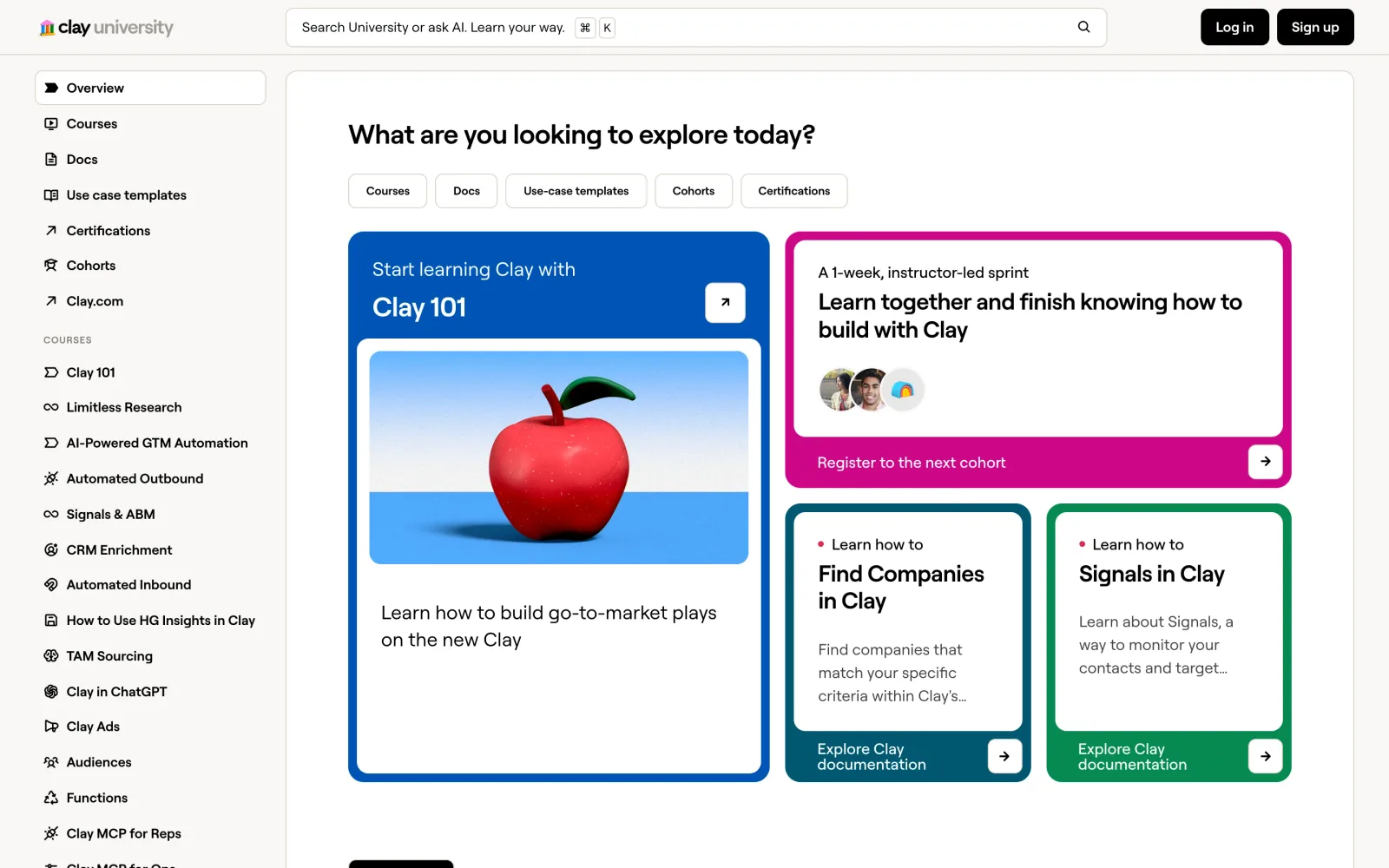
Clay University: free courses, docs, cohorts and certifications
Clay University: free courses and certifications.
Clay community page: join the Slack or find a local club
The community page: a Slack group and local clubs.

The full playbook:Community-led growthB2B influencer marketing

Name the job

Clay needed sellers who could build anything in its product, so it made a new role: part salesperson, part engineer. Clay says it coined “GTM engineer” in 2023; the Slack message it published about choosing the name is dated February 2024. It then defined the job, trained people for it and opened a marketplace to hire them.

Varun AnandCo-founder, Clay
We realized that the most fundamental skill set for this role wasn’t sales — it was being amazing at Clay … One person can deliver an amazing customer experience, generate content ideas and demand, and relay product feedback — instead of having it segmented in three different roles.

First Round ReviewRead the original

Varun AnandCo-founder, Clay
We just helped Airbnb hire their first GTM engineer. … Last year, I went to our team with a problem: too many enterprise companies were asking me how to hire GTM engineers and I needed help finding them. So, we launched @Clay's Talent Marketplace for GTM Engineers, which now has over 1,500 candidates across the ecosystem!!
Clay announcement for Alpha Forge, its GTM engineering bootcamp

X181 likes25K viewsView on X

Slack message from Varun to Kareem, February 7, 2024: I like the name GTM engineer, will go with that title for the team
The message Clay shows in its guide to the role.
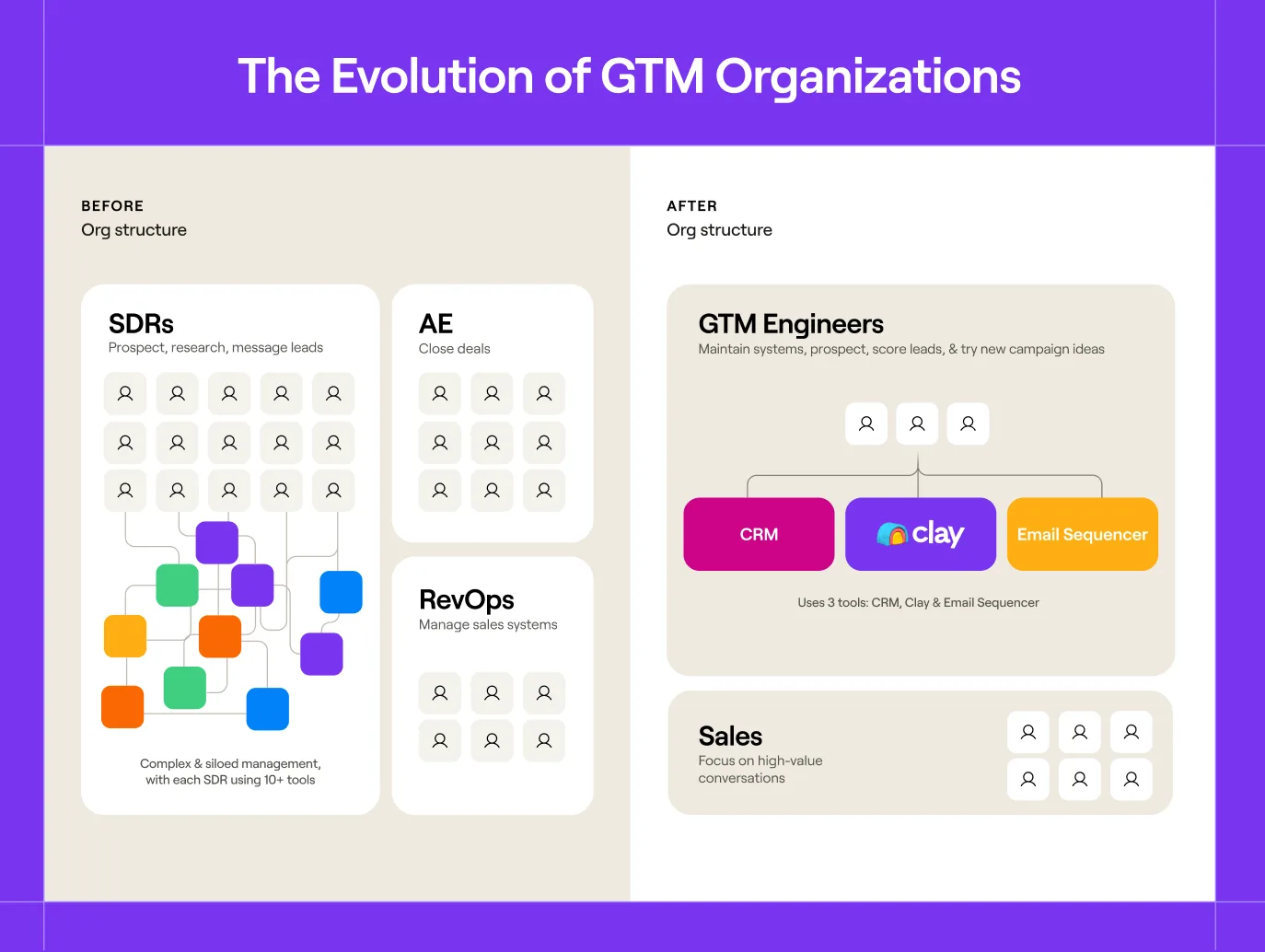
Clay diagram: separate SDR, AE and RevOps teams replaced by GTM engineers working across CRM, Clay and email tools
How Clay says the role changes a sales team.

Charge for usage, not seats

In 2022 Clay chose credits when most sales tools charged per seat, so a small team could do a lot and pay for the work done. It was so early that it had no billing in the product until it passed $1 million in ARR.

Varun AnandCo-founder, Clay
As recently as January 2023, we didn’t have billing in the product. I was just sending Stripe invoices to people, which is crazy for a self-serve product for $200/month … But back in 2022, our customers were shocked that we weren’t a per-seat company and investors thought we were leaving so much money on the table … We realized that all the value is in the columns because every column you add is a new enrichment. So the pricing lever should be an equation: Columns X Rows. And that comes back to credits

First Round ReviewRead the original

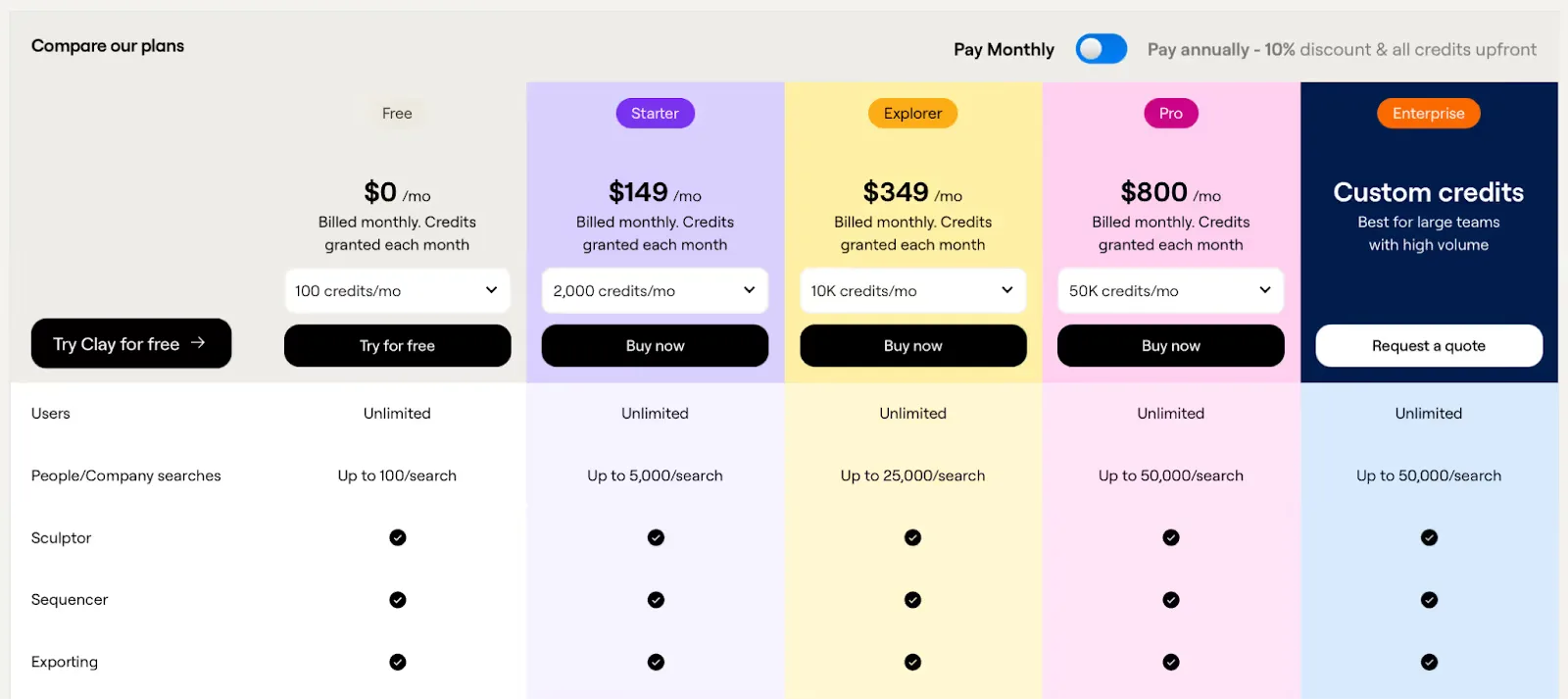
Clay’s plans before March 2026: Free, Starter $149, Explorer $349, Pro $800 and Enterprise, all priced in credits
The credit plans Clay sold until March 2026.

An AI researcher in every row

In September 2023 Clay launched Claygent, an AI agent that searches the web and fills in a table cell, such as whether a company is hiring or has a security certificate. It passed 1 billion runs by June 2025. Clay now pitches it as the start of a system that runs campaigns and learns from the results.

Kareem AminCo-founder and CEO, Clay
For truly bespoke research tasks, customers can use our AI research agent to fill in the gaps. For example, you can ask Claygent to infer a company’s competitors, check how many pricing plans it offers, filter for SOC-II compliance, and more.

Clay blog (Series B announcement)Read the original

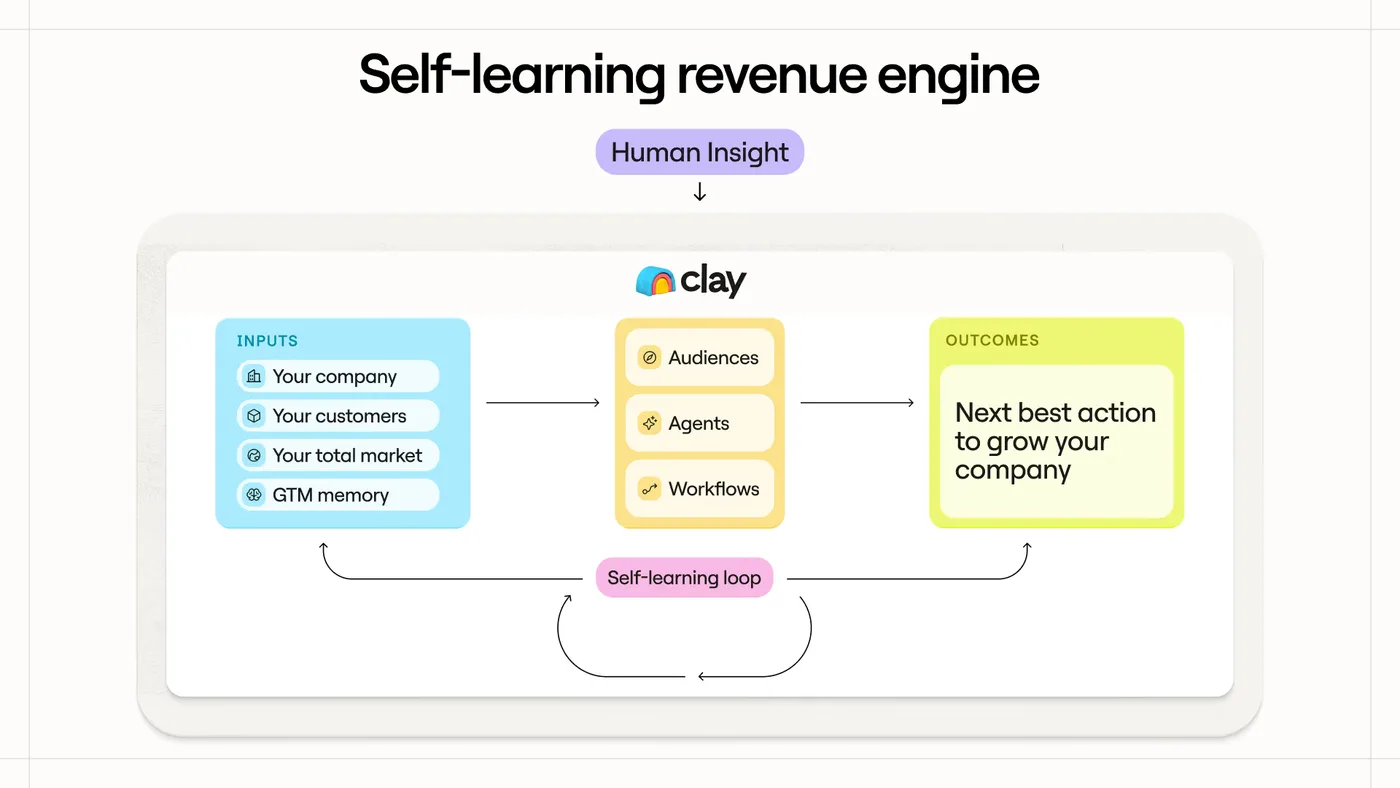
Clay diagram of a self-learning revenue engine: company and market data feed audiences, agents and workflows, and results loop back
The plan from Clay’s Series D post, September 2026.

Clay markets Clay with Clay

Clay’s growth team runs its campaigns on its own product and publishes how. Clay says syncing ad audiences from its CRM cut its LinkedIn cost per lead from $250 to $25. Its executives write their own LinkedIn posts, and its billboards are placed using a map of target accounts, then traced to pipeline through sales call recordings.

Bruno EstrellaHead of Marketing, Clay
We generated ~6M LinkedIn impressions from executive content this past quarter. … People want to learn from real operators. … Together, we’ve added 80k new followers so far.

LinkedIn1.2K likesView on LinkedIn

Varun AnandCo-founder, Clay
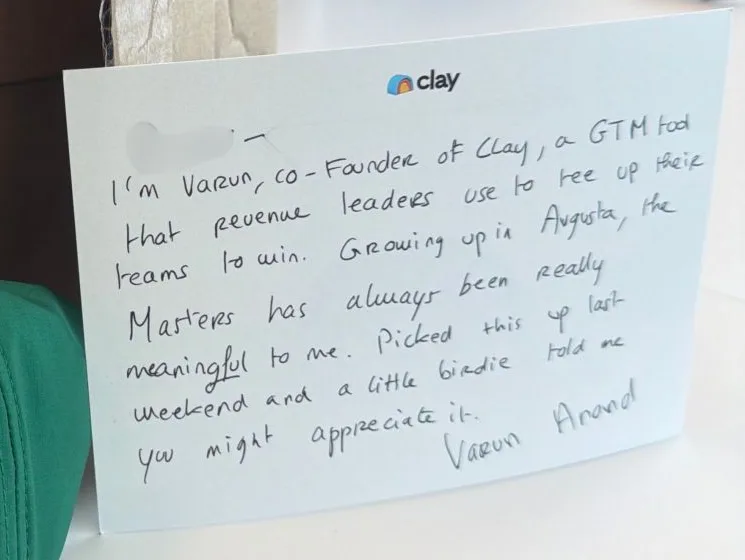
Heres how a boys trip to the Masters drove a 40x pipeline:spend ABM campaign for @Clay: … We used Claygent to cross-reference social profiles with web research to find "golf signals". … $3000 in gifts $2280 in shipping costs Total cost = $5280 114 sends 110 deliveries (96.5% delivery rate) … Dozens of positive replies and meetings booked with C-suite GTM leaders at large enterprise companies.
Handwritten note from Varun Anand sent with a Masters hat to a prospect, the recipient’s name blurred

X188 likes39K viewsView on X

Bruno EstrellaHead of Marketing, Clay
Today we’re launching a new brand campaign in San Francisco … We mapped where our target accounts are located in San Francisco (literally have a huge map with pins on it, using Clay of course) and Jessica and I flew to San Francisco to evaluate every single billboard and its visibility. … Michelangelo had marble, Monet had paint, Mozart had piano, and GTM has Clay.

LinkedIn1K likesView on LinkedIn

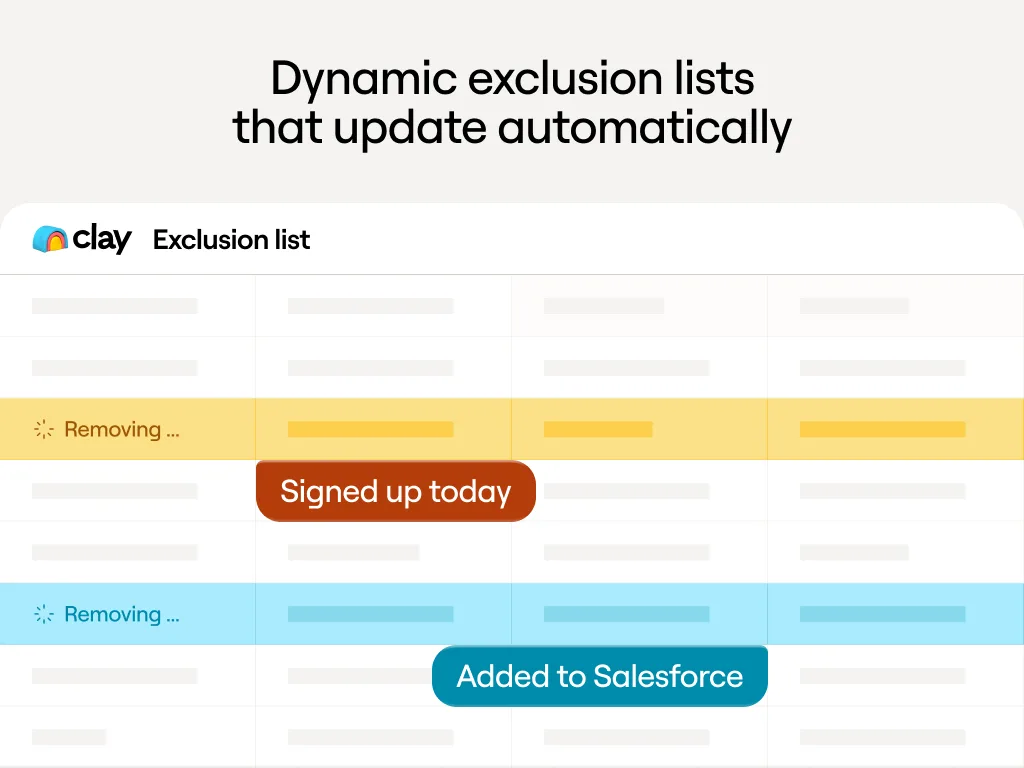
Clay exclusion list that removes new customers from ad audiences automatically
Ad exclusion lists that update themselves.
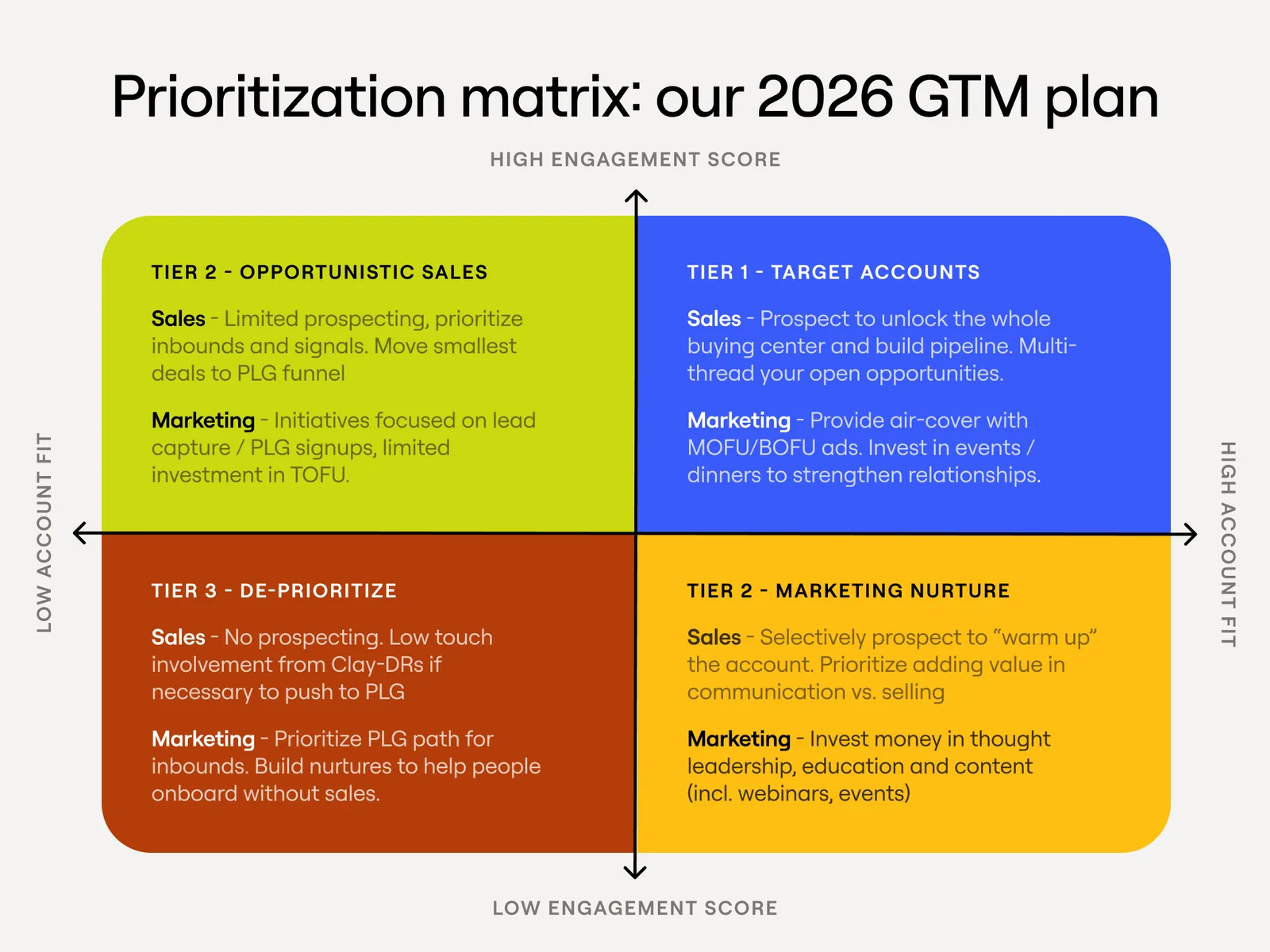
Clay’s 2026 go-to-market matrix: accounts sorted by fit and engagement into four tiers
Clay’s own 2026 account tiers, published with its ABM playbook.

The full playbook:Champagne outboundBillboard marketingWebinars

The 2026 pricing backlash

In March 2026 Clay split credits into Data Credits and Actions, cut data prices by 50–90% and began metering work such as API calls. It published the internal memo the same day.

  • The memo called the change “intentionally revenue- and profit-negative in the near term” and said direct API use “would no longer be unbounded”, a real shift for agencies.
  • In Clay’s public Slack the announcement drew 71 comments and 24 crying-face reactions. One customer asked why HTTP calls now cost more.
  • Rival vendors argued that Actions make agency work harder to budget. They compete with Clay.
  • Clay let existing customers keep their old plans, and its head of marketing told them to stay if that was cheaper.
Karan ParekhHead of Finance, Clay
When we created our pricing plans, we mispriced cost per credits in the Pro segment. Not only has this created challenging dynamics as our customer scaled with us, but it’s also meant that we’ve been operating at a loss in this segment for years. … This pricing change is intentionally revenue- and profit-negative in the near term. … Our community may push back. Our community is one of our biggest superpowers, and pricing changes are sensitive.

Clay blog (internal pricing memo)Read the original

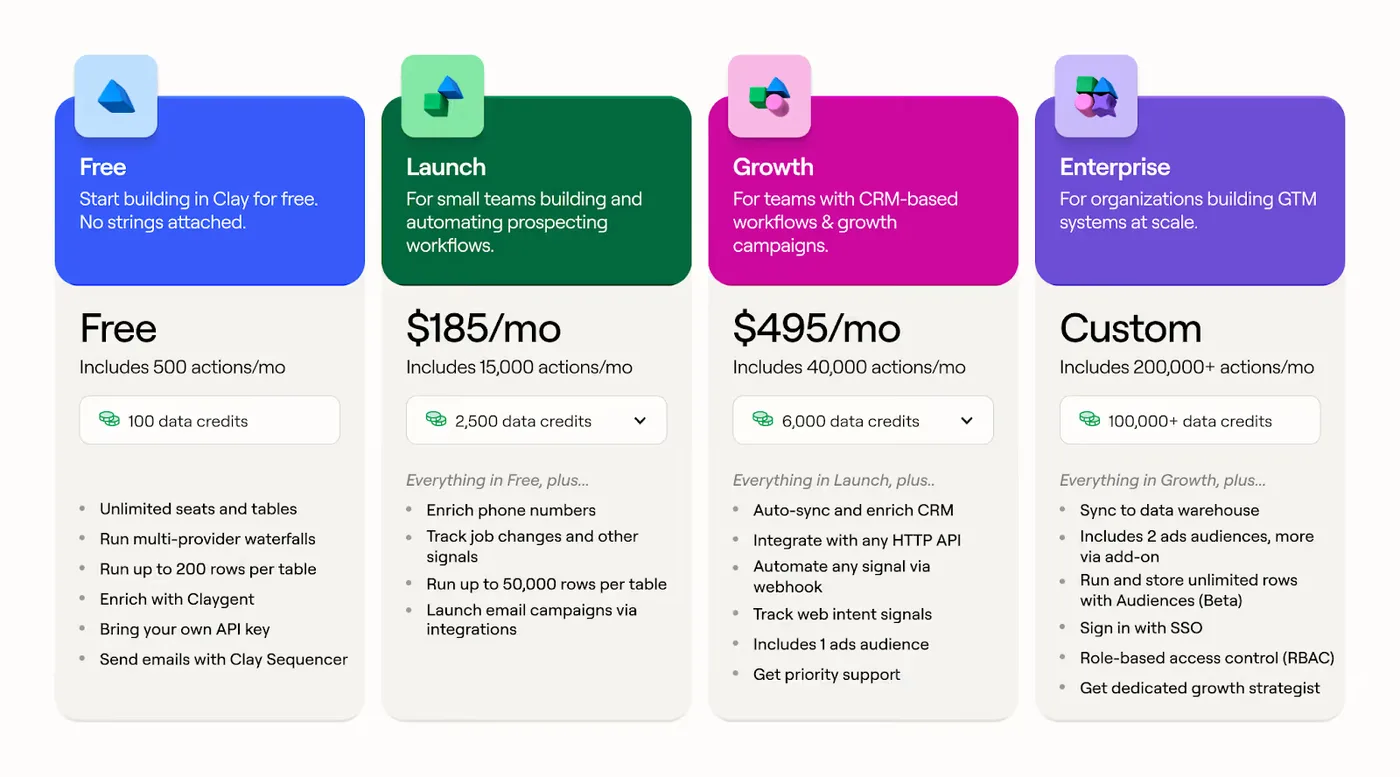
Clay’s plans from March 2026: Free, Launch at $185, Growth at $495 and Enterprise, each with Actions and Data Credits
The new plans, March 2026.

What you can copy from Clay

  1. 1.Pick one customer and cut the rest, even if most of your current users leave.
  2. 2.Find your first buyers in the Slack and WhatsApp groups where they already talk.
  3. 3.Let customers drive the demo, and fix whatever trips them up.
  4. 4.Help users look good in public and they will market you (community-led growth).
  5. 5.Name the job your product creates, then train people to do it.
  6. 6.Run your own marketing on your product and publish the numbers (webinars).

Knowledge graph

Everything LeadWave has on Clay: its leaders, our pages on it, the lists it’s on and the growth tactics it uses.

Frequently asked questions

More company dossiers

All dossiers
  • Cluely logo

    Cluely

    How Cluely Blew Up: Rage Bait, 700 Clippers and a Retracted Revenue Claim

    Cluely went from a Columbia suspension to $20.3 million in funding in about three months by treating attention as the product: a provocative launch film, 50 advertised internships and over 700 paid clippers. In March 2026 its CEO admitted that the $7 million in annual recurring revenue he had claimed was false. His corrected figure for June 2025 is $5.2 million.

    Read


  • Higgsfield logo

    Higgsfield

    How Higgsfield Grew: From One Last Attempt to a $1.35B Run Rate

    In early 2025 Higgsfield had burned most of its seed money on a mobile app people didn't keep using. It relaunched on the web with camera controls that March, and by October 2026 its CEO put its annualized run rate at $1.35 billion. Its newest channel, a ChatGPT plugin, brought 100,000 new paid subscribers in 10 weeks.

    Read
  • Lovable logo

    Lovable

    How Lovable Grew So Fast: From a GitHub Project to $600M ARR

    Lovable failed two launches in 2024 under the name GPT Engineer. The third, that November, reached $10 million in ARR in about two months, and by September 2026 the company reported more than $600 million. Its leaders credit a CEO who posted everything in public and a free product they treat as the marketing budget.

    Read
  • Mercor logo

    Mercor

    How Mercor Grew: From a Hackathon to a $3B Run Rate

    Mercor started in 2023 as three 19-year-olds placing engineers from India with US startups. A meeting with xAI pointed it at AI labs, and paid referrals helped build a network of more than 5 million experts. In November 2026 its CEO put its run rate at $3 billion. That figure is gross: experts reportedly keep 60% to 70% of it.

    Read
  • Notion logo

    Notion

    How Notion Grew: From Near-Death in Kyoto to 100M Users

    In 2015 Notion laid off its team, sublet its office and moved to Kyoto to rebuild before the money ran out. Its users then did most of the marketing, with templates, local groups and videos. It passed 100 million users in July 2024 and reportedly $600 million in annual recurring revenue by December 2025.

    Read
  • Cursor logo

    Cursor

    How Cursor Grew: From $1M to $4B ARR in Under Three Years

    Cursor had just passed $1 million in ARR when it raised its seed in October 2023. By June 2026 it was on a $4 billion run rate, and in August 2026 SpaceX bought it for $60 billion. Its founders say they hadn't spent a dollar on marketing; they explain how it grew in their own posts.

    Read