










Skip to content
Resend logoResendSan Francisco, California, USA (fully remote team)
Website

How Resend Grew: From an Open-Source Library to 6M Users

Curated by Khrystyna Oleksiienko · Published

Resend began in 2022 with a free, open-source email library, launched in January 2023 with a founder post that passed 1 million views, and crossed 6 million users on November 25, 2026. The first 3 million took three years; the next 3 million took under six months, as AI agents started choosing it. More than half of its website traffic is no longer human.

Users
6M+
Nov 2026
Paying customers, the CEO says
120,000
2026
Revenue growth in 2025
5x
Dec 2025
Of Claude Code's email picks, the CEO says
62.7%
Feb 2026

Resend’s growth in charts

Resend usersAs Resend reported them. 10,000 sign-ups six months after the January 2023 announcement; the first 3M took three years, the next 3M under six months.
02M4M6MJul 2023: 10,000+2023Mar 2024: 100,0002024Dec 2024: 200,000+Jan 2025: 249,0002025Apr 2025: 400,000Nov 2025: 1MMay 2026: 3M2026Nov 2026: 6M6M
People on the Resend teamThree people during YC, 57 in November 2026.
0204060Apr 2023: 32023Apr 2024: 62024Nov 2024: 10Apr 2025: 212025Dec 2025: 28Jun 2026: 432026Nov 2026: 5757
Resend's users, from Zeno Rocha's 6M postLine chart of Resend users from January 2023 to November 2026, nearly flat until 2025, then rising steeply to 6M
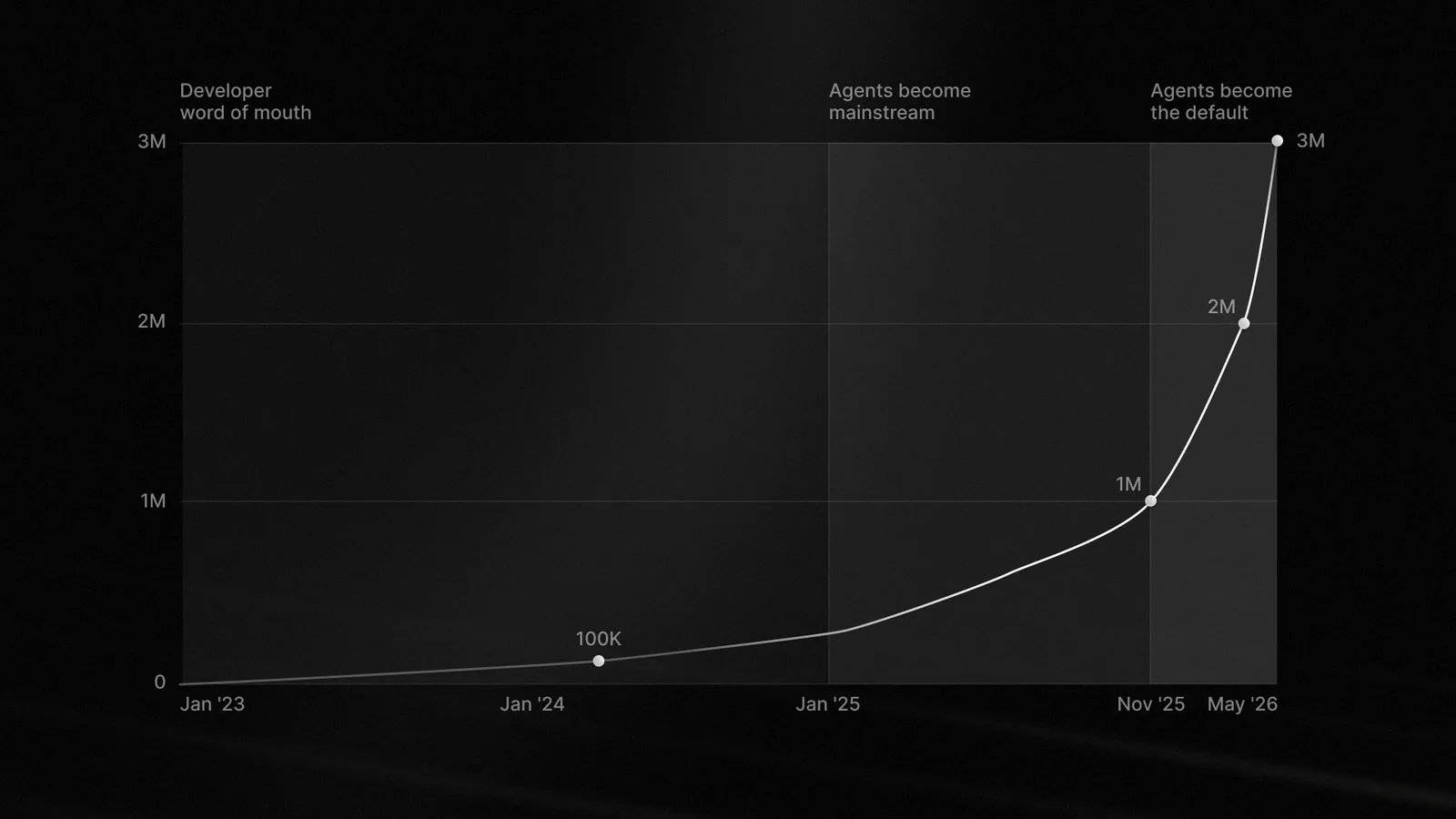
Posted on X on November 25, 2026: 100K in March 2024, 1M in November 2025, 3M in May 2026, 6M in November 2026.
The 3M chart, with the agent era markedResend users from January 2023 to May 2026 in three eras: developer word of mouth, agents become mainstream (January 2025), agents become the default (November 2025)
From the 3M post, June 2026: “Developer word of mouth” until 2025, then “Agents become mainstream” and “Agents become the default”.
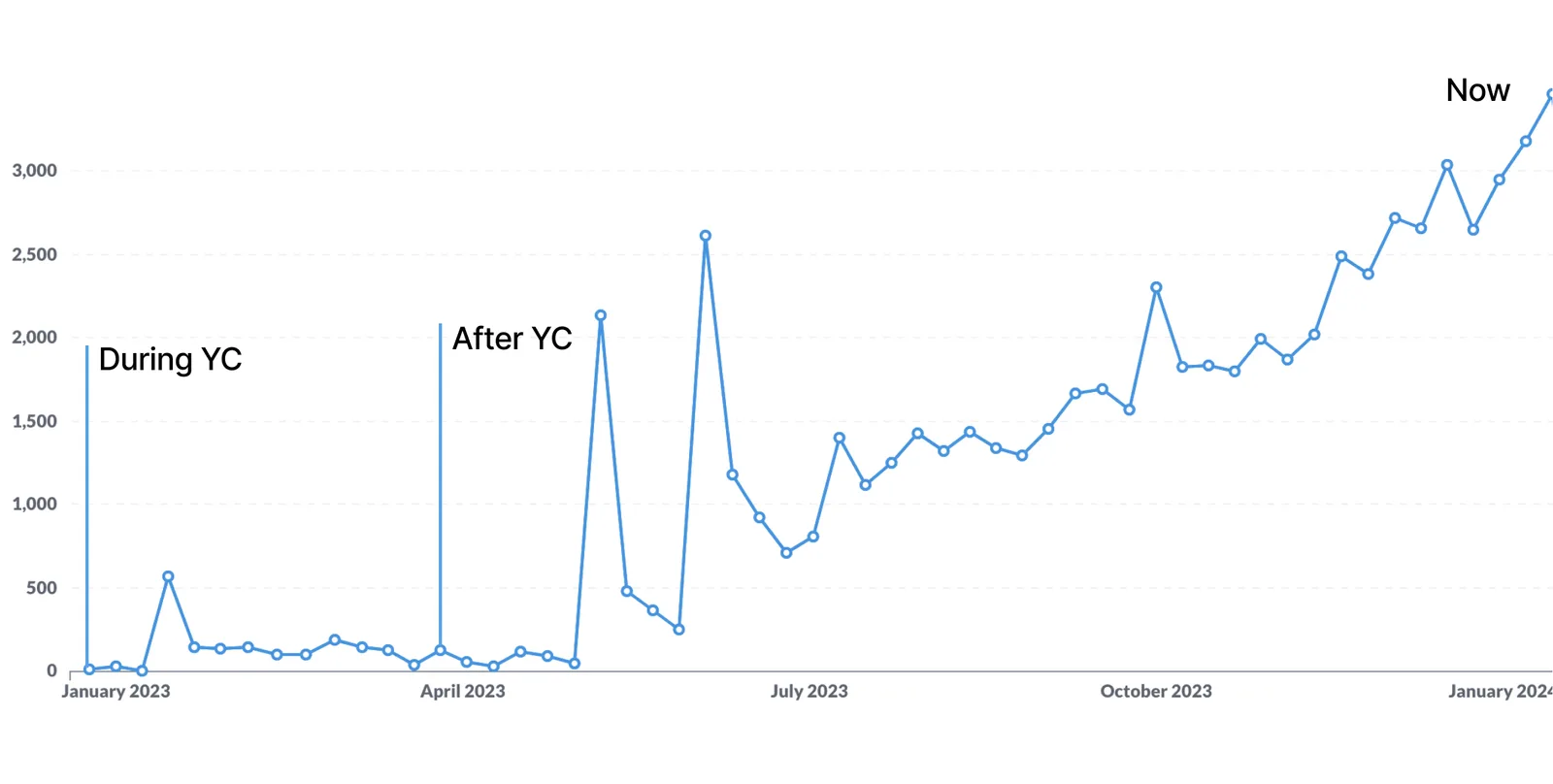
New sign-ups per week, during and after YCWeekly new Resend sign-ups from January 2023 to January 2024, low during YC, spiking after it and climbing to about 3,400 a week
From Zeno Rocha's post of February 2024: about 146 a week during the batch, about 3,464 a week a year later.

The Resend growth playbook at a glance

8 moves, one card each. The proof is further down the page; the full how-to is on each tactic’s page.

  1. React Email: the next generation of writing emails
    01

    Open source first

    React Email, a free library for email templates, launched a month before Resend and put its code in developers' projects.

    See the proof

  2. Zeno Rocha's launch post on X
    02

    Launch from the founder's account

    A launch post with a video, sent at 7:11 am PT on a Wednesday to 39,400 followers: 1M+ views and 6,338 people on the waitlist in seven weeks.

    See the proofFull playbook

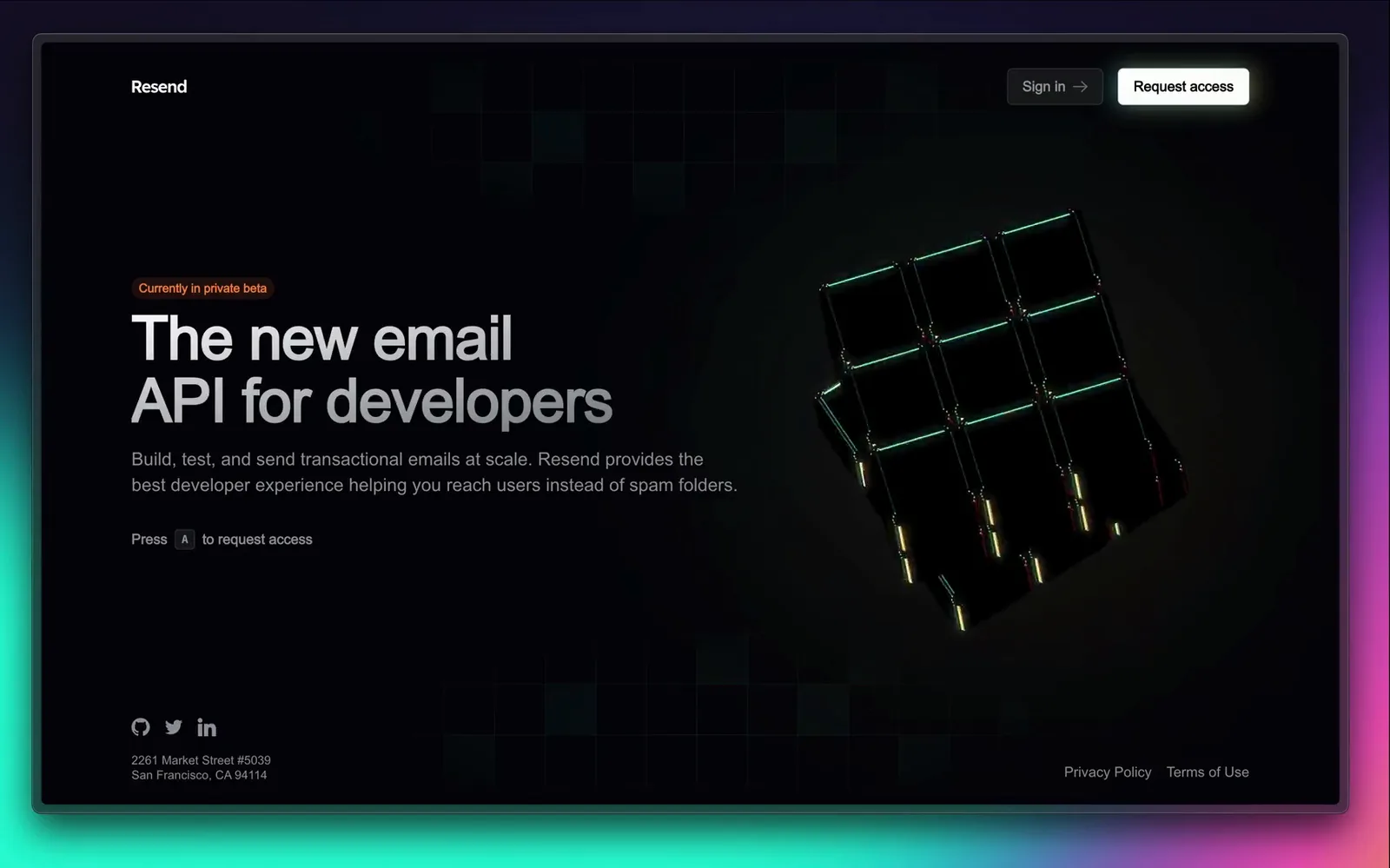
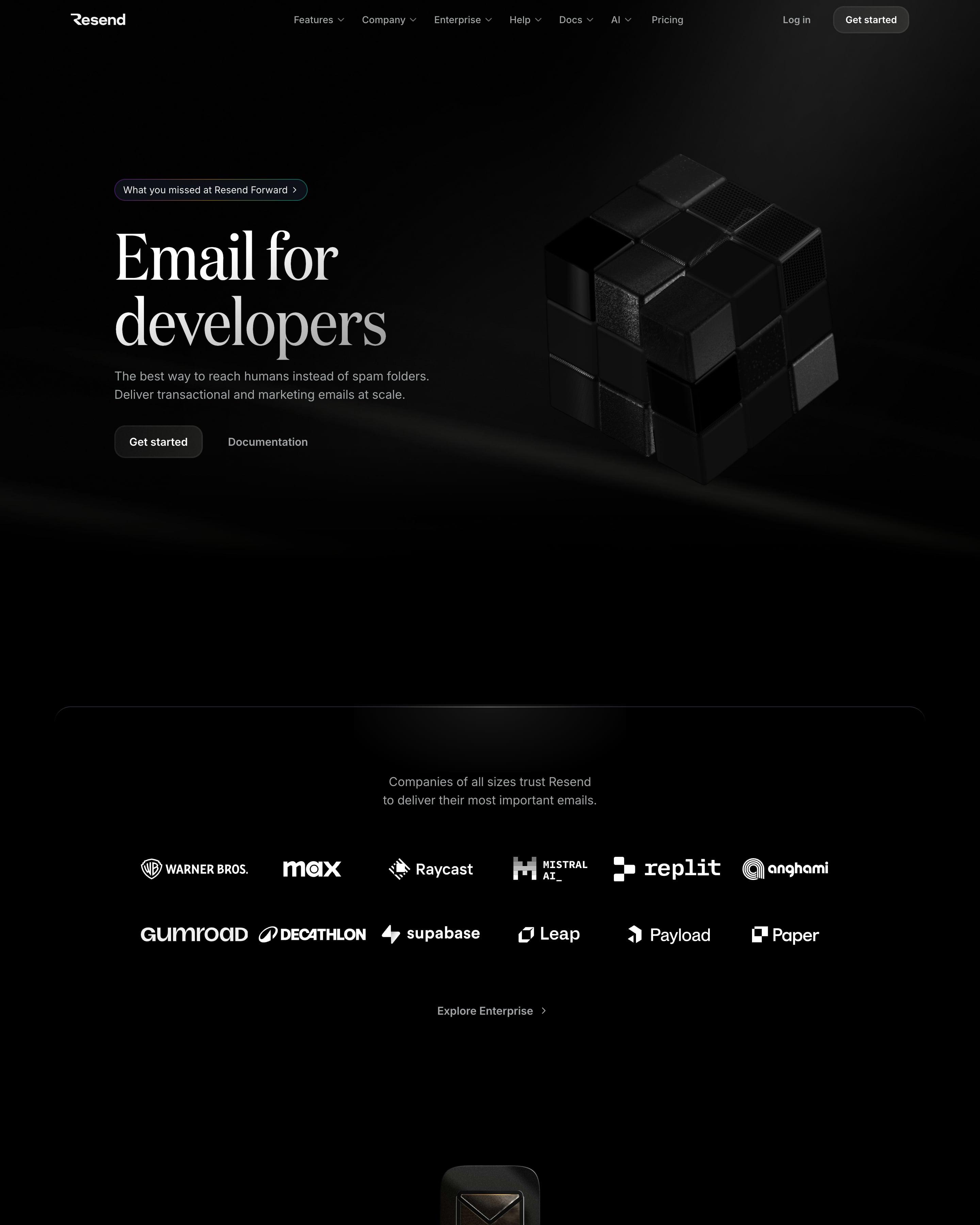
  3. Resend's homepage: Email for developers
    03

    A website that does the selling

    A $25,000 domain and a landing page with a 3D Rubik's cube. The handbook calls the website the sales team.

    See the proofFull playbook

  4. Zeno Rocha with Paul Graham at YC office hours
    04

    Credits for YC startups

    $25,000 in credits for startups in the current YC batch, and deal pages for other investors' portfolios.

    See the proofFull playbook

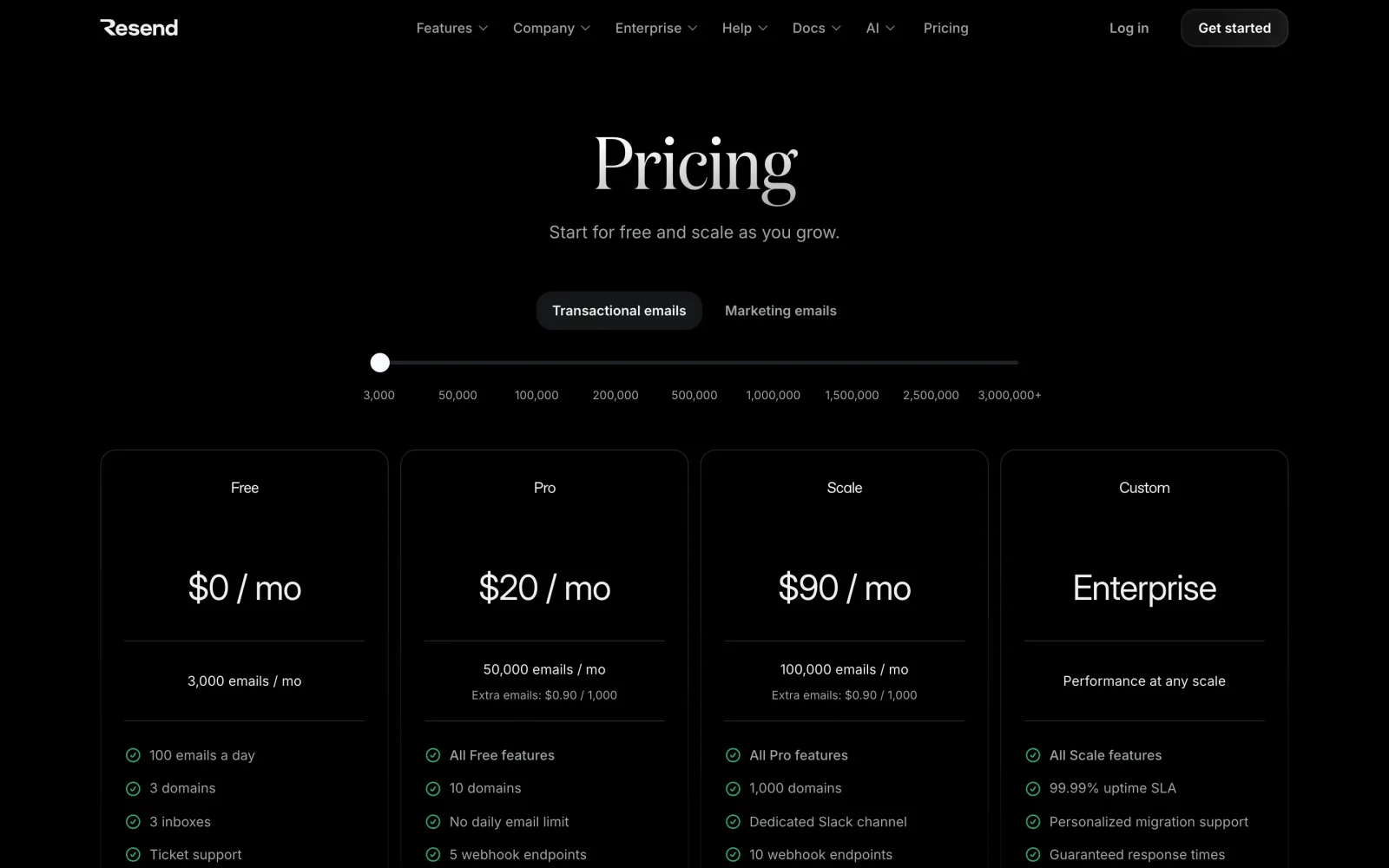
  5. Resend pricing: free plan with 3,000 emails a month
    05

    No sales call, no approval queue

    Sign up and send in minutes on a free tier of 3,000 emails a month; abuse is handled after sign-up.

    See the proof

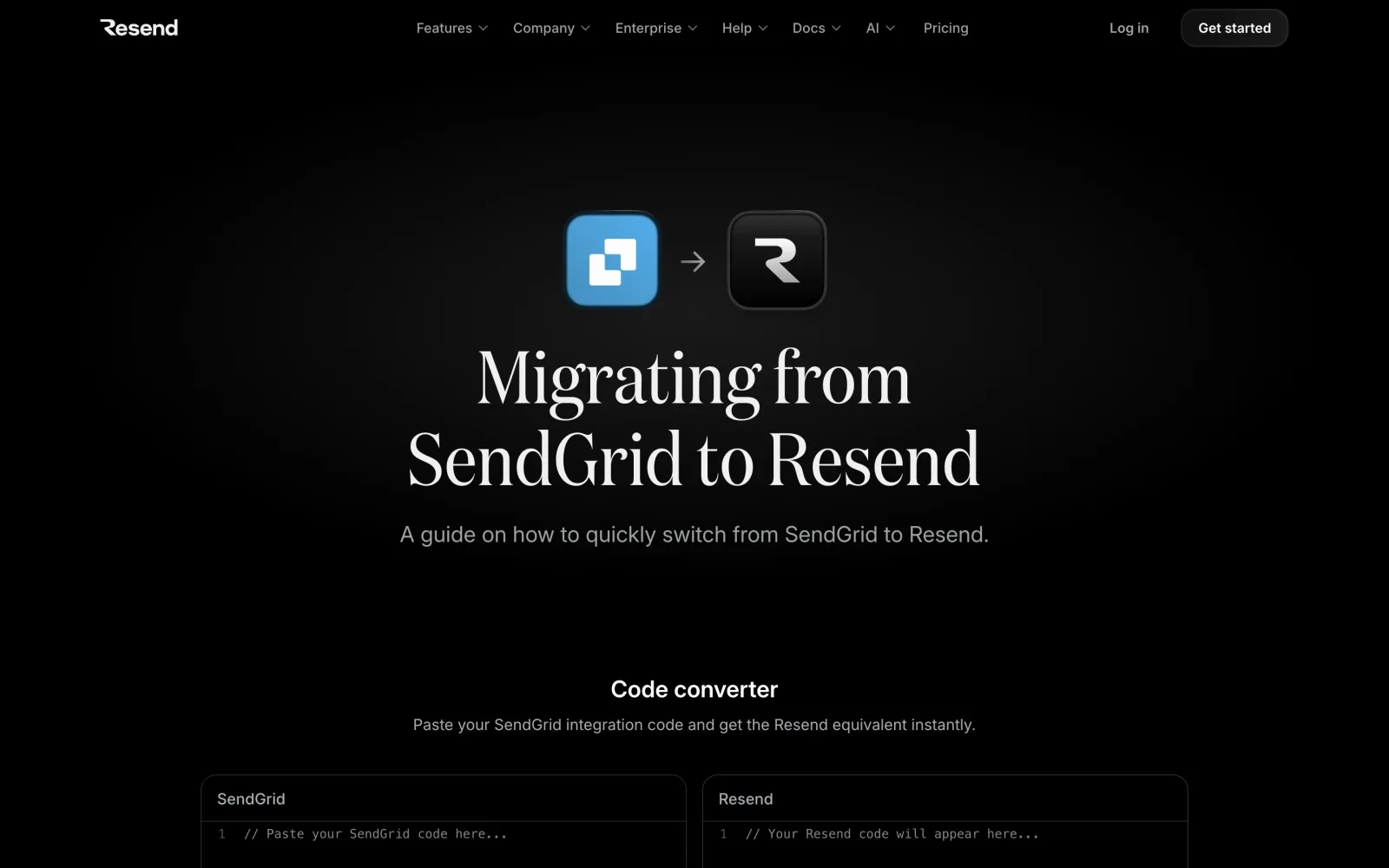
  6. Migrating from SendGrid to Resend, with a code converter
    06

    A switch guide for every rival

    Migration pages for SendGrid, Mailgun, Postmark, Mailchimp and Customer.io; the SendGrid one converts your code.

    See the proofFull playbook

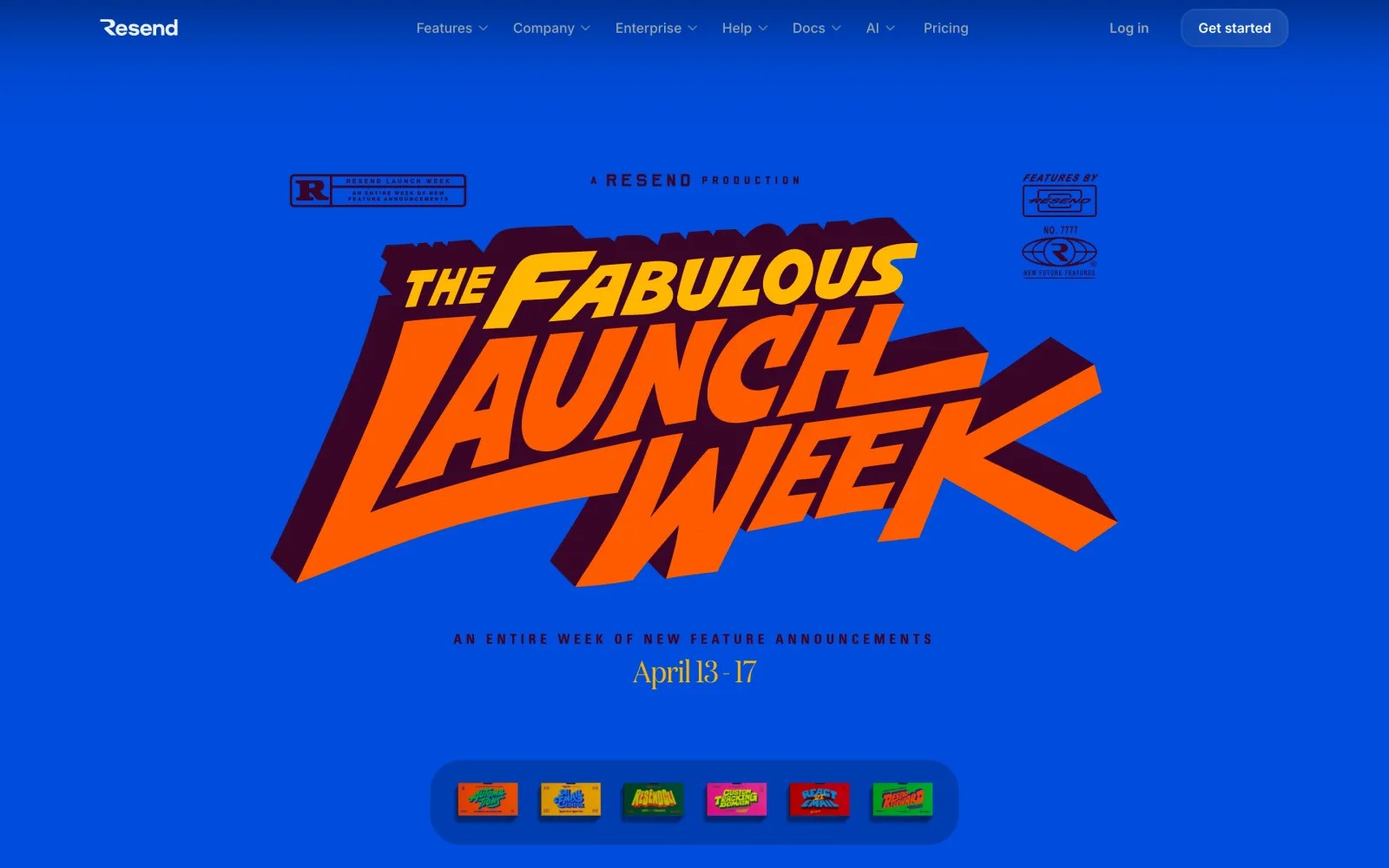
  7. The Fabulous Launch Week, Resend's sixth launch week
    07

    A heartbeat of launches

    Launch weeks two or three times a year, teased a week ahead, plus changelogs, blog posts and a social post a day.

    See the proofFull playbook

  8. Send emails with Claude Code, Resend's plugin page
    08

    Be the agent's default

    Markdown pages, an MCP server, a CLI, skills and plugins for Claude Code, Cursor and Codex, so agents pick Resend.

    See the proofFull playbook

Resend growth timeline

  1. First customer pays a $10 payment link

    Zeno Rocha and Bu Kinoshita had started the “Stripe of email” as a side project a month earlier. Source

  2. React Email launches

    12,000 visitors and 1,800 GitHub stars in its first days. Source

  3. Resend announced; YC Winter 2023 batch

    The launch post passes 1M views. Jonni Lundy joins the founding team. Source

  4. Public launch, free tier raised to 3,000 emails a month Source

  5. $3M seed round announced

    YC, SV Angel and founders of Figma, Vercel, Segment, WorkOS, Supabase and Sentry. Source

  6. Data breach; a 12-hour outage follows in February Source

  7. 100,000 users with a team of six Source

    100,000 users
  8. $18M Series A led by Andreessen Horowitz

    More than 200,000 developers signed up. Source

  9. 1M users; revenue up 5x in 2025

    Profitable since 2025; 28 people. Source

    1M users
  10. Claude Code picks Resend 62.7% of the time for email

    Zeno Rocha's reading of an outside study. Source

  11. First conference: Inboxes for agents and Forge, its own mail servers Source

  12. 6M users; most web traffic no longer human

    57 people; 18M weekly npm downloads. Source

    6M users

Open source first: React Email

Before announcing Resend, Zeno Rocha and Bu Kinoshita released React Email in December 2022: a free library for building email templates with React and Tailwind. It worked with other email providers too, so it spread on its own, and the sending API followed for people who already had the templates. By November 2026 it had 20,000 GitHub stars.

Zeno RochaFounder and CEO, Resend
The last few days have been crazy! 🤯 We launched the http://react.email docs and got a _lot_ of attention. More than 12k people visited the new website, and we crossed 1.8k stars on GitHub.

X25 likesView on X

Zeno RochaFounder and CEO, Resend
I saw this Notion doc that I found from very early on; it had only three bullet points for this master plan, which was “Build an open source project around email. Establish ourselves as email experts. And then build a SaaS product for it.” … React email is our Next.js, plain and simple. And we wanted an open source component, even though we’re not an open source company, and we don’t plan to be…

The Changelog, episode 585Read the original

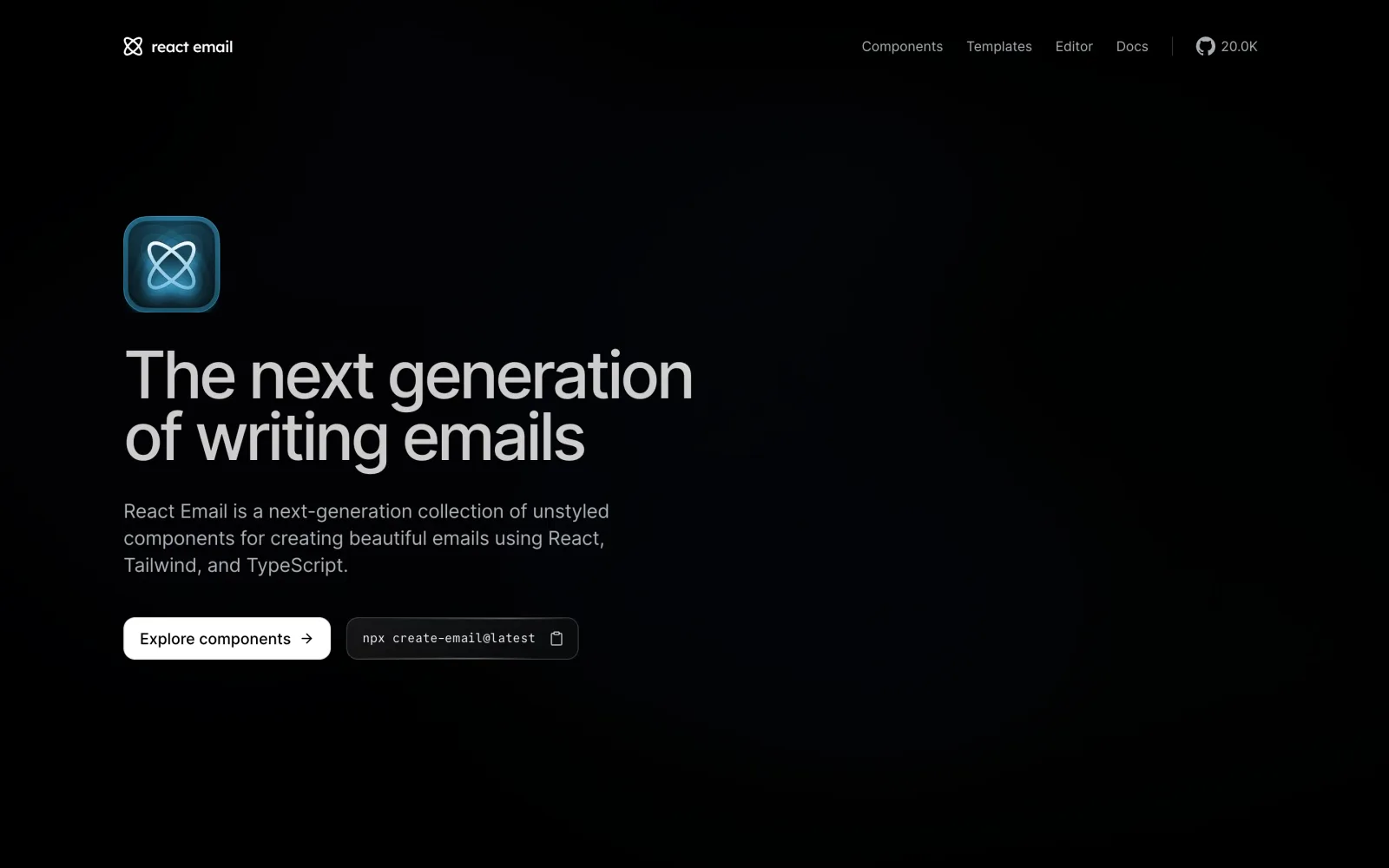
React Email: the next generation of writing emails, with 20.0K GitHub stars
React Email, November 2026: 20,000 stars on GitHub.

A $25,000 domain and a launch post with 1M views

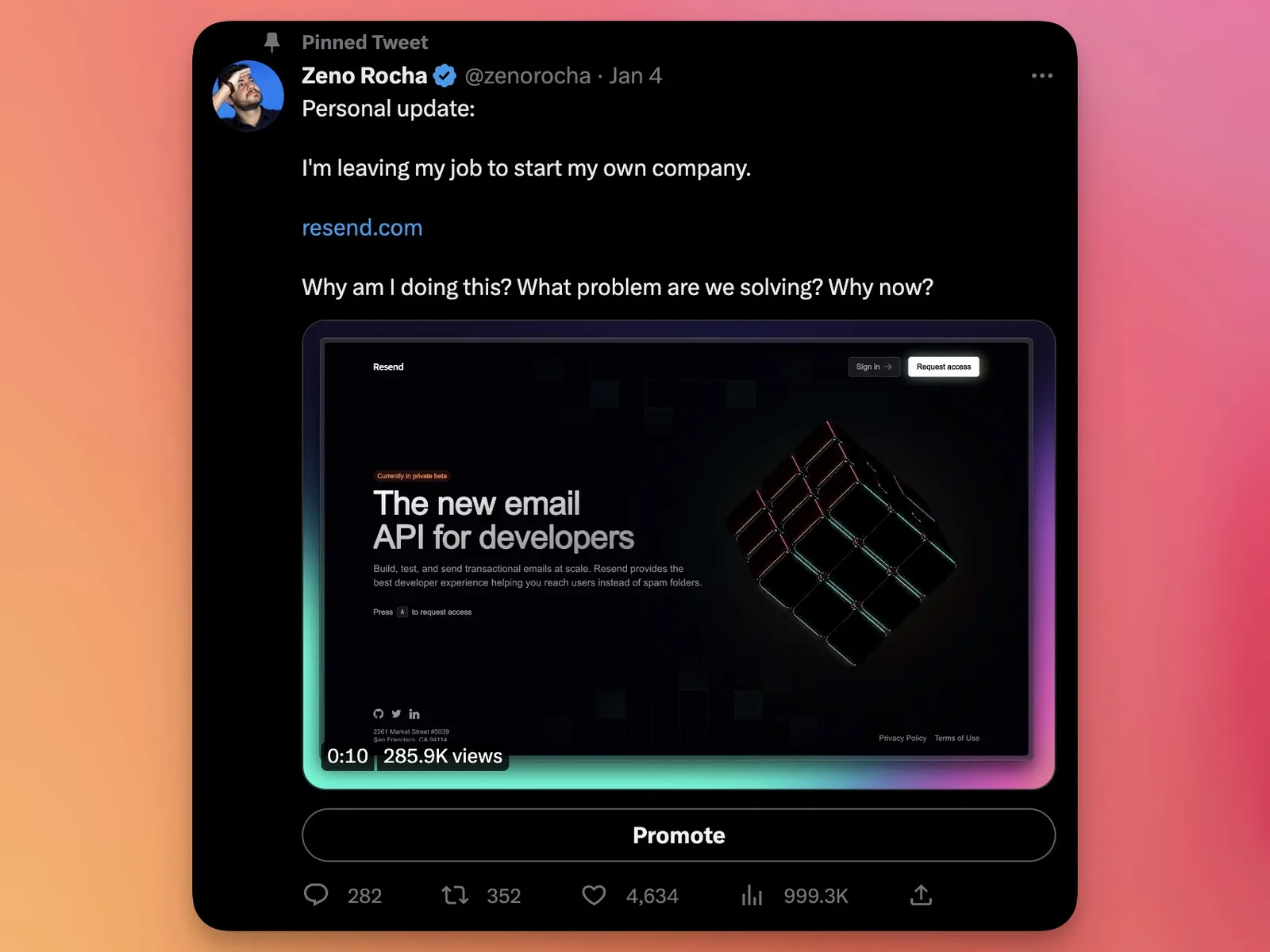
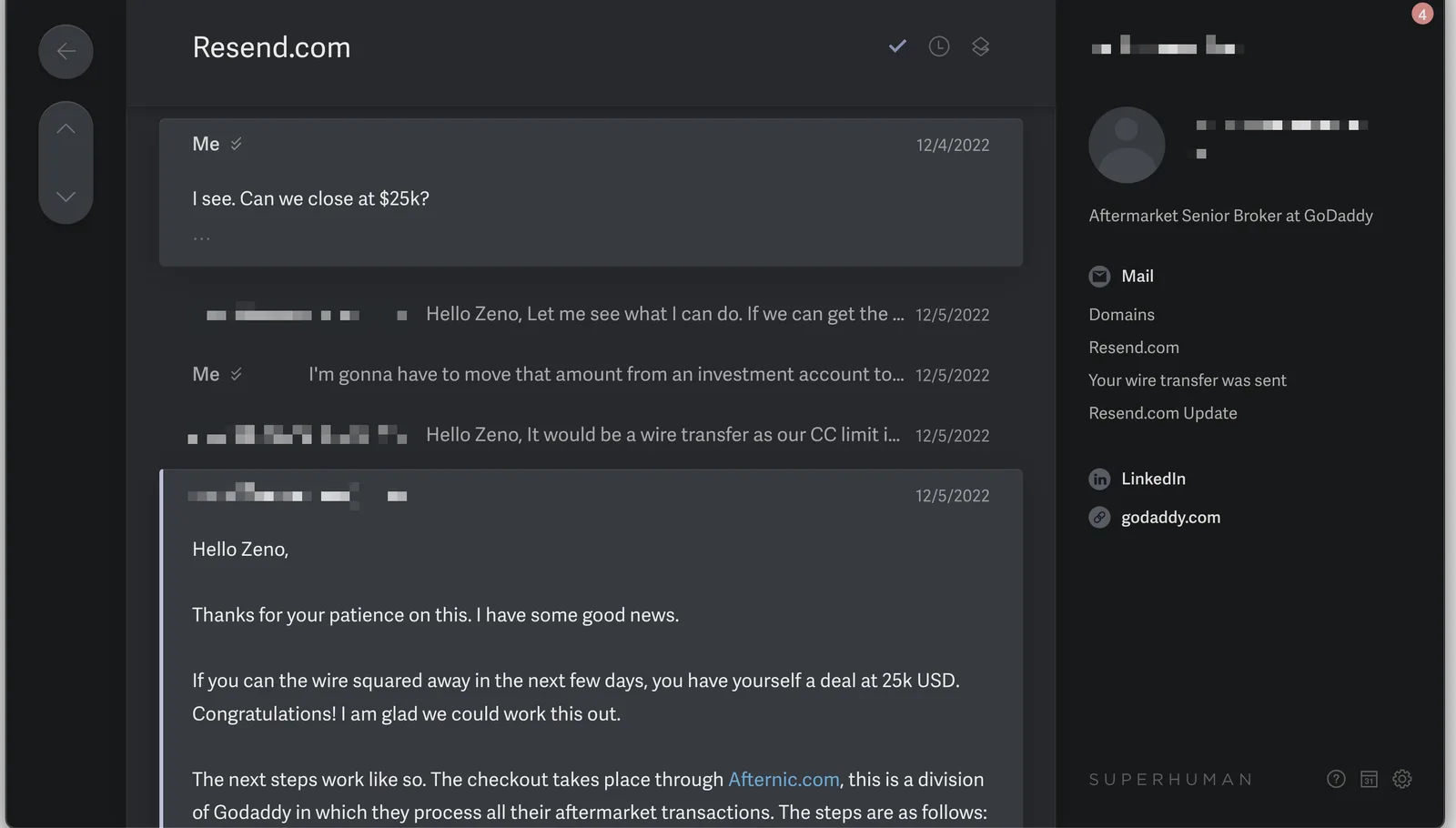
Zeno had posted on Twitter since 2009 and had 39,400 followers when he announced Resend on January 4, 2023. The post passed a million views, and the waitlist reached 6,338 people in seven weeks. The domain cost $25,000, talked down from $39,999.

Zeno RochaFounder and CEO, Resend
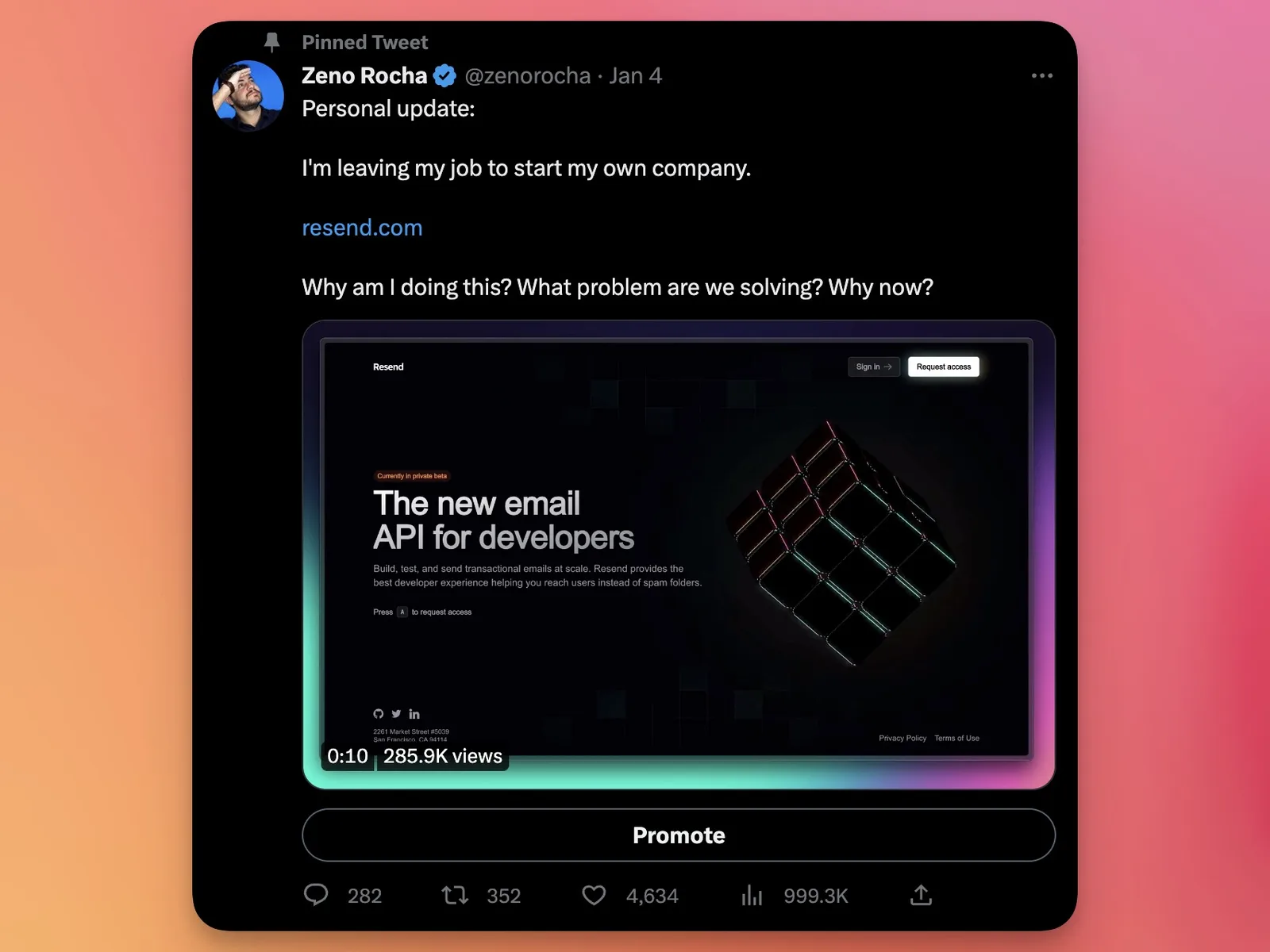
Personal update: I'm leaving my job to start my own company. http://resend.com Why am I doing this? What problem are we solving? Why now?
Still from the launch video: Resend's first landing page, “The new email API for developers”, in private beta, with a spinning Rubik's cube

X5.1K likes1.3M viewsView on X

Zeno RochaFounder and CEO, Resend
After years of doing that, I built a following of 39.4k people. This came in handy when we were launching Resend. On January 4th, 2023 at 7:11 am PT, I published the first tweet about Resend. This tweet had 999.3k views, 4,634 likes, 352 retweets, and 282 replies. … Tip #4 - Post a video - from all the possible content formats, video is the one that performs best nowadays.
Zeno Rocha's pinned launch post on X: 999.3K views, 4,634 likes, 352 reposts and 282 replies

Resend blogRead the original

Zeno RochaFounder and CEO, Resend
When I first saw the asking price for resend.com I was in shock. No way I'd pay $39,999 for a domain. … After a few of days of back and forth, we settled on $25,000. … It was a long and painful process, but it was worth it.
Zeno Rocha's email thread with a GoDaddy domain broker, December 2022: “Can we close at $25k?” and the reply agreeing to a deal at 25k USD

zenorocha.comRead the original

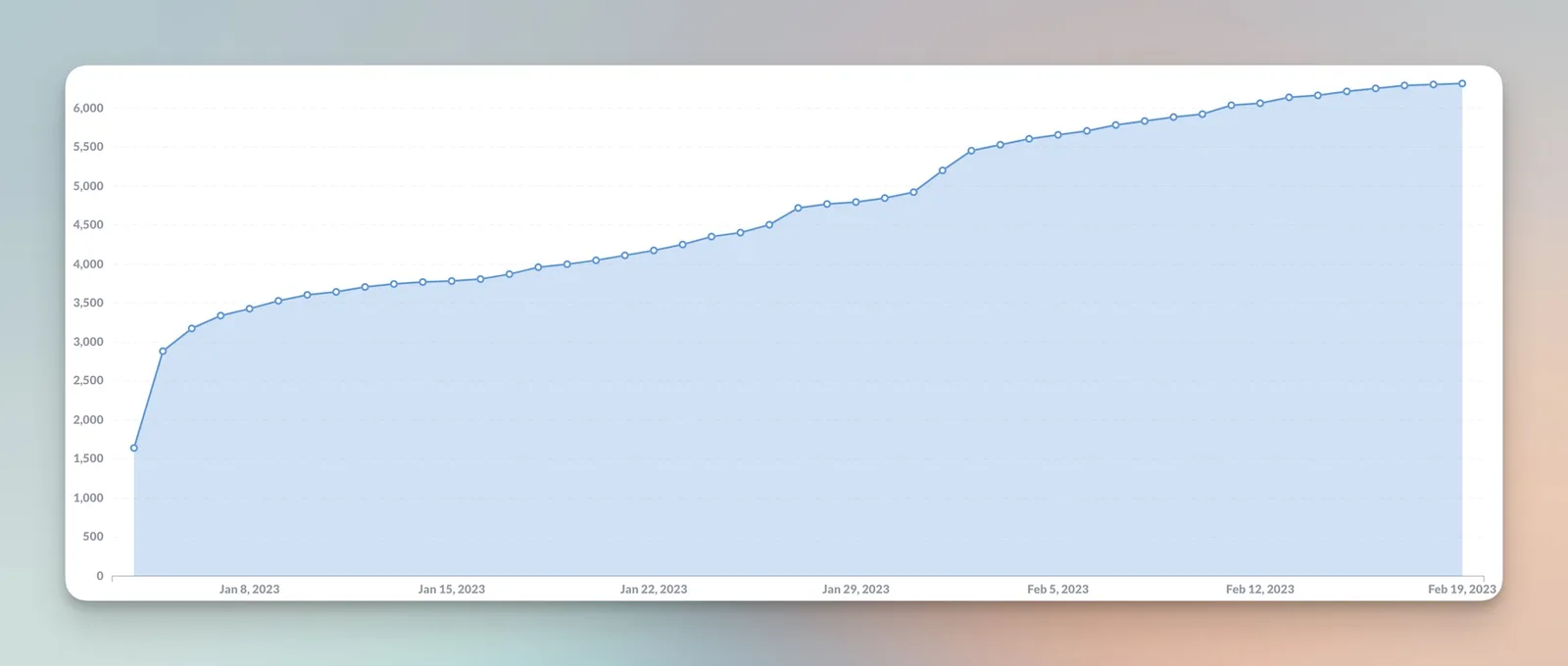
Resend's waitlist from January 4 to February 19, 2023: a jump to about 3,000 on launch day, then steady growth to about 6,300
The waitlist: 6,338 people in seven weeks.

The full playbook:Build in public

Y Combinator, then 3,464 sign-ups a week

Resend joined YC's Winter 2023 batch with three people. Zeno says Paul Graham told him that passing on SendGrid in 2009 was one of YC's worst passes. Weekly sign-ups went from about 146 during the batch to about 3,464 a year later, and Resend now gives startups in the current YC batch $25,000 in credits.

Zeno RochaFounder and CEO, Resend
I'm excited to announce that http://resend.com is now backed by @ycombinator! Our goal is to reimagine how email can be done in 2023 and beyond. With YC, we have the right partners to make this a reality.
Zeno Rocha standing behind the Y Combinator sign

X941 likes185K viewsView on X

Zeno RochaFounder and CEO, Resend
During that time, we used to have around 146 new sign ups every week, which seemed like a lot for us to handle as a small team of 3 people. … Today, we have around 3,464 new sign ups every week. … One of the reasons why we were able to grow is because of an immense sense of urgency.

zenorocha.com (“How is life post YC?”)Read the original

Zeno Rocha with Paul Graham at Y Combinator
First office hours with Paul Graham, on Resend's page for YC founders.

The full playbook:Startup program

No sales call, no approval queue

Resend's handbook says the website is its sales team: people sign up, send and pay without talking to anyone. The free tier went from 100 to 3,000 emails a month in June 2023, new senders don't wait for a manual review, and switch guides cover SendGrid, Mailgun, Postmark, Mailchimp and Customer.io.

Zeno RochaFounder and CEO, Resend
I would hate going to this service, and the first thing they ask me is to go on a call, or schedule a demo. No, I just want to try it out. … Because the way it happens is I’m on a Sunday afternoon, 3pm, with my laptop, and then I’m checking some stuff out, and then I see this new service and I’m like “Oh, let me give it a shot.” … Let me talk to my team Monday morning, and let me show them that “Hey, I built this POC over the weekend, in 30 minutes. We should maybe use this at work.”

The Changelog, episode 585Read the original

Jonni LundyCo-founder and COO, Resend
Often, the abuse becomes such an operational burden that the product takes shape around it. This leads to approval flows for production access, requiring credit card details at signup, and ultimately removing the free tier. … Friction points like these make setting up email feel like getting your driver's license. We believe developers shouldn't have to wait in a queue or jump through hoops to start sending emails. And that's why our philosophy is to always assume positive intent.

Resend blog (“$3M to Make Email Safer”)Read the original

Resend pricing: Free at $0 for 3,000 emails a month, Pro at $20, Scale at $90, and Enterprise
Pricing, November 2026: the free plan still sends 3,000 emails a month.
Migrating from SendGrid to Resend, with a code converter
The SendGrid switch guide converts your code to Resend's.

The full playbook:Competitor replacementComparison pages

The heartbeat: always shipping in public

Asked how Resend grew so fast, Zeno answers with one word: momentum. His heartbeat framework sets the rhythm: launch weeks two or three times a year, changelogs and blog posts once or twice a month, a social post a day. Resend has run six launch weeks since March 2023, published its handbook in 2024, and held its first conference in San Francisco in October 2026.

Zeno RochaFounder and CEO, Resend
"How did your startup grow so fast?" I've been getting that question a lot, and I believe it comes down to a single word: momentum. … As makers, we not only have to ship software. We have to ship and talk about it. We have to push new content constantly if we want to create a feeling of “always shipping”. … Launch Weeks are the big peaks. It's when we launch 5 new features in 5 days.

zenorocha.com (“The Heartbeat Framework”)Read the original

The Fabulous Launch Week, April 13–17, 2026
Launch week six, April 2026: each one gets its own art direction.
Resend's changelog
The changelog, updated once or twice a month.
Resend's handbook: the process behind Resend
The public handbook, including how Resend approaches marketing.

The full playbook:Feature teasersLaunch videosOffline events

Agents became users

In February 2025 Zeno wrote that agents pick whatever tool is easiest, so Resend built for them: Markdown versions of every page, an MCP server, a 53-command CLI and agent skills. A year later he said Claude Code recommended Resend 62.7% of the time for email, and that 1 in 4 people who say where they found Resend name Claude. By November 2026, more than half of its website traffic was no longer human.

Zeno RochaFounder and CEO, Resend
Agents will pick whatever tool is easiest to perform a task. If you ask an agent to send an email, they won't be able to wait 2 days for a service to manually review and authorize their sending. Agents are simply not going to "contact sales" or "book a demo". … We want to make Resend not only the "email for developers", but the "email for agents" too.

Resend blog (“What is AX (Agent Experience)”)Read the original

Zeno RochaFounder and CEO, Resend
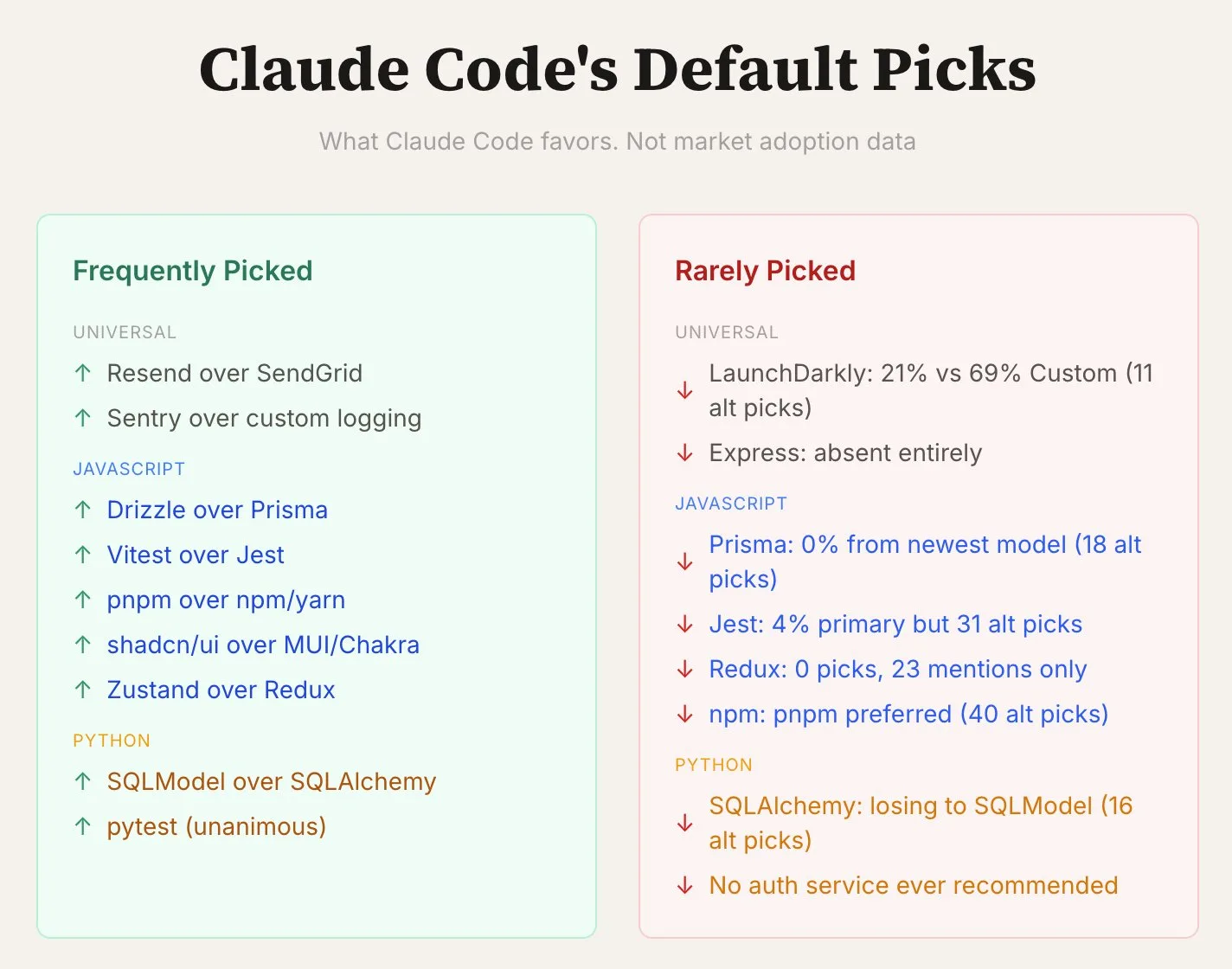
At @resend we're seeing this firsthand. Claude Code recommends us 62.7% of the time for email. Our internal data shows that, of the people who say where they found Resend, 1 in 4 say Claude. This doesn't translate to just new sign ups. It translates to actual revenue.
Claude Code's Default Picks, from the study in Zeno Rocha's article: “Resend over SendGrid” first on the frequently picked list

X (article: “What Claude Code Actually Chooses”)97 likes55K viewsView on X

Zeno RochaFounder and CEO, Resend
today is a special day. @resend just crossed 6,000,000 users! it took us three years to reach the first 3M. the next 3M took less than six months. something else changed too: more than half of our traffic is no longer human. here's how we're seeing the future...
Resend's users from January 2023 to November 2026: 100K in March 2024, 1M in November 2025, 3M in May 2026, 6M in November 2026

X731 likes23K viewsView on X

Send emails with Claude Code: Resend's plugin page
One of Resend's pages for coding agents: a Claude Code plugin with its MCP server and skills.
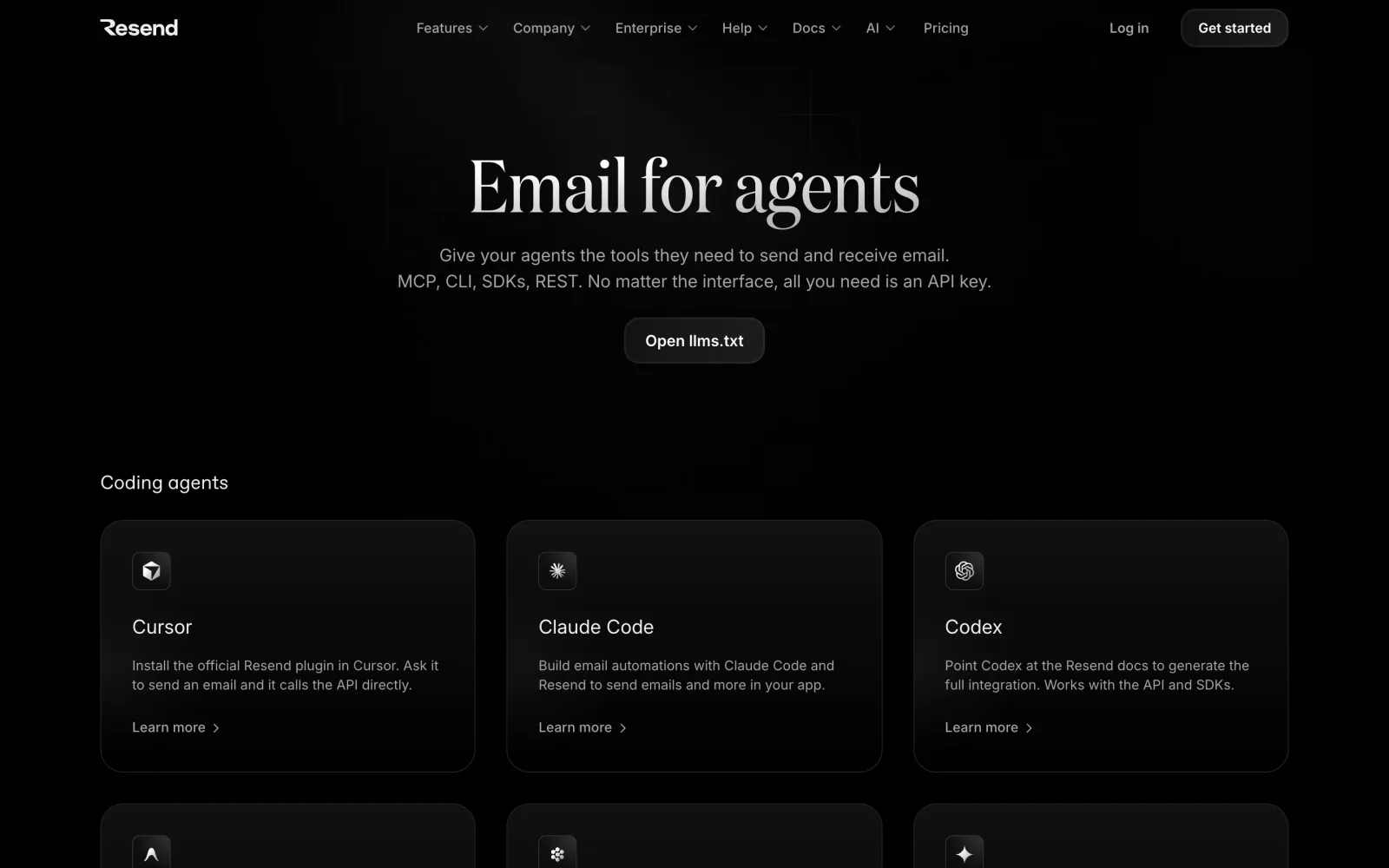
Email for agents: MCP, CLI, SDKs and REST, with cards for Cursor, Claude Code and Codex
Email for agents, with an llms.txt button up top.

The full playbook:AEO / GEOAI app directories

Profitable, then a sales team

Resend grew revenue 5x in 2025 and says it has been profitable since that year. It bought two companies, Mergent and Briefer, in 2025, began hiring salespeople in 2026, and in October 2026 launched Forge, its own mail servers on IP blocks it owns. Its CEO put paying customers at 120,000 in 2026, when it had 4.3 million users.

Zeno RochaFounder and CEO, Resend
Resend is profitable. It has been since last year. We didn't get there by cutting costs. We never reduced our cloud spend, never trimmed our Datadog bill, and never slowed hiring to hit the number sooner. … We're profitable, we'll remain profitable, and we'll continue to move insanely fast.

Resend blog (“3,000,000 users”)Read the original

Zeno RochaFounder and CEO, Resend
When we started Resend, we didn't have a sales team. One of our key insights was to focus on Developer Experience (DX) as a way to differentiate from others and find product-market fit. As our customers grew and started using the product for more use cases, we realized that Buyer Experience (BX) was just as important.

Resend blog (“1,000,000 users”)Read the original

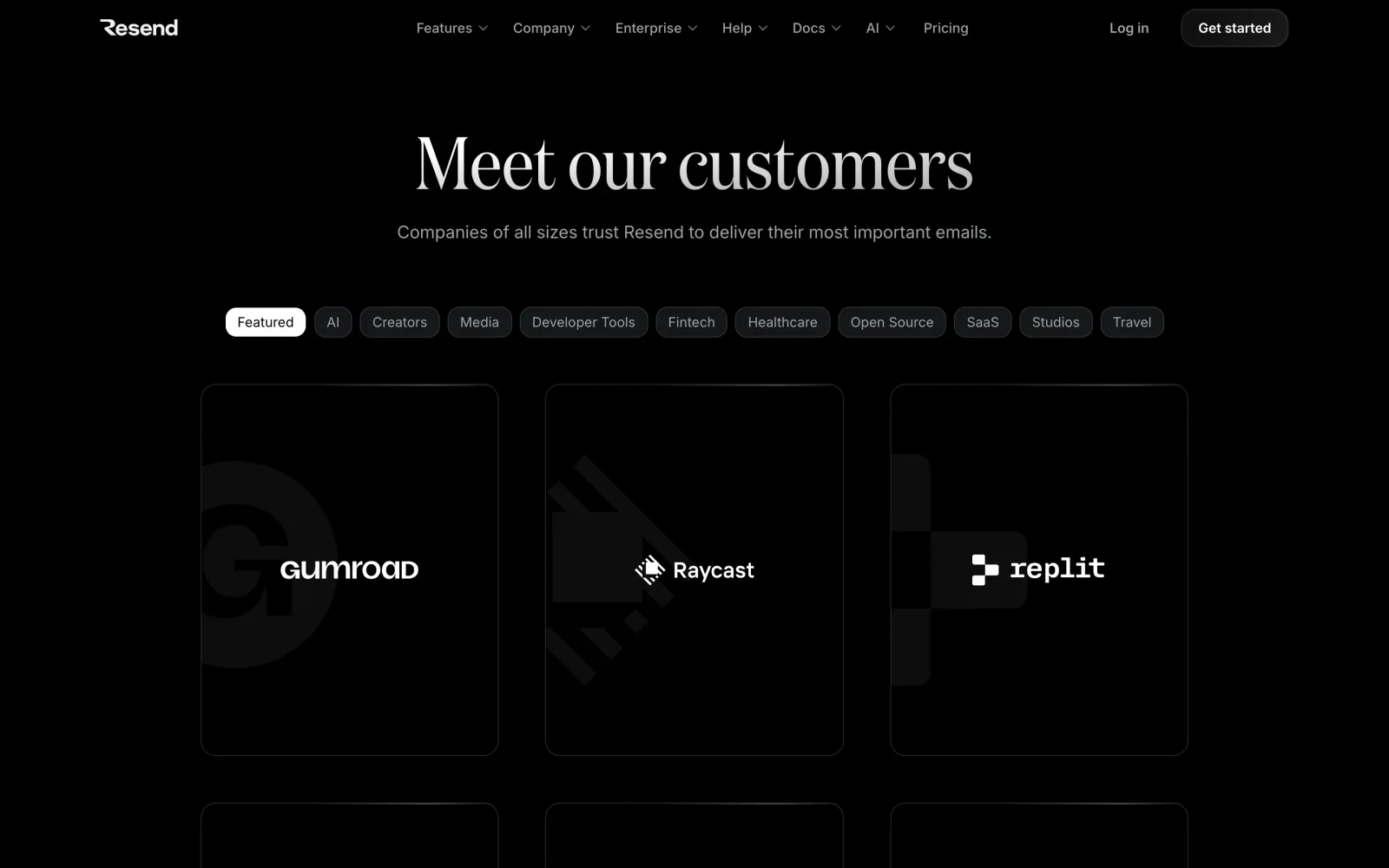
Resend customers page: Gumroad, Raycast and Replit
Customer stories, led by Gumroad, Raycast and Replit.

What went wrong

Resend wrote up its failures in public:

  • In January 2024 attackers used a database key left exposed in the dashboard's code to read customer data, including recipients, subjects and contacts, but not email bodies. Resend reported it to the FBI and data regulators.
  • A month later a bad database migration took Resend down for about 12 hours.
  • A Cloudflare outage stopped sending for three hours in November 2025, and a database overload delayed emails by about two hours in February 2026.
  • Open sign-ups attract spammers. In October 2025 Resend committed $3M over three years to safety work.
Zeno RochaFounder and CEO, Resend
On January 7th, attackers used a leaked environment variable of the Resend database API to access customer data including Emails Sent, Domains, API Keys (encrypted), Logs, and Contacts, affecting all users. The actual content of the emails was not accessed, nor were any unencrypted private keys for the Resend API or DKIM. … We sincerely apologize to everyone affected by this incident, and we appreciate your understanding as we learn to navigate this challenging period.

Resend blog (incident report)Read the original

What you can copy from Resend

  1. 1.Release a free, open-source tool for the job before the product, so your code is already in developers' projects when they need you.
  2. 2.Launch from the founder's own account, early on a weekday, with a video, and answer every reply (build in public).
  3. 3.Let people sign up and send without a call or a review; fight abuse after sign-up instead.
  4. 4.Keep a heartbeat: launch weeks two or three times a year, teased a week ahead, and something new every week (feature teasers).
  5. 5.Write your docs, pricing and pages for agents too: Markdown versions, an MCP server, skills (AEO / GEO).
  6. 6.Give every rival a switch guide, with a code converter if you can (competitor replacement).

Knowledge graph

Everything LeadWave has on Resend: its leaders and our pages on it.

Frequently asked questions

More company dossiers

All dossiers
  • Clay logo

    Clay

    How Clay Grew: The GTM Data Company’s Road to $100M ARR

    Clay, the go-to-market data company, took six years to reach $1 million in ARR and two more to pass $100 million, in December 2025. It got there by committing to cold email agencies, turning users into its marketers and naming a new job, the GTM engineer. By September 2026 it had more than 17,000 customers and a $7.1 billion valuation.

    Read


  • Cluely logo

    Cluely

    How Cluely Blew Up: Rage Bait, 700 Clippers and a Retracted Revenue Claim

    Cluely went from a Columbia suspension to $20.3 million in funding in about three months by treating attention as the product: a provocative launch film, 50 advertised internships and over 700 paid clippers. In March 2026 its CEO admitted that the $7 million in annual recurring revenue he had claimed was false. His corrected figure for June 2025 is $5.2 million.

    Read
  • Higgsfield logo

    Higgsfield

    How Higgsfield Grew: From One Last Attempt to a $1.35B Run Rate

    In early 2025 Higgsfield had burned most of its seed money on a mobile app people didn't keep using. It relaunched on the web with camera controls that March, and by October 2026 its CEO put its annualized run rate at $1.35 billion. Its newest channel, a ChatGPT plugin, brought 100,000 new paid subscribers in 10 weeks.

    Read
  • Lovable logo

    Lovable

    How Lovable Grew So Fast: From a GitHub Project to $600M ARR

    Lovable failed two launches in 2024 under the name GPT Engineer. The third, that November, reached $10 million in ARR in about two months, and by September 2026 the company reported more than $600 million. Its leaders credit a CEO who posted everything in public and a free product they treat as the marketing budget.

    Read
  • Mercor logo

    Mercor

    How Mercor Grew: From a Hackathon to a $3B Run Rate

    Mercor started in 2023 as three 19-year-olds placing engineers from India with US startups. A meeting with xAI pointed it at AI labs, and paid referrals helped build a network of more than 5 million experts. In November 2026 its CEO put its run rate at $3 billion. That figure is gross: experts reportedly keep 60% to 70% of it.

    Read
  • Notion logo

    Notion

    How Notion Grew: From Near-Death in Kyoto to 100M Users

    In 2015 Notion laid off its team, sublet its office and moved to Kyoto to rebuild before the money ran out. Its users then did most of the marketing, with templates, local groups and videos. It passed 100 million users in July 2024 and reportedly $600 million in annual recurring revenue by December 2025.

    Read