
Skip to content
Canva logoCanvaSydney (Surry Hills), Australia
Website

How Canva Grew: Free Templates, 100 Languages and 265M Users

Curated by Khrystyna Oleksiienko · Published

Canva launched in 2013 after three years of investor rejections. A generous free plan, a landing page for almost every design search and a product in 100 languages took it to 265 million monthly users and over $4 billion in annualized revenue by the end of 2025. In 2026 growth slowed, and Canva restructured 22% of its staff.

Monthly active users
265M
Dec 2025
Paying users
31M
Dec 2025
Annualized revenue
$4B+
Dec 2025
Profitable, the company says
9 years
Aug 2026

Canva’s growth in charts

Canva revenue and ARR over timeAnnualized revenue and ARR figures, as each source reported them. Hover or tap the line for each figure.
$0$1B$2B$3B$4B202320242025$4B
People using Canva every monthCanva's own figures, as reported. It took three years to reach 1 million monthly users and two more to reach 10 million.
0100M200M300MJun 2020: 30M2020Apr 2021: 55M+Sep 2021: 60M+Oct 2022: 100M+2022Mar 2023: 125MAug 2023: 135M+Oct 2024: 200M+2024Aug 2025: 230M+Sep 2025: 240M+Dec 2025: 265M+265M
Canva's valuationFunding rounds until 2021, share sales after that. The 2026 point is the value reportedly set for employee shares; investors marked Canva at $30–35B that year.
$0$20B$40B$60BJan 2018: $1B2018Jun 2020: $6B2020Apr 2021: $15B2021Sep 2021: $40BApr 2024: $26B2024Oct 2024: $32BAug 2025: $42B$42B2025Aug 2026: $31B (employee shares)$31B2026
Nonprofits on Canva's free programRegistered nonprofits get Canva's paid plan free. Figures from the founders and the company.
0100K200K300K400KDec 2016: 7,000+7KDec 2016Sep 2020: 50,00050KSep 2020Aug 2023: 400,000400KAug 2023

The Canva growth playbook at a glance

8 moves, one card each. The proof is further down the page; the full how-to is on each tactic’s page.

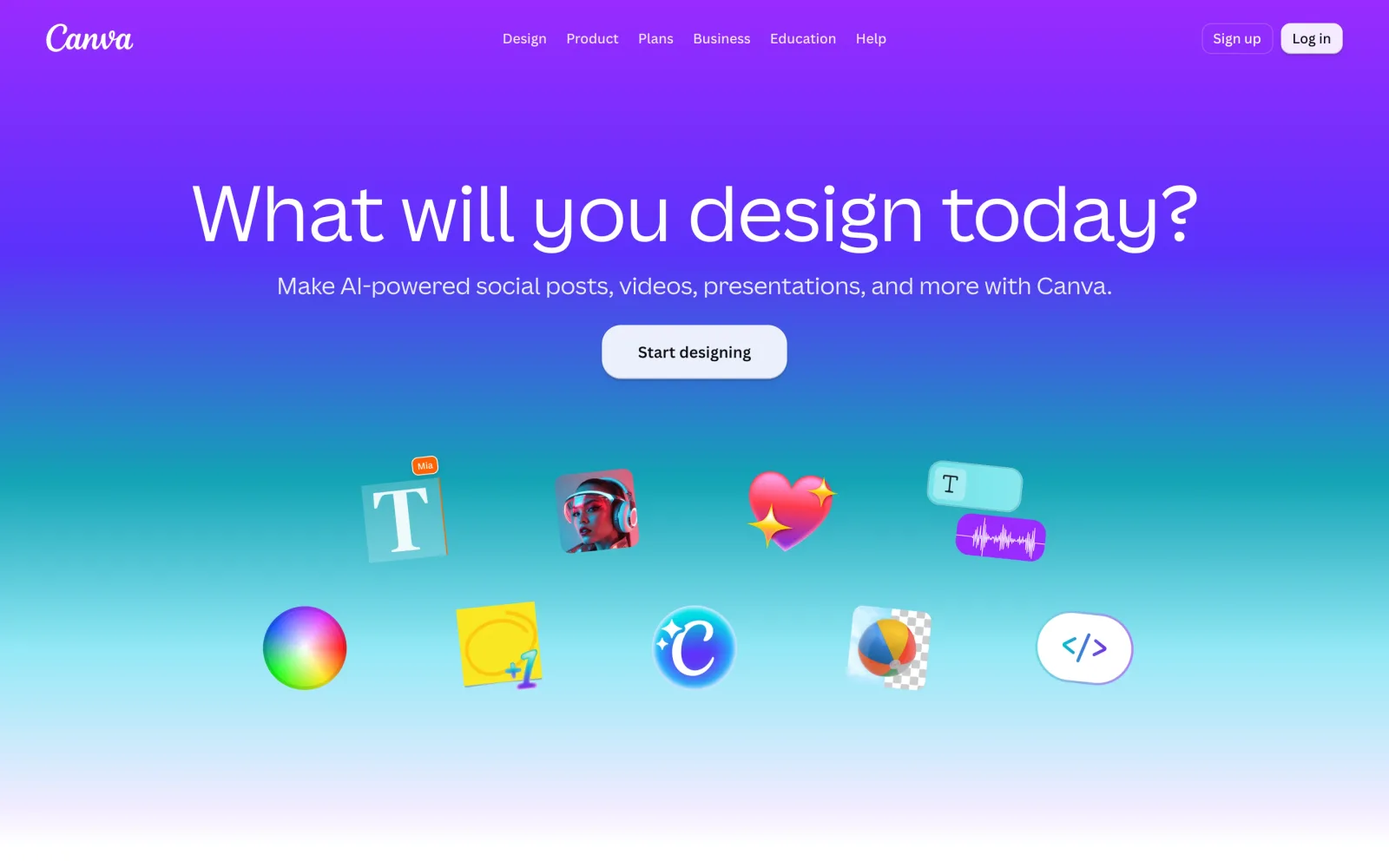
  1. Canva's homepage: What will you design today?
    01

    A free plan worth sharing

    Generous on purpose, so people make something, share it and bring in the next user. Only a minority of traffic comes from paid channels.

    See the proofFull playbook

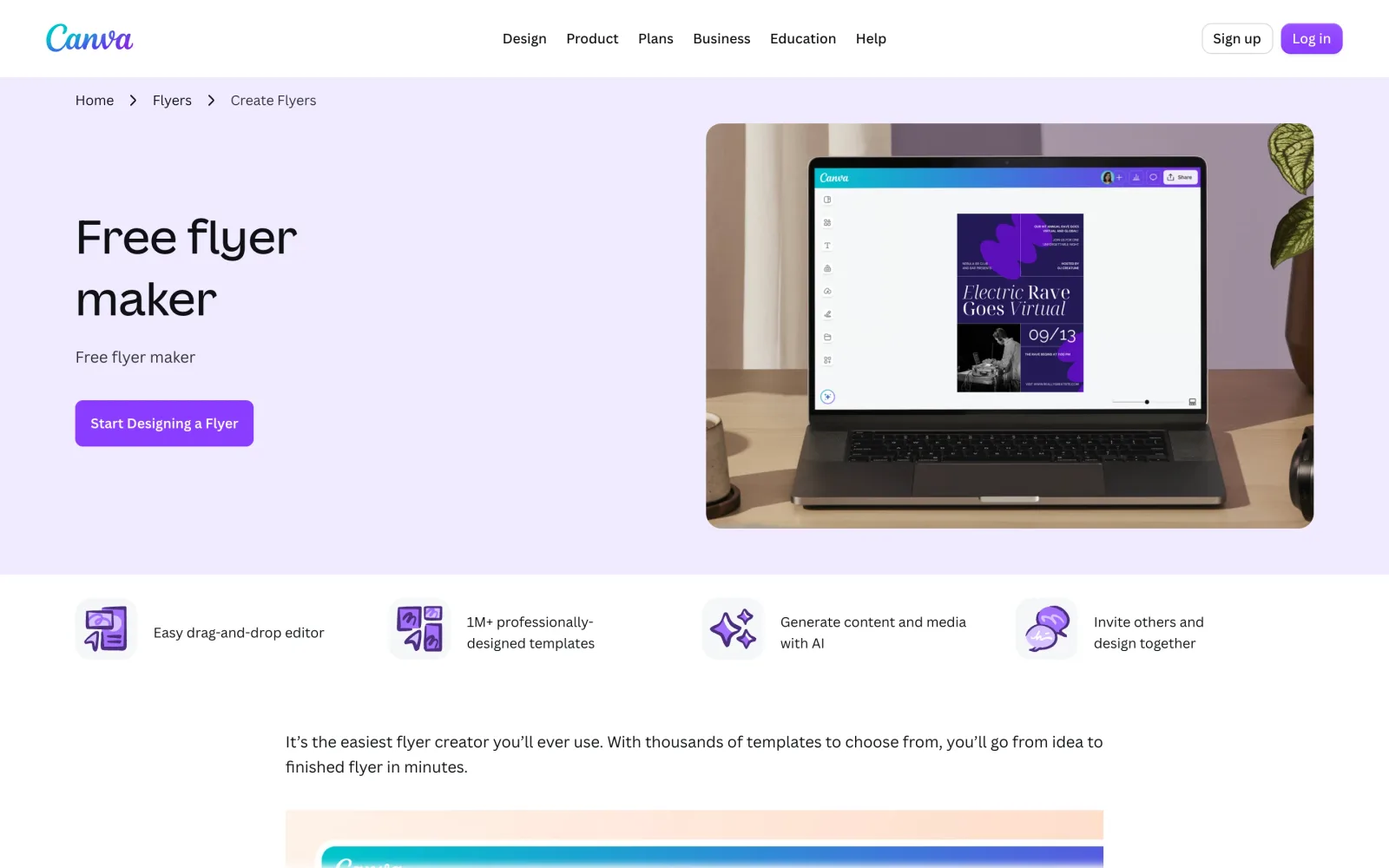
  2. Canva's free flyer maker landing page
    02

    A landing page for every design search

    Pages like “free flyer maker”, thousands of them, each opening straight into the editor.

    See the proofFull playbook

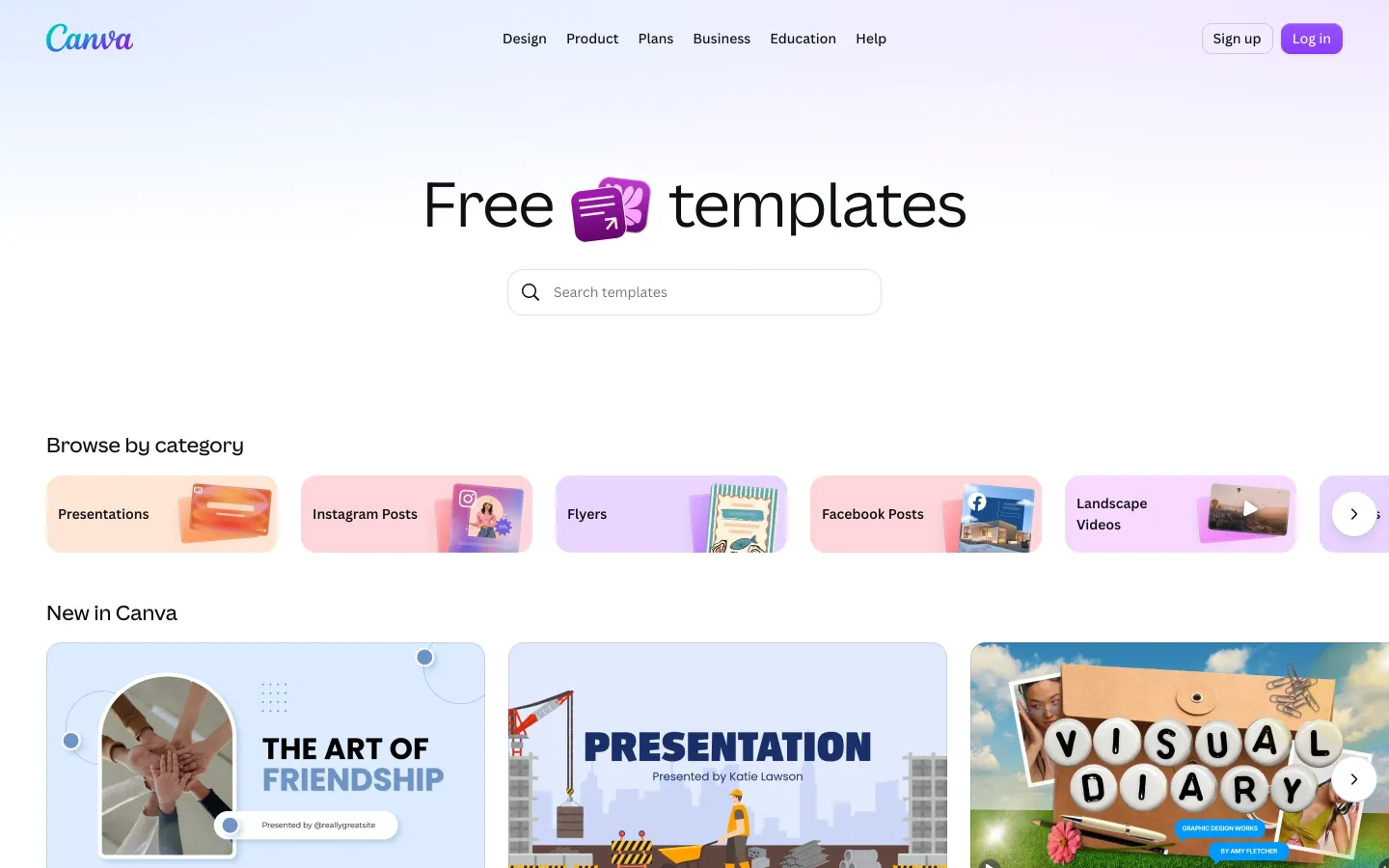
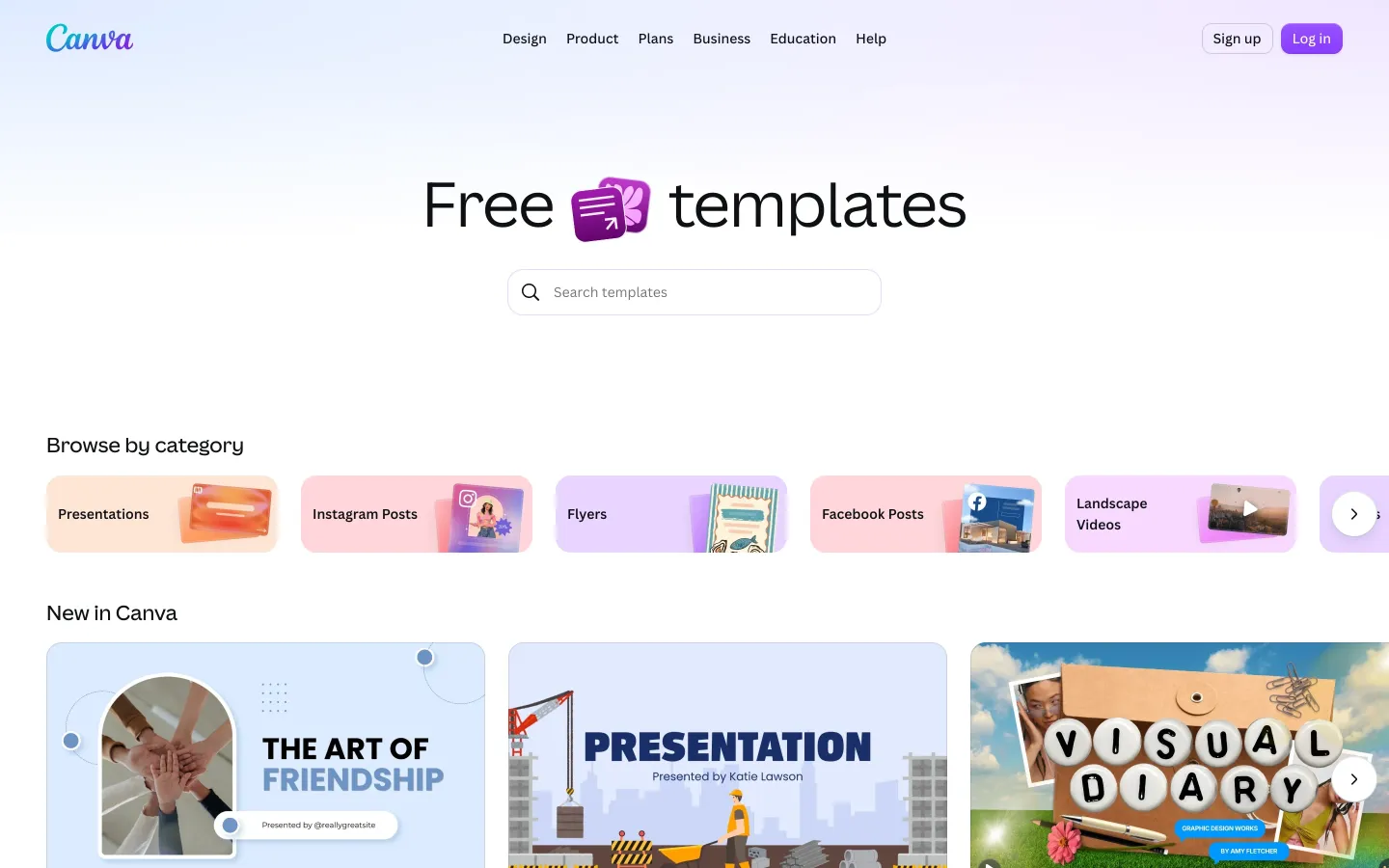
  3. Canva's free templates page
    03

    Templates for every job

    Ready-made posts, decks, resumes and posters, so nobody starts from a blank page.

    See the proofFull playbook

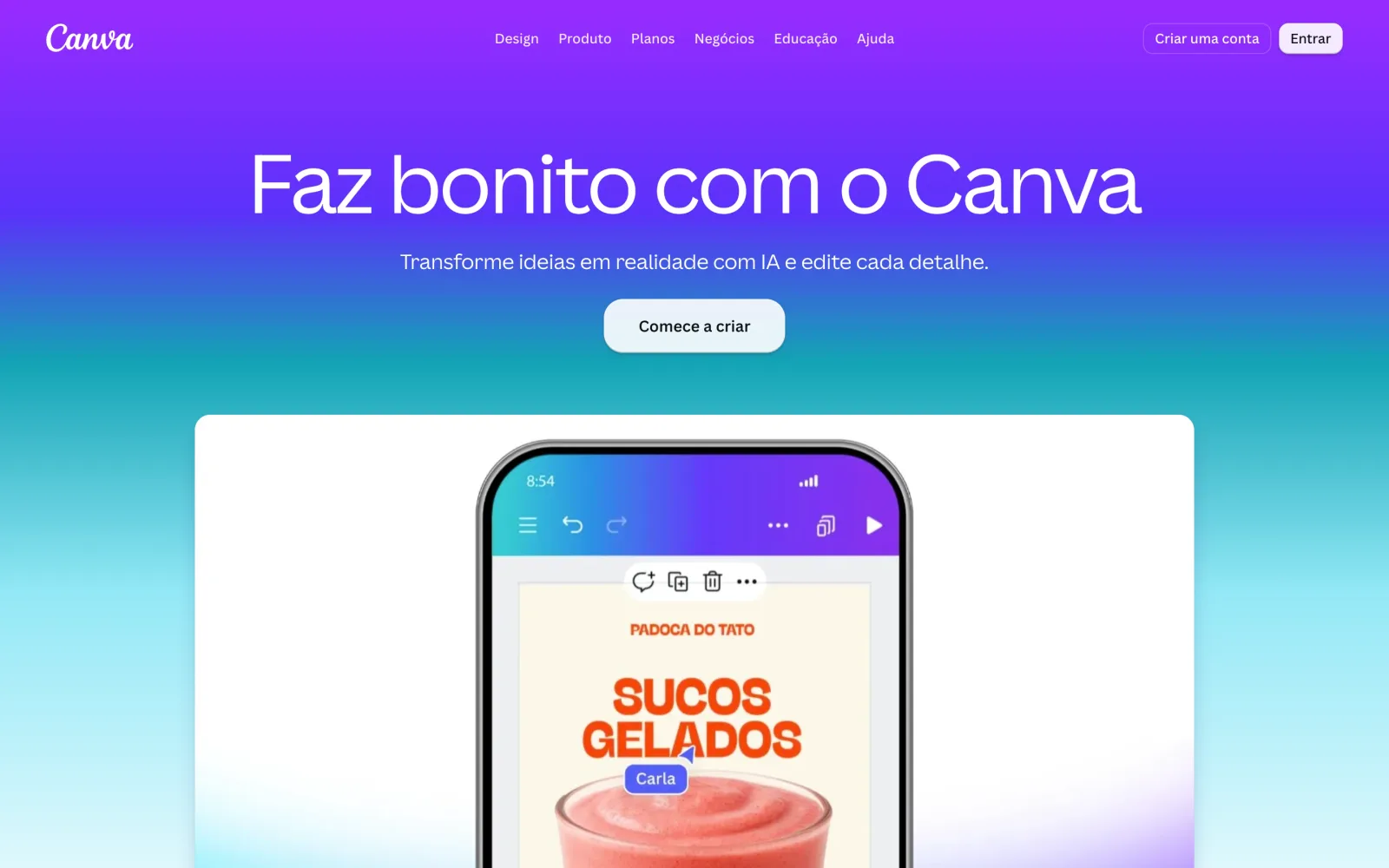
  4. Canva's Brazilian homepage in Portuguese
    04

    Speak every language

    100 languages and cheaper plans in some countries. Brazil, Indonesia, India and the Philippines are top markets.

    See the proof

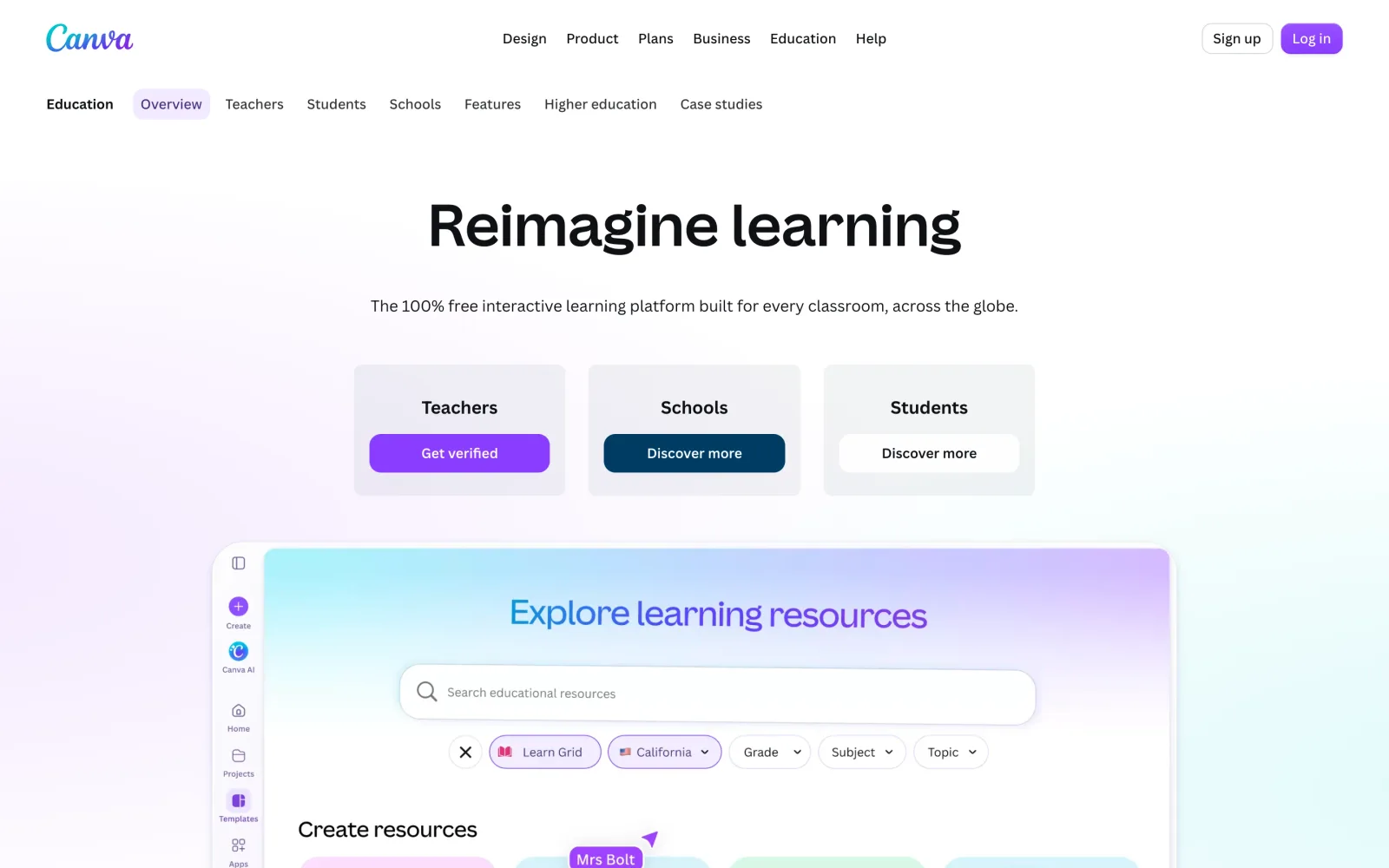
  5. Canva Education: the 100% free learning platform for every classroom
    05

    Free for schools and nonprofits

    The paid plan, free for 400,000 nonprofits and 45 million teachers and students by 2023.

    See the proof

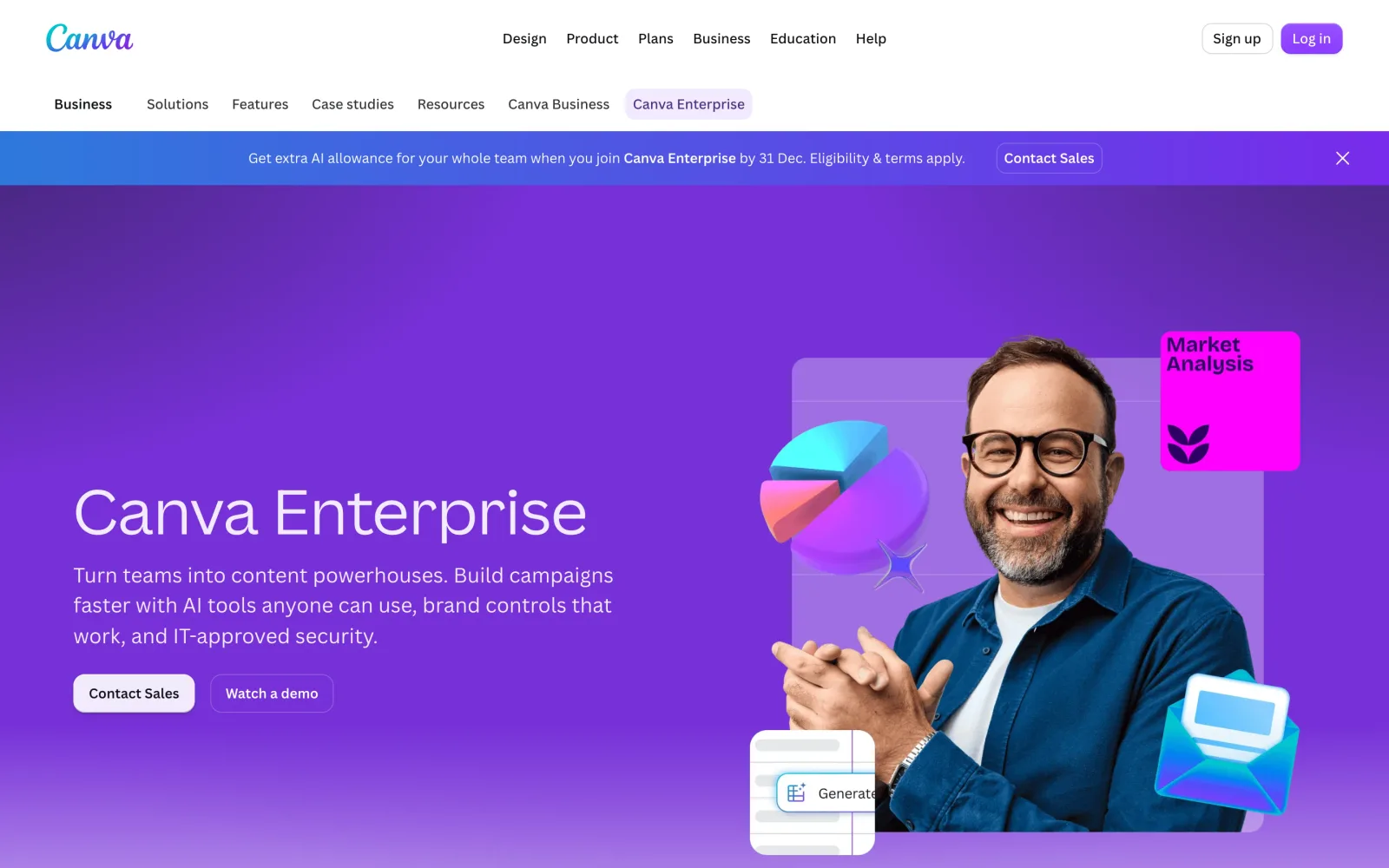
  6. Canva Enterprise page
    06

    From users to whole companies

    Pro subscriptions first, then a rebuilt enterprise product. Businesses with 25+ seats: $500M of annual revenue in 2025.

    See the proof

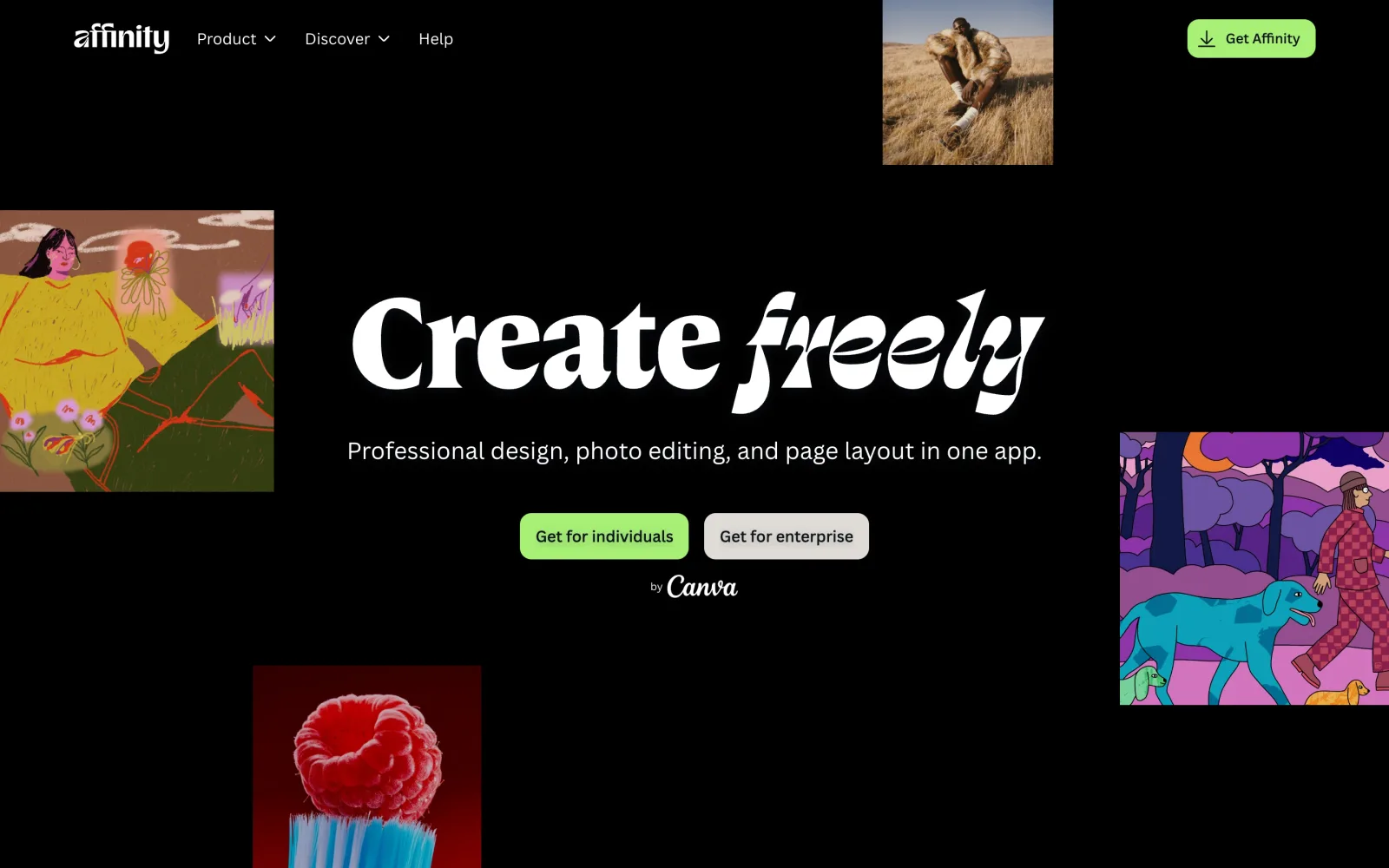
  7. Affinity by Canva: Create freely
    07

    Give the pro tool away

    Bought Affinity in 2024 and made it free in 2025, so pro designers pull their teams into Canva.

    See the proofFull playbook

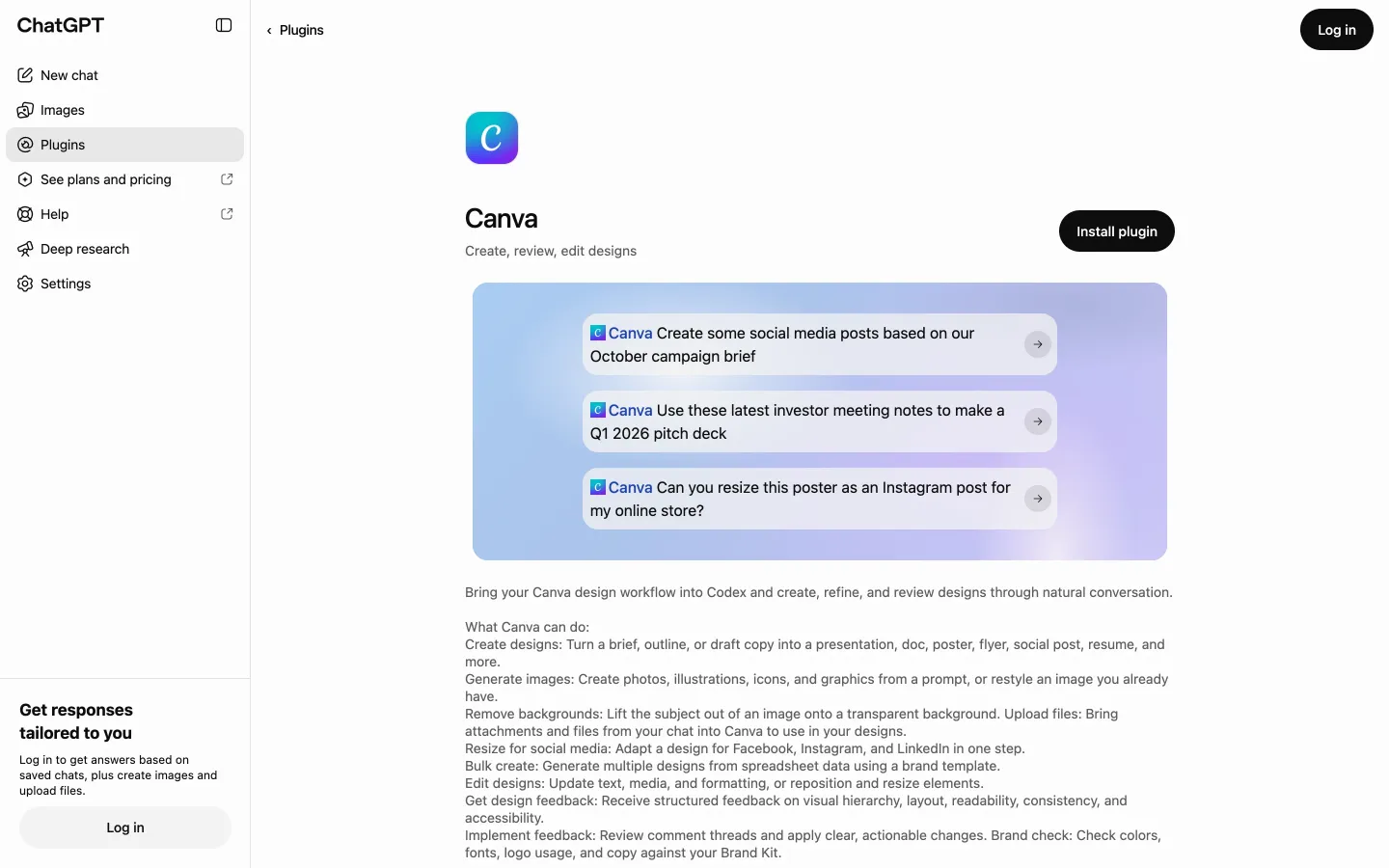
  8. Canva's app listing in ChatGPT
    08

    Be where people ask AI

    A Canva app in ChatGPT, 26 million conversations by October 2025, and AI built into the editor.

    See the proofFull playbook

Canva growth timeline

  1. Canva launches

    Backed by $3 million. Source

  2. 2 million users, 18 months after launch Source

  3. Valued at $1 billion

    10 million users in 179 countries. Source

    $1B valuation
  4. Data breach

    A hacker said they took data on about 139 million users. Source

  5. $60M at a $6B valuation

    30 million monthly users; revenue and users both growing about 100% a year. Source

  6. $200M at a $40B valuation

    60 million monthly users; more than 500,000 teams paying. Source

    $40B valuation
  7. 100 million monthly users

    Weeks after launching the Visual Worksuite for teams. Source

  8. Buys Affinity

    A professional design suite, reportedly for $380 million. Source

  9. A rebuilt enterprise product

    After two years of work, says Cliff Obrecht. Source

  10. Makes Affinity free Source

  11. $4B+ in annualized revenue

    265 million monthly users, 31 million of them paying. Source

    $4B+ annualized revenue
  12. Restructure affects 1,271 people

    22% of staff, after growth slowed for the first time in a decade. Source

Three years of rejections

Melanie Perkins tested the idea first on school yearbooks: Fusion Books, which she started with Cliff Obrecht in her mother's living room in Perth, became Australia's largest yearbook publisher. Raising money for Canva then took three years and more than 100 rejections, and every one made the pitch deck sharper. Canva launched in 2013 with $3 million and a third co-founder, former Google designer Cameron Adams.

Melanie PerkinsCo-founder and CEO, Canva
It was three years between first pitching to an investor and actually landing investment … This is an incredibly long period of time, and we had hundreds of rejections along the way. … But I think that process was really helpful for us, because it meant that we had to refine our pitch, and really get our strategy down before we started. So when we landed that investment we were able to execute quite quickly and effectively.

BBC NewsRead the original

Melanie PerkinsCo-founder and CEO, Canva
Every time we were rejected or had tricky questions we’d improve our pitch decks … In our earliest pitch decks we talked about our product in our first few slides, but in the end the majority of our pitch deck explained the problem and its magnitude. Now, almost ironically, most of our pitch deck is pretty graphs going up and to the right.

SmartCompanyRead the original

A free product people talk about

Launch day was quiet: a few visitors on the dashboard, then drinks at the pub. But the people who came stayed and told others, and Canva passed 2 million users 18 months after launch. It keeps the free plan generous on purpose, and most new users still arrive through other users.

Cameron AdamsCo-founder and Chief Product Officer, Canva
We had a big Google Analytics dashboard up on the wall. … After about 30 seconds, we saw one little drop come in of one person visiting the site. Two minutes later, we saw another drop coming in. Five minutes later we saw three drops. And then it just kind of went quiet. … We went to the pub at about 11:00 PM at night for drinks as we kind of realized that there wasn't going to be this flood of users. … We went from about 500 that first day. I think by the end of the week, we had about 5,000 people who'd signed up.

In Depth (First Round)Read the original

Melanie PerkinsCo-founder and CEO, Canva
We intentionally make our free product extremely generous for a number of reasons … It’s critical both for our marketing and towards our mission of empowering people to design. But, as part of our marketing, it means that people are able to love the product, share it with their friends and family, and promote it on social media. And then that virality really rapidly fuels our growth.

TechCrunchRead the original

Cameron AdamsCo-founder and Chief Product Officer, Canva
Word of mouth in that early couple of years was like gold for us. Still is. An amazing amount of organic traffic comes to Canva. It's only a minority that comes through marketing or other paid channels. It's really about Canva users bringing new Canva users into the fold that continues to drive the success of Canva.

In Depth (First Round)Read the original

Canva's homepage: What will you design today? Make AI-powered social posts, videos, presentations and more
canva.com, November 2026: one button, “Start designing”.

The full playbook:Product qualityCommunity-led growth

Every language, every classroom

From Australia, Canva could never live on its home market, so three years after launch it began translating the product: it now works in 100 languages, with cheaper plans in countries like Pakistan and Morocco. Its biggest markets include Brazil, Indonesia, India and the Philippines. It also gives the paid plan away: 400,000 nonprofits and 45 million teachers and students used Canva for free by 2023.

Cameron AdamsCo-founder and Chief Product Officer, Canva
I think one of the advantages we have as an Australian-founded company is that we couldn't just focus on Australia. … It was three years after we launched when we first started executing upon our international strategy, which involved firstly getting Canva into different languages. We launched eight languages in that year. And then the following year, we launched Canva in a hundred languages. … Our top five markets now are US, Brazil, Indonesia, India, and the Philippines.

In Depth (First Round)Read the original

Melanie PerkinsCo-founder and CEO, Canva
And then critically we've really had a strong focus on internationalization. So we're now in a hundred languages. We tackled some really hard languages like right to left for Arabic and Hebrew and Urdu. … We've got 50,000 nonprofits in our nonprofit program where we give our paid product away for free. We're in 50,000 schools now

Bessemer Venture PartnersRead the original

Canva's Brazilian homepage: Faz bonito com o Canva
The Brazilian homepage: “Faz bonito com o Canva”.
Canva Education: Reimagine learning, the 100% free interactive learning platform
Canva Education: free for teachers, students and schools.
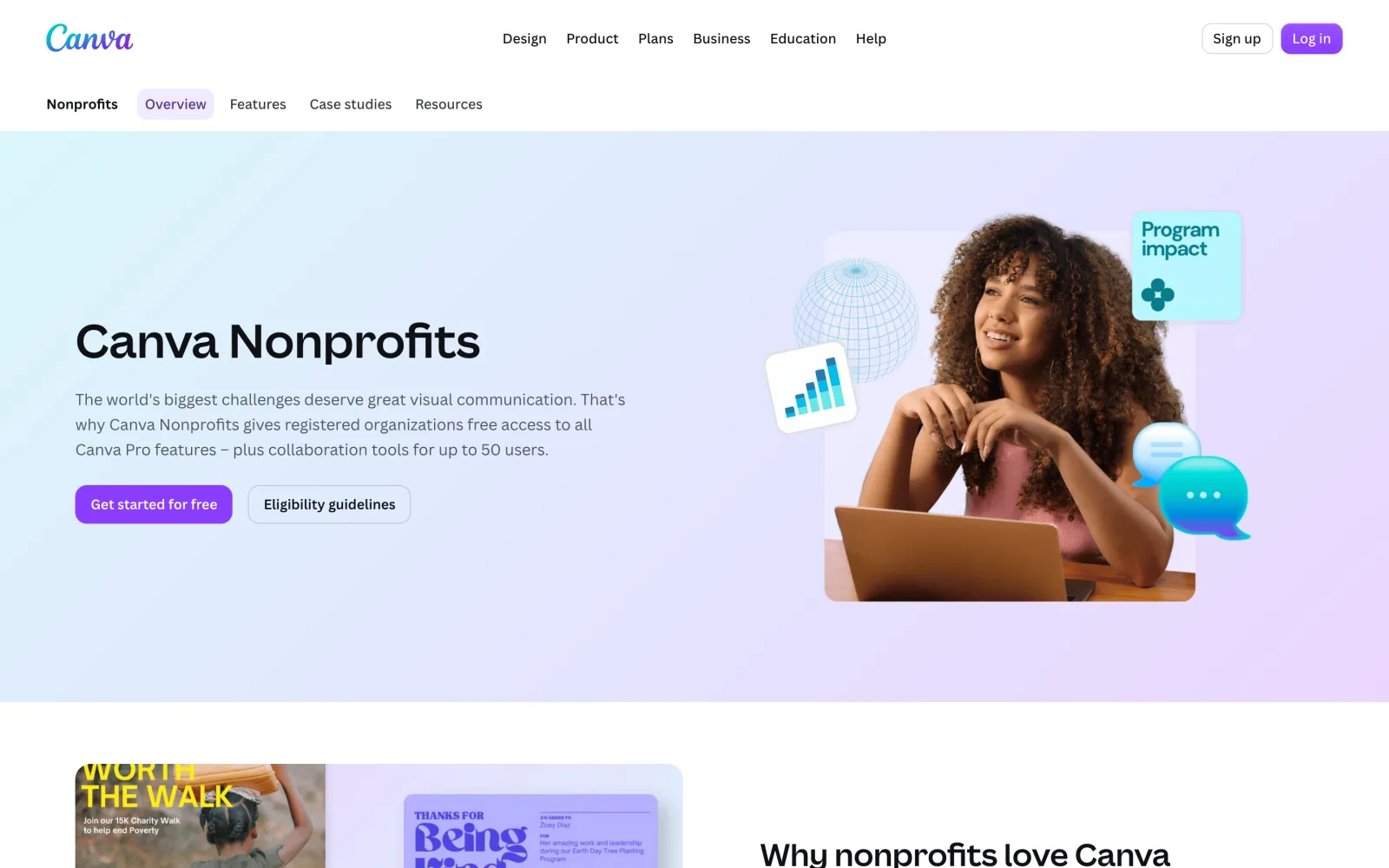
Canva Nonprofits: free access to all Canva Pro features for registered organizations
Canva Nonprofits: Canva Pro free, for up to 50 users.

From one designer to the whole company

Canva first made money selling stock images for $1 each, then launched a subscription, Canva for Work (now Canva Pro), which passed image sales within three months. From 2020 it went after big companies whose staff already used it; the first enterprise package didn't work, and a rebuilt one followed in 2024. In 2025 businesses with more than 25 seats brought in $500 million a year, double the year before.

Cameron AdamsCo-founder and Chief Product Officer, Canva
In our early pitch decks, we always had $1 for elements. … We operated on that business model for the first two years of Canva, and it was going pretty well. We had like 30% month-on-month growth on revenue. … we crafted this package that we called at the time Canva for Work, which is now Canva Pro. … So our $1 image revenue at that stage was I think about $2 million. Within three months, our subscription tier had already eclipsed that and was growing far more rapidly.

In Depth (First Round)Read the original

Cameron AdamsCo-founder and Chief Product Officer, Canva
So from about 2020, we started to think about enterprise as a distinct market that we wanted to go after. … So inside some companies, like 50,000 employee companies, we already had like 5,000 people using Canva. They just didn't do it in a structured way. … Got a little bit of traction, but we realized it wasn't very successful.

In Depth (First Round)Read the original

Cliff ObrechtCo-founder and COO, Canva
It’s taken us two years to work on our enterprise product. We’ve spent an incredible amount of time investing in making Canva a real enterprise workhorse. And we’re finally here. … That stuff kind of sounds boring, but, if you don’t do these things, you can’t win in large organisations … It was part of our strategic direction from day one. We took a really deliberate approach, building for the masses, and then working our way up to the enterprise

Forbes AustraliaRead the original

Canva Enterprise: turn teams into content powerhouses
Canva Enterprise: brand controls and IT-approved security.
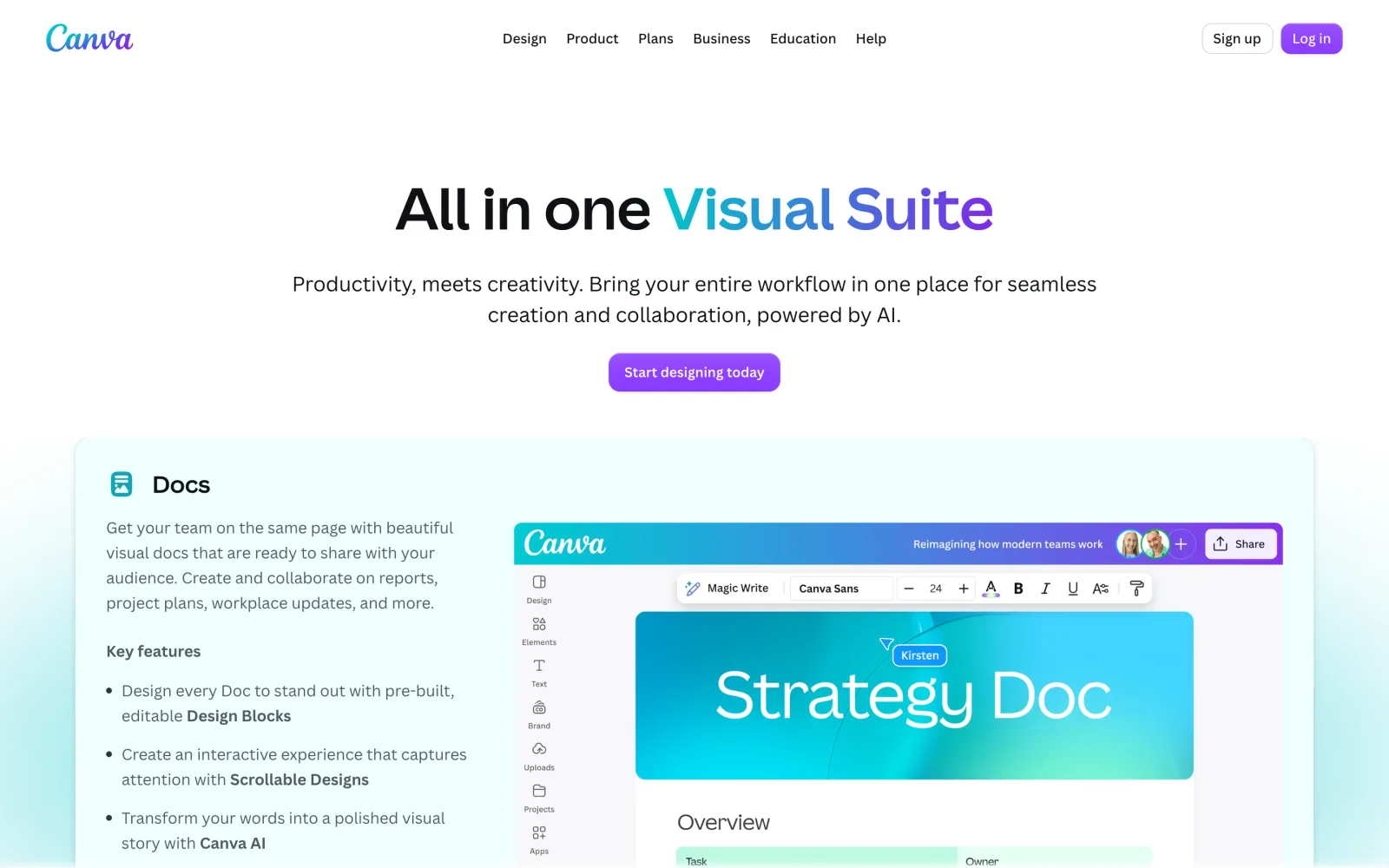
Canva's All in one Visual Suite page with Docs
The Visual Suite: docs, decks and more for work, in one app.

Buy the pro tool, then give it away

In March 2024 Canva bought Affinity, a professional design suite from Nottingham, reportedly for $380 million; Cameron Adams had first contacted the company on LinkedIn. In October 2025 Canva made Affinity free. The bet: designers craft their work in Affinity, and their companies scale it in paid Canva.

Cameron AdamsCo-founder and Chief Product Officer, Canva
There is no catch. We don't sell your data. We don't train AI features on your files. We don't monetise your creativity behind the scenes. Your work stays yours always. … This isn't a marketing stunt … It is a long-term bet on creative freedom. … When more pros use Affinity, more teams end up using Canva … Pro designers lead the visual workflow. If they build in Affinity, they're more likely to scale in Canva.

Affinity on YouTube (“How is Affinity now free?”)Read the original

Affinity by Canva: Create freely. Professional design, photo editing and page layout in one app
affinity.studio: “Create freely”, by Canva.

The full playbook:Free tools

AI, and Canva inside ChatGPT

Canva showed its first AI “Magic” tools at Canva Create, its yearly launch keynote, in 2023; an AI assistant and Canva Code followed in 2025, and its own design models in 2026. People had more than 26 million conversations with Canva's app in ChatGPT by October 2025, and Cliff Obrecht now treats AI chatbots the way Canva once treated Google search.

Cliff ObrechtCo-founder and COO, Canva
Where we started was… we got the Canva platform, and we’re giving the Canva platform a bunch of AI tools. We’re inverting that now. We’re becoming an AI platform with a bunch of design tools. So you can think of it more like a cursor for design

TechCrunch, at Web Summit QatarRead the original

Melanie PerkinsCo-founder and CEO, Canva
For the past few years, we’ve been working towards a simple idea: what if designing in Canva could feel like creating alongside a great collaborator, one who understands your vision and helps bring it to life? … Then I got my first demo of Canva Brush, our first vision design model. Great design doesn’t happen in one prompt. It happens in the back-and-forth, the tiny adjustments and exploring different ideas, which is what Canva Brush is built for.
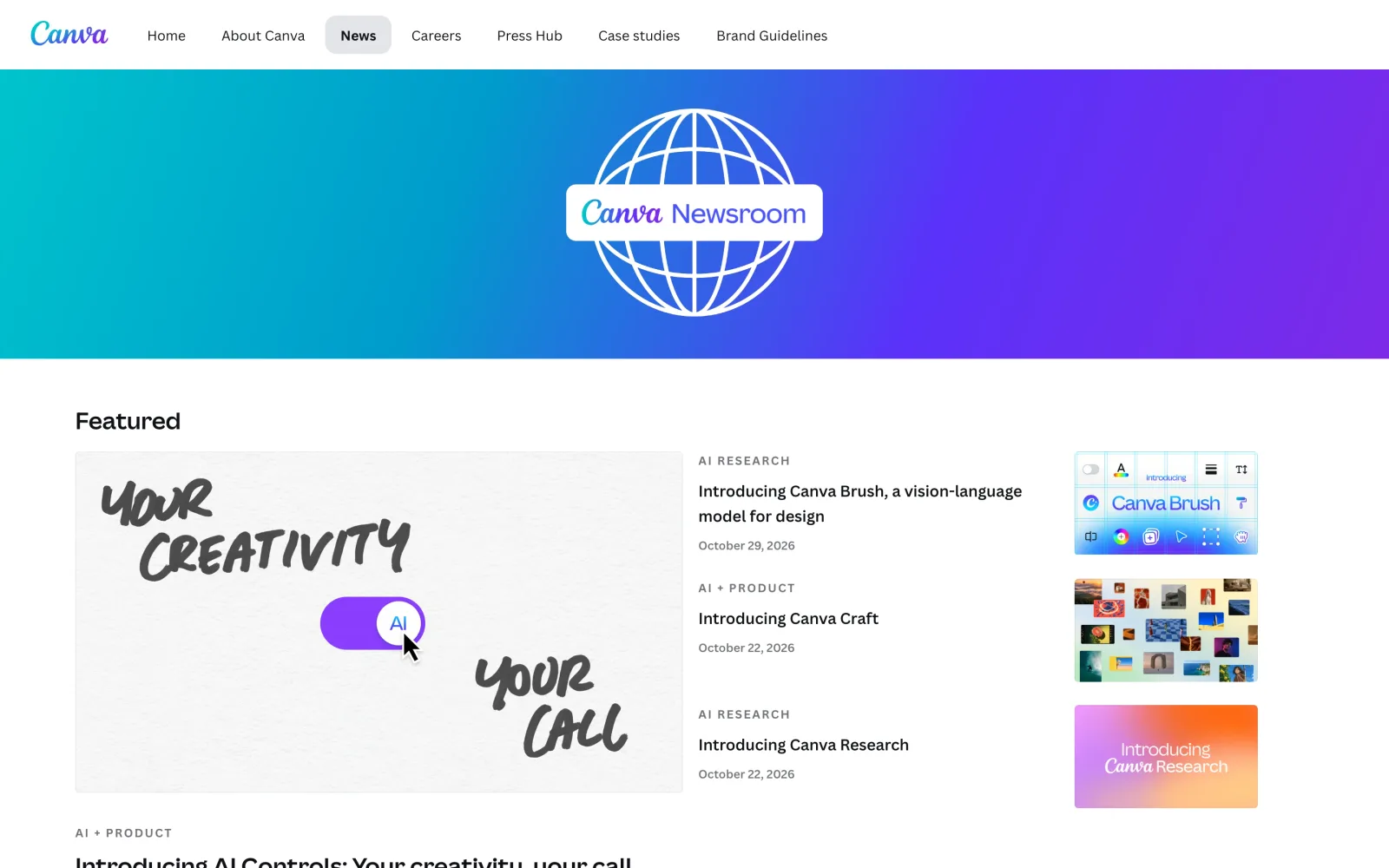
Canva Newsroom: Introducing Canva Brush, a vision-language model for design (October 29, 2026) and Canva Craft (October 22, 2026)

LinkedInView on LinkedIn

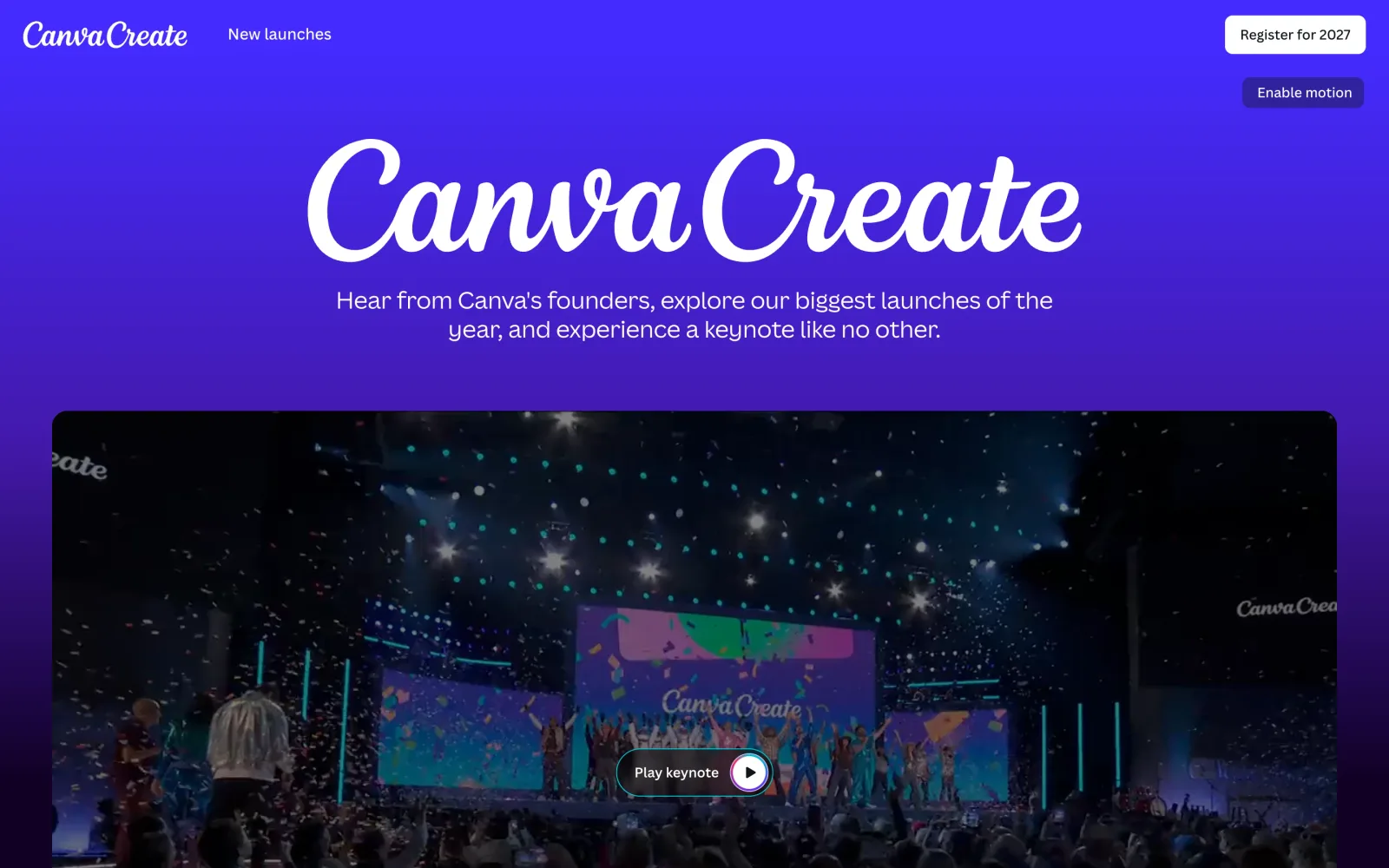
Canva Create: hear from Canva's founders and explore the biggest launches of the year
Canva Create: the founders' yearly launch keynote.
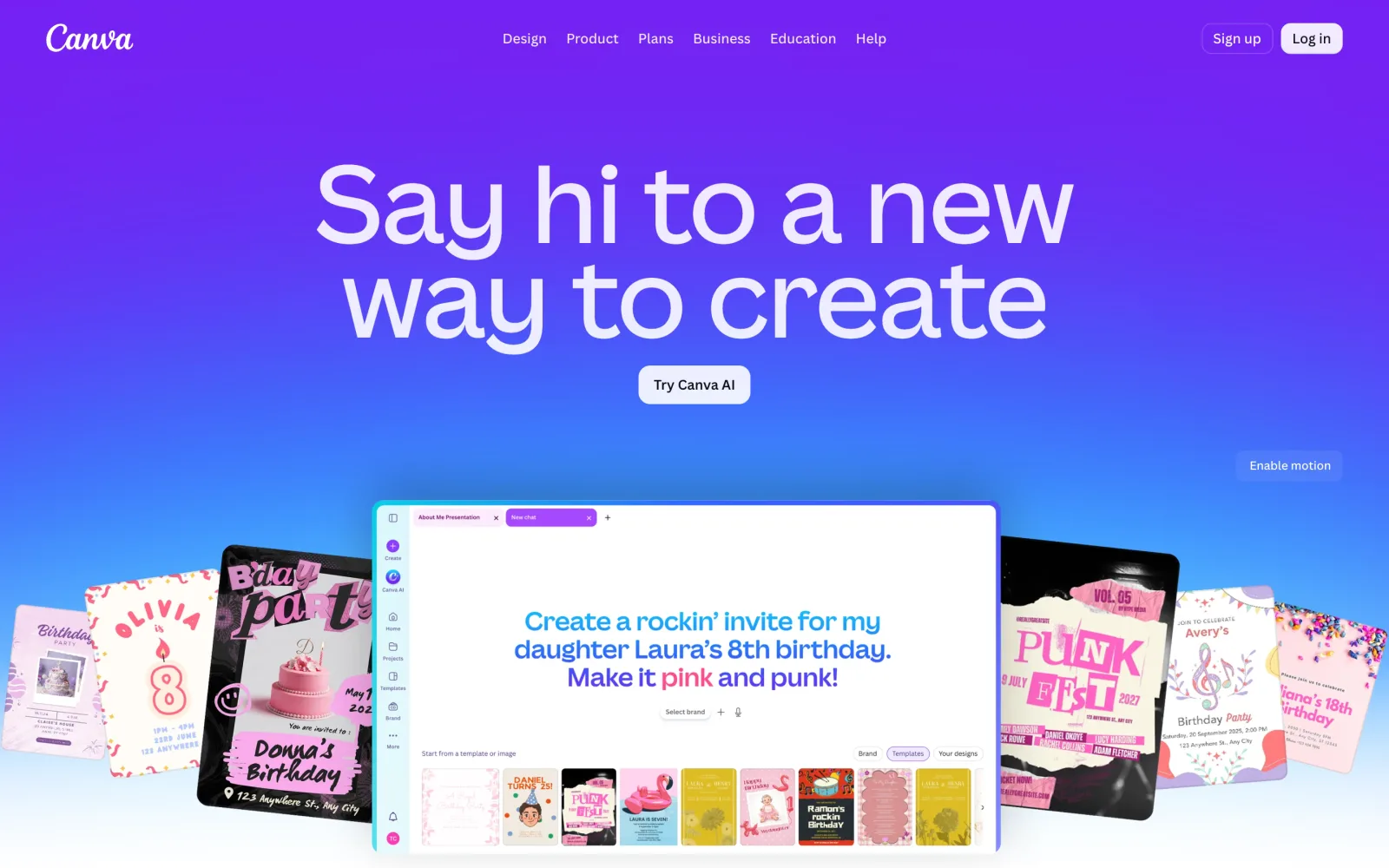
Canva AI: Say hi to a new way to create
Canva AI: design from a prompt.
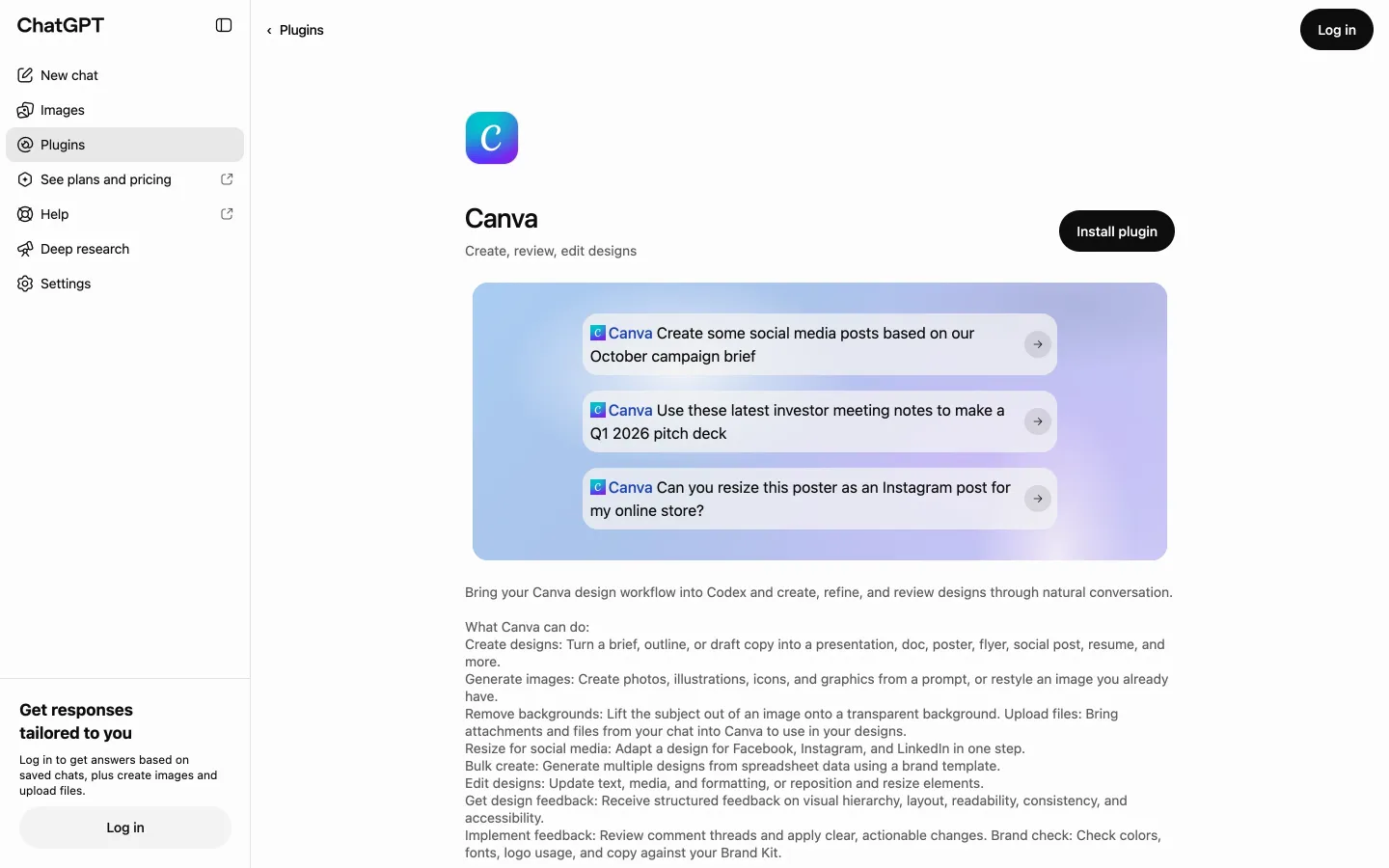
Canva's app in ChatGPT with three starter prompts
Canva's app in ChatGPT: make a design without leaving the chat.

The full playbook:AI app directoriesAEO / GEO

The cost of growing this big

Growth has come with real problems:

  • In May 2019 a hacker said they took data on about 139 million users. Canva said passwords were encrypted; its first email to users was criticized as “marketing fluff”.
  • In September 2024 Canva raised prices on older Teams plans, in one case from $119.99 to $500 a year for five people, pointing to its AI features.
  • In August 2026 it cut its 2026 growth forecast from 30% to 20% as AI costs rose, and its value was marked down from $42 billion to between about $30 billion and $35 billion.
  • On November 4, 2026 Melanie Perkins announced a restructure affecting 1,271 people, 22% of staff. Growth had slowed “for the first time in a decade”, she said.
Melanie PerkinsCo-founder and CEO, Canva
Today, we shared some incredibly difficult news with our team at Canva. We’re making significant changes to how we’re organised, which sadly means saying goodbye to many exceptionally talented people who have helped build Canva into what it is today. This is the hardest decision we've made in Canva's history, and we know it will deeply impact many people and their loved ones.

LinkedInView on LinkedIn

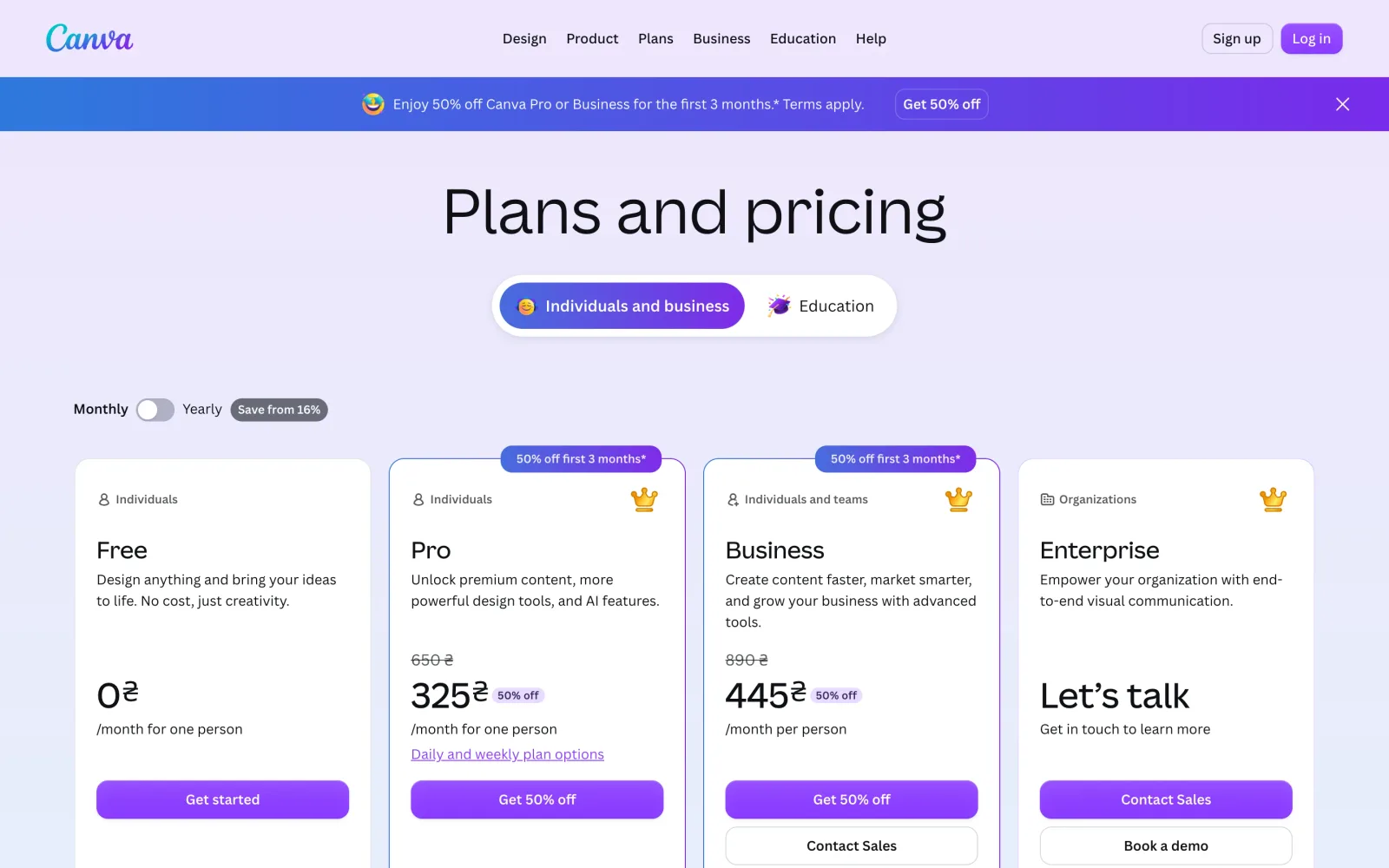
Canva's plans and pricing page: Free, Pro, Business and Enterprise
The pricing page, November 2026, in local currency: the free plan is still first.

What you can copy from Canva

  1. 1.Spend most of your pitch on the problem and how many people have it; Canva's deck got sharper with every rejection.
  2. 2.Make the free plan good enough that people share what they make with it (product quality).
  3. 3.Build a page for each thing people search to make, and drop them straight into the editor (programmatic SEO, template library).
  4. 4.If your home market is small, translate early and price for each country.
  5. 5.Let staff adopt you on their own, then build a real enterprise product before you sell to their bosses.
  6. 6.Treat AI assistants as the new search box (AI app directories).

Knowledge graph

Everything LeadWave has on Canva: its leaders, our pages on it, the lists it’s on and the growth tactics it uses.

Frequently asked questions

More company dossiers

All dossiers
  • Figma logo

    Figma

    How Figma Grew: From Three Years in Stealth to $1B+ in Revenue

    Figma spent three years in stealth making a design tool that runs in the browser, then let people use it free. Designers brought it to work, developers and product managers followed, and sales came last. Revenue passed $1 billion in 2025, and in the third quarter of 2026 it was still growing 43% a year.

    Read

  • Resend logo

    Resend

    How Resend Grew: From an Open-Source Library to 6M Users

    Resend began in 2022 with a free, open-source email library, launched in January 2023 with a founder post that passed 1 million views, and crossed 6 million users on November 25, 2026. The first 3 million took three years; the next 3 million took under six months, as AI agents started choosing it. More than half of its website traffic is no longer human.

    Read
  • Clay logo

    Clay

    How Clay Grew: The GTM Data Company’s Road to $100M ARR

    Clay, the go-to-market data company, took six years to reach $1 million in ARR and two more to pass $100 million, in December 2025. It got there by committing to cold email agencies, turning users into its marketers and naming a new job, the GTM engineer. By September 2026 it had more than 17,000 customers and a $7.1 billion valuation.

    Read
  • Cluely logo

    Cluely

    How Cluely Blew Up: Rage Bait, 700 Clippers and a Retracted Revenue Claim

    Cluely went from a Columbia suspension to $20.3 million in funding in about three months by treating attention as the product: a provocative launch film, 50 advertised internships and over 700 paid clippers. In March 2026 its CEO admitted that the $7 million in annual recurring revenue he had claimed was false. His corrected figure for June 2025 is $5.2 million.

    Read
  • Higgsfield logo

    Higgsfield

    How Higgsfield Grew: From One Last Attempt to a $1.35B Run Rate

    In early 2025 Higgsfield had burned most of its seed money on a mobile app people didn't keep using. It relaunched on the web with camera controls that March, and by October 2026 its CEO put its annualized run rate at $1.35 billion. Its newest channel, a ChatGPT plugin, brought 100,000 new paid subscribers in 10 weeks.

    Read
  • Lovable logo

    Lovable

    How Lovable Grew So Fast: From a GitHub Project to $600M ARR

    Lovable failed two launches in 2024 under the name GPT Engineer. The third, that November, reached $10 million in ARR in about two months, and by September 2026 the company reported more than $600 million. Its leaders credit a CEO who posted everything in public and a free product they treat as the marketing budget.

    Read